Regulatory Policy

Focuses on global regulatory developments, policy changes, and compliance requirements. It provides in-depth analysis of government regulations and their impact on the cryptocurrency and blockchain industries, helping businesses and investors proactively manage policy-related risks.

$20 for a Face: The Underground Business of Crypto KYC

Crypto KYC Bypass: A $20 Underground Industry Despite stringent KYC (Know Your Customer) requirements from major crypto exchanges, a thriving underground market exists to bypass these checks for as low as $20. Users often face geo-blocks or lengthy verifications, preventing access to services. This has fueled demand for illicit KYC services. Reports indicate over 500,000 participants in underground KYC markets, with more than 1 million listings selling verified profiles from platforms like Coinbase and Kraken. These accounts often include real personal data, sometimes without the original owners' knowledge. Fraud techniques have evolved, including deepfake attacks (up 2000% in three years), screen-based spoofing, and AI-generated fake documents. The virtual currency sector is the primary target, accounting for over 78% of KYC attacks. An investigation into a Telegram-based KYC vendor revealed a TRON address with over $59,000 in USDT from 600 transactions over two years, all eventually transferred to an OKX hot wallet. An interview with a KYC service provider, "Maoli," who operates in Chinese-speaking regions, detailed the process: clients pay for accounts verified by "foreigners" recruited globally, often from lower-income regions, who perform the KYC steps for a small fee. These accounts are sold with warnings against holding large funds due to fraud risks and potential reclaiming by the original identity owners. Maoli described the business as a "three-way win": users gain access, exchanges get user numbers, and he profits. However, this ignores the victims of identity theft whose data is used without consent. The KYC system, while intended for security, functions as a permeable barrier, with a vast shadow economy ensuring access for those willing to pay.

marsbit03/30 07:36

$20 for a Face: The Underground Business of Crypto KYC

marsbit03/30 07:36

New U.S. AI Policy: Ending the Era of '50 Laboratories,' Washington Opens a New Wide Door

The U.S. is shifting from a fragmented, state-by-state regulatory approach for AI to a unified federal framework, echoing the historical centralization seen with the Interstate Commerce Act of 1887. While this move promises to reduce compliance burdens and enhance competitiveness against global rivals like China, it fundamentally represents a consolidation of regulatory power in Washington. The new policy aims to establish federal preemption over state laws, creating a single set of rules to streamline innovation and maintain U.S. leadership in AI’s scale-driven economy. However, this centralization also risks increased federal control over time, potentially limiting flexibility and introducing future regulatory uncertainties. The framework addresses key areas like child protection, energy costs, intellectual property, and free speech but relies on existing laws and courts rather than a new dedicated agency. Compared to the EU’s safety-first and China’s state-led models, the U.S. prioritizes market scale and innovation speed. For startups, compliance may simplify in the short term, but long-term risks include political volatility and unresolved legal gray areas, particularly around data usage and intellectual property. Ultimately, the era of state-level "laboratories" is ending, replaced by a more efficient but centrally controlled federal "factory."

marsbit03/30 05:55

New U.S. AI Policy: Ending the Era of '50 Laboratories,' Washington Opens a New Wide Door

marsbit03/30 05:55

From Cash to Crypto: Towards a Consistent Regulatory Approach to Illicit Payments

"From Cash to Crypto: Towards a Consistent Regulatory Approach to Illicit Payments" by Andrea Minto et al. (BIS) examines the challenges for Anti-Money Laundering and Countering the Financing of Terrorism (AML/CFT) regulation posed by the diversification of payment instruments, from cash and bank deposits to cryptoassets and CBDCs. The paper introduces a conceptual framework centered on the degree of intermediary involvement in a payment tool. It identifies a "waterbed effect": as regulators tighten AML/CFT rules on one type of instrument (e.g., bank transfers), illicit activity may shift to less-regulated alternatives with lower detection probabilities (e.g., self-hosted crypto wallets). This regulatory arbitrage undermines overall effectiveness. The framework categorizes payment tools as either intermediary-dependent (e.g., bank deposits, e-money, custodial wallets) where regulated entities perform checks, or non-intermediated (e.g., cash, self-hosted wallets, offline CBDCs) which offer higher anonymity and pose greater detection challenges. Malicious actors are assumed to choose tools that minimize their risk of detection. A case study of the EU's evolving AML/CFT regime illustrates this dynamic, showing how regulation has expanded over time to cover new entities like Crypto-Asset Service Providers (CASPs). However, inconsistencies remain, such as transaction limits for cash but not yet for self-hosted wallets or offline digital euro transactions. The paper concludes by proposing a dual regulatory approach: a *lex generalis* establishing a unified baseline of core obligations for all intermediated tools, and a *lex specialis* with tailored rules for non-intermediated instruments (e.g., transaction limits for cash and offline CBDCs, enhanced "touch point" monitoring for self-hosted wallets). This aims to create a more effective, consistent, and forward-looking framework that balances financial integrity with considerations for user privacy and innovation.

marsbit03/29 12:18

From Cash to Crypto: Towards a Consistent Regulatory Approach to Illicit Payments

marsbit03/29 12:18

"Crypto Czar" Steps Down: 130-Day Political Performance Concludes, How Much of Trump's Crypto Promises Remain?

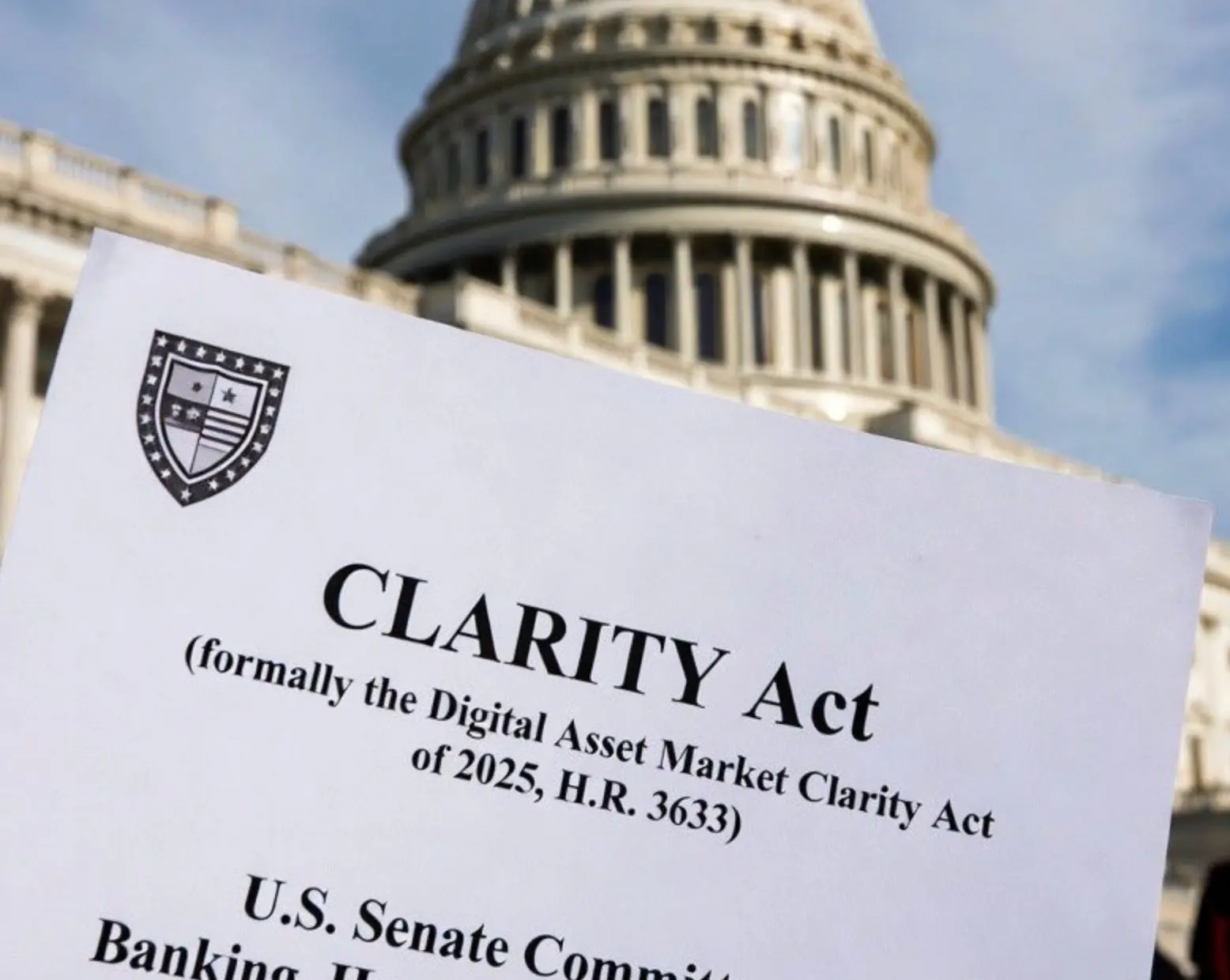
David Sacks, known as the "Crypto Czar," has stepped down after reaching the 130-day limit of his special government appointment. Initially appointed by former President Trump to lead AI and crypto policy, Sacks was tasked with creating a clear legal framework for the cryptocurrency industry. During his tenure, he achieved several high-profile actions, including banning a central bank digital currency (CBDC), hosting the first White House Crypto Summit, establishing a strategic Bitcoin reserve, and helping pass the GENIUS Act for stablecoin regulation. However, the article argues that these accomplishments were largely symbolic political performances rather than substantive gains for the crypto industry. The White House Crypto Summit was described as a publicity event with no concrete policies announced. The strategic Bitcoin reserve merely repurposed seized assets without new purchases, failing to inject liquidity or provide strong market backing. While the GENIUS Act was a tangible achievement, its counterpart, the CLARITY Act, remains stalled in Congress due to conflicts between banks and crypto firms over stablecoin interest benefits—with recent drafts favoring traditional banks, contrary to initial pro-crypto promises. Sacks will continue as co-chair of the Presidential Technology Advisory Council, focusing on AI policy, with no mention of crypto. The article concludes that Trump’s pro-crypto promises have largely resulted in political theater rather than meaningful regulatory progress.

marsbit03/29 06:26

"Crypto Czar" Steps Down: 130-Day Political Performance Concludes, How Much of Trump's Crypto Promises Remain?

marsbit03/29 06:26

活动图片