Industry News

Tracks company news, strategic changes, funding activities, and personnel adjustments across the blockchain and crypto industries, delivering a full-spectrum industry overview for our users.

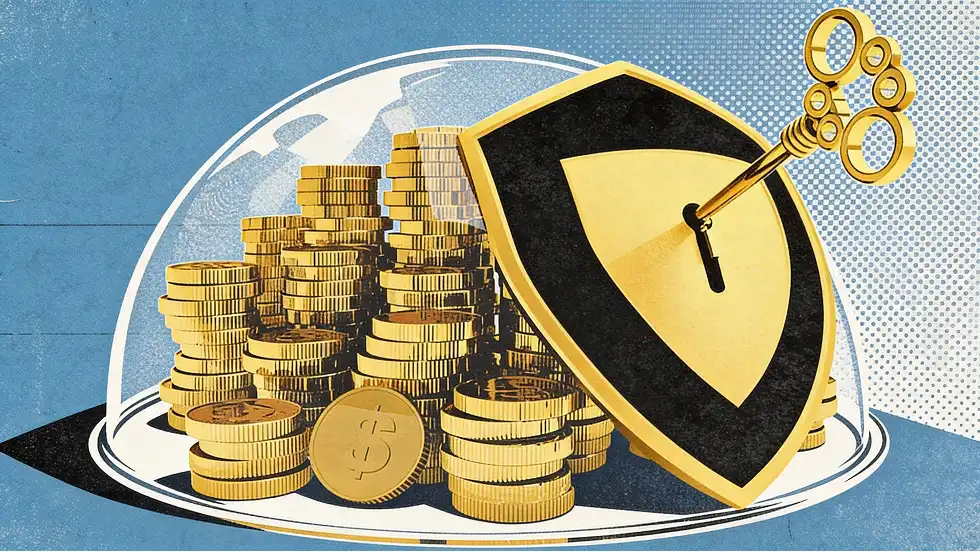
The Second Half of Stablecoins No Longer Belongs to the Crypto World

The article discusses the shift in the stablecoin market from the crypto sector to traditional finance, highlighted by Mastercard's acquisition of BVNK for up to $1.8 billion in March 2026. This move came after Coinbase abandoned a $2 billion deal for BVNK months earlier, signaling intensified competition for stablecoin infrastructure. BVNK specializes in cross-border payments using a "stablecoin sandwich" model: converting fiat to stablecoins like USDC for blockchain transfer, then back to local currency, reducing transaction times and costs. Its key asset is a suite of global licenses, including EMI from the UK FCA and CASP under EU MiCA, enabling compliance across 130+ countries. Mastercard's acquisition aims to integrate BVNK into its Multi-Token Network (MTN), a private blockchain for tokenized assets, addressing MTN's lack of connectivity with public chains. This enables atomic settlements, 24/7 B2B transactions, and programmable payments. The strategy contrasts with Visa’s partnership-focused approach, emphasizing direct control over infrastructure. The U.S. GENIUS Act (July 2025) provided regulatory clarity, defining stablecoins as non-securities under OCC oversight, which facilitated Mastercard’s move. The deal pressures players like Ripple and traditional correspondent banks, as Mastercard’s global network could disrupt cross-border payment fees. Ultimately, stablecoin evolution is becoming invisible to users—embedded in traditional finance for efficiency, not crypto adoption. Mastercard’s investment secures a foothold in the next-generation payment ecosystem.

marsbit03/21 07:12

The Second Half of Stablecoins No Longer Belongs to the Crypto World

marsbit03/21 07:12

Cursor's "Shelling" Kimi Controversy Reverses: From Infringement Allegations to Authorized Cooperation, China's Open-Source Models Once Again Become the Global AI Foundation

On March 20, AI programming tool Cursor (parent company Anysphere, valued at $29.3 billion) released its self-developed model Composer 2, claiming performance improvements through continued pre-training and reinforcement learning, without disclosing the base model source. Shortly after, a captured API request revealed the model ID as "kimi-k2p5-rl-0317-s515-fast," suggesting it was built on Kimi K2.5. Moonshot AI’s pre-training lead Du Yulun initially accused Cursor of violating Kimi’s modified MIT license, which requires commercial products exceeding certain revenue or user thresholds to credit Kimi model usage. The controversy gained traction with Elon Musk’s public comment. However, the situation reversed when Moonshot AI officially congratulated Cursor, clarifying that the usage was authorized through Fireworks AI’s commercial platform. Cursor’s co-founder Aman Sanger and VP Lee Robinson later explained that Kimi K2.5 was selected as the strongest base model after evaluation, and Composer 2 involved significant additional training by Cursor. They admitted failure to credit Kimi initially was a mistake. This incident highlights the growing influence of Chinese open-source models in the global AI ecosystem, as noted by Hugging Face’s CEO. It also serves as indirect validation for Moonshot AI, which is currently raising funds at a $18 billion valuation, suggesting its technology may be even more valuable than estimated.

marsbit03/21 01:52

Cursor's "Shelling" Kimi Controversy Reverses: From Infringement Allegations to Authorized Cooperation, China's Open-Source Models Once Again Become the Global AI Foundation

marsbit03/21 01:52

活动图片