1 декабря в Валь-д’Уазе, Франция, был похищен с улицы отец дубайского криптопредпринимателя; это очередной случай в каталоге Джеймсона Лоппа, где зафиксировано более 225 подтвержденных физических нападений на владельцев цифровых активов.
База данных, которую Лопп, главный специалист по безопасности биткоин-кошелька Casa, ведет уже шесть лет, показывает, что темпы принуждения быстро растут: в 2025 году зарегистрированный рост таких нападений составил 169%.
Сам риск не уникален для криптовалют: брокеры по золоту, продавцы предметов роскоши, даже инкассаторы столетиями сталкивались с тем же базовым оружием (насилием). Новое заключается в том, что цифровые активы теперь крадут лицом к лицу.
Этот сдвиг подпитывает новую гонку вооружений в дизайне кошельков. «Панические кошельки» с триггерами принуждения, которые могут мгновенно обнулить баланс, отправить ложные приманки или вызвать помощь с помощью незаметного биометрического жеста.
Идея звучит элегантно, пока вы не добавите в уравнение гаечный ключ. Как сказал Лопп Cointelegraph: «В конечном счете, использование кошельков принуждения основывается на предположениях о нападающем, а вы не можете знать его мотивацию и уровень осведомленности».
Данные, стоящие за страхом
Выводы Лоппа позволяют предположить, что атаки с помощью «гаечного ключа» следуют за рыночными циклами. Они учащаются во время бычьих трендов и периодов интенсивного внебиржевого (OTC) трейдинга, когда крупные сделки уходят с бирж. США лидируют по абсолютному количеству случаев, хотя риск на душу населения выше в Объединенных Арабских Эмиратах и Исландии.
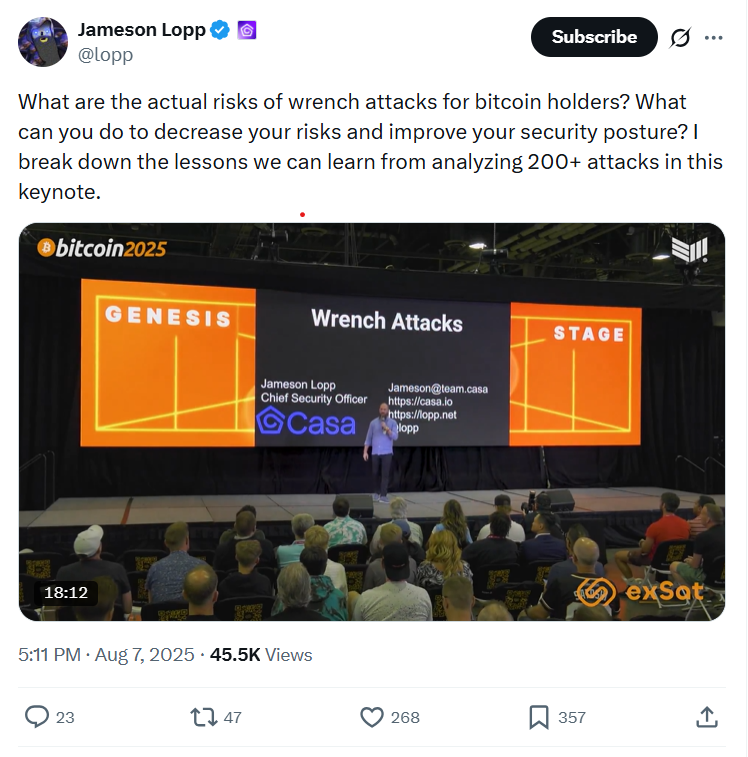
Около четверти инцидентов — это вторжения в дома, которым часто способствуют утечки данных Know Your Customer (KYC) (как сокрушается Лопп, «Kill Your Customer» — «Убей своего клиента») или доксинг через публичные записи. Еще 23% — похищения людей. Две трети атак успешны, и примерно 60% известных преступников оказываются пойманы.
Трендовая линия примерно коррелирует с графиком цены Биткоина (BTC). Каждая розничная мания привлекает новые деньги и новые цели в поле зрения публики, а преступники, как и все остальные, гонятся за возвратом на инвестиции.
По теме: Криптопользователь атакован во Франции из-за аппаратного кошелька Ledger — Сообщение
Проверка панического жеста
Если цифровая самозащита и развивается, то она делает это без доказательств. «Мы мало что можем определенно сказать об эффективности кошельков/триггеров принуждения, потому что у нас очень мало данных», — указывает Лопп.
По теме: Атаки «гаечным ключом» на владельцев Биткоина могут удвоить худший год по количеству инцидентов
Ему известно об одной жертве, которая попробовала использовать кошелек-приманку, но не смогла убедить нападавшего, и о другой, которая немедленно подчинилась, но все равно подвергалась пыткам часами, потому что вор предположил наличие скрытых резервов.
Создатели, которые дают отпор
Мэттью Джонс, сооснователь Haven, узнал это на собственном горьком опыте. При попытке совершить сделку на 25 BTC в Амстердаме его контрагент скрылся на поджидавшем фургоне. Его фотографии помогли Europol проследить путь банды по Европе; ни один из них так и не был пойман.
С тех пор он превратил этот опыт в продукт: биометрическую систему мульти-партиционного хранения, построенную на «непрерывной аутентификации без раскрытия личности».
Биометрический кошелек Haven блокирует переводы за живым сканированием лица, которое хранится только на устройстве пользователя. Крупные транзакции, свыше 1000 долларов, требуют подтвернения в реальном времени от второго верификатора, например, супруга или партнера.
Изменение этого контакта влечет за собой 24-часовое ожидание, что делает принуждение на месте практически бесполезным. Джонс говорит: «Речь идет о том, чтобы у вас украли наличные из кошелька, а не опустошили банковские счета. Так что все сводится к тому, чтобы определить вашу толерантность к риску и решить, на какую сумму».
По теме: Являются ли криптокошельки без сид-фраз ключом к массовому самохранению? Мнение эксперта
Дилема хранения
По мере роста физического принуждения и ужесточения правил конфиденциальности, таких как Рамочная основа отчетности по криптоактивам Организации экономического сотрудничества и развития (ОЭСР), даже veteran Bitcoiners пересматривают самохранение. Некоторые теперь предпочитают услуги кастодиана личному риску.
Лопп называет такой исход катастрофическим: «Если достаточное количество людей решит, что самостоятельное хранение Биткоина слишком опасно, это создаст массовую централизацию и системный риск для всей системы. Это битва, которую я веду уже десятилетие».
Это обнажает парадокс в основе криптобезопасности в 2025 году: каждая мера защиты, от более строгих баз данных KYC до оффчейн-биометрии, сужает анонимность, одновременно расширяя поверхность атаки. Ключевая проблема теперь не в уязвимостях смарт-контрактов; а в утечке данных и страхе.
По теме: Аргументы в пользу модели «необязательного KYC» — Интервью с Toobit
Что на самом деле работает
При всех инновациях最简单的 защитой остается социальная осмотрительность. Лопп советует: «Самое эффективное, что может сделать биткоинер, чтобы снизить риск атаки «гаечным ключом», очень сложно: не говорить о Биткоине, по крайней мере, не используя свое настоящее имя или лицо».
По мере того как аппаратные кошельки обзаводятся режимами паники, а регуляторы требуют более visible ownership, единственными масштабируемыми средствами защиты могут оказаться культурные. Большинство атак «гаечным ключом» succeed, потому что жертву можно найти, а не потому что ее кошелек можно взломать.
Журнал: 2026 год станет годом прагматичной приватности в криптоиндустрии — Canton, Zcash и другие