Buying Seafood with USDT in Vietnam: Has Web3 Truly Achieved Mass Adoption?

深潮Опубликовано 2025-12-22Обновлено 2025-12-22

Введение

In Vietnam, a country consistently ranked among the top in global cryptocurrency adoption, the author explores whether Web3 and crypto payments have achieved mass adoption beyond reports and whitepapers. During a two-week trip, the author avoided formal industry events and instead tested crypto payments in everyday scenarios like spas, street food stalls, and taxi rides. Key observations include: - Many local merchants prefer cash over international cards due to high fees and tax avoidance, creating an opening for stablecoins like USDT. - Using Bitget Wallet, the author successfully paid via VietQR—Vietnam’s ubiquitous payment QR system—at many locations, with transactions feeling nearly as seamless as Alipay. - However, a failed payment at a seafood restaurant revealed compatibility issues between crypto wallets and older, non-standard QR systems, highlighting remaining technical barriers. - Public perception of crypto remains mixed: in northern cities like Hanoi, it is often associated with crime and gambling, while southern hubs like Ho Chi Minh City show more enthusiasm, with young people trading or developing crypto projects in cafes. - Despite low visible crypto infrastructure (e.g., few Bitcoin ATMs), underlying adoption is significant, driven by a young, tech-savvy population eager for financial mobility. The author concludes that Vietnam’s combination of demographic youth, high mobile internet use, and informal financial vitality makes it a fertile ground for Web3 ...

Author: Joe Zhou, Foresight News

Vietnam, a remarkable country repeatedly mentioned in countless Web3 research reports.

It boasts one of the world's youngest population structures, an extremely high mobile internet penetration rate, and a financial vitality that grows almost wildly. In the "Global Cryptocurrency Adoption Index" released by Chainalysis, Vietnam has consistently ranked first or near the top for many years.

As a long-time observer of the crypto industry, I have always wanted to figure out one question: when grand concepts like "crypto payments," "stablecoins," and "Mass Adoption" written in PPTs and research reports are actually deployed on the streets of Vietnam, what kind of chemical reaction will occur?

At the end of 2025, I set foot on this land. During my two weeks in Vietnam, I didn't visit high-end exchanges or attend industry cocktail parties filled with clinking glasses. Instead, I traveled as an ordinary tourist—hailing rides, getting massages, and eating at street stalls.

I recorded five small incidents from my journey. They may not represent the whole picture, but they are the most authentic slices of Vietnam's current Web3 reality.

One: "No International Credit Cards, Cash and USDT Only"

At a SPA shop in Nha Trang, Vietnam, our group of 12 spent $320. When settling the bill, the merchant stated bluntly: a 10% discount for cash payment, full price for Visa or Mastercard.

I was initially displeased, as carrying large amounts of Vietnamese dong cash is inconvenient, and I suspected the owner might be "gouging" us. But the owner's patient explanation cleared up my misunderstanding.

In Vietnam, international credit card fees are high, often 3% or more. More importantly, using a card means funds enter the banking system, incurring additional taxes, while cash avoids these. From a very pragmatic small business perspective, the owner explained her difficulties.

Ultimately, we paid with $300 in cash. The owner paid less tax, and we saved dozens of dollars—a win-win. Of course, the losers were the "middlemen" like credit card organizations and banks.
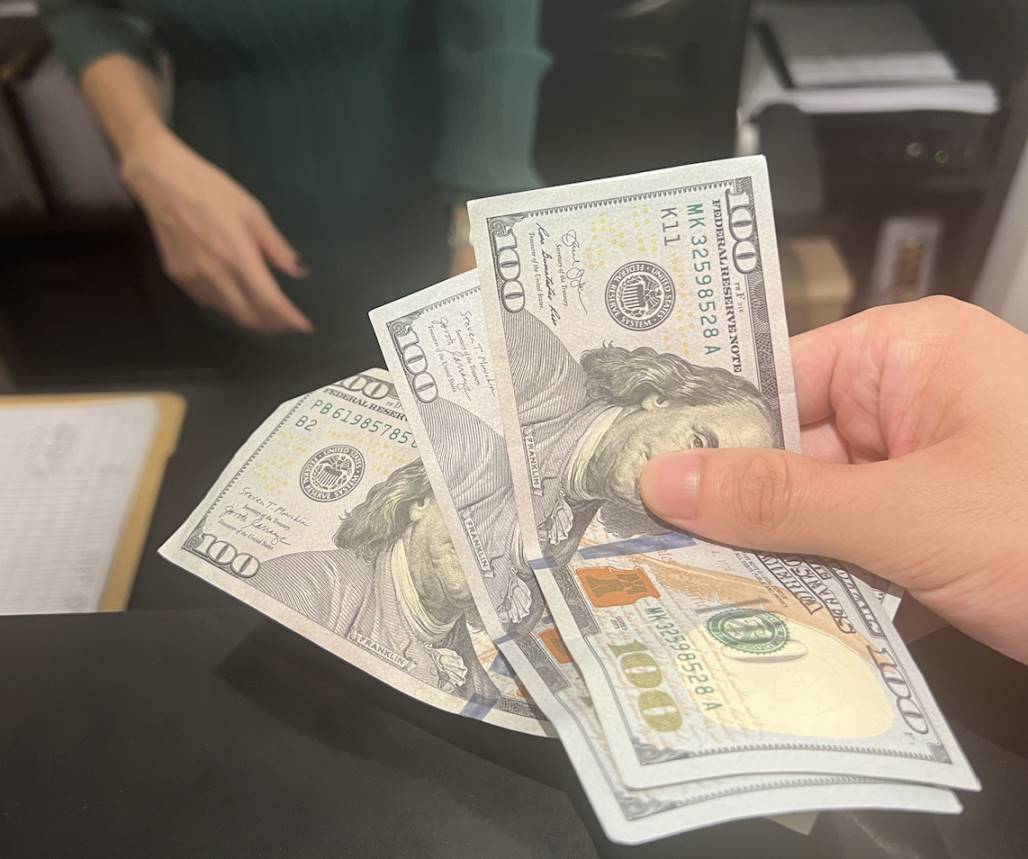
Above: The author paying with US dollar cash

This deeply resonated with me: the global credit card payment system has long been monopolized by a few giants, not only charging a 3% "toll" per transaction but also imposing ATM withdrawal fees as high as 4% or more. For merchants, this is not just a financial cost but also a compliance cost.

Since merchants have a natural preference for "US dollars,"理论上, their acceptance of "digital dollars" (stablecoins) is also值得期待—as long as the payment tool can solve the "last mile" problem for them,即 instantly converting USDT into the Vietnamese dong they need.

With this verification logic in mind, I began my subsequent experience with crypto payments in Vietnam.

Two: Stablecoin Payments in Vietnam, the Dawn of Mass Adoption Emerges

When Vietnamese merchants accept US dollar bills, are they ready to accept US dollar stablecoins?

During the rest of my journey, I deliberately tried to live solely using Bitget Wallet. Hailing rides with Grab, buying pho at street stalls, SPA massages, seafood feasts... I was surprised to find that as long as the merchant had a VietQR (Vietnam's universal payment QR code), I could basically use my wallet to scan and pay directly, with funds converted and arriving in real-time. And VietQR can be seen almost everywhere in Vietnam.

I use the word "basically" because I discovered a significant bug in crypto payments, which will be mentioned in Chapter Three.
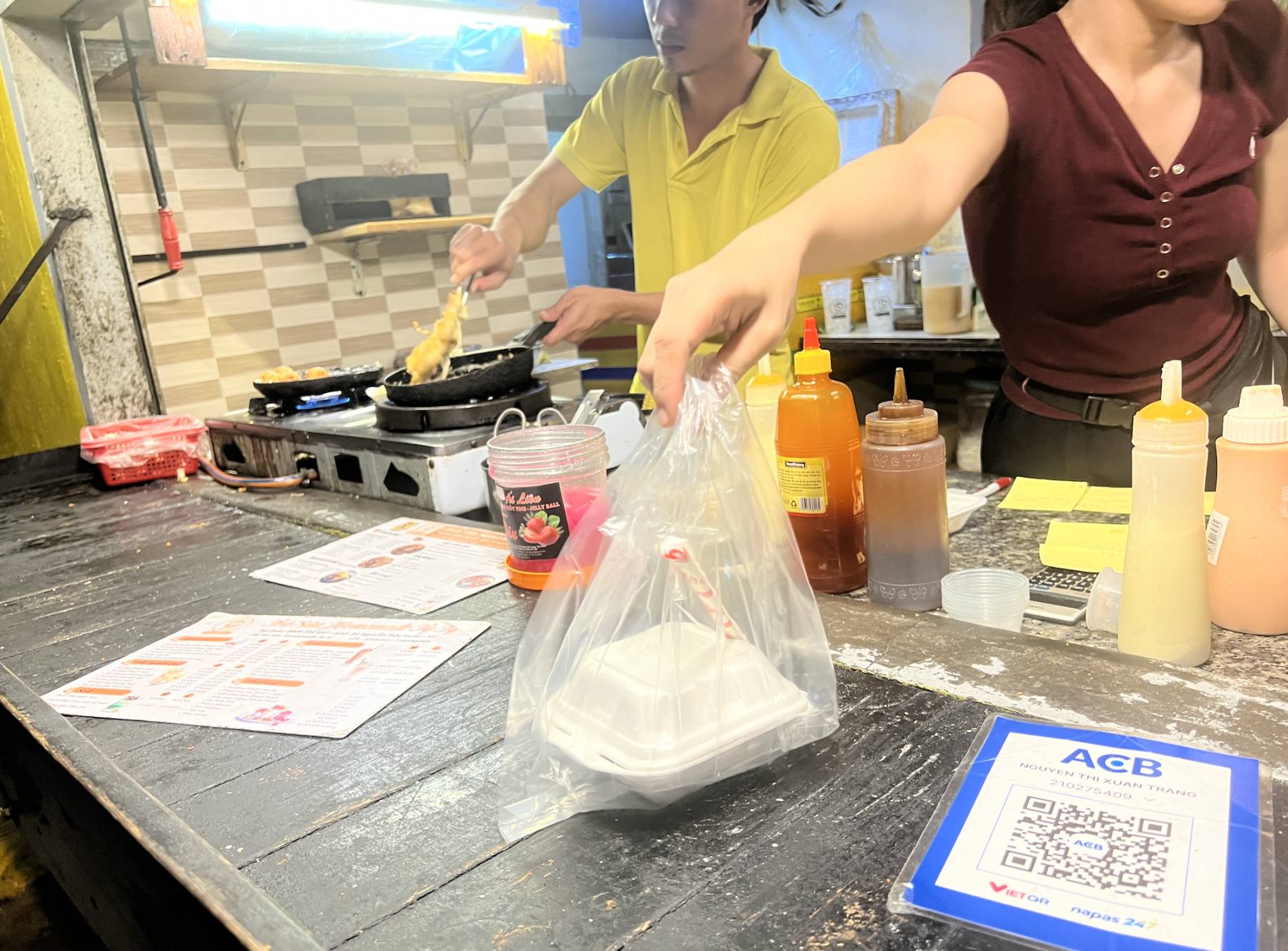
Above: VietQR (bottom right corner) ubiquitous on the streets and alleys of Vietnam, can be scanned directly for payment using Bitget Wallet

It's no exaggeration to say that in Vietnam, the experience of crypto payment is infinitely close to that of Alipay.

I had heard about it before, but the震撼 of firsthand experience was still strong. Bitget Wallet and other crypto wallets have underlying access to aggregated payment networks like Aeon Pay, which truly turns cryptocurrency from a "speculative asset" into "purchasing power," directly reaching tens of millions of merchants in Vietnam and surrounding countries.

Of course, all this smooth experience is built upon Vietnam having a highly unified and普及 QR code payment system (VietQR). It is the infrastructure, while crypto payment is the new blood running on it.

However, frequent use finally made me realize that Bitget Wallet扫码支付 is not omnipotent. I really did find a bug once.

Three: A Failed Crypto Payment Revealed the "Real-World Bug" to Me

On December 20, 2025, I dined again at the famous restaurant Moc Seafood in Nha Trang. The first two times I used cash and a credit card respectively; the third time, I decided to challenge myself to pay using Bitget Wallet.

However, this "challenge" failed.

The reason was that the shop displayed not a standard VietQR聚合码, but a printed QR code from an internal bank or old system. My wallet scanned the code and showed a successful deduction, but after the on-chain funds were transferred, the shop side had no voice broadcast or receipt notification for a long time.

The other party also demonstrated to me that when she used her mobile phone to pay, she received the money arrival notification immediately.
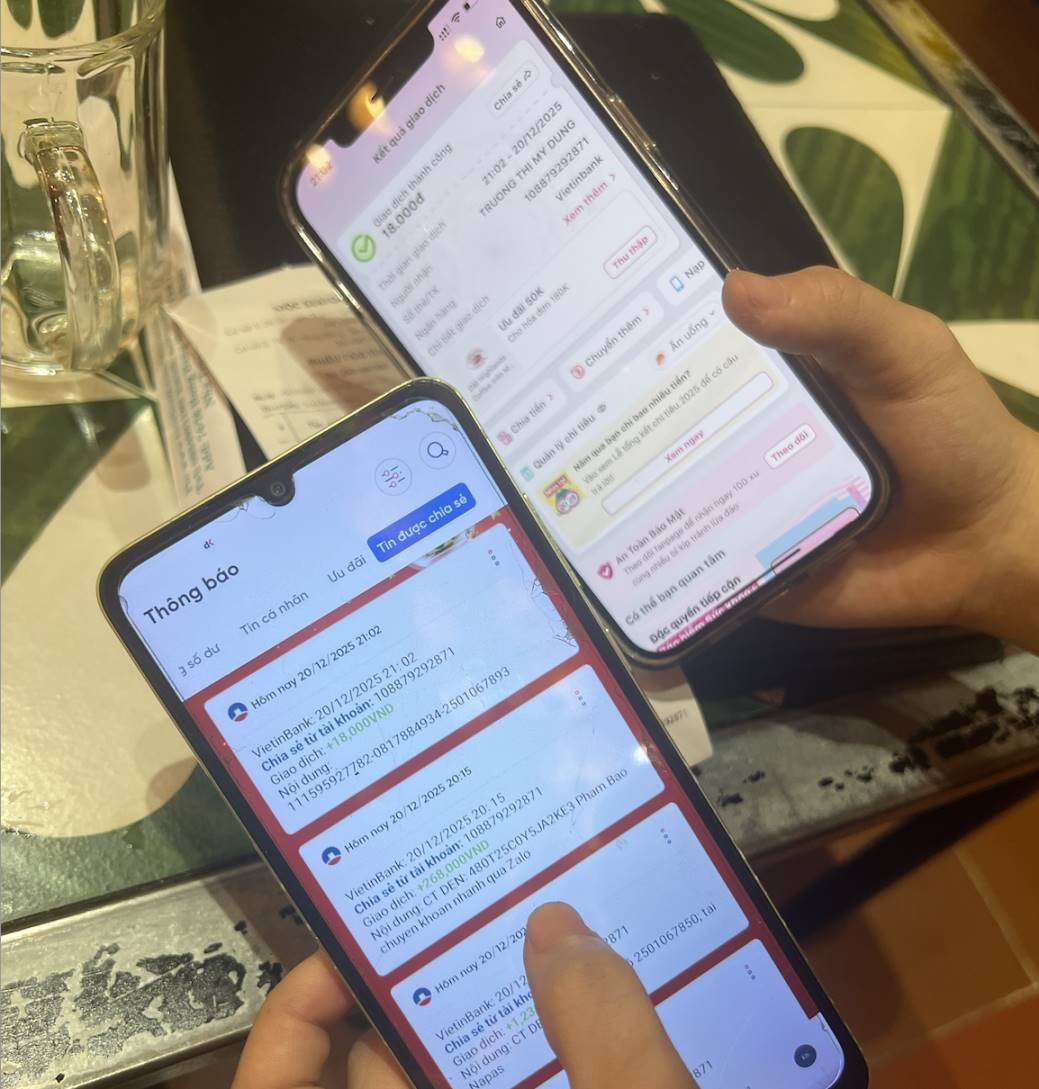
Above: The author's attempt at crypto payment failed, but the staff completed it smoothly using a local bank scan

The shopkeeper helplessly showed me their verification method: scanning with a local financial App, instant arrival.

The loss of these few dollars was the "tuition fee" I paid for this experience. This small episode made me realize that the "last mile" of crypto payments in the real world is still fragile. Missing compatibility protocols, confirmation delays on the merchant side, and the cognitive time差 between the user side's "deduction equals success" and the merchant side's "arrival才算数" (only arrival counts) are all pits that must be filled on the road to Mass Adoption.

Four: In the Minds of Ordinary Public, Cryptocurrency is Still "Grey"

The commercialization of technology depends not only on the maturity of the code but also on cultural acceptance.

Although Vietnam has an extremely young population, in the eyes of the general public, especially in northern Vietnamese cities, Crypto's image is not glorious. The author communicated with several locals in Hanoi—including currency exchangers, motorbike taxi drivers, and university students. Their first reaction to cryptocurrency was惊人一致: money laundering tool, grey industry, gambling.

In their view, this is not some "future of the internet" or "future of finance," but a means to evade regulation.

On the bustling streets of Hanoi and Nha Trang, the author could hardly find any Bitcoin ATMs or offline OTC exchange shops. This creates a strong visual contrast with places like Hong Kong, Japan, or Georgia—where the neon signs of Crypto Exchanges have long openly occupied the C位 (center stage) of commercial streets.

On one hand, there's the global number one in on-chain data; on the other hand, it's hard to find in the physical world. This complete disconnect between online and offline vividly演绎了一种 "Vietnamese-style crypto folding."

Five: In the Driver's Car, I Found a Binance Cap

An accidental discovery tore open a corner of Vietnam's crypto world.

During a Grab ride, my colleague敏锐地 noticed that this young driver had a cap with the Binance Logo casually placed on his dashboard. Seeing we noticed, the driver grinned and skillfully took out his phone, showing us the Binance App he was running.

This scene made me realize that cryptocurrency in this country is not just an underground undercurrent; it is渗透 into ordinary people's lives in an extremely vital way. Multiple public data show that over 20 million people in Vietnam hold or have used digital assets, and a large proportion of Vietnam's population is young (e.g., a significant percentage aged 10–24), which significantly promotes the acceptance of digital assets and the formation of Web3 usage habits.

This penetration shows an interesting "North-South difference" geographically.

A university student in Hanoi told me that the north and south of Vietnam have截然不同的 views on money: people in the north, represented by the capital Hanoi, are conservative,倾向于储蓄 (inclined to save), preparing for rainy days; while people in the south, led by the economic center Ho Chi Minh City, are deeply influenced by Western business culture,习惯提前消费 (accustomed to spending in advance), and have an extremely high acceptance of new things.

This also explains why the vast majority of Chinese Web3 practitioners—whether media, VCs, or链游 developers—mostly choose to settle in Ho Chi Minh City among Vietnamese cities.

Here, low labor costs collide with the high returns of the crypto economy, making Vietnam a heaven for geographical arbitrage in "play-to-earn mining." Many young people are ordinary office workers during the day and turn into链上的 "gold-farming worker ants" at night.

If the fourth point of the travelogue showed me the "prejudice" towards cryptocurrency among the public in northern Vietnamese cities, then on the streets of Ho Chi Minh City, my friends described to me the "enthusiasm" for cryptocurrency in this country.

Vietnam has a strong coffee culture, and in those crowded Highlands Coffee or The Coffee House shops, my friend witnessed an extremely hardcore scene: on the screens of rows of young people tapping on laptops, not all were games or social software; he frequently saw Binance's K-line charts,甚至 Solidity code editor black windows.

Data doesn't lie. According to Chainalysis's "Global Cryptocurrency Adoption Index," Vietnam has consistently ranked first or near the top for many years. It has the perfect "golden population structure," tens of millions of young people渴望阶层跃迁 (yearning for class leap), proficient in digital technology, and unlike the older generation, they do not迷信传统的银行体系 (superstitiously believe in the traditional banking system).

This gives Vietnam a wonderful sense of "folding":

On the street, a motorbike taxi driver might tell you Crypto is a "money laundering tool"; but in a café at the end of the alley, a young developer might be building the next Axie Infinity (a phenomenal Web3 game born in Vietnam).

This bottom-up vitality is perhaps the most authentic底色 of Web3 in Vietnam. There are no高大上的金融中心 (high-end financial centers) here, but every crowded coffee shop could be a Web3 node; every Grab穿梭在暴雨中 (shuttling through the rainstorm), the driver's seat might hold a young person waiting for the Bitcoin bull market.

Conclusion: Searching for the Next Decade's "Alpha"

These five small incidents are only the tip of the iceberg of my observations of Vietnam.

The chapters of the journey are far from over. Next, I will delve into the "Southern Economic Heart" Ho Chi Minh City, climb the highlands of "Vietnam's Dali" Da Lat, traverse the coastal hub Da Nang, and finally arrive at Phu Quoc Island in the south.

Having traveled to dozens of countries and after repeated exchanges with多位长期深耕当地的朋友 (friends who have long been deeply involved locally) and Vietnamese locals, I am increasingly convinced of one judgment: in the next decade, Vietnam will be one of the world's most promising economies, perhaps even the one with the most potential. The young population structure, continuously restless desire for upward mobility, and a relatively open social attitude towards foreign things together form a rare soil, and these are the best soil for nurturing new technologies.

I will continue to walk on this hot land and surrounding countries, not just as a tourist, but also as an observer, to explore the real growth state of Web3 in Southeast Asia.

Please stay tuned, our exploration continues.

Связанные с этим вопросы

QWhat is the main reason why some Vietnamese merchants prefer cash payments over international credit cards, as described in the article?

AMerchants prefer cash because international credit cards incur high transaction fees (around 3% or more) and involve bank systems that require additional tax payments, whereas cash allows them to avoid these costs.

QHow does the article describe the usability of crypto payments like USDT via Bitget Wallet for everyday transactions in Vietnam?

ACrypto payments are highly usable, with Bitget Wallet allowing seamless scanning of VietQR codes for transactions like Grab rides, street food purchases, and spa services, providing an experience close to Alipay.

QWhat issue did the author encounter when trying to use crypto payment at Moc Seafood restaurant in Nha Trang?

AThe payment failed because the restaurant used a non-standard, older bank-specific QR code instead of a VietQR code. The wallet showed successful deduction, but the merchant did not receive confirmation or funds.

QAccording to the article, how do ordinary people in northern Vietnam, such as Hanoi, generally perceive cryptocurrencies?

AThey view cryptocurrencies negatively, associating them with money laundering, gray market activities, and gambling, rather than as a technological or financial innovation.

QWhat demographic and cultural factors make Vietnam a promising environment for Web3 adoption, as highlighted in the article?

AVietnam has a young population, high mobile internet penetration, a strong desire for economic advancement, and openness to new technologies, particularly in southern cities like Ho Chi Minh City where Western commercial influences are stronger.

Похожее

Пакет программного обеспечения Injective стал жертвой вредоносной атаки на цепочку поставок – Подробности

Злоумышленники скомпрометировали популярный пакет программного обеспечения Injective Labs, @injectivelabs/sdk-ts, в ходе атаки на цепочку поставок. Получив доступ к учетной записи законного участника проекта на GitHub, они распространили вредоносную версию пакета (v1.20.21) через npm под видом обновления с телеметрией. Вредоносный код, остававшийся неактивным при установке, активировался только при использовании разработчиками функций создания кошельков `fromMnemonic` или `fromHex`, похищая их приватные ключи и сид-фразы. Это давало злоумышленникам полный контроль над криптокошельками жертв. Атака была масштабной: пакет загружался около 50 000 раз в неделю, а через транзитивные зависимости затронул еще 17 связанных пакетов Injective. Хотя впоследствии была выпущена чистая версия (v1.20.23), скомпрометированный пакет оставался доступен в npm и на GitHub. Для защиты пользователям рекомендуется затронутые учетные данные, создать новые кошельки и перевести средства. Этот инцидент произошел на фоне другой крупной атаки, в которой BonkDAO потерял 20 миллионов долларов.

ambcrypto1 ч. назад

Пакет программного обеспечения Injective стал жертвой вредоносной атаки на цепочку поставок – Подробности

ambcrypto1 ч. назад

Куда движется оценка MegaETH после оттока Aave и резких колебаний TVL?

По данным DefiLlama, полный TVL MegaETH 9-10 июля резко упал почти на 60%, достигнув чуть более $30 млн, что на 70% ниже пика мая. Ключевой протокол Aave V3 вывел около 80% ликвидности. Токен MEGA упал примерно до $0,048, рыночная капитализация составляет около $54 млн, а FDV — около $4,8 млрд. Ранний рост TVL в значительной степени зависел от Aave и стратегий зацикливания стабильных монет, таких как USDe, построенных на арбитраже. После исчезновения прибыльности эти средства ушли, обнажив недостаток устойчивого спроса. Существует три основных несоответствия в оценке MegaETH: 1. **Несоответствие оценки и реального использования:** При FDV около $4,7 млрд и 88,7% токенов, которые еще не находятся в обращении, реальные доходы протоколов составляют менее $90 тыс. за 30 дней при всего 2619 ежедневно активных адресах. 2. **Несоответствие нарратива токена и качества экосистемы:** Основным источником дохода в сети является игра Monster (около $670 тыс.), а не DeFi-протоколы. Объем торговли нативных стейблкоинов и деривативов низок. 3. **Несоответствие краткосрочных ожиданий и долгосрочного исполнения:** Интеграции крупных протоколов, таких как Uniswap и Aave, не привели к устойчивому притоку TVL, что указывает на преобладание арбитражного капитала. Ситуация с MegaETH отражает общий сдвиг на рынке: инвесторы все меньше платят за "бумажный" TVL и нарративы, требуя реальных показателей использования и экономической активности. Восстановление цены MEGA, скорее всего, будет зависеть от краткосрочных настроений, пока команда не продемонстрирует четкий прогресс в создании устойчивой экосистемы с реальными пользователями.

链捕手1 ч. назад

Куда движется оценка MegaETH после оттока Aave и резких колебаний TVL?

链捕手1 ч. назад

Глубокий отчет Goldman Sachs: Кто станет долгосрочным победителем в индустрии больших языковых моделей ИИ в Китае?

Глубокий отчет Goldman Sachs анализирует перспективы китайской индустрии больших AI-моделей, выделяя исторический переломный момент. Китайские модели с открытыми весами по интеллектуальным возможностям приближаются к ведущим глобальным проприетарным аналогам, что стимулирует быстрое внедрение как внутри страны, так и среди мирового малого и среднего бизнеса. Ключевые выводы: 1. **Эффективность и инновации:** Китайские модели достигают сопоставимой производительности при значительно меньших затратах благодаря инновациям в архитектуре (например, MoE) и высокой параметрической эффективности. Пример — модель LongCat 2.0 от Meituan, полностью обученная на отечественных чипах. 2. **Двухуровневая рыночная структура:** Формируется рынок с сегментами premium (например, GLM5.2, Qwen3.7 Max, ~$1 за млн токенов) и budget (модели для агентов, ~$0.06-$0.2 за млн токенов). Ожидается рост доходов от API/подписок с ~350 млрд юаней в 2026 г. до ~8.79 трлн юаней к 2030 г. 3. **Стратегия открытого исходного кода:** Широко используется для гибкости развертывания и роста сообщества, но монетизация ограничена. Ожидается переход от полностью открытых лицензий к моделям с "открытым весом + коммерческой лицензией" и соглашениям о разделе доходов. 4. **Сдвиг парадигмы на глобальном рынке:** Фокус смещается с максимизации объема токенов на приоритет ROI (окупаемости инвестиций). Китайские модели набирают долю на зарубежных рынках (не США) благодаря соотношению цена/качество и доступности через платформы, такие как AWS Bedrock и Gemini Enterprise. 5. **Конкурентный ландшафт:** Goldman Sachs выделяет потенциальных долгосрочных лидеров на основе анализа ценового потенциала, преимуществ по затратам и финансовой устойчивости. * **Базовые текстовые модели:** Zhipu AI (нейтральный рейтинг) и DeepSeek (не публичная) имеют самые сильные позиции. * **Мультимодальные/видеомодели:** ByteDance (Seedance) является лидером. Также положительно оцениваются MiniMax (покупка) и Kuaishou (Kling). Отчет подчеркивает значительный рост индустрии и ее растущее глобальное влияние.

marsbit1 ч. назад

Глубокий отчет Goldman Sachs: Кто станет долгосрочным победителем в индустрии больших языковых моделей ИИ в Китае?

marsbit1 ч. назад

Глубокий отчет Goldman Sachs: Кто станет долгосрочным победителем в индустрии ИИ-больших моделей Китая?

**Кто станет долгосрочным победителем в индустрии ИИ-моделей Китая? Отчет Goldman Sachs** Китайские большие языковые модели (LLM) находятся на переломном этапе. Аналитики Goldman Sachs отмечают, что производительность китайских открытых моделей приближается к ведущим мировым проприетарным аналогам, а их внедрение быстро растет. Ключевые факторы успеха — архитектурные инновации (например, смешанные экспертные модели — MoE) и высокая эффективность параметров, что позволяет добиваться сопоставимой производительности при значительно меньших затратах (2-10% от параметров топ-моделей) и формировать "двухслойную" структуру рынка. **Двухуровневый рынок:** Сформировались два сегмента. *Высококлассные* модели (например, GLM5.2 от Zhipu, Qwen3.7 Max от Alibaba) с ценой ~$1 за млн токенов и рентабельностью 10-20%. *Бюджетные* модели для агентов (цена ~$0.06-0.2 за млн токенов) активно завоевывают глобальный рынок малого бизнеса. Ожидается, что доходы от API/подписок в Китае вырастут с ~35 млрд юаней в 2026 до ~879 млрд юаней в 2030 году. **Стратегия открытого исходного кода:** Многие ведущие китайские модели (Zhipu, DeepSeek, Alibaba, MiniMax) используют открытые веса для ускорения итераций и глобального распространения. Однако текущая модель монетизации (прямые API) недооценивает реальный масштаб развертывания. Ожидается переход к модели "открытые веса + коммерческая лицензия" с разделением доходов через платформы (AWS Bedrock, Alibaba Cloud), что улучшит рентабельность. **Глобальная экспансия и смена парадигмы:** Главный потенциал роста — выход на международные рынки (особенно за пределами США), где китайские модели конкурируют ценой и качеством. Goldman отмечает сдвиг корпоративного спроса от максимизации потребления токенов к приоритету ROI (окупаемости инвестиций), где важнее эффективность и автоматизация задач. **Потенциальные победители:** Goldman Sachs оценивает конкуренцию по трем критериям: ценовая власть, преимущества в себестоимости и финансовая устойчивость. * **Базовые текстовые модели:** Наиболее сильные позиции у **Zhipu AI** (первое покрытие, целевая оценка $110 млрд) и **DeepSeek** (не публична). * **Мультимодальные/видеомодели:** Лидер — **ByteDance** (не публична) с моделью Seed (высокая рентабельность). Также выделены **Kuaishou** (Kling) и **MiniMax** (покупка, цель — 860 HKD), чья оценка выглядит недооцененной. **Вывод:** Китайские ИИ-модели добились прорыва в эффективности и качестве, формируя конкурентоспособное глобальное предложение. Долгосрочный успех будет определяться способностью сочетать технологическое лидерство, эффективную монетизацию открытых стратегий и выход на международные рынки.

链捕手1 ч. назад

Глубокий отчет Goldman Sachs: Кто станет долгосрочным победителем в индустрии ИИ-больших моделей Китая?

链捕手1 ч. назад

Circle получает окончательное одобрение OCC для создания национального трастового банка с целью укрепления инфраструктуры USDC

Circle получила окончательное одобрение Управления контролера денежного обращения США (OCC) на создание национального трастового банка под названием First National Digital Currency Bank, N.A. (Circle National Trust). Это важный нормативный этап, который переводит ключевую часть инфраструктуры стейблкоина USDC под прямое федеральное банковское регулирование. Новый трастовый банк будет предоставлять регулируемые услуги по хранению цифровых активов для компании и, в перспективе, для ограниченного числа институциональных клиентов, включая банки. Утверждение также закладывает основу для возможного будущего управления резервами USDC под надзором OCC. Circle стала одной из первых криптокомпаний в новой волне заявителей, прошедшей путь от условного до окончательного одобрения OCC, что отражает общую тенденцию интеграции криптоинфраструктуры в существующую банковскую систему США.

ambcrypto1 ч. назад

Circle получает окончательное одобрение OCC для создания национального трастового банка с целью укрепления инфраструктуры USDC

ambcrypto1 ч. назад

Торговля

Спот
活动图片