Bitcoin – Could 2026 be an ‘off year’ for BTC’s price?

ambcryptoОпубликовано 2025-12-19Обновлено 2025-12-19

Введение

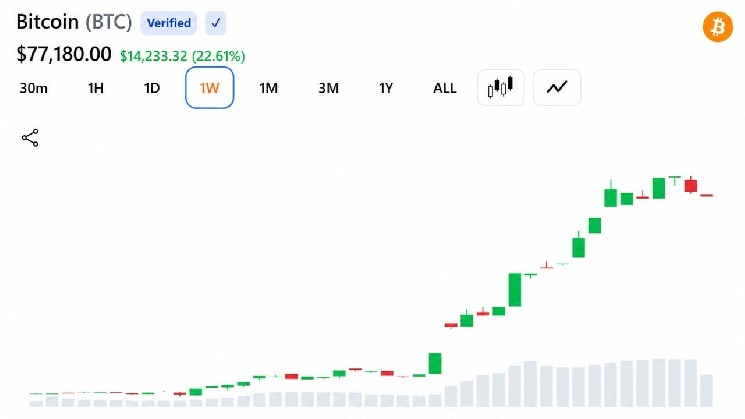
Bitcoin (BTC) is currently trading below its 2025 opening level of around $93,576, with slowing market momentum as the year ends. Analysts, including Fidelity’s Jurrien Timmer, suggest 2026 could be an “off year” for BTC, potentially seeing a decline to the $65,000–$75,000 range based on historical halving cycle patterns. Market demand remains weak, with recent activity reflecting internal wallet reshuffling rather than genuine accumulation. Regulatory uncertainty and macroeconomic shifts, including divergent central bank policies, have led to cautious investor behavior. Despite institutional growth through ETFs, Bitcoin may see increased correlation with traditional markets, potentially reducing its role as a pure inflation hedge.

Bitcoin [BTC] continues to trade below its 2025 opening level of approximately $93,576, while overall momentum across the cryptocurrency market has slowed as the year gradually draws to a close.

As the new year approaches, analysts are weighing the likelihood that Bitcoin may extend its sluggish performance, with the possibility that prices could decline further rather than recover.

Bitcoin winter still in play

Jurrien Timmer, Director of Global Macro at Fidelity Investments, one of the largest mutual fund firms in the United States, has suggested that 2026 could represent an “off year” for Bitcoin.

His assessment is based on BTC’s historical four-year halving cycle. According to Timmer, the asset could retreat to a support range between $65,000 and $75,000 next year if the cycle continues to play out as it has in the past.

The four-year halving cycle he referenced reflects a prolonged rally phase, roughly 145 months in this case, after a reduction in Bitcoin miners’ rewards.

Historically, this phase has often been followed by a broader market decline, as illustrated in long-term price charts.

Timmer noted that Bitcoin’s all-time high of $126,000 in October aligned “perfectly in both price and time” with this historical framework.

Fidelity Investments, through its FBTC U.S. spot Bitcoin exchange-traded fund (ETF), controls the second-largest Bitcoin ETF supply in the U.S. market.

FBTC holds Bitcoin valued at $16.73 billion, according to CoinGlass data, trailing only BlackRock’s IBIT ETF, which holds $65.57 billion.

If the bearish outlook holds, it could imply significant sell-offs from this cohort of Bitcoin investors. However, FBTC investors have so far shown bullish behavior this week, recording a net inflow of 179 BTC, equivalent to roughly $15.7 million.

Minimal demand in the market

The broader market has yet to witness sustained demand and has instead experienced more reshuffling than genuine accumulation capable of driving prices higher.

This dynamic helps explain why Bitcoin has remained range-bound between $85,000 and $93,000. The clarification follows a Glassnode analysis addressing reports that Bitcoin “sharks”, wallets holding between 100 and 1,000 BTC, had increased their holdings by 270,000 BTC.

Glassnode later clarified that the activity did not reflect true accumulation. Instead, it stemmed from large Bitcoin entities, those holding more than 100,000 BTC, undergoing internal wallet reshuffling.

A senior analyst at Glassnode explained:

“Wallet reshuffling occurs when large entities split or merge balances across addresses to manage custody, risk, or accounting, shifting coins between cohort size brackets without changing true ownership.”

While large-entity supply shifted by roughly 300,000 BTC, about 270,000 BTC appeared in shark wallets.

However, the data ultimately showed a net negative balance of around 30,000 BTC, suggesting that these investors likely sold Bitcoin rather than accumulated it.

Regulatory and global context

Investor caution has intensified as the year winds down, driven by a series of regulatory and macroeconomic developments across major economies.

In the United States, the policy outlook has turned more dovish following Federal Open Market Committee rate cuts. Similar moves have been observed in Europe. However, capital outflows linked to rising Japanese bond yields have weighed on Bitcoin sentiment.

These policy shifts and uncertainties have left markets undecided on whether to deploy capital or remain on the sidelines.

Ray Youssef, CEO of the crypto super app NoOnes, provided additional context on the current environment in an email. He said,

“Divergent signals from major sovereign banks, uneven global policy coordination, and mixed guidance on 2026 rate and liquidity pathways have prompted capital to adopt a wait-and-see approach as the year ends.”

Meanwhile, Jerome de Tychey, President of Ethereum France, told AMBCrypto that he expects crypto markets to increasingly align with traditional financial markets.

“With ETFs and institutional participation growing, crypto-specific corrections are less probable, but correlation with global markets will increase.”

That shift may reduce crypto’s standing as a pure inflation hedge. Still, proponents argue that the continued adoption of blockchain-based financial infrastructure remains a positive long-term development for the sector.


Final Thoughts

  • Fidelity’s Director of Global Macro has pointed to Bitcoin trailing its traditional four-year cycle, describing 2026 as a potential “off year” or winter period.
  • Bitcoin demand remains weak, with market activity driven more by internal rotations than by genuine new purchases.

Связанные с этим вопросы

QAccording to Fidelity's Jurrien Timmer, why could 2026 be an 'off year' for Bitcoin's price?

AHis assessment is based on BTC’s historical four-year halving cycle, which has historically been followed by a broader market decline after a prolonged rally phase.

QWhat price support range did Jurrien Timmer suggest Bitcoin could retreat to in 2026?

AHe suggested that the asset could retreat to a support range between $65,000 and $75,000.

QWhat did Glassnode analysis reveal about the reported accumulation by Bitcoin 'sharks' (wallets holding 100-1,000 BTC)?

AGlassnode clarified that the activity did not reflect true accumulation but was the result of large entities undergoing internal wallet reshuffling for custody, risk, or accounting purposes, with the data ultimately showing a net negative balance.

QWhat are some of the macroeconomic factors causing investor caution and a 'wait-and-see' approach according to the article?

AFactors include divergent signals from major sovereign banks, uneven global policy coordination, mixed guidance on 2026 rate and liquidity pathways, and capital outflows linked to rising Japanese bond yields.

QHow does Jerome de Tychey, President of Ethereum France, expect crypto markets to behave in relation to traditional financial markets?

AHe expects crypto markets to increasingly align with traditional financial markets, with crypto-specific corrections becoming less probable but correlation with global markets increasing due to growing ETF and institutional participation.

Похожее

Three Frameworks for Ordinary People to Achieve AI Capability Leap: Say Goodbye to the Dilemma of 'Repeating Inputs Every Day'

Summary: This article outlines three frameworks for maximizing AI efficiency, moving beyond basic prompt usage. 1. **Three-Layer Evolution**: Users progress from (1) **Prompt** (one-off instructions, reset each session), to (2) **Project** (context-aware within a specific project), to (3) **Skill** (permanent, auto-applied knowledge). Most users stagnate at the first layer, repeating the same instructions daily with no cumulative improvement. Skills transform the AI from a chat tool into a personalized work system. 2. **Transaction vs. Compound Interest Mindset**: Using prompts is a linear transaction—effort and output are 1:1, and stopping resets progress. Investing time in building Skills is compound interest; a small initial time investment pays continuous dividends, as each Skill permanently elevates the AI's baseline performance. 3. **Thin Harness, Fat Skills**: The system architecture should prioritize thick, well-defined Skills (90% of the value—containing processes, standards, and domain knowledge) and a thin "harness" (the minimal technical environment). Avoid over-engineering the toolchain while neglecting the AI's actual knowledge. Skills are permanent assets that automatically improve with model updates. The key takeaway: Identify tasks you repeat, encode them into Skills (using tools like Claude's Skill Creator), and shift focus from daily prompting to building a compounding, self-improving AI system.

marsbit16 мин. назад

Three Frameworks for Ordinary People to Achieve AI Capability Leap: Say Goodbye to the Dilemma of 'Repeating Inputs Every Day'

marsbit16 мин. назад

Торговля

Спот
Фьючерсы

Популярные статьи

Как купить S

Добро пожаловать на HTX.com! Мы сделали приобретение Sonic (S) простым и удобным. Следуйте нашему пошаговому руководству и отправляйтесь в свое крипто-путешествие.Шаг 1: Создайте аккаунт на HTXИспользуйте свой адрес электронной почты или номер телефона, чтобы зарегистрироваться и бесплатно создать аккаунт на HTX. Пройдите удобную регистрацию и откройте для себя весь функционал.Создать аккаунтШаг 2: Перейдите в Купить криптовалюту и выберите свой способ оплатыКредитная/Дебетовая Карта: Используйте свою карту Visa или Mastercard для мгновенной покупки Sonic (S).Баланс: Используйте средства с баланса вашего аккаунта HTX для простой торговли.Третьи Лица: Мы добавили популярные способы оплаты, такие как Google Pay и Apple Pay, для повышения удобства.P2P: Торгуйте напрямую с другими пользователями на HTX.Внебиржевая Торговля (OTC): Мы предлагаем индивидуальные услуги и конкурентоспособные обменные курсы для трейдеров.Шаг 3: Хранение Sonic (S)После приобретения вами Sonic (S) храните их в своем аккаунте на HTX. В качестве альтернативы вы можете отправить их куда-либо с помощью перевода в блокчейне или использовать для торговли с другими криптовалютами.Шаг 4: Торговля Sonic (S)С легкостью торгуйте Sonic (S) на спотовом рынке HTX. Просто зайдите в свой аккаунт, выберите торговую пару, совершайте сделки и следите за ними в режиме реального времени. Мы предлагаем удобный интерфейс как для начинающих, так и для опытных трейдеров.

1.2k просмотров всегоОпубликовано 2025.01.15Обновлено 2025.03.21

Как купить S

Sonic: Обновления под руководством Андре Кронье – новая звезда Layer-1 на фоне спада рынка

Он решает проблемы масштабируемости, совместимости между блокчейнами и стимулов для разработчиков с помощью технологических инноваций.

2.2k просмотров всегоОпубликовано 2025.04.09Обновлено 2025.04.09

Sonic: Обновления под руководством Андре Кронье – новая звезда Layer-1 на фоне спада рынка

HTX Learn: Пройдите обучение по "Sonic" и разделите 1000 USDT

HTX Learn — ваш проводник в мир перспективных проектов, и мы запускаем специальное мероприятие "Учитесь и Зарабатывайте", посвящённое этим проектам. Наше новое направление .

1.8k просмотров всегоОпубликовано 2025.04.10Обновлено 2025.04.10

HTX Learn: Пройдите обучение по "Sonic" и разделите 1000 USDT

Обсуждения

Добро пожаловать в Сообщество HTX. Здесь вы сможете быть в курсе последних новостей о развитии платформы и получить доступ к профессиональной аналитической информации о рынке. Мнения пользователей о цене на S (S) представлены ниже.

活动图片