Auto Research Era: 47 Tasks Without Standard Answers Become the Must-Test Leaderboard for Agent Capabilities

marsbitОпубликовано 2026-05-13Обновлено 2026-05-13

Введение

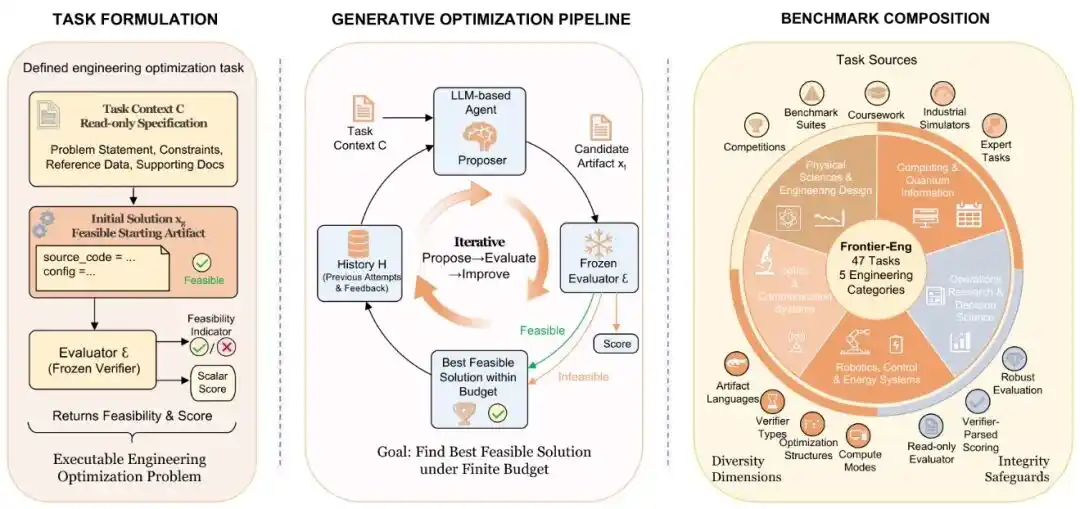
The article introduces Frontier-Eng Bench, a new benchmark for AI agents developed by Einsia AI's Navers lab. Unlike traditional tests with clear answers, this benchmark presents 47 complex, real-world engineering tasks—such as optimizing underwater robot stability, battery fast-charging protocols, or quantum circuit noise control—where there is no single correct solution, only continuous optimization towards a limit. It shifts AI evaluation from static knowledge retrieval to a dynamic "engineering closed-loop": the AI must propose solutions, run simulations, interpret errors, adjust parameters, and re-run experiments to iteratively improve performance. This process tests an agent's ability to learn and evolve through long-term feedback, much like a human engineer tackling trade-offs between power, safety, and performance. Key findings from the benchmark reveal two patterns: 1) Improvements follow a power-law decay, becoming harder and smaller as optimization progresses, and 2) While exploring multiple solution paths (breadth) helps, sustained depth in a single path is crucial for breakthrough innovations. The research suggests this marks a step toward "Auto Research," where AI systems can autonomously conduct continuous, tireless optimization in scientific and engineering domains. Humans would set high-level goals, while AI agents handle the iterative experimentation and refinement. This could fundamentally change research and development workflows.

If we throw AI into an engineering site with no standard answers, can it still survive?

For a long time, AI Agents have appeared omnipotent, but in reality, most are just 'flipping through memories' within known knowledge bases.

Yet the real engineering world is harsh: the stability of underwater robots, the lithium plating boundary of power batteries, the noise control of quantum circuits... These problems have no 'perfect score', only 'optimizations that inch closer to the limit'.

Recently, the Agent Benchmark released by Navers lab under Einsia AIFrontier-Eng Bench—officially tore off the label of AI being an 'exam-crammer'.
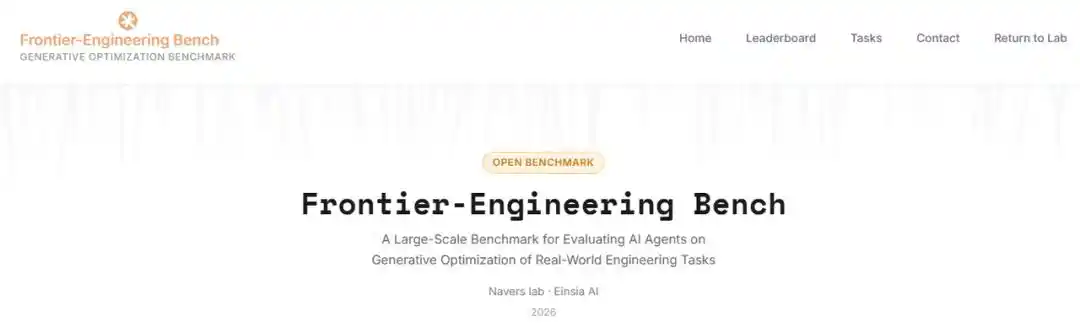
The research team didn't have AI grind through outdated coding problems. Instead, they gave it a complete 'engineering closed loop': propose a solution, connect to the simulator, digest errors, adjust parameters, and re-run.

Faced with 47 hardcore tasks spanning multiple disciplines, AI must behave like a senior engineer, seeking the optimal solution within the 'impossible triangle' of power consumption, safety, and performance.

This is not just a test suite; it's more like a rehearsal for Agent 'evolution'.

When AI begins to learn self-correction from feedback, the Auto Research era, where 'humans set goals and AI iterates non-stop 24/7', might be closer than we imagine.

AI Starts Tackling 'Hard Work'

Past large language models were more like super straight-A students.

You pose a question, it 'flips through memory' from massive training data, then pieces together an answer that seems plausible.

In this mode, the large model is essentially playing 'word chain', not solving real-world problems.

But the emergence of Frontier-Eng Bench has AI doing the work of 'engineering optimization'.

The process has shifted to letting AI first propose a solution, then connect to a simulator to run experiments, subsequently obtain feedback and errors, modify parameters and code, and continue re-running until performance improves further.

In this closed-loop system, AI's identity undergoes a qualitative change.

Want to make the underwater robot more stable? AI must start automatically tuning the controller.

Want to increase the speed of the robotic arm a bit more? AI has to run simulations itself.

To some extent, AIs have shed their purely semantic understanding role and begun to act like professional engineers, continuously optimizing based on real-world environmental feedback.
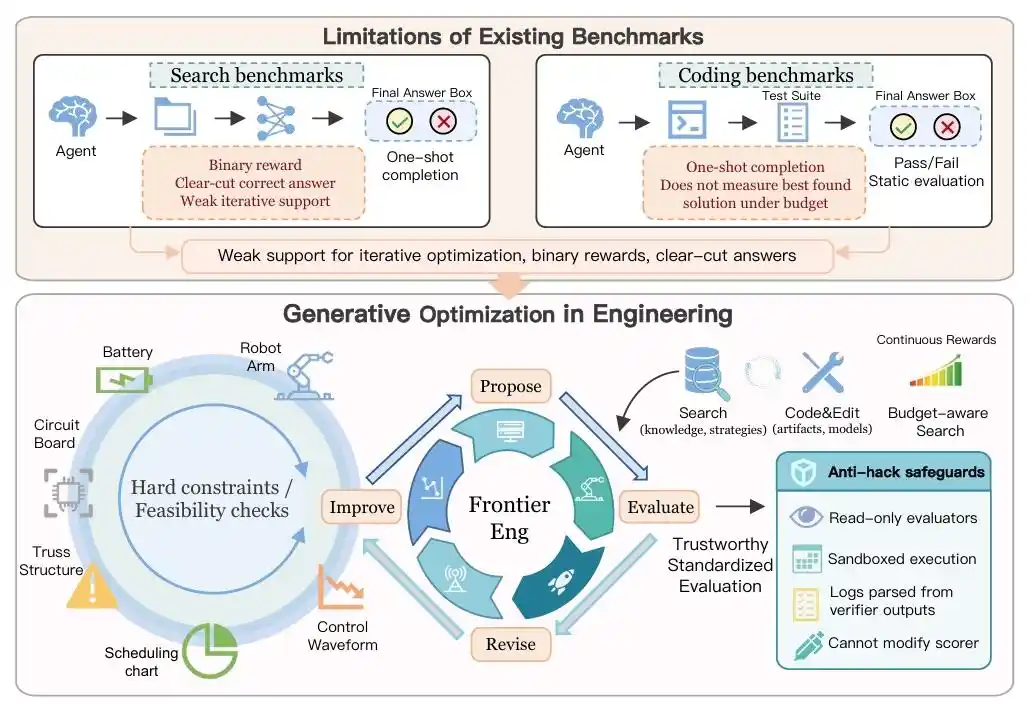
The most interesting aspect of Frontier-Eng Bench is: it doesn't test whether AI 'answered correctly', but rather whether AI can continuously become stronger.

Because real engineering optimization is never about multiple-choice questions; there is no single standard answer.

Take fast-charging batteries as an example: the goal sounds simple—charge as fast as possible, but reality isn't so easy.

Under strict constraints like temperature mustn't spike, voltage can't overspeed, battery life can't drop too fast, and lithium plating must be avoided, AI must precisely hit the balance point of performance.

This means AI cannot pass through by any clever 'test-cramming' tricks; it must demonstrate endurance for continuous evolution through long-term feedback.

Can AI perform long-term optimization in real environments?

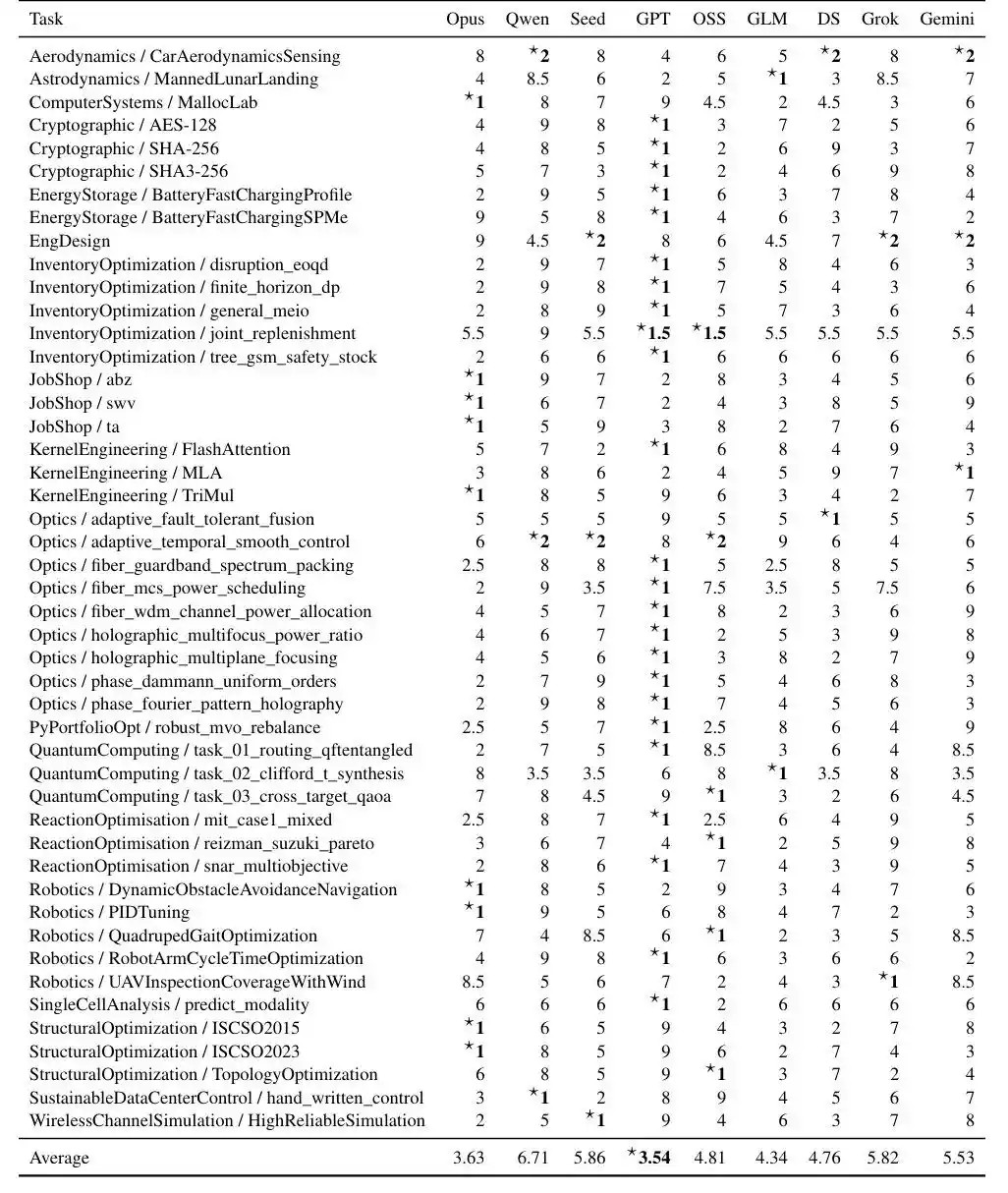
Looking at the results, GPT5.4 showed the most stable overall performance, but AIs still have a long way to go before 'solving' the Benchmark.
Auto Research Enters the 'Iterative Optimization' Era

The research team raised a very interesting point in their paper:

Truly advanced intelligence essentially relies on long-term feedback loops.

Just as AlphaGo could defeat Lee Sedol, it lay in the vast number of simulations and immediate feedback behind each decision, not the rote memorization of established game records.

True scientific research is the same: top labs don't rely on a single burst of inspiration, but continuously propose hypotheses, run experiments, examine results, modify plans, and try again.

Engineering optimization follows the same principle: anyone can create the first version; what's truly difficult is that final 1% performance leap.

The significance of Frontier-Eng Bench lies here: For the first time, it systematically begins testing AI's 'iterative optimization capability', and has summarized two nearly brutal laws of AI evolution.
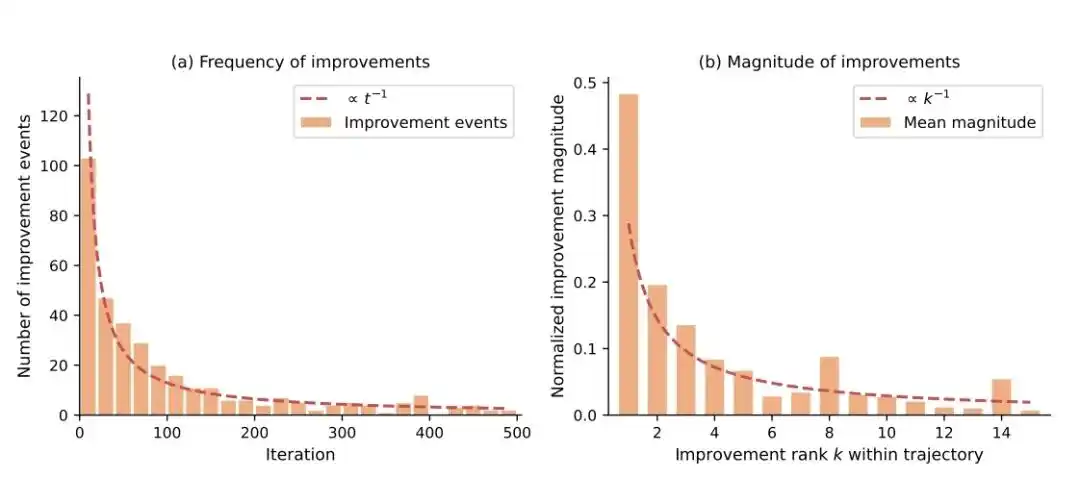
The first law is: The further you go, the harder the improvement.

This paper found that the frequency and magnitude of Agent improvements follow a power-law decay:

  • Improvement frequency ∝ 1 / iteration count
  • Improvement magnitude ∝ 1 / improvement count

Simply put: the fastest gains come in the first few rounds, and it gets progressively harder and smaller later on.

This closely resembles the real R&D process: the first version of AI can quickly eliminate many 'low-hanging fruits', but the closer it gets to the bottleneck, the more effort is required to squeeze out even a bit more performance.

Would it be more cost-effective to explore multiple paths in parallel for trial and error? The answer lies in the second law.
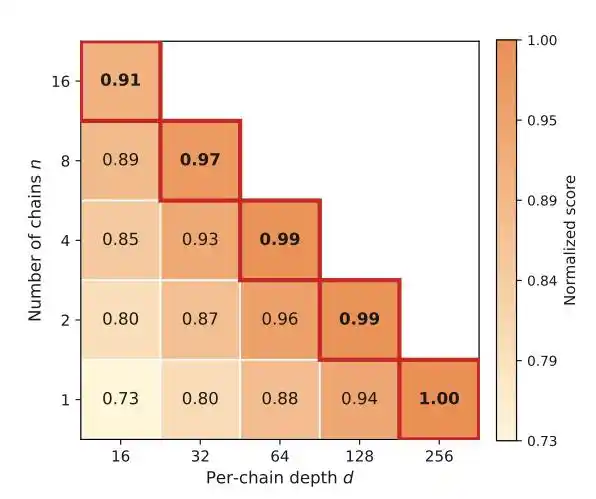
The second law: Breadth is useful, but depth is even more indispensable.

Running multiple parallel paths can avoid getting stuck, but with a fixed budget, each additional chain opened shallows the depth of exploration.

Many engineering breakthroughs require continuous accumulation and constant correction before structural leaps emerge; they can't be achieved simply by 'trying a few more times'.

This actually points towards the development direction of next-generation Agents: not models that 'output an answer once', but systems that can continuously iterate and self-evolve within long-term feedback loops.

AI Engineers Might Really Be Coming

The true far-reaching significance of this research lies in its preliminary outline of an AI system beginning to approach the real engineering cycle.
Imagine when AI connects to industrial software, simulation environments, CAD systems, chip design tools, scientific computing platforms...

A dramatic transformation in the modality of productivity is on the verge of emerging.

In future labs, a division of labor like this might appear:

Human researchers are responsible for proposing directions and goals.

For example, 'reduce this component's energy consumption by 30%', 'compress this model's forward pass GPU usage even lower', 'increase the stability of robot control a bit more', 'push the fidelity of this quantum circuit closer to the limit', etc.

And AI is responsible for 'grinding the path'. They focus on these goals, continuously optimizing.

For example, automatically running simulations and experiments, automatically reading feedback from verifiers and simulators, then continuing to modify and optimize, iterating non-stop 24/7.

This evolutionary logic frees AI from the identity of an 'assistive tool', allowing it to begin solving complex system problems like a real engineering team—and tirelessly at that.

And the issues revealed by the Frontier-Eng Benchmark are actually very direct:

When AI begins to learn 'long-term optimization', how far is it from true engineering intelligence?

Paper Title: Frontier-Eng: Benchmarking Self-Evolving Agents on Real-World Engineering Tasks with Generative Optimization

Project Homepage: https://lab.einsia.ai/frontier-eng/

Arxiv: https://arxiv.org/abs/2604.12290

GitHub repo: https://github.com/EinsiaLab/Frontier-Engineering

This article is from the WeChat public account "Quantum Bit", author: Yun Zhong

Трендовые криптовалюты

Связанные с этим вопросы

QWhat is the main purpose of the Frontier-Eng Benchmark released by Einsteina AI's Navers lab?

AThe main purpose of the Frontier-Eng Benchmark is to move beyond testing AI's ability to recall known information. It systematically tests AI agents' capability for 'iterative optimization' on 47 real-world, open-ended engineering tasks without standard answers, evaluating if they can continuously improve performance through a feedback loop involving simulation, error analysis, and parameter adjustment.

QHow does the AI's role change in the Frontier-Eng Benchmark testing process compared to traditional language models?

AIn the Frontier-Eng Benchmark, the AI transitions from acting as a 'super student' that retrieves and assembles answers from training data to performing 'engineering optimization.' Its role becomes akin to a professional engineer: it proposes solutions, runs simulations, analyzes feedback and errors, modifies parameters/code, and reruns experiments in a continuous loop to seek optimal performance under complex constraints.

QWhat are the two key 'AI evolution laws' discovered through the Frontier-Eng Benchmark regarding iterative optimization?

AThe two key laws are: 1) Improvements become progressively harder and smaller (showing a power-law decay: Improvement frequency ∝ 1/iteration count, Improvement magnitude ∝ 1/improvement count). 2) While exploring multiple parallel paths (breadth) is useful, sustained depth in a single optimization path is more critical for achieving structural breakthroughs, as fixed budgets force a trade-off between breadth and depth.

QWhat future work paradigm does the article suggest might emerge from the development of self-evolving AI agents?

AThe article suggests a future 'Auto Research' paradigm where human researchers define the goals and direction (e.g., 'reduce component energy consumption by 30%'), and AI agents take on the role of 'grinding the path.' They would work autonomously and tirelessly—running simulations, interpreting feedback from verifiers and simulators, and iteratively optimizing—24/7 to approach performance limits.

QAccording to the article, what fundamental shift in AI capability does the Frontier-Eng Benchmark represent?

AThe Frontier-Eng Benchmark represents a fundamental shift from evaluating AI's ability to find predetermined 'correct answers' to testing its capacity for 'self-evolution' through long-term feedback loops. It moves the focus to whether AI can demonstrate sustained learning and improvement in complex, real-world scenarios with no single correct answer, pushing AI closer to genuine engineering intelligence.

Похожее

Как распознать криптомошенничество или rug pull?

Представьте, что вы нашли многообещающий новый токен с тысячами держателей, растущей ценой и активным сообществом. Все выглядит легитимно, пока ликвидность внезапно не исчезает. Так начинается «скам» (rug pull). Разработчики сначала создают видимость надежности через заблокированную ликвидность и отказ от прав на контракт. Затем они раскручивают токен в соцсетях и нагнетают ажиотаж. Чем сильнее сообщество, тем легче привлечь новый капитал. Весь процесс от раскрутки до вывода средств часто занимает 48-72 часа. «Жесткие» скамы мгновенно выводят ликвидность, а «мягкие» постепенно снижают стоимость через продажи инсайдеров или отказ от развития проекта. Ключевые признаки скама: 1. **Высокая концентрация токенов:** если 5-10 кошельков контролируют более 30% предложения. 2. **Подозрительный смарт-контракт:** неверифицированный код, скрытые функции (например, для дополнительной эмиссии), возможность обновления контракта разработчиком. 3. **Рыночное поведение:** быстрый рост цены на основе рекламы от инфлюенсеров, низкий органический объем торгов, снижение числа новых держателей перед крупными переводами с кошельков разработчиков. Основные виды мошеннических схем: * **Ловушки (Honeypots):** Позволяют покупать, но блокируют или ограничивают продажу (98 442 случая). * **Скрытая эмиссия (Hidden mint):** Позволяет разработчикам напечатать новые токены после запуска, размывая доли держателей (60 985 случаев). * **Фальшивый отказ от прав (Fake ownership renunciation):** Заявления о децентрализации ложны, контроль сохранен (48 974 случая). Вывод: чтобы избежать скама, важно анализировать не только цену, но и сходимость нескольких факторов: структуру владения токенами, код смарт-контракта и модели торговли. Прозрачные условия вестинга, верифицированный код и независимый аудит значительно снижают риски.

ambcrypto31 мин. назад

Как распознать криптомошенничество или rug pull?

ambcrypto31 мин. назад

Открытый интерес по XRP достигает $2,6 млрд на фоне роста спроса на деривативы

Открытый интерес по фьючерсам XRP достиг 2,6 млрд долларов, что означает рост более чем на 10% за 24 часа, согласно данным CoinGlass. Это ставит XRP на четвертое место среди крупнейших криптоактивов по данному показателю. Рост открытого интереса свидетельствует об увеличении активности на деривативном рынке, но не указывает однозначно на бычьи или медвежьи настроения, а также не подтверждает рост спроса на спотовом рынке. Активность может быть вызвана долгосрочными или короткими позициями, хеджированием или спекуляциями. Ключевым вопросом является то, поддержит ли этот рост открытого интереса более сильное движение цены или создаст дополнительные риски волатильности. Для подтверждения устойчивости тренда необходимы сопутствующие сигналы, такие как рост объемов спотовой торговли и устойчивость ключевых ценовых уровней. В противном случае высокий уровень открытого интереса может привести к усилению давления при ликвидации позиций.

bitcoinist1 ч. назад

Открытый интерес по XRP достигает $2,6 млрд на фоне роста спроса на деривативы

bitcoinist1 ч. назад

Прогноз цены Биткоина на 2030 год: вот что нужно знать о следующем бычьем рынке

Недавний анализ AMBCrypto указывает на трудности майнеров Bitcoin (BTC), что соответствует условиям исторических медвежьих рынков. Снижение цены BTC наблюдается после падения 10 октября 2025 года, и точное дно рынка пока не определено. Ключевым фактором для разворота тренда станут чистые притоки стейблкоинов на биржи, которые выступают "топливом" для бычьего рынка. В настоящее время этот показатель отрицателен. Основатель Alphractal, Жоао Ведсон, на основе анализа исторических паттернов предполагает, что дно цикла в районе $41,5–45 тыс. может быть достигнуто в первой половине октября 2026 года. Что касается прогноза цены Bitcoin к 2030 году, технический анализ с использованием уровней Фибоначчи предлагает возможный сценарий. После потенциальной коррекции до области около $39,1 тыс. (близко к целевой зоне Ведсона) возможно возобновление долгосрочного восходящего тренда. Этот тренд может преодолеть уровень расширения Фибоначчи 61.8% на отметке $152,3 тыс. Итоговый пик следующего цикла, согласно такому анализу, может достигнуть $200–220 тыс. к 2030 году, после чего Bitcoin, вероятно, снова вступит в медвежью фазу. Отмечается, что текущий рыночный цикл может оказаться длиннее предыдущих. **Краткий итог:** * По фрактальному анализу, дно рынка Bitcoin возможно в октябре 2026 года. * Для роста к целям в $200+ тыс. к 2030 году необходимы значительные притоки стейблкоинов на биржи.

ambcrypto2 ч. назад

Прогноз цены Биткоина на 2030 год: вот что нужно знать о следующем бычьем рынке

ambcrypto2 ч. назад

Рыночный пульс BTC: 30-я неделя

После восстановления с уровня ниже 58 000 долларов и тестирования 65 000 долларов, биткоин перешёл в фазу консолидации около 64 500 долларов. Восходящий импульс ослаб, объёмы спот-торгов остаются низкими. Волатильность снизилась, что указывает на уменьшение премии за риск на деривативных рынках. Спекулятивный аппетит постепенно возвращается: открытый интерес на фьючерсах и опционах вырос, поток на перпетуальных контрактах сместился к чистым покупкам, а спрос на защиту от падения ослаб. Восстановление происходит осторожно, без агрессивного использования кредитного плеча. Активность в блокчейне стабилизируется. Институциональное давление на продажу ослабевает, о чём свидетельствуют улучшившиеся потоки спот-ETF в США и приближение средних цен покупки ETF к точке безубыточности. Рынок выглядит более сбалансированным: долгосрочные инвесторы обеспечивают поддержку, а спекулятивная активность остаётся сдержанной. Тем не менее, растущая доля краткосрочного капитала, чувствительного к цене, повышает вероятность резких всплесков волатильности, делая рынок устойчивым, но более восприимчивым к сдвигам в импульсе и давлению со стороны продавцов.

insights.glassnode3 ч. назад

Рыночный пульс BTC: 30-я неделя

insights.glassnode3 ч. назад

Спрос на спотовом рынке биткойна ослабевает, несмотря на приток средств в ETF, так как новый капитал не решается зайти

Несмотря на положительный приток средств в биткоин-ETF с 14 июля, этого оказалось недостаточно для уверенного преодоления ключевой зоны сопротивления в районе $65 тыс. Аналитики отмечают, что спрос на спотовом рынке BTC ослабевает, а метрика новых инвесторов остаётся около годовых минимумов, сигнализируя об отсутствии значительного притока свежего капитала. Хотя активное закрытие коротких позиций на деривативном рынке и снижение давления на продажу со стороны краткосрочных держателей помогли стабилизировать цену, показатель средней прибыльности краткосрочных инвесторов (STH SOPR) остаётся ниже 1.0. Это означает, что рынок ещё не перешёл в устойчивое бычье состояние, а текущая ситуация скорее указывает на паузу и консолидацию, чем на начало полномасштабного разворота вверх.

ambcrypto5 ч. назад

Спрос на спотовом рынке биткойна ослабевает, несмотря на приток средств в ETF, так как новый капитал не решается зайти

ambcrypto5 ч. назад

Торговля

Спот

Популярные статьи

Как купить ERA

Добро пожаловать на HTX.com! Мы сделали приобретение Caldera (ERA) простым и удобным. Следуйте нашему пошаговому руководству и отправляйтесь в свое крипто-путешествие.Шаг 1: Создайте аккаунт на HTXИспользуйте свой адрес электронной почты или номер телефона, чтобы зарегистрироваться и бесплатно создать аккаунт на HTX. Пройдите удобную регистрацию и откройте для себя весь функционал.Создать аккаунтШаг 2: Перейдите в Купить криптовалюту и выберите свой способ оплатыКредитная/Дебетовая Карта: Используйте свою карту Visa или Mastercard для мгновенной покупки Caldera (ERA).Баланс: Используйте средства с баланса вашего аккаунта HTX для простой торговли.Третьи Лица: Мы добавили популярные способы оплаты, такие как Google Pay и Apple Pay, для повышения удобства.P2P: Торгуйте напрямую с другими пользователями на HTX.Внебиржевая Торговля (OTC): Мы предлагаем индивидуальные услуги и конкурентоспособные обменные курсы для трейдеров.Шаг 3: Хранение Caldera (ERA)После приобретения вами Caldera (ERA) храните их в своем аккаунте на HTX. В качестве альтернативы вы можете отправить их куда-либо с помощью перевода в блокчейне или использовать для торговли с другими криптовалютами.Шаг 4: Торговля Caldera (ERA)С легкостью торгуйте Caldera (ERA) на спотовом рынке HTX. Просто зайдите в свой аккаунт, выберите торговую пару, совершайте сделки и следите за ними в режиме реального времени. Мы предлагаем удобный интерфейс как для начинающих, так и для опытных трейдеров.

803 просмотров всегоОпубликовано 2025.07.17Обновлено 2026.06.02

Как купить ERA

Обсуждения

Добро пожаловать в Сообщество HTX. Здесь вы сможете быть в курсе последних новостей о развитии платформы и получить доступ к профессиональной аналитической информации о рынке. Мнения пользователей о цене на ERA (ERA) представлены ниже.

活动图片