Оригинальная ссылка: «Big Ideas 2026»
Компиляция оригинала: CryptoLeo(@LeoAndCrypto)

Недавно компания Кэти Вуд Ark Invest опубликовала ежегодный отчет «Большие идеи 2026». В этом отчете основное внимание уделяется ИИ, робототехнике, блокчейну, накоплению энергии и мультиомике (метод исследования и стратегия в области биологии), которые ARK называет пятью технологическими платформами. Пять платформ будут взаимозависимы и катализировать, способствуя ускоренному слиянию технологий и создавая более новые функции платформ. В отчете говорится, что мир вступает в беспрецедентный цикл технологических инвестиций, инновации на каждой технологической платформе будут иметь более глубокое макроэкономическое влияние, и каждая технологическая платформа будет обеспечивать структурный импульс для глобального роста.
В отчете также кратко упоминается квантовые вычисления, например, проблема взлома биткоина квантовыми вычислениями, которая всех беспокоит. ARK заявляет, что производительность квантовых вычислений оставалась относительно плоской, несмотря на значительные инвестиции в их разработку. Google всего лишь удвоил количество кубитов за более чем четыре года. Даже если их производительность и стоимость значительно улучшатся, достигнув скорости закона Мура, квантовые вычисления не смогут использоваться для шифрования и дешифрования до 2040-х годов.
Odaily скомпилировал и организовал содержание, связанное с криптовалютами в «Больших идеях 2026», Наслаждайтесь~
1. Блокчейн и Биткоин
Как только блокчейн достигнет массового принятия, все средства и контракты будут перенесены в сеть, эти блокчейны смогут проверять цифровую редкость и доказательство права собственности. Финансовая экосистема, вероятно, будет переконфигурирована, чтобы адаптироваться к появлению криптовалют (включая соединение традиционных финансов и стейблкоинов) и смарт-контрактов. Эти технологии должны повысить прозрачность, уменьшить влияние капитала и регуляторного контроля, а также снизить стоимость исполнения контрактов.
По мере того как больше активов становятся похожими на деньги, а предприятия и потребители адаптируются к новой финансовой инфраструктуре, цифровые кошельки становятся все более необходимыми. А поскольку эти кошельки эволюционируют в агентов покупки на основе ИИ, они могут превратиться в платформы дистрибуции цифровых услуг.
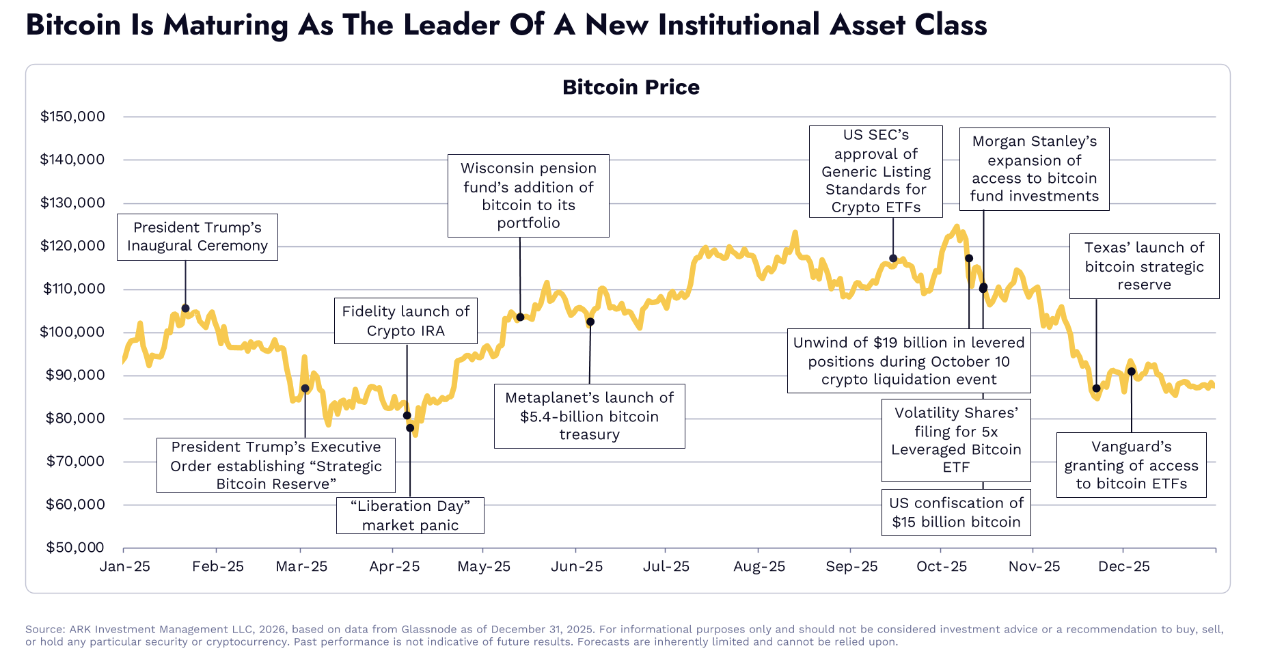
На рисунке выше показан график цен биткоина за весь 2025 год и временные узлы крупных событий, связанных с биткоином. От инаугурационной речи Трампа в начале 2025 года до стратегического резерва биткоина и до контакта Vanguard с Bitcoin ETF в конце года.
Биткоин созревает как новый класс активов, американские Bitcoin ETF и публичные компании владеют 12% от общего предложения биткоина. В 2025 году остатки Bitcoin ETF выросли на 19,7%, с примерно 1,12 миллиона до примерно 1,29 миллиона, в то время как holdings биткоина публичными компаниями выросли на 73%, с примерно 598 000 до примерно 1,09 миллиона. Доля Bitcoin ETF и биткоина, принадлежащего публичным компаниям, в обращении увеличилась с 8,7% до 12%.
Годовая доходность биткоина с поправкой на риск (коэффициент Шарпа) со временем превысила средние показатели рынка криптовалют. В течение большей части 2025 года доходность биткоина с поправкой на риск превышала большинство других криптовалют с большой рыночной капитализацией, а его средний годовой коэффициент Шарпа с последнего минимума цикла (ноябрь 2022 года), начала 2024 года и с начала 2025 года также был выше, чем у ETH, SOL и в среднем у остальных 9 токенов из топ-10 по версии CoinDesk.
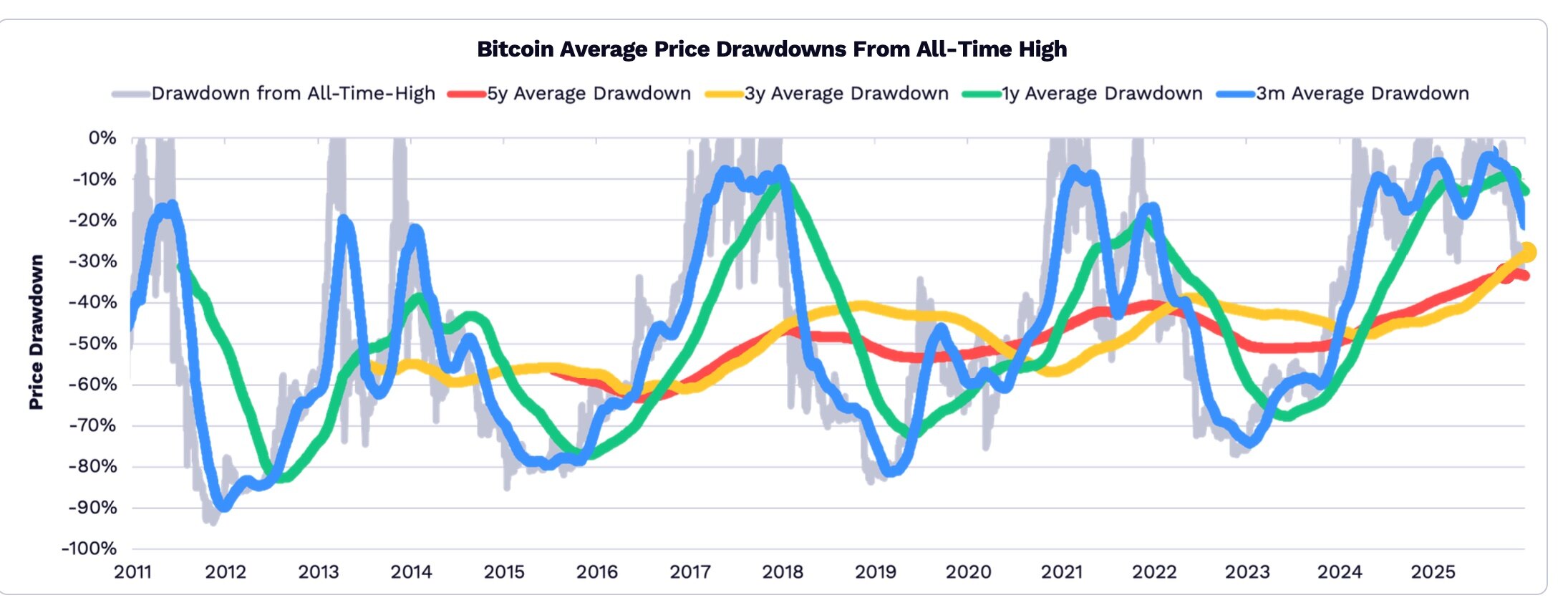
В 2025 году падение цены биткоина относительно его исторических максимумов сократилось, а его волатильность снизилась по мере того, как биткоин все больше выполняет роль убежища. С точки зрения временных промежутков в 5 лет, 3 года, 1 год и 3 месяца, откат биткоина в 2025 году был незначительным по сравнению с историческими масштабами откатов.

По мере того как цена золота стабильно растет, а скорость принятия стейблкоинов ускоряется, в оценочной модели ARK для биткоина на 2030 год изменились два данных points: общий TAM цифрового золота, после роста рыночной капитализации золота на 64,5% в 2025 году его потенциальный市场规模 вырос на 37%; из-за быстрого принятия стейблкоинов в развивающихся странах, проникновение в его характеристику убежища для развивающихся рынков снизилось на 80%.
Справочное чтение: «Ark Invest публикует оценочную модель биткоина: BTC на старте 500 000 долларов за штуку к 2030 году»
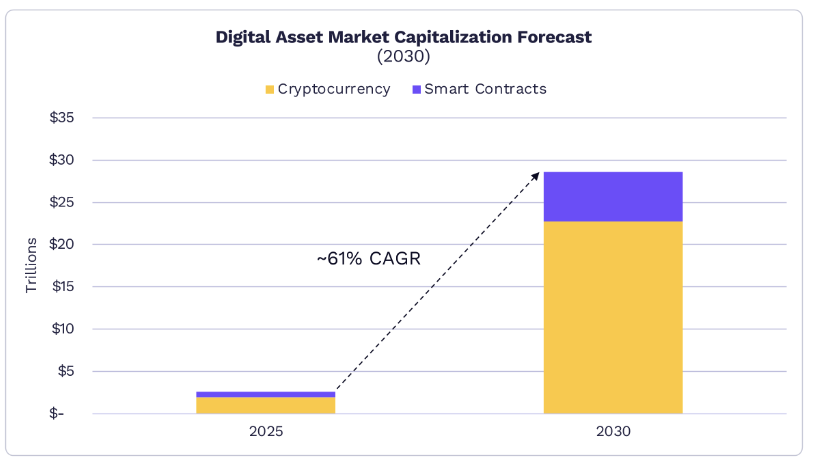
К 2030 году рыночная стоимость цифровых активов может достичь 28 триллионов долларов, рынок смарт-контрактов и чисто цифровых валют может расти с годовым темпом роста около 61% до 2030 года, достигнув 28 триллионов долларов. ARK считает, что биткоин может занять 70% этого рынка, а остальную часть будут主导ствовать ETH, Solana и другие.
Данные показывают, что Ethereum по-прежнему является блокчейном выбора для ончейн-игроков, активы на Ethereum теперь превышают 400 миллиардов долларов. Среди восьми основных блокчейнов на семи блокчейнах стейблкоины и топ-50 токенов занимают около 90% рыночной стоимости. На блокчейнах, отличных от Solana, доля рынка Meme-монет составляет около 3% или меньше. А на Solana доля рынка Meme-монет составляет около 21%.
Согласно прогнозам ARK, биткоин, скорее всего, будет доминировать в рыночной капитализации криптовалют, growing с совокупным годовым темпом роста (CAGR) около 63% в течение следующих пяти лет, с почти 2 триллионов долларов до 16 триллионов долларов к 2030 году.
К 2030 году рыночный капитал смарт-контрактов может расти на 54% в год, достигнув около 6 триллионов долларов, они генерируют около 192 миллиардов долларов годового дохода при средней ставке 0,75%.
Два или три платформы смарт-контрактов L1 должны занимать большую долю рынка, их рыночная капитализация, полученная от денежной премии (свойства сохранения стоимости и резервного актива), превысит дисконтированный денежный поток.
2. Токенизированные активы
Благодаря «GENIUS Act» финансовые учреждения пересматривают свои стратегии в отношении стейблкоинов и токенизации. По мере прояснения положений «GENIUS Act» активность стейблкоинов резко возросла до исторического максимума. Многочисленные компании и учреждения запустили свои собственные стейблкоины, а BlackRock раскрыла, что планирует внутреннюю платформу токенизации. Крупные предприятия и финтех-компании, такие как Tether, Circle и Stripe, также запустили или поддерживают блокчейны Layer 1, оптимизированные для стейблкоинов.
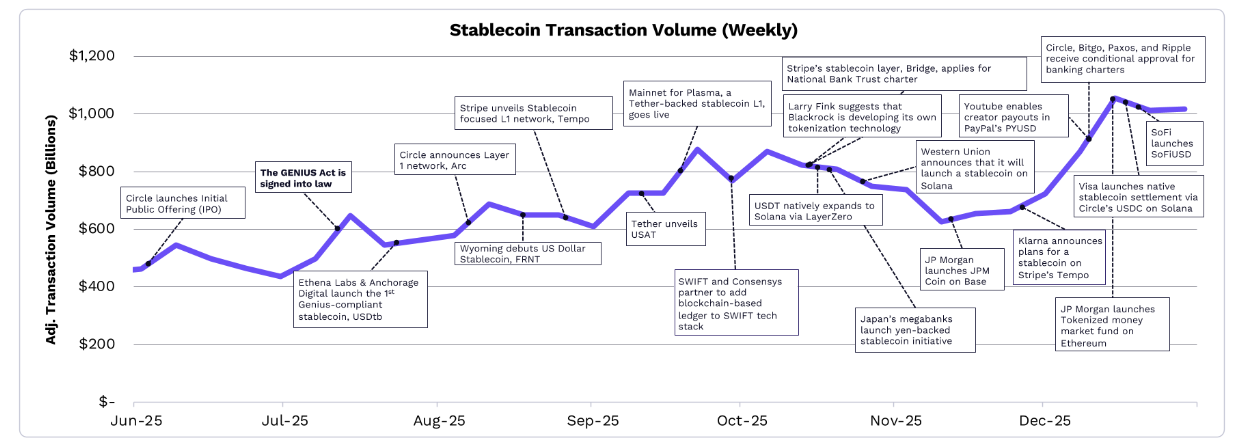
В декабре 2025 года объем транзакций со стейблкоинами достиг 3,5 триллионов долларов, что намного превышает большинство традиционных платежных систем:
В декабре 2025 года скорректированный объем транзакций со стейблкоинами (30-дневное скользящее среднее) составил 3,5 триллиона долларов, что в 2,3 раза превышает объемы Visa, PayPal и общий объем денежных переводов.
Стейблкоин USDC от Circle доминирует в скорректированном объеме транзакций с долей около 60%, затем следует USDT от Tether с около 35%.
В 2025 году предложение стейблкоинов выросло примерно на 50%, с 210 миллиардов долларов до 307 миллиардов долларов, причем USDT и USDC составляют 61% и 25% соответственно.
Sky Protocol — это эмитент стейблкоинов с рыночной капитализацией более 100 миллиардов долларов на конец 2025 года. Также值得注意的是, рыночная капитализация PYUSD от PayPal выросла более чем в шесть раз, достигнув 3,4 миллиарда долларов.
Под руководством казначейских облигаций США и товаров, рыночный размер токенизированных активов в 2025 году вырос в три раза, достигнув 19 миллиардов долларов
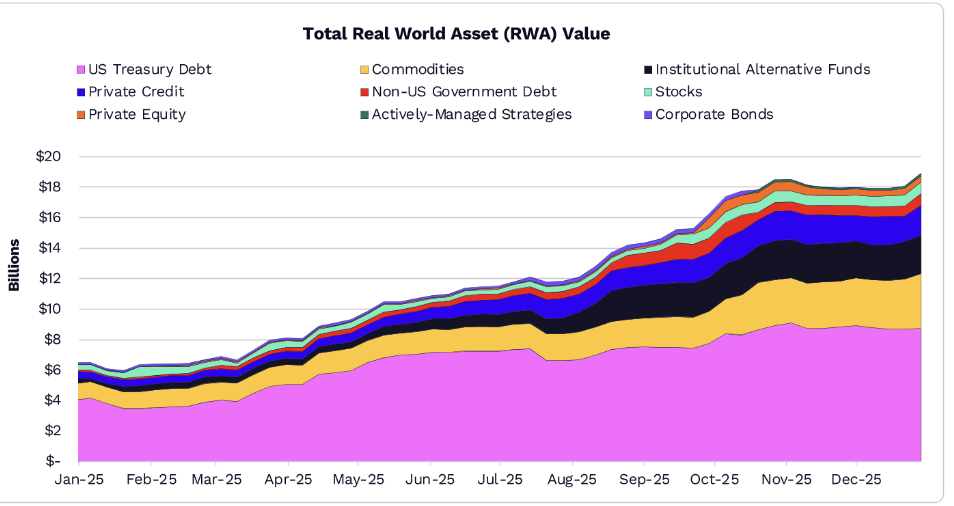
В 2025 году рыночная стоимость токенизированных реальных мировых активов (RWA) выросла на 208%, достигнув 18,9 миллиарда долларов.
Фонд денежного рынка BUIDL от BlackRock объемом 1,7 миллиарда долларов является одним из крупнейших продуктов, занимая 20% от 9 миллиардов долларов казначейских облигаций США;
Токенизированные золотые продукты Tether (XAUT) и Paxos (PAXG) лидируют в росте токенизированных товаров, увеличившись до 1,8 миллиарда долларов и 1,6 миллиарда долларов соответственно, в сумме составляя 83%;
Сумма токенизации публичных акций приблизилась к 750 миллионам долларов;
RWA может стать одной из самых быстрорастущих категорий, и хотя децентрализованные активы занимают большую часть глобальной стоимости, активы вне цепи остаются самой большой возможностью роста для принятия в цепи.
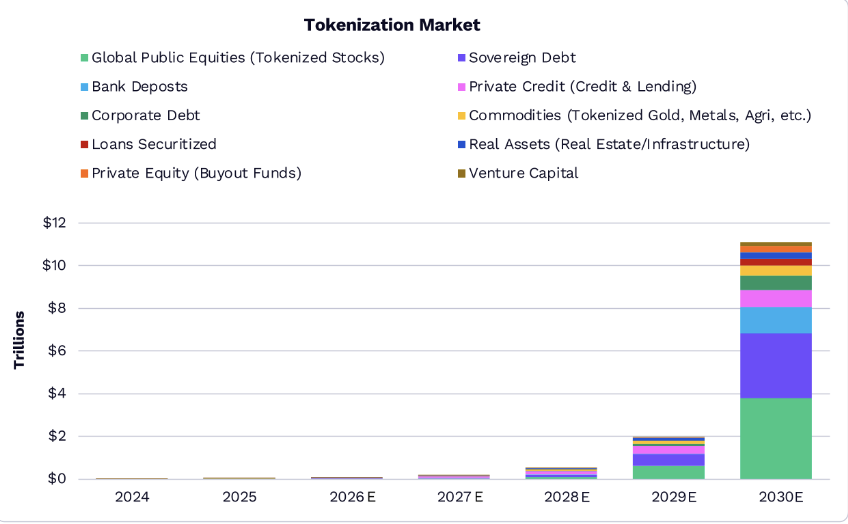
К 2030 году глобальный рыночный размер токенизированных активов может превысить 11 триллионов долларов.
К 2030 году токенизированные активы могут вырасти с 19 миллиардов долларов до 11 триллионов долларов, что составит около 1,38% глобальных финансовых активов.
Хотя суверенный долг в настоящее время является основной областью токенизации, в течение следующих 5 лет банковские депозиты и глобальные публичные акции, вероятно, будут представлены в большей доле в цепи. По мере развития нормативной ясности и инфраструктуры институционального уровня, токенизация, вероятно, получит широкое распространение.
Традиционные компании расширяют свое присутствие в цепи, запуская собственную инфраструктуру. Например: Circle (Arc), Coinbase (Base, cbBTC), Kraken (Ink), OKX (X Layer), Robinhood (Robinhood Chain) и Stripe (Tempo) запускают сети L1/L2 под своими брендами для поддержки собственных продуктов, таких как кредиты под залог биткоина, токенизированные акции и ETF, а также платежные каналы на основе стейблкоинов.
3. DeFi-приложения
Получение стоимости цифровых активов переместилось от сети к приложениям, сети становятся коммунальной основой, переставая быть экономическим слоем, а перенося пользовательскую экономику и прибыль на уровень приложений. Под руководством Hyperliquid, Pump.fun и Pancakeswap, общий доход DeFi-приложений в 2025 году достиг исторического максимума в около 3,8 миллиарда долларов.
В 2025 году одна пятая дохода приложений была получена в январе, это самый высокий ежемесячный доход за всю историю. Сегодня 70 приложений и протоколов имеют ежемесячный регулярный доход (MRR) более 1 миллиона долларов каждый.
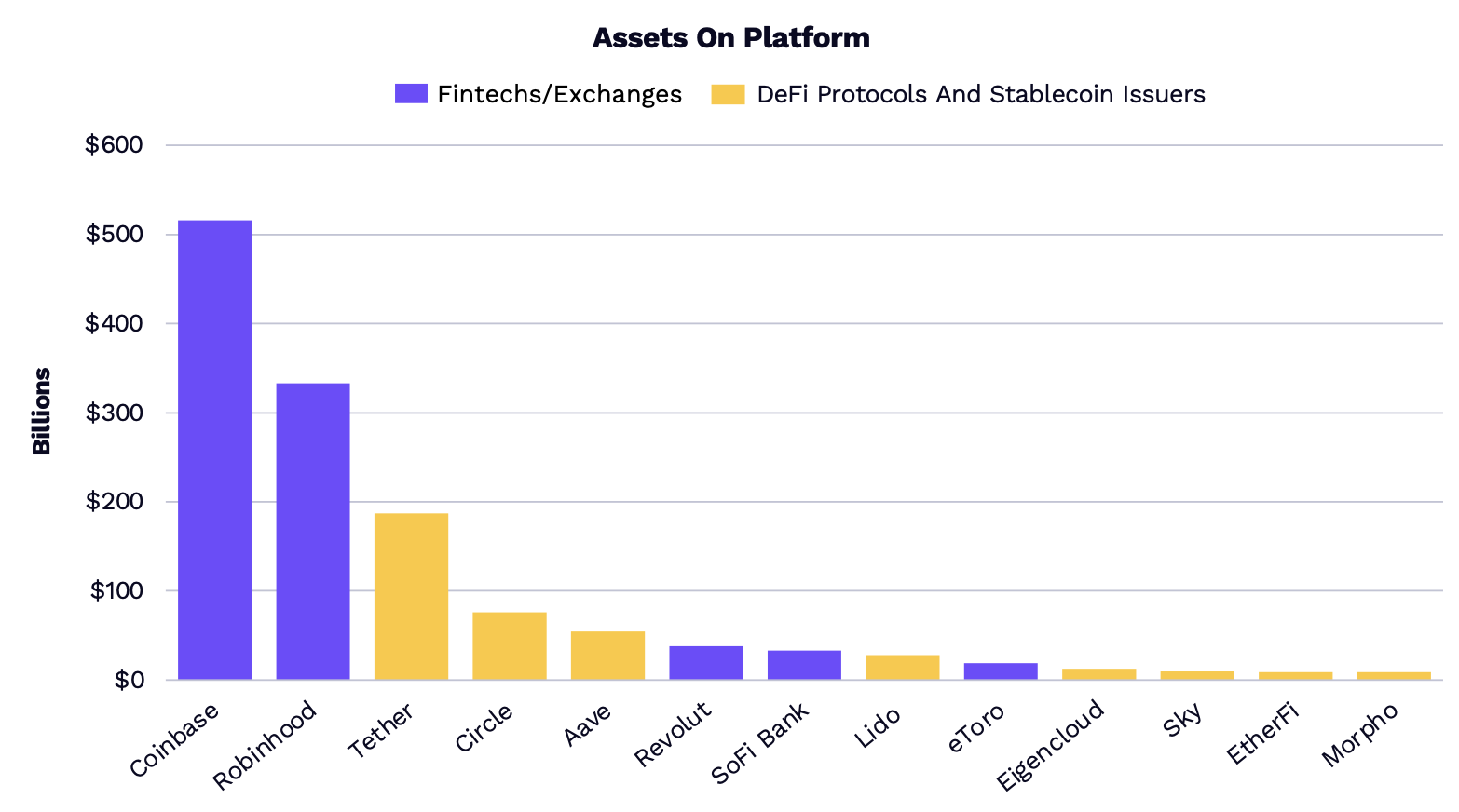
Активы DeFi и эмитентов стейблкоинов догоняют активы многих финтех-компаний. Разница в активах внутри платформы между традиционными финтех-платформами и нативными криптоплатформами сокращается, что указывает на постепенную конвергенцию традиционной инфраструктуры и инфраструктуры в цепи. Такие DeFi-протоколы, как платформы ликвидноого стейкинга или кредитования, привлекают институциональный капитал и быстро масштабируются.
У каждой из топ-50 DeFi-платформ TVL превышает 1 миллиард долларов, а у каждой из топ-12 платформ TVL превышает 5 миллиардов долларов. В число глобальных компаний с наибольшей доходностью входят Hyperliquid, Tether и pump.fun.
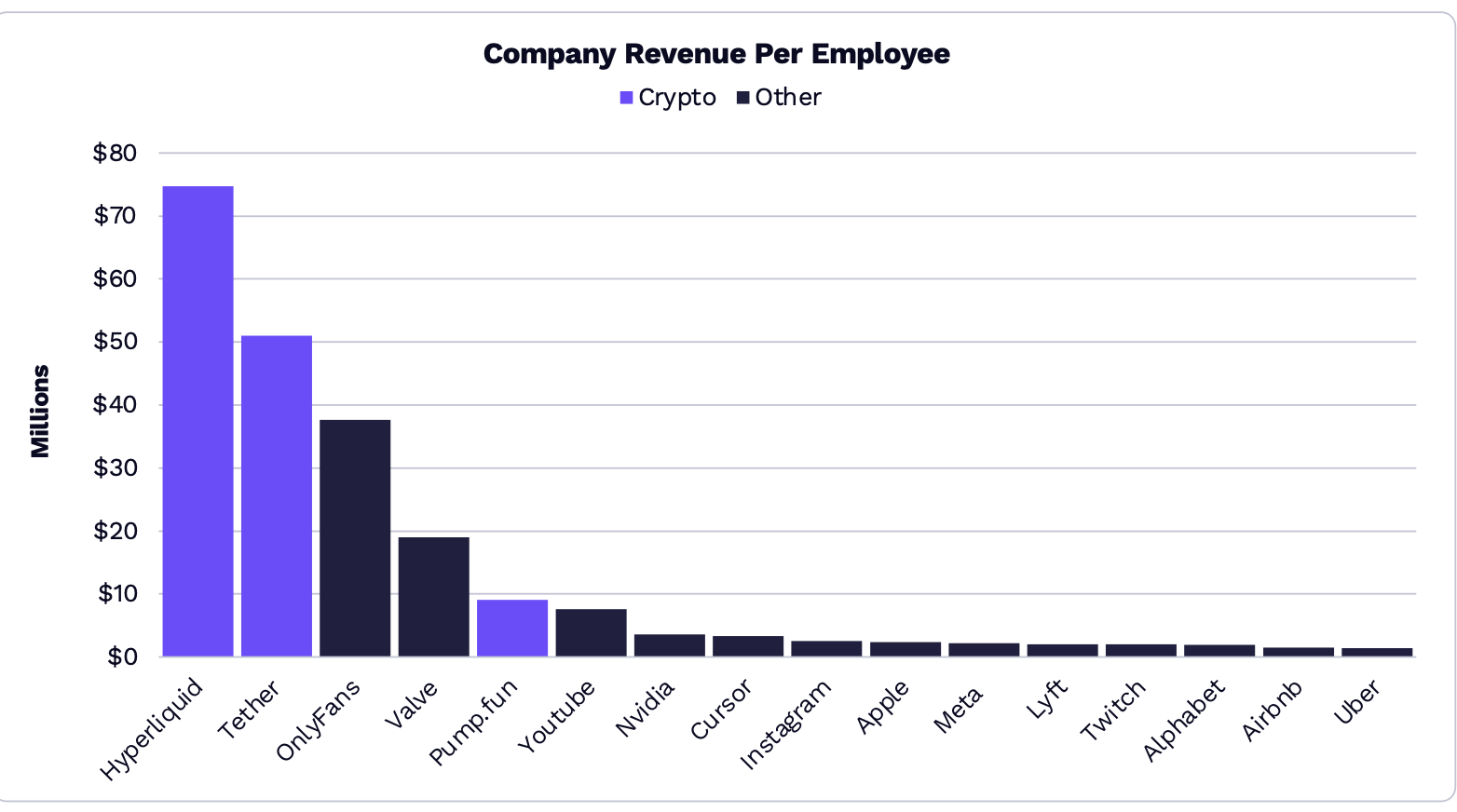
В 2025 году Hyperliquid при числе сотрудников не более 15 человек получил годовой доход более 800 миллионов долларов. Перпетуальные контракты, стейблкоины и Meme-монеты как ончейн-вертикали имеют четкое соответствие продукта рынку и способны привлекать пользователей и капитал в large scale.
Ончейн-бизнесы и протоколы переопределяют производительность, двузначное число сотрудников推动ет доход и прибыльность мирового класса.
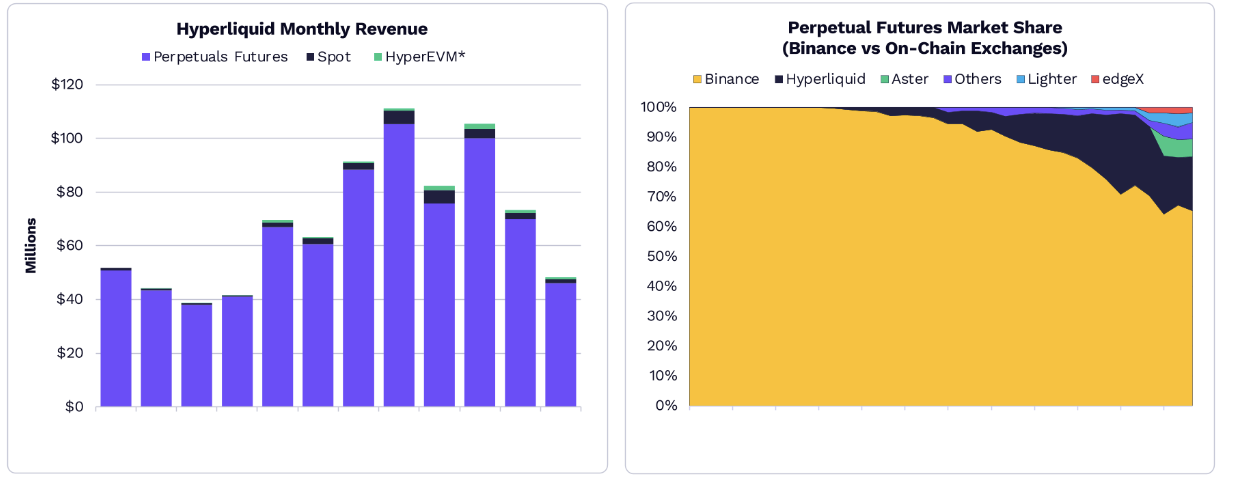
На рынке перпетуальных контрактов DeFi-деривативы под руководством Hyperliquid отбирают долю у Binance.
Layer 1 эволюционирует от сетей, генерирующих доход, к денежным активам. Применение мультипликаторов дохода с высоким ростом в 50 раз к их сетевому доходу показывает, что более 90% рыночной капитализации Ethereum обусловлено его ролью денежного актива.
Solana создала доход в 1,4 миллиарда долларов, что указывает на то, что 90% ее оценки зависит от ее сетевой полезности.
Лишь немногие криптоактивы смогут сохранить денежные свойства в качестве ликвидного средства сбережения стоимости.
Кроме того, в отчете ARK также упоминается искусственный интеллект. С момента бума ChatGPT темпы роста систем центров обработки данных увеличились с 5% до 29% в год. Поскольку базовые модели ИИ становятся новым слоем архитектуры Интернета, взаимодействие потребителей с приложениями постепенно уменьшается, и все больше взаимодействий происходит через AI Agent. Эта структурная трансформация усугубляет цифровой опыт потребителей. Потребители принимают искусственный интеллект гораздо быстрее, чем когда-то接纳или Интернет. К 2030 году AI Agent могут способствовать осуществлению онлайн-потребления на сумму более 8 триллионов долларов. Ожидается, что доля AI Agent в цифровых транзакциях будет不断增加 — с 2% онлайн-расходов в 2025 году до около 25% к 2030 году.
К 2030 году AI Agent, как ожидается, создадут около 900 миллиардов долларов коммерческих и рекламных доходов. По мере того как AI-агенты推动ют трансформацию цифровой экономики, в течение следующих пяти лет доходы потребителей, опосредованные ИИ, будут расти примерно на 105% в год, с текущих около 20 миллиардов долларов до около 900 миллиардов долларов к 2030 году. Привлечение потенциальных клиентов и реклама будут推动ять большую часть роста, намного превышая вклад доходов от потребительских подписок.
А наиболее близкой к инфраструктуре потребления AI Agent в криптоиндустрии в настоящее время является протокол x402, что также способствует развитию крипто+ИИ.





















