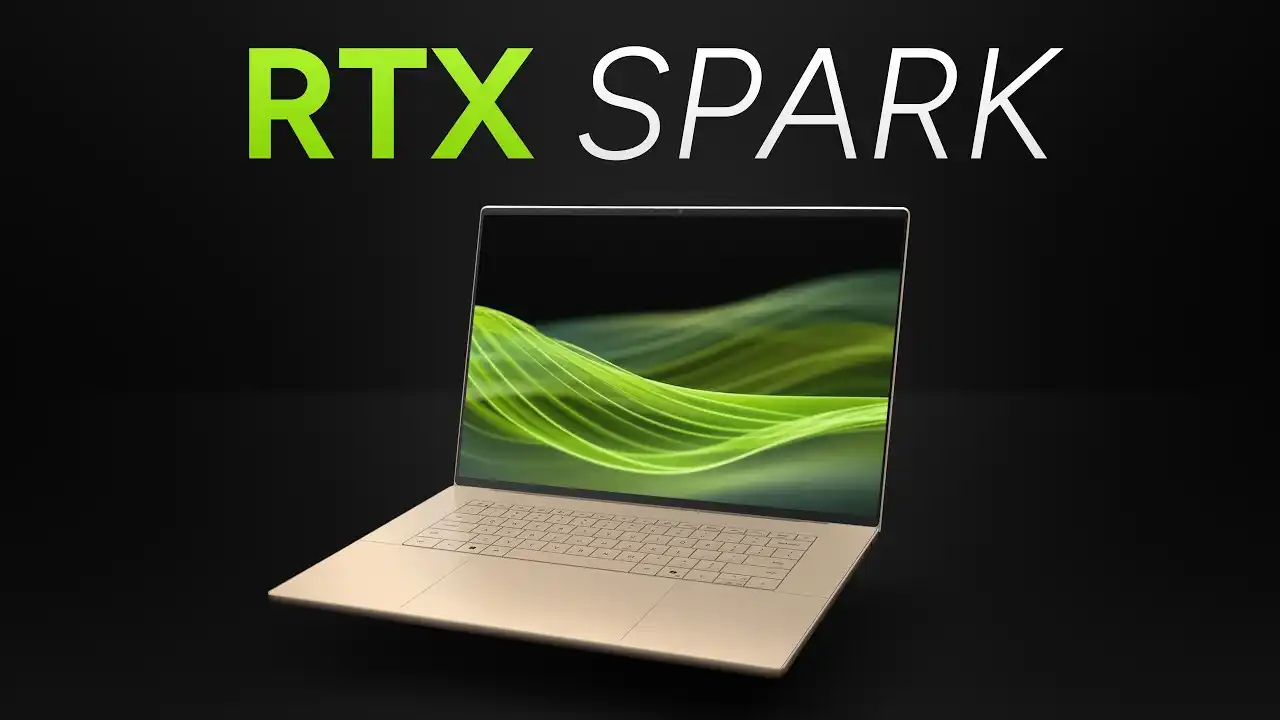
AI PCs Are Here, Going Toe-to-Toe with 120B Models Locally! NVIDIA Redefines the "Personal AI Computer" Foundation with RTX Spark

marsbitОпубликовано 2026-06-01Обновлено 2026-06-01

Введение

NVIDIA has redefined the "AI PC" standard with the launch of the RTX Spark super chip at GTC 2026. Boasting 1 petaflop (1000 TOPS) of AI performance, it dwarfs the 45-50 TOPS NPUs in current AI PCs. The SoC features a Blackwell GPU, a 20-core Arm CPU co-designed with MediaTek, and crucially, up to 128GB of unified memory shared between CPU and GPU. This architectural shift enables local execution of 120-billion-parameter large language models with million-token context windows, a massive leap from the 9B-40B models typical on current consumer hardware. Beyond AI, use cases include 12K video editing and high-fps ray-traced gaming. Key to enterprise adoption is a security collaboration with Microsoft. Windows security is upgraded, and NVIDIA's OpenShell sandbox runtime is integrated to safely contain AI agent actions. Major software support comes from Adobe, which announced a deep,底层-level rewrite of Photoshop and Premiere to leverage the unified memory for up to 2x performance gains. Six OEMs, including Dell, HP, Lenovo, and Microsoft Surface, will release RTX Spark-based轻薄本 and compact desktops this fall. However, questions remain about real-world performance,功耗, thermal management in laptops, pricing, and the actual impact of the OpenShell sandbox. The RTX Spark represents a fundamental power shift in the PC industry, moving from an x86 CPU-centric model to a GPU-centric SoC platform, but its ultimate success hinges on the upcoming product rollouts and ecosystem validatio...

For the past two years, PC manufacturers have repeatedly mentioned one parameter when promoting "AI PCs": NPU performance. Whether it's Intel Lunar Lake's 45 TOPS or AMD Strix Point's 50 TOPS, these numbers have consistently remained at a relatively modest level. They can handle background blur, voice noise reduction, and run some small-scale on-device models—but that's about it.

On May 31st, at the GTC 2026 conference, NVIDIA unveiled the RTX Spark superchip, raising this figure to 1 petaflop, or 1000 TOPS. This isn't a 30% or 50% improvement—it's an entire order of magnitude leap.

Announced alongside were several other key developments: Microsoft upgraded Windows' native security mechanisms in coordination with RTX Spark and integrated NVIDIA's open-source sandbox runtime, OpenShell, into the Windows platform; Adobe announced a fundamental redesign of Photoshop and Premiere from the ground up to specifically adapt to RTX Spark's Unified Memory Architecture; Six initial OEMs confirmed they will launch thin-and-light laptops and compact desktops featuring this chip in the fall of this year.

What NVIDIA is doing at this GTC isn't just releasing a new chip. It is attempting to set a new hardware standard for the "Personal AI Computer" category.

When GPU Becomes the Star of the PC

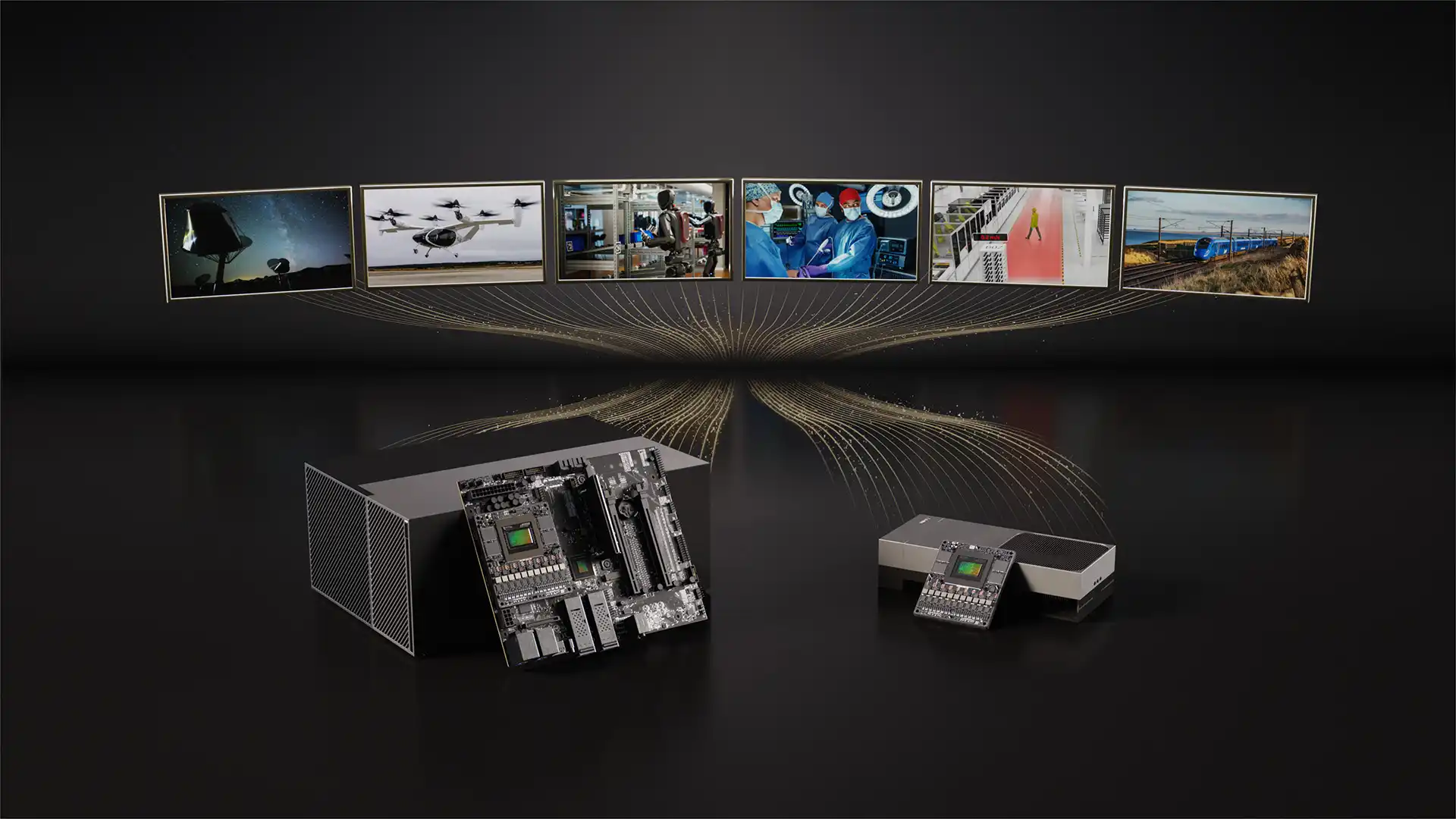
First, let's examine the chip itself. According to data NVIDIA revealed at GTC, RTX Spark integrates a Blackwell architecture GPU with 6144 CUDA cores, paired with a 20-core Arm architecture Grace CPU jointly designed with MediaTek, manufactured using TSMC's 3nm process. The key change lies in the memory architecture: up to 128GB of unified memory, where the CPU and GPU share a single memory pool, eliminating the need to move data back and forth between the two.

This is the opposite of traditional PC architecture logic.

The fundamental structure of a traditional PC is "x86 CPU as the main processor, with a discrete GPU as an optional component." Even with the rise of the AI PC concept in recent years, the approach by Intel and AMD has been to embed an NPU within the CPU as an add-on module for AI acceleration, typically offering performance in the range of 40-50 TOPS. The GPU remains "external."

RTX Spark reassigns dominance. This SoC makes the GPU the protagonist, relegating the CPU to a supporting role. NVIDIA claims AI performance of 1 petaflop at FP4 precision, equivalent to 1000 TOPS—more than 20 times the performance of the built-in NPUs in the previous generation of AI PCs. This isn't just speeding up on the same track; it's starting the race on an entirely different one.

The rapid response from OEMs confirms this assessment. According to NVIDIA's official announcement and subsequent reports from DIGITIMES, Asus, Dell, HP, Lenovo, Microsoft Surface, and MSI will launch thin-and-light laptops and compact desktops powered by RTX Spark this fall, with models from Acer and Gigabyte to follow. Virtually all major Windows PC brands have joined the fray.

RTX Spark isn't a product born from nothing. In early 2025, the same core Blackwell + Grace chip was introduced as Project DIGITS and DGX Spark, but it was positioned then as a Linux desktop supercomputer for developers, roughly the size of a small desktop PC. A year later, this architecture has been squeezed into the thermal envelope of a thin-and-light laptop, the operating system switched from Linux to Windows, and the target audience expanded from AI developers to general consumers and enterprise users. This is the most noteworthy change in the consumer-facing announcements at GTC 2026: NVIDIA isn't releasing a developer toy; it's pushing open the door to the consumer market.

Running a 120B Model Locally—Is It Enough?

The numbers for performance and memory ultimately need to answer one question: What can you do with it?

The answer NVIDIA gave at the launch is that RTX Spark supports running a 120B parameter large language model locally, with a context window potentially reaching up to 1 million tokens. What does 120B mean? For reference, the current mainstream practice for running local models on consumer hardware involves using a quantized and compressed 30B to 40B parameter model on an RTX 4090 with 24GB of VRAM. Smaller models that run quickly on consumer GPUs are in the 9B range. Jumping from 9B to 120B redefines the "sufficient" standard for on-device AI.

The 128GB unified memory is the prerequisite for all this. In traditional PC architectures, the CPU has its own system memory, and the GPU has its own VRAM, with a physical boundary between them. A large model exceeding the VRAM capacity either won't run at all or requires complex model partitioning and memory swapping, causing a drastic slowdown. The unified memory architecture eliminates this bottleneck, allowing model data to reside directly in the shared 128GB pool accessible to both the CPU and GPU. Apple first demonstrated the consumer viability of this technical path with Apple Silicon; now NVIDIA is bringing it to the Windows camp.

Beyond large model inference, NVIDIA listed use cases including 12K video editing, 3D scene rendering exceeding 90GB, and ray-traced gaming at 1440p resolution with over 100 fps. The common characteristic of these scenarios is the extremely large volume of data processed in a single operation, where traditional PCs either require wait times many times longer than the processing time itself or simply cannot handle the task at all.

There remains a gap between "supports running" and "runs fluidly." NVIDIA did not disclose the actual inference speed for a 120B model on RTX Spark, nor did it provide first-token latency data for scenarios involving million-token contexts. A key metric determining long-context inference speed is memory bandwidth. For reference, the DGX Spark, which uses the same GB10 core, achieved a measured memory bandwidth of approximately 301 GB/s. This bandwidth level is adequate for running a 120B model, but when handling context windows in the million-token range, users might need to wait several seconds to see the first output token. The notebook version of RTX Spark might see this bandwidth adjusted due to power limitations.

Adding a Safety Cage for AI Agents

Another core announcement beyond raw performance is the collaboration between NVIDIA and Microsoft at the system level. This part might be the most easily overlooked but potentially most impactful content for the industry from the GTC 2026 consumer launch.

A computer capable of running a 120B model, if placed in the hands of an AI agent that can autonomously operate the desktop, click buttons, and read/write files, elevates the security risk beyond the level of "could data be lost" to "could the agent do something you don't want it to do." Without solving this problem, enterprises cannot deploy such devices to their employees.

The solution from Microsoft and NVIDIA is a two-layer defense. First, Microsoft upgraded Windows' native security mechanisms to provide monitoring and constraints for AI agent behavior at the operating system level. Second, NVIDIA formally introduced the OpenShell runtime to the Windows platform. According to NVIDIA's official documentation, OpenShell is an open-source sandbox runtime offering kernel-level isolation. It creates a controlled operational boundary for an AI agent, within which the agent can autonomously execute tasks, but its permissions are strictly limited, preventing unauthorized access to core system files, network connections, or user-sensitive data.

This combination has clear significance for enterprise procurement. Prior to this, the concept of "local AI agents" remained at the stage of technical demos. The hardware might be capable, but the security framework was non-existent. No enterprise IT department would dare to include devices in that state on their procurement list. By inserting a standardized isolation layer between hardware and application, NVIDIA and Microsoft are transforming "usable" into "manageable."

The performance overhead of OpenShell itself is a variable to be observed. Sandbox isolation typically incurs some degree of performance penalty. How much it affects inference speed or system responsiveness hasn't been publicly quantified by NVIDIA yet. Practical implementation challenges like deployment complexity for enterprise IT management and compatibility with existing security policies will need to be validated once OEM devices hit the market.

Why Adobe Is Willing to "Redesign from the Ground Up"

The level of cooperation from software vendors is often a key indicator of whether a new hardware platform can gain a foothold.

Adobe's announcement during GTC is the most significant signal from the software side of this launch. According to confirmations from NVIDIA's official blog and Adobe executives, Adobe has initiated a ground-up redesign of Photoshop and Premiere to specifically adapt to RTX Spark's Unified Memory Architecture, claiming potential performance improvements of up to 2x for AI and graphics processing.

"Redesign from the ground up" isn't about adding a plugin or an adaptation layer. On traditional PCs, where the CPU and GPU have separate memory spaces, processing a massive PSD file or an 8K video timeline involves repeatedly moving data between the two memory pools—a major source of performance waste. RTX Spark's unified memory allows the CPU and GPU to directly share the same 128GB space. This structural change holds real value for professional creators' workflows. Adobe's willingness to alter its foundational code for this indicates it views this architectural direction as more than a one-off marketing gimmick.

However, NVIDIA and Adobe have not disclosed the baseline for this "2x acceleration" claim. Is it compared to a current-generation x86 processor paired with a discrete GPU, or to the NPU solutions in the previous generation of AI PCs? The implications are vastly different. Until the benchmark testing conditions are made public, the true value of this number remains an open question.

Other announced supporters include Blackmagic Design, ComfyUI, llama.cpp, OTOY, and several game developers. The follow-up from ComfyUI and llama.cpp is noteworthy because they are among the most active open-source tools in current local AI workflows. Early support from the developer community often provides a more genuine reflection of a platform's ecosystem potential than promises from large corporations.

NVIDIA is leveraging the CUDA ecosystem and unified memory architecture to build an experience akin to Apple's tight software-hardware integration within the Windows camp. The difference is that Apple built its own walled garden, while NVIDIA needs to persuade Microsoft and ISVs to build it together. Adobe's willingness to undertake a foundational redesign suggests that at least the first brick of that wall has been laid.

Beyond the Paper Specs

Returning to the most practical question: Can you actually buy these devices, and what will the experience be like in hand?

According to information released by NVIDIA, the first RTX Spark devices are scheduled to launch in the fall of this year, spanning thin-and-light laptops and compact desktops from Asus, Dell, HP, Lenovo, Microsoft Surface, and MSI. Models from Acer and Gigabyte will follow. Specific pricing and exact launch dates for all OEMs have not been announced.

More critical than pricing are several physical unknowns. How will power consumption and thermal management be balanced when squeezing a 1 petaflop chip into a thin-and-light laptop? How does RTX Spark perform in non-AI scenarios like everyday office tasks and battery life? Will the actual memory bandwidth of the 128GB unified memory in a notebook form factor be significantly reduced due to power constraints?

These questions represent the real test of industrial implementation. The peak performance of a chip in an engineering prototype and its actual performance in a consumer's hands over 8 hours a day are often two different things. NVIDIA emphasized RTX Spark's energy efficiency during the launch but did not provide specific TDP values or battery life data.

From the perspective of the PC industry landscape, the emergence of RTX Spark signals the formation of a new division of labor model. Over the past three decades, the authority over core PC chips has resided with x86 processor manufacturers. GPU makers, while increasingly important, have always been "components plugged into the motherboard." What NVIDIA is offering this time is a complete SoC, integrating everything from the CPU and GPU to the memory controller, with the Arm-based CPU portion designed in partnership with MediaTek. The power structure of the PC industry chain is shifting from "x86 CPU plus optional GPU" towards "GPU-centric SoC platforms."

This shift won't happen overnight. The OEMs' pricing strategies, the actual energy efficiency performance of the products, the adaptation progress of ISV software, and the validation cycles for enterprise customer procurement—each link will determine whether RTX Spark becomes a new benchmark for the PC industry or merely another high-profile technical demo that fails to meet expectations. The answer will have to wait at least until this fall.

Связанные с этим вопросы

QWhat is the key hardware specification that sets NVIDIA's RTX Spark apart from previous AI PC chips, and by what magnitude?

AThe key specification is its AI compute performance, which reaches 1 petaflop (or 1000 TOPS) of FP4 precision. This represents a performance increase of over 20 times compared to the previous generation of AI PC chips from Intel and AMD, which offered around 45-50 TOPS.

QWhat is the significance of the unified memory architecture in the RTX Spark SoC, and how much memory is available?

AThe significance is that the CPU and GPU share a single, unified memory pool of up to 128GB. This eliminates the need for data to be copied back and forth between separate system RAM and GPU VRAM, which is a major bottleneck for running large AI models or processing large datasets like high-resolution video.

QWhich major software company announced a significant commitment to the RTX Spark platform, and what did they promise to do?

AAdobe announced it would be undertaking a major, low-level refactoring of its flagship applications Photoshop and Premiere to specifically optimize for the RTX Spark's unified memory architecture, promising AI and graphics processing performance improvements of up to 2x.

QWhat are the two main security components introduced by Microsoft and NVIDIA to make local AI agents safe for enterprise use?

AFirst, Microsoft is upgrading Windows' native security mechanisms to monitor and constrain AI agent behavior at the OS level. Second, NVIDIA is bringing its OpenShell sandbox runtime to Windows, which provides kernel-level isolation to strictly limit what an AI agent can do, preventing unauthorized access to core files or sensitive data.

QWhat major shift in PC industry dynamics does the RTX Spark chip represent according to the article?

AIt represents a shift in the fundamental power structure of the PC industry. For decades, the x86 CPU was the central, controlling processor. The RTX Spark, an Arm-based SoC with the GPU as the primary compute element, marks a move towards a 'GPU-centric SoC platform,' challenging the traditional 'x86 CPU plus optional GPU' model.

Похожее

ETH Bull and Bear Views Compilation: Can Ethereum's Value Flow Back to ETH?

Titled "ETH Bull and Bear Views: Can Ethereum's Value Flow Back to ETH?", this article synthesizes the current heated debate around Ethereum's native token, ETH, following Bankless co-founder David Hoffman's decision to sell his entire ETH holdings. The **bullish case**, represented by figures like Tom Lee (BitMine CEO) and Raoul Pal, argues that ETH's core thesis remains intact. They contend Ethereum is the essential, secure, and neutral foundational layer for future finance—encompassing stablecoins, RWA, DeFi, L2s, and Agentic AI. Bulls bet on ETH's long-term revaluation as institutional adoption of on-chain finance grows, with significant buying activity from entities like BitMine and Consensys cited as evidence. Conversely, the **bearish perspective**, led by Hoffman and analysts like Markus Thielen, questions ETH's value capture mechanism. They acknowledge Ethereum's network success but argue that the value created by L2s, DeFi, and applications does not sufficiently accrue to the ETH token itself. Bears point to ETH's prolonged underperformance versus the broader crypto market, lack of traditional cash flows, weakening "ultrasound money" narrative, and apparent institutional retreat (e.g., Harvard Management Company exiting its ETH ETF position) as key concerns. The debate highlights a pivotal shift: ETH is no longer just a community belief asset. The central question is whether ETH can transition from being a "**used infrastructure**" to a "**continuously bought and held core asset**" as more value enters the Ethereum ecosystem. The market is now critically examining the direct link between network growth and ETH's value.

marsbit42 мин. назад

ETH Bull and Bear Views Compilation: Can Ethereum's Value Flow Back to ETH?

marsbit42 мин. назад

Crypto is dead, Perps are forever

The crypto industry is shifting from a focus on creating native assets (like altcoins and protocol tokens) to becoming a "global asset pipeline." Native cryptocurrencies, except for Bitcoin, are seen as failing in their value storage and utility promises, with demand driven largely by speculation. Attention and liquidity are now moving toward real-world assets (RWAs) like U.S. stocks, bonds, gold, and oil traded on-chain via perpetual contracts (Perps). Stablecoins like USDT and USDC set the precedent, proving blockchain's core strength is efficient global settlement and transfer, not inventing new monetary systems. Meanwhile, assets like Ethereum and many DeFi tokens struggle as their narratives weaken against tangible traditional assets and the rapid real-world progress of AI. Perpetual contracts have emerged as a pivotal innovation. They simplify trading by offering pure price exposure to any asset, bypassing complexities of ownership, custody, and traditional market hours. Projects like Hyperliquid gained traction by combining CEX-like efficiency with on-chain transparency, capitalizing on post-FTX distrust, macroeconomic volatility, and the surge in demand for 24/7 stock trading. In conclusion, while the era of speculative native "crypto assets" may be over, perpetual contracts persist as the industry's most potent financial instrument—transforming all assets into globally accessible, constantly tradable instruments centered on price speculation.

marsbit47 мин. назад

Crypto is dead, Perps are forever

marsbit47 мин. назад

Tencent, Alibaba, ByteDance in a Battle for the Skill Store

Skill is becoming a key concept in the AI field, essentially serving as a structured "instruction manual" for AI Agents that specifies tool calls, decision logic, and output standards. This allows Agents to execute predefined tasks. As the number of Skills grows, distribution platforms have emerged. Major tech companies are swiftly entering this space. In March, Tencent, Alibaba, and ByteDance launched Skill stores within their respective Agent platforms. Subsequently, players like Zhipu AI, Meituan, and Xiaohongshu joined the fray. This competition for the "Skill store" is fundamentally a battle for the AI-era user entry point; whoever controls distribution controls the users. While ByteDance's Coze has experimented with paid Skills, most platforms offer them for free. The real value lies not in the stores themselves but in using them to attract and retain users within an ecosystem, driving revenue from services like cloud computing, model calls, or advertising. The landscape features three main player types: 1) **Internet giants** (e.g., Alibaba, ByteDance, Tencent, Meituan), leveraging Skills to drive traffic and monetize through their broader ecosystems (cloud services, transactions, ads). 2) **Large model companies** (e.g., Zhipu AI, Moonshot AI), using Skill stores to increase user engagement and monetize model API calls. 3) **Content platforms** (e.g., Xiaohongshu), treating Skills as a new content format to generate traffic and ad revenue. However, transforming Skill stores into a sustainable business faces significant hurdles. Key challenges include: the **difficulty in pricing Skills** due to inconsistent outputs across different models and contexts; **lack of cost transparency** (varying token consumption); **security risks** like Skill poisoning; and the **absence of standardized protocols** for development and evaluation. Unlike standardized mobile apps, Skills are often personalized workflows resistant to uniformity, which hinders the establishment of a reliable review and monetization system akin to the App Store. While there is genuine user demand for paid Skills—particularly in enterprise (e.g., contract review) and certain personal productivity scenarios—current platforms offer developers limited and unpredictable distribution. The future of Skill stores depends on overcoming these standardization, evaluation, and safety challenges to make acquiring a Skill as straightforward as downloading an app. For now, the stores function more as display shelves than robust marketplaces.

marsbit47 мин. назад

Tencent, Alibaba, ByteDance in a Battle for the Skill Store

marsbit47 мин. назад

The Crypto Scene Is Dead, Perpetual Swaps Are Eternal

The crypto industry is undergoing a fundamental shift. The era defined by minting novel, native digital assets (altcoins) is fading. These assets, lacking real-world cash flows or clear value, are losing relevance as attention and capital flow elsewhere. Two powerful external forces are reshaping the space. First, traditional assets like U.S. stocks, bonds, gold, and oil are being tokenized and traded on-chain. Second, the explosive growth of AI, with its tangible products, has overshadowed crypto's once-dominant "future narrative." This marks a critical pivot: crypto is transitioning from being a "factory for new assets" to becoming a "global conduit for existing assets." Its validated utility is not complex financial reinvention but efficient global settlement, transfer, and trading—the original promise of blockchain. Stablecoins like USDT and USDC exemplify this, offering faster dollar movement rather than replacing it. Consequently, native ecosystems like Ethereum face profound challenges. While still crucial infrastructure, ETH struggles to capture value as users interact with Layer 2s or trade traditional assets without needing to hold it. DeFi's grand narrative of rebuilding finance has narrowed to core needs like cheap transfers and deep liquidity. The true breakout innovation is the perpetual contract (Perp). It brilliantly bypasses the complexities of direct asset ownership (custody, compliance, dividends) by creating pure price exposure. Users can speculate on the price movement of *any* asset—NVIDIA, gold, oil—24/7, globally, and with leverage. This "price casino" model, while risky and ethically fraught, delivers unmatched liquidity and accessibility. Projects like Hyperliquid succeeded not by inventing new mechanics but by perfecting the timing and execution of this model. Key drivers included making on-chain Perps feel like centralized exchanges, post-FTX trust migration towards transparency, and rising demand to trade macro assets and equities round-the-clock. In conclusion, the crypto world's most enduring successes are the dollar (via stablecoins), Bitcoin, and trading. Its new frontier is not creating alternative assets but providing a seamless, perpetual trading layer—a new API—for the world's existing financial system. The age of native altcoins is over; the age of perpetual synthetic exposure has begun.

Odaily星球日报56 мин. назад

The Crypto Scene Is Dead, Perpetual Swaps Are Eternal

Odaily星球日报56 мин. назад

Торговля

Спот
Фьючерсы

Популярные статьи

Неделя обучения по популярным токенам (2): 2026 может стать годом приложений реального времени, сектор AI продолжает оставаться в тренде

2025 год — год институциональных инвесторов, в будущем он будет доминировать в приложениях реального времени.

1.8k просмотров всегоОпубликовано 2025.12.16Обновлено 2025.12.16

Неделя обучения по популярным токенам (2): 2026 может стать годом приложений реального времени, сектор AI продолжает оставаться в тренде

Обсуждения

Добро пожаловать в Сообщество HTX. Здесь вы сможете быть в курсе последних новостей о развитии платформы и получить доступ к профессиональной аналитической информации о рынке. Мнения пользователей о цене на AI (AI) представлены ниже.

活动图片