After the Tide Recedes, How Many Truly Resilient Crypto Projects Remain?

比推Опубликовано 2026-02-05Обновлено 2026-02-05

Введение

Title: After the Tide Recedes: How Many Truly Resilient Crypto Projects Remain? In a prolonged crypto market downturn, projects demonstrating pragmatic and realistic visions are proving most resilient. This analysis highlights three key examples: 1. **Hyperliquid** addresses immediate trading friction by offering a decentralized exchange (DEX) for perpetual contracts, combining CEX-like features (high leverage, fast execution) with on-chain transparency. Its sustained activity post-airdrop reflects genuine user adoption. 2. **Canton Network** targets institutional finance needs by providing a blockchain infrastructure with "selective privacy" for regulatory compliance and business confidentiality. Backed by partnerships like DTCC (handling ~$3.7 quadrillion annually), it enables seamless integration with traditional finance. 3. **Kite AI** builds infrastructure for a future AI-driven economy, developing tools like "Agent Passport" for identity verification and the x402 protocol for autonomous payments. While not yet widely deployed, its vision aligns with the anticipated rise of AI agents as economic entities. Key evaluation criteria for project viability include: - Solving a real, existing problem (not manufactured demand); - Structurally sound solutions (technically, legally, economically); - Team execution capability (resources, expertise, track record). Projects failing these tests may see short-term gains but likely collapse in downturns. The current market stress...

Source: Tiger Research

Author: Ekko & Ryan Yoon

Original Title: Realism Is the Only Answer in a Crypto Downturn

Compiled and Edited: BitpushNews


The cryptocurrency market continues to be in a prolonged downtrend. In such an environment, the projects that can survive are those that present pragmatic and realistic visions.

Core Points

    The Canton Network was born in response to these needs. Using the smart contract language DAML, Canton can provide customizable data disclosure schemes based on the needs of the participating parties.

    This allows financial institutions to maintain transaction confidentiality while sharing information only to the necessary extent. Instead of强行推行 a technology-provider-led design, Canton has built infrastructure that highly aligns with institutional needs.

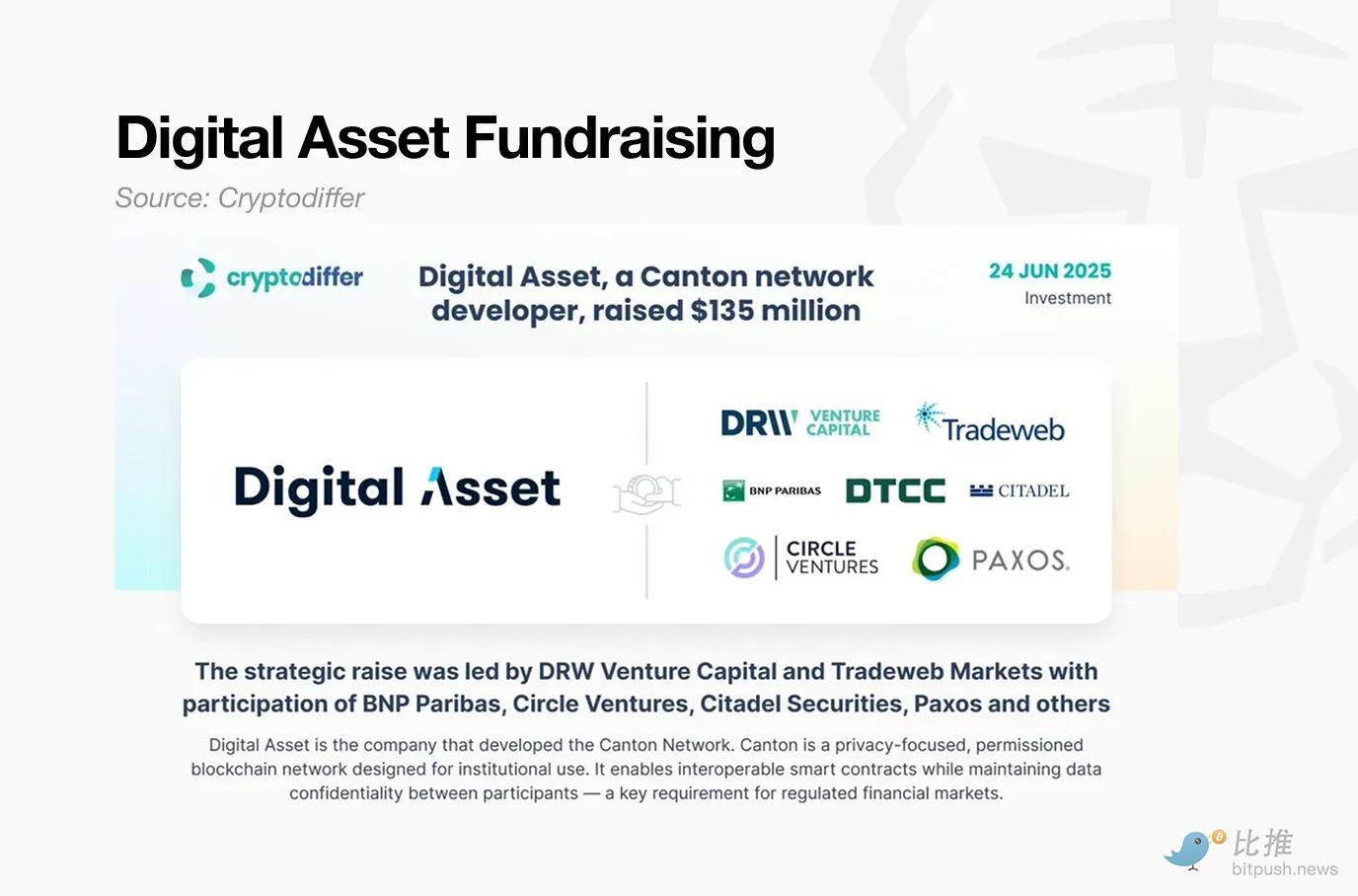
    Another key factor is that Canton has aimed for "real-world deployment" from the start to expand its ecosystem, receiving early collaborative support from financial institutions. Most notably, its partnership with DTCC (The Depository Trust & Clearing Corporation) has established a channel for assets managed in the traditional financial system to enter the Canton environment. DTCC handles approximately $3.7 quadrillion in transactions annually, further validating the practical feasibility of the Canton Network's solution.

    In the end, Canton provides a structured solution that simultaneously meets three major institutional requirements: privacy protection, regulatory compliance, and integration with the existing financial system.

    Kite AI: Building the AI Economy That Has Yet to Arrive

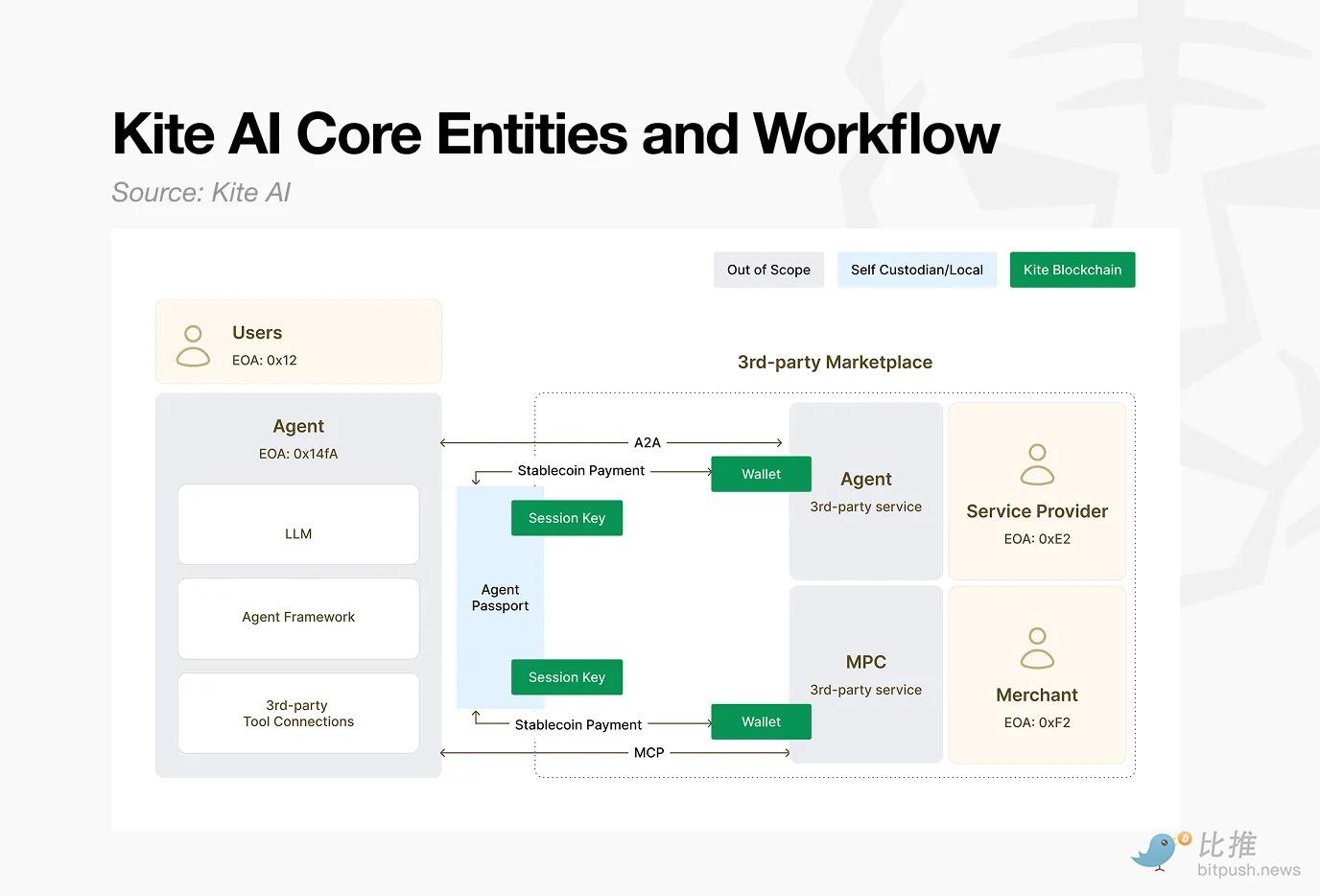
    Unlike the previous two examples, Kite AI currently has relatively limited application in the real world. However, viewed from the future perspective of "AI Agents operating as economic entities," its structural logic remains highly compelling.

    There is broad consensus, both in Web2 and Web3, on an "agent-driven future." Few would dispute that future AI Agents will handle tasks like booking hotels or ordering groceries on behalf of users.

    However, realizing this future requires an infrastructure that allows AI Agents to independently initiate and execute payments. Existing transaction systems are designed around transfers between people and efficiency for human participants.

    Therefore, for AI Agents to become autonomous economic entities, new mechanisms are needed, including identity verification and automated payment frameworks. Kite AI is building payment infrastructure specifically designed for this environment, with core components including the "Agent Passport" for identity verification and the x402 protocol for automated payments.

    The vision presented by Kite AI is not yet ready for large-scale deployment, simply because the future it targets has not fully arrived. Nonetheless, the project's practical significance stems from a broader assumption: when this widely anticipated future arrives, the foundational technology it is developing will become a necessity. This alignment with macro trends gives the project structural credibility even with its current limited usage.

    Three Key Questions for Assessing Practical Feasibility

    Although these three projects operate on different timeframes, they share a common characteristic: real-world feasibility.

    Evaluations of the same project often diverge: some believe it solves real problems, while others dismiss it as hype. To bridge this interpretative gap, we must ask at least three core questions:

    1. What specific problem is the project aiming to solve? (Is it a genuine pain point for users, or a need fabricated just to use the technology?)

    2. Is the proposed solution structurally feasible? (Does it hold up technically, in terms of compliance, and in its economic model?)

    3. Does the team have the capability to execute in reality? (Do they have relevant industry resources, technical expertise, and implementation experience?)

    Since most projects promote optimistic future narratives, answering these questions correctly requires time and effort; filtering out misleading or incomplete information is not easy. Projects that cannot confidently answer these three questions might experience short-term price increases, but when the next downturn comes, they will likely perish with it.

    The current state of the crypto market is clearly not optimistic. But this does not mean the industry is over. New experiments will continue, and our task is to assess what these efforts truly represent. Right now, keeping our feet on the ground is the only choice.


    Twitter:https://twitter.com/BitpushNewsCN

    Bitpush TG Discussion Group:https://t.me/BitPushCommunity

    Bitpush TG Subscription: https://t.me/bitpush

    Original link:https://www.bitpush.news/articles/7609260

Связанные с этим вопросы

QWhat is the core argument of the article regarding which crypto projects survive a market downturn?

AThe article argues that crypto projects which survive a downturn are those with a pragmatic and realistic vision, focusing on solving concrete, real-world problems rather than relying on abstract narratives or hype.

QAccording to the article, what are the three key questions to evaluate a project's practical viability?

AThe three key questions are: 1. What specific problem is the project trying to solve? (Is it a genuine user pain point or a manufactured need?) 2. Is the proposed solution structurally sound? (Is it technically, regulatorily, and economically viable?) 3. Does the team have the capability to execute in reality? (Do they have relevant industry resources, technical expertise, and implementation experience?)

QHow does Hyperliquid demonstrate resilience in the current market according to the analysis?

AHyperliquid demonstrates resilience by solving a persistent, real-world problem: user dissatisfaction with centralized exchanges. It brought key CEX features like high leverage, fast execution, and stable liquidity (via its HLP mechanism) on-chain with its perp DEX, and maintained high activity even after its token airdrop ended, showing genuine user认可 (recognition).

QWhat specific need of financial institutions does the Canton Network address?

ACanton Network addresses the institutional need for a 'selective privacy model' that supports regulatory compliance while protecting business confidentiality. It provides customizable data disclosure through its DAML smart contract language, allowing institutions to share information only as necessary, and is built with real-world deployment in mind, evidenced by its collaboration with major entities like the DTCC.
QWhat future scenario is Kite AI's infrastructure designed for, and why is it considered pragmatically credible despite limited current use?

AKite AI is designed for a future where AI Agents act as autonomous economic entities, requiring new infrastructure for identity verification (Agent Passport) and automated payments (x402 protocol). It is considered pragmatically credible because its vision aligns with the widely anticipated macro-trend of AI-driven economies, making its underlying technology a potential necessity when that future arrives.

Похожее

OpenAI Post-Training Engineer Weng Jiayi Proposes a New Paradigm Hypothesis for Agentic AI

OpenAI engineer Weng Jiayi's "Heuristic Learning" experiments propose a new paradigm for Agentic AI, suggesting that intelligent agents can improve not just by training neural networks, but also by autonomously writing and refining code based on environmental feedback. In the experiment, a coding agent (powered by Codex) was tasked with developing and maintaining a programmatic strategy for the Atari game Breakout. Starting from a basic prompt, the agent iteratively wrote code, ran the game, analyzed logs and video replays to identify failures, and then modified the code. Through this engineering loop of "code-run-debug-update," it evolved a pure Python heuristic strategy that achieved a perfect score of 864 in Breakout and performed competitively with deep reinforcement learning (RL) algorithms in MuJoCo control tasks like Ant and HalfCheetah. This approach, termed Heuristic Learning (HL), contrasts with Deep RL. In HL, experience is captured in readable, modifiable code, tests, logs, and configurations—a software system—rather than being encoded solely into opaque neural network weights. This offers potential advantages in explainability, auditability for safety-critical applications, easier integration of regression tests to combat catastrophic forgetting, and more efficient sample use in early learning stages, as demonstrated in broader tests on 57 Atari games. However, the blog acknowledges clear limitations. Programmatic strategies struggle with tasks requiring long-horizon planning or complex perception (e.g., Montezuma's Revenge), areas where neural networks excel. The future vision is a hybrid architecture: specialized neural networks for fast perception (System 1), HL systems for rules, safety, and local recovery (also System 1), and LLM agents providing high-level feedback and learning from the HL system's data (System 2). The core proposition is that in the era of capable coding agents, a significant portion of an AI's learned experience could be maintained as an auditable, evolving software system.

marsbit44 мин. назад

OpenAI Post-Training Engineer Weng Jiayi Proposes a New Paradigm Hypothesis for Agentic AI

marsbit44 мин. назад

Your Claude Will Dream Tonight, Don't Disturb It

This article explores the recent phenomenon of AI companies increasingly using anthropomorphic language—like "thinking," "memory," "hallucination," and now "dreaming"—to describe machine learning processes. Focusing on Anthropic's newly announced "Dreaming" feature for its Claude Agent platform, the piece explains that this function is essentially an automated, offline batch processing of an agent's operational logs. It analyzes past task sessions to identify patterns, optimize future actions, and consolidate learnings into a persistent memory system, akin to a form of reinforcement learning and self-correction. The article draws parallels to similar features in other AI agent systems like Hermes Agent and OpenClaw, which also implement mechanisms for reviewing historical data, extracting reusable "skills," and strengthening long-term memory. It notes a key difference from human dreaming: these AI "dreams" still consume computational resources and user tokens. Further context is provided by discussing the technical challenges of managing AI "memory" or context, highlighting the computational expense of large context windows and innovations like Subquadratic's new model claiming drastically longer contexts. The core critique argues that this strategic use of human-centric vocabulary does more than market products; it subtly reshapes user perception. By framing algorithms with terms associated with consciousness, companies blur the line between tool and autonomous entity. This linguistic shift can influence user expectations, tolerance for errors, and even perceptions of responsibility when systems fail, potentially diverting scrutiny from the companies and engineers behind the technology. The article concludes by speculating that terms like "daydreaming" for predictive task simulation might be next, continuing this trend of embedding the idea of an "inner life" into computational processes.

marsbit46 мин. назад

Your Claude Will Dream Tonight, Don't Disturb It

marsbit46 мин. назад

Торговля

Спот
Фьючерсы
活动图片