Автор: David Christopher
Компиляция: Saoirse, Foresight News
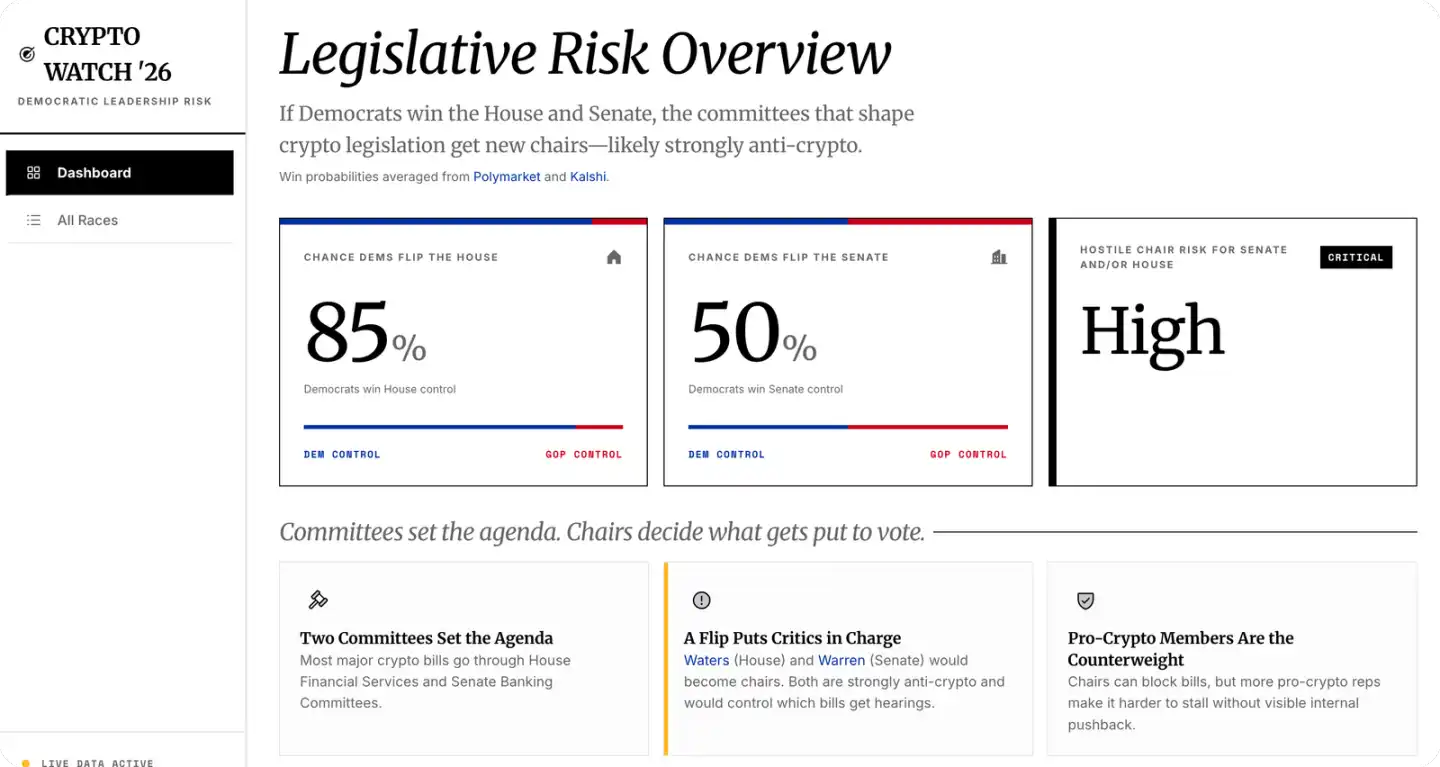
Насколько велики риски для криптоиндустрии на этих промежуточных выборах? По мере того, как вероятность того, что демократы получат контроль над обеими палатами Конгресса на промежуточных выборах, продолжает расти, я хочу, основываясь на существующих опросах, глубоко проанализировать их потенциальное влияние на будущее развитие криптоиндустрии.
Для этого я, с одной стороны, обратился к прогнозным рынкам, а с другой — изучил такие материалы, как Stand with Crypto (SWC, Альянс поддержки криптовалют) — платформа, которая собирает позиции различных кандидатов по вопросам политики в отношении криптоиндустрии. Я объединил эту информацию и на ее основе создал аналитическую панель.
Хотя данные все еще дополняются и уточняются, я уже построил核心овую базу данных, отслеживающую ключевые избирательные округа, где лидируют кандидаты от демократов, и связывающую их позиции по криптополитике с потенциальным влиянием в комитетах Конгресса. Этот анализ初步揭示了 политический ландшафт на ближайшие месяцы: на поверхности似乎 есть пространство для сотрудничества, но при глубоком изучении обнаруживаются глубинные структурные проблемы.
Неожиданная реальность
Прежде всего, необходимо прояснить, что поддержка криптоиндустрии со стороны демократов на самом деле выше, чем普遍预期 — по крайней мере, в отношении некоторых законопроектов.
В Палате представителей 101 демократ (около 48% от общей численности фракции) проголосовал за законопроект «GENIUS»; в Сенате 18 демократов (40%) проголосовали за вынесение этого законопроекта на голосование. Это, казалось бы, создало реальную двухпартийную коалицию поддержки. Однако эта поддержка ограничивается данным конкретным законопроектом, и как только дело доходит до ядра, определяющего ход законодательного процесса — этапа комитета, эта сила поддержки исчезает.
В этом и заключается ключевая проблема.
Источник влияния
Законодательство, связанное с криптовалютами, никогда не выносится напрямую на голосование всего состава палаты.
Будь то регулирование стейблкоинов,规范рыночных структур или определение полномочий Комиссии по ценным бумагам и биржам США (SEC), все вопросы должны сначала пройти рассмотрение в комитете. Комитет по финансовым услугам Палаты представителей (HFSC) и Банковский комитет Сената являются двумя ключевыми органами, определяющими судьбу криптозаконопроектов (законопроекты о структуре рынка также требуют запроса мнения Сельскохозяйственного комитета относительно полномочий Комиссии по торговле товарными фьючерсами (CFTC)).
Председатель комитета обладает абсолютной властью над повесткой дня: он решает, по каким законопроектам проводить слушания, какие выносить на рассмотрение, а какие тихо умирают в процедурном тупике. Председатель, выступающий против某个 законопроекта, не нуждается в его否决вании голосованием, достаточно просто отказаться включить его в повестку дня, чтобы заблокировать.
В последние годы председатели-республиканцы в полной мере продемонстрировали влияние этой власти:
- Председатель Банковского комитета Сената Тим Скотт продвинул законопроект «GENIUS» через рассмотрение в комитете и способствовал его прохождению в Сенате;
- Бывший председатель Комитета по финансовым услугам Палаты представителей Патрик МакГенри активно продвигал законопроект «FIT21», сделав его первым крупным законопроектом о структуре крипторынка, принятым Палатой представителей;
- Нынешний председатель Комитета по финансовым услугам Палаты представителей Френч Хилл продолжил эту тенденцию, способствуя принятию Палатой представителей相关законопроектов, таких как «CLARITY» (хотя этот законопроект все еще застрял в Сенате), и продолжая проводить слушания по вопросам цифровых активов и модернизации рынка капитала.
Итак, что произойдет, если демократы полностью победят на выборах?
Партия большинства будет контролировать все посты председателей комитетов Конгресса, без исключений. Если демократы вернут себе Палату представителей, они возглавят все ее комитеты; если они получат Сенат, они также получат полный контроль над всеми сенатскими комитетами. Кандидатуры председателей от партии большинства обычно определяются по старшинству.
- Комитет по финансовым услугам Палаты представителей: старейшим демократом является Максин Уотерс;
- Банковский комитет Сената: старейшим демократом является Элизабет Уоррен.
Известно, что обе голосовали против всех крупных криптозаконопроектов. Уоррен возглавила сопротивление на этапе рассмотрения законопроекта «GENIUS», назвав его «угрозой национальной безопасности»; Уотерс прямо осудила этот законопроект как «полнейшую криптоаферу».
Ключевая точка противостояния в Палате представителей заключается в следующем: в случае смены партийного контроля подкомитеты будут полностью реорганизованы. Партия большинства будет определять распределение мест и пропорции для новых членов. Уотерс будет иметь значительное влияние на кадровые安排 в Комитете по финансовым услугам Палаты представителей и его подразделениях, включая решение о том, кто будет руководить вопросами, связанными с «цифровыми активами». Безусловно, она не может единолично决定всех членов (руководство партии и парламентская фракция также имеют право голоса), но этого достаточно, чтобы направить комитет в предпочитаемом ею антикриптоном русле.
В настоящее время лагерь демократов в Комитете по финансовым услугам Палаты представителей явно склоняется к антикриптопозиции: Брэд Шерман, Стивен Линч, Эмануэль Кливер, Сильвия Гарсия занимают жесткую反对позицию. Даже несмотря на наличие поддерживающих криптовалюты членов, таких как Джим Хаймс, Билл Фостер, Ричи Торрес, Джош Готтхаймер, Висенте Гонсалес, они не смогут контролировать повестку дня в период председательства Уотерс.
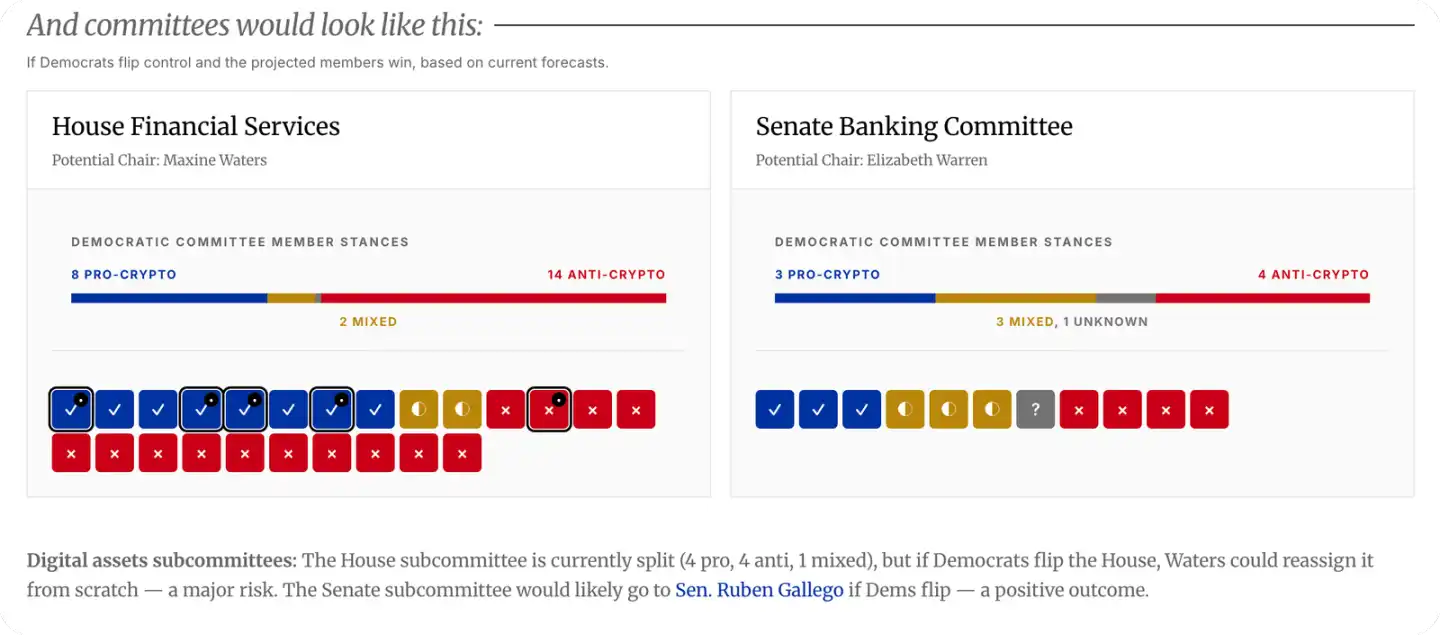
На этой диаграмме показано распределение криптопозиций в двух ключевых комитетах, если демократы вернут себе контроль над Конгрессом на промежуточных выборах 2026 года, что наглядно отражает регуляторный ландшафт, с которым столкнется криптоиндустрия.
Ситуация в Банковском комитете Сената немного лучше. Хотя Уоррен станет председателем, состав комитета более разнообразен: есть как поддерживающие криптовалюты сенаторы (например: Марк Уорнер, Рубен Гальего, Анджела Олсобрукс), так и противники (например: Тина Смит), а также колеблющиеся центристы. Слабым утешением является то, что если демократы будут контролировать Сенат, сенатор Гальего, имеющий благоприятный рейтинг на платформе SWC, скорее всего, возглавит подкомитет по цифровым активам. Хотя Уоррен по-прежнему будет контролировать повестку дня всего комитета, Гальего, возможно, сможет обеспечить некоторое пространство для выражения支持криптоголосов на уровне подкомитета.
Ключевые выборы,真正 влияющие на расклад сил
Большинство нынешних демократов, поддерживающих криптовалюты, не входят в Комитет по финансовым услугам Палаты представителей или Банковский комитет Сената. Они, конечно, могут голосовать за相关законопроекты на заседаниях полного состава палаты, могут оказывать давление на руководство своей партии (но, учитывая высокую степень партизации этого вопроса, большинство законодателей не хотят высказываться в поддержку криптоиндустрии), но они не могут заставить председателя комитета продвигать законодательный процесс.
Лишь несколько избирательных кампаний могут真正 изменить расстановку сил в комитетах.
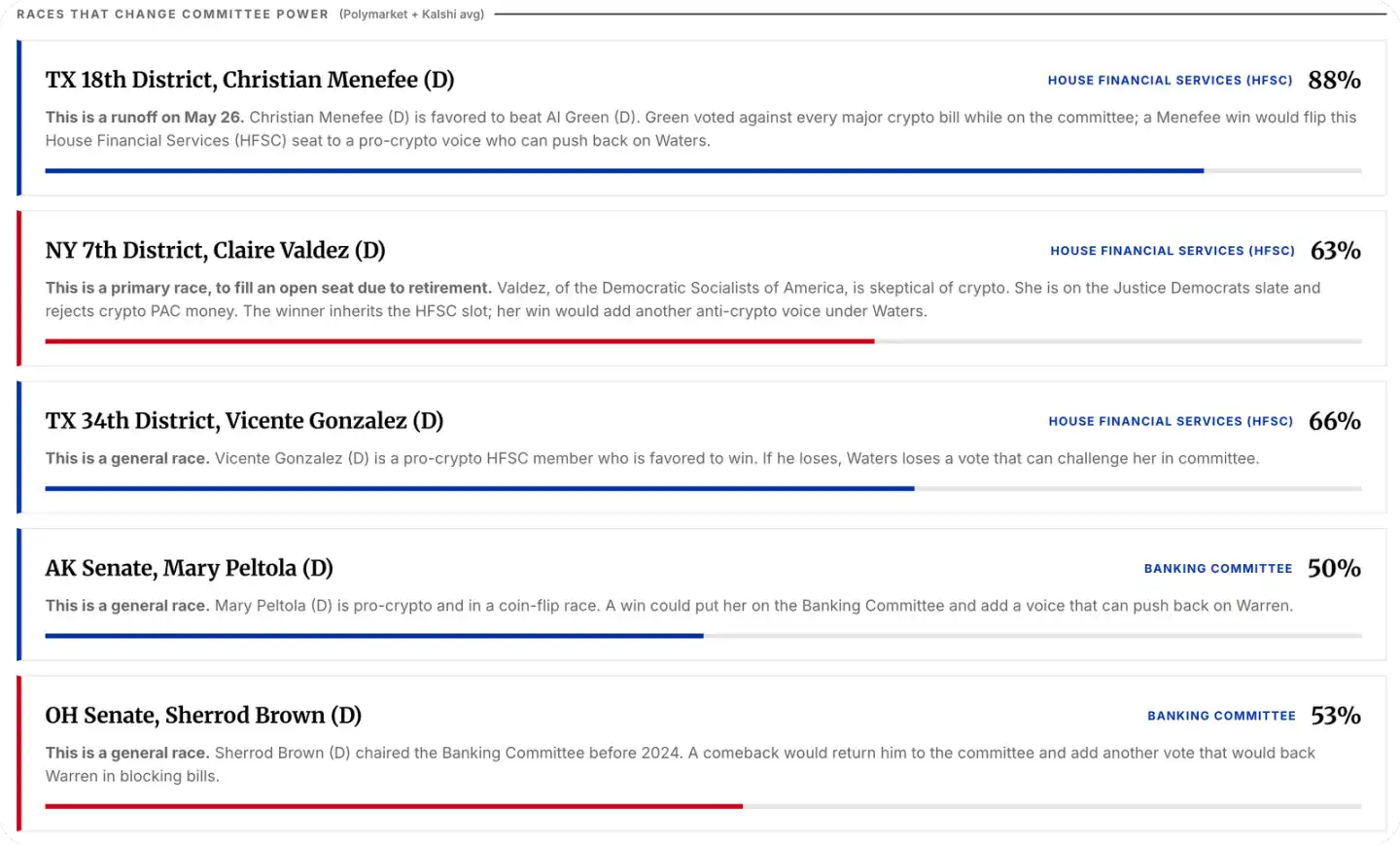
На этой диаграмме представлен анализ ключевых избирательных гонок, влияющих на власть в области криптозаконодательства в Конгрессе США. Данные представляют собой средние значения с прогнозных рынков Polymarket и Kalshi, и наглядно показывают, какие результаты выборов напрямую изменят криптопозиции Комитета по финансовым услугам Палаты представителей (HFSC) и Банковского комитета Сената.
Итог промежуточных выборов
Перспективы в Палате представителей крайне мрачные.
Вероятность того, что демократы вернут себе Палату представителей, составляет高达85%, что означает, что Уотерс, скорее всего, возглавит Комитет по финансовым услугам Палаты представителей, обладая абсолютной властью по реорганизации подкомитетов и контролю над законодательной повесткой дня. Сохраняющиеся проблески希望极为ограничены: Менефи, возможно, удастся победить Грина и завоевать место, Гонсалес, скорее всего, сохранит свое нынешнее место. Эти обстоятельства,或许, могут создать некоторый противовес, но не могут изменить ядро власти — принадлежность поста председателя.
Сенат является последним оплотом криптоиндустрии, и ситуация ухудшилась прошлой ночью: Джулиана Страттон победила Раджу Кришнамурти на праймериз в Иллинойсе. Согласно записям платформы SWC в сочетании с тем фактом, что Fairshake (супер-ПКК с背景ом американской криптоиндустрии, одна из самых влиятельных на данный момент политических лоббистских организаций в криптосфере) потратила 7 миллионов долларов на борьбу с ней, можно с уверенностью заключить, что Страттон является убежденным антикриптополитиком.
Еще более удручает общая картина: около 47% демократов в обеих палатах Конгресса поддержали законопроект «GENIUS», 37% демократов в Палате представителей поддержали законопроект «CLARITY» — поддерживающие криптовалюты демократы действительно существуют. Но судьба законопроектов никогда не решается голосованием всего состава палаты, а зависит от отношения комитета. Голосование в комитетах по законопроектам, связанным со структурой рынка, полностью следует партийным линиям. Существующие силы поддержки просто не могут быть传导至真正 определяющему исход законодательного процесса核心环节.
Криптоиндустрия не должна была быть настолько партизированной. Поддерживающие криптовалюты демократы действительно существуют, просто они оказались не на тех ключевых позициях, где сосредоточена реальная законодательная власть.







