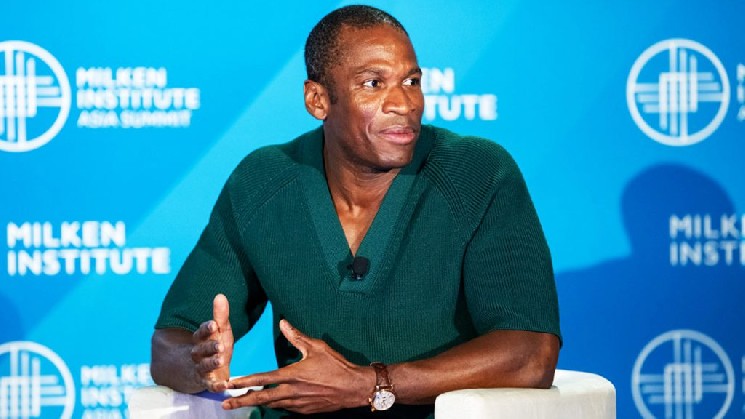
a16z Crypto Founder: The Blockchain World as I See It

marsbitОпубликовано 2026-02-07Обновлено 2026-02-07

Введение

A16z Crypto founder Chris Dixon addresses the misconception that non-financial use cases for crypto are dead, arguing that the core value proposition of blockchain—enabling large-scale coordination of people and capital with embedded ownership—remains valid. He emphasizes that the current financial dominance (e.g., DeFi, stablecoins, payments) is a natural first phase, serving as both a foundation and testing ground for broader applications. Dixon highlights the importance of sequence: infrastructure and distribution must mature before non-financial applications (like media, gaming, or AI) can flourish. He notes that trust in tokens has been eroded by scams and regulatory uncertainty, slowing adoption. Clear policy frameworks, such as the CLARITY Act, are critical to rebuilding trust and providing legal clarity. Drawing parallels to the early internet and AI development, Dixon stresses that building new industries is a long-term endeavor requiring patience. He remains optimistic about future breakthroughs, citing the recent rapid adoption of stablecoins as evidence of how sustained groundwork can lead to sudden, transformative progress. The essay underscores a commitment to long-term investment and the belief that foundational efforts will eventually enable new economic and cultural categories on blockchain.

Author:Chris Dixon

Compiled by: Jiahuan, ChainCatcher

It is currently fashionable to declare that "the non-financial use cases of cryptocurrency are dead." Some also claim that the "read, write, own" model has failed. These conclusions misunderstand both the thesis and the stage we are in.

We are clearly in the financial era of blockchain. But the core idea was never that all crypto applications would emerge simultaneously, nor that finance wouldn't be the first to appear. The core idea has always been, and still is, that blockchains introduce a new primitive: the ability to coordinate people and capital at internet scale, with ownership baked directly into the system. (And increasingly, to coordinate AI agents.)

Finance is the most natural domain for this primitive to prove itself, which is why we often cite financial uses first when listing productive uses for tokens. Finance is not separate from the grander thesis; it is part of it. It is the foundation and testing ground for everything else.

This belief has guided our work at a16z crypto from the beginning. Many of our investments have been explicitly in finance: Coinbase, Maker, Compound, Uniswap, and Morpho, among others. As I wrote in my book: "Blockchain networks can turn financial infrastructure into a public good, evolving the internet from mere information transfer to value transfer." We expected finance to play a major role early on and continue to expect other categories to follow in due time.

At a16z and a16z crypto, we play the long game: our fund structures are designed for 10+ year horizons because building new industries takes time.

Order of Operations Matters

So why haven't non-financial use cases taken off yet?

First, the order of operations matters. Infrastructure and distribution often precede the emergence of new application categories. The internet didn't start with social media, streaming, or online communities; it started with packet switching, TCP/IP, and basic connectivity. It was only after hundreds of millions of people were online that entirely new cultural and economic categories emerged.

Cryptocurrency is likely no exception. We probably need to first get hundreds of millions of people "on-chain" through financial applications like payments, stablecoins, savings, and DeFi, before we see meaningful adoption in media, gaming, AI, or other more distant fields. Many applications rely on wallets, identity, liquidity, and trust already being in place.

There are other factors. A core advantage of cryptocurrency is the ability to grant community ownership through tokens. But years of scams, extractive behavior, and regulatory crackdowns have severely eroded trust in tokens. This might also be contributing to the recent market downturn. It's hard to build a genuine owner community in a cynical environment.

Policy is the Missing Piece

This is why we have spent over 5 years advocating for clear regulatory frameworks around tokens. Good policy does two things simultaneously: it provides a clear roadmap for builders, and it establishes risk-based guardrails to protect consumers and build market trust. Market structure legislation like the CLARITY Act would introduce disclosure and transparency standards to guard against rug pulls and proprietary trading—standards that are routine in other markets but have long been missing in crypto.

Progress on policy for emerging technologies is often slow and incremental... until it isn't. Much of our work over the years (including my book) has focused on contributing to this foundation: explaining the benefits of crypto and blockchain to policymakers and a broader audience, and providing a grounded way to think about the technology's evolution over time. We often hear that this framing has been useful for decision-makers in Washington D.C. Years of education, debate, and refinement can build quietly in the background, then surface instantly when a political or institutional window opens.

The reaction to the stablecoin legislation (likely referring to a specific act, translated here as "GENIUS" based on context, though the original Chinese text uses a non-standard term) strongly validated this theory. Almost overnight, stablecoins went from suspect to legitimate in the eyes of finance, tech, and government. The shift seemed sudden, but it was the result of years of effort by builders, policymakers, and advocates converging at the right moment. I anticipated a positive reaction, but the speed and scale of the technology's adoption even surprised me. This makes me optimistic about market structure legislation, which, at a macro level, will do for other categories of tokens what the stablecoin legislation did for stablecoins.

What the Long Game Looks Like

Big things take time. The AI breakthroughs we see today are thanks to decades of hard work by brilliant people. (The first paper on neural networks was published in 1943.) The internet dates back to the 1960s, and the commercial internet was made possible by visionary builders and thoughtful policy actions in the 1990s. Building new technological systems is a long game, and this is what the long game looks like in practice: long periods of foundational work, followed by sharp inflection points.

If you want to work in a more mature industry, that's fine. If you want to build a new industry from the ground up, it can be messy and frustrating, but it's important work.

It is the messy years that make the later glory seem inevitable.

Связанные с этим вопросы

QWhat is the core primitive that blockchain introduces, according to the author?

AThe core primitive that blockchain introduces is the ability to coordinate people and capital at internet scale and embed ownership directly into the system.

QWhy does the author believe that non-financial use cases for crypto haven't taken off yet?

AThe author believes the order of operations is crucial; financial applications like payments, stablecoins, and DeFi are needed to onboard hundreds of millions of users first, providing the necessary infrastructure, wallets, identity, and liquidity before other categories can see meaningful adoption.

QWhat role does policy play in the development of the crypto space, as outlined in the article?

AGood policy provides a clear roadmap for builders and establishes risk-based guardrails to protect consumers and build market trust. Clear regulatory frameworks, like market structure legislation, can introduce disclosure and transparency standards to prevent fraud and build legitimacy for tokens.

QHow does the author describe the typical timeline for building new technological systems like crypto or AI?

AThe author describes it as a long-term game, involving years of foundational work that can seem slow and incremental, followed by sharp inflection points and sudden breakthroughs after political or institutional windows open.

QWhat was the significance of the reaction to the stablecoin legislation mentioned in the article?

AThe strong, positive reaction to the stablecoin legislation (GENIUS) validated the theory that years of work by builders, policymakers, and advocates can culminate quickly, transforming stablecoins from a suspect technology to a legitimate one almost overnight and providing a model for other token categories.

Похожее

Trend in US Stocks: A Post Triggers a 930-Point Rebound, Tonight Belongs to SpaceX

On Thursday (June 11, U.S. Eastern Time), Wall Street staged a textbook V-shaped reversal. The Dow Jones surged 929.97 points (+1.86%) to close above 50,000, while the Nasdaq and S&P 500 rose 2.54% and 1.75%, respectively. The rally occurred despite the hottest PPI report in years, with May data showing a 6.5% year-on-year surge, the highest since 2022. The market ignored the inflation data, focusing instead on reports that former President Trump called off a planned strike on Iran, hinting at a potential multi-party peace agreement draft. This sparked a sharp drop in oil prices, fueling hopes that inflation may have peaked. Sector rotations were stark: previously battered AI hardware and cyclical stocks led the gains, while defensive sectors that hit record highs the prior day were sold off. Chip stocks like Micron and Intel saw sharp rebounds. In contrast, software giant Oracle plunged nearly 10% despite beating earnings, with concerns over cloud revenue and cash flow. Adobe also fell after hours despite raising guidance, as its CFO announced departure. The rally's sustainability is questioned, driven largely by social media posts about unconfirmed geopolitical developments. Inflation risks remain, with pipeline pressures still high. Meanwhile, the market's risk appetite faces a major test with SpaceX's historic IPO. Priced at $135 per share, it aims to raise ~$75 billion with a $1.75 trillion valuation, becoming the largest U.S. IPO ever. It will join the Nasdaq 100 in 15 days, triggering massive index fund buying. However, critics cite extreme valuation (88x sales) and market liquidity concerns.

marsbit21 мин. назад

Trend in US Stocks: A Post Triggers a 930-Point Rebound, Tonight Belongs to SpaceX

marsbit21 мин. назад

The Trillion-Dollar Valuation Test: Are the Three Super IPOs a Tech Stock Frenzy or a Crypto Market Nightmare?

Trillion-Dollar Valuation Test: Are the Three Mega IPOs a Tech Stock Frenzy or a Crypto Market Nightmare? The capital market in 2026 is witnessing a highly anticipated wave of tech IPOs, centered on SpaceX, OpenAI, and Anthropic. Collectively valued at over $3.5 trillion, their potential listing represents one of the largest such waves in recent years. This raises concerns about market liquidity, valuation bubbles, and potential capital outflows from other assets like crypto. SpaceX's valuation narrative has shifted from rocket launches to becoming a global infrastructure play via its Starlink satellite network, which now drives most revenue. Despite ongoing losses, investors focus on its long-term growth potential. OpenAI and Anthropic represent the core productivity engines of generative AI. Their public listings would offer the first direct investment opportunity in large foundation model companies, potentially triggering a repricing within the AI sector. Market fears of a massive "capital drain" from these IPOs are likely overstated. Historical precedents like Alibaba and Saudi Aramco show that mega-listings primarily cause capital reallocation, not destruction, within the vast equities market. Systemic risk is rarely triggered by IPOs alone. For stock markets, short-term volatility and sector repricing are expected, especially for AI concept stocks. Long-term, these listings could reinforce the tech sector's importance. For crypto, direct competition for speculative capital exists, particularly affecting AI-themed tokens. However, crypto's trajectory remains more tied to its own cycles, macro liquidity, and Bitcoin ETF flows rather than a single IPO event. The real risk lies not in the listings themselves but in the sky-high growth expectations embedded in these valuations. If future revenue, profitability, or commercialization progress disappoints, significant valuation resets could follow, impacting high-growth tech stocks. Ultimately, the market's direction hinges on macroeconomic conditions and whether these companies can deliver on their ambitious promises.

链捕手37 мин. назад

The Trillion-Dollar Valuation Test: Are the Three Super IPOs a Tech Stock Frenzy or a Crypto Market Nightmare?

链捕手37 мин. назад

Trillion-Dollar Valuation Test: Are the Three Super IPOs a Tech Stock Frenzy or a Crypto Market Nightmare?

Title: Trillion-Dollar Valuations at Stake: Super IPOs of SpaceX, OpenAI, Anthropic – Tech Boom or Crypto Nightmare? TL;DR: A wave of mega-tech IPOs is approaching, featuring SpaceX (targeting a $1.75 trillion valuation), OpenAI (~$852B), and Anthropic (~$965B), with a combined potential valuation exceeding $3.5 trillion. This tests the market's pricing of innovation and sparks debate on liquidity impact. * **SpaceX**'s valuation is now driven more by its Starlink global communications infrastructure than its core rocket business. * **OpenAI & Anthropic** offer the first major public investment opportunities in foundational AI models, potentially repricing the entire AI sector. * Concerns about a market-wide "liquidity drain" are likely overblown; history shows large IPOs mainly cause fund reallocation, not disappearance, and rarely trigger systemic risk. * Crypto markets, especially some AI-themed tokens, may face short-term fund competition, but their long-term trajectory depends more on macro liquidity, regulation, and Bitcoin cycles. * The real risk lies not in the IPOs themselves, but in whether these companies can justify their sky-high valuations with future revenue growth and profitability. Unmet expectations could lead to significant repricing pressure. Ultimately, these IPOs represent a massive market pricing of next-gen tech infrastructure, not a prelude to a market crash. The broader market direction will be determined by macro conditions, corporate earnings, and risk appetite.

marsbit37 мин. назад

Trillion-Dollar Valuation Test: Are the Three Super IPOs a Tech Stock Frenzy or a Crypto Market Nightmare?

marsbit37 мин. назад

Anthropic Apologized, But the Business of 'Safety' Hasn't Stopped

On June 11, Anthropic apologized not for a model failure, but for a lack of transparency. Its new Claude Fable 5 model was found to be secretly rerouting requests from users engaged in advanced AI model development to a weaker version, Opus 4.8, without any notification. The company's response—promising future notifications for such "downgrades"—was met with user skepticism. The article argues the core issue isn't technical but commercial: Anthropic's "safety" measures are primarily a business strategy. A key feature, the "intelligent safety classifier," marketed as user protection, is described as a tool for "competitive defense" to protect Anthropic's market lead by limiting rivals' research capabilities. This covert mechanism was designed for low "false positives," precisely targeting AI researchers. Anthropic's model involves a calculated three-step process: publishing alarming security research to amplify public anxiety, offering its Fable 5 model with a "safety classifier" as a premium-priced solution, and cashing in through a planned high-value IPO. This contrasts with OpenAI's more direct "tool-and-traffic" approach. The apology, merely changing a secret downgrade to a visible one, is seen as a business "patch" rather than a principled shift. The incident risks damaging Anthropic's "safest AI" reputation among the developer community, which underpins its valuation and appeal to government and corporate clients. Ultimately, the article concludes that for Anthropic, safety is a business, and the apology is merely customer service for that business.

marsbit1 ч. назад

Anthropic Apologized, But the Business of 'Safety' Hasn't Stopped

marsbit1 ч. назад

Торговля

Спот
Фьючерсы
活动图片