Fidelity Mid-Year Review: 6 Key Digital Asset Trends for 2026

链捕手Опубликовано 2026-06-01Обновлено 2026-06-01

Введение

Fidelity Digital Assets' mid-year review assesses progress against its 2026 outlook, highlighting six key trends. The integration of digital assets with traditional capital markets is accelerating, with growing institutional product adoption and clearer U.S. regulatory guidance. Token holder rights mechanisms are being tested but have yet to command a clear market premium. Competition from AI compute demand is potentially slowing Bitcoin mining hash rate growth, indicating a structural shift. Bitcoin's network faces low risk from increased data capacity but shows signs of potential minor consensus divergence with the rise of Knots nodes, while quantum security upgrades gain focus. Market dynamics have leaned bearish due to macro pressures, though Bitcoin's resilience in crises suggests underlying strength. Gold has performed strongly, supported by central bank buying and de-dollarization trends, though its anticipated positive correlation with Bitcoin hasn't yet materialized. Overall, beneath short-term volatility, foundational trends for long-term digital asset maturation are advancing.

Author: Fidelity Digital Assets

Compiled by: Jiahuan, ChainCatcher

Mid-year is a good checkpoint for investors to assess how market dynamics have changed and whether their initial judgments still hold.

In the "2026 Outlook," the Fidelity Digital Assets research team argued that the key for this year was not immediate price appreciation, but a more subtle dynamic of structural "reconfiguration" across the digital asset ecosystem. Despite sometimes flat or volatile price performance this year, a closer look reveals that several underlying trends are steadily progressing.

This article reviews the progress to date on several key themes from the "2026 Outlook," highlighting which of our judgments have been validated, which have diverged, and what these changes might mean for the future.

1: Accelerated Integration of Digital Assets and Capital Markets

We previously expected the integration of digital assets with traditional capital markets to continue advancing in 2026. So far, this trend is indeed progressing, with some areas moving even faster than anticipated.

Despite market fluctuations, demand for exposure to digital assets through mainstream financial channels remains robust, and traditional platforms continue to expand their product lines.

Notably, the open interest for spot Bitcoin ETP options (products only launched in November 2024) has now become comparable to that of options settled directly in Bitcoin, reflecting the ongoing adoption by institutional and mainstream investors.

Momentum in the tokenization space is also strengthening, with activity seemingly exceeding expectations. Traditional financial institutions are increasingly launching blockchain-based investment products, while major exchanges are partnering with or acquiring stakes in digital asset platforms to broaden distribution channels and connect to on-chain infrastructure.

Meanwhile, regulatory clarity is also improving. The SEC and CFTC jointly issued guidelines establishing the classification of digital assets, and the advancement of legislation like the CLARITY Act suggests market participants are moving towards a more defined framework.

Taken together, these developments indicate a continued integration of digital assets into the broader financial system, driven by market demand and infrastructure expansion.

2: Token Holder Rights Gaining Attention, Yet Still Unclear

We expected that by 2026, the alignment of token holder interests would become tighter, with more on-chain enterprises prioritizing mechanisms like buybacks and clearer ownership.

So far, the direction appears unchanged, with continued experimentation across the ecosystem: from dynamics of reserve-based buybacks (e.g., the Hyperliquid/USDC alliance) to governance and structural updates like the Aave DAO/Labs reorganization.

However, although adoption of these mechanisms is broadening, a clear "token holder rights premium" has not yet been fully reflected in market pricing. This trend is advancing but remains in its early stages, as investors continue to assess which models can truly deliver sustained value accumulation.

3: Potential Shift from AI to Mining

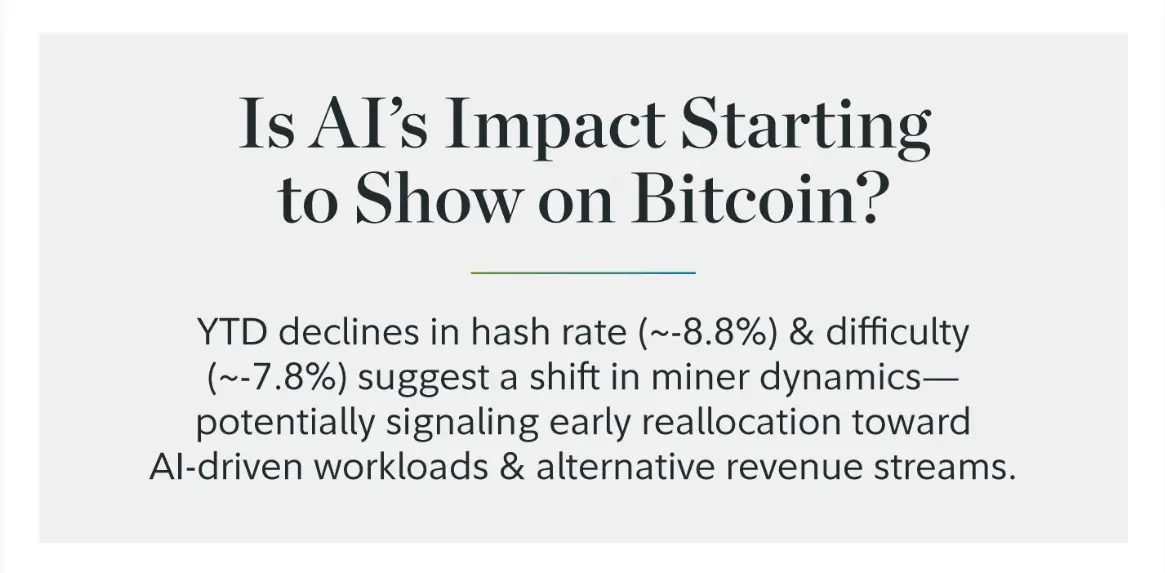
We proposed that increased competition from AI's demand for computing power could flatten Bitcoin's hashrate growth as miners reallocate energy and infrastructure toward potentially more profitable directions. This dynamic may now be emerging this year: the 30-day average hashrate and mining difficulty have declined by approximately 8.8% and 7.8%, respectively.
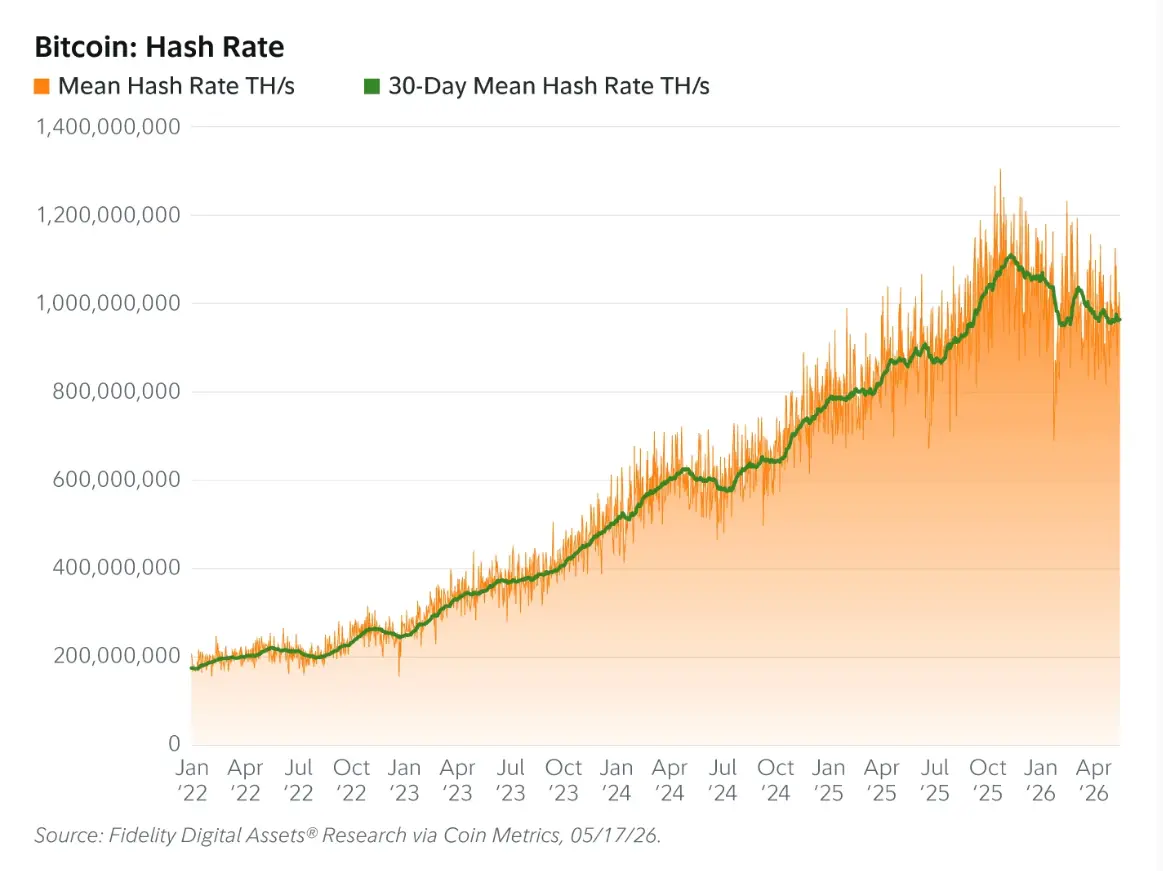
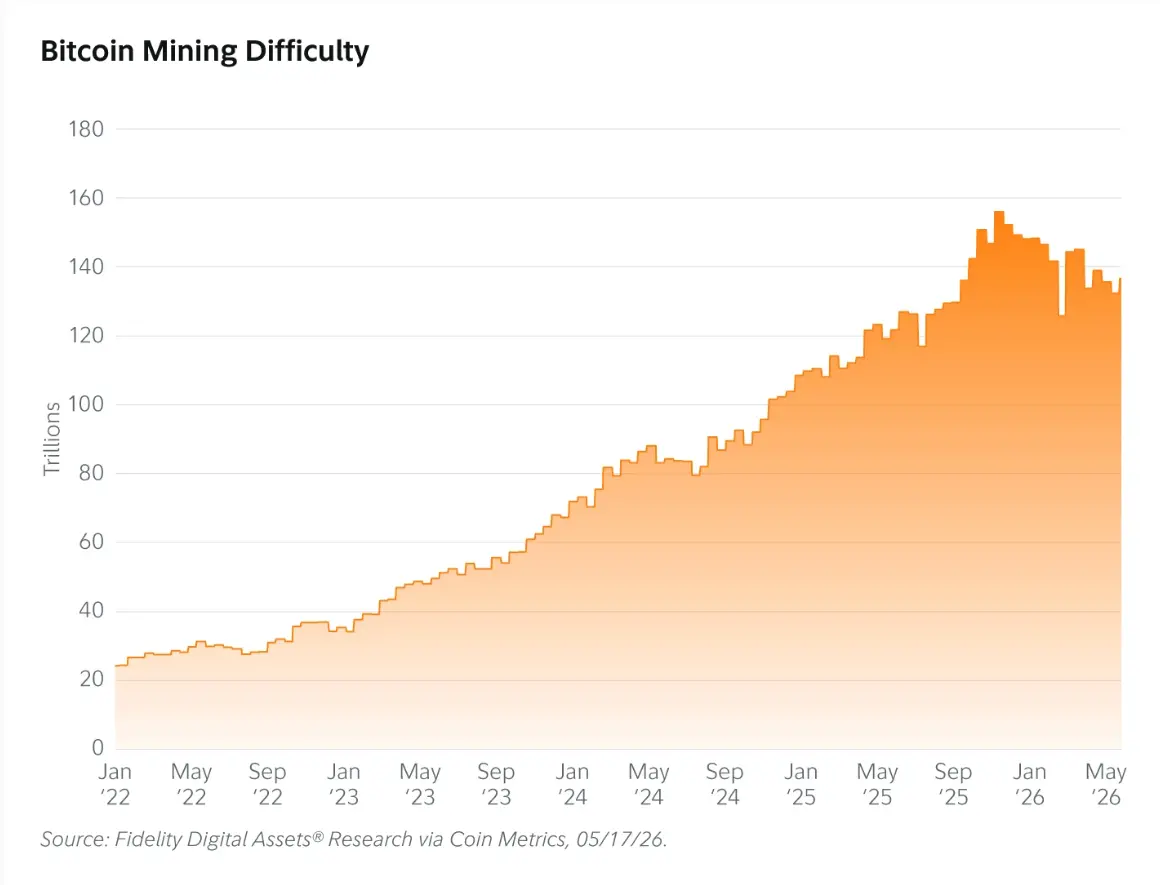
While some of this can be attributed to seasonal factors, particularly winter-related power curtailments, the recent recovery (hashrate up about 1.3% from lows, difficulty up about 8.8%) suggests that weather alone cannot fully explain this shift.

Looking at the longer trajectory, the rate of hashrate growth has slowed compared to previous years, which may be an early signal of structural change. The increasing profitability of AI data center operations, especially for large operators with access to power infrastructure, appears to be an increasingly likely driver behind this.

Though still early, the observed growth slowdown aligns with the initial hypothesis and may reflect miners gradually shifting toward alternative revenue sources.
4: Bitcoin at a New Turning Point

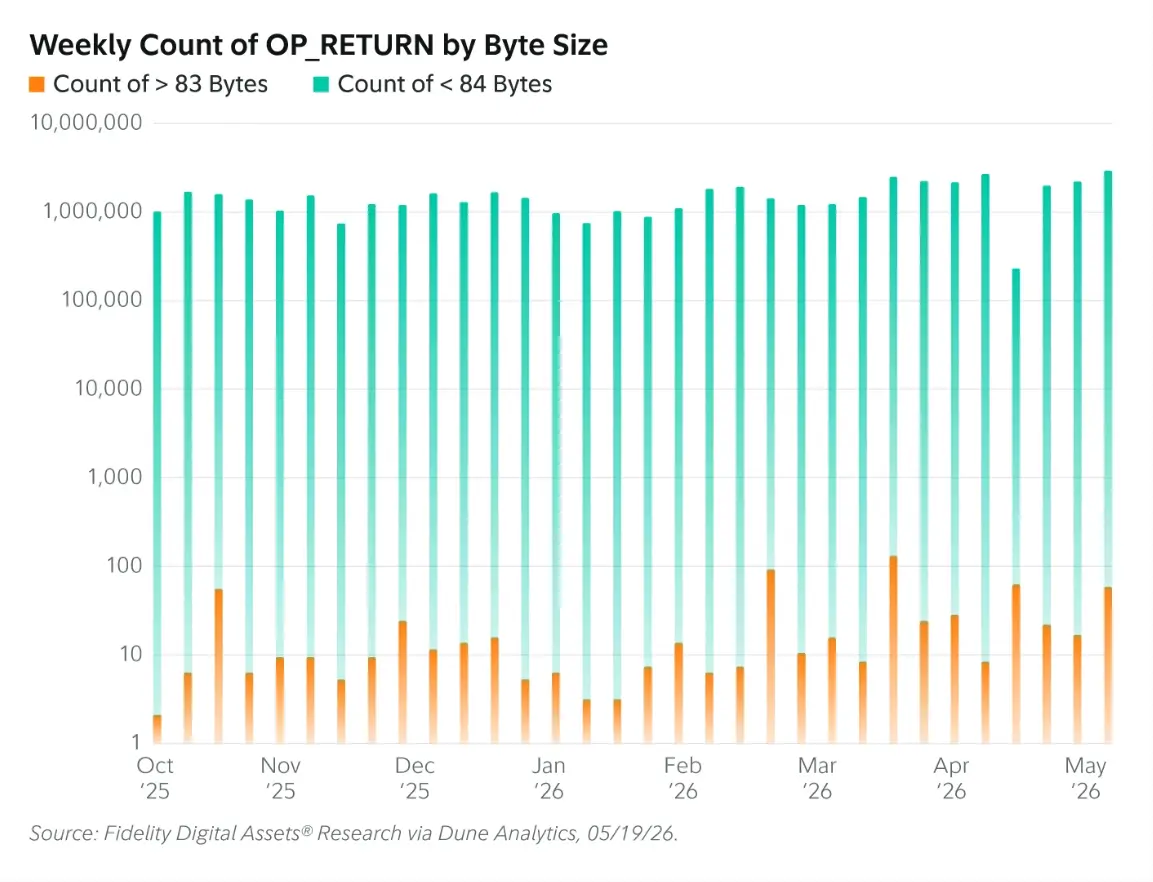
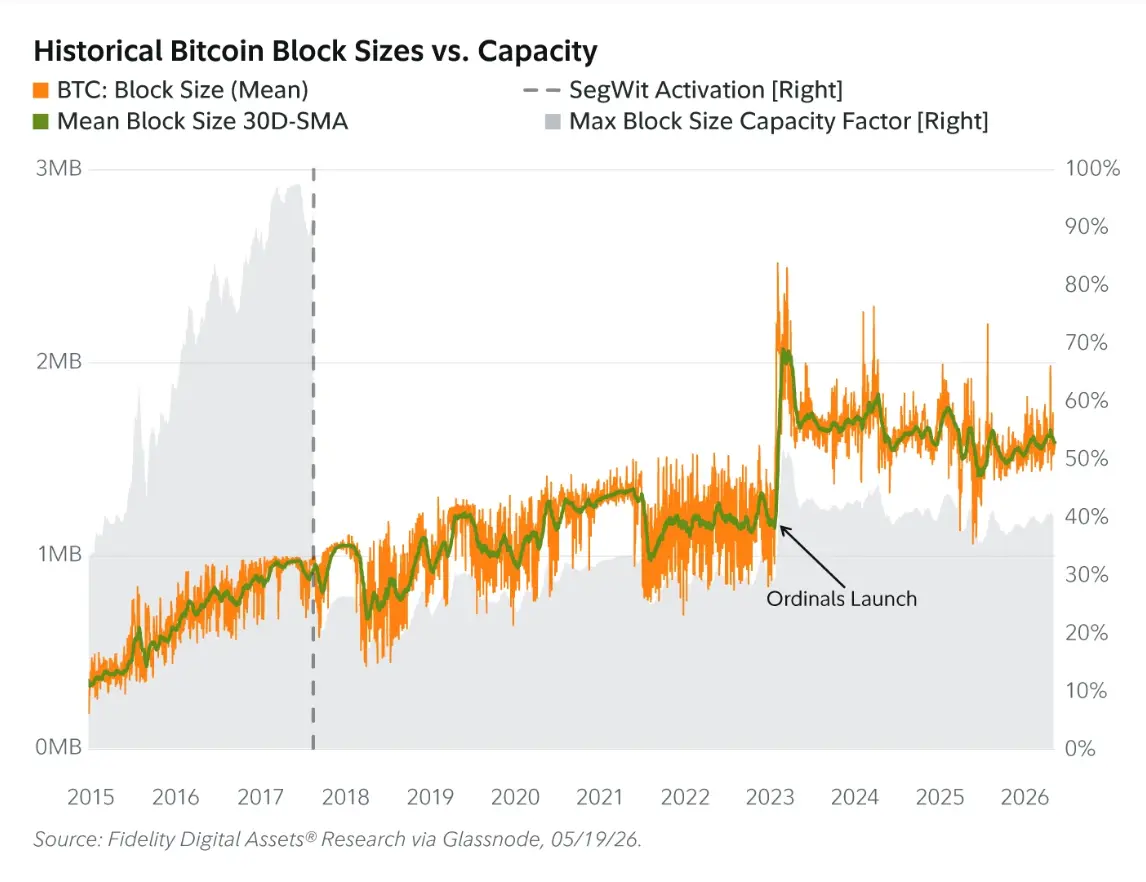
We expected that increasing the amount of data writable via the OP_RETURN opcode would not lead to significant blockchain bloat (OP_RETURN is used for writing data on-chain, and because it requires fees, relaxing its data limit has not led to abuse or network bloat). So far, the data seems to support this view.

Usage of larger (≥84 bytes) OP_RETURNs has largely remained unchanged, and overall blockchain growth remains within predicted ranges (approximately 1.35–2.5MB). Other block utilization metrics show capacity remains below 50%, indicating that increased data flexibility has not placed material stress on the network.

Meanwhile, focus has shifted to broader network dynamics. There has been significant volatility in Bitcoin Knots nodes, with a sharp rise and fall, sparking speculation about potential Sybil-like activity.
Based on current data, Bitcoin Core nodes still constitute about 77% of the network, while Knots nodes make up about 17%. Although a minority, this introduces the risk of an unexpected split—low probability, but not zero: under certain conditions, Knots nodes could diverge into a stalled or less secure chain, with current projections suggesting this scenario could materialize in approximately 80 days.

However, Core's dominant share continues to anchor network consensus. At the same time, momentum around long-term security upgrades is also building. BIP-360 has been simplified, introducing a quantum-resistant output type (Pay-to-Merkle-Root, or P2MR); ongoing OP_CHECKSHRINCS research reflects exploration of hash-based post-quantum signature schemes.

Although the specific timeline for a quantum threat remains uncertain, these developments show that the industry is placing increasing importance on preparing early for the network's future security.
5: Bears Temporarily in Control

In January, we outlined two scenarios for entering 2026 where bullish and bearish forces were balanced, expecting macro conditions to lead to a non-linear path despite improving structural fundamentals.

This year, the bearish scenario has largely prevailed: Bitcoin is down 13%, driven by deleveraging from liquidations, stubbornly high inflation, and geopolitical uncertainty prompting markets to price in further rate hikes. However, recent market performance reveals a more nuanced dynamic.

Following an initial wave of selling triggered by recent geopolitical conflict, Bitcoin has bounced back and has outperformed traditional assets during the same period, perhaps reflecting demand for highly liquid, neutral assets during stressful times.

Meanwhile, structural tailwinds remain, including continued formation of institutional capital, gradually improving regulatory clarity, and expanding global liquidity.

Despite a constrained near-term environment, our broader judgment still appears valid, though it is not progressing smoothly.

6: Gold Strength Persists, What's Next?

We noted that another strong year for gold would not be surprising, supported by central bank buying and the global trend of gradually moving away from the US dollar system.

This year, gold initially rallied nearly 30% amid geopolitical tensions before retreating to a more moderate gain of about 3–4%. Despite the pullback, gold may still finish the year outperforming the broader market.

Evidence supporting a move away from the dollar system is also growing, including emerging alternative settlement methods, such as Iran accepting Bitcoin for toll payments and payments related to activity in the Strait of Hormuz.

At the same time, central bank demand for gold remains strong. Recent data show continued accumulation, and notably, gold has surpassed the US dollar and US Treasuries to become the primary component of global reserves.

Gold's performance and sustained central bank demand are largely consistent with our initial view; however, the subsequent outperformance we expected for Bitcoin has yet to materialize.

Conclusion: Building Strength Beneath the Surface

Midway through the year, the 2026 digital asset landscape presents a balance between short-term pressures and long-term progress. Several themes from the "Outlook" are evolving as expected, particularly regarding institutional participation, regulation, and infrastructure; however, others remain in early stages or have yet to fully materialize.

For investors, this underscores the need to look beyond short-term price volatility and observe how structural shifts are taking shape. Much of the foundation supporting the next phase of growth appears to be thickening, even if not yet fully visible.


Связанные с этим вопросы

QAccording to the Fidelity Digital Assets mid-year review, what are the two main areas where the integration of digital assets with traditional capital markets is progressing faster than expected?

AThe two main areas are the demand for digital asset exposure through mainstream financial channels (evidenced by the comparable open interest in spot Bitcoin ETP options and directly-settled Bitcoin options) and the tokenization space, where traditional financial institutions are increasingly launching blockchain-based investment products.

QWhat key evidence does the article cite to suggest a potential structural shift in Bitcoin mining due to competition from AI compute demand?

AThe article cites a decline in Bitcoin's 30-day average hash rate and mining difficulty by approximately 8.8% and 7.8% respectively. While partially attributable to seasonal factors, the slower pace of hash rate growth compared to previous years is seen as an early signal that miners may be reallocating energy and infrastructure to more lucrative AI data center operations.

QWhat are the two potential network risks for Bitcoin discussed in the article under the trend 'Bitcoin at a New Inflection Point'?

AThe two potential risks are: 1) The fluctuating number of Bitcoin Knots nodes, which introduces a low-probability but non-zero risk of a chain split if they diverge into a stalled or less secure chain. 2) The long-term need to prepare for quantum computing threats, with ongoing research into post-quantum cryptographic solutions like BIP-360 and OP_CHECKSHRINCS.

QDespite the bearish short-term price action for Bitcoin in 2026, what structural positive factors does Fidelity identify as remaining in place?

AThe structural positive factors identified are: the continued formation of institutional capital, the gradual improvement in regulatory clarity, and the expansion of global liquidity.

QWhat two major drivers are supporting gold's performance in 2026, as outlined in the article?

AThe two major drivers are: sustained central bank demand for gold (which has made it a primary component of global reserves) and the broader global trend of de-dollarization, evidenced by new alternative settlement methods like Iran accepting Bitcoin for toll payments.

Похожее

BitMart Research Institute Weekly Highlights: ETF Continued Outflows + AI Drain, Crypto Market Seeks Bottom Amid Volatility

**BitMart Research Weekly Highlights: ETF Outflows and AI Demand Weigh on Crypto Market** The crypto market saw a correction this past week, diverging from the all-time highs in U.S. equity markets. Bitcoin (BTC) fell roughly 6%, while Ethereum (ETH) declined about 4.5%. The primary pressure point was significant and sustained outflows from U.S. spot Bitcoin ETFs, which experienced a record nine consecutive days of net redemptions totaling approximately $2.8 billion. Spot Ethereum ETFs also faced continuous outflows. This weakness in digital assets contrasted with the continued surge in traditional markets, particularly AI-related stocks. The news of Anthropic's secret IPO filing, targeting a potential $750B IPO, and Alphabet's major new AI infrastructure funding further fueled the tech rally. The analysis suggests a potential "liquidity siphon" effect, where capital is being diverted from crypto into the dominant AI investment narrative. Other notable developments include DTCC's DTC announcing plans to integrate Stellar for tokenized asset services, signaling a major step for tokenized equities. Meanwhile, MicroStrategy paused its primary mechanism for funding Bitcoin purchases to focus on debt management, removing a key institutional buyer from the market. The report concludes that the crypto market remains under pressure from the competing AI narrative and major upcoming IPOs, with a potential for a broader market bottom if an AI-driven correction occurs later this cycle.

marsbit8 мин. назад

BitMart Research Institute Weekly Highlights: ETF Continued Outflows + AI Drain, Crypto Market Seeks Bottom Amid Volatility

marsbit8 мин. назад

The Death of the Three-Act Play: AI Ushers Enterprise Software Startups into the ‘Speedrun Era’

The Death of the Three-Act Play: How AI is Ushering in a 'Speedrun Era' for Enterprise Software Startups The traditional three-act play for building an enterprise software company—first, a niche wedge product; second, an expanded suite; third, a dominant platform—is becoming obsolete in the AI era. Previously, startups would spend 3-5 years perfecting a single-point solution to reach tens of millions in ARR (Act 1: The Wedge). Then, over another few years, they'd build adjacent products to form a suite and cross the $100M ARR threshold (Act 2: The Suite). Finally, with scale and user engagement, they could aim to become a foundational platform themselves (Act 3: The Platform). This model assumed a timeline measured in years. However, AI-driven tools have dramatically compressed software development costs and timelines. Companies like Cursor, Clay, and Harvey have scaled from near zero to approaching or surpassing $100M ARR in remarkably short periods, demonstrating a new competitive pace. The core argument is that in this rapidly changing market, relying on a small, "safe" wedge as a protective harbor may now be a conservative, even risky, strategy. The plummeting cost of building software means the time required for Acts 1 and 2 is approaching zero. Consequently, rational strategy now favors planning to build the entire vision from the outset. This shift changes the calculus for early-stage investment. The emphasis is moving from finding a defensible niche to backing founders with "unreasonable, relentless ambition" to reimagine entire workflows or replace incumbent platforms from day one. The age of gradual expansion is giving way to an era of immediate, full-scale ambition.

marsbit27 мин. назад

The Death of the Three-Act Play: AI Ushers Enterprise Software Startups into the ‘Speedrun Era’

marsbit27 мин. назад

After the 'Golden Finger' Points to IBM, the Stock God Trump's Next Target Emerges

The White House occupant is being called a "stock god." Financial disclosures show former President Trump executed 3,642 stock trades in Q1 2026, averaging 58 per trading day. More significantly, a pattern has emerged where companies he publicly praises often see their stock prices rise and frequently overlap with his personal portfolio holdings, government industrial policy, and federal funding. Since a high-profile Tesla event in March 2025, Trump has publicly endorsed at least nine companies, including Intel, Dell, Micron, Palantir, IBM, Apple, Thermo Fisher, Nvidia, and AMD. These "Trump concept stocks" share key traits: they are tied to AI, semiconductors, quantum computing, or "Made in America" narratives; they often receive government contracts, subsidies (like CHIPS Act funding), or regulatory favors; and their CEOs typically have strong personal or political ties to Trump. Timing raises questions. In several instances, such as with Palantir and Dell, Trump's personal account established or increased positions weeks before his public endorsements, which were followed by significant stock price jumps. While his assets are reportedly held in a blind trust managed by his children, the correlation is notable. Based on this pattern, analysis suggests the next companies likely to be endorsed are those where the US government has already taken a strategic equity stake but which haven't yet received a high-profile "call-out." Prime candidates include MP Materials (rare earths, 15% DoD interest), Lithium Americas (lithium, DoE-backed), and quantum computing firms like IonQ, Rigetti, and D-Wave, which are reportedly in talks for government equity-for-funding deals. Other potential names are Oracle (deep political ties) and GlobalFoundries (semiconductors and quantum funding). These stocks carry high political premium, meaning their valuations are highly sensitive to political favor, which can be volatile.

marsbit52 мин. назад

After the 'Golden Finger' Points to IBM, the Stock God Trump's Next Target Emerges

marsbit52 мин. назад

Торговля

Спот
Фьючерсы
活动图片