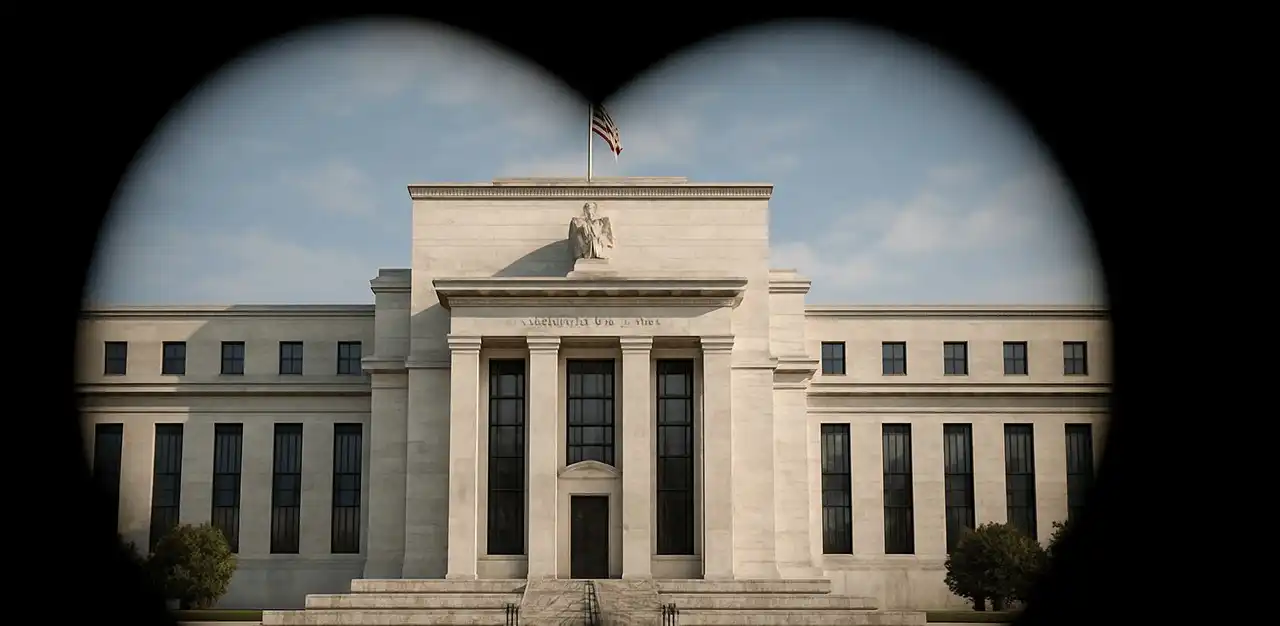
What Wall Street Really Wants After the Crypto Story Recedes

marsbitОпубликовано 2026-06-17Обновлено 2026-06-17

Введение

The tide of speculative crypto narratives has receded, revealing Wall Street's true objective: building a controlled, yield-generating, and compliant financial pipeline on distributed ledgers. They are migrating core functions onto blockchains, not for decentralization, but for efficiency and new revenue streams. Key developments include BlackRock's BUIDL fund, a tokenized treasury fund acting as a foundational reserve asset, and the rise of Securitize, which is going public and partnering with the NYSE to build a 24/7 digital securities trading and settlement system. This signals a major shift of securities clearing to blockchain technology. To make volatile assets like Bitcoin palatable for institutional investors, firms like BlackRock and Goldman Sachs are creating "covered call" ETFs (e.g., BITA). These products systematically sell options on Bitcoin holdings, transforming price volatility into stable monthly income, effectively repackaging crypto as a yield-bearing asset. Stablecoins are being positioned not as speculative tools but as efficient payment rails. Companies like Stripe and Mastercard are integrating them for instant, low-cost merchant settlements and cross-border card payments, respectively. Critically, new legislation like the GENIUS Act shapes them as non-interest-bearing, heavily regulated extensions of the US dollar system. In summary, Wall Street is quietly constructing a parallel, blockchain-based financial infrastructure featuring tokenized tradit...

Author: Vernacular Blockchain

In the fall of 2008, on the weekend when Lehman Brothers collapsed, Wall Street traders were packing boxes in their offices. Months later, a person using the pseudonym Satoshi Nakamoto inscribed the genesis block into the Bitcoin network, attaching a taunt: "The Chancellor is on the brink of a second bailout for banks."

That was a declaration of war on Wall Street. Seventeen years later, the tide has turned.

Most of those who declared war have dispersed, while Wall Street has instead walked the path they paved into the on-chain world. However, this time, they bring not speculative narratives, but treasury bonds, option contracts, and banking settlement systems.

Between 2025 and 2026, the global scale of tokenized assets surged over 220%. The BUIDL fund managed by BlackRock has stabilized its assets under management between $25 billion and $28 billion, becoming the anchor of the on-chain short-term U.S. Treasury market. Securitize is about to list on the NYSE with a valuation of $1.25 billion, while the NYSE itself has signed a memorandum of understanding to build a 24/7 stock clearing system on-chain.

Wall Street no longer wants the "decentralization" story. What they want is a set of compliant financial pipelines they can control, that generate yield, but this time, these pipelines are built on distributed ledgers.

01 Moving Treasury Bonds On-Chain: BlackRock and Securitize's Tokenization Empire

The design of the BUIDL fund is purely in the taste of traditional buy-side institutions.

Minimum investment of $5 million, open only to "Accredited Investors" as defined by U.S. law. Underlying assets are 100% allocated to cash, short-term U.S. Treasuries, and overnight reverse repurchase agreements, with Bank of New York Mellon as the custodian. No exposure to crypto assets whatsoever, as clean as a money market fund.

But it runs on-chain. Through Securitize's transfer agent infrastructure, BUIDL achieves daily dividend auto-reinvestment and 24/7 instant transfers. This has quickly made it the safest underlying reserve asset in the eyes of large on-chain protocols, derivatives clearinghouses, and synthetic dollar issuers.

More noteworthy is Securitize's own path to capitalization. In June 2026, the SEC announced that its merger registration statement with a SPAC affiliated with Cantor Fitzgerald had become effective. The pre-merger valuation was $1.25 billion, accompanied by $225 million in PIPE financing. The new company will list on the NYSE under the name "Securitize Corp." with the ticker symbol SECZ.

Simultaneously, the NYSE signed an MOU with Securitize in March, designating the latter as the first official transfer agent for its planned digital trading platform. This platform has grand ambitions: using the NYSE's existing matching engine plus a private blockchain to enable 24/7 trading, on-chain instant settlement, and stablecoin funding channels for U.S.-listed stocks and ETFs.

Nasdaq, across the street, has taken another path, choosing to overlay a tokenized trading layer on top of the traditional clearing system. The NYSE is building a brand-new on-chain trading and transfer system from scratch.

The technical routes of the two exchanges are diverging. This in itself speaks to one thing: Wall Street's core securities clearing function is migrating towards distributed ledger technology.

Meanwhile, the synthetic dollar protocol Ethena invested $250 million in the STAC fund issued by Securitize. This fund invests in AAA-rated collateralized loan obligations, deployed on the Solana chain.

Ethena's reason for doing this is straightforward: Its synthetic dollar USDe previously heavily relied on crypto derivatives arbitrage to maintain its peg. Once the market cooled and funding rates turned negative, yields would dry up. Now, floating rates from the traditional credit market provide its safety net.

The global CLO market exceeds $1.3 trillion. This capital is flowing into the reservoir of on-chain finance through the programmability of public chains.

02 Making Money Even if Bitcoin Doesn't Rise: BITA's Covered Call Magic

Bitcoin pays no interest and is highly volatile, which has kept pension funds and sovereign wealth funds away. Wall Street's solution: turn volatility itself into yield.

BlackRock's iShares Bitcoin Premium Income ETF (ticker BITA) is expected to list around June 19, 2026. Its mechanism is not complex but quite ingenious.

The fund holds physical Bitcoin and BlackRock's own IBIT spot ETF as its underlying positions. IBIT has over $50 billion in assets under management, with excellent secondary market liquidity. On this foundation, the fund manager systematically sells short-term call options on IBIT, collects premiums, and after deducting the 0.65% management fee, distributes the proceeds to investors monthly in the form of cash dividends.

In essence, it trades the potential for Bitcoin's explosive growth for stable monthly income.

If Bitcoin trades sideways or dips slightly, BITA's performance will far exceed simply holding the spot asset, as the option premiums provide downside cushion and stable income. However, if Bitcoin surges sharply in the short term, exceeding the option strike price, the excess gains go entirely to the option buyer, and BITA holders only receive the capped return.

This resembles the fixed annuity products traditional financial advisors sell to retirees. Wall Street has stripped away Bitcoin's chaotic volatility and repackaged it into a standardized, income-generating asset that pays interest monthly.

Existing similar products like BTCI and YBTC offer coupon dividend rates as high as 27% to 41%, but suffer from shallow liquidity and significant basis risk, with their principal severely eroded during the past year's bull market. BlackRock's advantage lies in the $50 billion liquidity pool of its IBIT underlying asset, something other issuers simply cannot match.

Goldman Sachs isn't sitting idle either, planning to launch its own Premium Income product in early July. The fact that established investment banks are now in direct competition on the same track indicates this is no longer a pilot but a consensus direction.

03 Stablecoins Aren't Trading Tools, They're Cash Registers

Credit card payment experiences are smooth, but for a cross-border transaction from swipe to the merchant actually receiving funds, it often takes several days. The process passes through correspondent banks, clearing agents, and settlement cycles layer by layer, with fees being siphoned off at each step.

Stablecoins are changing this.

Stripe now accepts merchants in over 70 countries globally to receive payments directly via stablecoins. Consumers pay by scanning a wallet QR code, Stripe confirms instantly on Solana, Ethereum, or Polygon, and the backend handles forex and compliance checks through Bridge.xyz, which it acquired for $1.1 billion. Merchants can choose to receive USD or keep USDC. The entire process requires almost zero development cost for the merchant.

Mastercard has gone even further. The upgraded settlement architecture launched in June 2026 supports financial institutions using compliant stablecoins like USDC, PYUSD, RLUSD, etc., to execute card clearing intraday, on weekends, and on holidays across multiple mainstream public chains. Banks no longer have to wait for weekdays to settle.

Even SWIFT can't sit still anymore. The giant controlling global cross-border payment messaging released a roadmap for its Minimum Viable Product of a distributed "Shared Ledger" in March 2026, aiming to allow global commercial banks to directly manage tokenized deposits via a consortium blockchain, enabling 24/7 cross-border clearing.

This isn't about eliminating correspondent banks, but about solving a real pain point: To prevent settlement failures due to time zones and holidays, small and medium-sized banks globally have long frozen over $10 trillion in reserves at large correspondent banks.

The key enabler for all this happening is legislation. The GENIUS Act, signed into law in 2025, excludes compliant stablecoins from the definitions of securities and commodities, while making two key designs.

First, it prohibits stablecoins from distributing dividends to holders, firmly restricting them to the category of "pure payment instruments" to prevent the siphoning of bank deposits. Second, it mandates stablecoin issuers be brought under anti-money laundering regulatory systems, making dollar stablecoins an extension tool for the U.S. to expand the effectiveness of global financial sanctions.

No dividends, strong regulation, programmable. This is the stablecoin Wall Street wants.

04 Summary

Wall Street hasn't slowed down. They've just changed their path.

No more coin speculation, no more grand narratives of decentralization. On-chain, they are replicating an entire set of things they are familiar with: treasury bond funds, covered call options, card clearing networks, compliant transfer systems. Each product comes with hard yield, each pipeline is embedded with U.S. sovereign credit.

Blockchain fundamentalists once dreamed of replacing Wall Street with code. In the end, Wall Street learned to write code.


Связанные с этим вопросы

QWhat is the core shift in Wall Street's approach to blockchain technology, as described in the article?

AThe core shift is that Wall Street is no longer pursuing speculative 'decentralization' narratives or crypto trading. Instead, they are focusing on building a compliant, yield-generating financial infrastructure on distributed ledgers that they can control, such as tokenized treasury funds, covered call strategies, and new payment/clearing systems.

QExplain the purpose and significance of BlackRock's BUIDL fund in the context of tokenized assets.

ABlackRock's BUIDL fund is a tokenized short-term U.S. Treasury fund that serves as a foundational reserve asset in the on-chain world. Its significance lies in bringing traditional, highly secure financial assets (cash, treasuries, repos) onto the blockchain with features like daily dividend reinvestment and 24/7 instant transfers, attracting large protocols and institutions seeking safe, regulated on-chain yield.

QHow does the iShares Bitcoin Premium Income ETF (BITA) transform Bitcoin into a product appealing to traditional investors?

AThe BITA ETF transforms Bitcoin by systematically selling covered call options against its Bitcoin holdings. This strategy converts Bitcoin's price volatility into stable monthly cash income for investors, effectively repackaging it as a standardized, income-generating asset. It appeals to traditional investors by offering downside buffering and predictable yields, similar to fixed-income products, while capping exposure to extreme upside price movements.

QAccording to the article, what key regulatory design under the GENIUS Act shapes the role of stablecoins in finance?

AThe GENIUS Act shapes the role of stablecoins by: 1) Prohibiting them from distributing dividends to holders, firmly defining them as 'pure payment tools' to prevent bank deposit drainage. 2) Mandating that issuers comply with anti-money laundering regulations, making USD stablecoins an extension tool for U.S. global financial sanctions. This creates a framework for stablecoins that are non-interest-bearing, heavily regulated, and programmable.

QWhat fundamental challenge in the traditional financial system are institutions like SWIFT and Mastercard aiming to address with their new blockchain initiatives?

AThey aim to address the inefficiency and cost of cross-border and interbank settlement. A key pain point is the trillions of dollars in reserves that smaller banks are forced to park at larger correspondent banks to guard against settlement failures due to time zones and holidays. Their blockchain initiatives (like SWIFT's shared ledger and Mastercard's upgraded settlement) seek to enable 24/7, near-instant, and direct settlement, thereby freeing up this trapped capital and reducing intermediary fees.

Похожее

Behind HYPE's Repeated Record Highs, the 'Minions' in the Ecosystem Can't Keep Up

While HYPE, the native token of the Hyperliquid ecosystem, surges to new all-time highs above $76 and attracts significant institutional ETF inflows, a starkly different reality unfolds within its HyperEVM application layer. Multiple core DeFi protocols across lending, NFTs, stablecoins, and DEXs have announced shutdowns between May and June. The article argues HYPE functions more like an "application stock" than a traditional ecosystem token. Its value is anchored to the trading fees from Hyperliquid's core perpetual contracts platform (HyperCore), which boasts a diversified revenue stream from crypto, commodities, and indices. Approximately 97% of protocol fees fund buybacks and burns of HYPE. This means HYPE's price is largely decoupled from the health of projects built on HyperEVM. The closures of significant projects like lending protocol HypurrFi (peak TVL >$300M) and NFT marketplace Drip.Trade highlight a structural tension. Hyperliquid's minimalist philosophy offers infrastructure without official grants, liquidity support, or marketing coordination for HyperEVM projects. This forces protocols into a fiercely competitive environment from day one. Furthermore, the success of HyperCore creates a liquidity vacuum, and mechanisms like HIP-3 (allowing direct perpetual market deployment) divert user attention and capital away from application-layer projects. The stronger the core perpetual trading business becomes, the more difficult it is for peripheral "DeFi lego" projects to survive and capture value, despite the flagship token's rising price.

Foresight News18 мин. назад

Behind HYPE's Repeated Record Highs, the 'Minions' in the Ecosystem Can't Keep Up

Foresight News18 мин. назад

Conversation with Arthur Hayes: AI Has Drained Market Liquidity, BTC Will Be Below 100k by Year-End

In this June 2026 podcast interview, BitMEX co-founder Arthur Hayes explains his decision to sell his major crypto holdings (HYPE, NEAR, Worldcoin, Zcash). His rationale is based on a macro view linking oil prices, the Iran conflict, US politics, and an impending AI bubble burst. Hayes argues that high oil prices, driven by the ongoing war, will pressure domestic US inflation. To salvage the Republican Party's chances in the midterm elections, he believes Donald Trump may pivot to a populist, anti-AI stance—advocating for taxes and regulation—which would deflate the AI investment narrative. He sees the AI sector, particularly massive capital expenditure on data centers, as having absorbed nearly all excess market liquidity (around $1.5 trillion in debt issuance since 2025), starving other assets like Bitcoin. He highlights the upcoming SpaceX IPO at a ~$1.8 trillion valuation and 100x price-to-sales ratio as a potential tipping point. If these hyped IPOs underperform, it could shatter market confidence in AI. In such a scenario, all risk assets, including crypto, would fall together as correlations converge to 1 during a broad correction. Hayes has moved his portfolio into Treasuries and energy stocks (like ExxonMobil), predicting Bitcoin will be below $100k by year-end. He sees a potential crypto bull market only after the AI frenzy cools, liquidity stops flowing exclusively into AI, and possibly after a significant market downturn prompts new monetary stimulus.

marsbit29 мин. назад

Conversation with Arthur Hayes: AI Has Drained Market Liquidity, BTC Will Be Below 100k by Year-End

marsbit29 мин. назад

Fed's Internal Doves Flock to Hawkish Stance, Warsh's Debut "Between a Rock and a Hard Place"

U.S. Federal Reserve officials who previously advocated for rate cuts, including Governor Christopher Waller, have recently shifted their stance, with many now not ruling out the possibility of future rate hikes. This sets a challenging stage for new Fed Chair Kevin Warsh's first policy meeting. Appointed by President Trump based on his dovish views, Warsh now faces a committee where the debate has pivoted from "when to cut" to "whether to hike," driven by persistent inflation above 3%, a strong labor market, and supply-side pressures from AI infrastructure demands and geopolitical tensions. Key figures illustrate the shift. Governor Waller, once concerned about employment, now says data has pushed him toward considering rate increases. Even moderate voices like Governor Lisa Cook, while expecting inflation to ease, have indicated readiness to hike if it fails to do so. Long-time hawks such as regional Fed presidents Beth Hammack, Lorie Logan, and Neel Kashkari have grown more vocal, arguing that the real policy rate is effectively falling and that action may soon be needed. The upcoming Fed meeting is expected to keep rates steady but will likely remove the "easing bias" from its statement, signaling a neutral stance between cuts and hikes. The quarterly "dot plot" is anticipated to show most officials projecting no cuts this year, with some potentially indicating hikes. Chair Warsh, a critic of the Fed's reliance on forward guidance like the dot plot, must navigate communicating this pivot using tools he has questioned, all while steering policy in a direction counter to the preferences of the president who appointed him. The consensus suggests the Fed's next move could well be a rate increase.

marsbit1 ч. назад

Fed's Internal Doves Flock to Hawkish Stance, Warsh's Debut "Between a Rock and a Hard Place"

marsbit1 ч. назад

The Trillion-Yuan Market Cap 'Yi Zhong Tian': Who is the True Value King?

The article analyzes the three leading Chinese optical module companies, collectively nicknamed "Yi Zhong Tian": Xinyisheng, Zhongji Innolight, and TFC Optical Communication. It evaluates their "cost-performance" not by current stock price, but through three lenses: PEG ratio (growth vs. valuation), earnings quality, and premium/discount for certainty. Xinyisheng shows the most attractive PEG ratio and high profitability, but its valuation reflects discounts for risks like high customer concentration and reliance on overseas markets. Zhongji Innolight, the most expensive, commands a premium for its market leadership, dominant share in key products like 800G/1.6T modules, and higher earnings certainty, though it faces geopolitical risks. TFC Optical, as an upstream component supplier ("water seller"), has the highest gross margin and bets on the long-term CPO/NPO architecture trend, but trades at a high valuation with more stable, less explosive growth. The core argument is that while these companies dominate module assembly, the true profit pool and technological moat lie upstream in laser and switch chips, currently controlled by U.S. firms like Lumentum and Coherent. The long-term "cost-performance" for these Chinese leaders hinges on whether the domestic industry, exemplified by companies like Yuanjie Technology, can successfully move up the value chain into high-power laser chips. Otherwise, their high growth may remain confined to the lower-margin assembly segment.

marsbit1 ч. назад

The Trillion-Yuan Market Cap 'Yi Zhong Tian': Who is the True Value King?

marsbit1 ч. назад

Торговля

Спот
Фьючерсы
活动图片