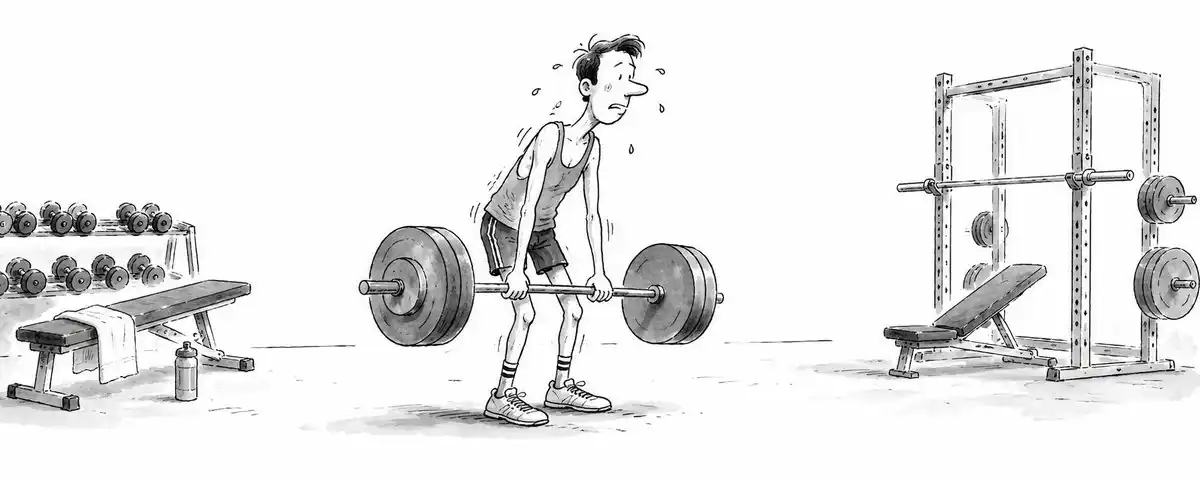
In the 2026 Gaokao (National College Entrance Examination), a phenomenon never seen before emerged.
Candidates had not yet received their scores, but AI had already started competing for them.
Qianwen launched a Gaokao application agent, claiming to be China's first full-cycle intelligent agent for college application planning, offered for free. Kuake upgraded its Gaokao channel, opening up all four major functions for the eighth consecutive year of serving Gaokao users.
Tencent Yuanbao, in collaboration with QQ Browser, introduced Yuanbao Gaokao Assistant, positioning it as a Gaokao consultation agent. Baidu directly embedded the Gaokao module into its ERNIE Assistant. Doubao didn't set up a separate section, but its chat dialog could already answer most questions regarding application filling.
Almost all mainstream AI products are vying for the same entry point: Gaokao college application.
On the surface, this appears to be just another seasonal marketing campaign. Every year during the Gaokao season, internet companies scramble for traffic from candidates and parents.
But if we extend the timeline, something more noteworthy becomes apparent.
For many years, the biggest business around Gaokao has been information asymmetry. And in 2026, this information asymmetry began, for the first time, to transform into a public good.
This is the first time AI has entered Chinese people's life decision-making scenarios on a large scale. It is also the first time AI has begun to influence the future choices of the tens of millions of families behind 12.9 million candidates.
The real change this year did not happen inside the examination halls. It happened outside.
I. What Used to Cost Ten Thousand Yuan Suddenly Became Free
The business of Gaokao application filling has been expanding for over a decade.
From early test prep books and score line manuals to later application planners, one-on-one consultations, and enrollment agencies. Against the backdrop of the education and training industry's transformation and the white-hot competition in civil service and recruitment exams, parents' fear of choosing the wrong major has peaked, directly fueling a distortedly prosperous application market.
Today, high-end application services on the market have long exceeded ten thousand yuan. One-on-one consultations range from 12,999 to 18,999 yuan; a single 40-minute consultation costs 5,000 yuan, operating on a quota-based rush purchase system, with popular teachers booked solid for up to three years. Ordinary planners charge 5,000 to 8,000 yuan. New similar agencies in county towns start at three to five thousand.
What are they selling? Superficially, consulting services. Essentially, information asymmetry.
They don't create admission spots, nor can they help candidates score 50 extra points. They create a cognitive advantage: which school might lower its score line this year, which major offers better future employment, which city is more worthwhile, which application combination best utilizes the score "without waste."
This information is not secret.
But for an 18-year-old student who has never gone through the application process and their parents, it's nearly impossible to complete the gathering, screening, judgment, and decision-making within a few days. Thus, an industry formed around information asymmetry was born.
And today, AI is doing the same thing. Only it's free.
Last year, Alibaba pioneered the "AI Application Report," distributing nearly 13 million copies. This year, upgraded reports are 15 to 40 pages each, covering dozens of application combination schemes. Candidates input their province, subject choices, score, and rank; the system generates "aspire," "steady," and "safe" schemes, accompanied by admission trends, major analysis, and career advice.
Two or three years ago, many families would have paid tens of thousands for this. Today, it just requires opening an app.
II. AI Isn't Eliminating the Planners
The impact of technology on the traditional consulting industry is far more rapid than imagined.
Past: You don't understand the rules, I do. So you pay.
Today: AI masters the rules faster than anyone, and charges no fee.
Yuanbao Gaokao Assistant accesses over a decade of admissions databases. Qianwen's Agent can identify candidates' interest directions, city preferences, career inclinations, even MBTI personality types. Even two candidates from the same province, with the same score and subject choices, receive completely different recommendation schemes, claiming coverage of nearly 3,000 colleges and over 2,000 undergraduate majors, with data cross-verified from multiple sources.
They may not be perfect. But for the vast majority of candidates who previously had no access to professional guidance—China sees a large number of first-generation university students from rural areas and county towns every year, whose parents have never left their county and are utterly unable to guide applications—
For this group, the emergence of AI provides a baseline guarantee of essential information.
Families in Beijing, Shanghai, and Shenzhen naturally possess more educational information. They know which majors are rising, which schools are undervalued, which career tracks will have more opportunities in the next decade.
Many county families lack such resources. With the same score, parents in big cities might help their children accurately avoid majors in sunset industries, while parents in county towns might, merely because a major sounds respectable, have their children miss out on industry booms.
Thus, the same score leads to completely different life paths. After the Gaokao ends, what truly creates the gap is often not just the exam, but information.
The intervention of AI essentially uses the certainty of technology to counter the uncertainty brought by geography and social stratum. This year, for the first time, a new possibility emerges: the information gap after the exam is also beginning to be leveled by AI.
This is perhaps the closest moment to information equity in China's education system in many years.
III. Why Gaokao Became the Scene AI Competes to Conquer
It's not because Gaokao traffic is high; it's because Gaokao is inherently suitable for AI.
Extremely standardized data. Nearly 3,000 colleges nationwide, thousands of majors, historical admission scores, and ranks—all publicly transparent. This is the type of data AI is best at processing.
Extremely clear decision chain. Inputs are scores, rank, subject choices, and preferences. Output is the application form. The intermediate logic can be completely structured. This is precisely the type of task Agents excel at: given a goal, plan the path, output the solution.
Extremely rigid demand. After the Gaokao ends this year, 12.9 million candidates must complete an important decision that may affect the next several years within an extremely short time frame. Time is limited, pressure is immense, and the margin for error is low. Such a scenario naturally drives users to seek more efficient tools.
Standardized data, a clear decision chain, and strong demand. The combination of these three conditions makes Gaokao one of the most viable real-world application scenarios for AI in China.
IV. The Real Change Is Not That Application Became Easier
In the past, what did a candidate typically go through to fill out applications?
Ask teachers, who are familiar with their own school's past experience. Ask parents, whose cognition often lags in their own era. Ask seniors, who can only represent their own experiences. Find agencies, which are expensive and of varying quality.
Every source of information was partial, limited, and biased.
Today, a new entity appears for the first time. AI may not be perfect, but it has seen all the data, won't recommend a certain school due to conflicts of interest, nor reject a certain major due to personal bias. It can complete scheme comparisons in dozens of seconds that used to take days.
This is not merely a tool upgrade; it's a reconstruction of cognitive resources.
A student from a key high school in Shenzhen and a student from a county high school in Guizhou have the opportunity, for the first time, to receive application advice of nearly equal quality.
Not because their scores are the same, but because AI doesn't differentiate who you are; as long as you input the score, the quality of analysis given is the same.
In the past, connections determined information. Today, accessing AI means accessing information.
V. The First Door AI Enters Chinese Households
In many people's understanding, writing code, generating images, or videos constitutes the AI revolution.
But for the vast majority of ordinary Chinese families, it is not. They don't write code, don't make videos, and rarely even touch those cutting-edge AI products.
Gaokao is different.
Behind 12.9 million candidates are tens of millions of parents. When AI begins participating in Gaokao application filling, it enters the most important, sensitive, and error-intolerant decision-making scenario for Chinese families for the first time.
Once this door opens, what follows will proceed naturally. Today it's choosing a university; tomorrow it might be choosing a job; the day after could be choosing a house, financial planning, career planning, even life planning.
Around the Gaokao, people place their trust in AI. This trust will seep like water into every major choice they make in the future, transforming AI from a tool into an advisor.
Gaokao may be the starting point of this change.
VI. When Life Is Precisely Calculated
AI has seen all historical data and can use the coldest cost-benefit ratio to calculate the employment rate, average salary, and industry lifespan of every major. Its recommendations are inevitably rational, risk-averse, even utilitarian.
In AI's algorithm, "aspire, steady, safe" is a precise math problem. It would advise a child with literary talent to study computer science or law because the latter has broader career prospects. It would suggest a student fascinated by archaeology choose financial management because that major offers a shorter payback period.
At this point, what remains of personal choice and reflection in life?
If one completely follows AI's arrangements, risks are indeed avoided, and the highest probability of average societal success is obtained in exchange. But haven't we simultaneously surrendered something else? Blind passion, wholehearted devotion, reckless partiality, and the freedom to make mistakes?
The information gap is being leveled. But will the diversity of life also be leveled by algorithms?
AI can help us avoid misjudgments on the application form, but it cannot bear the confusion in our long lives for us. Faced with a flawless application form generated by an algorithm, the one who truly needs to make the decision is still the young person standing at the crossroads of 18.
Words from [Beyond the Page]:
Looking back many years later, people may not remember what the Gaokao essay topic was in 2026, nor how difficult the last math problem was.
But they might remember another thing.
That year, AI appeared on a Gaokao application form for the first time.
Starting from that application form, AI began participating in the life choices of ordinary Chinese people for the first time.
In the past, people always understood AI as a technology. Only when it began influencing lives did the technology truly become reality.
What is perhaps truly worth remembering is not how many decisions AI made for us, but whether, in this era of increasingly intelligent algorithms, we are still willing to bear the full consequences of our own choices.
This article is from the WeChat public account "Beyond the Page," author: Ban Jun