2026-04-16 Четверг

Новостной центр - Страница 743

Получайте криптоновости и тенденции рынка в режиме реального времени с помощью Новостного центра HTX.

Alibaba Invested in a Latin American Stablecoin Company, Why VelaFi?

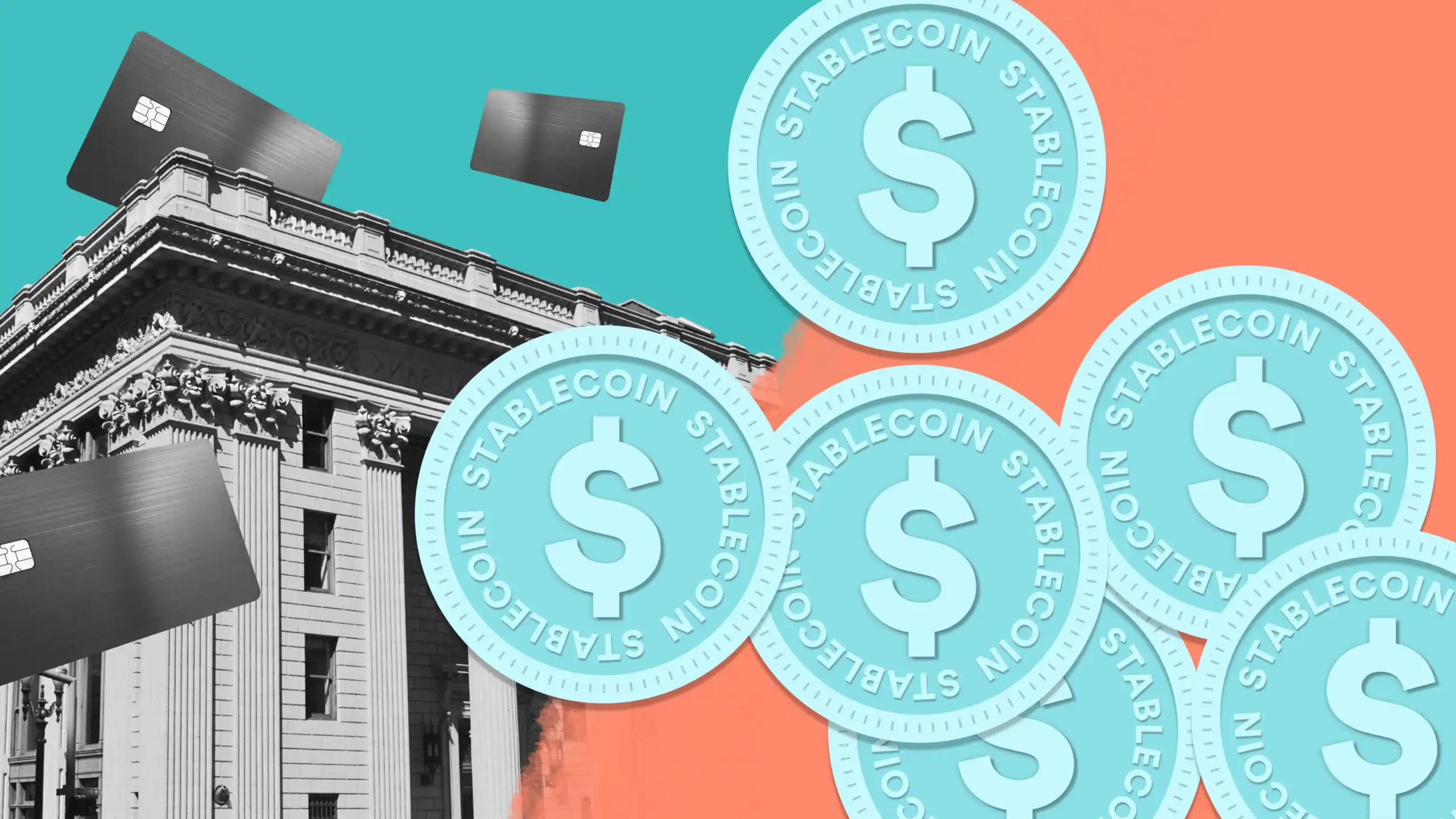
VelaFi, a financial infrastructure platform focused on Latin America and bridging fiat and crypto, has raised $20 million in a Series B round, bringing its total funding to over $40 million. Notably, the investment round included participation from Alibaba Investment, a subsidiary of Alibaba Group. Alibaba's investment is strategic, as VelaFi's stablecoin-based infrastructure enables instant, low-cost cross-border settlements. This addresses key pain points of high fees and slow processing times, aligning with Alibaba's goals for its AliExpress and B2B platforms in emerging markets. The funding was co-led by XVC and Ikuyo, with participation from other firms. VelaFi, part of Galactic Holdings and led by CEO Maggie Wu, was formerly known as TruBit Business. It has expanded from Latin America into the U.S. and Asia, serving hundreds of enterprise clients and processing billions in transaction volume. VelaFi's core B2B model focuses on two main services: providing regulated on/off ramps for converting between local fiat and stablecoins, and facilitating cross-border payments by converting one local currency directly into another (e.g., Mexican Pesos to Brazilian Reals). It achieves this by integrating with local instant payment systems like Mexico's SPEI and Brazil's PIX, using stablecoins as a settlement layer to create a faster, more efficient alternative to traditional banking channels.

marsbit01/14 10:40

Alibaba Invested in a Latin American Stablecoin Company, Why VelaFi?

marsbit01/14 10:40

2025 Epic Showdown: Has DEX Finally Overtaken CEX?

In 2025, decentralized exchanges (DEXs) experienced unprecedented growth, with trading volume nearly quadrupling compared to previous years. This surge was particularly driven by the rise of perpetual decentralized exchanges (Perp DEXs), which saw a 176% increase in annual trading volume—exceeding the cumulative total of the previous four years. Key players like Hyperliquid, Lighter, and Aster led this expansion, while established platforms like dYdX and GMX saw slower growth. The year began with Solana-based DEXs outperforming Ethereum in Q4 2024, fueled by meme coin and AI-related trading. However, Ethereum regained momentum in Q1 2025 following its Pectra upgrade and renewed investor confidence. Binance’s collaboration with PancakeSwap in Q2 significantly boosted BSC-based DEX volume, while Q3 saw intensified competition among Perp DEXs and the successful launch of Jupiter Lend, which attracted over $1 billion in deposits within days. Despite a market shake-up in Q4 due to the "10·11" liquidation event, Perp DEXs demonstrated resilience, with Aster and Lighter recovering faster than Hyperliquid. In spot trading, Uniswap maintained dominance in TVL, while Solana-based DEXs collectively reached trading volumes comparable to Uniswap. The article concludes that DEXs are not outright replacing centralized exchanges (CEXs) but are evolving alongside them. Both are integrating each other’s strengths—DEXs improving in efficiency and user experience, and CEXs adopting self-custody and on-chain transparency—suggesting a future of coexistence rather than displacement.

marsbit01/14 10:14

2025 Epic Showdown: Has DEX Finally Overtaken CEX?

marsbit01/14 10:14

After the Implementation of Uniswap's Fee Switch: Is This DeFi Transformation's 'Report Card' Impressive Enough?

Uniswap's fee switch activation, implemented through the "UNIfication" proposal, marks a pivotal shift in its tokenomics by linking UNI tokens directly to protocol usage and revenue. Previously a governance-only asset, UNI now accrues value through a deflationary mechanism where a portion of protocol fees from Uniswap V2, V3, and Unichain is used to programmatically burn UNI tokens. An initial one-time treasury burn of 100 million UNI was executed to compensate holders for past unaccrued fees. Early data indicates an annualized protocol revenue of approximately $26-27 million, resulting in a revenue multiple of around 207x relative to UNI’s $5.4 billion market capitalization. The current annualized burn rate is estimated at 4-5 million UNI, representing only 0.4% of the circulating supply. This high valuation implies strong market expectations for future growth, requiring expanded fee capture—such as broader pool coverage, V4 hooks, and Unichain optimization—to justify current levels. The move reflects a broader DeFi trend toward "fee-hooked" token models, where tokens are designed to better align holders with protocol economics through mechanisms like burns, staker rewards, or ve-token lockups. This transition makes UNI more analytically grounded but also subjects it to greater scrutiny based on sustainable value accumulation and real yield generation. Regulatory developments regarding revenue-sharing tokens will also play a critical role in shaping its future.

marsbit01/14 10:05

After the Implementation of Uniswap's Fee Switch: Is This DeFi Transformation's 'Report Card' Impressive Enough?

marsbit01/14 10:05

活动图片