One Vote Could Make SOL's Daily Burn Rate Soar 14 Times

marsbitОпубликовано 2026-08-28Обновлено 2026-08-28

Введение

Solana's first formal on-chain governance vote concluded on August 27th, coinciding with SOL hitting a yearly high. Three key proposals aimed at reshaping the network's tokenomics were decided. Solana's core challenge is a massive usage-to-value capture gap. Despite processing 120x more transactions than Ethereum and leading in DEX volume, its fee revenue is significantly lower due to its fee structure. Currently, most fees (priority fees) go to validators, with only a small base fee partially burned. This results in high net inflation (approx. 6k SOL issued vs. ~650 burned daily). The three proposals seek to address this: **SGP-0001** establishes the formal governance framework. **SGP-0002** (Double Deflation Acceleration) proposes doubling the annual reduction rate of new SOL issuance from 15% to 30%, aiming to reach the terminal inflation rate by 2029 instead of 2032, reducing issuance by an estimated 18.9 million SOL. **SGP-0003** (Resource & Entry Fee Restructuring) would split the base fee into a fixed "entry fee" for block producers and a variable, fully burned "resource fee." This could increase daily SOL burns by ~14x to 7,500-9,000. Major stakeholders like Helius, Jupiter, and Jito support the changes. However, opposition exists, notably from Solana Company (HSDT), whose revenue is 99.4% from staking. They argue rapid changes could disrupt institutional adoption. Critics also highlight a potential conflict where validators can vote against reduced staking yields ...

Author: Xiaobing

SOL hit $109 on August 27th, setting a new high for the entire year of 2026. It gained 44% in August, its strongest month since 2024. On the same day, Solana's first-ever formal on-chain governance vote concluded, with three proposals that could reshape the network's tokenomics entering the vote-counting stage.

If all three proposals pass, SOL's annual new issuance will decelerate more rapidly, and its average daily burn rate will increase by approximately 14 times.

Whether Solana can be reshaped by governance will be revealed soon.

The World's Busiest Highway, the Cheapest Toll

To understand why this governance vote is important, one must first understand Solana's core structural contradiction.

Solana's network usage is indisputable. It processed 25.3 billion transactions in Q1 2026, over 120 times that of Ethereum in the same period. Its spot DEX market share has ranked first for seven consecutive quarters, accounting for about 30%. It has maintained 100% uptime for over 90 days, with no network-wide outages since February 2024. The on-chain supply of RWA (Real World Assets) exceeded $3 billion in June, accounting for 24% of TVL.

Charles Schwab announced the inclusion of SOL in its crypto trading product line, and SBI Holdings shifted its blockchain business to Solana through a joint venture.

However, SOL holders have gained extremely limited economic returns from this growth.

Solana's total historical fee revenue is approximately $586 million, compared to Ethereum's $13.12 billion, a gap of over 22 times.

The value captured by the application layer is 134 times that of the protocol layer. Galaxy Research's Q2 2026 report shows that Solana network fees decreased 44% QoQ to approximately $155 million, and Network Revenue (REV) dropped 43% from $89.8 million in Q1 to $51 million. In the multi-chain revenue ranking, Solana ranked fourth with a 12% share, behind Hyperliquid, Tron, and Ethereum.

The problem lies in the fee structure.

In February 2025, validators approved SIMD-0096, which allocated 100% of priority fees to block-producing validators, with not a single cent being burned. Priority fees and Jito tips combined account for over 85% of the network's daily revenue. The base fee, which can create a deflationary effect, only accounts for a small portion, and only 50% of it is burned. The result is: Solana burns approximately 650 SOL daily, while issuing about 60,000 new SOL daily. A network with the world's highest daily transaction volume still maintains a steady net inflation rate.

21Shares summarized this dilemma in one sentence: "Scale has been proven; value capture has not."

Three Proposals: Installing Toll Booths on the Highway

The three governance proposals initiated on August 22nd are the latest attempt by the Solana community to repair this crack. First, let's introduce the three proposals:

SGP-0001 (Solana Constitution): Establishes a formal on-chain governance framework. Voting power is allocated based on stake weight. Ordinary stakers have the right to override validators' votes. This is the institutional foundation for the latter two proposals.

SGP-0002 (Double Deflation Acceleration): Proposed by engineers from infrastructure company Helius, it doubles the annual deflationary decay rate from 15% to 30%. The current inflation rate is about 3.8%. Under the original plan, it would only reach the terminal inflation rate of 1.5% by 2032. The new plan compresses this timeline to 2029, reducing issuance by approximately 18.9 million SOL over six years, worth about $1.5 billion at current prices.

SGP-0003 (Resource & Entry Fee Restructuring): Proposed by R&D company Temporal, it splits the flat base transaction fee into two parts: a fixed entry fee paid to block producers, and a resource fee priced based on actual computational resource consumption and burned in full. If implemented, the average daily SOL burn could jump from about 650 to between 7,500 and 9,000, an increase of nearly 14 times.

As of August 27th, before the voting deadline, participation for SGP-0002 had reached 33.84%, meeting the one-third quorum requirement. Approve votes accounted for about 25.84% of the voting weight, Deny votes about 5.54%, and Abstain about 2.65%. Approve votes constituted over 80% of the valid votes. Helius committed about 16 million SOL in support, Jupiter committed 12.47 million SOL, and Jito pre-authorized approval for all three proposals through its internal governance mechanism.

Who is Opposing?

Not all participants support these changes.

The NASDAQ-listed Solana Company (ticker HSDT) supports SGP-0001 but voted against SGP-0002 and SGP-0003. CEO Joseph Chee cited timing as the reason: "Institutions need stable, auditable economic parameters for multi-year planning. Suddenly changing staking rewards and transaction cost structures at a stage when Solana ETFs are just beginning to attract traditional capital could slow institutional adoption."

There is a direct profit motive behind this opposition.

Solana Company's Q2 revenue was $2.526 million, of which staking revenue accounted for $2.512 million, a staggering 99.4%. Accelerating deflation means staking rewards would drop from the current ~5.25% to ~2.25% within three years, directly cutting into its lifeblood.

A deeper tension lies in the governance mechanism itself. Under Solana's new governance framework, validators default to voting with the full weight of all delegations they manage, unless individual stakers actively override. This means a validator reliant on staking income can use SOL delegated to it by others to vote against reducing staking rewards, while most delegators might be completely unaware their stake is being used this way. CryptoSlate's analysis directly points out this principal-agent problem.

The pressure on smaller validators is more concrete. 21Shares' model shows that if SGP-0002 is implemented, some smaller validators with higher operating costs may become unprofitable and be forced to exit. This could, in the short term, exacerbate the trend of validator centralization, running counter to Solana's decentralization vision.

Lessons and Variables

This is not Solana's first attempt to fix the inflation issue.

In March 2025, SIMD-0228 proposed an 80% direct cut to the inflation rate, adopting a dynamic issuance mechanism based on staking participation. The result was 61.39% of staked SOL voting against, and the proposal was rejected.

The core reason for rejecting SIMD-0228 is the same as now: validators are unwilling to cut their own income sources. However, the current proposal is designed to be more moderate; SGP-0002 only accelerates the decay slope, avoiding a cliff-edge cut. The technical implementation, SIMD-0550, is specifically designed with a continuous anchoring mechanism to avoid discontinuous jumps in issuance upon activation.

However, even if both SGP-0002 and SGP-0003 pass, the voting result is only a "directional mandate." The actual protocol changes would still require subsequent SIMD technical implementation, testing, and on-chain activation. There could be a window of several months between the vote passing and actual enactment.

SOL's current position is delicate.

Having fallen over 60% from its ATH of $293, rebounding 44% in August to $109 reflects a mix of technical oversold recovery, pre-pricing of governance expectations, and sector rotation from BTC breaking $80k. The RSI has entered overbought territory. Short-term traders should note the risk of "buy the rumor, sell the news" after the governance vote results land. For long-term holders, the core question to answer is only one: Can Solana translate its indisputable network usage into economic returns for SOL holders?


Трендовые криптовалюты

Связанные с этим вопросы

QAccording to the article, what are the potential combined effects of SGP-0002 and SGP-0003 on SOL's daily burn rate?

AIf both SGP-0002 and SGP-0003 are passed, the daily SOL burn rate could increase by approximately 14 times, potentially rising from about 650 SOL per day to between 7,500 and 9,000 SOL per day.

QWhat is the core structural contradiction of Solana highlighted in the article?

AThe core structural contradiction is the mismatch between Solana's immense network usage (e.g., highest daily transaction volume) and its limited economic returns to SOL holders. This is due to a fee structure where a majority of revenue (priority fees & tips) goes to validators without being burned, resulting in high net inflation despite high activity.

QWhy does Solana Company (HSDT) oppose proposals SGP-0002 and SGP-0003, according to the article?

ASolana Company opposes SGP-0002 and SGP-0003 primarily due to concerns about timing and its direct financial interest. The CEO argues that changing economic parameters could disrupt institutional adoption plans just as Solana ETFs are gaining traction. More directly, over 99% of the company's revenue comes from staking, and the proposals would significantly reduce staking rewards, threatening its core business model.

QWhat key difference does the article mention between the failed SIMD-0228 proposal and the current SGP-0002 proposal?

AThe key difference is the approach to reducing inflation. SIMD-0228 proposed an abrupt 80% cut in the inflation rate, which was rejected. In contrast, SGP-0002 proposes a more moderate acceleration of the existing deflationary decay rate (from 15% to 30% annually), avoiding a cliff-like reduction and making the change less drastic.

QWhat is the fundamental long-term question for SOL holders that the article concludes with?

AThe fundamental long-term question is whether Solana can translate its undeniable network usage and scale into tangible economic returns for SOL token holders.

Похожее

Крупный игрок на рынке биткоинов, который бездействовал 15 лет, начал перемещать свои BTC!

Согласно данным Galaxy Research, шесть долго неактивных биткоин-кошельков, созданных в период с 2011 по 2014 год, возобновили активность. С 16 по 26 августа с них было перемещено в общей сложности 553,59 BTC на сумму около 40 миллионов долларов. Особый интерес вызывает один из адресов, бездействовавший более 15 лет. Анализ показывает, что пять из шести кошельков отправили средства на адреса, не связанные с известными криптобиржами, что не указывает на прямую цель продажи. Один кошелек перевел 40 BTC провайдеру услуг Boerse Stuttgart Digital, возможно, для хранения или институциональных операций. Глава исследований Galaxy Digital Алекс Торн отметил, что активность долго неиспользуемых биткоинов («спящих монет») упала до минимума с третьего квартала 2022 года. Он прогнозирует, что в 2026 году объем подобных переводов может сократиться более чем вдвое по сравнению с прошлогодним уровнем.

cryptonews.ru7 мин. назад

Крупный игрок на рынке биткоинов, который бездействовал 15 лет, начал перемещать свои BTC!

cryptonews.ru7 мин. назад

Секрет Starlink: почему Китай, Amazon, Европа и Россия проигрывают битву за низкую орбиту

Разрыв между Starlink и его конкурентами держится на связке четырех элементов: серийное производство спутников (до 70 аппаратов в неделю), многоразовые ракеты (Falcon 9 с 30 полетами), большая платящая абонентская база (12 млн подписчиков) и высокая скорость обновления сети. Эта замкнутая цикличность позволяет SpaceX быстро развиваться, в то время как конкуренты решают лишь часть задачи. Китай (проекты Qianfan и Guowang) технологически продвинут, особенно в многоразовости ракет, но сильно отстает от собственных графиков развертывания. Amazon, купив очередь запусков у разных операторов, зависит от их темпов, а не от своих мощностей. Евросоюз (IRIS2) и Россия («Рассвет») создают компактные и дорогие сети для обороны и госнужд, сознательно жертвуя масштабом ради суверенитета. Государства вкладываются в такие проекты прежде всего из-за военного значения низкоорбитальной связи, стремясь избежать зависимости от иностранного оператора. Однако ни один конкурент пока не смог объединить все четыре ключевых элемента своей бизнес-модели, как это сделала SpaceX.

cryptonews.ru2 ч. назад

Секрет Starlink: почему Китай, Amazon, Европа и Россия проигрывают битву за низкую орбиту

cryptonews.ru2 ч. назад

Подтвержденный аккаунт Дональда Трампа объявил о запуске нового альткоина: за одну ночь его цена обвалилась

Аккаунт, связанный с Дональдом Трампом, объявил о запуске мемкоина GOLD в экосистеме Solana. Токен, рекламируемый как «Цифровое золото Трампа», быстро достиг рыночной капитализации в $60 млн, но затем обвалился более чем на 95% за считанные минуты. Появились подозрения, что аккаунт @realtrumpcoins1, официального партнера The Trump Organization, мог быть взломан. Все посты о GOLD были удалены. Предполагаемый злоумышленник заявил о прибыли в $8,2 млн. Данные блокчейна показывают, что 15 кошельков, связанных с проектом, продали 224,5 млн токенов, получив значительную прибыль, и до сих пор концентрируют большую часть оставшихся токенов. Связи инцидента с иранскими хакерами, о которых сообщали СМИ, не были независимо подтверждены.

cryptonews.ru2 ч. назад

Подтвержденный аккаунт Дональда Трампа объявил о запуске нового альткоина: за одну ночь его цена обвалилась

cryptonews.ru2 ч. назад

Диалог с основателем Epoch Ventures: Массовый приток капитала начался, четырехлетний цикл завершен

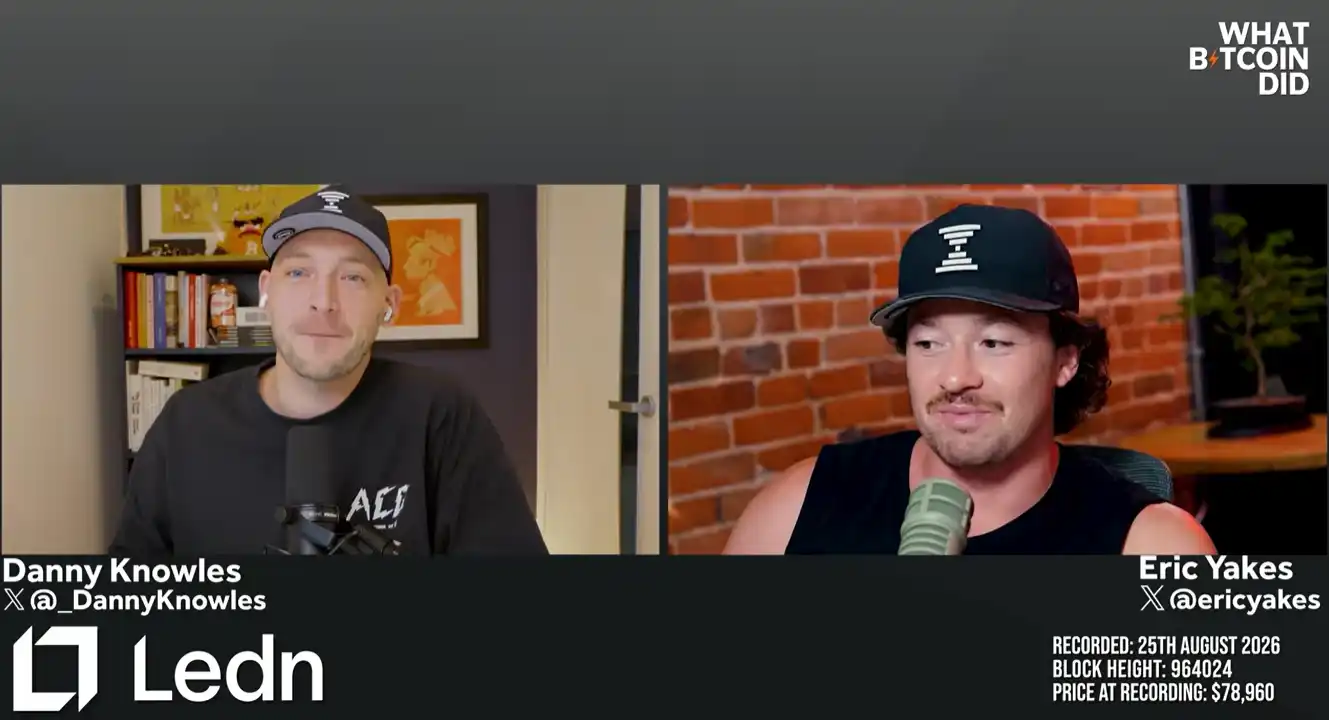
Источник: интервью с основателем Epoch Ventures Эриком Яксом в подкасте "What Bitcoin Did". Основные тезисы: Эрик Якс утверждает, что традиционный четырехлетний цикл роста и падения биткоина подходит к концу. Последняя коррекция на 50% (вместо ожидаемых 80%) сигнализирует о структурных изменениях на рынке. Биткоин все больше воспринимается как инструмент хеджирования против девальвации фиатных валют, а не как спекулятивный актив, что ведет к снижению волатильности. Ключевым фактором является приток институциональных средств через ETF. Снижение волатильности позволяет управляющим активами увеличивать долю биткоина в портфелях до 10-20%. Долгосрочный сценарий ("супербиткоинизация") выглядит следующим образом: Казначейство США будет стимулировать распространение стейблкоинов для поддержки спроса на гособлигации. Стейблкоины усилят долларизацию глобальной экономики. Конкуренция заставит эмитентов стейблкоинов увеличивать резервы в биткоине (аналогично золоту в эпоху свободного банкинга). Когда стейблкоины, обеспеченные биткоином, станут доминирующим платежным средством, произойдет переход к "супербиткоинизации". Несмотря на рост институционального хранения (ETF, трасты), угроза централизации смягчается легкостью самостоятельного хранения (self-custody), что создает сдерживающий фактор для любых злоупотреблений.

marsbit3 ч. назад

Диалог с основателем Epoch Ventures: Массовый приток капитала начался, четырехлетний цикл завершен

marsbit3 ч. назад

Чего ожидать от цен на биткоин (BTC) и догекоин (DOGE) в ближайшие дни?

Криптоаналитик Али Мартинес поделился техническим прогнозом для биткоина (BTC) и догекоина (DOGE). Для биткоина ключевым уровнем является отметка в 73 880 долларов. Удержание цены выше этого порога может открыть путь к цели в 100 000 долларов. Мартинес также отмечает сходство текущей ценовой структуры с паттерном, наблюдавшимся после минимума 2022 года, и указывает на важный потенциальный пик около 83 000 долларов к маю 2026 года. Коррекция от этого уровня может стать следующей возможностью для покупки. Что касается догекоина, на часовом графике возможно формирование бычьего флага. Аналитик выделил уровень поддержки в 0,081 доллара и критический уровень сопротивления в 0,090 доллара. Закрытие свечи выше 0,090 доллара может подтвердить прорыв и открыть путь к цели в районе 0,115 доллара.

cryptonews.ru4 ч. назад

Чего ожидать от цен на биткоин (BTC) и догекоин (DOGE) в ближайшие дни?

cryptonews.ru4 ч. назад

Торговля

Спот

Популярные статьи

Как купить ONE

Добро пожаловать на HTX.com! Мы сделали приобретение Harmony (ONE) простым и удобным. Следуйте нашему пошаговому руководству и отправляйтесь в свое крипто-путешествие.Шаг 1: Создайте аккаунт на HTXИспользуйте свой адрес электронной почты или номер телефона, чтобы зарегистрироваться и бесплатно создать аккаунт на HTX. Пройдите удобную регистрацию и откройте для себя весь функционал.Создать аккаунтШаг 2: Перейдите в Купить криптовалюту и выберите свой способ оплатыКредитная/Дебетовая Карта: Используйте свою карту Visa или Mastercard для мгновенной покупки Harmony (ONE).Баланс: Используйте средства с баланса вашего аккаунта HTX для простой торговли.Третьи Лица: Мы добавили популярные способы оплаты, такие как Google Pay и Apple Pay, для повышения удобства.P2P: Торгуйте напрямую с другими пользователями на HTX.Внебиржевая Торговля (OTC): Мы предлагаем индивидуальные услуги и конкурентоспособные обменные курсы для трейдеров.Шаг 3: Хранение Harmony (ONE)После приобретения вами Harmony (ONE) храните их в своем аккаунте на HTX. В качестве альтернативы вы можете отправить их куда-либо с помощью перевода в блокчейне или использовать для торговли с другими криптовалютами.Шаг 4: Торговля Harmony (ONE)С легкостью торгуйте Harmony (ONE) на спотовом рынке HTX. Просто зайдите в свой аккаунт, выберите торговую пару, совершайте сделки и следите за ними в режиме реального времени. Мы предлагаем удобный интерфейс как для начинающих, так и для опытных трейдеров.

1.0k просмотров всегоОпубликовано 2024.04.12Обновлено 2026.06.02

Как купить ONE

Обсуждения

Добро пожаловать в Сообщество HTX. Здесь вы сможете быть в курсе последних новостей о развитии платформы и получить доступ к профессиональной аналитической информации о рынке. Мнения пользователей о цене на ONE (ONE) представлены ниже.

活动图片