How One Article Moved 45 Billion: The Collapse of a 25-Year-Old 'AI Stock Guru'

marsbitОпубликовано 2026-08-28Обновлено 2026-08-28

Введение

This article details the dramatic rise and near-collapse of a hedge fund built by Leopold Aschenbrenner, a 24-year-old former OpenAI researcher. The fund, named Situational Awareness, amassed $45 billion in assets within two years. Its explosive growth stemmed from Aschenbrenner's influential 165-page manifesto predicting AGI's arrival by 2027 and his high-profile Silicon Valley connections. The fund employed an extremely aggressive strategy: high concentration and 400% leverage to bet long on AI infrastructure stocks while shorting legacy software firms. In July, this structure backfired when both sides of the trade reversed simultaneously—AI stocks plunged while shorted stocks rallied—triggering massive losses that nearly wiped out all equity. Major player Jane Street reportedly lost billions. The fund's leveraged public portfolio was ultimately sold at a discount to Citadel. The SEC is now investigating banks like Goldman Sachs for their role in facilitating the fund's high-leverage trades. The article compares this to past blow-ups like Archegos, highlighting systemic failures in risk management where the pursuit of short-term profits overrode due diligence. It questions whether such risky leverage concentrated in the AI sector, currently at record highs, poses a broader systemic threat. Ironically, Aschenbrenner, who studied AI safety at OpenAI, designed a fund structure prone to uncontrolled failure. Days after the crisis, he reportedly raised another $400 million for...

Age 24, a former OpenAI researcher, was elevated to god-like status in Silicon Valley by a 165-page manifesto, and built a $45 billion hedge fund in two years, with returns once exceeding 1000%.

However, this fund nearly collapsed within a month. The day the crash finally materialized coincided with the arrival of guests for his wedding.

The story recently added another chapter: The SEC has issued subpoenas to Goldman Sachs, JPMorgan Chase, Citigroup, and Bank of America, demanding communications records related to the fund's trading timing and leverage usage. It should be noted that this inquiry is still in its early stages, and the fund has not been charged with any misconduct.

This is not just a story about a young man's leveraged blow-up. How did a young man with no investment background manage to raise $45 billion in two years, bypassing Wall Street's entire due diligence system? Who was truly behind this collapse?

The Making of a Legend: How a Manifesto Translated into $45 Billion

Aschenbrenner's resume itself reads like a high-potential script.

At 19, he graduated as the top student with a double major in Economics and Mathematical Statistics from Columbia College, Columbia University. In 2023, he joined OpenAI's "Superalignment" team, considered one of the company's core groups possessing the most advanced judgment on AGI safety.

In 2024, he was fired by OpenAI. The official reason was that he leaked sensitive information to external parties; he argued that he was merely discussing hypothetical scenarios about AI safety with outsiders.

This controversy did not ruin his reputation; instead, it created a tragic narrative of a "prophet ostracized for telling the truth." In Silicon Valley's context, this archetype of the "visionary exiled by a big corporation" has inherent virality.

After being fired, he wrote a 165-page long essay titled "Situational Awareness." Its core thesis was: The composite curves of computing power expansion, algorithmic efficiency improvement, and model capability growth make the emergence of AGI as early as 2027 "surprisingly plausible," and it will trigger an "intelligence explosion" affecting national security and the geopolitical landscape. (Note: Original article link: https://situational-awareness.ai/ )

This article quickly became known as "must-read in Silicon Valley," with its influence, according to multiple media reports, even reaching policy discussions in Washington.

From then on, he was no longer an obscure 24-year-old but was labeled as "one of the few who truly sees the future trajectory of AI."

Moreover, he lived in the same house as an Anthropic senior employee, renowned AI chip supply chain analyst Dylan Patel, and podcast host Dwarkesh Patel. This circle itself is one of the most well-informed microcosms in the AI industry.

The label was soon cashed in for real money.

The fund was backed with capital from Stripe co-founders Patrick Collison and John Collison, as well as investors Daniel Gross and Nat Friedman.

Early bets also initially validated the narrative: The fund successfully bet on AI infrastructure beneficiaries like SK Hynix, CoreWeave, and Bloom Energy, achieving a 47% net return (after management and performance fees) in the first half of 2025.

Notably, an independent market analyst mentioned in a personal blog post that this fund, in its first year of operation with only $225 million under management and a founder with zero investment track record, managed to secure an allocation in CoreWeave's IPO. Such an opportunity is almost impossible to obtain under traditional asset management's mature due diligence processes.

A "Perfect Hedge" That Became a Double Whammy

The fund's prospectus for Situational Awareness stated: "no restrictions" on investment types, and no limits on "investment concentration or the amount of leverage used."

This was not an execution error; it was by design—there were no brakes installed in the system.

Its trading structure appeared, on the surface, to be a classic long-short hedge: Go long on the physical bottlenecks of AI infrastructure, including memory chips, computing power, and energy; simultaneously short traditional software companies deemed to be disrupted by AI. This structure was, for the past eighteen months, a "beautiful trade."

The problem was that these two legs were actually different expressions of the same macro factor, not truly opposite-direction hedges.

In July of this year, both bets reversed simultaneously: the market grew skeptical about the sustainability of AI infrastructure spending, with heavy holdings like SK Hynix and CoreWeave falling over 30% in a month; meanwhile, shorted traditional software stocks like Adobe began to rebound over 20%.

The long leg was falling, and the short leg, which should have been profitable, was also losing money. A true hedge requires opposite directions under the same factor; what occurred here was a "rising and falling together." The higher the leverage, the more fatal this two-way pummeling becomes.

And the leverage was pushed to the extreme. According to estimates from multiple media outlets, the fund's leverage ratio was as high as 400%, meaning for every dollar of its own capital, it borrowed four dollars to amplify bets.

At such leverage levels, a 35% to 47% drop in core holdings is enough to wipe out the equity capital itself.

One market analyst's comment was: "Running a 400% lever with such a concentrated position is not a strategy, it's a countdown."

The high profile itself also became a risk amplifier in this collapse. When the fund reduced positions, the massive and highly concentrated sell orders in a few AI-related stocks made it easy for other traders to guess who the seller was, further exacerbating the stampede.

Ultimately, the fund sold its leveraged public equity holdings at a discount to Citadel.

A Recurring Wall Street Script

This is not the first time Wall Street has paid the price for a "sufficiently compelling narrative."

In 2021, Bill Hwang's family office, Archegos Capital Management, using similar tactics—concentrated holdings, high leverage, and hidden true exposure through total return swaps—ultimately triggered combined losses exceeding $10 billion for banks including Credit Suisse, which was severely weakened as a result.

This time, a new actor appeared in the script: Jane Street.

This notoriously secretive market-making giant, known for its strict quantitative risk controls, was a major investor in Situational Awareness. According to reports from Reuters, CNBC, Fortune, and others, Jane Street's exposure to this fund reportedly snowballed from an initial ~$2.5 billion to nearly $10 billion, before falling back to around $3 billion after the July crisis.

This loss directly led to Jane Street's first overall monthly loss in nearly a decade, forcing it, led by JPMorgan Chase, to urgently issue $14.6 billion in new bonds to refinance approximately $11 billion in existing floating-rate loans and debt.

How could a man in his twenties, who had never managed money before, borrow such massive amounts sufficient to lever up 400%?

According to industry media reports, one family office invested in this fund because its owner, himself the founder of a large US tech company, personally instructed the investment, thereby bypassing his own institution's originally established risk control procedures.

This seems more like a structural tendency rather than a precise, proven causal chain.

The bankers approving the financing have their bonuses and review cycles calculated quarterly and annually, while the risk of a leveraged blow-up only materializes when the market truly reverses—a classic principal-agent problem. The decision-makers enjoy the immediate gains; the institutions and shareholders bear the future risks.

The banks also don't need to judge whether the long-term AI infrastructure trend is right; they only need to judge "Can I detect the risk earlier than the fund itself, tighten conditions earlier, and offload the risk earlier?"

Meanwhile, in Q2 2026, Goldman Sachs' equity financing business revenue hit a record $3.26 billion, 26% higher than its entire 2020 revenue, with market demand "far exceeding the amount banks were willing to take on." When all peers are fighting for the same pie, a single bank tightening standards on its own means watching revenue literally walk into competitors' hands.

Another real cognitive bias is also at play: When a fund selectively discloses returns that once hit 1000%, many investors subconsciously take this stellar performance as evidence of the founder's "foresight." Carrying this bias, those involved ignore many clues pointing to "this might just be a combination of directional bets layered with high leverage that hasn't exploded yet."

An Isolated Case or a Trend?

Looking at this single event, the banks didn't lose money, the fund wasn't liquidated, there was no systemic market shock, and Citadel even booked paper gains after taking over the positions at a discount. From this angle, it resembles a stress test more than a real crisis.

But if we zoom out and look at the total leverage within the entire AI sector?

The Bank for International Settlements (BIS) issued a warning in 2026: The combined AI capital expenditures planned by leading cloud providers for 2025-2026 could exceed $1 trillion. A reversal in this investment wave could potentially drag some economies into recession.

Bank of England Deputy Governor Sarah Breeden also voiced a related concern from another angle: If automated trading systems, trained on similar data and optimized for similar objectives, make synchronized selling decisions under stress, it could trigger a self-reinforcing crash faster than human traders could react.

These warnings are not idle talk. According to FINRA data, US securities margin debt reached $1.416 trillion in May 2026, a record high since the data series began in 1997, representing a staggering 54% year-over-year increase. According to Goldman Sachs citing EPFR statistics (this data only covers 573 US leveraged equity ETFs, excluding bond, commodity leveraged products, or overseas markets like Korea), the total assets of such US leveraged equity ETFs doubled from $39 billion in April this year to $84 billion by the end of May. JPMorgan Chase CEO Jamie Dimon also publicly acknowledged that current margin debt levels are "quite high."

Intriguingly, merely days after the crisis, Aschenbrenner secured another $400 million in private investment for a new bet, bringing his total personal wager to $500 million, including a previous $100 million.

He clearly does not view this near-collapse as the end of his investing career.

The greatest irony this saga leaves behind might be this: A person who once specialized in researching "how to anticipate and manage the risk of AGI going rogue" personally designed a leverage structure for his own hedge fund that was most prone to running out of control.

Understanding risk and managing risk are two entirely different capabilities. Seeing the direction of a grand trend does not equate to having the ability to navigate its short-term volatility unscathed.

This crisis didn't destroy any institution, nor did it truly interrupt this young man's own investment rhythm. But it tore open a fissure, allowing a glimpse into just how fragile the mechanisms meant to stop risk have become behind the AI narrative-driven capital frenzy.

The next time a narrative is compelling enough, will there be someone willing to sound the alarm first? (This article was first published on Titanium Media APP, author | Silicon Valley Tech_news, editor | Lin Shen)


Трендовые криптовалюты

Связанные с этим вопросы

QWho is the 25-year-old 'AI Stock God' at the center of this article, and what was his background?

AThe article focuses on Leopold Aschenbrenner, a 25-year-old former OpenAI researcher on the Superalignment team. He was fired from OpenAI in 2024. At age 19, he graduated summa cum laude with degrees in Economics and Mathematical Statistics from Columbia College, Columbia University. His reputation was built on a 165-page manifesto titled 'Situational Awareness', which argued for the possibility of AGI emerging around 2027.

QWhat was the core investment strategy (the 'perfect hedge') of the Situational Awareness fund, and why did it fail?

AThe fund's strategy was a long-short hedge: going long on AI infrastructure stocks (e.g., SK Hynix, CoreWeave, Bloom Energy) while shorting traditional software companies perceived as vulnerable to AI disruption. It failed because this was not a true hedge. Both legs of the trade were exposed to the same macro factor—market sentiment towards AI. In July, AI infrastructure stocks plummeted while the shorted software stocks rallied, causing losses on both sides simultaneously. This was exacerbated by the fund's extremely high leverage of around 400%.

QWhat role did the investment firm Jane Street play in the fund's story, and what were the consequences for Jane Street?

AJane Street, a major quantitative trading firm known for strict risk management, was a key investor in the Situational Awareness fund. Its exposure reportedly ballooned from an initial ~$2.5 billion to nearly $10 billion before the crisis, then fell back to ~$3 billion after the fund's losses in July. These losses contributed to Jane Street's first monthly overall loss in nearly a decade, forcing it to issue $14.6 billion in new bonds, led by JPMorgan, to refinance existing debt.

QAccording to the article, what systemic or structural factors in the financial industry enabled a young, inexperienced manager to raise $45 billion and access extreme leverage?

ASeveral structural factors contributed: 1) Bankers' compensation is tied to short-term deal volume, not long-term risk, creating a misalignment of incentives (principal-agent problem). 2) Intense competition among banks for lucrative financing business discourages any single bank from tightening standards. 3) A cognitive bias among investors, who mistook the fund's early high returns (e.g., 1000%) for genius, overlooking the role of concentrated, leveraged bets. 4) High-profile backers (e.g., Stripe founders) provided credibility. 5) In some cases, founders of investing institutions overrode their own internal risk controls to personally authorize the investment.

QWhat broader market risks and warnings related to AI and leverage does the article mention in its conclusion?

AThe article cites several broader warnings: The Bank for International Settlements (BIS) warned that massive AI capital expenditure by cloud providers (over $1 trillion) could trigger a recession if reversed. The Bank of England's Sarah Breeden expressed concern about automated trading systems potentially triggering synchronized, self-reinforcing crashes. Data shows US securities margin debt hit a record $1.416 trillion in May 2026, up 54% year-over-year. Leveraged ETF assets in the US doubled from $39B to $84B in two months. JPMorgan CEO Jamie Dimon also acknowledged margin debt levels are 'quite high'.

Похожее

Крупный игрок на рынке биткоинов, который бездействовал 15 лет, начал перемещать свои BTC!

Согласно данным Galaxy Research, шесть долго неактивных биткоин-кошельков, созданных в период с 2011 по 2014 год, возобновили активность. С 16 по 26 августа с них было перемещено в общей сложности 553,59 BTC на сумму около 40 миллионов долларов. Особый интерес вызывает один из адресов, бездействовавший более 15 лет. Анализ показывает, что пять из шести кошельков отправили средства на адреса, не связанные с известными криптобиржами, что не указывает на прямую цель продажи. Один кошелек перевел 40 BTC провайдеру услуг Boerse Stuttgart Digital, возможно, для хранения или институциональных операций. Глава исследований Galaxy Digital Алекс Торн отметил, что активность долго неиспользуемых биткоинов («спящих монет») упала до минимума с третьего квартала 2022 года. Он прогнозирует, что в 2026 году объем подобных переводов может сократиться более чем вдвое по сравнению с прошлогодним уровнем.

cryptonews.ru5 мин. назад

Крупный игрок на рынке биткоинов, который бездействовал 15 лет, начал перемещать свои BTC!

cryptonews.ru5 мин. назад

Секрет Starlink: почему Китай, Amazon, Европа и Россия проигрывают битву за низкую орбиту

Разрыв между Starlink и его конкурентами держится на связке четырех элементов: серийное производство спутников (до 70 аппаратов в неделю), многоразовые ракеты (Falcon 9 с 30 полетами), большая платящая абонентская база (12 млн подписчиков) и высокая скорость обновления сети. Эта замкнутая цикличность позволяет SpaceX быстро развиваться, в то время как конкуренты решают лишь часть задачи. Китай (проекты Qianfan и Guowang) технологически продвинут, особенно в многоразовости ракет, но сильно отстает от собственных графиков развертывания. Amazon, купив очередь запусков у разных операторов, зависит от их темпов, а не от своих мощностей. Евросоюз (IRIS2) и Россия («Рассвет») создают компактные и дорогие сети для обороны и госнужд, сознательно жертвуя масштабом ради суверенитета. Государства вкладываются в такие проекты прежде всего из-за военного значения низкоорбитальной связи, стремясь избежать зависимости от иностранного оператора. Однако ни один конкурент пока не смог объединить все четыре ключевых элемента своей бизнес-модели, как это сделала SpaceX.

cryptonews.ru2 ч. назад

Секрет Starlink: почему Китай, Amazon, Европа и Россия проигрывают битву за низкую орбиту

cryptonews.ru2 ч. назад

Подтвержденный аккаунт Дональда Трампа объявил о запуске нового альткоина: за одну ночь его цена обвалилась

Аккаунт, связанный с Дональдом Трампом, объявил о запуске мемкоина GOLD в экосистеме Solana. Токен, рекламируемый как «Цифровое золото Трампа», быстро достиг рыночной капитализации в $60 млн, но затем обвалился более чем на 95% за считанные минуты. Появились подозрения, что аккаунт @realtrumpcoins1, официального партнера The Trump Organization, мог быть взломан. Все посты о GOLD были удалены. Предполагаемый злоумышленник заявил о прибыли в $8,2 млн. Данные блокчейна показывают, что 15 кошельков, связанных с проектом, продали 224,5 млн токенов, получив значительную прибыль, и до сих пор концентрируют большую часть оставшихся токенов. Связи инцидента с иранскими хакерами, о которых сообщали СМИ, не были независимо подтверждены.

cryptonews.ru2 ч. назад

Подтвержденный аккаунт Дональда Трампа объявил о запуске нового альткоина: за одну ночь его цена обвалилась

cryptonews.ru2 ч. назад

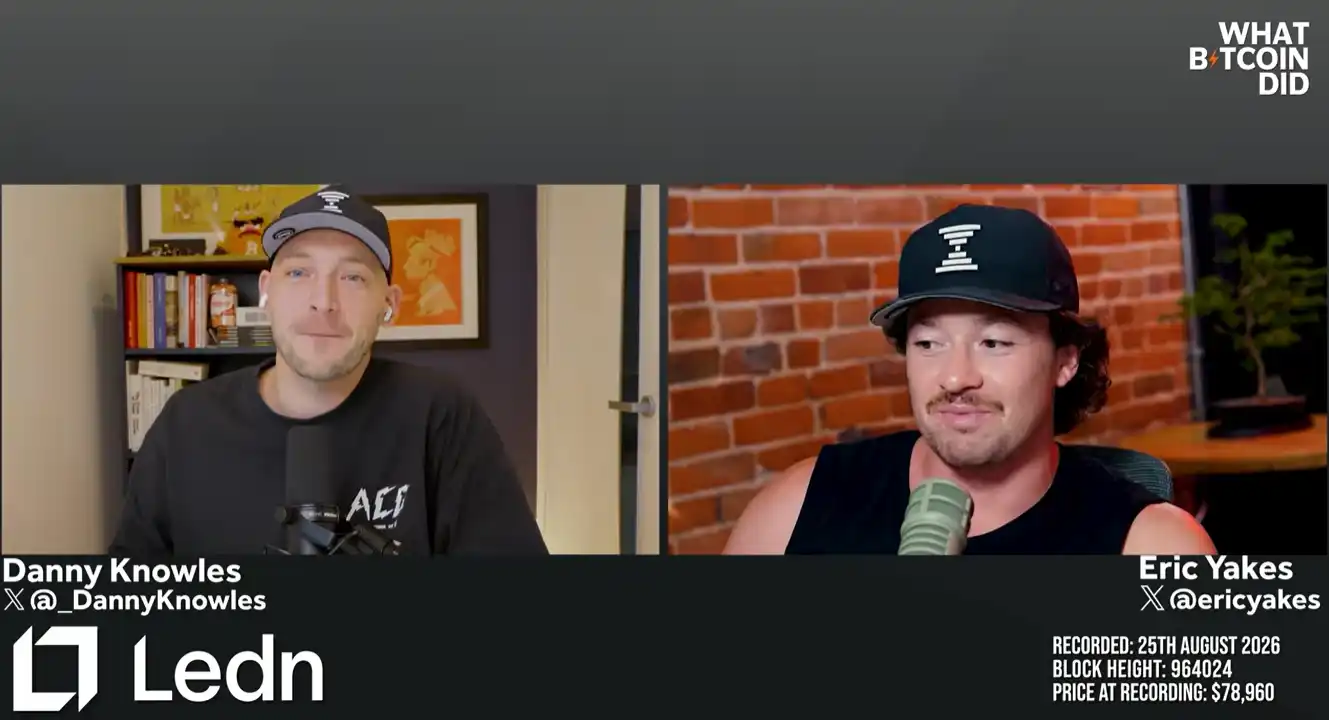
Диалог с основателем Epoch Ventures: Массовый приток капитала начался, четырехлетний цикл завершен

Источник: интервью с основателем Epoch Ventures Эриком Яксом в подкасте "What Bitcoin Did". Основные тезисы: Эрик Якс утверждает, что традиционный четырехлетний цикл роста и падения биткоина подходит к концу. Последняя коррекция на 50% (вместо ожидаемых 80%) сигнализирует о структурных изменениях на рынке. Биткоин все больше воспринимается как инструмент хеджирования против девальвации фиатных валют, а не как спекулятивный актив, что ведет к снижению волатильности. Ключевым фактором является приток институциональных средств через ETF. Снижение волатильности позволяет управляющим активами увеличивать долю биткоина в портфелях до 10-20%. Долгосрочный сценарий ("супербиткоинизация") выглядит следующим образом: Казначейство США будет стимулировать распространение стейблкоинов для поддержки спроса на гособлигации. Стейблкоины усилят долларизацию глобальной экономики. Конкуренция заставит эмитентов стейблкоинов увеличивать резервы в биткоине (аналогично золоту в эпоху свободного банкинга). Когда стейблкоины, обеспеченные биткоином, станут доминирующим платежным средством, произойдет переход к "супербиткоинизации". Несмотря на рост институционального хранения (ETF, трасты), угроза централизации смягчается легкостью самостоятельного хранения (self-custody), что создает сдерживающий фактор для любых злоупотреблений.

marsbit3 ч. назад

Диалог с основателем Epoch Ventures: Массовый приток капитала начался, четырехлетний цикл завершен

marsbit3 ч. назад

Чего ожидать от цен на биткоин (BTC) и догекоин (DOGE) в ближайшие дни?

Криптоаналитик Али Мартинес поделился техническим прогнозом для биткоина (BTC) и догекоина (DOGE). Для биткоина ключевым уровнем является отметка в 73 880 долларов. Удержание цены выше этого порога может открыть путь к цели в 100 000 долларов. Мартинес также отмечает сходство текущей ценовой структуры с паттерном, наблюдавшимся после минимума 2022 года, и указывает на важный потенциальный пик около 83 000 долларов к маю 2026 года. Коррекция от этого уровня может стать следующей возможностью для покупки. Что касается догекоина, на часовом графике возможно формирование бычьего флага. Аналитик выделил уровень поддержки в 0,081 доллара и критический уровень сопротивления в 0,090 доллара. Закрытие свечи выше 0,090 доллара может подтвердить прорыв и открыть путь к цели в районе 0,115 доллара.

cryptonews.ru4 ч. назад

Чего ожидать от цен на биткоин (BTC) и догекоин (DOGE) в ближайшие дни?

cryptonews.ru4 ч. назад

Торговля

Спот

Популярные статьи

Как купить ONE

Добро пожаловать на HTX.com! Мы сделали приобретение Harmony (ONE) простым и удобным. Следуйте нашему пошаговому руководству и отправляйтесь в свое крипто-путешествие.Шаг 1: Создайте аккаунт на HTXИспользуйте свой адрес электронной почты или номер телефона, чтобы зарегистрироваться и бесплатно создать аккаунт на HTX. Пройдите удобную регистрацию и откройте для себя весь функционал.Создать аккаунтШаг 2: Перейдите в Купить криптовалюту и выберите свой способ оплатыКредитная/Дебетовая Карта: Используйте свою карту Visa или Mastercard для мгновенной покупки Harmony (ONE).Баланс: Используйте средства с баланса вашего аккаунта HTX для простой торговли.Третьи Лица: Мы добавили популярные способы оплаты, такие как Google Pay и Apple Pay, для повышения удобства.P2P: Торгуйте напрямую с другими пользователями на HTX.Внебиржевая Торговля (OTC): Мы предлагаем индивидуальные услуги и конкурентоспособные обменные курсы для трейдеров.Шаг 3: Хранение Harmony (ONE)После приобретения вами Harmony (ONE) храните их в своем аккаунте на HTX. В качестве альтернативы вы можете отправить их куда-либо с помощью перевода в блокчейне или использовать для торговли с другими криптовалютами.Шаг 4: Торговля Harmony (ONE)С легкостью торгуйте Harmony (ONE) на спотовом рынке HTX. Просто зайдите в свой аккаунт, выберите торговую пару, совершайте сделки и следите за ними в режиме реального времени. Мы предлагаем удобный интерфейс как для начинающих, так и для опытных трейдеров.

1.0k просмотров всегоОпубликовано 2024.04.12Обновлено 2026.06.02

Как купить ONE

Обсуждения

Добро пожаловать в Сообщество HTX. Здесь вы сможете быть в курсе последних новостей о развитии платформы и получить доступ к профессиональной аналитической информации о рынке. Мнения пользователей о цене на ONE (ONE) представлены ниже.

活动图片