Cache hit rate reaches 99.93%, the best Harness for DeepSeek is here, GitHub pulls in 86k Stars

marsbitОпубликовано 2026-08-11Обновлено 2026-08-11

Введение

The open-source programming agent "Pi" has surged in popularity on GitHub, amassing around 86,000 stars, largely due to its exceptional efficiency when paired with DeepSeek's models. A key highlight is its remarkably high cache hit rate of approximately 99.93% for input tokens when using DeepSeek. This minimal cache miss rate of 0.07% means most repeated context is reused, drastically reducing computational costs. In a benchmark test by Composio comparing eight major agent harnesses running DeepSeek V4 Flash, Pi achieved the lowest average cost per successful task at about $0.028, significantly outperforming others like Claude Code, which was nearly seven times more expensive. Pi functions as a streamlined "harness" or workspace for AI models, providing core tools like file read/write and command execution while allowing users to add extensions. Its simplicity and specific adaptation for DeepSeek's API—handling its unique reasoning content and tool call formats—make it highly compatible. This design maximizes the efficiency of DeepSeek's low-cost tokens and powerful caching mechanism, as the agent's linear workflow avoids unnecessary changes to earlier prompt sections. While DeepSeek has officially announced its own harness project targeting Claude Code, Pi remains a versatile, user-customizable platform supporting multiple AI providers. It offers developers a cost-effective and flexible alternative, setting a high bar for future official solutions.

Nice, nice.

DeepSeek's official version is still on the way, and the unofficial "Best Harness" has already made a grand entrance! (Might as well outdo everyone.jpg)

The project is called "Pi", an open-source programming Agent that has pulled in about 86,000 Stars on GitHub.
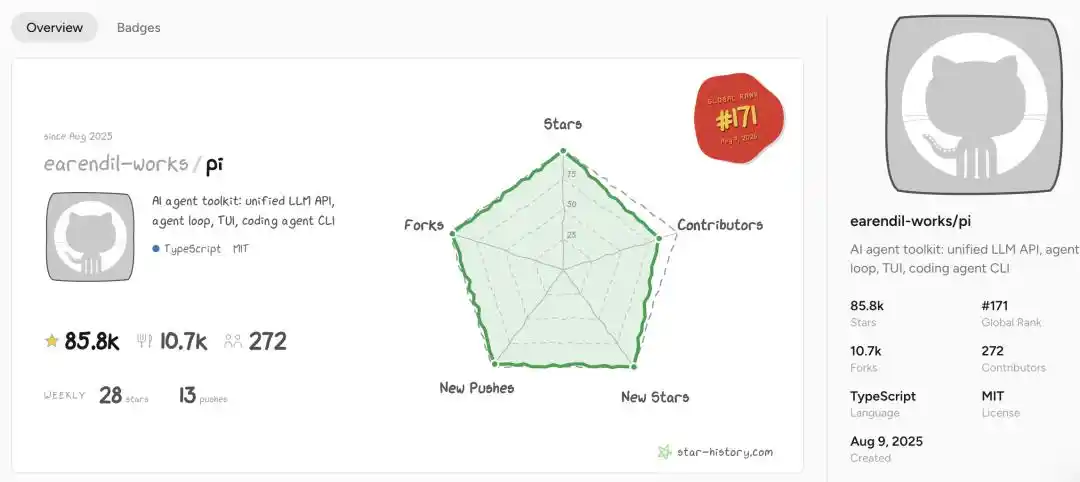
The main reason the project is so hot is simply because this thing is so Efficient...

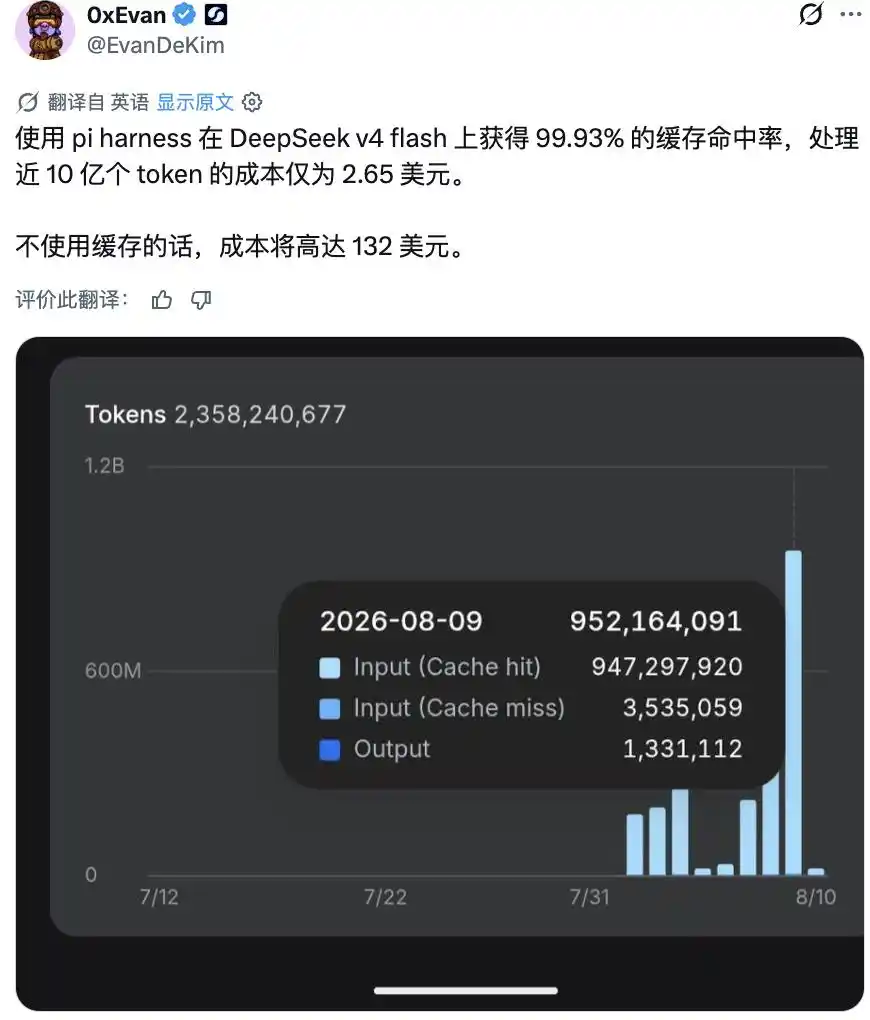
Look at this developer, Evan Kim. After he connected DeepSeek to Pi, approximately 99.93% of input tokens were successfully cache hits.

In other words, the cache miss rate is only 0.07%, meaning the vast majority of repeated context doesn't need to be recomputed???
What's more, the Composio team recently conducted a horizontal test of 8 mainstream Agent Harnesses, directly running DeepSeek V4 Flash on real tasks.

The results came out a bit dramatic—

Pi had the lowest average cost per successful task, only about $0.028.

Claude Code: How did you just make my price 7 times Pi's!!!

DeepSeek: My tokens are already sold this cheap.

Pi and other cost-saving projects: It's fine, we can make users buy even fewer of them, ha.

Four Tools Paired with DeepSeek, Cache Miss Rate Drops to 0.07%

Before talking about Pi, let's briefly discuss what a Harness actually is.

We all know that large models themselves are more like thinking brains—

To get them to actually work in a code repository, they need to be equipped with eyes, hands, and workflows.

For example, who reads files, how to call the terminal, how to run tests after modifying code—these engineering systems surrounding the model are collectively called a Harness.

Because of this, the same model with a different Harness can have vastly different practical performance and invocation costs!!

And the "Pi" created by developer Mario Zechner does exactly this—building such a programming workstation for large models.

After scanning the project, I can briefly summarize that Pi's approach is quite Direct

That is, this thing, from the very beginning, never intended to cram "all features" into its core...

Specifically, by default, Pi only gives the model four tools—read file, write file, modify file, and execute command.

If users need planning mode, sub-agents, MCP, Git checkpoints, or permission controls, they can then install them one by one via extensions and Skills~

Emm... It's probably like delivering a bare apartment with basic utilities; Pi is responsible for building the four walls, and whether it's eventually decorated into a studio, a gaming room, or a three-bedroom apartment depends entirely on the user's own tinkering??

What a coincidence, this perfectly aligns with DeepSeek's needs...

As is well known, DeepSeek's reasoning and programming capabilities are quite strong, but its tool calling, context management, and reasoning content playback have their own interface rules.

This leads to problems when we directly plug it into a general Harness designed around OpenAI or Claude, such as tool format incompatibility, errors in reasoning content playback, and cache invalidation.

So, while DeepSeek's official product is still on the way, Pi took the initiative to adapt first—

In April this year, Pi added native Provider support for DeepSeek while also fixing 400 errors in V4 session playback.

It retains the reasoning_content as required by DeepSeek's interface and maps Pi's internal reasoning intensity to the thinking levels supported by DeepSeek.

Truly·customized by the community.

But! What really made Pi and DeepSeek click instantly was "Caching".

After all, a Coding Agent, with each step it executes, has to resend the system prompt, tool definitions, historical conversation, and code to the model, which leads to—

The longer the model works on a task, the longer the request grows, and most of this content, DeepSeek has already seen...

This is where automatic prefix caching comes in handy.

It can temporarily remember the already computed beginning of a request. In the next invocation, as long as the system prompt, tool definitions, and historical conversation remain consistent, this large chunk of content can be reused directly, and the model only needs to process the newly added information at the end.

And "Cache Hit Rate" measures exactly what percentage of tokens in this input successfully reused previous computation results.

The higher the hit rate, the fewer tokens need recomputation, and naturally, the lower the invocation cost.

But the trouble hides here too; adding a timestamp to the prompt, changing the order of tools—the cache might immediately forget and start computing from scratch.

However, Pi's advantage is that it's Simple Enough: Few default tools, session content continuously appends forward, rarely going back to tinker with previous content.

This way, when DeepSeek checks the log, the hundreds of pages it has already seen can be skipped directly, only processing the few newly added pages at the end, drastically lowering the cache miss rate~

And indeed, netizen Evan Kim came forward to verify—

After connecting DeepSeek to Pi, the cache miss rate dropped to 0.03%, corresponding to a cache hit rate of about 99.97%.

Do the math: processing 1 billion tokens would cost only around $19, whereas without using the cache, the cost would be over $900...

Additionally, the Composio team recently conducted a horizontal test of 8 mainstream Agent Harnesses, directly running DeepSeek V4 Flash on real tasks.

The results came out somewhat dramatic, The same DeepSeek, with a different Harness, can have a cost difference of up to 7 times???

At a glance, indeed Pi Agent has the lowest "average cost" per successful task, needing only about $0.028.

Following behind are Deep Agents, Hermes Agent, OpenCode, Codex, Oh My Pi, and Prime Agent, respectively.

Let's look at A-clan's precious Claude Code, the undisputed "Most Expensive Contestant"—

Completing one successful task costs an average of about $0.195, yes, nearly 7 times that of Pi... (The sky is falling)

Of course, this number doesn't mean Claude Code lacks capability; after all, it is itself a complete engineering system built around the Claude model.

It's just that when the underlying model is switched to DeepSeek, the workflows optimized for the Claude ecosystem don't fully benefit from DeepSeek's low cost and high cache efficiency.

The model is still the same DeepSeek; Pi just makes it read much less of the content it has already seen.

Pi: Quietly waiting for the official Harness to surpass me, ha.

Official Harness Team Already Assembled, Targeting Claude Code Directly

Of course, no matter how suitable Pi is for DeepSeek, it's currently still a third-party solution.

After all, DeepSeek itself has decided to step into the ring and build its own Harness, and it's probably not far from launch? (I guess)

Back in May this year, DeepSeek senior researcher Chen Deli confirmed that the company is internally forming an Agent Harness team, summarizing its goal in a very straightforward statement—

Build a DeepSeek Code Harness from scratch, benchmarked against Claude Code.

Then, over the past few months, job postings for Harness Product Managers and R&D Engineers have been popping up everywhere on the official website, like:

Then, at the end of July, the team lead for DeepSeek's Agent Harness team, ACM gold medalist Cui Tianyi, was still recruiting developers for related projects online.

It's almost coming to fruition.

Putting these clues together, DeepSeek's path is gradually becoming clear.

V4 is responsible for strengthening underlying reasoning, programming, and Agent capabilities; the official Harness is responsible for connecting the model to terminals, code repositories, and toolchains; context management and test feedback can send real user failure cases back to the model team.

Of course, to be honest, after the official product launches, Pi won't lose its place because of it.

DeepSeek Harness focuses on out-of-the-box usability and deeper synergy with its own models.

Pi leaves the workstation for users to modify themselves, more suitable for developers who like to control tools, customize workflows, and swap models at any time.

After all, Pi never tied itself exclusively to DeepSeek from the start...

Claude, OpenAI, Gemini, Kimi, MiniMax are all supported. Use DeepSeek today to save tokens, switch to another model tomorrow for special tasks—users can switch Providers anytime.

Emm... This also means that DeepSeek's official Harness, besides facing a bunch of Claude Code-style products, also has to contend with open workstations like Pi that developers have already adapted quite comfortably. (doge)

So now, the pressure officially shifts to the official version—

Your own Harness for DeepSeek, surely it can't be less knowledgeable about saving tokens than a third-party one, right??? (doge)

Reference Links:

[1]https://x.com/composio/status/2086814488162972027?s=20

[2]https://github.com/earendil-works/pi

This article is from WeChat Official Account "QbitAI", Author: Meng Yao

Трендовые криптовалюты

Связанные с этим вопросы

QWhat is the caching hit rate achieved when DeepSeek is integrated with the Pi harness according to the developer Evan Kim?

AAccording to developer Evan Kim, the caching miss rate is as low as 0.03% when DeepSeek is integrated with the Pi harness, which corresponds to a caching hit rate of approximately 99.97%.

QWhat is the average cost per successful task for Pi using DeepSeek V4 Flash, and how does it compare to Claude Code in the Composio team's test?

AIn the Composio team's test, Pi achieved the lowest average cost per successful task at approximately $0.028 using DeepSeek V4 Flash. Claude Code, in contrast, had an average cost of about $0.195, making it nearly 7 times more expensive than Pi.

QWhat are the four core tools provided by the Pi harness in its default setup?

AThe four core tools provided by the Pi harness in its default setup are: reading files, writing files, modifying files, and executing commands.

QWhat is the announced goal of DeepSeek's internal team for their upcoming official Agent Harness, as stated by senior researcher Chen Deli?

ADeepSeek senior researcher Chen Deli stated that the goal of their internal team is to build the DeepSeek Code Harness from scratch, aiming to rival Claude Code.

QWhat is a key architectural philosophy behind the Pi harness that contributes to its high caching efficiency with DeepSeek?

AA key architectural philosophy of the Pi harness is its simplicity and modularity. It starts with a minimal core of only four basic tools, and additional features can be added via extensions. This design keeps session content stable and appended sequentially, which minimizes changes to prompts and tool definitions, thereby maximizing caching hit rates for models like DeepSeek.

Похожее

Криптовалюта: Быки вернулись. Кто отскочил сильнее всех?

Автор: Джо Чжоу, Foresight News Криптовалютный рынок, находившийся в затишье почти весь год, на прошлой неделе резко оживился. Биткоин вырос более чем на 26%, достигнув максимума в $79 500, что стало рекордным еженедельным ростом с марта 2023 года. Рост оживил разговоры о возвращении бычьего тренда. Анализ показывает, что поворот рынка тесно связан с макроэкономической политикой США, в частности, с ожиданиями увеличения ликвидности из-за решений Казначейства по выкупу облигаций и с продвижением криптовалютного законодательства, инициированным администрацией Трампа. Важным индикатором снова выступили спотовые BTC-ETF, которые зафиксировали рекордный еженедельный чистый приток средств с октября 2025 года ($26 млрд совокупно для BTC и ETH ETF), предвосхитив общий подъем рынка. Рост биткоина запустил четкую цепочку перетока капитала: за ним последовали Ethereum (рост почти 30%), а затем альткойны и мем-токены с еще более высокой доходностью. Среди самых результативных активов за неделю выделились: * **ENA (Ethena):** рост на 100.75% благодаря партнерству с Coinbase. * **PUMP (Pump.fun):** рост до 99% на волне бума мем-токенов в Solana. * **STX (Stacks):** рост до 94% на фоне возрождения интереса к экосистеме Bitcoin L2. * **TRUMP (Official Trump):** рост до 91%, коррелирующий с политическими новостями. * **ZEC (Zcash):** рост 75% и достижение исторического максимума. Мем-токены, такие как «牛来» (Niúlái) в BNB Chain и BOME в Solana, также показали взрывной рост, подтвердив статус самых волатильных активов в условиях растущего ажиотажа.

marsbit6 мин. назад

Криптовалюта: Быки вернулись. Кто отскочил сильнее всех?

marsbit6 мин. назад

Ухань готовится к крупнейшему в своей истории IPO

Ухань готовится к крупнейшему в своей истории IPO — компания Yangtze Memory Technologies Co., Ltd. подала заявку на листинг на科创板 Шанхайской фондовой биржи с целью привлечения 33 млрд юаней. Предполагаемая рыночная стоимость компании достигает 300 млрд юаней. Основанная в 2016 году на базе Wuhan Xinxin, Yangtze Memory является единственным в Китае производителем 3D NAND флеш-памяти по IDM-модели. Её развитие стало результатом более чем десятилетних усилий Уханя по созданию кластера полупроводниковой промышленности, начатых ещё в 2000-х годах. Акционерами компании являются государственные фонды и институты, включая Национальный фонд интегральных схем (большой фонд) первой и второй фазы, а также инвестиционные платформы провинции Хубэй и города Ухань. За время существования компания привлекла значительные инвестиции в ходе нескольких раундов финансирования. Успешное размещение акций Yangtze Memory укрепит позиции оптической долины Уханя (Гуангу) как ключевого технологического центра. В настоящее время в Гуангу насчитывается 72 публичные компании, и власти планируют увеличить их число до 100 к 2030 году. Для поддержки стартапов в таких сферах, как фотонная интеграция, искусственный интеллект и квантовые технологии, уже созданы специализированные фонды общей суммой 18 млрд юаней.

marsbit6 мин. назад

Ухань готовится к крупнейшему в своей истории IPO

marsbit6 мин. назад

В июне Дональд Трамп впервые купил акции Berkshire Hathaway

Согласно финансовому отчёту от 22 августа, Дональд Трамп в июне впервые приобрёл акции Berkshire Hathaway. За месяц было совершено 1051 финансовая операция с акциями, облигациями и ETF на общую сумму покупок свыше $9 млн и продаж более $28,5 млн. Суммы сделок указывались диапазонами, например, от $1 до $5 млн. Крупнейшими сделками стали продажа акций ETF Vanguard Dividend Appreciation 22 июня на $5-25 млн и покупка акций Fidelity National Information Services и Home Depot. 18 июня, после падения рынков, Трамп продал акции Meta Platforms и Motorola Solutions, а затем вложился в акции Berkshire Hathaway, Cintas, Visa и Mastercard. В июне также были приобретены ETF на казначейские облигации США, технологический сектор и товары, а проданы позиции в ETF на краткосрочные облигации, потребительский сектор и европейские акции. Всего от имени Трампа было совершено 25 сделок с акциями и облигациями на суммы $1-5 млн каждая. Активность наблюдалась и на крипторынке: Трамп продавал и покупал акции Coinbase на фоне снижения биткоина.

cryptonews.ru9 мин. назад

В июне Дональд Трамп впервые купил акции Berkshire Hathaway

cryptonews.ru9 мин. назад

Банки и регуляторы присоединились к пилотному проекту по тестированию криптопереводов, устойчивых к квантовым атакам

Банки и регуляторы из Европы, Ближнего Востока и Азии присоединились к пилотному проекту по тестированию защищённой от квантовых атак инфраструктуры для переводов цифровых активов. Инициатива, организованная Responsible Fintech Institute (RFI) и компанией Safeheron, реализуется в тестовой сети NEAR с использованием постквантового стандарта цифровой подписи ML-DSA-65. В числе участников — регуляторы Abu Dhabi Global Market, Бутана и Мальты, а также Bison Bank и DK Bank. Банки протестируют создание кошельков и транзакции, в то время как регуляторы будут наблюдать и участвовать в разработке управленческих механизмов. Организаторы намерены опубликовать технический отчёт и открыть исходный код проекта. Пилот запущен на фоне подготовки мировых финансовых органов к рискам, которые квантовые компьютеры представляют для классической криптографии, и в соответствии с рекомендациями о переходе на постквантовые системы.

cryptonews.ru9 мин. назад

Банки и регуляторы присоединились к пилотному проекту по тестированию криптопереводов, устойчивых к квантовым атакам

cryptonews.ru9 мин. назад

Торговля

Спот

Популярные статьи

Как купить S

Добро пожаловать на HTX.com! Мы сделали приобретение Sonic (S) простым и удобным. Следуйте нашему пошаговому руководству и отправляйтесь в свое крипто-путешествие.Шаг 1: Создайте аккаунт на HTXИспользуйте свой адрес электронной почты или номер телефона, чтобы зарегистрироваться и бесплатно создать аккаунт на HTX. Пройдите удобную регистрацию и откройте для себя весь функционал.Создать аккаунтШаг 2: Перейдите в Купить криптовалюту и выберите свой способ оплатыКредитная/Дебетовая Карта: Используйте свою карту Visa или Mastercard для мгновенной покупки Sonic (S).Баланс: Используйте средства с баланса вашего аккаунта HTX для простой торговли.Третьи Лица: Мы добавили популярные способы оплаты, такие как Google Pay и Apple Pay, для повышения удобства.P2P: Торгуйте напрямую с другими пользователями на HTX.Внебиржевая Торговля (OTC): Мы предлагаем индивидуальные услуги и конкурентоспособные обменные курсы для трейдеров.Шаг 3: Хранение Sonic (S)После приобретения вами Sonic (S) храните их в своем аккаунте на HTX. В качестве альтернативы вы можете отправить их куда-либо с помощью перевода в блокчейне или использовать для торговли с другими криптовалютами.Шаг 4: Торговля Sonic (S)С легкостью торгуйте Sonic (S) на спотовом рынке HTX. Просто зайдите в свой аккаунт, выберите торговую пару, совершайте сделки и следите за ними в режиме реального времени. Мы предлагаем удобный интерфейс как для начинающих, так и для опытных трейдеров.

2.0k просмотров всегоОпубликовано 2025.01.15Обновлено 2026.06.02

Как купить S

Sonic: Обновления под руководством Андре Кронье – новая звезда Layer-1 на фоне спада рынка

Он решает проблемы масштабируемости, совместимости между блокчейнами и стимулов для разработчиков с помощью технологических инноваций.

2.5k просмотров всегоОпубликовано 2025.04.09Обновлено 2025.04.09

Sonic: Обновления под руководством Андре Кронье – новая звезда Layer-1 на фоне спада рынка

HTX Learn: Пройдите обучение по "Sonic" и разделите 1000 USDT

HTX Learn — ваш проводник в мир перспективных проектов, и мы запускаем специальное мероприятие "Учитесь и Зарабатывайте", посвящённое этим проектам. Наше новое направление .

2.0k просмотров всегоОпубликовано 2025.04.10Обновлено 2025.04.10

HTX Learn: Пройдите обучение по "Sonic" и разделите 1000 USDT

Обсуждения

Добро пожаловать в Сообщество HTX. Здесь вы сможете быть в курсе последних новостей о развитии платформы и получить доступ к профессиональной аналитической информации о рынке. Мнения пользователей о цене на S (S) представлены ниже.

活动图片