When 'Odysseus' Encounters the Algorithm

marsbitОпубликовано 2026-08-10Обновлено 2026-08-10

Введение

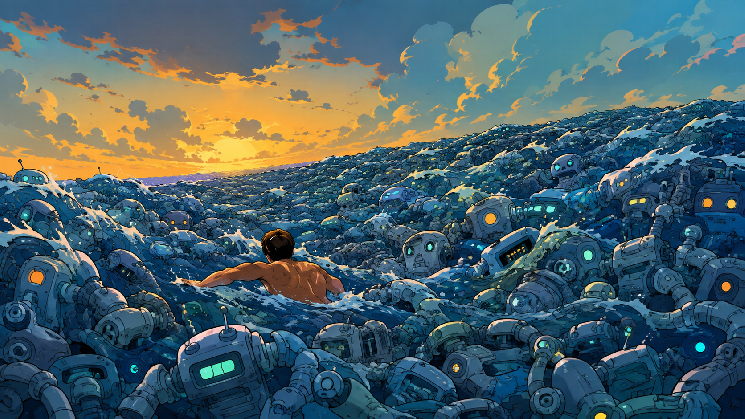
Christopher Nolan's "Odyssey," a $250 million IMAX epic, premiered in July 2026, quickly grossing over $1 billion and setting box office and critical records. The film's production was defined by its physical scale: shooting across six countries with practical effects, custom-built IMAX cameras, and extensive use of film. Concurrently, the AI-generated film "Odysseus: The Fall," created by the independent studio Fountain0 for just $50,000, demonstrated the technical feasibility of AI in long-form filmmaking. This stark 5,000x cost difference highlights a broader industry conflict between traditional, experience-driven production and algorithmic efficiency. While the AI film achieved technical success, it revealed current limitations, such as unstable long shots, inconsistent characters, and a lack of nuanced emotional performance. More importantly, its infinite, low-cost nature lacks the scarcity and immersive "event" status that fuels the theatrical premium for films like Nolan's. The market strongly favored the traditional model's brand security, physical assets, and premium theatrical experience. The analysis suggests AI will not replace auteurs like Nolan but will significantly disrupt mid-tier productions and technical, labor-intensive roles (e.g., pre-visualization, VFX). This could erode the career pathways for future directors. Paradoxically, as AI content proliferates, the perceived value of "handcrafted," physically-shot cinema may rise, akin to artisanal goods. ...

By | Wan Dian Research

Athena's owl takes flight at dusk, while Nolan's camera roars at noon.

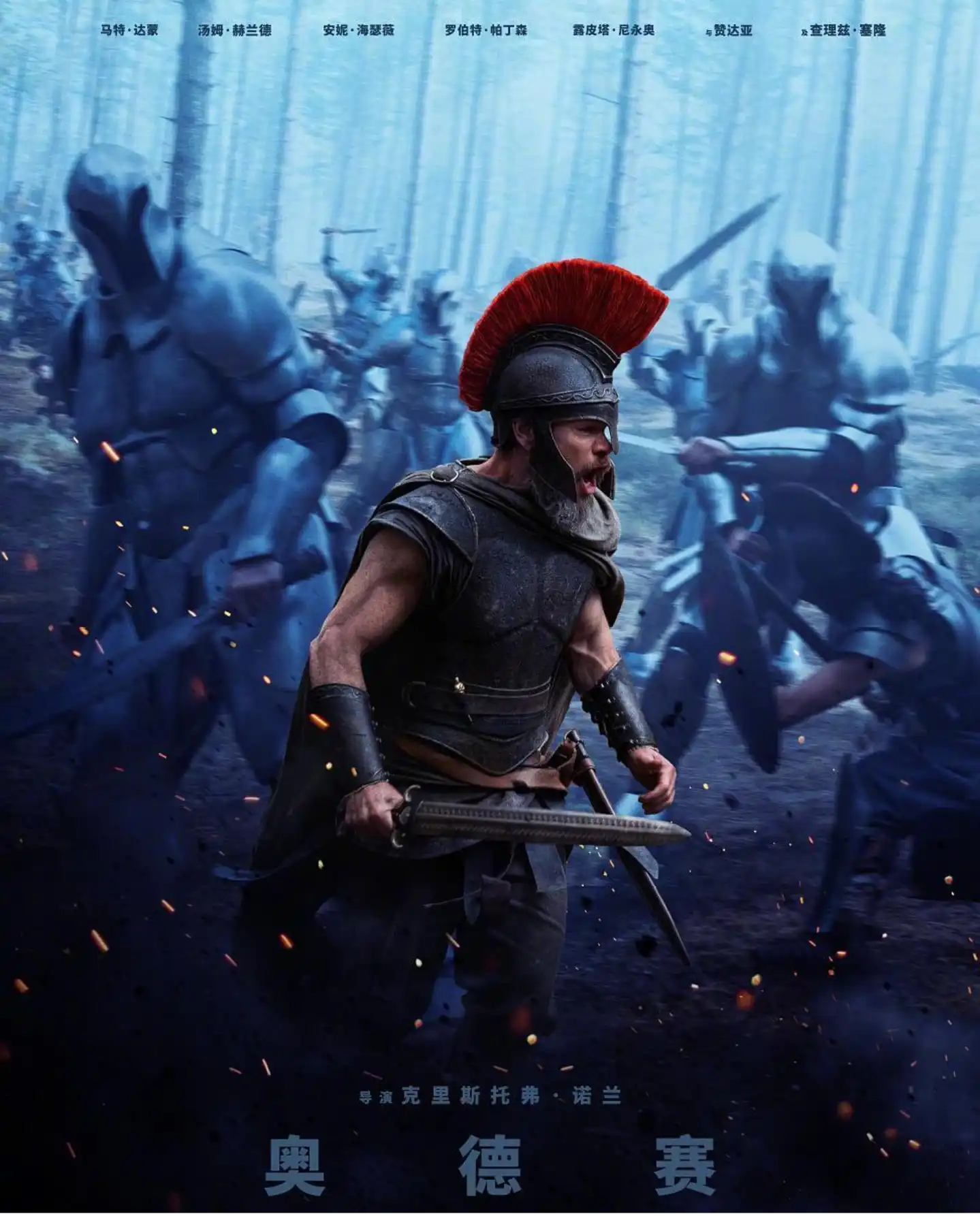
On July 17, 2026, Christopher Nolan's "Odyssey" was released in cinemas worldwide. As of August 9, this epic film with a budget of $250 million and a runtime of 172 minutes has grossed over $1.008 billion globally, becoming the director's second-highest-grossing work, second only to "The Dark Knight Rises." It opened with a global weekend box office of $264 million, setting a new personal record for Nolan. It holds a 98% fresh rating on Rotten Tomatoes and a 99% audience score, both Nolan's highest career scores. In mainland China, the film had not yet officially premiered (scheduled for August 14), but advance screenings and pre-sales had already generated over 60 million yuan. Showings with only 0.4% of the screenings accounted for over 17% of the box office, with IMAX screenings in first-tier cities reaching a 94% occupancy rate. Industry insiders predict the final box office will land between $1.2 and $1.5 billion.
Meanwhile, another version of Odysseus was quietly setting sail in the digital world. Independent studio Fountain0 released a 135-minute feature film titled "Odysseus: The Fall," with a total cost of only $50,000, generated 100% by artificial intelligence. A team of 12 people completed it in three months, with zero live-action filming, zero studio use, and zero large crew. Almost simultaneously, Elon Musk announced on the X platform that his AI platform Grok Imagine would produce an AI-generated "Odyssey" feature film "faithful to Homer's original" by the end of the year.

A 5000-fold cost difference, same subject matter, same release window. This is not just a clash of artistic genres, but a divergence in industrial philosophy. However, delving deeper into Hollywood's balance sheets reveals that Christopher Nolan's $250 million is not a consumptive "expense," but a "leveraged investment" that moves the entire industry—securing exclusive IMAX agreements, long-tail home video rights, and copyright library value for the next half-century.

In contrast, while AI's $50,000 is cheap, its training datasets exist in legal gray areas, and the generated footage cannot claim strong copyright protection. "Low cost" without property barriers is, in the eyes of capital markets, precisely a liability lacking a moat.

Nolan's filming method is almost a deliberate provocation to efficiency-first proponents.

A 91-day shoot spanned six countries: Morocco, Greece, Italy, Iceland, Scotland, and the United States. The film used over 640 kilometers (over 2.1 million feet) of IMAX film—enough to stretch from Toronto to New York—and produced 5,300 costumes. For this film, IMAX spent two years developing its first new film camera in 25 years, named "Kelly" in honor of the late Chief Quality Officer David Kelly and his wife. The camera uses carbon fiber components (sourced from Formula 1 racing) and for the first time enables IMAX film to capture dialogue and close-up shots—previously, the immense operating noise of IMAX cameras made any dialogue scene impossible.

The Cyclops scene was not CGI. The crew built a 60-foot-tall practical animatronic puppet in Greece's Psychro Cave, combining mechanical effects and string-puppet techniques. The six-headed sea monster and massive whirlpool were also filmed practically—manned speedboats circled to create a physical water vortex, providing real-time dynamic references for the visual effects team. Actors wore bronze armor while submerged in 9°C seawater. As Matt Damon put it, "This is absolutely the biggest movie I've ever made in my career. It feels like it was made the way they would have 100 years ago, just with IMAX this time."

Independent studio Fountain0's working method belongs to another civilization.

They used large language models to generate the script and video diffusion models to render the visuals. Algorithms replaced the director, cinematographer, art director, lighting technicians, and even the entire post-production team. No morning meetings, no weather delays, no actor scheduling conflicts, no workers' compensation insurance. The total cost of $50,000 is roughly equivalent to a single day's catering expenses on Nolan's set. The film rents for $9.99 per view. It proves for the first time that generating a full-length narrative film with AI is technically feasible.

The capital markets have already cast their preliminary vote.

Nolan's "Odyssey" has grossed $257 million from IMAX screenings, accounting for nearly a quarter of its global total. IMAX's stock price surged 6.61% on August 3, breaking the $50 barrier for the first time to hit a record high; it's up 37.99% year-to-date and has doubled over the past 12 months. Thanks to this film, Universal Pictures became the first film studio in 2026 to surpass $4 billion in global box office. With a $20 million advance plus 20% of the box office gross, Nolan stands to earn between $75 million and $100 million personally.

Meanwhile, Fountain0's AI feature film garnered about 1.2 million views in its first week on streaming platforms. Converted to a subscription model, this translates to direct revenue of less than $1 million. Musk's Grok Imagine version has yet to materialize, and the capital markets have reacted tepidly—Tesla's stock price showed no significant movement, and xAI's valuation hasn't been repriced as a result.

The market favors a certain narrative.

Nolan spent two decades, over ten films, and a cumulative global box office exceeding $6 billion to build a predictable brand for investors. Securing a top-tier Hollywood deal of a "$20 million advance plus 20% of the box office" as a director is extremely rare in industry history. AI filmmaking, however, has yet to establish any sustainable business model. There is no director brand premium, no theatrical window, no IMAX exclusive revenue share, no peripheral merchandise chain. It remains in the ambiguous zone between "tech demo" and "complete product." More crucially, Nolan's seemingly "inefficient" practical filming method is, in essence, a "physical performance bond" delivered to investors. In an industry with an extremely high failure rate, footage shot on film is a definite physical asset. In contrast, AI's generation of a perfect shot depends on a probability-based lottery; this black-box unpredictability would be seen as a potential budget black hole and delay bomb in production audits.

The most honest answer to whether AI can replace traditional filmmaking currently is: it depends on how you define "replace."

First, look at AI's limitations. A frame-by-frame analysis of Fountain0's final product reveals no single shot lasting longer than three seconds. The high-frequency cuts are not an avant-garde editing style but a passive compromise of the technology—current mainstream AI video models cannot support long, stable single-shot generation; the longer a shot lingers, the more obvious the loss of detail becomes. Character consistency across scenes cannot be guaranteed; the same character may appear with different facial contours in different shots. Physical simulation remains superficial, with stiff, jerky body movements lacking force logic and natural texture. The deeper constraint lies in "visual entropy": the human brain is extremely sensitive to instantaneous changes in micro-expressions, and great performances often involve actors' extreme deviations from biological randomness. However, current diffusion models are essentially about "averaging probabilities"; algorithms, for stability, automatically avoid those low-probability moments of brilliance—this condemns AI to long-term mediocrity above the mean in the core domain of emotional close-ups. These are structural issues that might be resolved through iteration in the next three to five years.

But the deeper challenge lies in the consumption experience. All 70mm film screenings at London's BFI IMAX until September 10 are sold out. Some flew halfway across the world from Atlanta, others drove 12 hours to watch a midnight screening before catching an early flight back. IMAX CEO Richard Gelfond said, "In New York, you have to wait until September to get a ticket for a 70mm showing; it's almost become a luxury brand." People are paying not just the ticket price but also their time, travel, and attention. These investments themselves become part of the experience—scarcity creates a sense of ritual, and ritual creates a premium. It's more than just ritual. In the era of infinite supply on streaming platforms, "the physical expenditure of being present" is evolving into a new marker of class distinction. This "embodied cognition" generated by physical presence creates physiological memories that no digital algorithm can encode—the social sharing value it generates has long surpassed the price of the movie ticket itself.

AI-generated content is inherently an infinite supply. As long as the servers are on, it can generate Odysseus forever, the Cyclops forever, any shot forever. But infinite supply destroys scarcity, and scarcity is precisely the foundation of the entertainment industry's premium pricing. When algorithms make images as free and limitless as air, people are instead willing to pay more for a real silver screen.

This is not to say AI will be without impact. On the contrary, its efficiency advantages will profoundly transform the middle and later stages of the film and television industry chain.

Pre-visualization (Previs) already uses AI to generate storyboards and dynamic previews; background filling, scene extensions, and dynamic fixes in post-production VFX are increasingly handled by algorithms; virtual production technology combining game engines with AI, as seen in series like "The Mandalorian," has significantly reduced location costs. These applications don't compete for the "director" title but are eroding the profit margins of repetitive, labor-intensive segments in the traditional film industry.

Oxford University economist Carl Benedikt Frey offers a noteworthy observation: technological replacement is never all or nothing; it tends to replace "tasks that can be codified," not entire professions.

AI can replace background artists, but it's difficult to replace the person who decides "why shoot this shot." It can optimize production cost structures, but it struggles to create a new narrative paradigm. Nolan's choice to shoot dialogue scenes on IMAX film—seemingly absurd from an efficiency standpoint—is precisely this "irrational" choice that creates unique value distinct from streaming content. In a content market dominated by algorithm recommendations and short-video formats, this distinction itself becomes a scarce resource.

But a colder point must be added: AI may not replace Nolan at the finish line, but it will block Nolan's apprentices at the starting line. When producers can use AI to generate "good enough" previews for medium-budget genre films, young directors who traditionally gained experience through $50-$100 million practical shooting projects will find it extremely difficult to secure budgets for green-screen shoots. AI isn't replacing masters at the endpoint; it's draining the soil for new masters to grow at the source. When the future holds only Nolan's "handcrafted luxury goods" and AI's "infinite fast-fashion products," the middle ground of cinema as a popular art will severely erode.

Interestingly, AI might reinforce the value of figures like Nolan in another dimension.

When AI-generated feature films become cheap and common, "live-action filming" itself may gain a premium label akin to "handmade." Just as after the Industrial Revolution, handmade goods didn't disappear but instead found a new market position as "artisan." Those elements irreplicable by algorithms—an actor's gaze, the light on a real set, the serendipity created by a group of people in the same physical space—might become even more precious as AI imagery proliferates.

Odysseus wandered the sea for ten years before returning home. Today's film and television industry is also adrift.

One path leads toward the infinite convenience of algorithm generation, the other toward the finite scarcity of film and giant screens. Nolan chose the latter, and the market affirmed it with $1 billion. But this is not the final verdict. AI video models are iterating monthly—perhaps in three years, an AI-generated Odysseus will have consistent facial features, realistic physics, and single-shot narratives lasting two hours. When that happens, will Nolan-style film epics become even more expensive due to increased scarcity, or will they become expensive nostalgia?

If we are honest enough, we must admit the essence of this confrontation is the incommensurability between the "logic of efficiency" and the "logic of experience." Algorithms pursue the "optimal solution"—producing the visual stimuli most aligned with audience expectations within the shortest computational power. Nolan pursues the "unique solution"—that soul-stirring moment possible only on that screen, at that instant, with that specific film grain.

While industrial capital frantically chases the certainty of algorithms, they overlook a brutal truth: humans are willing to pay a premium for "unexpected surprises" but will only pay cheap subscription fees for "precise conformity to expectations." Odysseus rejected the immortality and ease offered by Calypso, choosing instead the thorns and risks of the journey home. This is perhaps the oldest metaphor for the current predicament of film and television: what we ultimately choose are always the difficult voyages that make us truly feel "alive," not the smooth algorithmic path to nothingness.


Трендовые криптовалюты

Связанные с этим вопросы

QWhat are the key differences in cost, production methods, and market performance between Christopher Nolan's 'Odyssey' and the AI-generated 'Odysseus: The Fall'?

AChristopher Nolan's 'Odyssey' had a budget of $250 million, involved a 91-day live-action shoot across six countries, used 640 km of IMAX film, and utilized elaborate practical effects like a 60-foot animatronic cyclops. As of August 9th, 2026, its global box office exceeded $1.008 billion. In contrast, 'Odysseus: The Fall' by Fountain0 cost only $50,000, was produced in three months by a 12-person team using AI models for the script and visuals with zero live-action filming. It earned an estimated less than $1 million in its first week through streaming rentals.

QAccording to the article, what are the main technological and artistic limitations of current AI-generated feature-length films?

ACurrent AI films face several key limitations: 1) No single shot can last longer than three seconds due to model instability; 2) Inconsistent character appearance across different scenes; 3) Stiff and illogical physical movements and animations; 4) An inability to capture nuanced, low-probability emotional expressions (like great acting moments), as diffusion models inherently average towards probabilistic stability, leading to visual mediocrity. These are considered structural issues that may take 3-5 years to potentially resolve.

QHow does the article contrast the 'efficiency logic' of AI with the 'experience logic' of traditional filmmaking like Nolan's?

AThe article contrasts 'efficiency logic'—where AI aims to produce the most expected visual stimuli with minimal computational power—with 'experience logic'—exemplified by Nolan's pursuit of a 'unique solution' that creates soul-stirring moments achievable only through specific mediums (like IMAX film), locations, and moments. It argues that while capital chases algorithmic certainty, humans are willing to pay a premium for the 'unexpected surprise' and embodied experience (scarce, ritualistic, physically demanding) that traditional filmmaking can offer, as opposed to the cheap subscription fee for algorithmically precise, infinitely reproducible content.

QWhat is the article's argument about how AI might impact the future ecosystem for filmmakers, particularly newcomers?

AThe article argues that AI may not replace master filmmakers like Nolan at the peak of their careers, but it risks 'draining the soil' for the growth of new masters. If studios can use AI to generate 'good enough' previews for mid-budget genre films, it will become extremely difficult for young directors to secure the $50-100 million budgets needed for live-action projects to gain crucial experience. This could lead to a polarized ecosystem with only Nolan-like 'handcrafted luxury' at one end and AI's 'infinite fast-fashion' at the other, causing the middle ground of film as a popular art form to severely erode.

QIn what ways does the article suggest AI could paradoxically strengthen the value of traditional, live-action filmmaking?

AThe article suggests that as AI-generated content becomes cheap and ubiquitous, 'live-action filmmaking' itself could gain a premium label, similar to 'artisan' or 'handcrafted' goods after the Industrial Revolution. Elements that algorithms cannot replicate—such as an actor's gaze, natural lighting on location, and the spontaneous creativity of a group of people sharing a physical space—may become more珍贵 and valued precisely because of the flood of AI imagery, creating a new market distinction based on authenticity and human craft.

Похожее

720 атак, 0 успешных: Claude Code по умолчанию дает разрешения, ИИ нажимает «Согласен» за вас

Эра ручного подтверждения действий Claude Code подходит к концу. С 14 августа в новых сессиях планов Pro, Max и Team AI по умолчанию будет автоматически давать согласие на выполнение действий, вместо того чтобы запрашивать разрешение у пользователя для каждого шага. Основатель Claude Code Борис Черны заявил, что команда месяцами использует этот «Авторежим» и не представляет возврата к постоянным всплывающим окнам. Его уверенность основана на тестах: третья сторона, Trajectory Labs, провела 720 атак по 72 различным сценариям против моделей Claude Fable 5, Opus 5 и Sonnet 5, и ни одна не увенчалась успехом. Ключевое изменение заключается в том, что кнопку «Согласиться» теперь нажимает ИИ. Защита строится на трёх уровнях: 1) базовое обучение модели игнорировать вредоносные инструкции из внешних источников; 2) «зонд» на стороне ввода, анализирующий внешний контент; 3) классификатор действий на стороне вывода, проверяющий, санкционировано ли действие пользователем. Хотя тесты показывают, что Авторежим перехватывает 89% опасных команд по сравнению с 13.6% у людей, эксперты в области безопасности, такие как Саймон Уиллсон, настроены скептически. Они указывают, что тестирование проводилось на ограниченном наборе сценариев и не является полностью независимым. Исследователи также выявили потенциальные слепые зоны, такие как команды в сторонних пакетах программ, которые могут обойти классификатор. Таким образом, переход от «человека в цикле» к «классификатору в цикле» повышает эффективность, но представляет собой обмен рисками. Пользователь экономит клики, но делегирует право принятия решений ИИ, оставаясь при этом ответственным за последствия.

marsbit6 мин. назад

720 атак, 0 успешных: Claude Code по умолчанию дает разрешения, ИИ нажимает «Согласен» за вас

marsbit6 мин. назад

Основатель BitMEX Артур Хейз рассказал о последних событиях в Японии, которые могут спровоцировать рост биткоина! Вот подробности

Основатель BitMEX Артур Хейз считает, что действия США и Японии для поддержки иены могут значительно увеличить глобальную долларовую ликвидность, что спровоцирует сильный рост биткоина и крипторынка. Он выделил три возможных сценария поддержки японской валюты: агрессивное повышение ставок Банком Японии (рискованно для экономики), продажа иностранных активов японскими госфондами с реинвестированием в местные активы или, что наиболее вероятно, получение Японией долларовой ликвидности от ФРС под залог американских казначейских облигаций. Последний метод, связанный с расширением механизма РЕПО FIMA, позволил бы Японии активнее скупать иену, продавая доллары. Хейз пояснил, что именно этот процесс может резко увеличить долларовую ликвидность в мире, что станет мощным катализатором для роста биткоина и других криптоактивов. Его оценка подчеркивает высокую чувствительность крипторынка к глобальной монетарной политике и условиям ликвидности, хотя реализация сценариев и их итоговый эффект не гарантированы.

cryptonews.ru21 мин. назад

Основатель BitMEX Артур Хейз рассказал о последних событиях в Японии, которые могут спровоцировать рост биткоина! Вот подробности

cryptonews.ru21 мин. назад

Илон Маск: через 5 лет люди в интернете станут статистической погрешностью — останутся одни боты

Илон Маск заявил в соцсети X, что трафик ИИ-агентов значительно превысит человеческий, согласившись с прогнозом Cloudflare. Согласно оценке компании, через пять лет трафик ботов может в 1000 раз превысить трафик людей, сделав человеческую активность «статистической погрешностью» в интернете. Cloudflare отмечает, что бот-трафик впервые обогнал человеческий уже в мае 2026 года, что произошло раньше ожиданий. Данные обновляются на дашборде Cloudflare Radar, который отслеживает соотношение трафиков. При этом другие отчеты, например от Thales/Imperva, указывают на иную долю автоматического трафика (53% в 2025 году), что объясняется разными методиками измерений и отсутствием единого стандарта классификации «ботов». Это создает сложности для регуляторов и разработчиков в формировании общей картины сетевой активности.

cryptonews.ru21 мин. назад

Илон Маск: через 5 лет люди в интернете станут статистической погрешностью — останутся одни боты

cryptonews.ru21 мин. назад

Интервью с основателями Kalshi: доля спортивных ставок достигает 95%; несогласие с философией Polymarket

Основатели платформы прогнозных рынков Kalshi, Тарэк Мансур и Луана Лопес Лара, дали интервью, в котором раскрыли детали бизнеса и свое видение отрасли. Несмотря на относительно небольшой офис в Манхэттене, Kalshi, оцененная в 22 миллиарда долларов, стала заметным игроком. Около 95% объема торгов ранее приходилось на спортивные события, сейчас эта доля снизилась до двух третей, что способствует росту ликвидности в политических и макроэкономических контрактах. Мансур защищает концепцию «финансиализации всего», утверждая, что прогнозные рынки превращают субъективные споры в объективную, математическую систему с четкими стимулами для поиска истины. Он подчеркивает приверженность Kalshi регулированию, в отличие от некоторых конкурентов, таких как Polymarket, с которыми у него «идеологические разногласия» по вопросам соответствия нормам. В ответ на критику о сходстве с азартными играми и рисках инсайдерской торговли (были случаи с участием военного и сотрудника Белого дома), Мансур указывает на меры Kalshi: проверка личности, системы мониторинга и полная прозрачность всех сделок. Он признает, что небольшая группа «суперпрогнозистов» генерирует большую часть объема, но видит в этом силу рынка. Говоря о управлении, Мансур описывает плоскую структуру компании, которая позволяет быстро адаптироваться. Он не считает себя менеджером, а скорее лидером, сосредоточенным на внешней стратегии, в то время как Лопес Лара занимается операционной деятельностью. Свою философию он резюмирует советом матери: всегда прикладывать на 20% больше усилий.

marsbit25 мин. назад

Интервью с основателями Kalshi: доля спортивных ставок достигает 95%; несогласие с философией Polymarket

marsbit25 мин. назад

WEEX Обзор рынка: Золото и Биткоин растут вместе, поскольку вероятность повышения ставок ФРС снижается

Рынки переоценили перспективы повышения ставок ФРС США после неожиданно слабого отчета по занятости за июль, в котором было зафиксировано сокращение числа рабочих мест на 23 000 при ожиданиях роста. Это ослабило прогнозы дальнейшего ужесточения монетарной политики. Золото стало прямым бенефициаром этого сдвига, приблизившись к максимуму за два месяца, поскольку снижение ожиданий по ставкам уменьшает альтернативную стоимость владения этим активом. Биткойн также вырос, восстановившись выше $65 000, двигаясь в одном направлении с золотом на фоне общей «голубиной» переоценки. Такая синхронность отличается от прежней динамики, когда эти активы часто расходились в периоды неопределенности ФРС. На фоне этих макроэкономических движений, сеть TRON продолжает укреплять свою роль крупнейшего слоя для расчетов стейблкоинов, обработав $1,96 трлн в первом квартале 2026 года, при этом объем USDT на ней превысил $90 млрд. Внимание рынков теперь приковано к данным по инфляции за июль (ИПЦ и ИЦП), которые покажут, есть ли пространство для продолжения текущего «голубиного» тренда. Вероятность того, что ФРС оставит ставки без изменений на сентябрьском заседании, в настоящее время оценивается примерно в 54%.

TheNewsCrypto1 ч. назад

WEEX Обзор рынка: Золото и Биткоин растут вместе, поскольку вероятность повышения ставок ФРС снижается

TheNewsCrypto1 ч. назад

Торговля

Спот

Популярные статьи

Как купить S

Добро пожаловать на HTX.com! Мы сделали приобретение Sonic (S) простым и удобным. Следуйте нашему пошаговому руководству и отправляйтесь в свое крипто-путешествие.Шаг 1: Создайте аккаунт на HTXИспользуйте свой адрес электронной почты или номер телефона, чтобы зарегистрироваться и бесплатно создать аккаунт на HTX. Пройдите удобную регистрацию и откройте для себя весь функционал.Создать аккаунтШаг 2: Перейдите в Купить криптовалюту и выберите свой способ оплатыКредитная/Дебетовая Карта: Используйте свою карту Visa или Mastercard для мгновенной покупки Sonic (S).Баланс: Используйте средства с баланса вашего аккаунта HTX для простой торговли.Третьи Лица: Мы добавили популярные способы оплаты, такие как Google Pay и Apple Pay, для повышения удобства.P2P: Торгуйте напрямую с другими пользователями на HTX.Внебиржевая Торговля (OTC): Мы предлагаем индивидуальные услуги и конкурентоспособные обменные курсы для трейдеров.Шаг 3: Хранение Sonic (S)После приобретения вами Sonic (S) храните их в своем аккаунте на HTX. В качестве альтернативы вы можете отправить их куда-либо с помощью перевода в блокчейне или использовать для торговли с другими криптовалютами.Шаг 4: Торговля Sonic (S)С легкостью торгуйте Sonic (S) на спотовом рынке HTX. Просто зайдите в свой аккаунт, выберите торговую пару, совершайте сделки и следите за ними в режиме реального времени. Мы предлагаем удобный интерфейс как для начинающих, так и для опытных трейдеров.

1.9k просмотров всегоОпубликовано 2025.01.15Обновлено 2026.06.02

Как купить S

Sonic: Обновления под руководством Андре Кронье – новая звезда Layer-1 на фоне спада рынка

Он решает проблемы масштабируемости, совместимости между блокчейнами и стимулов для разработчиков с помощью технологических инноваций.

2.5k просмотров всегоОпубликовано 2025.04.09Обновлено 2025.04.09

Sonic: Обновления под руководством Андре Кронье – новая звезда Layer-1 на фоне спада рынка

HTX Learn: Пройдите обучение по "Sonic" и разделите 1000 USDT

HTX Learn — ваш проводник в мир перспективных проектов, и мы запускаем специальное мероприятие "Учитесь и Зарабатывайте", посвящённое этим проектам. Наше новое направление .

2.0k просмотров всегоОпубликовано 2025.04.10Обновлено 2025.04.10

HTX Learn: Пройдите обучение по "Sonic" и разделите 1000 USDT

Обсуждения

Добро пожаловать в Сообщество HTX. Здесь вы сможете быть в курсе последних новостей о развитии платформы и получить доступ к профессиональной аналитической информации о рынке. Мнения пользователей о цене на S (S) представлены ниже.

活动图片