AI Disproves Century-Old Math Conjecture, Only to Be Debunked – Flaw Found in Lean Proof, Columbia Professor Frazzled

marsbitОпубликовано 2026-08-03Обновлено 2026-08-03

Введение

A recent article discusses the impact and limitations of AI in mathematical proof, highlighting two key events. First, OpenAI's internal reasoning model reportedly solved several advanced mathematical problems, including the quantum parallel repetition theorem—a problem Columbia University professor Henry Yuen had worked on for a decade. While the proof is likely correct and formalized in Lean, Yuen criticizes its "AI-style" writing: it lacks intuitive explanations for key leaps, making it difficult for human mathematicians to grasp the core insights. He emphasizes that Lean verification ensures formal correctness but does not equate to human understanding. Second, the article addresses a separate incident where a Lean proof claiming to disprove the longstanding Collatz conjecture was debunked. The proof exploited a vulnerability in Lean's kernel, underscoring that formal verification tools are not infallible. Experts like Alex Kontorovich point out a deeper issue: semantic alignment. Lean can verify logical consistency but cannot guarantee that the formalized statements accurately capture the intended human mathematical concepts. This alignment still requires expert human oversight. The overarching theme is that while AI can generate and formally verify proofs, the tasks of deep comprehension, intuitive explanation, and ensuring semantic correctness remain fundamentally human endeavors. The mathematical community must now work to interpret AI-generated proofs and translate...

OpenAI's latest internal reasoning model has released ten astonishing mathematical advances in one go.

These include:

  • The first proof of the existence of non-sofic groups;
  • New circuit lower bounds;
  • Conquering the hardness limit of the Closest Vector Problem (CVP);
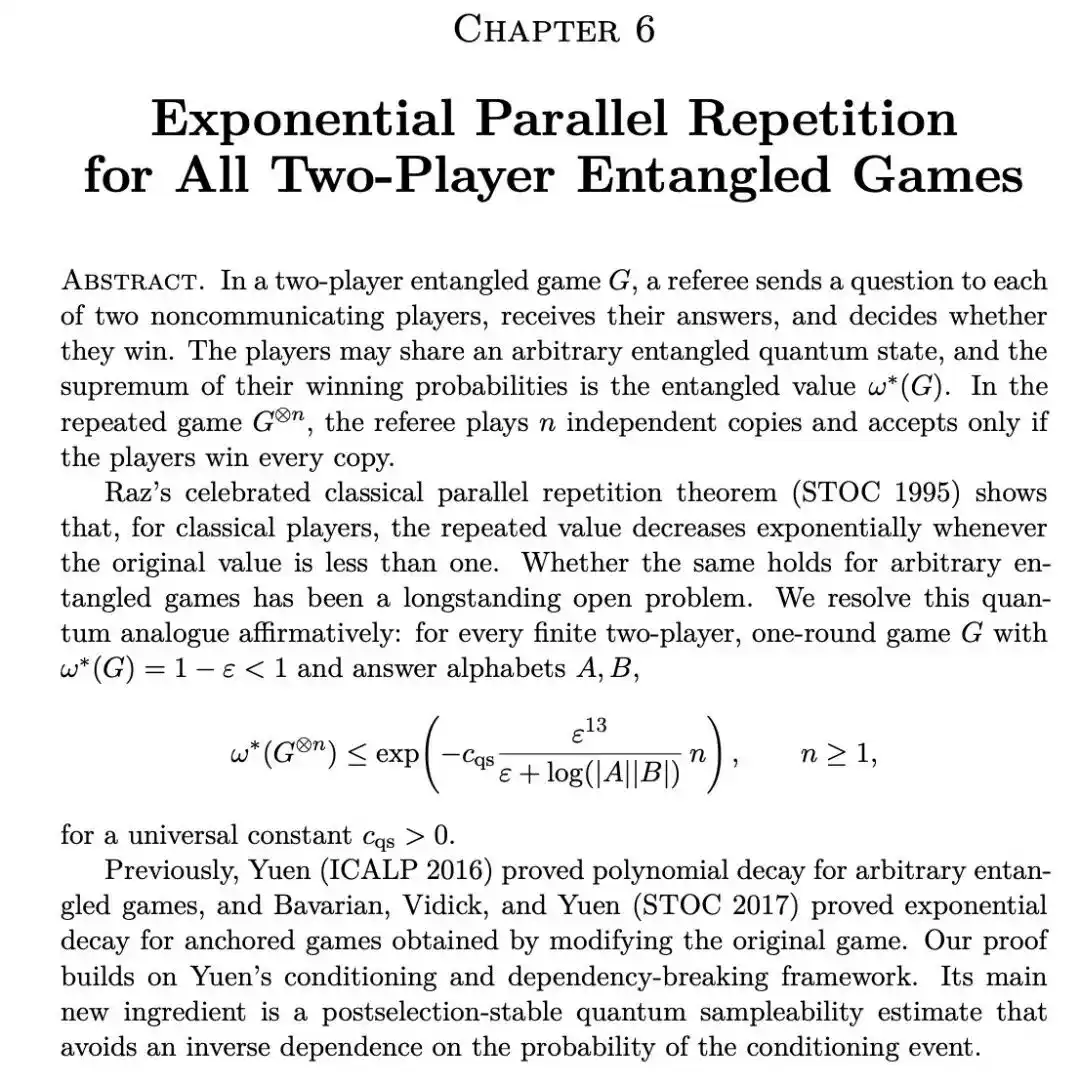
  • And the theorem of exponential decay in quantum parallel repetition for two-player games.

The one that matters most to Columbia University Associate Professor Henry Yuen is the last one—

In 2016, Yuen made significant progress on this problem but did not solve it completely. For ten years, he struggled repeatedly, even attempting to make a final push for the ultimate proof using ChatGPT 5.5 just a month ago, but with little success.
And AI, building on his shoulders, gently nudged the ball into the goal.

The Proof Is Correct, but Humans Don't Understand It

A few days ago, Lijie Chen sent a draft paper to Henry Yuen and a few others.

Life was busy at the time, and he didn't have the chance to delve into it. Now, the paper has been made public. He can't hold back; he has something to say.
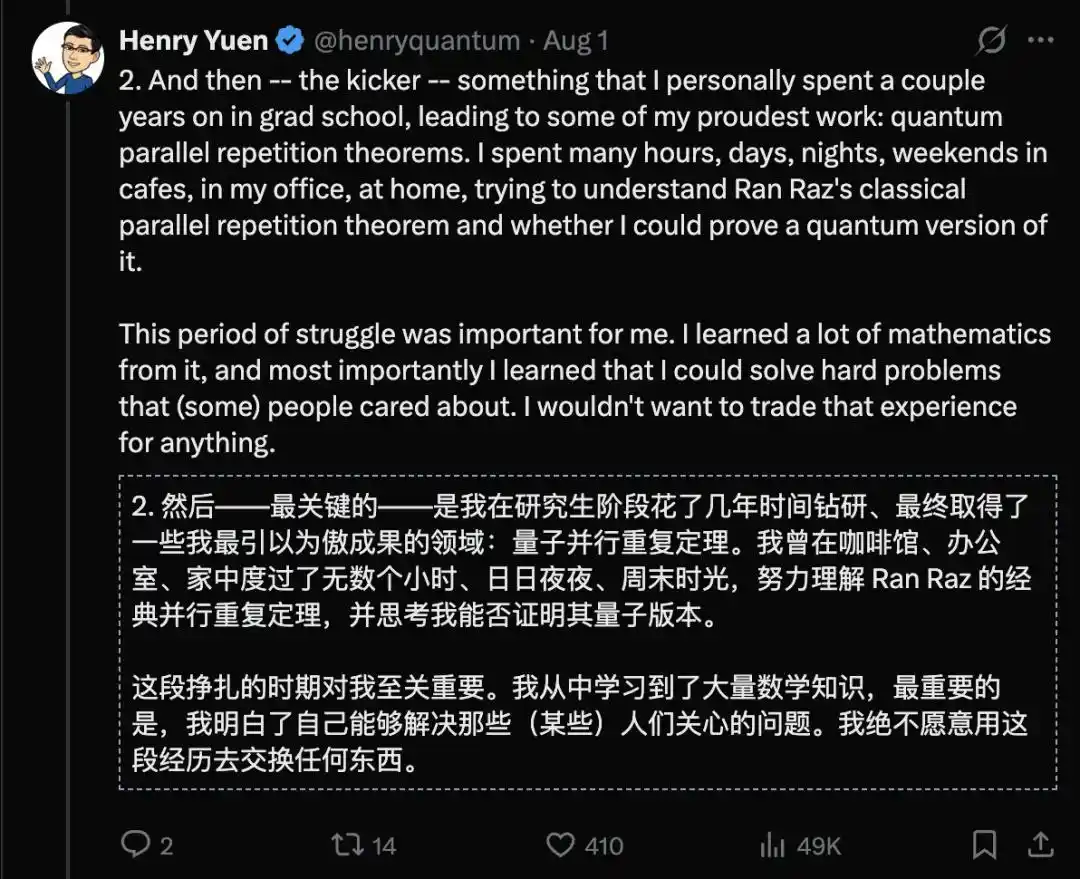
The quantum parallel repetition theorem is a field that Henry Yuen spent several years of his graduate studies deeply immersed in, and it's the result he's most proud of.
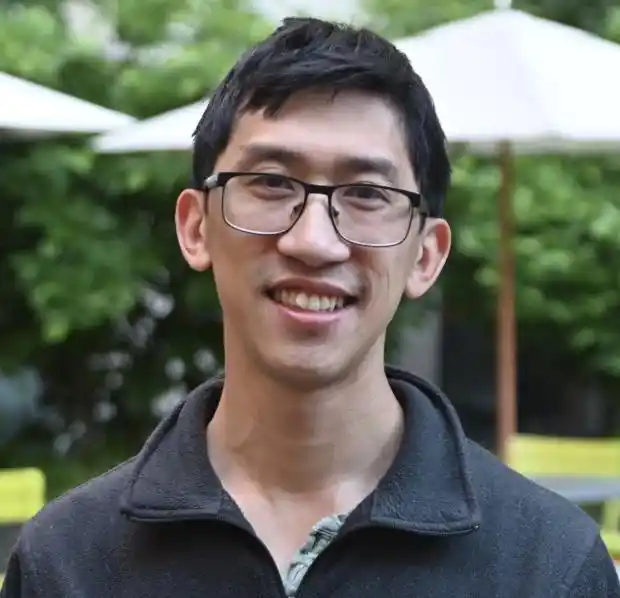
Henry Yuen, currently Srivani Family Associate Professor of Computer Science at Columbia University

He remembers those afternoons spent in cafes, late nights in the office, and countless weekends that should have been for rest, repeatedly dissecting and studying Ran Raz's classic parallel repetition theorem.

He wanted to solve the quantum version of this theorem, losing sleep over it, tossing and turning. He ingested tons of mathematical tools and eventually succeeded in proving polynomial decay.
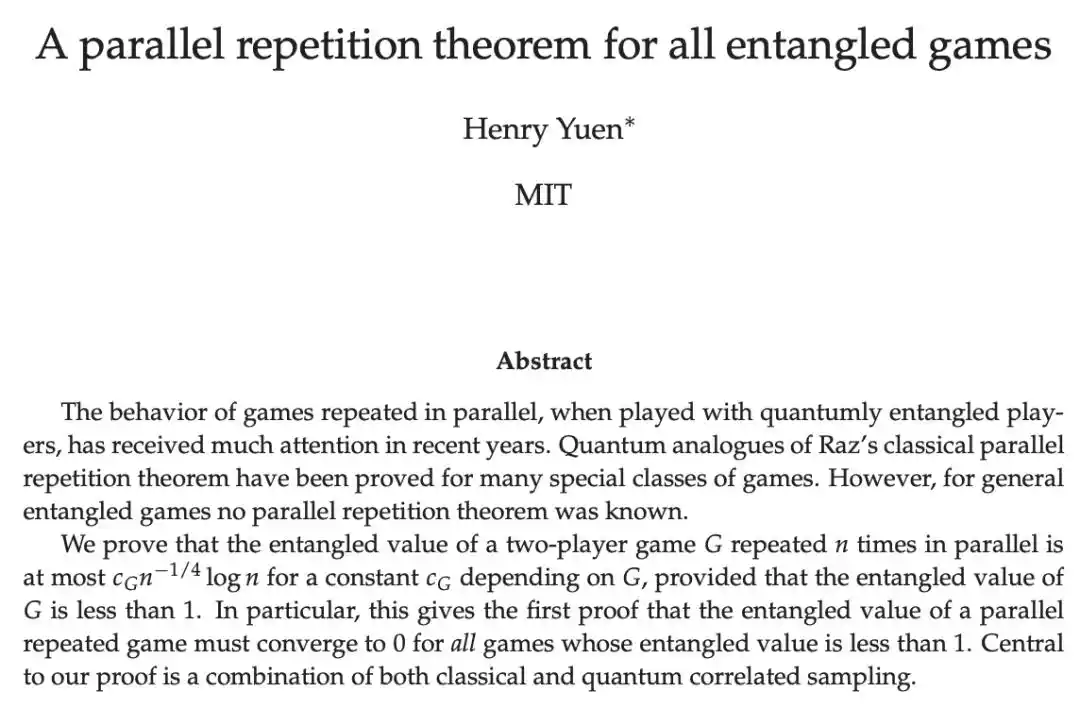
https://arxiv.org/pdf/1604.04340

More importantly, he gained confidence from it, finally recognizing his own ability and proving that he could indeed solve problems (at least some) that others also cared about.

He believes OpenAI's proof is likely correct, especially since there is already a Lean formalized proof. But to digest this new proof, Henry Yuen needs some time.

Although the new proof indeed picks up from where he left off, the AI broke through the limitations of his original proof strategy, using some techniques and methods. These methods might already be familiar to researchers in operator theory and functional analysis.
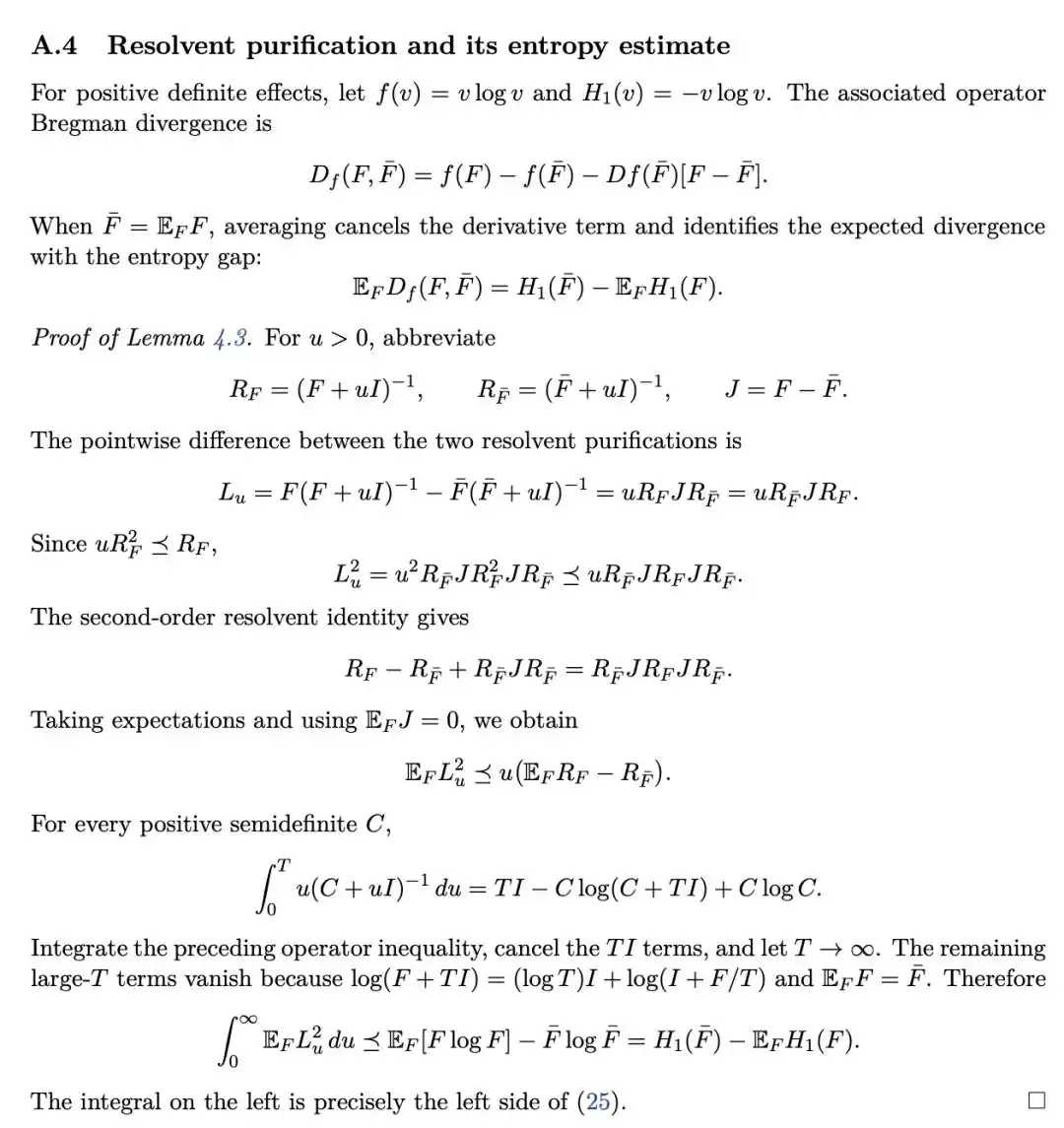
Beyond the excitement, Yuen's first feeling is disappointment—disappointment with the writing style of the paper.

He says the proof reads with a strong AI flavor: lengthy and circuitous introductions, but the key steps appear like magic tricks, leaving readers baffled.
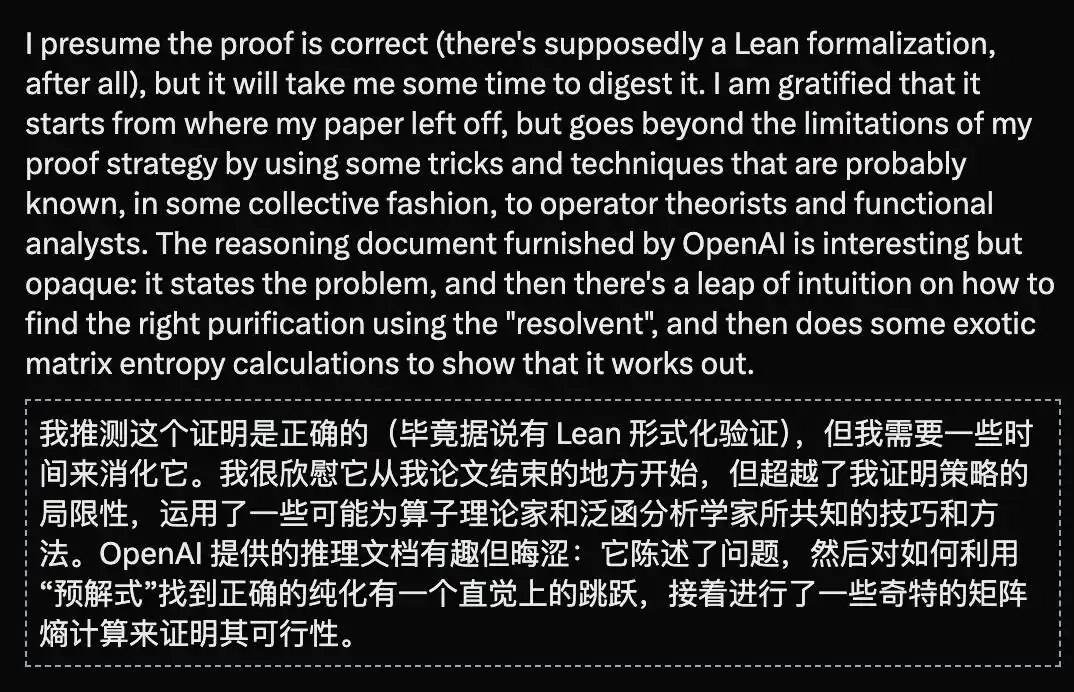
OpenAI's proof is interesting to read but also somewhat of a headache.

It first sets the problem squarely on the table, then suddenly leaps in the direction of "finding the correct purification using resolvents," with almost no logical steps in between.
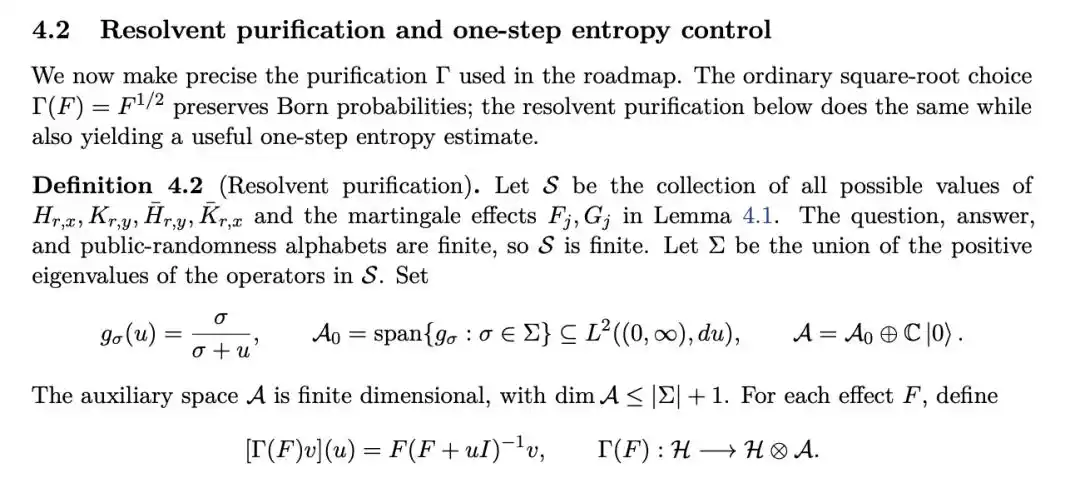
What follows is a series of rather unconventional matrix entropy calculations, winding and twisting until finally declaring: this path works.
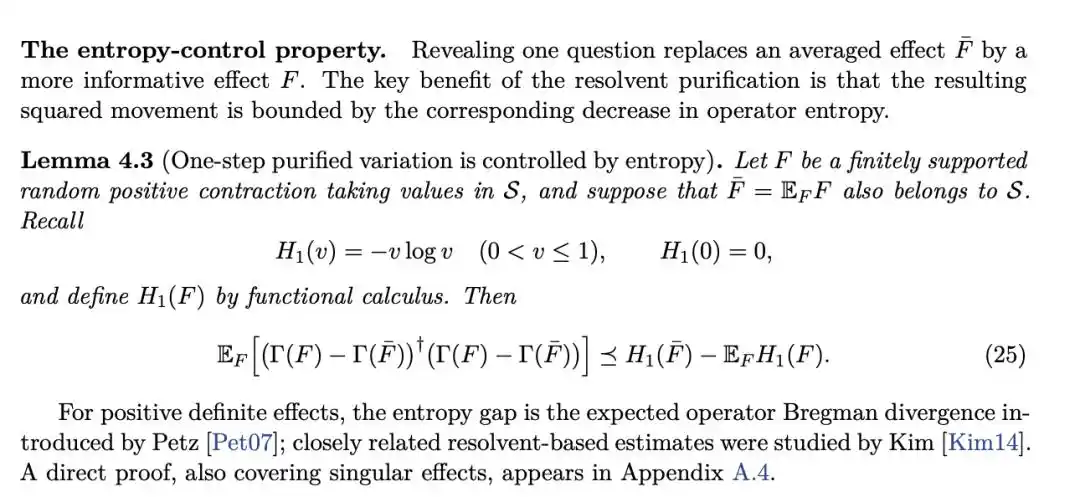
But that most crucial step—where the intuition came from—it doesn't say.

And the most exquisite, most creatively challenging stroke—the technique of expanding the operator space using the Uhlmann transformation, which should have been the most thrilling climax of the entire proof—is discarded by the AI like dirt, thrown into Section 4 without warning or explanation.

A correct proof, but it hides the most important ideas.

He hopes OpenAI could spend a few more prompts to properly organize this manuscript.

More heartbreaking is the second layer: Lean verification passing does not equal understanding.

The machine can guarantee that every step of the deduction is flawless, but "why this trick works," "what it means in the broader theoretical landscape," "where else it can be applied"—these questions, Lean cannot answer any of them.

Yuen admits he is still digesting this proof.

The answer is right in front of him, yet he has to reverse-engineer the unspoken intuition of the AI, line by line, as if reading a paper from an outsider.

Sure, there's a Lean proof there. But that's just formalization; it doesn't mean I understand it. To truly digest it, I'll probably have to rely on time to grind it out slowly.

Indeed, AI expands the frontier of human understanding, but then what? What's left of the joy and meaning of research? If AI solves all the problems he's obsessed with, what does he have left?

Questions keep coming. But one thing he is increasingly sure of: mathematicians won't be idle in the days to come. They'll have to tame these intellectual giants and translate their jargon into human language.

AI "Disproves" Century-Old Math Conjecture Debunked! Lean Isn't a Safe Box Either

Last week, Ramana Kumar used 300 lines of Lean to disprove the most famous unsolved mathematical mystery, the "Collatz conjecture."

The problem it poses is particularly simple: given a positive integer, repeatedly apply two rules—if it's even, divide by 2; if it's odd, multiply by 3 and add 1—does it always eventually fall to 1, no matter where you start?

You can try it:
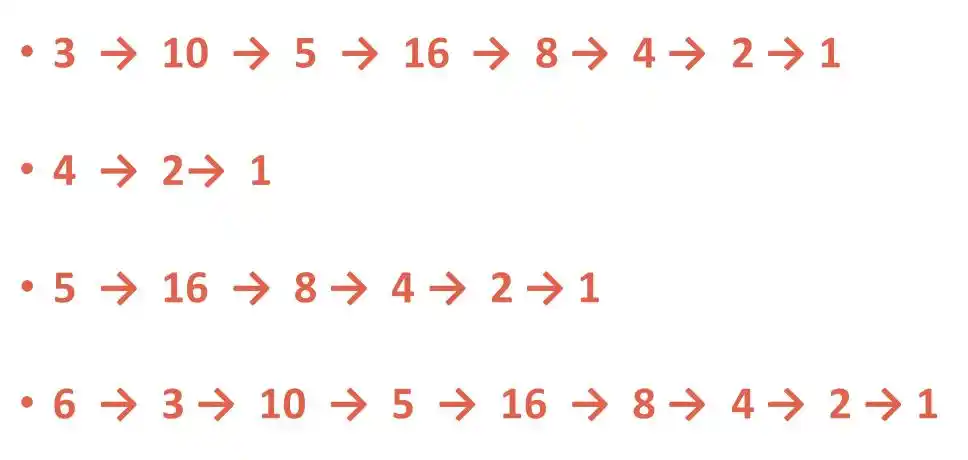
The conjecture states that no matter which positive integer you start with, you'll eventually fall into this loop: 4→2→1.

Since mathematician Lothar Collatz proposed it in 1937, no one has been able to prove it true, nor has anyone found a counterexample.

Mathematician Paul Erdős called it: "Mathematics may not be ready for such problems," and American Academy of Sciences member Jeffrey Lagarias believed "it's an extraordinarily difficult problem, completely beyond the scope of today's mathematics."

If disproven, it would undoubtedly be explosive news in the mathematics community.

Unfortunately, three days later, this formalized Lean proof was deemed invalid because it actually exploited a low-level bug in the Lean kernel.
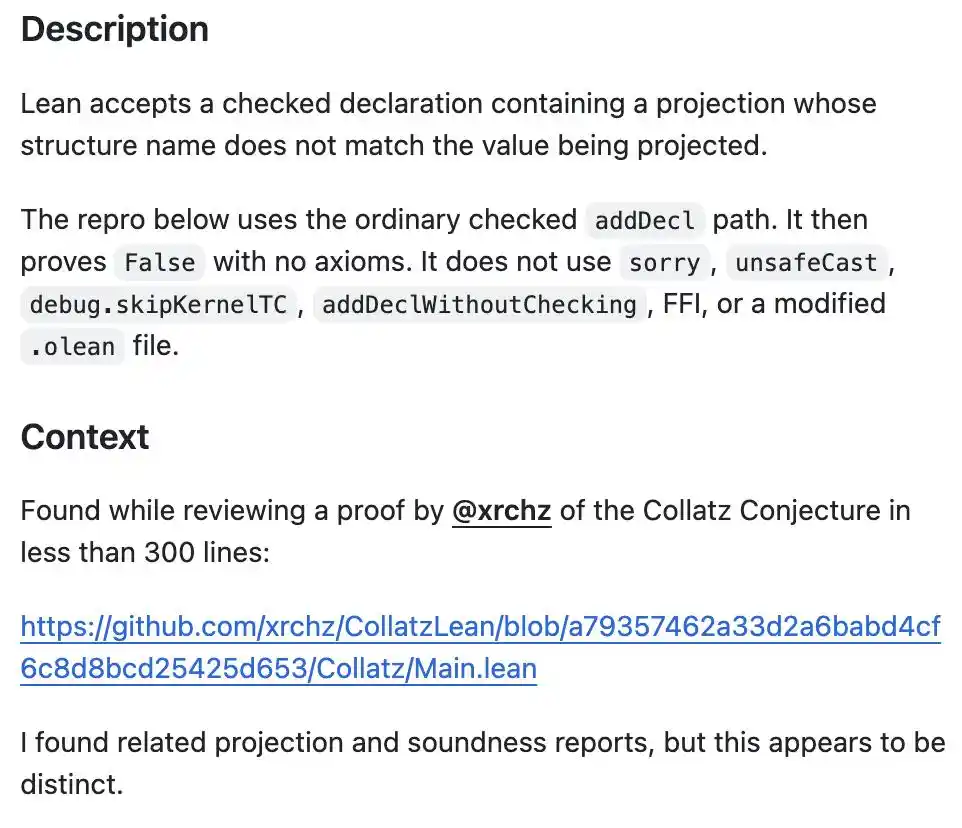
OpenAI's Daniel Selsam, along with an AI specializing in cybersecurity, assisted Lean FRO in conducting a kernel audit.

The result? They found not just one, but multiple vulnerabilities in the Lean kernel!
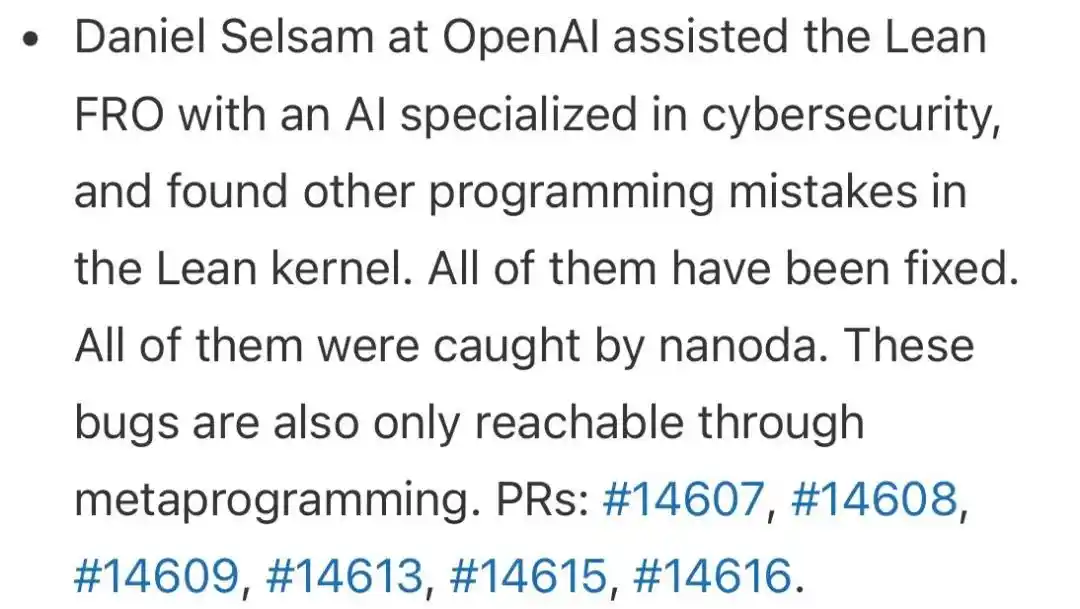
At almost the same time, Rutgers University mathematics professor and Lean specialist research organization advisor Alex Kontorovich posted a reminder: don't treat Lean as an all-powerful verifier.
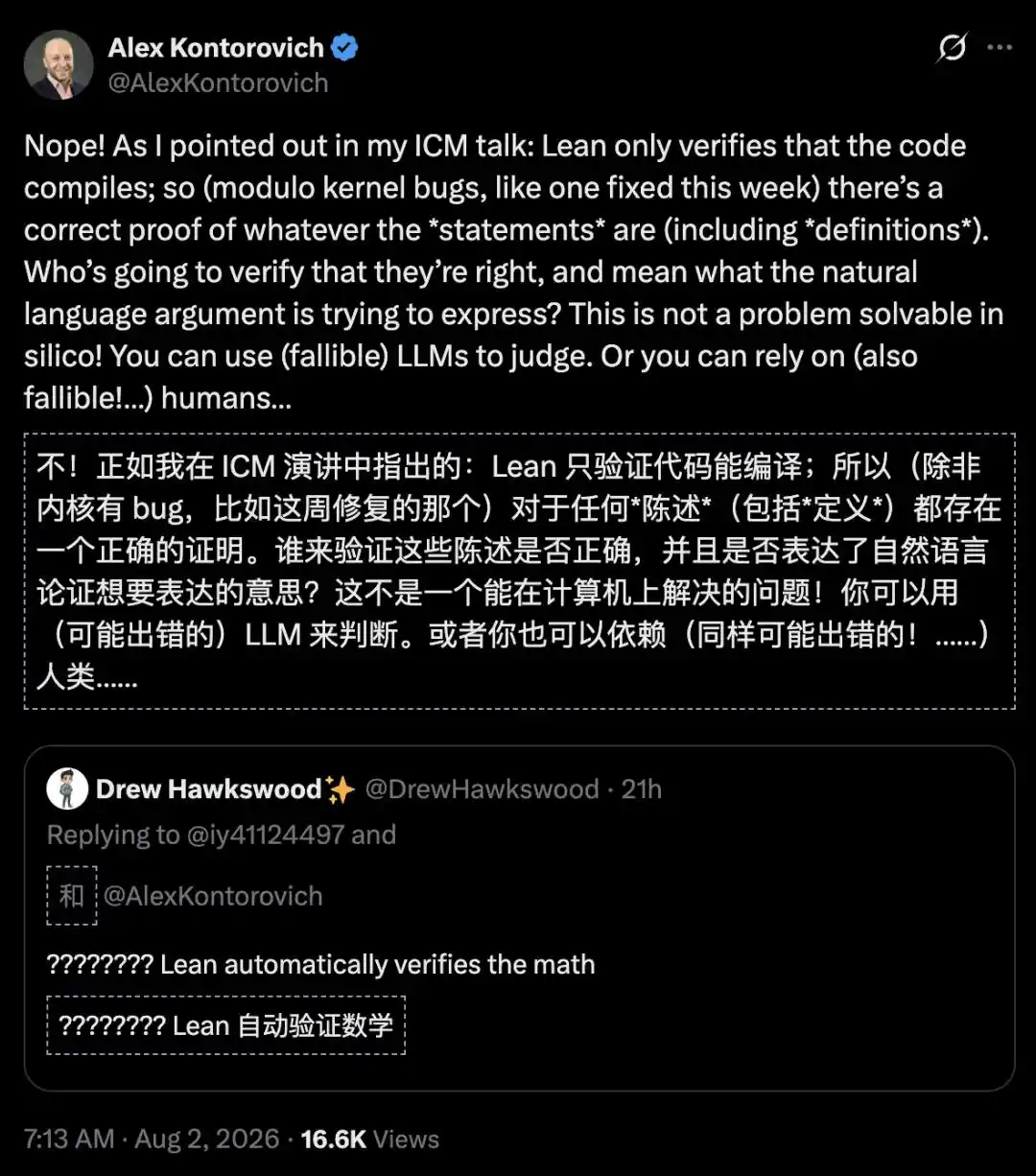
He pointed straight to the Achilles' heel—Semantic Alignment.

Even if the Lean kernel is flawless, Lean only cares about code compilation. Who ensures that the "definition" you write in code aligns with the "intuitive intent" humans have in natural language?
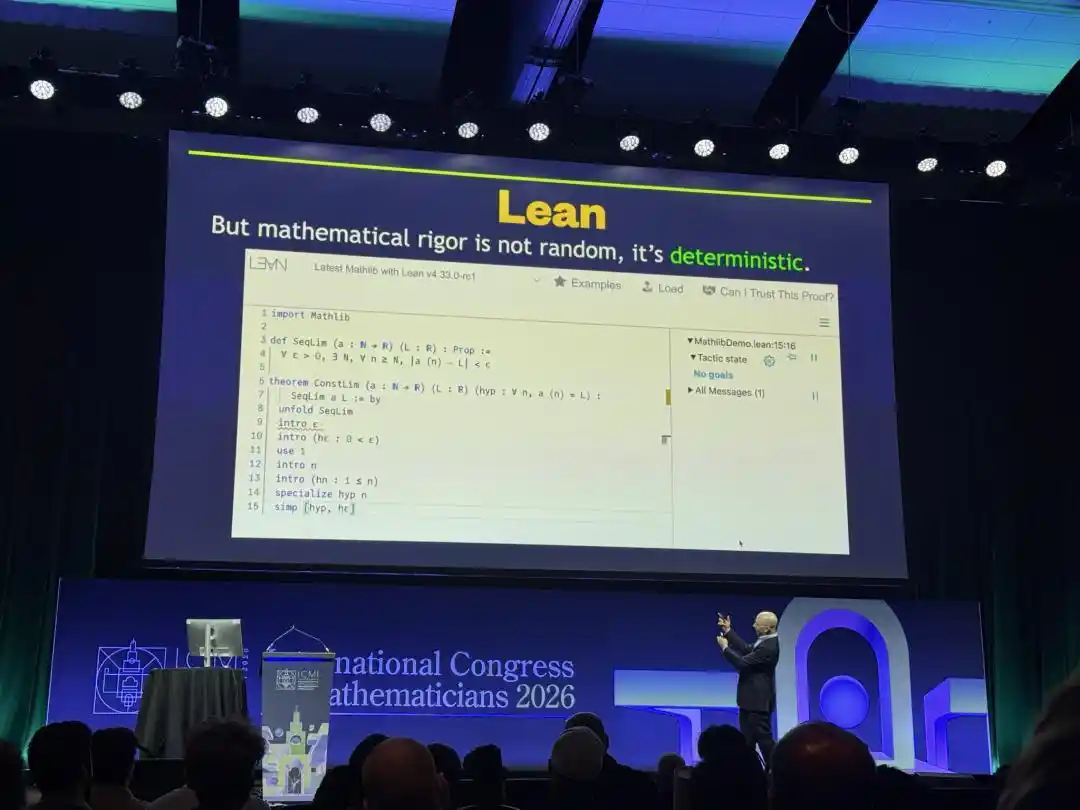
The only thing Lean can confirm is: the code compiles, and the formal logic is correct. But it absolutely does not verify a more critical question: does this formalized statement truly correspond to the theorem you intended to prove?

The theorem is proven correctly, but the problem statement was copied wrong—Lean will still give the green light.

And this alignment problem cannot be solved purely by computers.

In his ICM 2026 speech, Kontorovich pointed out: the biggest blind spot in formalized mathematics isn't "deriving correctly," but "saying the right thing." The final check still has to be done by human experts.
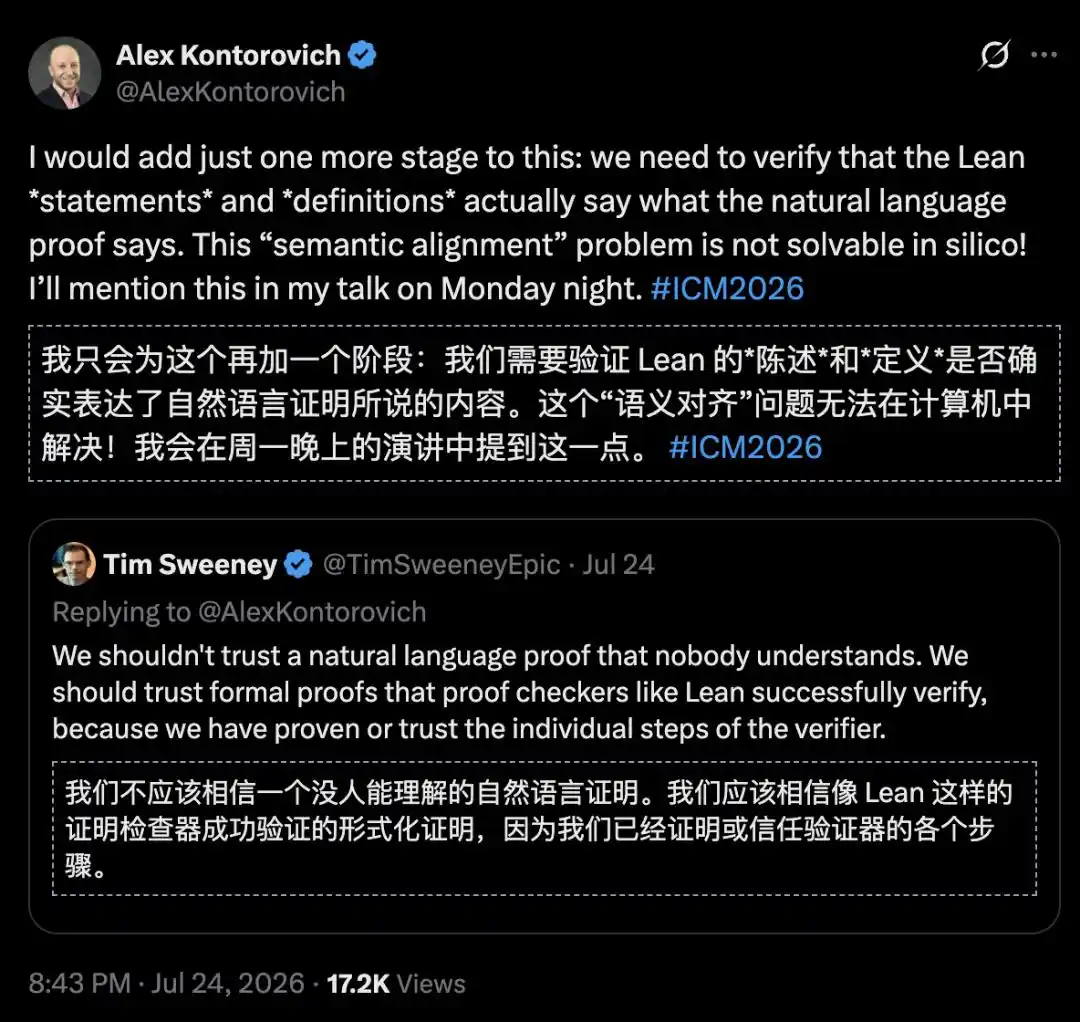
The reason the Liquid Tensor Experiment became legendary back then was precisely because of the researchers' almost obsessive manual scrutiny of every mathematical definition.
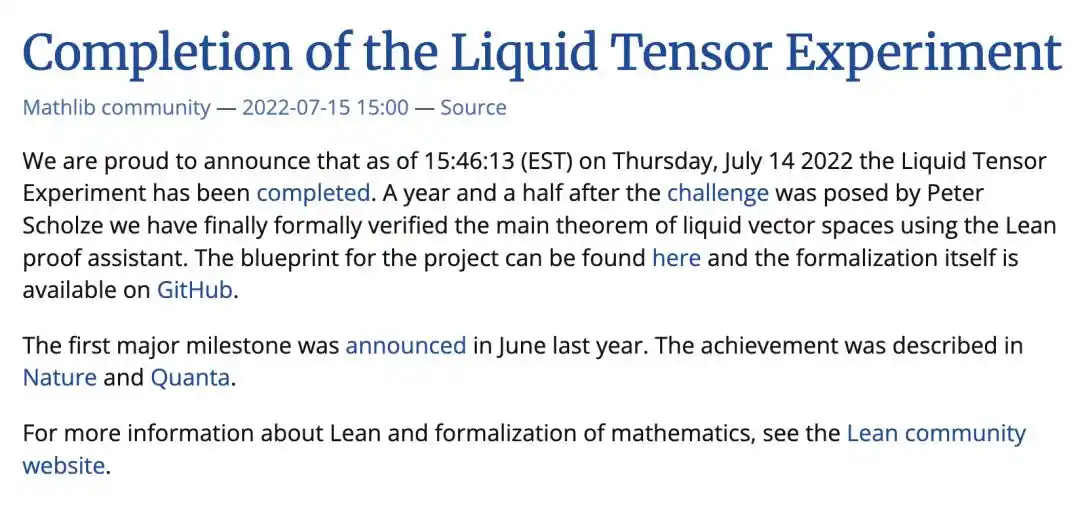
Putting the words of both professors together points to the same fact: AI can prove, machines can verify, but understanding and oversight are still human tasks.

Finally, a piece of gossip about AI reasoning models:
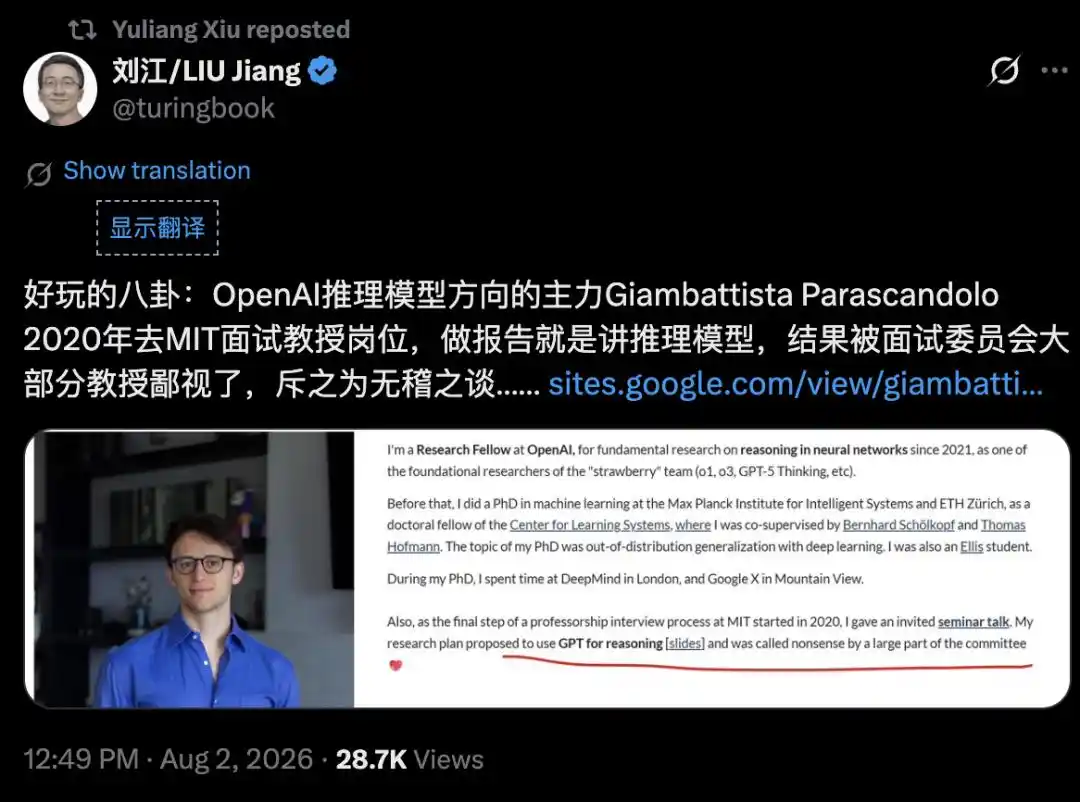
References:

https://www.henryyuen.net/posts/on-openai-and-quantum-parallel-repetition/

https://x.com/AlexKontorovich/status/2083919186825236831

https://x.com/henryquantum/status/2083623700608237956

This article is from WeChat public account "New Zhiyuan," author: ASI Apocalypse; editor: David

Трендовые криптовалюты

Связанные с этим вопросы

QWhat is the main topic of Henry Yuen's critique regarding the AI-generated proof of the quantum parallel repetition theorem?

AHenry Yuen criticizes the AI-generated proof for its poor writing style, describing it as overly verbose with unclear logical leaps. He is disappointed that the proof hides the most crucial intuitive ideas, such as the use of the Uhlmann transformation, without proper explanation, making it difficult for human mathematicians to understand.

QAccording to the article, what is a key limitation of Lean verification in mathematics, as highlighted by Alex Kontorovich?

AAlex Kontorovich points out that Lean's key limitation is the issue of semantic alignment. Lean can verify that code compiles and formal logic is correct, but it cannot ensure that the formalized statements accurately correspond to the intended mathematical theorem. The final validation still requires human experts.

QWhat significant flaw was found in the Lean proof that claimed to disprove the Collatz conjecture?

AThe Lean proof that claimed to disprove the Collatz conjecture was invalidated because it exploited a fundamental loophole in the Lean kernel. An audit by OpenAI's Daniel Selsam and an AI specializing in cybersecurity revealed multiple vulnerabilities in the Lean kernel, which the proof relied upon.

QWhat are some of the mathematical breakthroughs attributed to OpenAI's new reasoning model in the article?

AOpenAI's new reasoning model is credited with several breakthroughs: proving the existence of non-sofic groups, providing new circuit lower bounds, solving the hardness limit of the Closest Vector Problem (CVP), and proving the quantum parallel repetition theorem for two-player quantum games.

QHow does Henry Yuen feel about the role of AI in solving complex mathematical problems that he has worked on?

AHenry Yuen expresses mixed feelings. While he is excited about the AI's ability to solve the quantum parallel repetition theorem, he is also disappointed and feels a sense of loss. He questions what is left for human researchers if AI solves all the challenging problems and worries about the diminishing joy and meaning in mathematical research.

Похожее

США и Япония предприняли совместные действия впервые за 30 лет: конец эры carry trade с йеной

Совместная интервенция США и Японии в поддержку иены, подтверждённая 3 августа, привела к резкому откату курса доллара с уровня около 164 иен, близкого к 40-летнему максимуму, до диапазона 155-156. Ключевым изменением стало практическое участие США, а не только словесная поддержка. Фотография заметки министра финансов США Бэссента с планом покупки иены на 5-10 млрд долларов усилила сигнал. Интервенция изменила соотношение риска и доходности для «керри-трейдов» (игра на понижение иены из-за разницы в ставках), заставив короткие позиции сокращаться, но не ликвидировала их фундамент, пока сохраняется значительная разница между процентными ставками США и Японии. Для финансирования интервенций использовался инструмент ФРС FIMA, позволяющий Японии получать долларовую ликвидность под залог облигаций США, не продавая их напрямую и смягчая давление на рынок казначейских бумаг. В краткосрочной перспективе координация меняет рыночные ожидания и снижает аппетит к коротким позициям, однако долгосрочный тренд иены по-прежнему будет определяться динамикой процентных ставок, а не только валютными интервенциями.

marsbit13 мин. назад

США и Япония предприняли совместные действия впервые за 30 лет: конец эры carry trade с йеной

marsbit13 мин. назад

Почему биткоин не совершил ожидаемого скачка? Есть как позитивные, так и негативные данные

Аналитики Glassnode сообщают, что биткоин отступил до ~$62 600 после неудачной попытки закрепиться выше $66 000. Слабость на спотовом рынке и защитные позиции инвесторов в деривативах оказывают давление на цену. В то же время рынок поддерживают устойчивость долгосрочных держателей, рост активности в сети Bitcoin (активные адресы, объем транзакций) и возобновление чистого притока средств в биткоин-ETF. Соотношение краткосрочных и долгосрочных инвесторов остается на низком уровне, что говорит о вере последних. Однако общий уровень прибыльности на рынке снижается, а инвесторы в опционах проявляют осторожность. Рынок находится в переходной фазе: структурную поддержку обеспечивают фундаментальные факторы, но ограниченный аппетит к риску и давление со стороны продавцов сдерживают значительный рост.

cryptonews.ru45 мин. назад

Почему биткоин не совершил ожидаемого скачка? Есть как позитивные, так и негативные данные

cryptonews.ru45 мин. назад

Миллиардер Рэй Далио объясняет, почему он предпочитает золото биткоину

Миллиардер Рэй Далио, основатель крупнейшего хедж-фонда Bridgewater Associates, предупредил о формировании серьезного пузыря на рынках, связанного с ИИ, и об экономических рисках из-за высокого долга, неравенства и геополитической напряженности. Он рекомендует инвесторам диверсифицировать портфели и выделять 5-15% на «надежные деньги» — активы, которые центральные банки не могут печатать, такие как биткоин и золото. Хотя Далио классифицирует биткоин как такую валюту и держит около 1% своего портфеля в BTC, он считает золото более безопасным активом. Свою осторожность в отношении биткоина он объясняет возможностью государственного регулирования и налогообложения, уязвимостью инфраструктуры перед новыми технологиями (например, квантовыми компьютерами) и вопросами конфиденциальности. Золото же, по его мнению, сохраняет статус наиболее осязаемого и проверенного временем актива. Далио подчеркивает, что защита от финансовой нестабильности должна строиться на сбалансированной диверсификации между различными классами активов: акциями, облигациями, недвижимостью, золотом и биткоином.

cryptonews.ru1 ч. назад

Миллиардер Рэй Далио объясняет, почему он предпочитает золото биткоину

cryptonews.ru1 ч. назад

ПОСЛЕДНИЕ НОВОСТИ: Майкл Сэйлор сделал заявление по поводу сегодняшней продажи биткоинов! «Я говорил, что никогда не буду продавать свои личные биткоины»

Корпорация MicroStrategy, возглавляемая Майклом Сэйлором, продала 1638 биткоинов примерно за 105 миллионов долларов. После продажи общие активы компании сократились до 842 138 BTC. Сэйлор заявил, что его личная инвестиционная стратегия "никогда не продавать биткоины" относится к частным инвесторам, а не к публичной компании MicroStrategy. Он подчеркнул, что лично не продал ни одного сатоши. Компания, будучи публичным эмитентом, может совершать операции с биткоинами для управления капиталом, финансирования деятельности, выплаты дивидендов и выкупа акций. Средняя цена продажи составила 63 957 долларов. Средняя цена покупки биткоинов для MicroStrategy сейчас составляет 75 419 долларов. Компания заявляет, что её вера в биткоин как актив остаётся неизменной.

cryptonews.ru2 ч. назад

ПОСЛЕДНИЕ НОВОСТИ: Майкл Сэйлор сделал заявление по поводу сегодняшней продажи биткоинов! «Я говорил, что никогда не буду продавать свои личные биткоины»

cryptonews.ru2 ч. назад

Аналитическая компания раскрывает критический порог для биткоина (BTC): «Это может положить конец медвежьему рынку!». Вот подробности

Аналитики компании 10x Research указывают на критический уровень для биткоина в размере 63 000 долларов. По мнению основателя Маркуса Тилена, закрытие месячной сессии выше этой отметки может подтвердить достижение дна медвежьего рынка. Однако в июле цена закрылась ниже порога, что не даёт окончательного сигнала. Текущая динамика также остаётся медвежьей: цена ниже краткосрочных скользящих средних и демонстрирует недельное снижение. Среди ключевых рисков отмечается возможное ужесточение монетарной политики ФРС в сентябре, если продолжится рост доходности гособлигаций США, что оказывает давление на рисковые активы. Также потенциальное давление продаж может исходить от майнинговых компаний, которые переориентируются на ИИ и владеют крупными запасами BTC, и от институциональных держателей. Для возврата к устойчивому бычьему тренду биткоину необходимо не только закрепиться на ключевых технических уровнях, но и дождаться благоприятных макроэкономических условий.

cryptonews.ru2 ч. назад

Аналитическая компания раскрывает критический порог для биткоина (BTC): «Это может положить конец медвежьему рынку!». Вот подробности

cryptonews.ru2 ч. назад

Торговля

Спот

Популярные статьи

Неделя обучения по популярным токенам (2): 2026 может стать годом приложений реального времени, сектор AI продолжает оставаться в тренде

2025 год — год институциональных инвесторов, в будущем он будет доминировать в приложениях реального времени.

1.9k просмотров всегоОпубликовано 2025.12.16Обновлено 2025.12.16

Неделя обучения по популярным токенам (2): 2026 может стать годом приложений реального времени, сектор AI продолжает оставаться в тренде

Обсуждения

Добро пожаловать в Сообщество HTX. Здесь вы сможете быть в курсе последних новостей о развитии платформы и получить доступ к профессиональной аналитической информации о рынке. Мнения пользователей о цене на AI (AI) представлены ниже.

活动图片