LIT Token Hits Six-Month High: How Long Can the Buyback Flywheel Keep Burning Fuel?

Foresight NewsОпубликовано 2026-06-18Обновлено 2026-06-18

Введение

The LIT token of decentralized perpetual exchange Lighter surged to a six-month high above $1.90 on June 18th, with a market cap of $425 million. After a price correction earlier this year, the recent rebound is attributed to its core "buyback flywheel" mechanism. All protocol fee revenue is used for programmatic, hourly market buybacks of LIT. Since its TGE in December 2025, approximately 15 million LIT (6% of circulating supply) has been repurchased for around $21 million. Additional price support comes from the LLP (Lighter Liquidity Pool), where providers must stake LIT worth 10% of their deposited USDC, locking significant token supply. However, challenges persist. Trading volume has declined amidst a sluggish market, with total volume at $1.68 trillion, significantly lower than leading competitor Hyperliquid's $4.37 trillion. While Lighter focuses on perpetual contracts, RWA, and Pre-IPO markets, Hyperliquid has expanded into prediction markets and boasts a U.S. spot ETF, attracting institutional investment and influencer endorsements like from Arthur Hayes. In contrast, LIT currently lacks similar high-profile backing. With 75% of LIT's total 1 billion supply still locked (team and investor tokens begin a 3-year linear unlock in December 2026), there is no immediate unlock selling pressure. The token's future performance hinges on sustaining trading volume growth, successful product iteration, and executing its transparent buyback strategy against a dominant competit...


Written by: Ma He, Foresight News


On June 18th, Lighter's token LIT broke through $1.9, reaching a new high since January of this year. Its current market cap is $425 million with an FDV of $1.7 billion. The token price has since retreated and is fluctuating around $1.6.
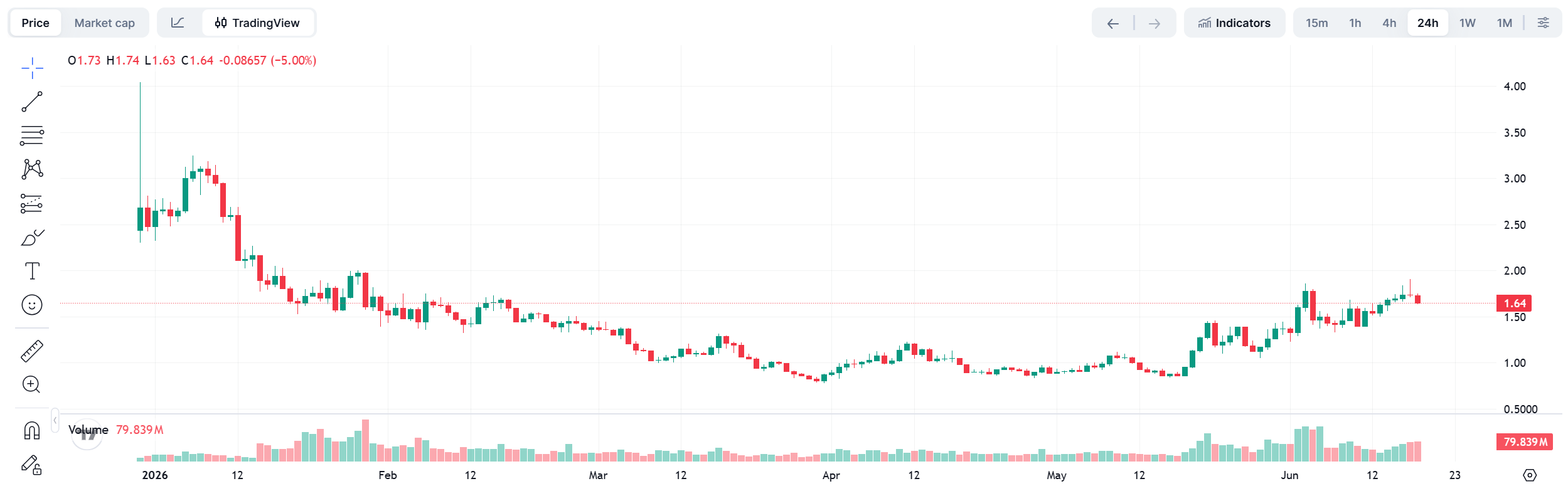


In 2026, Hyperliquid gained significant market attention through its buyback flywheel and expansion into multiple sectors, with its token price surging from $20 to a peak of $76, setting a new all-time high. After adjusting at the beginning of the year, the price of Lighter's token has rebounded significantly recently. So, what factors are currently driving this?


Lighter is a decentralized perpetual contracts exchange. In December 2025, its native token LIT officially underwent Token Generation Event (TGE), accompanied by a large-scale airdrop. The total fixed supply is 1 billion tokens. Specifically, within the ecosystem portion, 25% was automatically airdropped to early users via points seasons at TGE, with the remaining 25% reserved for future incentives, partners, and growth. The team holds 26%, and investors hold 24%. The airdrop portion was released 100% at TGE.


The team and investor portions have a 1-year cliff (starting unlocking on December 30, 2026), followed by a 3-year linear unlock.
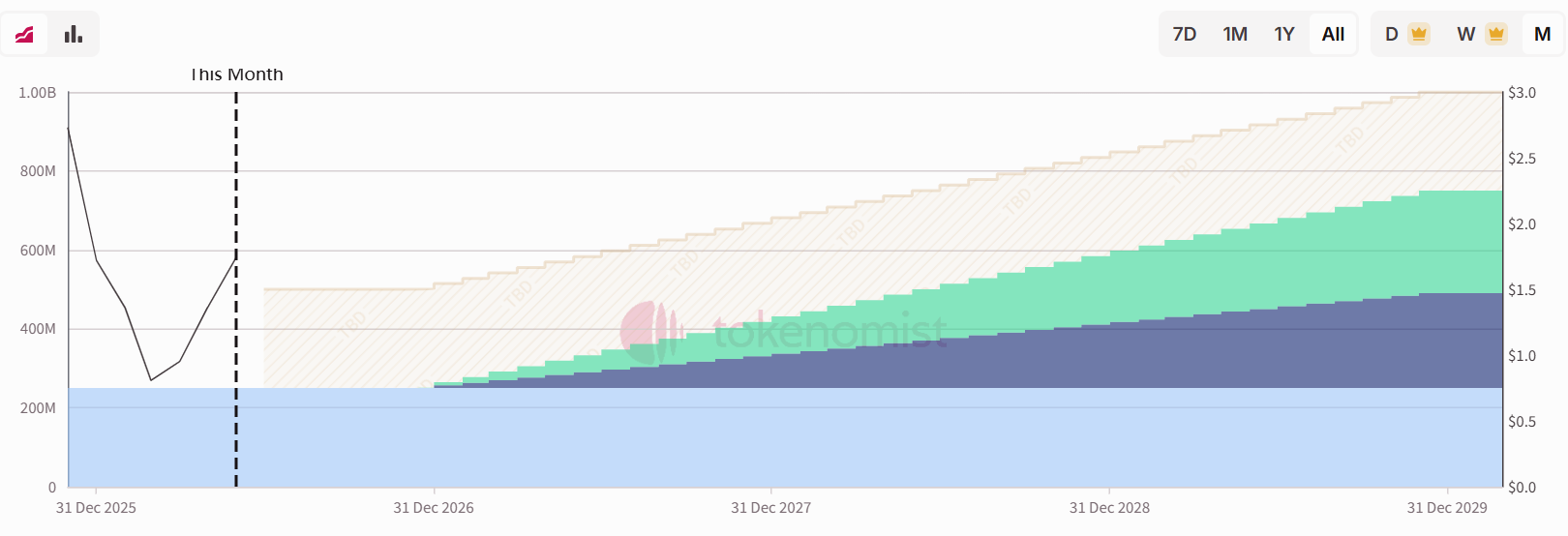


To date, the circulating supply remains at approximately 250 million tokens (25% of total supply), with the remaining 75% still locked. This means there is temporarily no VC and team unlock selling pressure in the second half of this year.


Buyback, LLP & Staking Pool


The buyback mechanism is the core of Lighter's value capture. The protocol uses all fee income generated from products like perpetual trading to buy back LIT tokens on the open market. Official disclosures show this buyback is fully programmatic: the protocol automatically aggregates all fee income hourly and places 100 limit buy orders from the current market price down to a -10% range.
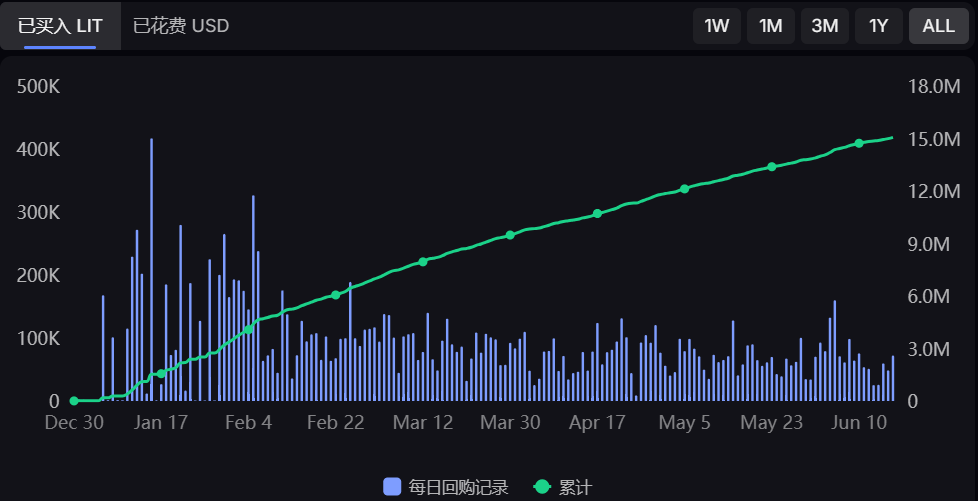


According to the latest data from Lighter, since TGE, the protocol has programmatically bought back approximately 15 million LIT, accounting for about 6% of the circulating supply, with a buyback amount of around $21 million, representing 1.51% of the total supply. These buybacks directly convert protocol revenue into continuous on-chain buy-side pressure.


So, how is Lighter currently performing in the market?


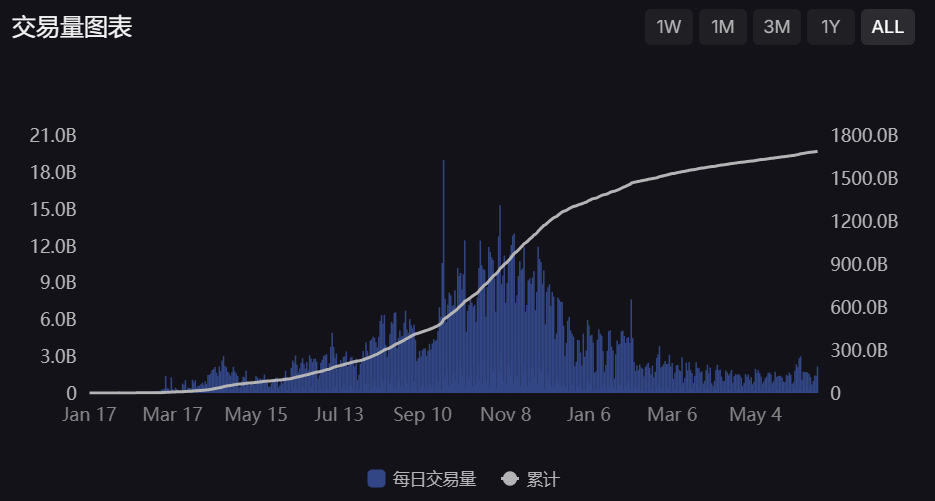
Data from the official website shows its total trading volume has exceeded $1.68 trillion. However, its trading volume has been declining this year due to factors like sluggish market conditions.


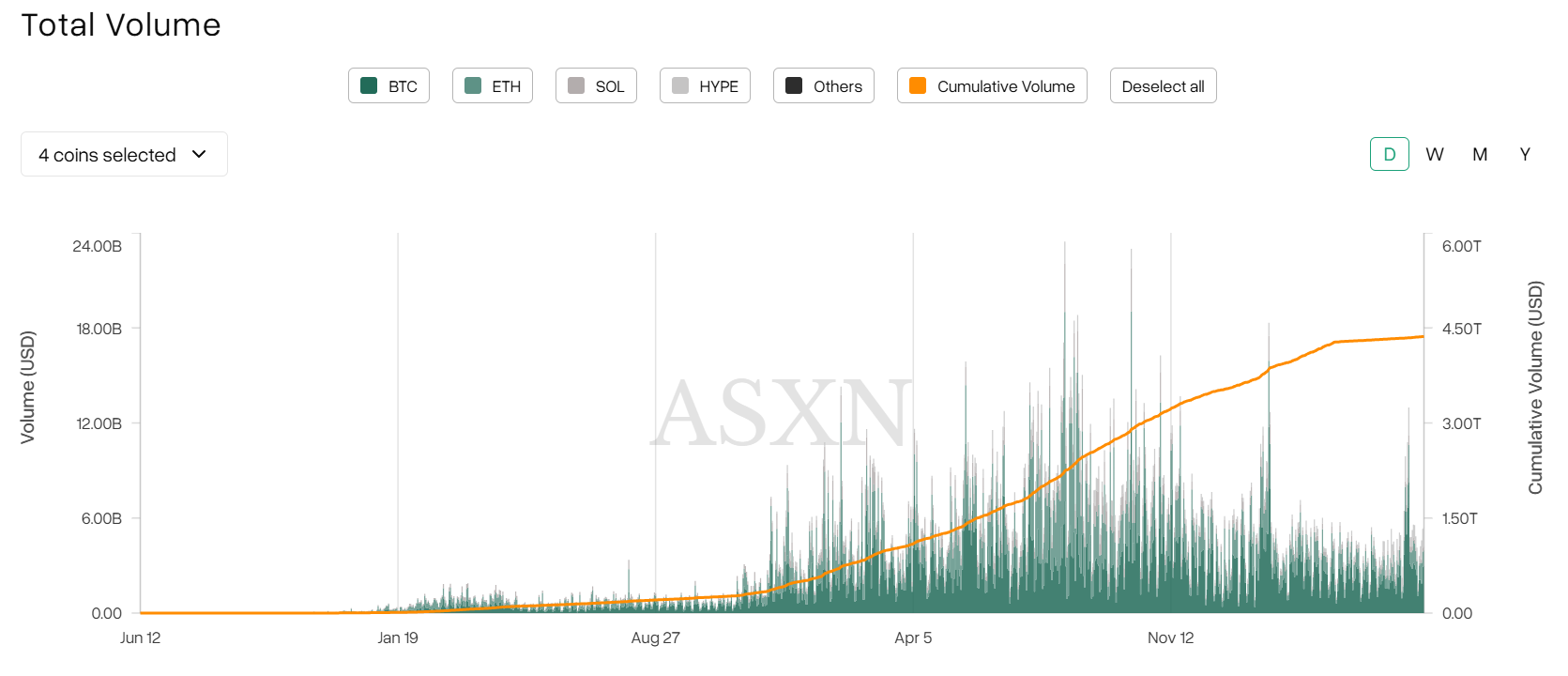
In comparison, Hyperliquid's total trading volume has surpassed $4.37 trillion, nearly three times that of Lighter, and its volume has remained stable since September-October 2025.


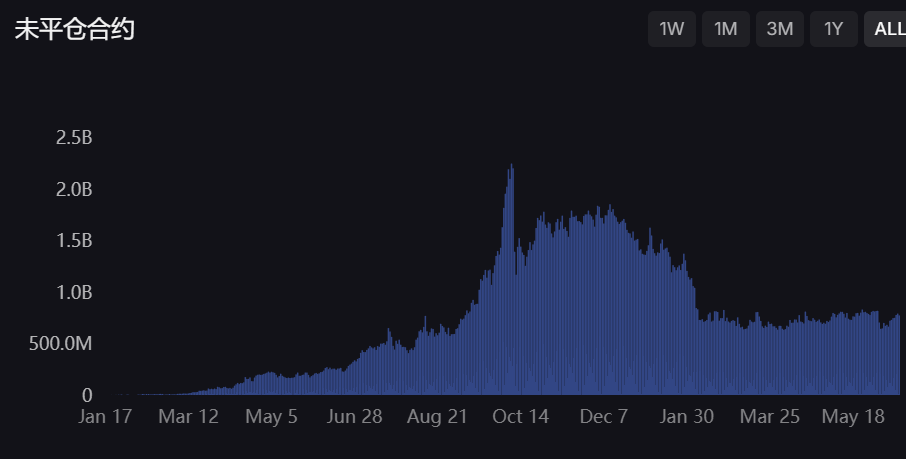
However, turning our attention to open interest, Lighter's open interest data from November 2025 was $1.6 billion, while the current data is $750 million, which isn't drastically low. Hyperliquid's open interest peaked at $9.64 billion and currently remains at $5.06 billion.


Meanwhile, Lighter continues to iterate on the product side. In May, it partnered with Insilico Terminal to introduce a professional-grade execution management system, attracting systematic traders and deepening order book liquidity. The platform has launched a Pre-IPO perpetual contracts market and introduced features like LIT fee points, expanding trading scenarios and user engagement. These actions complement the buyback flywheel, amplifying protocol revenue and buy-side effects under macro event drivers.


Simply put, the Lighter Liquidity Pool (LLP) is the market maker capital pool for the Lighter exchange. In a centralized exchange, when a user goes long, the counterparty is typically a market maker (institution) or another user going short. However, in a decentralized exchange, the underlying logic changes: the "common counterparty" for all traders' positions across the entire exchange is the LLP. In other words, if users profit from going long, the LLP pays them; if users incur losses, those losses are directly absorbed into the LLP.


According to historical big data statistics, retail traders are highly likely to lose money over long periods. Therefore, large players depositing their USDC into the LLP to act as the casino's bankroll are essentially "acting as the house," passively profiting from retail traders' losses and the exchange's fees.



According to the latest official website data, its TVL has risen to $98.42 million, with an annualized rate reaching 11.47%. According to Lighter's official rules, entering the LLP requires staking LIT tokens equivalent to 1/10th of the deposited capital amount. This design makes many large players one of the biggest spot buyers of LIT in the secondary market. The more USDC they deposit, the more LIT tokens are locked in the market.


It's important to note that the LLP liquidity pool is not shared with the staking pool; they are separate pools.


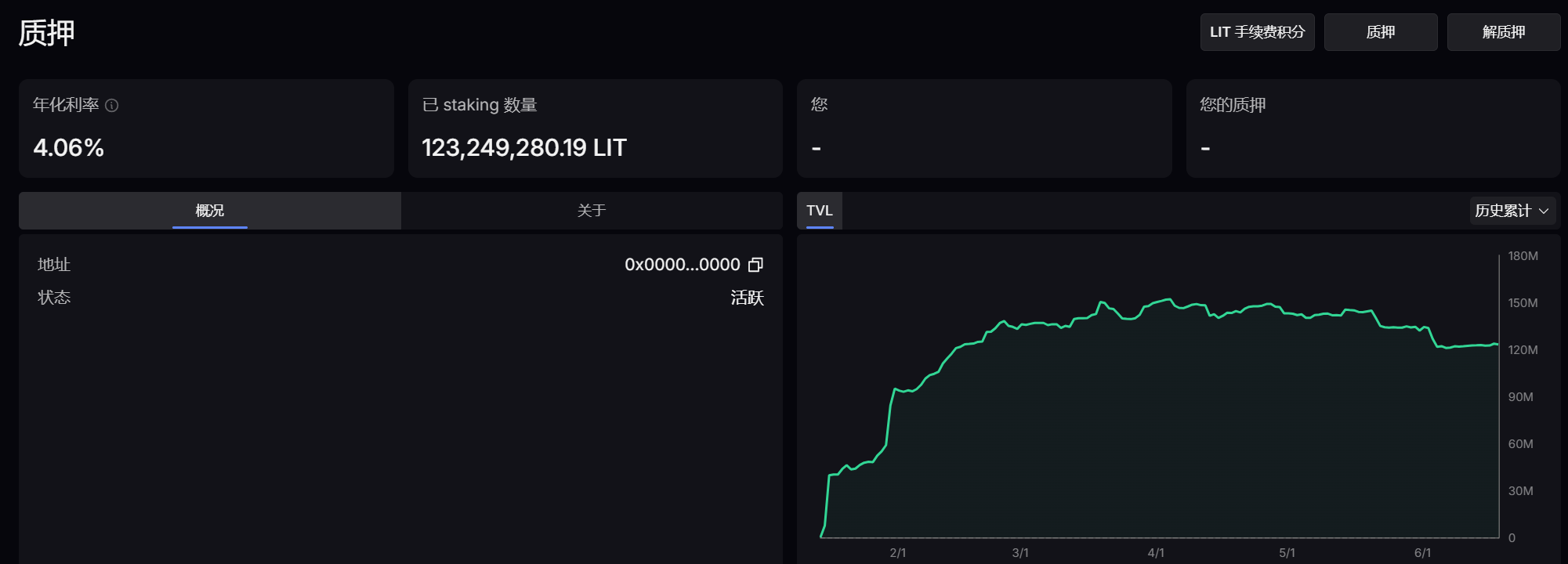
According to the latest official website data, its annualized yield is 4.06%, with 123.23 million LIT tokens staked, totaling over $204.6 million in value.


Compared to Hyperliquid, Concerns Remain


In the perpetual contracts DEX sector, Hyperliquid, with its first-mover advantage and scale effect, is the current recognized leader, while Lighter has established a unique position through technical differentiation and product focus.


Hyperliquid also implements an aggressive revenue buyback strategy with considerable scale. However, combined with staking gas fees and ecosystem incentives, it forms a more comprehensive token utility system. Lighter's buyback execution has certain advantages in transparency and predictability, while Hyperliquid's buyback is matched with a higher base of protocol revenue.


Furthermore, Hyperliquid has broader coverage: beyond perpetual contracts, it continues to expand into RWA and a more complete DeFi ecosystem, even prediction markets (e.g., Bitcoin, Ethereum price predictions). As of June 16th, the World Cup-related section within the HIP-4 prediction markets on Hyperliquid saw its 7-day trading volume surge 202% week-over-week. Continuous business expansion broadens its audience and trading volume, which in turn further boosts the buy-side pressure for the HYPE token. In contrast, Lighter is still focusing on RWA and Pre-IPO layouts and hasn't ventured into areas like prediction markets.


Institutions are also increasingly buying HYPE. According to on-chain analyst Ai Yi's monitoring, since June 1st, wallets related to a16z have withdrawn 1,229,524 HYPE ($85.54 million) and deposited them for staking. Even the prominent endorser Arthur Hayes tweeted, "Looking at the current crypto market cap rankings, most are shitcoins. I believe HYPE should at least surpass SOL before this bull cycle ends."


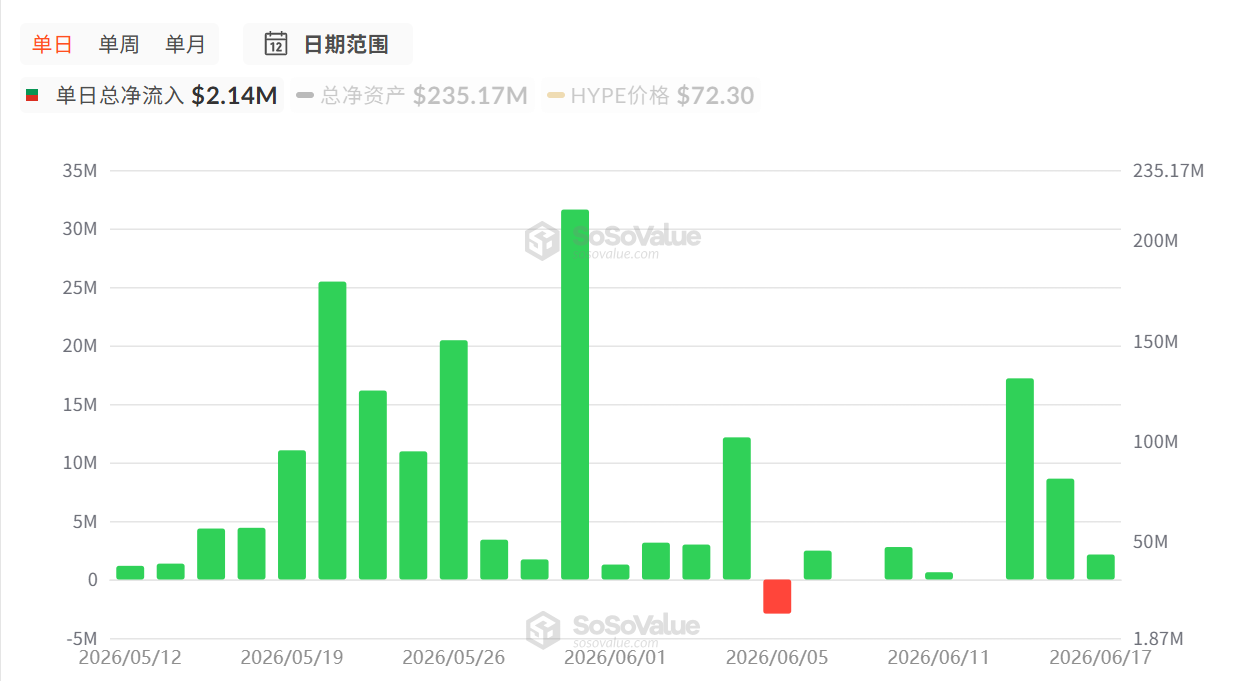
US institutions have also launched a HYPE spot ETF, providing stable support for its price. According to SoSoValue data, the cumulative net inflow for US HYPE spot ETFs is currently $182.56 million. In contrast, LIT still relies solely on secondary market activity and buybacks for price support.


Currently, LIT lacks both influential figure endorsements and public, continuous buying by large institutions, leaving a hint of concern for its token price.


Overall, Hyperliquid currently dominates in scale, liquidity, and ecosystem breadth, while Lighter is building its competitive advantages through its ZK tech stack, transparent buyback mechanism, zero fees for retail users, and differentiated tools for institutional players.


The future relative performance of both will depend on their execution in trading volume growth, product iteration, and market adoption.


Трендовые криптовалюты

Связанные с этим вопросы

QWhat is the core mechanism driving LIT's value appreciation, and how does it work?

AThe core mechanism is a repurchase (buyback) flywheel. Lighter uses all protocol fee revenue generated from its perpetual contracts and other products to programmatically repurchase LIT tokens on the open market. This happens hourly, placing 100 limit buy orders at prices from the current market price down to -10%, directly converting protocol income into continuous on-chain buy pressure for LIT.

QWhat is the Lighter Liquidity Pool (LLP), and what is its role in the ecosystem?

AThe Lighter Liquidity Pool (LLP) is essentially the counterparty for all traders on the Lighter exchange. It acts as the "house" or market maker in a decentralized setting. When traders profit, the LLP pays them; when traders lose, the losses flow into the LLP. This allows large liquidity providers to deposit USDC into the LLP to earn profits from overall trader losses and fees. A key rule is that providers must stake LIT tokens equal to 10% of their USDC deposit, which creates significant buy-and-lock demand for LIT in the secondary market.

QHow does Lighter's current market performance and data compare to its main competitor, Hyperliquid?

ALighter trails Hyperliquid in key metrics. As of the article's data, Lighter's total trading volume is over $1.68 trillion, while Hyperliquid's is over $4.37 trillion, nearly three times larger. Lighter's Open Interest stands at $750 million, significantly lower than Hyperliquid's $5.06 billion. Furthermore, Hyperliquid benefits from broader ecosystem expansion (like RWA and prediction markets), public endorsements from figures like Arthur Hayes, institutional buying, and a US spot ETF, which Lighter currently lacks.

QWhat is the current status of LIT's token supply and upcoming unlocks?

ALIT has a fixed total supply of 1 billion tokens. Currently, the circulating supply is approximately 250 million tokens (25% of the total). The remaining 75% are locked. The allocations for the team (26%) and investors (24%) have a 1-year cliff starting on December 30, 2026, followed by a 3-year linear vesting schedule. This means there is no unlock selling pressure from these major holders until the end of 2026.

QAccording to the article, what are the potential concerns or hidden worries for LIT's price sustainability?

AThe main concerns are its relative lack of broader market catalysts compared to Hyperliquid. Specifically, LIT lacks influential public endorsements (like Arthur Hayes' support for HYPE), visible large-scale institutional buying, and products like a US spot ETF that provide stable demand. Its price is currently supported primarily by the secondary market and the internal repurchase mechanism, making it potentially more vulnerable if trading volumes and protocol fees decline.

Похожее

XRP: Формируется настройка на разворот вокруг гармонической модели и ключевой зоны поддержки

Криптовалюта XRP находится на технически важном уровне, который может определить её дальнейшее движение. Аналитик The_Alchemist_Trader_ указывает, что цена находится в критической зоне поддержки, подкреплённой несколькими факторами: уровнем коррекции Фибоначчи 0.618 и точкой контроля текущего торгового диапазона. Сочетание этих элементов усиливает значимость данной зоны, превращая её в потенциальную точку разворота. На графике формируется гармоническая модель разворота. Хотя такие модели не являются гарантией, они предоставляют трейдерам чёткую структуру для определения возможных точек разворота, уровней стоп-лосса и целей. Ключевой вопрос заключается в том, вызовет ли поддержка сильную реакцию покупателей или лишь замедлит падение. Для подтверждения разворота быкам необходимо не просто краткосрочное отскок от поддержки, а устойчивый рост с высоким объёмом торгов и закреплением выше ближайшего сопротивления. Без этого рынок может расценить ситуацию как очередную неудачную попытку восстановления. Таким образом, текущая ситуация представляет собой наблюдаемую торговую установку, а не прогноз, и её реализация зависит от последующего ценового действия.

bitcoinist1 ч. назад

XRP: Формируется настройка на разворот вокруг гармонической модели и ключевой зоны поддержки

bitcoinist1 ч. назад

Идея Виталика об алгоритмических стейблкоинах: механизм и вызовы с точки зрения опционов

Виталик Бутерин предложил новый механизм алгоритмического стейблкоина, основанный на концепции опционов. В его модели единица ETH разделяется на две части: стабильную (P) и восходящую (N). Стабильная часть P функционирует как синтетический покрытый колл-опцион, обеспечивая ценовую устойчивость до определенного ценового уровня, в то время как часть N получает весь доход от роста выше этого уровня. Поскольку оба компонента в сумме всегда равны одному ETH, система не требует залога, долга и процедуры ликвидации, что решает ключевую проблему традиционных CDP-стейблкоинов. Основная трудность заключается в том, что для поддержания стабильности актив P должен непрерывно пролонгироваться как глубокий опцион в деньгах, что создает риски проскальзывания цен, проблем с ликвидностью и возможных фронтранов. Кроме того, для каждого выпуска стабильного актива P должен существовать контрагент, готовый постоянно удерживать соответствующую восходящую часть N — по сути, рычаговую длинную позицию по ETH без комиссий финансирования и риска ликвидации. Устойчивый спрос на такую позицию является обязательным условием для масштабирования системы. Автор, основываясь на опыте Rysk, отмечает, что опционы в DeFi редко находят массовое применение как самостоятельный торговый инструмент. Однако в качестве базового финансового модуля для более сложных продуктов — таких как стейблкоины, структурированные доходные продукты или индексы — они могут стать эффективной инфраструктурой для распределения рисков и ценообразования. Таким образом, предложение Виталика подтверждает перспективность подхода, при котором опционы служат не конечным продуктом, а строительным блоком для следующего поколения децентрализованных финансовых приложений.

marsbit1 ч. назад

Идея Виталика об алгоритмических стейблкоинах: механизм и вызовы с точки зрения опционов

marsbit1 ч. назад

SpaceX, ИИ и XRP: Почему следующий перенос богатства может быть другим?

Финансовый мир вступает в фазу, ориентированную не на спекулятивные циклы, а на строительство новой экономической инфраструктуры. Ожидания публичного размещения акций SpaceX отражают поиск капиталом новых рубежей, таких как космическая инфраструктура, спутниковые сети и центры обработки данных. Это, наряду с развитием искусственного интеллекта (ИИ), формирует повышенный структурный спрос на промышленные товары. Блокчейн-технологии могут занять ключевую роль в этой новой системе не как спекулятивные активы, а как слой для расчетов в реальном времени. Активы, ориентированные на платежи и межсетевое взаимодействие, такие как XRP и XLM, могут стать важными для трансграничных расчетов и машинных платежей, что подчеркивается связями между их создателями и космической отраслью (например, Vast и SpaceX). Ключевой становится конвергенция ИИ и блокчейна. По мере того как автономные ИИ-агенты начинают совершать транзакции, растет потребность в инфраструктуре для мгновенных расчетов и управления идентификацией, которую могут обеспечить распределенные реестры. Четкое регулирование цифровых активов ускоряет институциональное внедрение. Таким образом, формируется картина структурного перехода: капитал направляется в космическую и ИИ-инфраструктуру, что стимулирует спрос на товары, а блокчейн-сети позиционируются как финансовый слой для расчетов между этими новыми системами.

marsbit2 ч. назад

SpaceX, ИИ и XRP: Почему следующий перенос богатства может быть другим?

marsbit2 ч. назад

Обратный отсчет до GPT-5.6: Прощай с иллюзией единого API, итерации вычислительной мощности не сравнятся с одним согласованием

В середине июня 2026 года ряд событий, включая ограничения для модели Fable 5, открытый исходный код GLM-5.2 и утечку информации о GPT-5.6, указывают на переломный момент в индустрии ИИ. Логика развития отрасли претерпевает существенные изменения: во-первых, «пригодность к использованию» становится важнее «передовых технологий», формируется «двухколейная» система сосуществования контролируемых закрытых и локальных открытых моделей; во-вторых, конкуренция смещается от «языкового интеллекта» к «пространственному интеллекту (моделям мира)», требующему огромных вычислительных мощностей; в-третьих, «независимость от модели» становится критически важной для разработчиков приложений для обеспечения непрерывности бизнеса в условиях транснациональных регуляторных рисков. Инцидент с Fable 5 (Anthropic), доступ к которой для неамериканских пользователей был ограничен через 72 часа после запуска, демонстрирует, что технологическое лидерство может быть ограничено нормативными требованиями. В ответ открытое сообщество, как показывает выпуск GLM-5.2 с лицензией MIT, предлагает стабильные, экономичные и локально развертываемые альтернативы, сокращающие затраты и снижающие зависимость. В свою очередь, OpenAI, судя по утечкам, фокусирует GPT-5.6 на развитии «пространственного интеллекта» и «моделей мира», пытаясь создать новое технологическое преимущество в областях, требующих высокой вычислительной мощности, таких как 3D-моделирование и робототехника. Ключевой вывод: в новой эре оценивать инфраструктуру ИИ необходимо не только по техническим показателям, но и по устойчивости к нормативным требованиям. Для разработчиков жизненно важно создавать архитектуры, не зависящие от конкретной модели, чтобы обеспечить быстрый переход между поставщиками и поддержание непрерывности бизнеса.

marsbit4 ч. назад

Обратный отсчет до GPT-5.6: Прощай с иллюзией единого API, итерации вычислительной мощности не сравнятся с одним согласованием

marsbit4 ч. назад

Закончится ли скоро «битва субсидий на токены» между ИИ-гигантами?

Токены ИИ, используемые в подписках, на самом деле сильно субсидируются: в дорогих тарифах стоимость потреблённых токенов может в 70 раз превышать абонентскую плату. Основные игроки, такие как OpenAI и Anthropic, активно привлекают инвестиции и готовятся к IPO, но их бизнес-модель сталкивается с фундаментальной проблемой — отсутствием «эффекта привязки» (lock-in) пользователей. В отличие от интернет-сервисов, таких как такси или доставка еды, токены легко заменяемы, и пользователи могут быстро переключиться на более дешёвый аналог. Билл Марис, основатель Google Ventures, отмечает, что Google, обладая огромной прибылью от рекламы, может снизить цену токенов на 80%, оказывая давление на конкурентов, которые зависят от внешнего финансирования. Это делает ценовую войну не средством достижения монополии, а скорее бесконечной «игрой на выживание», где цель — остаться за игровым столом. Вероятный сценарий — превращение токенов в стандартизированную инфраструктуру, подобную электричеству или интернет-трафику, где цены стремятся к себестоимости, а прибыль становится минимальной. Это означает, что эпоха крупных субсидий может продлиться, и пользователи продолжат получать мощные ИИ-сервисы по относительно низкой цене, но сами компании-разработчики вряд ли достигнут сверхвысокой прибыльности в долгосрочной перспективе.

marsbit4 ч. назад

Закончится ли скоро «битва субсидий на токены» между ИИ-гигантами?

marsbit4 ч. назад

Торговля

Спот
Фьючерсы

Популярные статьи

Как купить LIT

Добро пожаловать на HTX.com! Мы сделали приобретение Lighter (LIT) простым и удобным. Следуйте нашему пошаговому руководству и отправляйтесь в свое крипто-путешествие.Шаг 1: Создайте аккаунт на HTXИспользуйте свой адрес электронной почты или номер телефона, чтобы зарегистрироваться и бесплатно создать аккаунт на HTX. Пройдите удобную регистрацию и откройте для себя весь функционал.Создать аккаунтШаг 2: Перейдите в Купить криптовалюту и выберите свой способ оплатыКредитная/Дебетовая Карта: Используйте свою карту Visa или Mastercard для мгновенной покупки Lighter (LIT).Баланс: Используйте средства с баланса вашего аккаунта HTX для простой торговли.Третьи Лица: Мы добавили популярные способы оплаты, такие как Google Pay и Apple Pay, для повышения удобства.P2P: Торгуйте напрямую с другими пользователями на HTX.Внебиржевая Торговля (OTC): Мы предлагаем индивидуальные услуги и конкурентоспособные обменные курсы для трейдеров.Шаг 3: Хранение Lighter (LIT)После приобретения вами Lighter (LIT) храните их в своем аккаунте на HTX. В качестве альтернативы вы можете отправить их куда-либо с помощью перевода в блокчейне или использовать для торговли с другими криптовалютами.Шаг 4: Торговля Lighter (LIT)С легкостью торгуйте Lighter (LIT) на спотовом рынке HTX. Просто зайдите в свой аккаунт, выберите торговую пару, совершайте сделки и следите за ними в режиме реального времени. Мы предлагаем удобный интерфейс как для начинающих, так и для опытных трейдеров.

503 просмотров всегоОпубликовано 2026.01.15Обновлено 2026.06.02

Как купить LIT

Обсуждения

Добро пожаловать в Сообщество HTX. Здесь вы сможете быть в курсе последних новостей о развитии платформы и получить доступ к профессиональной аналитической информации о рынке. Мнения пользователей о цене на LIT (LIT) представлены ниже.

活动图片