La Liga Team Bets $1 Million Against Themselves Before Match: Does Using Prediction Markets for Insurance Comply with Sports Regulations?

Foresight NewsОпубликовано 2026-06-09Обновлено 2026-06-09

Введение

A Spanish La Liga club, reportedly Osasuna, purchased insurance against relegation and was linked to a transaction of over $1 million on the prediction market platform Kalshi, betting against its own victory in a crucial season-ending match. While Osasuna confirmed buying €1.2 million insurance for a potential €6 million payout in case of relegation through broker Howden, it did not confirm involvement with Kalshi. The reported trade involved intermediaries like Game Point Capital and Greenlight Commodities, with quant firm Susquehanna as the counterparty. This incident highlights the blurring line between financial hedging and gambling in prediction markets. Such markets allow trading on future event outcomes, like sports results. In the US, Kalshi operates as a regulated event contract market under the CFTC. However, Spanish authorities recently initiated penalties against Kalshi and Polymarket, considering their activities unlicensed gambling. The case raises core questions about prediction markets: who can trade, how insider information is handled, and whether participants can influence outcomes, especially in sports where results are human-driven. While leagues like La Liga and Serie A have partnered with Polymarket in North America, the regulatory clash and potential for conflicts of interest, as seen in this club's alleged transaction, present significant challenges as prediction markets evolve toward institutional risk management.


By: KarenZ, Foresight News


On May 23rd, Osasuna lost the match but avoided relegation from La Liga.


In the 38th and final round of the 2025-2026 Spanish Primera División season, Osasuna lost 0:1 to Getafe away. According to the club's own post-match announcement, they remained in La Liga because the draw between Elche and Girona meant the final standings ended in their favor. Osasuna will spend their eighth consecutive season in Spain's top-flight league.


Two weeks later, another financial page of this relegation battle was revealed: Osasuna officially admitted that the club had purchased relegation risk insurance through the insurance brokerage Howden, paying a premium of 1.2 million euros; if they were actually relegated, they would receive a payout of 6 million euros.


Another Ledger on Relegation Night


What truly propelled the incident into the center of the prediction market controversy was another link in the chain reported by the media.


On June 4th, according to an exclusive report by Semafor, a related party of an unnamed Spanish club placed a bet of over $1 million on the prediction market platform Kalshi, wagering that they themselves would *not* win a crucial match at the season's end. The transaction path involved intermediaries such as Game Point Capital and Greenlight Commodities. The counterparty was reportedly the quantitative trading firm Susquehanna, which profited over $1 million.


On June 8th, Osasuna issued an official statement confirming the purchase of relegation insurance but emphasized the club's involvement was "strictly limited" to purchasing coverage from Howden. The same day, Protos linked the anonymous club in Semafor's report to Osasuna, while also noting that Osasuna's official documents only mentioned Howden, with no mention of Kalshi, Susquehanna, Game Point Capital, or Greenlight.


A more precise summary is: Osasuna confirmed buying relegation insurance; Semafor first reported that an anonymous La Liga team hedged relegation risk via Kalshi; Protos later linked the two, suggesting that club was Osasuna, though the full details of the transaction chain have not been officially confirmed by the club.


A relegation battle on the pitch, an insurance policy in the club statement, and an event contract about relegation risk in media reports. It is the overlap of these three narratives that makes the story so glaring.


Relegation Can Also Be Financialized


The fear of relegation among football clubs is nothing new.


Relegation takes away broadcast revenue, matchday income, sponsorship leverage, and player valuations. For small and medium-sized clubs, it's not just a single loss, but a downward spiral for their entire business model.


Osasuna's official explanation is also quite measured: purchasing coverage through Howden, a premium of 1.2 million euros, with a payout of 6 million euros upon relegation; La Liga was informed, and the club's auditors and the chairman of the control committee were notified.


What makes the matter particularly sharp is the unconfirmed transaction chain reported in the media.


According to Semafor's report, the related transaction chain featured several roles familiar to Wall Street: the sports insurance broker Game Point Capital managing risk for the team, Greenlight Commodities (originally a firm focused on renewable energy credits) facilitating institutional access to prediction markets, and the quantitative trading firm Susquehanna willing to take on the counterparty risk.


Game Point Capital CEO Will Hall told Semafor they wanted to see how prediction markets handle such "large, binary outcome" risks.


This is both the most fascinating and the most dangerous aspect of prediction markets. They can turn the world's uncertainties into prices. Wars, elections, interest rates, sports matches, weather, policy votes—all can be placed into a "yes or no" box. Proponents say it's more honest than pundits and faster than polls; critics see a different picture: real-world anxieties sliced into chips, information advantages turned into profits.


The Osasuna case is especially sensitive because the underlying asset is not oil prices, exchange rates, or some distant macroeconomic indicator, but whether a team falls from La Liga.


Players strive on the pitch, fans pray in the stands, while another group calculates how much that relegation is worth.


It touches on the core issues of prediction markets: when real-world events are financialized, who can trade, who possesses information, and who has the capacity to influence outcomes?


More difficult questions also emerge: How should the compliance of team insiders betting against their own team or buying positions linked to adverse outcomes for themselves be assessed? Even if the trade is packaged as insurance or hedging, as long as the underlying asset directly ties to match results and relegation fate, the market is unlikely to view it as a purely financial instrument.


When Prediction Markets Collide with Regulation


On May 26th, just three days after Osasuna secured safety, Spain's Ministry of Social Rights, Consumer Affairs and 2030 Agenda initiated sanctioning procedures against Polymarket and Kalshi, ordering the temporary blocking of the two platforms' websites in Spain as a precautionary measure pending final rulings in the cases.


The explanation from Spain's General Directorate for the Regulation of Gambling (DGOJ) is straightforward: prediction markets allow users to buy and sell shares related to future event outcomes, with prices reflecting the probability of different outcomes; under Spanish regulatory interpretation, this type of trading on uncertain future outcomes is considered to have a gambling nature, thus requiring specific administrative authorization to operate locally. The announcement also mentioned the process is expected to take 3 to 4 months.


Kalshi's status in the US is entirely different. It emphasizes being regulated by the CFTC as a Designated Contract Market, trading event contracts.


Interestingly, professional football is not just passively involved with prediction markets. In April 2026, La Liga proudly announced a multi-year cooperation agreement with Polymarket, making Polymarket its "official predictions partner" in the US and Canada. In May, Serie A USA also announced a multi-year regional partnership with Polymarket, making Polymarket the official and exclusive prediction market partner of Serie A in the United States.


At the same table, it's called a financial market in the US, and seen as unlicensed gambling in Spain and many other places. This identity fracture is the central conflict in the expansion of prediction markets.


The Web3 circle is no stranger to such grey zones. Polymarket pushed prediction markets into the mainstream spotlight during the US elections. Many began to believe market prices could reveal the truth earlier than experts.


But the Osasuna incident pushes the issue a step further. Prediction markets are no longer just a way for retail users to observe the world; they are beginning to approach institutional risk management. When insurance brokers, sports advisors, intermediaries, and quantitative trading firms appear together, it's no longer just about "users placing bets."


This might be the moment prediction markets truly grow up, and also the moment they most need constraints.


If they are to become financial infrastructure, they must answer the oldest questions of financial markets: who can trade, who possesses insider information, who has the capacity to influence outcomes, and who is responsible for market integrity.


The sports field is especially tricky because match outcomes don't stem from natural laws, but from people. Players, coaches, management, referees, injuries, tactics, and psychological pressure can all alter the result.


Трендовые криптовалюты

Связанные с этим вопросы

QWhat is the core controversy surrounding the Osasuna case according to the article?

AThe core controversy is that Osasuna reportedly purchased relegation insurance, and media reports suggest a related party placed a bet of over $1 million on a prediction market (Kalshi), effectively betting *against* the team winning a crucial match. This intertwines a sporting outcome with financial hedging, raising questions about market integrity, insider information, and the ethical and regulatory boundaries of using prediction markets for such purposes.

QHow did Spanish regulators view prediction markets like Kalshi and Polymarket in this context?

ASpanish regulators, specifically the General Directorate for Gambling Regulation (DGOJ), view such prediction markets as having a gambling nature. They initiated sanctioning procedures against Kalshi and Polymarket and ordered a temporary block on their websites in Spain, stating that trading on uncertain future events requires a specific license, which these platforms did not possess.

QWhat was Osasuna's official statement regarding their financial arrangements for relegation risk?

AOsasuna's official statement confirmed that the club purchased relegation risk insurance through the insurance broker Howden, paying a premium of 1.2 million euros for a potential payout of 6 million euros if relegated. The club emphasized its involvement was 'strictly limited' to this insurance purchase and stated that La Liga and its internal auditors were informed.

QAccording to the article, what is the key difference in how prediction markets are treated in the US versus Spain?

AIn the United States, platforms like Kalshi operate under the oversight of the Commodity Futures Trading Commission (CFTC) as a designated contract market, framing their products as 'event contracts' within a financial regulatory framework. In Spain and similar jurisdictions, the same activities are classified as gambling, requiring a different set of licenses and facing potential blocks if unauthorized.

QWhat broader implication does the Osasuna case highlight for the future of prediction markets?

AThe case highlights that prediction markets are evolving from platforms for retail speculation to tools for institutional risk management. This growth necessitates confronting fundamental financial market questions: defining who can trade, managing insider information, preventing outcome manipulation, and ensuring overall market integrity, especially in sensitive areas like sports where human agency determines results.

Похожее

Внимание, пользователи биткоина! Сегодняшний взлом может быть масштабнее, чем вы думали. Вот что нужно делать

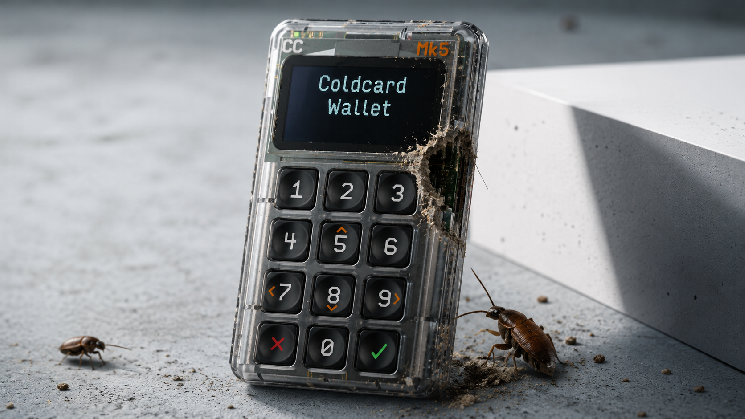
Компания Coinkite, производитель аппаратных биткоин-кошельков Coldcard, обнаружила критическую уязвимость в процессе генерации сид-фраз на устройствах Coldcard Mk3 с прошивкой версий 4.0.1–5.0.3. Все биткоин-адреса, созданные из этих сид-фраз, потенциально скомпрометированы. Компания настоятельно рекомендует пользователям немедленно перевести средства на новый, безопасный кошелёк, создав новую сид-фразу. Просто сменить устройство недостаточно — старую сид-фразу использовать нельзя. Это предупреждение следует на фоне масштабной атаки 30 июля, в ходе которой автоматизированный инструмент за 41 минуту опустошил 1196 кошельков, похитив около 1082 BTC (на тот момент ~$70,2 млн). Исследователи связывают эту атаку с обнаруженной уязвимостью, так как она произошла за 30 часов до публичного раскрытия проблемы Coinkite. Украденные средства пока остаются на четырёх адресах без движения.

cryptonews.ru2 ч. назад

Внимание, пользователи биткоина! Сегодняшний взлом может быть масштабнее, чем вы думали. Вот что нужно делать

cryptonews.ru2 ч. назад

Биткоин в августе: эксперты ждут проверки диапазона, а не быстрого разворота

Биткоин в августе, по мнению аналитиков, скорее всего, останется в состоянии проверки ключевых ценовых уровней, а не совершит резкий разворот к росту. Несмотря на восстановление в июле, сохраняется риск снижения ниже $60 тыс. Основными факторами давления остаются сложная макроэкономическая обстановка: высокие ставки в США, устойчивая инфляция и сильный доллар, что ограничивает аппетит к рисковым активам, включая криптовалюты. Эксперты отмечают, что август исторически слаб для крипторынка. Институциональный спрос остается вялым, о чем свидетельствуют чистые оттоки из биткоин-ETF. Рынок продолжает торговаться в узком диапазоне, преимущественно между $60 и $65 тыс. Прогнозы на месяц в основном сдержанные. Базовый сценарий (вероятность 50%) предполагает движение в коридоре $58–68 тыс. Негативный (30%) — снижение к $50–55 тыс. Позитивный (20%) — рост к $71–75 тыс. Ключевыми уровнями являются поддержка в районе $60–61 тыс. и сопротивление около $67 тыс., преодоление которого могло бы изменить текущий нисходящий тренд. Эксперты советуют инвесторам рассматривать текущие уровни как возможность для постепенного долгосрочного накопления, но быть готовыми к повышенной волатильности. Более существенные движения рынка ожидаются не раньше четвёртого квартала. Внимание рекомендуется уделять не только цене биткоина, но и динамике ставок, инфляции, потокам в ETF и общему настроению на рынке рисковых активов.

cryptonews.ru2 ч. назад

Биткоин в августе: эксперты ждут проверки диапазона, а не быстрого разворота

cryptonews.ru2 ч. назад

Аппаратный кошелек Coldcard взломан: хакеры вывели 594 биткоина за 25 минут

Аппаратные кошельки Coldcard от компании Coinkite были скомпрометированы из-за критической уязвимости, существовавшей пять лет. Ошибка в коде, допущенная в марте 2021 года, отключила защищенный генератор случайных чисел, что привело к созданию предсказуемых seed-фраз на основе серийного номера и системного времени. Это позволило злоумышленникам 30 июля 2026 года вывести около 594,5 BTC (примерно $40 млн) с 500 адресов всего за 25 минут, просто перебирая возможные варианты в офлайне. Компания Coinkite подтвердила уязвимость всех устройств, работавших на скомпрометированных прошивках (Mk2-Mk5, Q), и исключила финансовые компенсации. Для защиты средств владельцам необходимо: обновить прошивку до безопасных версий, сгенерировать новую seed-фразу на обновленном устройстве и полностью перевести все активы на новые адреса. Использование BIP-39 парольной фразы может снизить риски, но не заменяет необходимость смены ключа. Инцидент подчеркивает, что даже специализированное аппаратное обеспечение требует постоянного независимого аудита, особенно в криптографических функциях. Открытый исходный код не гарантирует быстрого обнаружения подобных ошибок, как показали пять лет невыявленной уязвимости и аналогичные случаи в прошлом.

cryptonews.ru2 ч. назад

Аппаратный кошелек Coldcard взломан: хакеры вывели 594 биткоина за 25 минут

cryptonews.ru2 ч. назад

Tether (USDT) опубликовал ожидаемые финансовые результаты за второй квартал! Вот его текущее состояние и активы

Крупнейший эмитент стейблкоинов Tether опубликовал финансовый отчёт за второй квартал 2026 года, подтверждённый аудитором BDO. Чистая операционная прибыль составила около $1,5 млрд, а превышение активов над обязательствами достигло $4,11 млрд. Объём USDT в обращении на 30 июня составил приблизительно $184,6 млрд, увеличившись за квартал на $446 млн. Доля Tether на мировом рынке стейблкоинов превысила 60%. Основную часть прибыли принесли инвестиции в казначейские облигации США и операции репо. Совокупные активы компании оцениваются в $187,75 млрд, обязательства — в $183,64 млрд, из которых $183,62 млрд связаны с выпущенными токенами. Tether сократил объём обеспеченных кредитов на $2,38 млрд (15%) и увеличил золотой запас на 14 тонн, доведя его до более чем 146 тонн. Компания остаётся одним из крупнейших мировых держателей гособлигаций США, а её пользовательская база выросла более чем на 30 миллионов человек. Генеральный директор Паоло Ардоино подчеркнул, что USDT полностью обеспечен резервами, и сообщил о прохождении всестороннего аудита в одной из "большой четвёрки" аудиторских фирм.

cryptonews.ru3 ч. назад

Tether (USDT) опубликовал ожидаемые финансовые результаты за второй квартал! Вот его текущее состояние и активы

cryptonews.ru3 ч. назад

Circle достигла важной вехи в области регулирования, получив лицензию на ведение трастовой деятельности от Департамента финансовых услуг штата Нью-Йорк (NYDFS)

Компания Circle, предоставляющая финансовые услуги и услуги в сфере стейблкоинов, достигла важного этапа, получив от Департамента финансовых услуг штата Нью-Йорк (NYDFS) устав трастовой компании с ограниченным кругом деятельности. Эта лицензия позволяет Circle расширить свою деятельность в штате Нью-Йорк, предлагая клиентам услуги по хранению активов, выпуск одобренных штатом стейблкоинов и управление резервными фондами для их обеспечения. Соучредитель и генеральный директор Circle Джереми Аллайр отметил, что получение данной лицензии было давней целью компании, подчеркивая ясность регулирования, которую она предоставляет. Он назвал NYDFS международным органом, устанавливающим стандарты в регулировании цифровых активов, а само достижение — результатом более чем десятилетней приверженности соблюдению нормативных требований. Компания рассматривает это как подтверждение своих высочайших стандартов безопасности, прозрачности и соответствия, сравнивая уровень проверки NYDFS с требованиями к полноценным коммерческим банкам. Данное разрешение от NYDFS последовало за недавним одобрением Управления валютного контролера США (OCC) на создание Circle National Trust, что перевело деятельность компании по выпуску стейблкоинов под федеральный надзор. Эти шаги, по словам руководства Circle, направлены на установление нового стандарта прозрачности и управления, укрепляя позиции стейблкоина USDC в глобальной финансовой системе.

cryptonews.ru3 ч. назад

Circle достигла важной вехи в области регулирования, получив лицензию на ведение трастовой деятельности от Департамента финансовых услуг штата Нью-Йорк (NYDFS)

cryptonews.ru3 ч. назад

Торговля

Спот

Популярные статьи

Как купить LA

Добро пожаловать на HTX.com! Мы сделали приобретение Lagrange (LA) простым и удобным. Следуйте нашему пошаговому руководству и отправляйтесь в свое крипто-путешествие.Шаг 1: Создайте аккаунт на HTXИспользуйте свой адрес электронной почты или номер телефона, чтобы зарегистрироваться и бесплатно создать аккаунт на HTX. Пройдите удобную регистрацию и откройте для себя весь функционал.Создать аккаунтШаг 2: Перейдите в Купить криптовалюту и выберите свой способ оплатыКредитная/Дебетовая Карта: Используйте свою карту Visa или Mastercard для мгновенной покупки Lagrange (LA).Баланс: Используйте средства с баланса вашего аккаунта HTX для простой торговли.Третьи Лица: Мы добавили популярные способы оплаты, такие как Google Pay и Apple Pay, для повышения удобства.P2P: Торгуйте напрямую с другими пользователями на HTX.Внебиржевая Торговля (OTC): Мы предлагаем индивидуальные услуги и конкурентоспособные обменные курсы для трейдеров.Шаг 3: Хранение Lagrange (LA)После приобретения вами Lagrange (LA) храните их в своем аккаунте на HTX. В качестве альтернативы вы можете отправить их куда-либо с помощью перевода в блокчейне или использовать для торговли с другими криптовалютами.Шаг 4: Торговля Lagrange (LA)С легкостью торгуйте Lagrange (LA) на спотовом рынке HTX. Просто зайдите в свой аккаунт, выберите торговую пару, совершайте сделки и следите за ними в режиме реального времени. Мы предлагаем удобный интерфейс как для начинающих, так и для опытных трейдеров.

773 просмотров всегоОпубликовано 2025.06.04Обновлено 2026.06.02

Как купить LA

Обсуждения

Добро пожаловать в Сообщество HTX. Здесь вы сможете быть в курсе последних новостей о развитии платформы и получить доступ к профессиональной аналитической информации о рынке. Мнения пользователей о цене на LA (LA) представлены ниже.

活动图片