孙宇晨接受《胡润百富》专访:变革周期里,价值流动的新秩序与确定性

marsbitОпубликовано 2026-05-28Обновлено 2026-05-28

Введение

在Web3行业深入发展和全球金融基础设施重构的背景下,波场TRON创始人孙宇晨接受《胡润百富》专访,系统阐述了对行业发展的判断。他指出,区块链技术正从早期探索走向规模化应用,核心目标是构建开放、普惠的价值互联网,让全球任何人都能低成本、高效地转移和使用资金。 孙宇晨强调,能够穿越行业周期的项目必须基于真实需求。目前,以稳定币为核心的链上支付已成为最成熟且具备规模化能力的应用场景。波场TRON已发展成为全球最大的稳定币流通网络之一,其链上USDT流通量超过863亿美元,增长动力来源于跨境转账、价值存储等真实用户需求,体现了技术对传统金融体系的“自然替代”。 在战略层面,他总结了“数据驱动迭代、快速执行与用户导向”相结合的方法论,以及“方向清晰、分层支撑与全员主人翁意识”的管理框架。他以波场TRON与Tether合作推出TRC-20 USDT为例,说明基于对市场趋势和风险回报的综合判断是关键。同时,他强调了全球化布局中本地合规与文化适配的重要性。 对于技术融合趋势,孙宇晨认为人工智能(AI)是对“思考与决策能力”的重构,AI与区块链在数据、算力及智能执行层面的结合是重要方向。区块链可为AI提供去中心化基础设施,AI则能提升区块链的智能化与用户体验。 最后,他建议行业参与者和年轻创业者,在不确定的环境中应持续学习、快速适应,并在理解全局的基础上聚焦核心优势,打造不可替代的竞争力。波场TRON正通过完善基础设施、推进全球化战略和前瞻技术布局,持续推动价值互联网的落地演进。

在Web3行业迈入深水区、全球金融基础设施加速重构的背景下,区块链正由早期探索走向规模化应用。作为在商业与投资领域具有广泛影响力的权威机构,知名杂志《胡润百富》的深度专访被视为重要的行业风向标。近日,波场TRON创始人孙宇晨在接受《胡润百富》专访时,围绕稳定币支付、全球化路径及AI融合趋势等核心议题,系统阐述其对行业演进与长期价值的判断,其观点亦折射出Web3基础设施从“可行性验证”迈向“全球普及”的关键阶段。
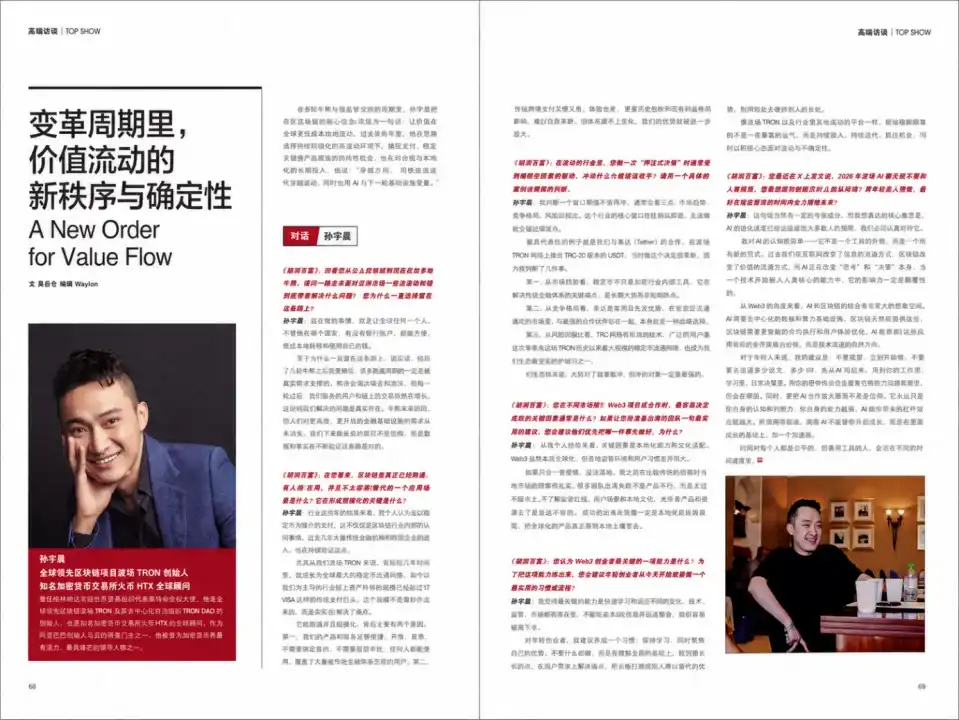
稳定币构建全球价值流通网络,Web3基础设施迈入规模化阶段

在《胡润百富》的专访中,孙宇晨以极为简洁的语言概括了其长期所致力的核心目标:“让全球任何一个人,无论身处何地、是否拥有银行账户,都能低成本、高效率地转移和使用自己的资金。”这一表述从根本上揭示了区块链技术的价值本质——构建开放、普惠的价值互联网。

他进一步指出,区块链行业历经多轮牛熊周期后,真正能够穿越周期的项目,必须建立在真实需求与实际使用之上。链上用户规模与交易量的持续增长,是其判断行业方向的重要依据。在这一背景下,以稳定币为核心的链上支付体系,已成为当前最成熟且具备规模化能力的应用场景。

在《胡润百富》的专访中,孙宇晨提到,波场TRON已在短时间内发展为全球最大的稳定币流通网络之一,其链上资产转移规模甚至已超过部分传统支付网络。这一增长并非源于短期市场情绪,而是基于真实用户在跨境转账、价值存储及日常支付等场景中的持续使用。官方数据显示,目前波场TRON链上的USDT流通量已超过863亿美元,这一规模体现出真实用户需求驱动下的强劲网络效应。

从结构性优势来看,稳定币支付的规模化得益于两方面因素:一方面,区块链网络具备开放性与无需许可的特征,使其能够覆盖传统金融体系难以触达的用户群体;另一方面,传统跨境支付体系在效率、成本及用户体验方面的局限,为新一代基础设施提供了显著的替代空间。孙宇晨认为,这一趋势本质上是技术进步对既有金融体系的“自然替代”,而非短期竞争。

全球化战略与技术融合并进,构建Web3长期竞争优势

在谈及企业增长与战略决策时,孙宇晨在《胡润百富》专访中提出了高度体系化的方法论。他将成功要素总结为“数据驱动的迭代、快速执行与用户导向”的结合,并强调在高速变化的技术环境中,单一维度的能力已难以支撑长期竞争力,必须通过三者的协同实现高效试错与精准决策。

在组织层面,他提出“方向清晰、分层支撑与全员主人翁意识”的管理框架,以避免在高速扩张过程中出现偏离与失控。这种强调扁平化与敏捷性的组织结构,被视为Web3企业在高不确定性环境中保持竞争力的重要基础。

具体到关键战略决策,孙宇晨在《胡润百富》专访中回顾了波场TRON与Tether合作推出TRC-20 USDT的案例。他表示,这一决策基于对市场趋势、竞争格局及风险回报比的综合判断:稳定币是金融体系演进的长期趋势,头部资产具备显著的网络效应,而该领域的上行空间远大于潜在风险。事实证明,该合作成为波场TRON生态的重要增长引擎,并构筑了其在稳定币领域的核心竞争壁垒。

在全球化布局方面,孙宇晨强调,Web3虽具备天然的跨境属性,但实际落地仍高度依赖本地合规与文化适配。在《胡润百富》的专访中,他指出,不同市场在监管框架、用户习惯及商业环境上存在显著差异,项目能否成功,往往取决于对这些差异的理解深度以及本地合作网络的构建能力。

此外,孙宇晨对AI技术的发展亦表达了明确判断。他在专访中表示,AI并非简单的工具升级,而是对“思考与决策能力”的重构,其与区块链在数据、算力及智能执行层面的结合,将成为下一阶段技术演进的重要方向。区块链为AI提供去中心化基础设施,而AI则提升区块链系统的智能化与用户体验,两者的融合具备长期战略价值。

面向行业参与者与年轻创业者,孙宇晨在《胡润百富》专访中给出的核心建议是:在高度不确定的环境中,持续学习与快速适应是最关键的能力。同时,应在理解行业全局的基础上进行聚焦投入,打造不可替代的核心优势,而非在多条赛道中分散资源。

从早期的技术验证与市场探索,逐步迈入以稳定币为代表的规模化应用阶段,并向AI融合与全球合规落地延伸。在这一进程中,波场TRON正通过基础设施能力、全球化战略与技术前瞻布局,持续推动价值互联网的落地与演进。


Связанные с этим вопросы

Q孙宇晨在《胡润百富》专访中提出的区块链技术的长期核心目标是什么?

A孙宇晨提出的核心目标是:让全球任何一个人,无论身处何地、是否拥有银行账户,都能低成本、高效率地转移和使用自己的资金。这揭示了区块链技术构建开放、普惠的价值互联网的本质。

Q根据文章,孙宇晨认为当前Web3领域最成熟且具备规模化能力的应用场景是什么?波场TRON在这一领域有何表现?

A孙宇晨认为,以稳定币为核心的链上支付体系是当前最成熟且具备规模化能力的应用场景。波场TRON已发展为全球最大的稳定币流通网络之一,其链上资产转移规模超过部分传统支付网络,USDT流通量已超过863亿美元。

Q孙宇晨在专访中,将企业成功的要素总结为哪三者的结合?在组织管理层面,他提出了什么框架?

A孙宇晨将企业成功的要素总结为“数据驱动的迭代、快速执行与用户导向”的结合。在组织管理层面,他提出了“方向清晰、分层支撑与全员主人翁意识”的管理框架,以避免高速扩张中的偏离与失控,强调扁平化与敏捷性。

Q文章中提到,孙宇晨如何看待人工智能与区块链技术的关系?

A孙宇晨认为,AI是对“思考与决策能力”的重构,而不仅仅是工具升级。AI与区块链在数据、算力及智能执行层面的结合是重要方向:区块链为AI提供去中心化基础设施,而AI则提升区块链系统的智能化与用户体验,两者融合具备长期战略价值。

Q孙宇晨在专访中,向年轻创业者给出的核心建议是什么?

A孙宇晨的核心建议是:在高度不确定的环境中,持续学习与快速适应是最关键的能力。同时,应在理解行业全局的基础上进行聚焦投入,打造不可替代的核心优势,避免在多条赛道中分散资源。

Похожее

Sharplink CEO: One Million Ethereum Developers, Who Can Compete?

Etherean Ecosystem: One Million Developers and a Formidable Moat The Ethereum network has surpassed a significant milestone: over one million unique lifetime developers, with approximately 232,000 active in the past year. This vast and growing talent pool is Ethereum's core advantage, far more critical than transient metrics like speed or transaction fees. The central question is not which blockchain is fastest, but where the best builders choose to build long-term. Ethereum's answer lies in a decade-long accumulation of infrastructure, standards, tools, liquidity, and collaborative culture that is exceptionally difficult to replicate. It has become the default operating system for programmable finance. This massive developer base is actively working on complex, high-risk challenges that deepen Ethereum's strategic moat: * **Glamsterdam Upgrade (2026):** Focused on core protocol scalability (ePBS, parallel execution) while preserving core values like credible neutrality. * **Synchronous Composability:** Aims to make numerous Rollups interoperate like a single chain, directly addressing fragmentation concerns. * **Quantum Resistance:** Ethereum leads mainstream ecosystems in coordinated preparation for post-quantum cryptography, with a targeted migration plan around 2029. This developer advantage is self-reinforcing, fueled by: * **Deep Composability:** Applications interact like interoperable financial Lego bricks via shared standards (e.g., EVM, Solidity). * **Credible Neutrality:** Secured by over 900,000 validators, making it trusted by major institutions. * **Modularity:** Rollups (Base, Arbitrium, etc.) expand, rather than fracture, the ecosystem into a tightly connected modular internet economy. * **Culture:** Attracts top-tier researchers and standard-setters who guide the entire industry. In essence, while other chains generate activity, Ethereum is consolidating as the trusted, long-term coordination layer for internet-native finance. Its future is being built now by the architects of the next-generation financial infrastructure.

Odaily星球日报23 мин. назад

Sharplink CEO: One Million Ethereum Developers, Who Can Compete?

Odaily星球日报23 мин. назад

Ethereum Reaches the Milestone of One Million Developers, Sharplink CEO Delves Deep into Ethereum's Future Possibilities

Ethereum Surpasses One Million Developers Milestone: A Look at Its Unshakeable Dominance and Future Joseph Chalom, CEO of Sharplink, reflects on his recent Asia trip where he engaged deeply with Ethereum developers and ecosystem leaders. The most striking takeaway was not just the industry's vibrancy, but the rigorous, long-term vision of local builders. This context brings to life a pivotal statistic: Ethereum has now surpassed one million cumulative developers (1,012,824), with approximately 232,000 remaining active in the past year—a talent pool unmatched by any other crypto ecosystem. The critical question isn't which blockchain is fastest, but where top developers choose to build long-term. Ethereum's answer is unequivocal. Its decade-long lead stems from a unique convergence of technology, institutional culture, economic systems, and composability, cementing its role as the foundational operating system for programmable finance. This massive developer base is tackling the industry's hardest problems, continuously strengthening Ethereum's moat. Key initiatives include: * **The Glamsterdam Upgrade (planned 2026):** Introducing ePBS and Block-level Access Lists for parallel execution and higher throughput while preserving core values like credible neutrality and fair MEV distribution. * **Synchronous Composability:** Projects are working to enable atomic transactions across dozens of Rollups, making them function as one unified chain and eliminating ecosystem fragmentation. * **Post-Quantum Security:** Ethereum is far ahead in preparing for quantum computing threats, with a dedicated foundation working group and testnets targeting a full migration by ~2029—a crucial factor for institutional adoption. Beyond developers, Ethereum's core network effects are its unparalleled composability and unified standards (like EVM and Solidity), which create a powerful flywheel: more developers → better tools → greater liquidity → more institutional participation. Its other decisive advantages include credible neutrality (over 900k validators), a secure modular architecture with interconnected Rollups, and a deeply entrenched culture shaped by top-tier researchers. Ultimately, there's a vast difference between generating short-term activity and becoming the trusted, long-term coordination layer for global native finance. Major institutions prioritize security, trust, and liquidity—areas where Ethereum holds dominant mindshare. The industry's trajectory shows resources consolidating around unified standards, deep liquidity, and developer consensus. After meeting the builders in Seoul and Hong Kong, Chalom is more convinced than ever: Ethereum's unshakeable future is being built right now.

Foresight News34 мин. назад

Ethereum Reaches the Milestone of One Million Developers, Sharplink CEO Delves Deep into Ethereum's Future Possibilities

Foresight News34 мин. назад

Saylor's Latest Long Read: Bitcoin is Not Money, It's Digital Capital, and Money is Built Upon It

Michael Saylor presents his "Digital Asset Stack" theory, positioning Bitcoin as the foundational layer of digital capital. He argues Bitcoin itself should remain unchanged—no staking, inflation, or protocol alterations. Instead, a five-layer financial architecture should be built atop it: Digital Capital (BTC), Digital Credit (e.g., yield instruments like STRC), Digital Currency (stable, yield-bearing instruments pegged to fiat), Digital Yield (leveraged/structured products), and Digital Equity (e.g., MSTR stock, absorbing residual volatility). Saylor asserts this stack transforms Bitcoin's high-volatility, high-energy capital into tailored products: stable currencies for payments/savings, yield instruments for income seekers, and equity for growth investors. This approach meets diverse needs—corporate treasuries, banks, retirees, emerging market users—without compromising Bitcoin's core properties (scarcity, decentralization). The "killer use case" is rebuilding global money, credit, and capital markets on Bitcoin, bridging the fiat world with a superior digital asset foundation. The system leverages traditional finance principles (risk layering, structured products) while using Bitcoin as the ultimate collateral. This expands Bitcoin's utility, drives adoption, and offers a better monetary experience: digital, yield-bearing, stable-value tools for everyday use.

marsbit47 мин. назад

Saylor's Latest Long Read: Bitcoin is Not Money, It's Digital Capital, and Money is Built Upon It

marsbit47 мин. назад

Can SK Hynix's Stock Double Again in This Rally?

The article discusses the highly optimistic price target of approximately $3,500 for SK Hynix stock, set by Aletheia Capital. This target is significantly above the consensus range of $2,000-$2,520 from major brokerages. The core debate is whether SK Hynix deserves a fundamental re-rating beyond its traditional cyclical discount, based on the long-term impact of AI-driven demand. The $3,500 target hinges on three key assumptions holding simultaneously until at least 2027: 1) Continued shortage and high pricing for HBM (High Bandwidth Memory), a critical component for AI chips; 2) Sustained high prices for standard DRAM, as HBM production consumes capacity and constrains general supply; and 3) Strong AI server demand generating substantial, above-expectation free cash flow. SK Hynix's leading ~58% market share in HBM and its early certification with key clients like Nvidia provide a competitive advantage, allowing it to capture significant supply chain premiums. The HBM shortage is seen not just as a niche growth driver but as a catalyst that amplifies profitability across the entire memory business by tightening overall DRAM supply. However, the article cautions that this target represents an optimistic "tail scenario." Key risks include potential supply increases from competitors (Samsung, Micron) by 2027, a possible slowdown in HBM price growth, and high capital expenditures that could erode the projected free cash flow. The divergence in analyst targets reflects the market's uncertainty over whether the current AI-driven boom will temporarily elevate earnings or permanently raise the memory industry's profit baseline.

marsbit50 мин. назад

Can SK Hynix's Stock Double Again in This Rally?

marsbit50 мин. назад

Торговля

Спот
Фьючерсы

Популярные статьи

Как купить FLOW

Добро пожаловать на HTX.com! Мы сделали приобретение Flow (FLOW) простым и удобным. Следуйте нашему пошаговому руководству и отправляйтесь в свое крипто-путешествие.Шаг 1: Создайте аккаунт на HTXИспользуйте свой адрес электронной почты или номер телефона, чтобы зарегистрироваться и бесплатно создать аккаунт на HTX. Пройдите удобную регистрацию и откройте для себя весь функционал.Создать аккаунтШаг 2: Перейдите в Купить криптовалюту и выберите свой способ оплатыКредитная/Дебетовая Карта: Используйте свою карту Visa или Mastercard для мгновенной покупки Flow (FLOW).Баланс: Используйте средства с баланса вашего аккаунта HTX для простой торговли.Третьи Лица: Мы добавили популярные способы оплаты, такие как Google Pay и Apple Pay, для повышения удобства.P2P: Торгуйте напрямую с другими пользователями на HTX.Внебиржевая Торговля (OTC): Мы предлагаем индивидуальные услуги и конкурентоспособные обменные курсы для трейдеров.Шаг 3: Хранение Flow (FLOW)После приобретения вами Flow (FLOW) храните их в своем аккаунте на HTX. В качестве альтернативы вы можете отправить их куда-либо с помощью перевода в блокчейне или использовать для торговли с другими криптовалютами.Шаг 4: Торговля Flow (FLOW)С легкостью торгуйте Flow (FLOW) на спотовом рынке HTX. Просто зайдите в свой аккаунт, выберите торговую пару, совершайте сделки и следите за ними в режиме реального времени. Мы предлагаем удобный интерфейс как для начинающих, так и для опытных трейдеров.

532 просмотров всегоОпубликовано 2024.03.29Обновлено 2026.06.02

Как купить FLOW

Обсуждения

Добро пожаловать в Сообщество HTX. Здесь вы сможете быть в курсе последних новостей о развитии платформы и получить доступ к профессиональной аналитической информации о рынке. Мнения пользователей о цене на FLOW (FLOW) представлены ниже.

活动图片