Solayer Luncurkan Platform Perdagangan Perpetual Multi-Aset Bernama Margin Trade

TheNewsCryptoОпубликовано 2026-05-22Обновлено 2026-05-22

Введение

Solayer, blockchain Layer 1 yang kompatibel dengan Solana Virtual Machine (SVM), telah meluncurkan pengujian publik untuk platform perdagangan perpetual multi-aset andalannya, Margin Trade. Dibangun oleh mantan pedagang dari Citadel dan Kraken, platform ini menawarkan margin terpadu untuk perdagangan kripto dan instrumen pasar tradisional seperti emas, minyak, dan indeks saham AS di satu tempat. Berjalan di InfiniSVM milik Solayer, Margin Trade memanfaatkan infrastruktur yang dipercepat perangkat keras untuk efisiensi, skalabilitas, dan latensi rendah, mendukung lebih dari 330.000 TPS. Platform ini bertujuan mengatasi fragmentasi di pasar berjangka saat ini dengan menghadirkan efisiensi modal dan eksposur multi-aset dalam lingkungan terpadu. Peluncuran ini merupakan bagian dari diversifikasi produk Solayer ke pasar keuangan, menyusul platform pembayaran stablecoin Solayer Pay. Didukung oleh dana ekosistem $35 juta, rencana ke depan termasuk menambah penawaran seperti saham individu dan produk volatilitas, serta program insentif dan kompetisi perdagangan.

Solayer, sebuah blockchain Layer 1 yang kompatibel dengan Solana Virtual Machine (SVM) berkinerja tinggi, telah meluncurkan pengujian publik untuk platform perdagangan perpetual multi-aset andalannya, Margin Trade.

Solayer membuka Margin Trade untuk pengujian publik

Dibangun oleh tim di Solayer Labs, dan mantan trader dengan latar belakang dari Citadel dan Kraken, Margin Trade menawarkan margin terpadu dengan perdagangan on-chain baik untuk instrumen pasar kripto maupun tradisional dalam satu platform. Penawaran keuangan tradisionalnya mencakup komoditas seperti emas, perak, dan minyak, serta MT500, indeks sintetis yang melacak ekuitas Amerika Serikat.

Peluncuran publik Margin Trade di testnet Solana menyusul beta privat pekan lalu, yang melibatkan pengguna awal, mitra, dan trader dari daftar tunggu Solayer. Pada periode yang sama, Solayer menyelesaikan integrasi protokol, kolaborasi pemasaran, dan kemitraan strategis dalam persiapan untuk rilis hari ini.

Mengenai hal ini, Joshua Sum, Kepala Petugas Produk di Solayer Labs, menyatakan:

"Sebagian besar infrastruktur perdagangan futures perpetual saat ini masih terkotak-kotak di pasar yang terpisah dan struktur akun kolateral yang terfragmentasi. Margin Trade dirancang untuk membawa efisiensi modal, eksekusi waktu nyata, dan eksposur multi-aset dalam lingkungan terpadu yang terasa lebih dekat dengan visi pasar keuangan global yang sesungguhnya dibandingkan platform perdagangan tradisional."

Sebagai platform asli dari InfiniSVM Solayer, Margin Trade memanfaatkan infrastruktur akselerasi perangkat keras rantai tersebut untuk fungsi yang efisien, skalabel, dan latensi rendah. Rantai ini memberikan lebih dari 330.000 transaksi per detik (TPS), dengan finalitas sekitar 400 milidetik untuk 304.000 penggunanya. Semua fitur yang sangat berharga ini sangat diperlukan untuk membangun aplikasi terdesentralisasi berkinerja tinggi dan kritis pada jaringan.

Lebih lagi, menggunakan token asli Solana (SOL) untuk biaya gas membuat transaksi menjadi sangat terjangkau, karena biaya Solana termasuk yang terendah di seluruh ekosistem kripto.

Masuknya Solayer ke arena keuangan

Debut Margin Trade semakin memperkuat inisiatif diversifikasi produk Solayer – dari membangun infrastruktur hingga pasar keuangan langsung. Di antara produk keuangannya adalah Solayer Pay, platform pembayaran stablecoin yang baru-baru ini meluncurkan kartu fisik untuk mendukung transaksi pedagang-pelanggan. Peluncuran Margin Trade juga menunjukkan utilitas dana ekosistem senilai $35 juta yang mendukung aplikasi on-chain berthroughput tinggi.

Di masa depan, Margin Trade berencana untuk memperluas penawarannya untuk mencakup ekuitas saham tunggal dan produk volatilitas. Solayer juga merencanakan kompetisi perdagangan, sistem peringkat, dan program insentif berbasis rujukan sebagai bagian dari pengembangan ekosistem yang lebih luas.

TagsBlockchainSolayer

Связанные с этим вопросы

QApa yang diluncurkan Solayer dalam pengujian publik?

ASolayer telah meluncurkan pengujian publik untuk platform perdagangan perpetual multi-asset unggulannya yang disebut Margin Trade.

QInstrumen keuangan tradisional apa saja yang tersedia di Margin Trade?

AMargin Trade menawarkan perdagangan instrumen pasar tradisional seperti komoditas (emas, perak, minyak) dan indeks sintetis MT500 yang melacak saham AS.

QApa keunggulan Margin Trade yang disebutkan Joshua Sum dari Solayer Labs?

AJoshua Sum menyebutkan bahwa Margin Trade dirancang untuk menghadirkan efisiensi modal, eksekusi waktu-nyata, dan eksposur multi-asset dalam satu lingkungan terpadu yang lebih mendekati visi pasar keuangan global yang sesungguhnya.

QApa fitur infrastruktur Solayer yang mendukung kinerja Margin Trade?

AMargin Trade memanfaatkan infrastruktur Solayer yang dipercepat perangkat keras (InfiniSVM), yang mampu menangani lebih dari 330.000 transaksi per detik dengan finalitas sekitar 400 milidetik, serta biaya gas yang rendah menggunakan SOL.

QInisiatif produk keuangan lain apa yang dimiliki Solayer selain Margin Trade?

ASelain Margin Trade, Solayer juga memiliki Solayer Pay, platform pembayaran stablecoin yang baru-baru ini meluncurkan kartu fisik untuk mendukung transaksi merchant-pelanggan.

Похожее

τ Scaling: Huawei's New Growth Engine Designed for the Post-Moore Era

**Tau Scaling: Huawei's New Growth Engine for the Post-Moore Era** For 60 years, progress in semiconductors was driven by Moore's Law – making transistors smaller, denser, and cheaper. This path has now stalled due to plummeting returns below 7nm, astronomical lithography costs, and rising per-transistor expenses. After six years and testing 381 production chips, Huawei’s semiconductor team proposes a fundamental shift: **stop competing on size, start competing on time**. This is the core of their "τ (Tau) Scaling" theory. It treats *time* as the key optimization metric, compressing characteristic delays (τ) across all levels – from transistor switching (picoseconds) to data center tasks (seconds), spanning 12 orders of magnitude. **What is τ Scaling?** It holistically minimizes delay/time constants (τ) across four layers: transistors (switching speed), circuits (signal delay), chips (compute/memory access), and systems (end-to-end communication). The goal is to align optimization from process and circuit design to architecture and systems using this unified metric. **Mobile Application: LogicFolding** Without advancing the process node, this technique vertically stacks chips using ultra-precision hybrid bonding, distributing critical paths across layers ("stacking floors"). Results include a 55% transistor density increase, 41% better energy efficiency, over 40% higher SRAM frequency, and a roadmap targeting 4GHz by 2029. **AI Data Center Application: Full-Link Latency Compression** With 80% of AI cluster energy and 70% cost spent on data movement, the focus is slashing communication time. Key innovations include: 1. **Unified Bus:** Cuts multi-layer protocols, reducing remote access latency from microseconds to ~100 nanoseconds – 500x faster. 2. **Hi-ONE Optical Interconnect:** Replaces copper with fiber, enabling 8Tb/s per module and scaling distances from 1m to 100m for 10,000-chip clusters. 3. **3D Folding:** Solves the "interface bottleneck" of 2.5D packaging by vertically integrating memory, power, and optical I/O alongside compute, predicting over 100x integration density gain by 2035. **Re-fusion of Logic and Memory** The AI era, where data movement is more critical than computation, demands tight 3D integration of logic and memory, shifting industry influence towards memory and advanced packaging. **Remaining Challenges** include adapting EDA tools for 3D design, optimizing wafer-to-wafer process variation and vertical interconnect losses, and establishing new energy efficiency and benchmarking standards. **Conclusion:** The era of scaling physical dimensions is over. The era of scaling time has begun. By leveraging 3D stacking, system architecture, and interconnect optimization—rather than solely chasing advanced lithography—performance and efficiency can continue to advance. This is poised to be the semiconductor industry's core roadmap for the next decade.

marsbit6 мин. назад

τ Scaling: Huawei's New Growth Engine Designed for the Post-Moore Era

marsbit6 мин. назад

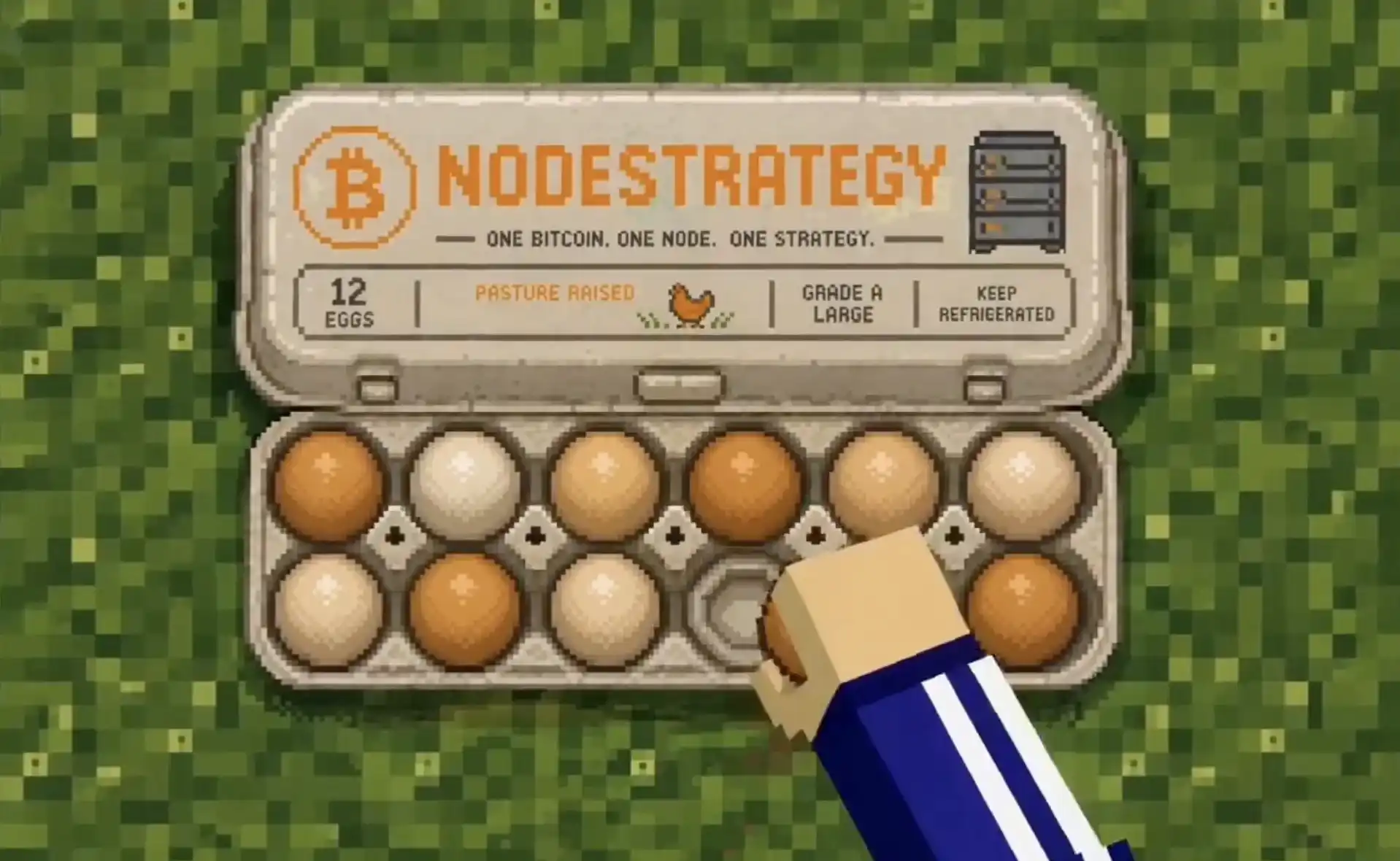
NodeStrategy: The First Ordinals DAT Project, Bringing the Strategy Treasury Narrative to NFTs

**Summary: The Fundamental Flaws of NodeStrategy, the 'First Ordinals DAT'** NodeStrategy presents itself as the first Ordinals Digital Asset Treasury (DAT) on Bitcoin. Its model mirrors MicroStrategy's treasury narrative but for NFTs, specifically targeting the NodeMonkes collection (not officially affiliated). The project's core mechanism is a four-step flywheel: a 10% fee on all trades (90% to treasury, 10% to radFi/Bound marketplace) is used to buy NodeMonkes. These NFTs are then listed for sale on Satflow, with 100% of the sale proceeds used to buy back and burn the project's token, NODESTRAT, aiming to create a perpetual value cycle. However, the design contains critical, self-defeating flaws: 1. **Platform Lock-In:** As a Bitcoin Rune, NODESTRAT lacks smart contract functionality and cannot natively enforce the 10% fee. The fee can only be collected on the radFi/Bound marketplace itself. This makes the entire flywheel dependent on a single platform. If liquidity moves elsewhere, fee revenue drops to zero, halting the mechanism. 2. **Self-Suffocating Economics:** The 10% fee acts both as the flywheel's fuel and a major drag on demand. A buy/sell roundtrip incurs a 20% cost, creating a massive hurdle for traders. This strangles the very trading volume needed to generate fees. 3. **Ineffective Value Support:** The flywheel is starved. Low daily volume (~$9K) generates minimal fees for NFT purchases. The NFT "ladder" sales are slow and unpredictable (only 39 total sold), meaning buybacks are infrequent. While 30.77% of the supply has been burned, this supply reduction cannot lift price without corresponding demand, which is suppressed by the high transaction tax. 4. **Meaningless NAV:** The Net Asset Value (NAV), currently at a 0.46x discount to market cap, is merely a marketing figure. There is no redemption mechanism for token holders to claim the underlying NodeMonkes assets. Price is set by market liquidity flows, not by this theoretical backing. In essence, NodeStrategy's design forces its revenue source (trading fees) to simultaneously cripple the demand and liquidity required for its own success, trapping the project in a stagnant state.

marsbit13 мин. назад

NodeStrategy: The First Ordinals DAT Project, Bringing the Strategy Treasury Narrative to NFTs

marsbit13 мин. назад

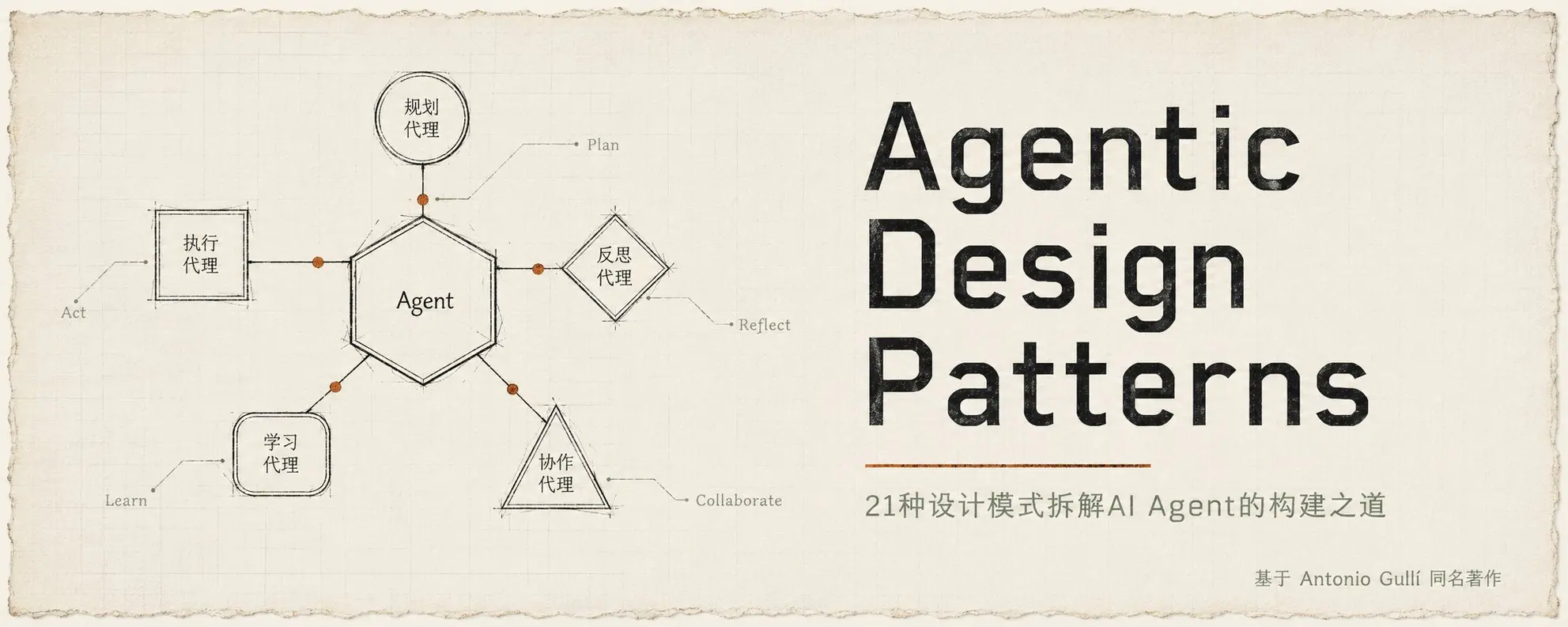
Agentic Design Patterns: A Book That Made Me Re-Understand "What Is an Agent, Really?"

"Agentic Design Patterns" is a 2025 book by Antonio Gullí, a Google engineering director, which offers a systematic framework for AI Agent development through 21 design patterns. A core contribution is the "Four Levels of Agency": Level 0 (bare LLMs) are not true agents. Level 1 agents actively decide when and how to use tools. Level 2 agents engage in strategic planning, context engineering (curating and filtering information), and self-reflection. Level 3 involves multi-agent collaboration with defined communication topologies. The book introduces **Context Engineering** as a superset of prompt engineering, managing four layers of information for the agent: system prompts, external data, implicit context (user history, environment), and feedback loops for automated optimization. A key pattern is **Reflection (Producer-Critic)**, where two distinct agents with different prompts collaborate iteratively—one produces output, the other critiques it—until quality is satisfactory or a max iteration limit is reached. For **Memory**, a three-layer model is proposed: Session (ephemeral conversation context), State (temporary task data), and Memory (persistent, long-term storage). Regarding **Multi-Agent Systems**, the book advises against unnecessary complexity, recommending simple topologies like Supervisor or Peer-to-Peer based on task needs. It emphasizes perfecting a single Level 2 agent before moving to multi-agent setups. The author concludes with three actionable takeaways: 1) Add a Critic agent to existing workflows, 2) Practice Context Engineering beyond simple prompts, and 3) Avoid premature multi-agent complexity; first master a robust single agent. The book provides a practical map, codifying common challenges like reflection, memory, and coordination into reusable patterns, saving developers from reinventing foundational solutions.

链捕手59 мин. назад

Agentic Design Patterns: A Book That Made Me Re-Understand "What Is an Agent, Really?"

链捕手59 мин. назад

An AI Read SpaceX's Prospectus and Wrote This Investment Memo in 12 Minutes

An AI agent autonomously analyzed SpaceX's 226MB S-1 filing, purchased real-time market data on-chain for $1.87, and generated a comprehensive investment memo in 12 minutes. The memo concludes a "Hold" recommendation. Bull Thesis: SpaceX holds a near-monopoly in commercial launch (80% of global orbital mass since 2023), operates the profitable Starlink business (10.3M subscribers, $7.2B adj. EBITDA), and is vertically integrated from rockets to AI via the xAI acquisition. Starlink alone is a standout, high-margin business. Bear Thesis: The AI division is a massive cash burn ($6.4B operating loss on $3.2B revenue in 2025). True debt obligations approach ~$42B, not the headline $29B, due to bridge loans and X-related debt. Significant contingent liabilities exist, including a potential $10B fee from a Cursor option agreement. The company faces concentrated counterparty risk (e.g., a $45B Anthropic contract), slowing revenue growth, and complex governance as a controlled company with four share classes. Valuation anchors Starlink's standalone value at ~$84B (applying Iridium's 7.4x sales multiple), suggesting the current ~$500B+ IPO target prices in immense future execution risk for Starship and AI. Key risks include Starship delays, accelerating AI losses, and underwriter conflicts (the IPO's lead banks are also lenders on the $20B bridge loan it aims to refinance). Investment triggers: upgrade to "Overweight" if priced ≤$350B and Starship meets milestones; downgrade to "Pass" if priced >$510B or key risks materialize.

marsbit1 ч. назад

An AI Read SpaceX's Prospectus and Wrote This Investment Memo in 12 Minutes

marsbit1 ч. назад

Торговля

Спот
Фьючерсы

Популярные статьи

Как купить LAYER

Добро пожаловать на HTX.com! Мы сделали приобретение Solayer (LAYER) простым и удобным. Следуйте нашему пошаговому руководству и отправляйтесь в свое крипто-путешествие.Шаг 1: Создайте аккаунт на HTXИспользуйте свой адрес электронной почты или номер телефона, чтобы зарегистрироваться и бесплатно создать аккаунт на HTX. Пройдите удобную регистрацию и откройте для себя весь функционал.Создать аккаунтШаг 2: Перейдите в Купить криптовалюту и выберите свой способ оплатыКредитная/Дебетовая Карта: Используйте свою карту Visa или Mastercard для мгновенной покупки Solayer (LAYER).Баланс: Используйте средства с баланса вашего аккаунта HTX для простой торговли.Третьи Лица: Мы добавили популярные способы оплаты, такие как Google Pay и Apple Pay, для повышения удобства.P2P: Торгуйте напрямую с другими пользователями на HTX.Внебиржевая Торговля (OTC): Мы предлагаем индивидуальные услуги и конкурентоспособные обменные курсы для трейдеров.Шаг 3: Хранение Solayer (LAYER)После приобретения вами Solayer (LAYER) храните их в своем аккаунте на HTX. В качестве альтернативы вы можете отправить их куда-либо с помощью перевода в блокчейне или использовать для торговли с другими криптовалютами.Шаг 4: Торговля Solayer (LAYER)С легкостью торгуйте Solayer (LAYER) на спотовом рынке HTX. Просто зайдите в свой аккаунт, выберите торговую пару, совершайте сделки и следите за ними в режиме реального времени. Мы предлагаем удобный интерфейс как для начинающих, так и для опытных трейдеров.

651 просмотров всегоОпубликовано 2025.02.11Обновлено 2025.03.21

Как купить LAYER

Обсуждения

Добро пожаловать в Сообщество HTX. Здесь вы сможете быть в курсе последних новостей о развитии платформы и получить доступ к профессиональной аналитической информации о рынке. Мнения пользователей о цене на LAYER (LAYER) представлены ниже.

活动图片