GitHub Empire on the Brink of Collapse: Source Code Leak, 18-Year Veteran Leaves, Microsoft Loses 1.5 Billion Developers

marsbitОпубликовано 2026-05-22Обновлено 2026-05-22

Введение

GitHub is facing an unprecedented crisis, marked by a massive exodus of developers and severe operational failures. The tipping point came when Mitchell Hashimoto, creator of Ghostty and an 18-year GitHub user, publicly severed ties, citing persistent platform outages that made serious work impossible. This departure highlights a broader pattern of user frustration. The platform's instability has drawn complaints from major corporate clients like Citibank and Intel, forcing Microsoft to issue substantial service credits. A critical incident last month saw an accidentally triggered, unreleased feature cause widespread repository rollbacks, erasing recent code changes and pushing enterprises to migrate. Security has catastrophically breached. In May 2026, hackers infiltrated over 3,800 of GitHub's internal repositories via a poisoned VS Code extension installed by a developer, leading to the attempted sale of core source code for $50,000. This follows the discovery of a critical zero-day vulnerability in March that threatened access to millions of repositories. Internally, GitHub's autonomy has collapsed. After the resignation of CEO Thomas Dohmke in mid-2025, Microsoft eliminated the CEO role, folding GitHub into its CoreAI division under the unpopular leadership of Jay Parikh. This triggered a talent drain, with key executives and engineers leaving. A disruptive migration of GitHub's infrastructure to Azure servers, pushed by CTO Vladimir Fedorov, is blamed for the recurri...

GitHub is experiencing an unprecedented major collapse.

Recently, the global open-source tech community witnessed a shocking rift.

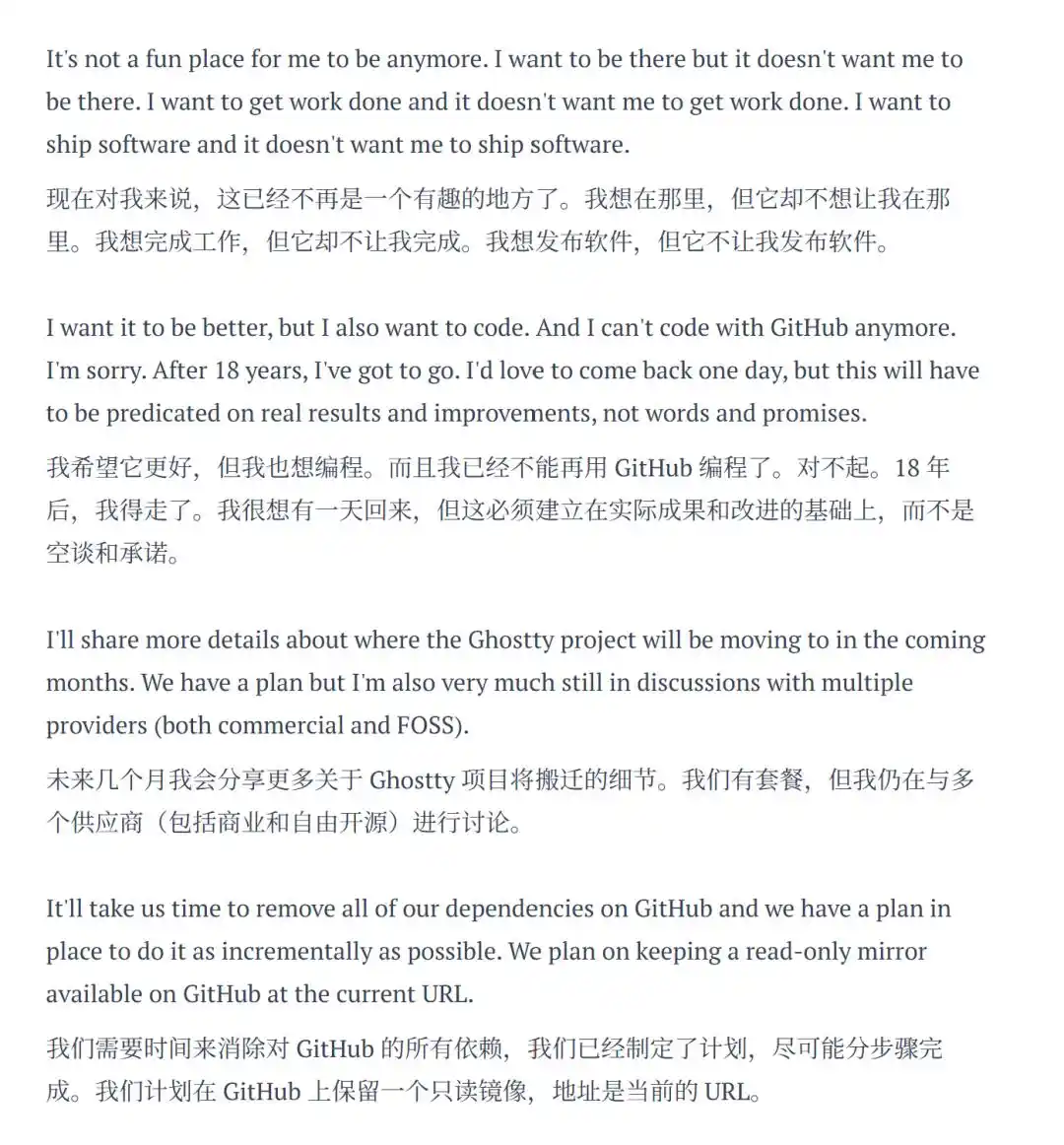
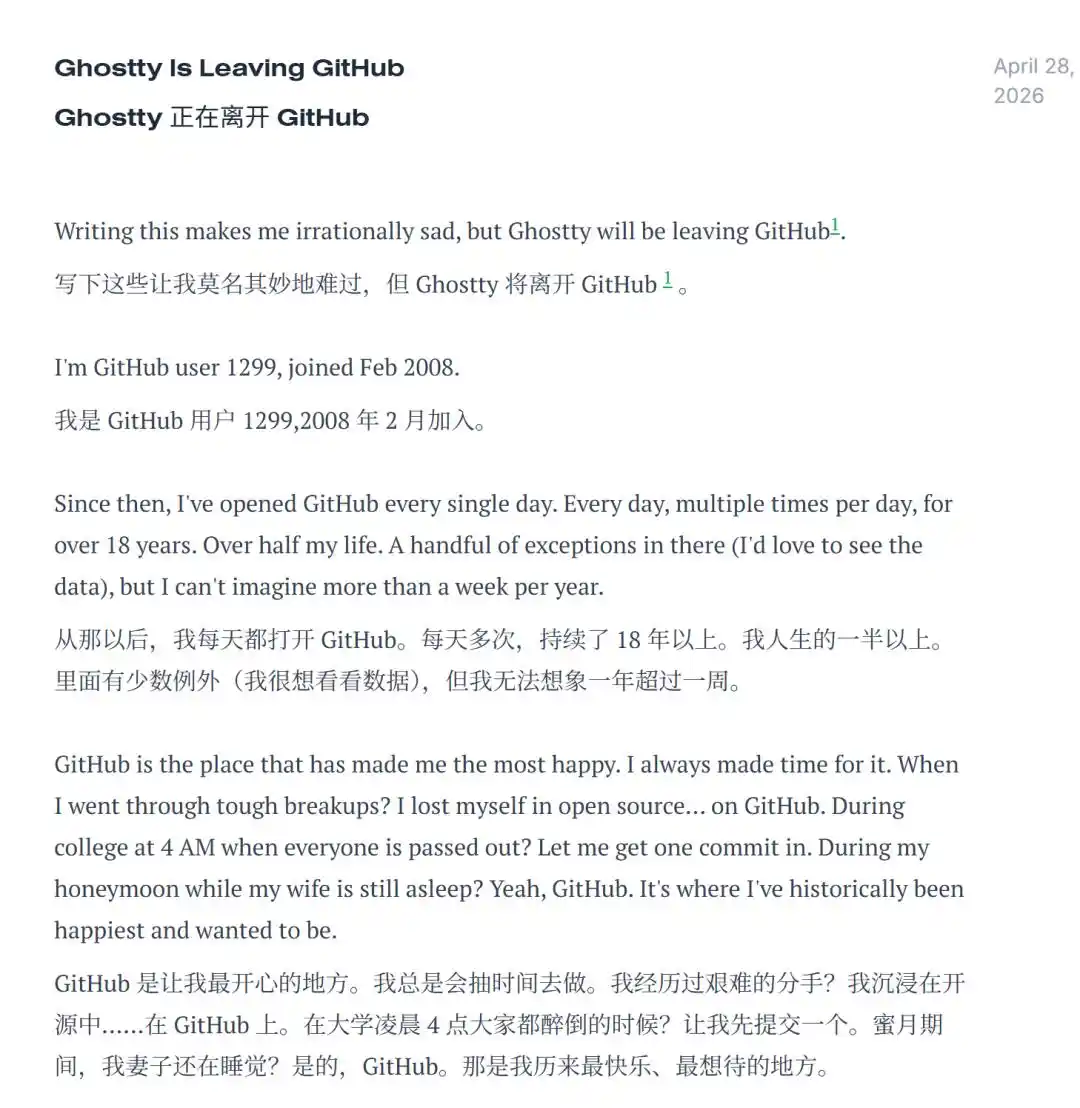
Mitchell Hashimoto, an 18-year veteran fan of GitHub and the famous developer of the Ghostty terminal, posted a sensational 'farewell letter' that went viral—every word bleeding with pain.

GitHub fails me every day.

I wish it were better, but I want to program more. I can no longer program using GitHub. I'm sorry, after 18 years, I have to go.

If a platform locks you out for hours every day, it is no longer suitable for serious work.

Subsequently, Ghostty packed up all its assets and decisively left.

His departure is just the tip of the iceberg in an avalanche.
GitHub's Life or Death

In recent months, giants like Citibank and Intel have expressed dissatisfaction to Microsoft over GitHub's ongoing failures. Even OpenAI has begun exploring self-built solutions.

To appease customers, Microsoft had to issue a large number of Credits to enterprise users as compensation for losses, leading directly to a bleeding of profits.

The most severe incident occurred last month: a mistakenly triggered, unreleased feature on GitHub caused numerous repositories to 'roll back,' with recent code modifications disappearing directly. Many enterprises have been forced to migrate.

Nearly eight years ago, when Microsoft acquired GitHub for $7.5 billion, global programmers were filled with concern.

As expected, after a brief golden period, this 'programmer's sanctuary'—hosting over 1.5 billion developers and 10 billion code repositories worldwide—now stands at a critical juncture of life or death in an extremely brutal manner.

3800+ Repositories 'Wiped Out' by Hackers

Even more serious, a recent security storm has completely stripped GitHub bare.

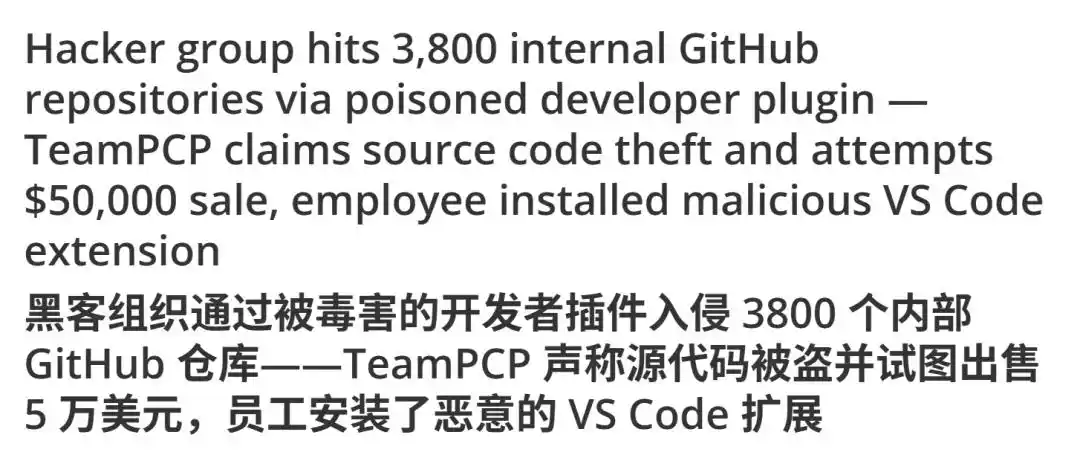
On May 21, 2026, a message instantly exploded on the hacker forum BreachForums: a hacker group openly offered GitHub's core source code for sale at a mere $50,000!
They arrogantly wrote:

Everything of the main platform is here. I would be happy to send samples to interested buyers for verification. This is not blackmail; we are too lazy to extort GitHub. If one person buys, we will completely destroy the data. If no buyer is found, we will soon make it public for free.
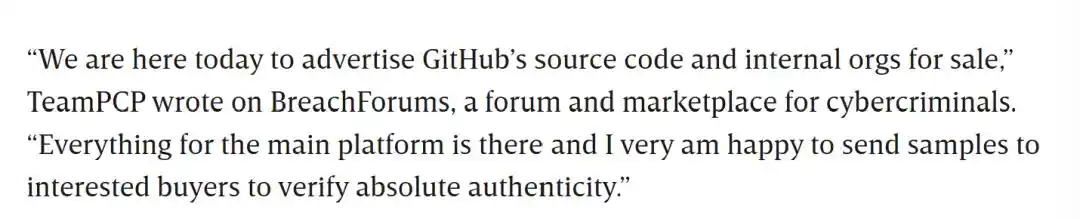
Subsequently, GitHub officially reluctantly confirmed: over 3,800 internal code repositories were indeed compromised.

The origin of this disaster is absurdly unbelievable: a GitHub internal developer installed a malicious, poisoned VS Code extension plugin on their work device. After credentials were leaked, over 3,800 repositories were breached.

VS Code and GitHub, both belonging to Microsoft, should have been a 'family ecosystem combination.' However, VS Code plugins lack high-intensity review mechanisms, making them the perfect entry point for hackers.

Because VS Code frequently prompts developers to install various plugins, these 'Trojan horses' can freely access local files, system terminals, etc.

When the GitHub engineer downloaded the malicious plugin, their long-term valid personal access token was instantly intercepted by the hackers!

For a platform built on 'code security and hosting,' having its source code publicly offered for sale is undoubtedly a resounding slap in the face.

This is just the tip of the iceberg.

In March of this year, security agencies discovered a 0-day-level critical vulnerability in GitHub's internal Git infrastructure.

If exploited, attackers could directly and unlimitedly access millions of public and private code repositories across the entire network, with consequences a hundred times more terrifying than this incident!

Management Shake-up: No More CEO, Reduced to a Microsoft Vassal

Behind the frequent security and technical incidents is GitHub's internal 'leaderless state' for nearly a year.

Last summer, the beloved former CEO Thomas Dohmke suddenly resigned. Microsoft then made a decision that shocked all employees: completely abolish the GitHub CEO position.

GitHub CEO Thomas Dohmke
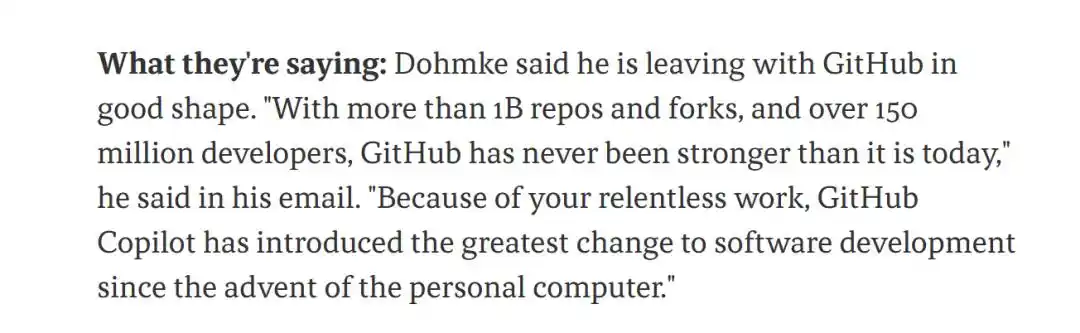
Dohmke thanked everyone: 'GitHub has never been stronger, with over 1 billion repositories and branches, and over 1.5 billion developers. It is thanks to your relentless efforts that GitHub Copilot has brought the biggest transformation in software development since the advent of the PC.'

For seven years, GitHub proudly maintained its status as an 'independent subsidiary.' But last summer, it was merged into the newly formed CoreAI team.

This drastic change directly pushed GitHub executives into an awkward position: they lost their direct line of communication with Microsoft's top leadership and were forced to report to Parikh, the head of the CoreAI team and former Meta executive.

However, Parikh is extremely unpopular internally. It was he who insisted on erasing the GitHub CEO position.

'There's basically no GitHub here anymore; it's now completely a department of Microsoft,' one senior employee angrily stated. 'Management and technical talent are fleeing madly.'

This was followed by a loss of top talent: former CEO Dohmke founded the next-generation developer platform Entire, poaching 11 people; 34-year veteran Julia Liuson resigned; Senior Vice President of Product Engineering Jared Palmer transferred to the Xbox team; the Chief Revenue Officer resigned.
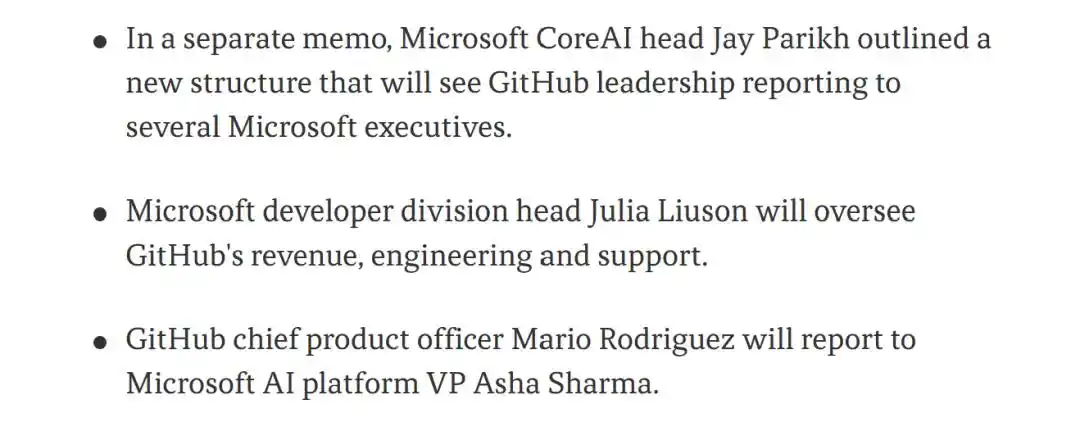
Current CTO Vladimir Fedorov aggressively promoted the project to migrate GitHub to Azure servers. This complex MySQL cluster relocation directly caused the chain of outages over the past year.

Thus, GitHub's R&D, finance, and marketing have been comprehensively strangled and devoured. Internally, there is division and discord, with the loss of technical backbone.

GitHub's once-proud 'pure developer culture' is being gnawed away by Microsoft's bureaucratic and powerful system!

Moat Breached: Cursor and Claude Code's Dimensional Reduction Strike

The external outages and internal turmoil have torn open huge cracks for predators.

Once, Copilot was almost synonymous with AI-assisted programming.

However, in 2024, Cursor emerged out of nowhere. While GitHub Copilot was still stuck in the 'you write a line, I guess the next line' code completion stage, Cursor could already understand the entire project context and generate entire modules with one click.

In 2025, Claude Code launched a dimensional reduction strike—it could not only write code but also automate complex debugging, testing, and multi-file collaborative modifications.

Microsoft was thrown into unprecedented panic internally. According to leaks, Jay Parikh warned with an ashen face in a meeting: GitHub is facing a 'death threat.'

Parikh's core fear is: once developers get used to completing all development in Cursor, they will no longer upload their code to GitHub.

To this end, Microsoft seriously evaluated acquiring Cursor but hesitated for a moment. In the blink of an eye, Cursor was snapped up by SpaceX.

What's even more amusing is that Claude Code is so incredibly good that tens of thousands of engineers in Microsoft's Windows and Office departments have all become die-hard fans of CC. Microsoft executives were completely broken!

Rajesh Jha issued a strict order to all staff, forcibly revoking all CC licenses by the end of June and forcing engineers to revert to using GitHub Copilot CLI.

Financial Avalanche: The 'Subsidy Black Hole' of Making More Money, Losing More Money

Moreover, GitHub's commercial operations are also deeply mired, even starting to backfire on Microsoft.

On the surface, GitHub's data still looks impressive. By the end of 2025, Copilot paid users surpassed 4.7 million, and GitHub's annual recurring revenue crossed the $3 billion threshold.
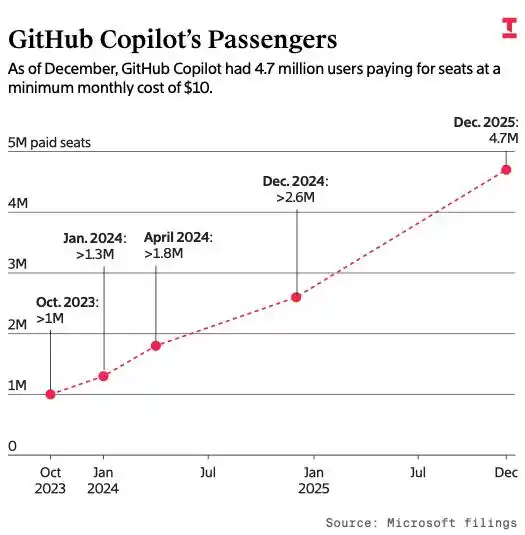
But behind the pretty numbers, it's all Microsoft's blood.

With the AI explosion, GitHub traffic surged 14 times. However, AI features for code hosting and open-source projects remain completely free.

Meanwhile, the inference costs for running AI models remain high. The computing power consumed by heavy users far exceeds the $10 monthly subscription fee—the more they sell, the more they lose.

During Microsoft's earnings call in April this year, the CFO rarely admitted: the significant increase in GitHub Copilot usage directly lowered the gross margin of the entire core cloud business.

Under pressure from Wall Street, GitHub announced last month: abolish the unlimited monthly usage model and fully transition to 'pay-as-you-go.' Once credits are depleted, AI services are immediately cut off.

This move, perceived as greedy, completely infuriated developers!

The global IT services giant NinjaOne immediately publicly stated: they are comprehensively guiding engineers to abandon GitHub and turn to the Claude Code ecosystem.

Will GitHub Die?

This year, Microsoft's stock price has fallen by over 10%, performing the worst among the 'Magnificent Seven' tech stocks.

Its developer ecosystem cornerstone, GitHub, is pushing everything toward the abyss.

To break free from dependence on OpenAI and Anthropic, CoreAI has ordered the comprehensive collection of all code to train Microsoft's own native large model.

This practice of recklessly depleting the ecosystem for its own benefit has completely chilled developers worldwide.

The trust of the open-source community, the neutral ecological environment, and the free, pure developer culture are rapidly vanishing from this $7.5 billion behemoth.

Now, the most fatal question facing Satya Nadella is: In the era of AI agents, do global developers still need a central code repository platform like GitHub?

If Microsoft cannot provide a convincing answer, it will lose the soul it has cultivated around its ecosystem for decades—

'Developers, developers, developers!'

References:

https://www.theverge.com/tech/935250/microsoft-github-struggles-notepadhttps://mitchellh.com/writing/ghostty-leaving-githubhttps://www.wired.com/story/teampcp-software-supply-chain-attack-spree-github/?utm_source=chatgpt.com

This article comes from the WeChat public account "Xinzhiyuan," author: ASI Revelation.

Трендовые криптовалюты

Связанные с этим вопросы

QWho is Mitchell Hashimoto and what significant action did he take regarding GitHub?

AMitchell Hashimoto is the developer of the Ghostty terminal and a long-time GitHub user. He recently announced his departure from the platform, citing frequent outages that prevented serious work, and moved the Ghostty project assets away from GitHub.

QWhat major security incident involving GitHub's source code is detailed in the article?

AA hacker group breached and stole the source code for over 3,800 of GitHub's internal repositories. The breach originated from a GitHub engineer installing a malicious VS Code extension, which compromised their credentials, allowing the hackers to access and later attempt to sell the code.

QHow has Microsoft's internal restructuring impacted GitHub's leadership?

AMicrosoft disbanded GitHub's independent subsidiary status and merged it into the CoreAI team. The CEO position was eliminated, and GitHub's leadership now reports to the CoreAI head, Jay Parikh, leading to a loss of autonomy, internal dissatisfaction, and a significant exodus of senior talent.

QWhat competitive threats to GitHub Copilot are mentioned, and what was Microsoft's internal reaction?

AThe article cites Cursor and Claude Code as major competitive threats, offering more advanced AI-assisted programming features. Microsoft was internally alarmed, with executives describing it as an 'existential threat.' Notably, many Microsoft engineers preferred using Claude Code, prompting management to forcibly revoke its licenses within the company.

QWhat financial and operational challenges is GitHub facing according to the article?

AGitHub is struggling with profitability despite high revenue. The massive computational costs of running free AI features like Copilot exceed subscription income, negatively impacting Microsoft's cloud margins. In response, GitHub shifted from a flat-rate subscription to a pay-as-you-go model, which angered many developers and prompted some companies to consider alternatives.

Похожее

Благодаря броскам кубиков ключи от биткоинов хранятся в автономном режиме, но не все будут этим заниматься

Статья посвящена практике генерации сид-фраз для биткоин-кошельков с помощью бросков кубиков в свете уязвимости, обнаруженной в аппаратных кошельках Coldcard. Подчеркивается, что физический бросок кубика (дающий около 2.6 бит энтропии за бросок) создает высококачественную случайность, поскольку предсказать результат практически невозможно из-за множества переменных. Для создания стандартной сид-фразы из 12 слов (128 бит энтропии) требуется около 50 бросков, а для повышенной безопасности рекомендуется 99 и более. В связи с инцидентом Coldcard, когда неисправный генератор случайных чисел в прошивке (2021-2026 гг.) мог создавать предсказуемые ключи, выяснилось, что сид-фразы, сгенерированные вручную через кубики, были защищены от этой уязвимости. Однако исследование показало, что другие функции устройства (создание бумажных кошельков, ключей для мультиподписи, паролей и т.д.) по-прежнему использовали скомпрометированный генератор, подвергая риску владельцев даже с безопасной основной сид-фразой. Автор отмечает, что, хотя метод с кубиками криптографически надежен, он непрактичен для массового использования из-за трудоемкости, высокой вероятности ошибок при вводе и необходимости строгой дисциплины для сохранения секретности процесса. Делается вывод, что будущее безопасности лежит в создании надежных аппаратных генераторов случайных чисел и понятных интерфейсов, а ручные методы остаются нишевым инструментом для опытных пользователей. Владельцам Coldcard рекомендуется обновить прошивку и проверить/заменить все ключи, сгенерированные уязвимыми функциями.

cryptonews.ru2 ч. назад

Благодаря броскам кубиков ключи от биткоинов хранятся в автономном режиме, но не все будут этим заниматься

cryptonews.ru2 ч. назад

Майкл Сэйлор заявил, что стало невозможно принять обновление биткойна, против которого он выступал!

Майкл Сэйлор заявил, что обновление BIP-110 для Bitcoin не сможет достичь необходимого порога в 55% добровольной поддержки майнеров в текущем цикле сложности. Согласно его данным, из 946 блоков, сгенерированных к настоящему моменту, только 24 содержали сигнал поддержки этого предложения, и все они исходили от майнеров DATUM через пул OCEAN. Сэйлор подчеркивает, что отсутствие сигналов от других майнеров означает отсутствие общего консенсуса. BIP-110 — это предложение, направленное на ограничение внесения в блокчейн Bitcoin данных, не связанных непосредственно с денежными переводами (например, изображений или текста). Сэйлор выступает против него, считая, что сеть не должна решать, какие транзакции являются «нужными», а правила не должны меняться по желанию небольшой группы. Он также утверждает, что заявленный уровень поддержки может быть искусственно завышен из-за автоматизированных процессов сигнализации.

cryptonews.ru2 ч. назад

Майкл Сэйлор заявил, что стало невозможно принять обновление биткойна, против которого он выступал!

cryptonews.ru2 ч. назад

Количество негативных комментариев о биткоине достигло исторического максимума: что это значит?

Аналитическая компания Santiment сообщает, что негативные комментарии о биткоине в социальных сетях достигли исторического максимума. Соотношение позитивных и негативных упоминаний упало до рекордно низкого уровня: на каждый негативный комментарий приходится лишь 0,58 позитивных. Основной причиной роста негатива стала уязвимость в прошивке аппаратных кошельков Coldcard, что подорвало доверие к системам холодного хранения, традиционно считающимся наиболее безопасными. В отличие от прошлых кризисов (таких как крах FTX или Mt. Gox), текущие обсуждения сфокусированы на безопасности аппаратных решений, а не на централизованных биржах. По данным Santiment, текущий уровень паники в социальных сетях даже превышает пики, зафиксированные во время событий этого года, связанных с геополитической напряженностью, и во время прошлых крупных криптовалютных кризисов. Таким образом, страх на рынке исторически значительно превосходит жадность. Компания подчеркивает, что данные пока отражают ситуацию лишь за один день.

cryptonews.ru3 ч. назад

Количество негативных комментариев о биткоине достигло исторического максимума: что это значит?

cryptonews.ru3 ч. назад

SUI стоит на пороге нового прорыва, поскольку «быки» нацелены на рост до 20 долларов

1 августа состоялась плановая разблокировка около 13,72 млн токенов SUI на сумму ~$9,9 млн, что увеличило циркулирующее предложение примерно на 0,34%. Выпуск осуществляется через постепенный ежедневный вестинг, что смягчает давление на рынок. Несмотря на это событие и общее снижение на крипторынке, в результате которого цена SUI упала до ~$0,68, некоторые аналитики, например CryptoPatel, видят в текущем диапазоне $0,50-$0,70 зону накопления для долгосрочного роста с перспективой целей до $20. Фундаментальные показатели сети остаются сильными: недавно был запущен токенизированный фонд Mubadala Capital, доступный в том числе на Sui, а также тестнет Hashi для использования Bitcoin в качестве залога. Снижение цены связывают главным образом с увеличением предложения и общей рыночной коррекцией, а не с проблемами в протоколе.

cryptonews.ru4 ч. назад

SUI стоит на пороге нового прорыва, поскольку «быки» нацелены на рост до 20 долларов

cryptonews.ru4 ч. назад

Blackrock и Fidelity возглавляют отток средств из биткоин-ETF на сумму 265 млн долларов на фоне роста курса эфира

31 июля спотовые биткоин-ETF в США зафиксировали значительный чистый отток средств в размере 265,4 млн долларов. Основной объём выводов пришёлся на фонды лидеров рынка: IBIT от Blackrock (122,7 млн долларов) и FBTC от Fidelity (54,8 млн долларов). Это произошло после дня сильного притока 30 июля, когда те же ETF привлекли 233,1 млн долларов, что подчёркивает высокую волатильность потоков. В то же время спотовые ETF на эфир (Ethereum) продемонстрировали противоположную динамику с чистым притоком около 9,03 млн долларов, причём продукт Blackrock ETHA лидирует уже несколько дней. Эта дивергенция указывает на смещение части институционального интереса в сторону альткойнов, возможно, из-за восприятия роли эфира в токенизации и расчётах. Отток 31 июля соответствует более широкой тенденции: второй квартал 2026 года стал третьим подряд кварталом чистого вывода средств из биткоин-ETF. На настроения инвесторов влияет общая регуляторная неопределённость в США и волатильность цены биткоина. Поскольку IBIT остаётся крупнейшим фондом, его ежедневные потоки, вероятно, будут задавать тон рынку в ближайшее время.

cryptonews.ru4 ч. назад

Blackrock и Fidelity возглавляют отток средств из биткоин-ETF на сумму 265 млн долларов на фоне роста курса эфира

cryptonews.ru4 ч. назад

Торговля

Спот

Популярные статьи

Как купить OP

Добро пожаловать на HTX.com! Мы сделали приобретение Optimism (OP) простым и удобным. Следуйте нашему пошаговому руководству и отправляйтесь в свое крипто-путешествие.Шаг 1: Создайте аккаунт на HTXИспользуйте свой адрес электронной почты или номер телефона, чтобы зарегистрироваться и бесплатно создать аккаунт на HTX. Пройдите удобную регистрацию и откройте для себя весь функционал.Создать аккаунтШаг 2: Перейдите в Купить криптовалюту и выберите свой способ оплатыКредитная/Дебетовая Карта: Используйте свою карту Visa или Mastercard для мгновенной покупки Optimism (OP).Баланс: Используйте средства с баланса вашего аккаунта HTX для простой торговли.Третьи Лица: Мы добавили популярные способы оплаты, такие как Google Pay и Apple Pay, для повышения удобства.P2P: Торгуйте напрямую с другими пользователями на HTX.Внебиржевая Торговля (OTC): Мы предлагаем индивидуальные услуги и конкурентоспособные обменные курсы для трейдеров.Шаг 3: Хранение Optimism (OP)После приобретения вами Optimism (OP) храните их в своем аккаунте на HTX. В качестве альтернативы вы можете отправить их куда-либо с помощью перевода в блокчейне или использовать для торговли с другими криптовалютами.Шаг 4: Торговля Optimism (OP)С легкостью торгуйте Optimism (OP) на спотовом рынке HTX. Просто зайдите в свой аккаунт, выберите торговую пару, совершайте сделки и следите за ними в режиме реального времени. Мы предлагаем удобный интерфейс как для начинающих, так и для опытных трейдеров.

875 просмотров всегоОпубликовано 2024.03.29Обновлено 2026.06.02

Как купить OP

Обсуждения

Добро пожаловать в Сообщество HTX. Здесь вы сможете быть в курсе последних новостей о развитии платформы и получить доступ к профессиональной аналитической информации о рынке. Мнения пользователей о цене на OP (OP) представлены ниже.

活动图片