Jensen Huang is Satoshi Nakamoto

marsbitОпубликовано 2026-03-19Обновлено 2026-03-19

Введение

Summary: The article draws a compelling parallel between Jensen Huang, CEO of NVIDIA, and Satoshi Nakamoto, the pseudonymous creator of Bitcoin. It argues that both figures, though operating in different eras, fundamentally architected new "token economies" based on a core conversion rule: inputting computational power (electricity) to output a valuable token. Nakamoto's 2008 whitepaper defined a system where Proof-of-Work mining produces scarce cryptographic tokens, creating a decentralized "faith economy" based on speculative value. In 2026, Huang is portrayed as performing a structurally identical act at GTC. Instead of merely selling GPUs, he presented a complete "token economics" framework, segmenting the market into tiers (Free, Medium, High, Premium, Ultra) based on inference speed, model type, and price per million tokens. He defined valuable computation for the AI age. The key distinction lies in the tokens' purpose and resulting scarcity. Crypto tokens derive value from artificial, code-enforced scarcity (e.g., Bitcoin's 21 million cap) and are meant to be held. AI tokens derive value from their immediate consumption for productive tasks (coding, decision-making) and face a natural, physical scarcity governed by the laws of thermodynamics, land, and power grids, which Huang's hardware is designed to maximize. Ultimately, while Nakamoto created a speculative asset, Huang is building an indispensable utility. The AI token economy, powered by NVIDIA ecosystem, is ar...

Author: Luo Yihang

In January 2009, an anonymous individual invented something called a "token." You invest computing power, obtain tokens, and these tokens circulate, are priced, and traded within a consensus network. The entire crypto economy was born from this. Over a decade later, people are still debating whether this token has any value.

In March 2025, a man in a leather jacket redefined another thing called a "token." You invest computing power, produce tokens, and these tokens are instantly consumed in an AI inference (inference & reasoning) process: thinking, reasoning, writing code, making decisions. The entire AI economy is accelerating because of this. No one debates whether this token has value because you just used millions of them this morning.

Two types of tokens, the same name, the same underlying structure: computing power goes in, something valuable comes out.
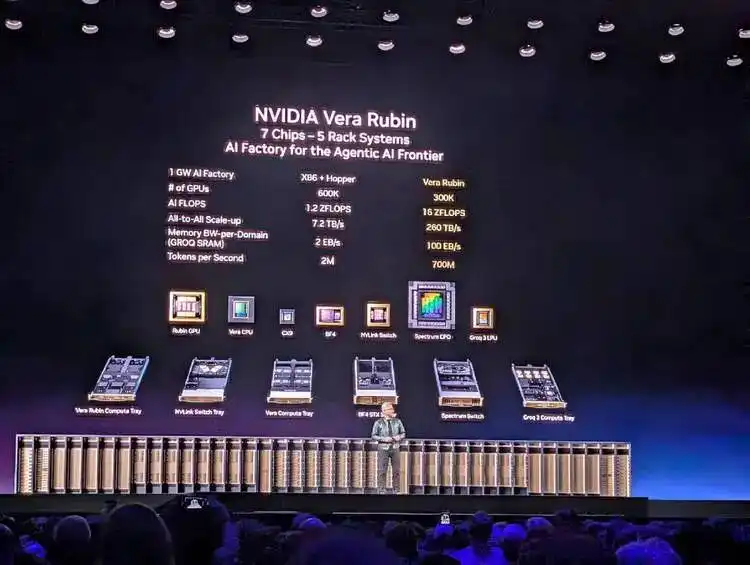
In March 2026, I sat in the NVIDIA GTC venue and listened to Jensen Huang deliver a keynote speech with almost no product promotion. Yes, he unveiled Vera Rubin, a product combining CPU and GPU. But this time, he didn't talk about chip specifications or manufacturing processes; he talked about a complete economics of token production, pricing, and consumption:

Which model corresponds to which token speed; which token speed corresponds to which price range; which price range requires what level of hardware to support.

He even prepared data center computing power allocation plans for the CEOs and decision-makers holding the corporate checkbooks in the audience: 25% for the free tier, 25% for mid-tier, 25% for high-end, 25% for the high-premium tier.

Yes, this time he wasn't specifically selling a particular GPU group, like he did with Blackwell two years ago. But this time, he was selling something bigger. After two hours, I felt the sentence he most wanted to say was: Welcome to consume tokens, and only Nvidia's factory could produce.

At that moment, I realized that this man was doing something structurally identical to what that anonymous person did 17 years ago when he mined the first token.

The Same Conversion Rules

The anonymous individual using the pseudonym "Satoshi Nakamoto" wrote a nine-page white paper in 2008, designing a set of rules: invest computing power, complete a mathematical proof (Proof of Work), and receive a crypto token as a reward.

The brilliance of this rule lies in the fact that it doesn't require anyone to trust anyone else—as long as you accept these rules, you automatically become a participant in this economy. The rule is correct; after all, it brought so many deceitful people together.

And Jensen Huang, on the stage at GTC 2026, did something structurally identical.

He showed a chart illustrating the relationship and tension between inference efficiency and token consumption: the Y-axis is throughput (tokens produced per megawatt of power), the X-axis is interactivity (token speed perceived per user). Then, he labeled five pricing tiers below the X-axis: Free uses Qwen 3, $0/million tokens; Medium uses Kimi K2.5, $3/million tokens; High uses GPT MoE, $6/million tokens; Premium uses GPT MoE 400K context, $45/million tokens; and Ultra, $150/million tokens.

This chart could almost serve as the cover of Jensen Huang's "token economics" white paper.
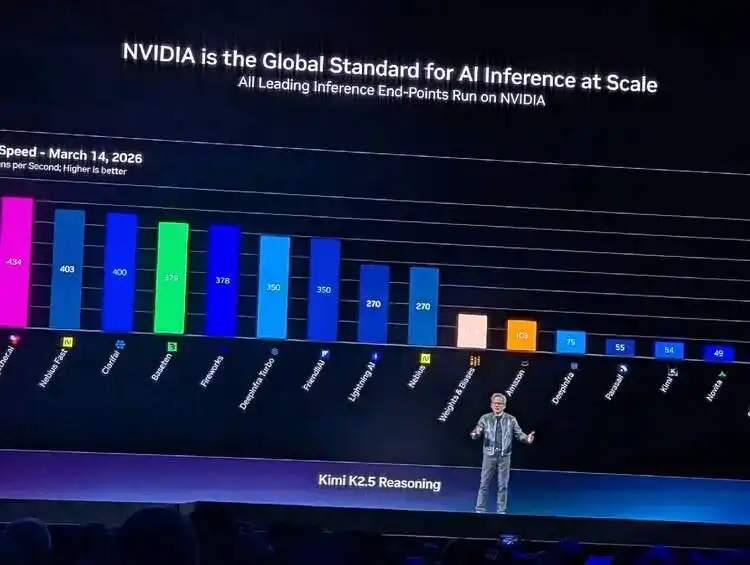
Satoshi defined "what constitutes valuable computation"—completing an SHA-256 hash collision was valuable. Jensen Huang defined "what constitutes valuable inference"—producing tokens for a specific scenario at a specific speed under given power constraints is valuable.

Neither Satoshi Nakamoto nor Jensen Huang directly produced tokens; they both defined the rules for token production and the pricing mechanism.

A sentence Huang said on stage could almost be written directly into the abstract of a token economics white paper—

Tokens are the new commodity, and like all commodities, once it reaches an inflection, once it becomes mature, it will segment into different parts.

Token is the new commodity. Commodities naturally stratify once they mature. He wasn't describing the status quo; he was predicting a market structure and then precisely laying out his hardware product line across every layer of this structure.

The production processes of the two types of tokens even have a semantic symmetry: mining is called mining, inference is called inference.

The essence of both mining and inference is turning electricity into money. Miners spend electricity costs to mine crypto tokens and then sell them. Inference models and AI Agents spend electricity costs to generate AI tokens and then sell them to developers priced per million. The middle steps are different, but the two ends are the same: on the left is the electricity meter, on the right is revenue.

Two Ways to Write Scarcity

The most important design decision Satoshi Nakamoto made was not Proof of Work, but the 21 million Bitcoin supply cap. He used code to create artificial scarcity—no matter how many mining rigs flood in, the total number of Bitcoins will never exceed 21 million. This scarcity is the value anchor of the entire crypto economy.

And Jensen Huang created natural scarcity using physical laws. He said:

"You still have to build a gigawatt data center. You still have to build a gigawatt factory, and that one gigawatt factory for 15 years amortized... is about $40 billion even when you put nothing on it. It's $40 billion. You better make for darn sure you put the best computer system on that thing so that you can have the best token cost."

A 1GW data center will never become 2GW. This isn't a code limitation; it's a law of physics.

Land, electricity, cooling—each has a physical limit. How many tokens this factory you built for $40 billion can produce over its 15-year lifecycle depends entirely on what computing architecture you put inside it.
Satoshi's scarcity can be forked. If you don't like the 21 million cap, fork a new chain, change it to 200 million, call it Ether or whatever, and issue a white paper. And people did just that, with great relish.

But the scarcity Huang creates cannot be forked. After all, you can't fork the second law of thermodynamics, you can't fork a city's power grid capacity, you can't fork the physical area of a piece of land.

But whether it's Satoshi Nakamoto or Jensen Huang, the scarcity they created led to the same result: a hardware arms race.

The history of mining is: CPU→GPU→FPGA→ASIC. Each generation of specialized hardware rendered the previous generation obsolete. And the history of AI training and inference is replaying: Hopper→Blackwell→Vera Rubin→Groq LPU. Start with general-purpose hardware, settle with specialized hardware. The Groq LPU showcased by Huang at this year's GTC, the deterministic dataflow processor released after acquiring Groq. Static compilation, compiler scheduling, no dynamic scheduling, 500MB on-chip SRAM—its architectural philosophy is the ASIC of the inference field. Do one thing, but do it to the extreme.

Interestingly, GPUs played a key role in both waves.

Around 2013, miners found that GPUs were more suitable for mining crypto tokens than CPUs, and NVIDIA graphics cards were sold out. 10 years later, researchers found that GPUs are the best tool for training and inferring AI models, and NVIDIA data center cards were sold out again. GPU, as a processor category, has successively served two generations of token economies.

The difference is, the first time NVIDIA benefited passively, and that was it. The second time, as the main battlefield of AI computing consumption shifted from pre-training to inference, NVIDIA quickly seized the opportunity to actively design the entire game, becoming the writer of the AI rules of the game.

The World's Most Profitable Shovel Seller

In the gold rush, the most profitable weren't the gold miners, but the shovel seller Levi Strauss. In the mining boom, the most profitable weren't the miners, but the mining machine seller Bitmain and Jihan Wu. In the AI pre-training and inference wave, the most profitable aren't the foundation models and Agents, but the GPU seller NVIDIA.

But honestly, the roles of Bitmain and NVIDIA in their respective industries are no longer comparable.

Bitmain only sold mining machines; NVIDIA was even a supplier to Bitmain. You bought a mining machine, what coin to mine, which mining pool to join, at what price to sell, all had nothing to do with Bitmain. It was a pure hardware supplier, earning one-time equipment profits.

NVIDIA is different. He doesn't just sell hardware; now, especially since the explosion of inference-side AI in 2025, he deeply defines what should be mined with this GPU, how to price tokens, who to sell tokens to, how data center computing power should be allocated... All of this is in Huang's presentation PPT: he divides the market into five tiers, each tier corresponding to which model, context length, interaction speed, and price... NVIDIA has standardized and formatted the future market driven by AI inference.

Around 2018, global computing power was concentrated in a few large mining pools—F2Pool, Antpool, BTC.com—they competed for computing power share, but the source of mining machines was highly concentrated in Bitmain.

Just like NVIDIA today, 60% of revenue comes from competing "hyperscalers" like AWS, Azure, GCP, Oracle, CoreWeave, while 40% comes from dispersed AI Natives, sovereign AI projects, and enterprise customers. Large "mining pools" contribute the main revenue, small "miners" provide resilience and diversification.

The structure of the two ecosystems is exactly the same. But Bitmain later encountered competitors—MicroBT, Innosilicon, Canaan—all eating into its share. Mining machines are relatively simple ASIC designs, so followers had a chance. But shaking NVIDIA seems increasingly difficult: 20 years of CUDA ecosystem, hundreds of millions of GPU install base, six generations of NVLink interconnect technology, the decoupled inference architecture after the Groq integration—NVIDIA's technical complexity and ecosystem barriers have rendered most competitive tools ineffective.

This might last for 20 years.

The Fundamental Fork of Two Tokens

What makes cryptocurrency and AI training/inference tokens fundamentally different is the motivation and psychology of their users.

The demand side for Crypto tokens is speculation. No one "needs" Bitcoin to get work done. All white papers claiming blockchain tokens can solve your problems were written by scammers. You hold crypto because you believe someone will buy it from you at a higher price in the future. Bitcoin's value comes from a self-fulfilling prophecy: if enough people believe it has value, it has value. This is the faith economy.

The demand side for AI tokens is productivity. Nestlé needs tokens to make supply chain decisions—its supply chain data refresh rate went from every 15 minutes to every 3 minutes, costs reduced by 83%; this value can be directly mapped to the P&L. 100% of NVIDIA engineers already need tokens to write code instead of hand-coding; research teams need tokens for scientific research. You don't need to believe tokens have value; you just need to use them, and the value proves itself in use.

This is the most essential difference between the two tokens. Crypto tokens are produced to be held and traded—their value lies in not being used. AI tokens are produced to be consumed immediately—their value lies in the moment they are used.

One is digital gold, more valuable the more you hoard it; the other is digital electricity, produced to be burned.

This difference determines that: the AI token economy will not become as bubble-prone as the crypto token economy. Bitcoin rises and falls sharply because the price of a speculative item is driven by sentiment. But the price of [AI] tokens is driven by usage volume and production cost. As long as AI remains useful—as long as people are still using Claude Code to write code, using ChatGPT to write reports, using Agents to run business processes—the demand for tokens won't collapse. It doesn't rely on faith; it relies on being indispensable.

In 2008, the Bitcoin white paper needed to repeatedly argue why a decentralized electronic cash system was valuable. 17 years later, people are still arguing.

In 2026, token economics did not引发 any debate; it didn't even need论证 and became consensus. When Huang stood on the GTC stage and said "tokens are the new commodity," no one questioned it. Because everyone sitting in the audience had used Claude Code or ChatGPT to consume millions of tokens this morning. They didn't need to be convinced that tokens have value—their credit card bills had already proven it.

In this sense, Huang really is a副本 of Satoshi Nakamoto, the副本 that stayed behind to monopolize mining machine production, defined the usage scenarios and norms for tokens, and holds an annual show at the San Jose SAP Center telling people how powerful the next generation of "mining machines" supporting AI training and inference will be.

Satoshi Nakamoto had a charm of cautious desire; he designed the rules, handed them over to the code, and then disappeared. This is cypherpunk romance. And Huang is more of a businessman than any scientist; he designed the rules, maintains them personally, constantly adds bricks and tiles, and solidifies his moat.

The token you used to see because you believed, now you can see without believing. It is the next one after Watt, Ampere, Bit.


Связанные с этим вопросы

QWhat is the core similarity between Satoshi Nakamoto's crypto token and Jensen Huang's AI token as described in the article?

ABoth involve a fundamental structure where computational power (electricity and hardware) is converted into valuable tokens. In crypto, proof-of-work mining produces tokens for a decentralized financial network, while in AI, inference computation produces tokens for immediate consumption in tasks like reasoning and decision-making.

QHow does Jensen Huang's 'token economics' define the value of AI tokens, according to the article?

AHuang defines the value of AI tokens based on the efficiency of their production—how many tokens can be generated per megawatt of power at specific speeds (latency) for different pricing tiers (e.g., free, medium, high, premium, ultra), correlating directly with the computational hardware and model used.

QWhat is the key difference in how scarcity is created between Bitcoin tokens and AI tokens, as per the article?

ABitcoin's scarcity is artificial and code-enforced, with a fixed supply limit of 21 million coins, which can be forked and altered. AI token scarcity is natural and physics-bound, limited by real-world constraints like land, electricity, cooling, and the fixed capacity of data centers (e.g., a 1GW facility's output is capped by its hardware efficiency).

QWhy does the article claim that AI token economics is less prone to bubbles compared to crypto token economics?

ACrypto tokens derive value from speculation and belief, with prices driven by sentiment and trading, leading to volatility. AI tokens derive value from immediate productivity and utility (e.g., coding, decision-making), with demand anchored in real-world use cases and cost of production, making them more stable and less bubble-prone.

QHow has Nvidia's role evolved from the crypto mining era to the AI era, as highlighted in the article?

ADuring the crypto era, Nvidia was a passive beneficiary as GPUs were used for mining, but it did not define the ecosystem. In the AI era, Nvidia actively shapes the market by designing the rules—hardware, token pricing tiers, data center allocation, and inference architectures—becoming the central rule-maker and infrastructure provider for AI token production.

Похожее

После трёх кварталов падения: получится ли у крипторынка стабилизироваться в третьем квартале?

Криптовалютный рынок пережил худший квартал с 2022 года, общая капитализация упала на 12,6% до $2,1 трлн, а дневные объемы торгов снизились на 20,9%. Впервые за три года сократилась и капитализация стейблкоинов. Основные факторы спада — отток средств из биткоин-ETF, распродажа биткоинов корпоративным казначейством Strategy и ужесточение монетарной политики ФРС. Второй квартал завершился чистым оттоком $46,7 млрд из ETF, при этом в июне отток достиг рекордных $45 млрд. Ключевым событием третьего квартала станет заседание ФРС 28–29 июля. Мягкий сигнал может поддержать биткоин в диапазоне $68 000–84 000 и вернуть приток в ETF, тогда как жесткая риторика способна сместить торговый диапазон к $50 000–56 000. Законодательная неопределенность также давит на рынок: прогресс по закону CLARITY Act, определяющему регуляторные границы, замедлился, и вероятность его принятия в 2026 году упала до 40–45%. Несмотря на общий спад, два сегмента показали рост: объемы на рынках предсказаний выросли на 48,7%, а торговля токенизированными коллекционными предметами увеличилась на 143%. Сектор RWA продолжает стабильно развиваться, достигнув $28,1 млрд. Рынок, вероятно, миновал фазу острой распродажи, но для устойчивого восстановления необходимы ясность от ФРС и регуляторный прогресс.

marsbit12 ч. назад

После трёх кварталов падения: получится ли у крипторынка стабилизироваться в третьем квартале?

marsbit12 ч. назад

BIT Торговые часы: BTC по-прежнему под давлением 200 EMA на недельном графике, после отскока возможен перезапуск нисходящего движения; секторы хранения данных и полупроводников, выросшие ночью, начали падение в вечерней сессии

**Краткий обзор рынка: BTC под давлением, коррекция на рынке акций, внимание к данным и событиям** Рынок криптовалют демонстрирует осторожное восстановление. Bitcoin торгуется около $66 000, сталкиваясь со значительным сопротивлением в районе $68 000, где сосредоточены объемные "застрявшие" позиции. Ключевые технические уровни — 200-недельная скользящая средняя (~$63 333) и 200-недельная EMA (~$68 328). Аналитики отмечают низкую ликвидность, характерную для летнего периода. На фондовом рынке после сильного роста во вторник наблюдается коррекция. Фьючерсы на основные индексы США снижаются. Акции полупроводниковой и памяти, которые резко выросли накануне, падают в ночных торгах. Исключением стал SMCI, который вырос более чем на 15% после оптимистичного прогноза. На общий настрой негативно влияют рост цен на нефть (более $91 за баррель Brent) и доходности государственных облигаций США (10-летние — около 4,64%), что возрождает инфляционные опасения. Азиатские рынки показали нестабильную динамику. Индекс KOSPI в Корее вырос на 0,74%, а японский Nikkei 225 снизился на 0,18%. Основной риск для региона — ослабление японской иены до минимумов с 1986 года, что повышает вероятность вмешательства властей. **Ключевые события для наблюдения:** * **24 июля:** Финансовые отчеты Alphabet (Google), Tesla, IBM. Событие AMD, посвященное ИИ. * **25 июля:** Решение по процентной ставке ЕЦБ и пресс-конференция Кристин Лагард. Финансовые отчеты Intel, American Airlines, Honeywell и других. Данные по числу первичных заявок на пособие по безработице в США.

marsbit12 ч. назад

BIT Торговые часы: BTC по-прежнему под давлением 200 EMA на недельном графике, после отскока возможен перезапуск нисходящего движения; секторы хранения данных и полупроводников, выросшие ночью, начали падение в вечерней сессии

marsbit12 ч. назад

Бывший глава CFTC и президент Circle Тарберт: призывает к долгосрочной стратегии, но сам выводит $30 млн

Бывший председатель CFTC и президент Circle Хит Тарберт, публично пропагандируя долгосрочное видение компании для инвесторов на фоне падения акций на 70% с пиковых значений, сам активно распродавал свои акции CRCL. С момента IPO Circle он по плану 10b5-1 продал более 360 тысяч акций, выручив около 30 миллионов долларов, и при этом ни разу не докупал акции на открытом рынке. Эта разница между его публичными заявлениями и личными действиями вызвала критику. Карьера Тарберта демонстрирует классическое использование «вращающейся двери» между регулирующими органами и частным сектором. Уйдя с поста председателя CFTC в 2021 году, через 27 дней он занял должность главного юрисконсульта в маркет-мейкере Citadel Securities, который в тот момент находился под пристальным вниманием из-за скандала с акциями GameStop. Позже, уже работая в Citadel, Тарберт выступал за расширение полномочий CFTC на крипторынок, в то время как его работодатель планировал выход на этот рынок. В 2023 году Тарберт присоединился к Circle, где его опыт и связи сыграли ключевую роль в успешном проведении IPO компании в 2025 году. Однако его последующие массовые продажи акций, совпавшие с падением котировок и его же призывами к долгосрочным инвестициям, ставят под сомнение искренность его уверенности в будущем компании. Критики видят в его карьере образец превращения регуляторного опыта и политических связей в личную выгоду, в то время как риски несут обычные инвесторы, верящие его нарративам.

marsbit12 ч. назад

Бывший глава CFTC и президент Circle Тарберт: призывает к долгосрочной стратегии, но сам выводит $30 млн

marsbit12 ч. назад

Gate Research: Взлет «уолл-стритизации» криптофинансовых продуктов — это конкуренция или интеграция?

**Аналитический обзор Gate Research Institute: Волна "уолл-стритизации" криптофинансовых продуктов — конкуренция или интеграция?** Создание биткоина в 2009 году было ответом на финансовый кризис и стремлением построить децентрализованную систему без доверенных посредников. Однако к 2026 году значительная часть биткоинов (около 7,14%) хранится через ETF таких гигантов, как BlackRock. Это символизирует глубокую интеграцию традиционных финансов (TradFi) и крипторынка. С появлением биткоин-ETF, фьючерсов, RWA (токенизированных реальных активов) и государственных облигаций на блокчейне, традиционные институты получают всё больше влияния на выпуск, ценообразование, кастодию и дистрибуцию криптоактивов. Однако это не одностороннее поглощение, а взаимодополняющая конвергенция. Криптосфера приносит TradFi глобальную 24/7 ликвидность и программируемость, а TradFi предоставляет криптосфере регулируемые каналы, институциональное доверие и массовый доступ. Яркий пример — две противоположные, но ведущие к одной цели траектории: * **Путь А:** Криптобиржи, такие как Gate, начинают с токенизированных акций и CFD, а затем напрямую подключаются к инфраструктуре традиционных брокеров, предлагая реальную торговлю акциями США, Гонконга и Кореи за стейблкоины. * **Путь Б:** Традиционные брокеры, такие как Robinhood, интегрируют криптоактивы, а затем создают собственные Layer 2 для токенизации своих акций, стремясь к круглосуточной торговле. Обе стратегии нацелены на создание **универсального финансового аккаунта будущего** — единой точки доступа к акциям, криптовалютам, ETF, токенизированным облигациям и другим активам. Ключевой конкурентной борьбой становится не между CEX и брокерами, а между этими "супераккаунтами". Параллельно, слой RWA и токенизированных гособлигаций растёт даже на медвежьем рынке, становясь "прослойкой" для объединения капиталов. Хотя этот рынок (около $150 млрд токенизированных казначейских облигаций) ещё мал по сравнению с традиционным ($30 трлн), он демонстрирует устойчивый структурный тренд, привлекающий крупнейшие финансовые институты (JPMorgan, DTCC и др.). **Вывод:** "Уолл-стритизация" — это не поражение идеалов децентрализации, а формирование новой гибридной модели. Децентрализованные протоколы продолжают работать на базовом уровне, в то время как на уровне приложений и пользовательского опыта формируется более эффективный, глобальный и свободный объединённый рынок капитала, где активы TradFi и DeFi торгуются бок о бок в одном интерфейсе. Уолл-стрит не завоевала криптосферу, а криптосфера не обошла Уолл-стрит — они совместно строят новые финансовые рельсы.

marsbit12 ч. назад

Gate Research: Взлет «уолл-стритизации» криптофинансовых продуктов — это конкуренция или интеграция?

marsbit12 ч. назад

S&P Dow Jones и Pantera выпускают криптоиндекс, биткоин оставлен за бортом из-за «отсутствия прибыли»

Стандард энд Пурс (S&P Dow Jones Indices) совместно с Pantera Capital запускает индекс S&P Pantera Digital Asset Index. Новый индекс включает 18 токенов, но исключает биткоин, XRP и мем-токены. Критерием отбора послужила «финансовая жизнеспособность», по аналогии с S&P 500: протокол должен демонстрировать положительный доход в течение нескольких кварталов и распределять стоимость среди держателей токенов. Это первое применение фундаментального подхода к оценке криптоактивов со стороны крупнейшего в мире провайдера индексов. В первую пятерку активов вошли Ethereum (ETH), BNB, Solana (SOL), TRON (TRX) и Hyperliquid (HYPE). Pantera отмечает, что совокупный годовой доход всех протоколов индекса превышает $30 млрд. Биткоин был исключен по трем причинам: он рассматривается как монетарный актив, доступный через отдельные ETF; он не генерирует доход протокола; а смешивание его в индексе с доходными активами затрудняет фундаментальный анализ для институциональных инвесторов. Пока индекс является эталонным, но Pantera ведет переговоры о создании на его основе ETF и других инвестиционных продуктов. Компания также отмечает значительный разрыв на рынке: многие институциональные инвесторы готовы к аллокации в криптоактивы, но им не хватает структурированных продуктов, фокусирующихся на активах с реальной экономической деятельностью.

marsbit12 ч. назад

S&P Dow Jones и Pantera выпускают криптоиндекс, биткоин оставлен за бортом из-за «отсутствия прибыли»

marsbit12 ч. назад

Торговля

Спот
活动图片




