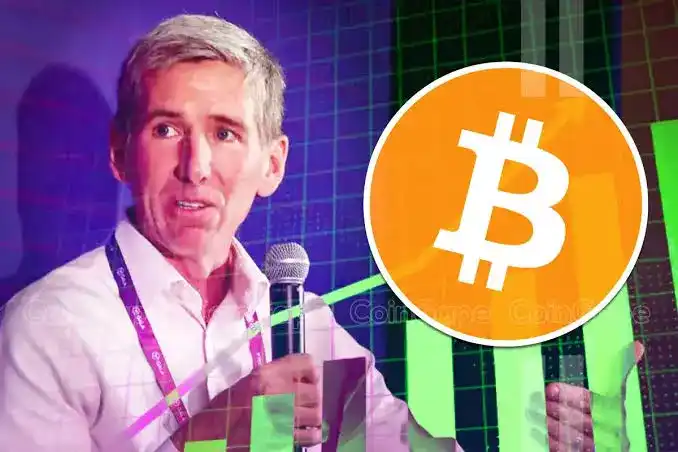
IOSG Founder: 2025 is a Dark Year for the Crypto Market, So What About 2026?

深潮Опубликовано 2025-12-26Обновлено 2025-12-26

Введение

In a detailed analysis, IOSG Ventures' co-founder argues that 2025, while appearing to be a dark year for crypto with BTC down -5.4% and ETH -12%, actually marks a fundamental structural shift from retail-driven speculation to institutional adoption. Despite negative price action, institutional inflows were massive: BTC ETFs saw $25 billion in net inflows, pushing AUM to $114-120 billion, with institutions now holding 24% of BTC. Data shows long-term holders sold 1.4 million BTC over the year, which was fully absorbed by corporate treasuries and macro investors, not retail. This indicates a new cycle where stable institutional capital is replacing volatile retail speculation. Key drivers include the approval of spot BTC ETFs in 2024, aggressive accumulation by firms like BlackRock (now holding more BTC than MicroStrategy), and a favorable U.S. policy environment under the Trump administration, including pro-crypto executive orders and pending legislation. Looking ahead to 2026, the author expects continued institutional accumulation and policy momentum in H1, potentially driving BTC toward $120K-$150K, though H2 may bring increased volatility due to mid-term elections. The core conclusion is that 2025 was not a market top but the start of a new institutional cycle, with stronger fundamentals and broader adoption ahead.

Author: Jocy, IOSG Co-Founder

This is a fundamental shift in market structure, yet most people are still viewing the new era through the lens of the old cycle.

Recapping the 2025 crypto market, we see a paradigm shift from retail speculation to institutional allocation. Core data shows institutional holdings at 24%, while retail participation has retreated by 66% — the 2025 crypto market turnover is complete. Forget the four-year cycle; the crypto market in the institutional era has new rules! Let me break down the truth behind this "worst year" with data and logic.

Surface Data: 2025 Asset Performance

First, the surface data — 2025 asset performance. Traditional assets: Silver +130%, Gold +66%, Copper +34%, Nasdaq +20.7%, S&P 500 +16.2%. Crypto assets: BTC -5.4%, ETH -12%, major altcoins -35% to -60%. Looks bad? Read on.

But if you only look at the price, you're missing the most important signal. Although BTC was down -5.4% for the year, it hit a new all-time high of $126,080 during that period. More crucially: what happened while the price was falling? BTC ETFs saw a net inflow of $25 billion in 2025, with total AUM reaching $114-120 billion, and institutional holdings accounting for 24%. Some panicked, while some bought.

First Key Judgment: Market Dominance Has Shifted from Retail to Institutions

The approval of the BTC spot ETF in January 2024 was a watershed moment. The market, once dominated by retail and OGs, is now led by macro investors, corporate treasuries, and sovereign funds. This isn't just a change in participants; it's a rewrite of the rules of the game.

Data supports this judgment: BlackRock's IBIT reached $50 billion AUM in 228 days, becoming the fastest-growing ETF in history. It now holds 780,000–800,000 BTC, surpassing MicroStrategy's 670,000 BTC. Grayscale, BlackRock, and Fidelity collectively account for 89% of total BTC ETF assets. 13F filings show that 86% of institutional investors already hold or plan to allocate to digital assets. The correlation between BTC and the S&P 500 rose from 0.29 in 2024 to 0.5 in 2025.

Look at the aggressive strategies of BlackRock and MicroStrategy. BlackRock's IBIT holds about 60% of the BTC ETF market share, with holdings of 800,000 BTC, already surpassing MicroStrategy's 671,268 BTC. Institutional participation continues to rise: 13F filers' holdings account for 24% of total ETF AUM (Q3 2025); the proportion of professional institutional investors reached 26.3%, up 5.2% from Q3; large asset managers account for 57% of 13F BTC ETF holdings, and professional hedge funds account for 41% of BTC ETF holdings — together nearly 98% — indicating that current institutional holdings are primarily from these two types of professional investors, not yet counting more conservative institutions like pension funds and insurance companies (they may still be观望 or just starting to allocate); FBTC institutional holdings account for 33.9%.

Major institutional investors include Abu Dhabi Investment Council (ADIC), Mubadala sovereign wealth fund, CoinShares, Harvard University Endowment (holding $116 million in IBIT), and others. Large traditional brokerages and banks have also increased their holdings of Bitcoin ETFs. Wells Fargo reported holdings of $491 million, Morgan Stanley $724 million, and JPMorgan $346 million. This shows Bitcoin ETF products are being continuously integrated by major financial intermediaries. The question is: why are institutions continuing to build positions at "high" prices?

Because They Look at Cycles, Not Price

After March 2024, Long-Term Holders (LTH) cumulatively sold 1.4 million BTC, worth $121.17 billion. This was an unprecedented supply release. But miraculously — the price didn't crash. Why? Because institutions and corporate treasuries absorbed all this selling pressure.

Three waves of selling by long-term holders: From March 2024 to November 2025, Long-Term Holders (LTH) cumulatively sold approximately 1.4 million BTC (worth $121.17 billion). First wave (late 2023 - early 2024): ETF approval, BTC $25K→$73K; Second wave (late 2024): Trump elected, BTC surged towards $100K; Third wave (2025): BTC remained above $100K for an extended period.

Unlike the single explosive distributions of 2013, 2017, and 2021, this was a multi-wave, sustained distribution. We have experienced a year of sideways movement at BTC's highs, something that has never happened before. BTC unmoved for 2+ years has decreased by 1.6 million coins (approx. $140 billion) since early 2024, but the market's absorption capacity has strengthened.

Meanwhile, what are retail investors doing? Active addresses continue to decline, Google searches for "Bitcoin" hit an 11-month low, small transactions ($0-$1) decreased by 66.38%, while large transactions ($10M+) grew by 59.26%. River estimates retail net sold 247,000 BTC (approx. $23 billion) in 2025. Retail is selling, institutions are buying.

This Leads to the Second Key Judgment: The Current Phase is Not a "Bull Market Top," but an "Institutional Accumulation Phase"

Old cycle logic: retail frenzy → price surge → crash → restart. New cycle logic: stable institutional allocation → narrowing volatility → rising price floor → structural appreciation. This explains why the price is sideways, but capital inflows continue.

The policy environment is the third dimension. The Trump administration in 2025 has already delivered: Crypto Executive Order (signed 1.23), Strategic Bitcoin Reserve (~200,000 BTC), GENIUS Act stablecoin regulatory framework, SEC Chair change (Atkins appointed). Pending: Market Structure Act (77% probability of passing before 2027), Stablecoins buying short-term U.S. Treasuries (size expected to grow 10x in the next three years).

Potential impact of the 2026 midterm elections: 435 House seats and 33 Senate seats up for election in 2026. 274 "pro-crypto" candidates were elected in 2024, but banking lobby groups plan to spend $100M+ to counter crypto donation influence. Polls show 64% of crypto investors believe a candidate's crypto stance is "very important." Policy friendliness is unprecedented.

But there's a timing window here: the midterm elections are in November 2026. Historical pattern: "Election year policy push" →密集 policy rollouts in the first half →等待 election results in the second half → increased volatility. So the investment logic should be: H1 2026 = policy honeymoon + institutional allocation = bullish; H2 2026 = political uncertainty = increased volatility.

Why am I Still Bullish Despite 2025 Being Crypto's "Worst Performance" Year?

Now back to the opening question: Why am I still bullish despite 2025 being crypto's "worst performance" year? Because the market is completing a "handover": from retail hands → to institutional hands, from speculative chips → to allocation assets, from short-term博弈 → to long-term holding. This process inevitably involves price adjustment and volatility.

How to view institutional target prices?

VanEck: $180,000; Standard Chartered: $175,000-$250,000;

Tom Lee: $150,000; Grayscale: New ATH in H1 2026.

Not blind optimism, but based on: Continued ETF inflows, Public company treasury DCA accumulation (134 companies globally hold 1.686 million BTC), Unprecedented U.S. policy window, Institutional allocation has just begun.

Of course, risks remain: Macro - Fed policy, strong dollar; Regulatory - Market Structure Act可能 delay; Market - LTH may continue selling; Political - Midterm election results uncertain. But the flip side of risk is opportunity. When everyone is bearish, it's often the best time to position.

Final investment logic: Short-term (3-6 months): $87K-$95K range-bound, institutions continue accumulating; Medium-term (H1 2026): Policy + institutional drivers, target $120K-$150K; Long-term (H2 2026): Increased volatility, depends on election results and policy continuity.

Core Judgment: This is Not a Cycle Top, But the Start of a New Cycle

Why am I confident? Because history tells us: 2013 retail-led, peak $1,100; 2017 ICO frenzy, peak $20,000; 2021 DeFi+NFT, peak $69,000; 2025 institutional entry, currently $87,000. Each cycle, participants are more professional, capital is larger, infrastructure is more robust.

The "worst performance" of 2025 is essentially: the transition period from the old world (retail speculation) to the new world (institutional allocation). Price is the cost of transition, but the direction is set. When BlackRock, Fidelity, and sovereign funds are accumulating on the left, retail is still纠结 "will it fall further?". This is the认知差 (cognitive gap).

Summary

Final summary: 2025 marks the acceleration of the crypto market's institutionalization. Despite BTC's negative annual return, ETF investors showed strong "HODL" resilience. Superficially the worst for crypto in 2025, it was actually: The largest supply handover, The strongest institutional allocation意愿, The clearest policy support, The broadest infrastructure improvement. Price -5%, but ETF inflows of $25 billion. This itself is the biggest signal.

As long-term practitioners and investors, our job is not to predict short-term prices, but to identify structural trends. Key看点 for 2026 include: Market Structure Act progress, Potential expansion of the Strategic Bitcoin Reserve, and Policy continuity post-midterm elections. Long-term, the完善 of ETF infrastructure and regulatory clarity lay the foundation for the next leg up.

When the market structure fundamentally changes, old valuation logic fails, and new pricing power is rebuilt. Stay rational, stay patient.


Трендовые криптовалюты

Связанные с этим вопросы

QAccording to the article, what is the fundamental shift in the crypto market structure in 2025?

AThe fundamental shift is a transition from a market dominated by retail speculation to one driven by institutional allocation, marking a paradigm shift in the rules of the game.

QWhat key data point supports the argument that institutional investors are now the dominant force in the Bitcoin market?

AInstitutional holdings now account for 24% of the total, with BlackRock's IBIT ETF holding 80,000 BTC, surpassing MicroStrategy's holdings, and the top three institutions (Grayscale, BlackRock, Fidelity) controlling 89% of the total BTC ETF assets.

QWhy does the author believe that 2025 is not the 'top of a bull market' but an 'institutional accumulation phase'?

AThe author argues that the price consolidation and high-volume selling by long-term holders were fully absorbed by institutional and corporate treasury buying, indicating a structural change towards stable institutional配置 rather than a speculative retail peak.

QWhat are the main political and regulatory factors cited as tailwinds for the crypto market in 2026?

AThe key political factors include the Trump administration's pro-crypto policies (executive order, strategic Bitcoin reserve, GENIUS Act), a potential market structure bill, and the outcome of the November 2026 midterm elections which could impact policy continuity.

QWhat is the author's core conclusion about the performance of the crypto market in 2025 and the outlook for 2026?

AThe author concludes that 2025's negative price performance masked a major supply transfer from retail to institutions, strong institutional demand, and improved infrastructure. They view it as the start of a new cycle and are bullish for 2026, driven by policy and institutional adoption, with a medium-term price target of $120K-$150K.

Похожее

Securitize за первую неделю листинга упал на 40%, в индустрии токенизации начинается патентная война

2 июля Securitize (NYSE: SECZ) завершила слияние через SPAC и вышла на Нью-Йоркскую фондовую биржу. Первоначальный рост сменился резким падением: к 7 июля акции упали на 25,92% за день, потеряв около 40% с максимума первой недели. Аналитики связывают волатильность с механизмом SPAC, приводящим к смене базы инвесторов, а не с ухудшением фундаментальных показателей компании. Одновременно Securitize столкнулась с патентными исками. 15 июня компания tZERO обвинила ее в нарушении двух патентов, касающихся токенизированных ценных бумаг, и потребовала прекратить продажи продуктов DS Protocol и Vault Registrar. В ответ Securitize подала иск о признании невиновности. tZERO заявила, что владеет 105 патентами и выявила потенциальные нарушения еще у шести игроков рынка, что может сигнализировать о начале масштабной патентной войны в индустрии токенизации. Несмотря на сильный список инвесторов, включая BlackRock, вторичный рынок отреагировал на краткосрочные риски — давление от SPAC и судебные разбирательства. Падение Securitize отражает разрыв между нарративом о токенизации и текущей рыночной реальностью, где доверие институтов не гарантирует стабильной ликвидности. В то время как цена акций может восстановиться, патентные споры становятся новым серьезным вызовом для всей отрасли.

Foresight News29 мин. назад

Securitize за первую неделю листинга упал на 40%, в индустрии токенизации начинается патентная война

Foresight News29 мин. назад

Крупнейшее IPO за день на Гонконгской бирже

Крупнейшее IPO на Гонконгской бирже сегодня — компания Momenta, получившая титул «первой акции физического ИИ». Основанная в 2016 году выпускником Университета Цинхуа Цао Сюйдуном, компания специализируется на автономном вождении. Её стратегия «одно маховое колесо, две опоры» сочетает массовое производство вспомогательных систем вождения (L2) с развитием полностью автономных технологий (L4). Более 1 млн автомобилей с системами Momenta собирают реальные данные, что ускоряет обучение её флагманской R7 мировой модели — ядра физического ИИ. Momenta сотрудничает с 24 автопроизводителями, включая 9 из 10 крупнейших в мире, и занимает 65% китайского рынка городских NOA. Выручка компании за 2023-2025 гг. росла на 80% в год, достигнув 2,4 млрд юаней. На IPO привлечено около 6,8 млрд гонконгских долларов при оценке свыше 70 млрд HKD. Среди инвесторов — GIC, Fidelity, BlackRock, Mercedes-Benz, BYD и другие ключевые игроки. IPO Momenta знаменует выход физического ИИ на глобальный рынок капитала.

marsbit46 мин. назад

Крупнейшее IPO за день на Гонконгской бирже

marsbit46 мин. назад

Слёзы Роналду и шоу «экспертизы слёз» на Polymarket

**Краткое содержание на русском:** После поражения Португалии от Испании (0:1) в 1/8 финала ЧМ-2026, 41-летний Криштиану Роналду, для которого этот турнир стал последним, со слезами на глазах попрощался с болельщиками. Это событие стало центральным в медиа, однако на платформе предсказаний Polymarket развернулись настоящие дебаты о том, плакал ли футболист на самом деле. Платформа заранее запустила рынок прогнозов на событие «Заплачет ли Роналду на ЧМ-2026?». Согласно строгим правилам расчетов, ответ «Да» считался верным только при наличии четких фото- или видеодоказательств видимых слез на его лице непосредственно на поле или скамейке запасных. Эмоции, покрасневшие глаза или вытирание лица не учитывались. Из-за этого кадры с Роналду после матча подверглись тщательному анализу. Участники рынка спорили, были ли на его лице слезы или просто пот, отблески света. Событие дважды не прошло автоматический расчет и перешло в стадию спора, в результате чего вероятность исхода «Да» упала ниже 20%. Ситуация кардинально изменилась утром, когда команда Polymarket выпустила официальное уточнение правил. В нем указывалось, что на имеющихся кадрах, снятых на поле после матча, четко видны слезы на лице Криштиану Роналду. После этого объявления вероятность исхода «Да» моментально взлетела до 99%, а общий объем торгов на этом рынке превысил 22 миллиона долларов. Таким образом, эта история не только о эмоциональном моменте в спорте, но и о том, как платформа предсказаний в данном случае отдала приоритет общепринятому восприятию события, а не буквальному толкованию правил в ущерб очевидности.

marsbit46 мин. назад

Слёзы Роналду и шоу «экспертизы слёз» на Polymarket

marsbit46 мин. назад

После того, как Роналду заплакал на прощании, на Polymarket разыгралась драма "проверки слёз"

После поражения Португалии от Испании (0-1) в 1/8 финала ЧМ-2026 и завершения карьеры Криштиану Роналду на чемпионатах мира, в предсказательном рынке Polymarket разгорелись споры по контракту «Заплачет ли Роналду на этом ЧМ?». Несмотря на широко распространённые в СМИ и соцсетях кадры с явными эмоциями футболиста, правила рынка требовали чётких доказательств: на фото или видео должны быть видны узнаваемые слёзы на лице, и событие должно произойти на поле или скамейке запасных. Многие участники оспаривали, были ли это слёзы, а не пот или блики, из-за чего событие дважды не прошло settlement и цена «Да» упала ниже 20%. Однако утром команда Polymarket выпустила уточняющее правило, официально признав, что имеющиеся фото- и видеодоказательства, снятые на поле после матча, ясно показывают Роналду с явными слезами на лице. Это привело к мгновенному развороту рынка — вероятность «Да» взлетела до 99% при общем объёме торгов свыше $22 млн. Данный случай указывает на возможный сдвиг в подходе платформы к урегулированию споров в сторону учёта общепринятого восприятия событий, а не только буквальной трактовки правил.

Odaily星球日报51 мин. назад

После того, как Роналду заплакал на прощании, на Polymarket разыгралась драма "проверки слёз"

Odaily星球日报51 мин. назад

Ставки не на голы, а на «слёзы»: пользователи Polymarket сражаются из-за последнего матча Криштиану Роналду на ЧМ

7 июля 2026 года завершился последний матч Криштиану Роналду на чемпионате мира, когда Португалия проиграла Испании. В предсказательном рынке Polymarket разгорелись жаркие споры по поводу того, заплакал ли игрок на поле. Объём этого рынка достиг 23,94 млн долларов. Правила Polymarket гласят: результат «Да» засчитывается, если на любых фото или видео во время матча ЧМ-2026 за сборную Португалии будет чётко видно, как слёзы явно стекают по лицу Роналду, пока он находится на поле или в зоне запасных. «Нет» — в противном случае. После матча мировые СМИ сообщили, что Роналду был «со слезами на глазах». Были обнародованы кадры, где он краснеет, вытирает лицо и выглядит эмоциональным. Однако участники рынка разделились во мнениях: сторонники «Да» утверждают, что видно слёзы и их вытирание, а сторонники «Нет» настаивают, что правилу соответствует только явное стекание слёз по щекам, а не просто влажные глаза. В итоге рынок дважды предлагали разрешить как «Нет», но после протестов он перешёл в фазу окончательного арбитража сообществом UMA. 8 июля Polymarket добавил уточнение, что на момент публикации существуют соответствующие фото- и видео-доказательства слёз на лице игрока на поле после матча. Этот случай вновь высветил проблему предсказательных рынков: они эффективны для объективных событий, но вызывают большие споры при оценке субъективных визуальных деталей. Споры повышают активность и популярность платформы, в то время как рядовые участники остаются в уязвимом положении.

Foresight News1 ч. назад

Ставки не на голы, а на «слёзы»: пользователи Polymarket сражаются из-за последнего матча Криштиану Роналду на ЧМ

Foresight News1 ч. назад

Торговля

Спот

Популярные статьи

Что такое подарки от HTX

Подарки — это эксклюзивная функция обмена вознаграждениями, предоставляемая HTX соответствующим условиям пользователям.

877 просмотров всегоОпубликовано 2026.06.24Обновлено 2026.06.24

Что такое подарки от HTX

Что такое NES

I. Введение в проектNesa является крупнейшей децентрализованной платформой и экосистемой ИИ, поддерживаемой первым уровнем ИИ с приоритетом конфиденциальности. Ее собственная технология зашифрованного вывода поддерживает широкий спектр рабочих нагрузок и обслуживает клиентов из списка Fortune 500 в таких отраслях, как розничная торговля, здравоохранение и ИТ.II. Информация о токенеНазвание токена: NES (Nesa)III. Связанные ссылкиВебсайт: https://nesa.ai/Эксплореры: https://bscscan.com/address/0x3131f6B80C26936aB03F7d9D29Eb4Ddf36AC3FB5Твиттер: https://x.com/nesaorgПримечание: Введение в проект основано на материалах, опубликованных или предоставленных официальной командой проекта, и предназначено только для справки и не является инвестиционным советом. HTX не несет ответственности за любые прямые или косвенные убытки, возникшие в результате.

126 просмотров всегоОпубликовано 2026.06.24Обновлено 2026.06.24

Что такое NES

Как купить NES

Добро пожаловать на HTX.com! Мы сделали приобретение Nesa (NES) простым и удобным. Следуйте нашему пошаговому руководству и отправляйтесь в свое крипто-путешествие.Шаг 1: Создайте аккаунт на HTXИспользуйте свой адрес электронной почты или номер телефона, чтобы зарегистрироваться и бесплатно создать аккаунт на HTX. Пройдите удобную регистрацию и откройте для себя весь функционал.Создать аккаунтШаг 2: Перейдите в Купить криптовалюту и выберите свой способ оплатыКредитная/Дебетовая Карта: Используйте свою карту Visa или Mastercard для мгновенной покупки Nesa (NES).Баланс: Используйте средства с баланса вашего аккаунта HTX для простой торговли.Третьи Лица: Мы добавили популярные способы оплаты, такие как Google Pay и Apple Pay, для повышения удобства.P2P: Торгуйте напрямую с другими пользователями на HTX.Внебиржевая Торговля (OTC): Мы предлагаем индивидуальные услуги и конкурентоспособные обменные курсы для трейдеров.Шаг 3: Хранение Nesa (NES)После приобретения вами Nesa (NES) храните их в своем аккаунте на HTX. В качестве альтернативы вы можете отправить их куда-либо с помощью перевода в блокчейне или использовать для торговли с другими криптовалютами.Шаг 4: Торговля Nesa (NES)С легкостью торгуйте Nesa (NES) на спотовом рынке HTX. Просто зайдите в свой аккаунт, выберите торговую пару, совершайте сделки и следите за ними в режиме реального времени. Мы предлагаем удобный интерфейс как для начинающих, так и для опытных трейдеров.

82 просмотров всегоОпубликовано 2026.06.24Обновлено 2026.06.24

Как купить NES

Обсуждения

Добро пожаловать в Сообщество HTX. Здесь вы сможете быть в курсе последних новостей о развитии платформы и получить доступ к профессиональной аналитической информации о рынке. Мнения пользователей о цене на A (A) представлены ниже.

活动图片