惊魂暴跌夜:单日爆仓史上最高191亿美元,财富疯狂流动

Odaily星球日报Опубликовано 2025-10-13Обновлено 2025-10-13

原创 | Odaily 星球日报(@OdailyChina

作者 | 叮当(@XiaMiPP

凌晨 5 点,大盘血崩。

昨夜特朗普宣布要加征 100%关税,且是在现有关税基础上再叠加,这一消息如点燃的导火索,引爆市场,恐慌指数飙升。

美股三大股指均出现不同程度下跌。纳斯达克指数跌幅接近3.5%,标普500跌幅达到2.7%,道琼斯指数下跌1.9%。

加密市场方面,BTC 一度跌破 102000 美元,最低触及 101516 美元,24 小时跌幅达到 16%ETH 最低触及 3400 美元,24 小时跌幅达 22%SOL 跌破 150 美元,最低触及 141.3 美元,24 小时跌幅达 31.83%

主流币尚且如此,山寨更是惨不忍睹。其中 IP 1 小时内从 7.8 美元最低跌至 1 美元附近,跌幅达到 87%,目前暂时反弹至 4.8 美元;PUMP 则从 0.00488 美元最低跌至 0.000411 美元,目前回升至 0.00385 美元。

币安推出的质押理财产品 WBETH、BNSOL 也难逃魔爪。WBETH 最低跌至 430.65 美元,跌幅超 800%,BNSOL 从 213 美元最低跌至 34.9 美元,跌幅也超 500%。甚至稳定币都难逃一劫。USDE 一度触及 0.65 美元,脱锚幅度达到 54%,目前回升至 0.96 美元附近。

衍生品市场则是这场坍塌最直观的放大器。Coinglass 数据显示,过去 24 小时全球共有160万人被爆仓,爆仓总金额达到 191.3 亿美元,为史上最高单日清算金额。其中多单爆仓 166.79 亿美元,空单爆仓 24.54亿美元,最大单笔爆仓发生在 Hyperliquid - ETH-USDT,价值约 2.03 亿美元。
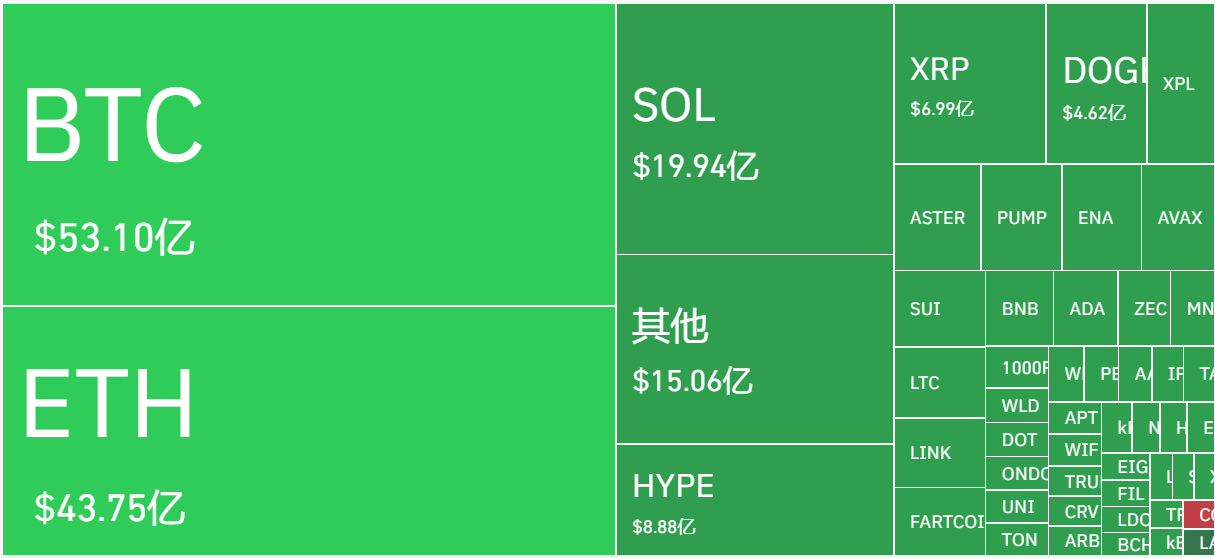
这一次,是对整个加密市场全方位、无差别的扫射

起初,大家都以为迎接的是一次正常的小回调。毕竟一周前,BTC 才刚刚突破 12.6 万美元创下历史新高。渣打银行在报告中上调预期至 13.5 万美元,摩根大通更乐观,直指 16.5 万美元。

谁都没料到,这样的高点竟成了深渊的起点。

神操作——明牌逃顶

即便在这种行情下,也不乏神级操作。

昨日,比特币巨鲸加仓做空 BTC 和 ETH,总仓位超过 11 亿美元。目前,链上数据显示,其仓位已经全部清空,从 Hyperliquild 平台提走 6000 万美金。据链上分析师 Lookonchain 称,该 OG 或与易理华旗下 Trend Research 存在关联。

事实上,易理华本人近几日确实多次在社交媒体上高调表达“看空”立场。
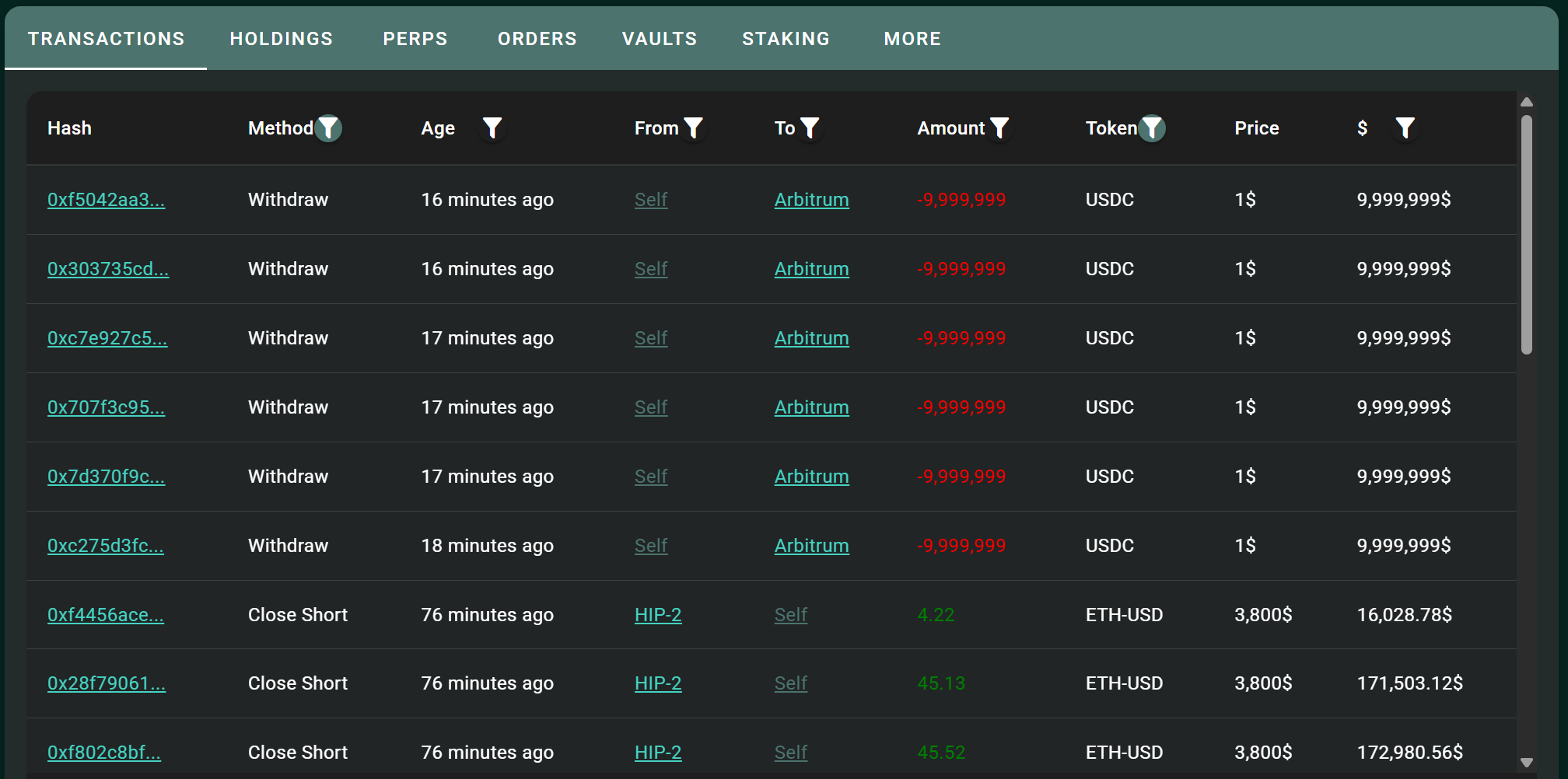
据链上分析师 Lookonchain 监测,自 10 月 3 日起,Trend Research 已陆续将 14.5 万枚 ETH 存入交易所,按当时价格计算价值约 6.54 亿美元。截至 10 月 5 日,其链上仅剩 7,163 枚 ETH。粗略估计该机构本轮在 ETH 上应该获利高达 3.03 亿美元

结语

只要 2 小时,就足以重写许多市场参与者的命运。

有人成为 191 亿美元爆仓潮中的一粒尘埃,有人却从大厦将倾中,稳稳接住了 6000 万的机会赏金。

大多数标的正从 2 小时前的针底向上修复,而也有些币种“借机”躺平,Odaily将第一时间持续跟进。

Похожее

IOSG: After the Number of Developers Halved, Crypto Did Not Die

The crypto development community has undergone a significant transformation, with monthly active developers on GitHub halving from 45K in 2022 to approximately 23K by 2026. This decline is largely attributed to the departure of newcomers, whose roles were often tied to market-driven hype cycles like NFTs and forked DeFi protocols, leading to a 52% churn rate among those with less than a year of experience. However, the core of the industry has strengthened. Established developers with over two years of experience have reached a record high, contributing about 70% of the code. They are consolidating around ecosystems with genuine users and revenue, such as Bitcoin and Solana, while moving away from narrative-driven projects. The talent shift represents a "deleveraging" and an increase in core density. This core group has developed a unique skillset by operating in an environment of "code is law," with zero tolerance for error and no external recourse. They have learned to build trust and functional systems from the ground up without central authorities, as demonstrated by protocols like Uniswap and MakerDAO. These capabilities are now being repriced and leveraged in the AI era. The structural challenges of AI scaling—such as trust, coordination, and verification—mirror those long addressed in crypto. Examples include CoreWeave pivoting from GPU mining to AI compute, OpenSea's founder applying NFT market logic to AI model routing with OpenRouter, and projects like NEAR and Catena Labs transitioning crypto-native architectural and financial insights into AI infrastructure and agent banking. Key areas where crypto-bred skills are directly applicable to AI include: 1. **Compute Aggregation & Optimization**: Using token incentives and cryptographic verification (e.g., Proof of Sampling & Privacy) to create trusted, decentralized GPU networks, as seen with Hyperbolic. 2. **AI Governance & Incentive Design**: Applying economic mechanism design from DAOs and tokenomics to align the goals of multiple, fast-acting AI agents, a direction explored by EigenLayer's EigenCloud. 3. **AI Agent Autonomous Payments**: Leveraging stablecoins and programmable, permissionless blockchains to enable the micro-transactions required for AI agent economies, exemplified by protocols like x402. The role of the crypto builder is evolving from writing smart contracts to designing trust mechanisms for autonomous AI systems. This convergence is reflected in hiring trends at major firms and significant capital allocation from funds like Paradigm and a16z crypto, which are investing at the intersection of crypto and AI. Regional differences exist, with the US favoring foundational protocol innovation and Asia focusing on compliant application-layer integration, but the underlying trend is clear. The industry's "deleveraging" has not signaled its demise but rather a maturation, positioning its core builders to solve critical trust and coordination problems in the age of AI.

marsbit27 мин. назад

IOSG: After the Number of Developers Halved, Crypto Did Not Die

marsbit27 мин. назад

Currency and Stock Market Barometer: Strategy Invested Over $2 Billion to Buy Over 24,800 BTC Last Week; Bitmine's ETH Holdings Increase to 4.37% of Total Supply (May 19)

Crypto & Stock Market Watch: Institutional BTC Buying Surges, ETH Holdings Grow Major listed companies aggressively accumulated Bitcoin last week, with net purchases skyrocketing over 44x to $2.03 billion. Strategy (formerly MicroStrategy) led the charge, spending approximately $2.01 billion to buy 24,869 BTC, bringing its total holdings to 843,738 BTC. Overall, listed firms (excluding miners) now hold 1,113,841 BTC, valued at ~$86.16 billion. On the Ethereum front, Bitmine purchased 71,672 ETH in the past week. It now holds 5,278,462 ETH, worth $11.56 billion and representing 4.37% of ETH's total supply. A significant portion (4,712,917 ETH) is staked, generating an annualized yield of $289 million. Industry leaders note a divergence from the MicroStrategy model, with ETH treasury firms increasingly focusing on staking yields and simpler balance sheets. In traditional markets, Morgan Stanley warns of a potential significant U.S. stock market correction if bond yields and volatility continue rising. Investment giants like Berkshire Hathaway and Bridgewater adjusted portfolios in Q1, with Bridgewater notably increasing its stakes in chipmakers like Nvidia, Broadcom, and Micron while shedding software stocks. Among other crypto-focused public companies, Solana treasury firm Upexi reported a widened net loss of $109 million for its fiscal Q3, driven by a decline in its crypto holdings' value. Meanwhile, Hyperion DeFi, a HYPE token treasury company, reported a Q1 net profit of $8.8 million and increased its HYPE holdings past 2 million tokens.

marsbit28 мин. назад

Currency and Stock Market Barometer: Strategy Invested Over $2 Billion to Buy Over 24,800 BTC Last Week; Bitmine's ETH Holdings Increase to 4.37% of Total Supply (May 19)

marsbit28 мин. назад

24-Year-Old "Wall Street Newcomer" Portfolio Adjustments Revealed: Shorts Chips Heavily in Q1, Bullish on Energy and AI Infrastructure

A 24-year-old Wall Street prodigy, Leopold Aschenbrenner, has disclosed the Q1 portfolio adjustments for his fund, Situational Awareness LP. The fund's assets under management skyrocketed from $5.52 billion to $13.7 billion. The most significant move was a massive bearish bet on the semiconductor sector. The fund established $8.46 billion in put options, targeting chipmakers like NVIDIA ($1.6B in puts) and the VanEck Semiconductor ETF (SMH, $2B in puts). This bearish stance extended to Broadcom, Oracle, AMD, Micron, ASML, Intel, Corning, and TSMC. However, the fund made a selective bullish exception, adding shares and call options for memory chip maker SanDisk. The fund maintained its core bullish thesis on energy and AI infrastructure. Bloom Energy remained its largest long equity holding. It also increased stakes in cryptocurrency mining/data center firms like CleanSpark, Riot Platforms, Applied Digital, and IREN Limited, viewing them as providers of critical ready-to-use infrastructure—land, power, and grid permits—for AI expansion. The 13F filing was submitted one day late. Overall, the fund's strategy involves substantial bearish semiconductor bets while maintaining concentrated, high-volatility investments in selective tech, computing, and infrastructure plays aligned with AI growth.

marsbit47 мин. назад

24-Year-Old "Wall Street Newcomer" Portfolio Adjustments Revealed: Shorts Chips Heavily in Q1, Bullish on Energy and AI Infrastructure

marsbit47 мин. назад

Global Long-Term Bonds Break Down: The Fiscal Illusion of the Low-Interest Era is Collapsing

Global long-term bonds are experiencing a widespread breakdown, as the fiscal illusion of the low-interest-rate era collapses. Sovereign yields are hitting multi-year highs in the US, UK, Japan, and France, signaling a market repricing driven by a common reality: unsustainable debt and deficits outpacing economic growth, compounded by renewed inflationary pressures from energy shocks. The direct trigger is the blockade of the Strait of Hormuz, which has pushed oil prices higher and reignited inflation fears. This squeezes central bank policy space, with expectations shifting from future rate cuts to potential hikes. The core "fiscal Ponzi scheme" is becoming evident—governments rely on new debt to service existing obligations, but as growth lags and borrowing costs rise, investors demand higher yields. Key developments include the US 30-year yield surpassing 5% for the first time since 2007, with tepid auction demand; Japan's 30-year yield reaching 4%, threatening its long-standing low-rate financial system; and political paralysis in the UK and France making meaningful fiscal consolidation unlikely. The marginal buyer for US debt is also shifting from foreign central banks to more price-sensitive private investors. While debt managers may adjust issuance, fundamental drivers—deteriorating fiscal paths, persistent inflation, and constrained central banks—remain. The market is conclusively repricing the end of the low-interest-rate financing model for highly indebted developed economies.

marsbit55 мин. назад

Global Long-Term Bonds Break Down: The Fiscal Illusion of the Low-Interest Era is Collapsing

marsbit55 мин. назад

Торговля

Спот
Фьючерсы
活动图片