Cardano Founder Slams ‘Drama’ Over Client Diversity Debate

bitcoinistОпубликовано 2025-09-02Обновлено 2025-09-02

Введение

Cardano founder Charles Hoskinson used a late-September 1 video to rebut what he called misrepresentations of his stance on client...

Trusted Editorial content, reviewed by leading industry experts and seasoned editors. Ad Disclosure

Cardano founder Charles Hoskinson used a late-September 1 video to rebut what he called misrepresentations of his stance on client diversity, insisting it has been a design goal “from the very beginning” and warning that social-media “drama” is harming coordination on core upgrades such as Leios. “I’m not anti-client diversity,” Hoskinson said. “There was always from the very beginning a plan for client diversity. We live in the world of facts, not feelings.”

Hoskinson Clarifies Cardano’s Client Diversity Roadmap

Hoskinson framed client diversity as a prerequisite for decentralization rather than an optional feature. “Client diversity is crucial. Ethereum knows it. Solana knows it. Everyone knows it. It’s not some fancy feature. It’s the foundation of decentralization,” he said, adding that developers need implementation choice to customize nodes and push the protocol’s capability frontier. His intervention followed a spate of posts by alternative-client teams on X that he said “tr[ied] to misrepresent” remarks from a recent AMA.

At the heart of his argument is Cardano’s reliance on formal specifications as the “code-independent, implementation-independent blueprint” of the protocol. “If you don’t have a formal specification, then the code is the spec,” he said, underscoring why IOHK invested in specs intended to enable multiple interoperable clients. He stressed that specifications can be expressed in different formalisms as long as rigor and ambiguity management are maintained: “You can write them in TLA, you can write them in Agda, you can write them in Lean… you can write them in markdown if you want to. [But] it does have to have some form of rigor and limited ambiguity.”

Hoskinson outlined a two-track strategy he says he originally proposed for “responsible” diversification: continue maintaining the current Haskell-based Cardano node while building a second, independent implementation—“Cardano 2.x”—in Rust with a microservices architecture. The goal would be to run them in parallel until they meet at feature parity, which he likened to the current plan for Lace 1.x and Lace 2.x to “intersect” later this year. The second codebase, he argued, would pressure-test the specifications, reduce ambiguity and pave the way “to go from two to n” clients.

Instead, he said, the ecosystem took a more fragmented path when builders organized under Pragma began writing their own nodes “not actively contributing to the specifications we’ve written.” That approach, he warned, increases the risk of network partition and raises coordination costs unless teams align on specs and testing. “How do you avoid things like a network partition and how do you ensure peer interoperability? It’s a lot harder. The teams have to work together,” he said, noting IOHK convened a “node diversity workshop” and is currently integrating third-party components—“Namely, with Blockfrost, they are currently integrating Dolos… into the full-node design… being built for the desktop replacement for Daedalus”—to demonstrate it values external work.

Will Underfunded Nodes Won’t Delay Leios?

The most immediate flashpoint is Leios, Cardano’s planned scaling architecture that Hoskinson called the company’s “single most urgent program.” He said IOHK has reorganized and increased staffing to run “a 24/7 follow-the-sun development model… to write Haskell code for the Haskell node for Leios,” adding that dissenters internally were “reassigned or terminated.”

But he also questioned whether alternative client teams have the resources to bring Leios support online next year. “I do not believe the alternative nodes are resourced enough to be able to build Leios in 2026… If I am right, what that means is that they will not be able to launch their alternative nodes in 2026 if we are able to get Leios fully coded and integrated… unless the network wants to wait for them,” he said. The “remedy,” in his view, is either more funding for those teams or accepting a delay to Leios.

To avoid both fragmentation and indefinite deferrals, Hoskinson advocated creating a “certified client” program tied directly to the specifications. “I would like certified clients where you create evidence that those clients follow the specification and thus are certified,” he said. Budgeting could then be structured around baseline features, new functionality, and certification, with Catalyst or treasury requests covering “all three things,” rather than funding features that may not interoperate or meet security expectations. Certification, he suggested, would also answer recurring community questions about an “official client”: “My answer is there is none, but I would like certified clients.”

Looking forward, Hoskinson reaffirmed a multi-client roadmap anchored in a Rust-based “Project Acropolis,” which he described as a microservices “polyglot node” that could unify the partner-chains framework with Cardano’s main stack. He sketched a split between “enterprise” deployments—Kubernetes-orchestrated microservices with horizontal scaling and self-healing—and “retail” nodes combining lighter components like Dolos with Mithril to accelerate full-node sync “in less than an hour.” He also signaled appetite for modernizing networking—potentially adding pub/sub capabilities suitable for partner chains and dapps—while acknowledging the difficulty of re-implementing Cardano’s “mini-protocol” stack in other languages.

Lessons Learned

The broader message was an appeal to de-escalate social-media conflict and re-center on technical delivery and shared incentives. “We’ve gotten a bit too in love with drama and a bit too in love with adversarial behavior,” he said, warning that persistent bad-faith interpretations and intra-ecosystem feuds risk creating “a toxic hellscape” that drives builders away. He drew two personal “red lines”—accusations of criminal conduct and the repurposing of funds intended for the community—while otherwise inviting criticism of his decisions and style. “If you’re attacking my personality, my conduct, my company… I don’t care. Say whatever you want to say,” he said. “If you say I have committed a crime… that’s the red line.”

He also pushed back against narratives that Cardano is chronically underperforming, citing one-year relative returns and the network’s historical uptime, while acknowledging that 2022–2023 were difficult and that feature delivery “took a lot longer” than planned. “We shipped in a period of 24 months everything from Shelley to smart contracts and… governance,” he said, arguing that the ecosystem is now “digesting” those milestones ahead of the Basho scaling phase and Leios.

The video closed on a pragmatic, if combative, optimism that Leios could be the “great unifier” to align client teams around a shared paradigm, provided the ecosystem recommits to coordination, specification discipline, and mutual respect. “The outcome I want is Leios to ship next year… for the Haskell node to continue to grow… and I would also like three to five clients to be horizontal, meaning within 12 to 24 months they can begin to compete,” he said.

Reiterating that IOHK intends to surface client choice to end-users, he added, “Once we have a reasonable degree of security… we will give every Lace user the option of which backend they want to install… because it excites me to give the user choice.”

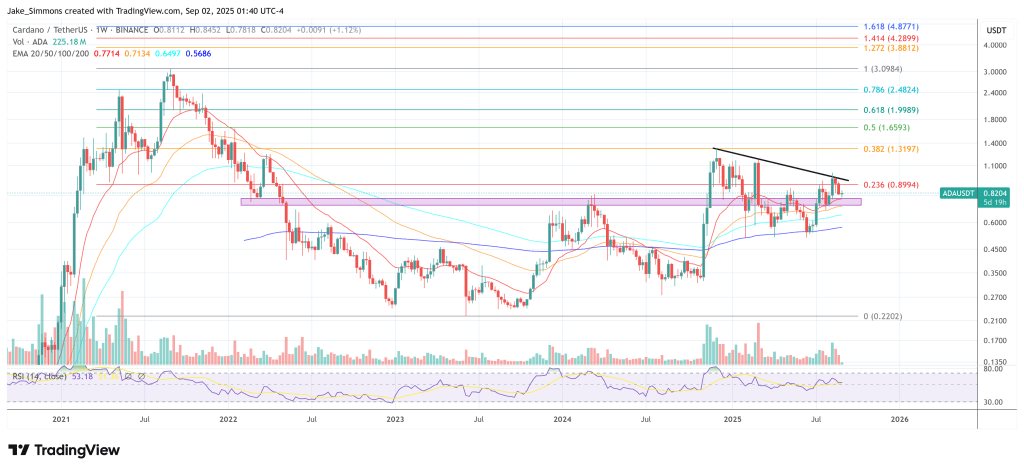
At press time, ADA traded at $0.82.
Cardano price
Cardano remains above the red zone, 1-week chart | Source: ADAUSDT on TradingView.com
Featured image created with DALL.E, chart from TradingView.com
Editorial Process for bitcoinist is centered on delivering thoroughly researched, accurate, and unbiased content. We uphold strict sourcing standards, and each page undergoes diligent review by our team of top technology experts and seasoned editors. This process ensures the integrity, relevance, and value of our content for our readers.

Jake Simmons has been a Bitcoin enthusiast since 2016. Ever since he heard about Bitcoin, he has been studying the topic every day and trying to share his knowledge with others. His goal is to contribute to Bitcoin's financial revolution, which will replace the fiat money system. Besides BTC and crypto, Jake studied Business Informatics at a university. After graduation in 2017, he has been working in the blockchain and crypto sector. You can follow Jake on Twitter at @realJakeSimmons.

Трендовые криптовалюты

Похожее

Регуляторы США одобрили запуск Kalshi регулируемых CFTC бессрочных фьючерсов, привязанных к Bitcoin

**Краткое изложение:** Комиссия по торговле товарными фьючерсами США (CFTC) одобрила платформе Kalshi запуск регулируемых бессрочных фьючерсных контрактов с привязкой к биткоину. Это решение рассматривается как важная веха в развитии регулируемого рынка криптовалютных деривативов в США, предлагающая альтернативу офшорным платформам. Ключевой момент — создание регулируемого инструмента для розничных инвесторов, а не одобрение маржинальной торговли как таковой. Развитие происходит в период поиска рынком четкого направления. Хотя биткоин остается ключевым для настроений, внимание также смещается на фундаментальные показатели альткоинов. Утверждение Kalshi может стать фактором для оценки трендов, связанных с регулированием и внедрением. Однако его реальное влияние на рынок будет зависеть от подтверждения другими данными, реакции ликвидности и общего рыночного контекста.

bitcoinist1 ч. назад

Регуляторы США одобрили запуск Kalshi регулируемых CFTC бессрочных фьючерсов, привязанных к Bitcoin

bitcoinist1 ч. назад

Sui запускает фреймворк Seal MPC для защиты транзакций автономных AI-агентов

**TL;DR** Mysten Labs представила прототип Sui Seal MPC — фреймворк, использующий многосторонние вычисления для безопасного выполнения ончейн-действий AI-агентами без прямого раскрытия приватных ключей. **Основное содержание** История о запуске Sui Seal MPC стала заметным событием, так как находится на пересечении нескольких важных для рынка тем. Основной смысл разработки — предоставление рынку нового критерия для оценки криптосреды: определяется ли она реальным внедрением технологий или спекуляциями. Фреймворк представляет собой слой безопасности и разрешений для автономных AI-агентов, а не наделяет их полноценной правосубъектностью. **Контекст рынка** Новость появляется в период, когда рынок криптоактивов ищет четкое направление. Внимание смещается с Bitcoin на фундаментальные показатели альткоинов, такие как использование, ликвидность и развитие. Успех этой технологии может повлиять на оценку Sui, AI и криптографии в ближайшие недели. **Что важно отслеживать далее** Ключевыми станут последующие подтверждения из первоисточников, ончейн-данные и реакция ликвидности. Даже значимые разработки могут не повлиять на цены, если общая рыночная структура останется оборонительной. Историю следует рассматривать в более широком рыночном контексте.

bitcoinist2 ч. назад

Sui запускает фреймворк Seal MPC для защиты транзакций автономных AI-агентов

bitcoinist2 ч. назад

SKYAI достиг месячных минимумов после падения на 36% – но ЭТА группа не отступает

СКИАИ пережил одно из самых значительных ежедневных падений, потеряв 36,2% своей стоимости за 24 часа, при этом торговый объем вырос на 70,85%. Это указывает на высокую активность участников, сопровождавшую агрессивное давление продавцов, а не на возобновление уверенности. Открытый интерес на срочном рынке резко сократился (-36,65%), что говорит о массовом закрытии левериджа. Чистый приток токенов на биржи увеличил доступное для продажи предложение. Покупатели защищают ключевую зону поддержки около $0,168, предотвращая немедленный обвал. Однако технические индикаторы, такие как MACD и Parabolic SAR, остаются медвежьими. Восстановление возможно к уровню сопротивления $0,335, но потеря поддержки $0,168, вероятно, приведет к продолжению коррекции.

ambcrypto3 ч. назад

SKYAI достиг месячных минимумов после падения на 36% – но ЭТА группа не отступает

ambcrypto3 ч. назад

Средства Humanity Protocol и Kelp DAO, полученные в результате взломов, смешаны – Один и тот же злоумышленник?

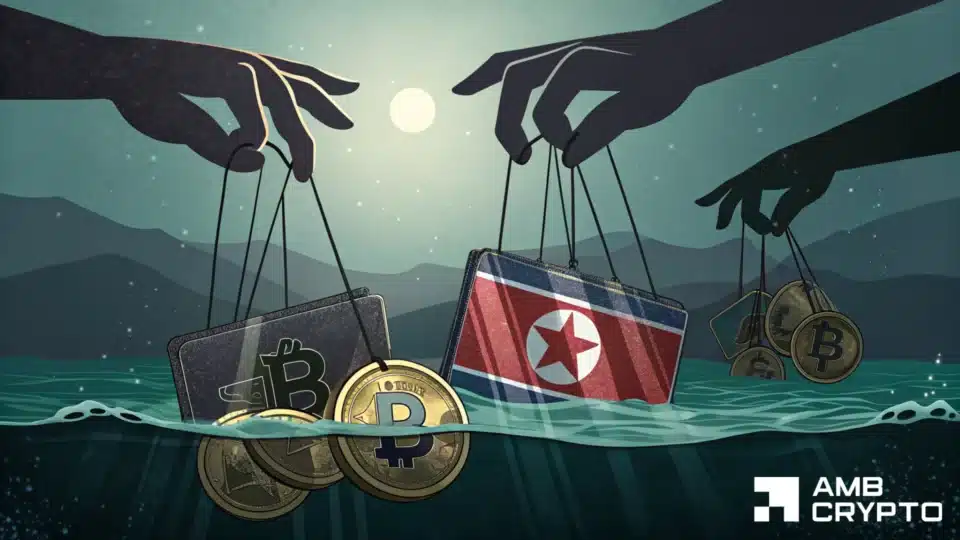
Расследования инцидентов 2026 года, связанных с взломами Kelp DAO и Humanity Protocol, получили новое развитие. Блокчейн-аналитик ZachXBT обнаружил, что средства, похищенные в результате двух разных атак, недавно были перемешаны. Это указывает на то, что активы из обоих инцидентов проходили через один и тот же кошелек или цепочку транзакций, что свидетельствует о связи между злоумышленниками. Злоумышленник, стоящий за взломом Humanity Protocol, перевел 15 403 ETH (на сумму $23,6 млн) на новый адрес в сети Ethereum, после чего средства были перемещены в сеть Bitcoin и смешаны с доходами от взлома Kelp DAO. На данный момент через этот канал отмыто более $8 млн похищенных у Humanity Protocol средств. Используемая тактика — объединение средств из разных операций в одном Bitcoin-кошельке с последующей передачей через миксеры и внебиржевые площадки — характерна для таких групп, как Lazarus Group. Взлом Kelp DAO в апреле 2026 года привел к потере около $292 млн, а атака на Humanity Protocol в июне — около $32 млн. Хотя изначально во взломе Humanity Protocol подозревали инсайдеров, новая информация о смешении средств с трофеями от Kelp DAO указывает на общего внешнего злоумышленника или тесно связанную киберпреступную сеть. Одновременно с этим в деле фигурируют иски на сумму свыше $877 млн против Северной Кореи, что добавляет гипотезе о причастности Lazarus Group дополнительный контекст. Эти события подчеркивают растущие угрозы безопасности в сфере DeFi, особенно на фоне усиления влияния MEV-ботов и манипуляций торговой инфраструктурой, как показал инцидент Jaredfromsubway.eth.

ambcrypto7 ч. назад

Средства Humanity Protocol и Kelp DAO, полученные в результате взломов, смешаны – Один и тот же злоумышленник?

ambcrypto7 ч. назад

Торговля

Спот

Популярные статьи

Как купить ADA

Добро пожаловать на HTX.com! Мы сделали приобретение Cardano (ADA) простым и удобным. Следуйте нашему пошаговому руководству и отправляйтесь в свое крипто-путешествие.Шаг 1: Создайте аккаунт на HTXИспользуйте свой адрес электронной почты или номер телефона, чтобы зарегистрироваться и бесплатно создать аккаунт на HTX. Пройдите удобную регистрацию и откройте для себя весь функционал.Создать аккаунтШаг 2: Перейдите в Купить криптовалюту и выберите свой способ оплатыКредитная/Дебетовая Карта: Используйте свою карту Visa или Mastercard для мгновенной покупки Cardano (ADA).Баланс: Используйте средства с баланса вашего аккаунта HTX для простой торговли.Третьи Лица: Мы добавили популярные способы оплаты, такие как Google Pay и Apple Pay, для повышения удобства.P2P: Торгуйте напрямую с другими пользователями на HTX.Внебиржевая Торговля (OTC): Мы предлагаем индивидуальные услуги и конкурентоспособные обменные курсы для трейдеров.Шаг 3: Хранение Cardano (ADA)После приобретения вами Cardano (ADA) храните их в своем аккаунте на HTX. В качестве альтернативы вы можете отправить их куда-либо с помощью перевода в блокчейне или использовать для торговли с другими криптовалютами.Шаг 4: Торговля Cardano (ADA)С легкостью торгуйте Cardano (ADA) на спотовом рынке HTX. Просто зайдите в свой аккаунт, выберите торговую пару, совершайте сделки и следите за ними в режиме реального времени. Мы предлагаем удобный интерфейс как для начинающих, так и для опытных трейдеров.

2.4k просмотров всегоОпубликовано 2024.03.29Обновлено 2026.06.02

Как купить ADA

SNEK: ведущий мемкоин на блокчейне Cardano, открывающий новую эпоху для экосистемы Cardano

SNEK - это дефляционный мемкоин, выпущенный на блокчейне Cardano. Он создаёт децентрализованную культурную и развлекательную ценность за счёт участия глобального сообщества.

2.1k просмотров всегоОпубликовано 2025.10.15Обновлено 2025.10.15

SNEK: ведущий мемкоин на блокчейне Cardano, открывающий новую эпоху для экосистемы Cardano

Неделя обучения по популярным токенам 8: запуск основной сети Ouroboros Leios для ADA ожидается в 2026 году

Основная сеть Ouroboros Leios для ADA, как ожидается, будет запущена в 2026 году, а хардфорк до версии протокола 11 запланирован на I квартал 2026 года.

2.0k просмотров всегоОпубликовано 2026.02.10Обновлено 2026.02.12

Неделя обучения по популярным токенам 8: запуск основной сети Ouroboros Leios для ADA ожидается в 2026 году

Обсуждения

Добро пожаловать в Сообщество HTX. Здесь вы сможете быть в курсе последних новостей о развитии платформы и получить доступ к профессиональной аналитической информации о рынке. Мнения пользователей о цене на ADA (ADA) представлены ниже.

活动图片