Автор|Odaily Planet Daily(@OdailyChina)
Автор|Wenser(@wenser 2010 )

2025 год завершился, и сектор рынка предсказаний подвел свои итоги.
Согласно данным PredictionIndex.xyz, общий объем торгов на рынке предсказаний в 2025 году достиг 50,25 миллиарда долларов США. За исключением Kalshi и Polymarket, объем торгов остальной части экосистемы составил 1,25 миллиарда долларов. Согласно данным, опубликованным KalshiData, номинальный объем торгов Kalshi за год составил 23,8 миллиарда долларов, что на 1108% больше, чем годом ранее. В то время как и Polymarket, и Kalshi достигли оценки в более чем 10 миллиардов долларов, такие результаты, несомненно, стали стимулом для рынка капитала и пользователей. В 2026 году сектор рынка предсказаний продолжит оставаться в центре внимания криптосообщества.
Odaily Planet Daily в этой статье обобщит и кратко проанализирует общие данные рынка предсказаний за 2025 год для ознакомления читателей.
Общий объем рынка предсказаний в 2025 году: порядка 50 миллиардов долларов, доля рынка Kalshi и Polymarket превышает 97,5%
Согласно сквозному индексному отслеживанию экосистемы рынка предсказаний, проведенному PredictionIndex.xyz, охватывающему рынки, инфраструктуру, конечные точки и новые экспериментальные проекты, окончательные результаты таковы:
- По неполной статистике платформы, общий объем торгов на рынке предсказаний в 2025 году составил примерно 50,25 миллиарда долларов США.
- За исключением Kalshi и Polymarket, объем торгов остальной части экосистемы составил 1,25 миллиарда долларов США.
- Этот длинный хвост рынка является ключевым для тестирования и эволюции новых рыночных конструкций, стимулов и концепций, включая такие проекты, как azuroprotocol, TrendleFi, hyperstiti0ns, Limitless, MyriadMarkets, overtime, footballdotfun, xodotmarket, predictonfliq, DGbet_official и BRKTgg.
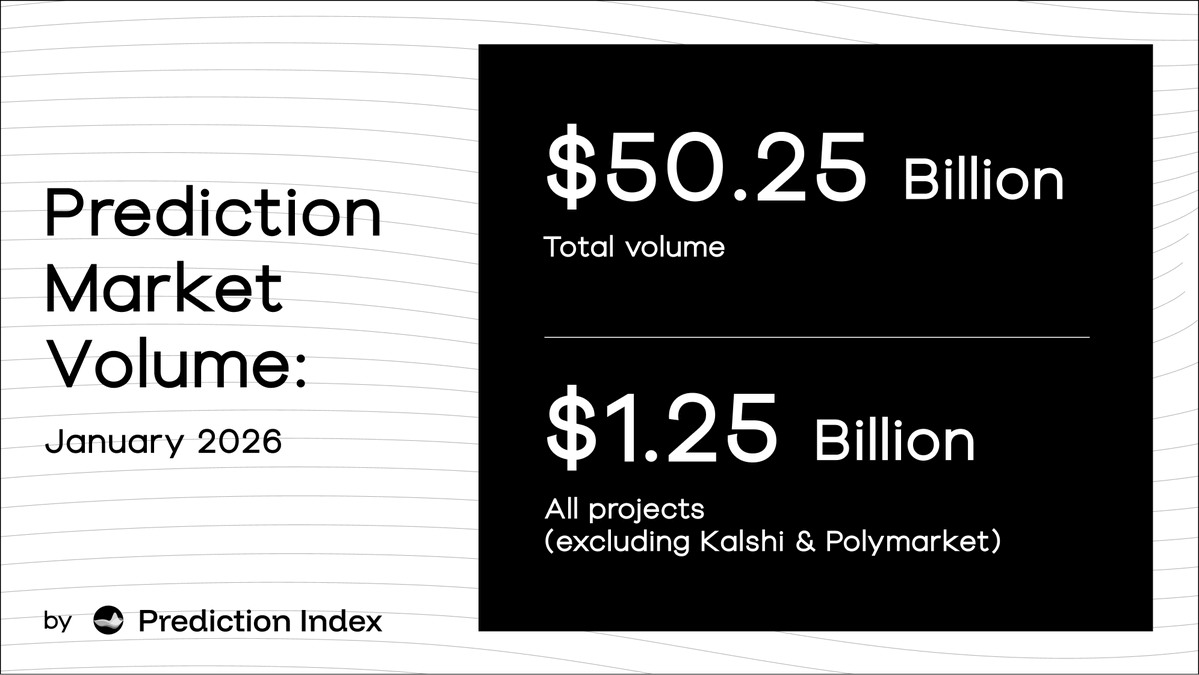
Если такие данные показывают нам текущую «дуополистическую» структуру рынка предсказаний, то данные за 2025 год, представленные KalshiData, дочерней платформой Kalshi, более подробно демонстрируют нам степень популярности этого горячего сектора.
Итоги Kalshi за 2025 год: объем торгов достиг 23,8 миллиарда долларов, рост более чем в 11 раз
3 января KalshiData сообщила, что в 2025 году все показатели Kalshi достигли рекордного роста.
По номинальному объему торгов: общий годовой объем составил 23,8 миллиарда долларов, что на 1108% (примерно в 12,1 раза) больше, чем годом ранее.
- В декабре был установлен новый месячный рекорд в 6,38 миллиарда долларов;
- 4-я неделя декабря установила новый недельный рекорд в 1,7 миллиарда долларов;
- 21 декабря был установлен новый дневной рекорд в 381,7 миллиона долларов.
По количеству сделок: общее количество за год составило 97 миллионов, что на 1680% (примерно в 17,8 раза) больше, чем годом ранее.
- Количество сделок в декабре составило 27,67 миллиона;
- На 4-й неделе декабря — 7,6 миллиона;
- 21 декабря — 1,5 миллиона, все это исторические максимумы.
По открытому интересу: общий объем составил 225 миллионов долларов, что на 169% (примерно в 2,7 раза) больше, чем годом ранее.
- 9 марта был установлен новый дневной рекорд в 533 миллиона долларов,
- 1-я неделя марта установила новый недельный рекорд в 530 миллионов долларов,
- Февраль установил новый месячный рекорд в 499,5 миллиона долларов.
По количеству торгуемых контрактов: общее количество за год составило 23,8 миллиарда, что на 1108% (примерно в 12,1 раза) больше, чем годом ранее.
- Декабрь установил месячный рекорд в 6,38 миллиарда контрактов;
- 4-я неделя декабря установила недельный рекорд в 1,7 миллиарда контрактов;
- 21 декабря установил дневной рекорд в 382 миллиона контрактов.
Согласно данным сайта KalshiData, с момента запуска 28 июня 2021 года общий исторический объем торгов Kalshi составил 27 255 757 183 доллара, средний дневной объем торгов — 16 619 364 доллара, общее количество сделок — 27 242 274 566.
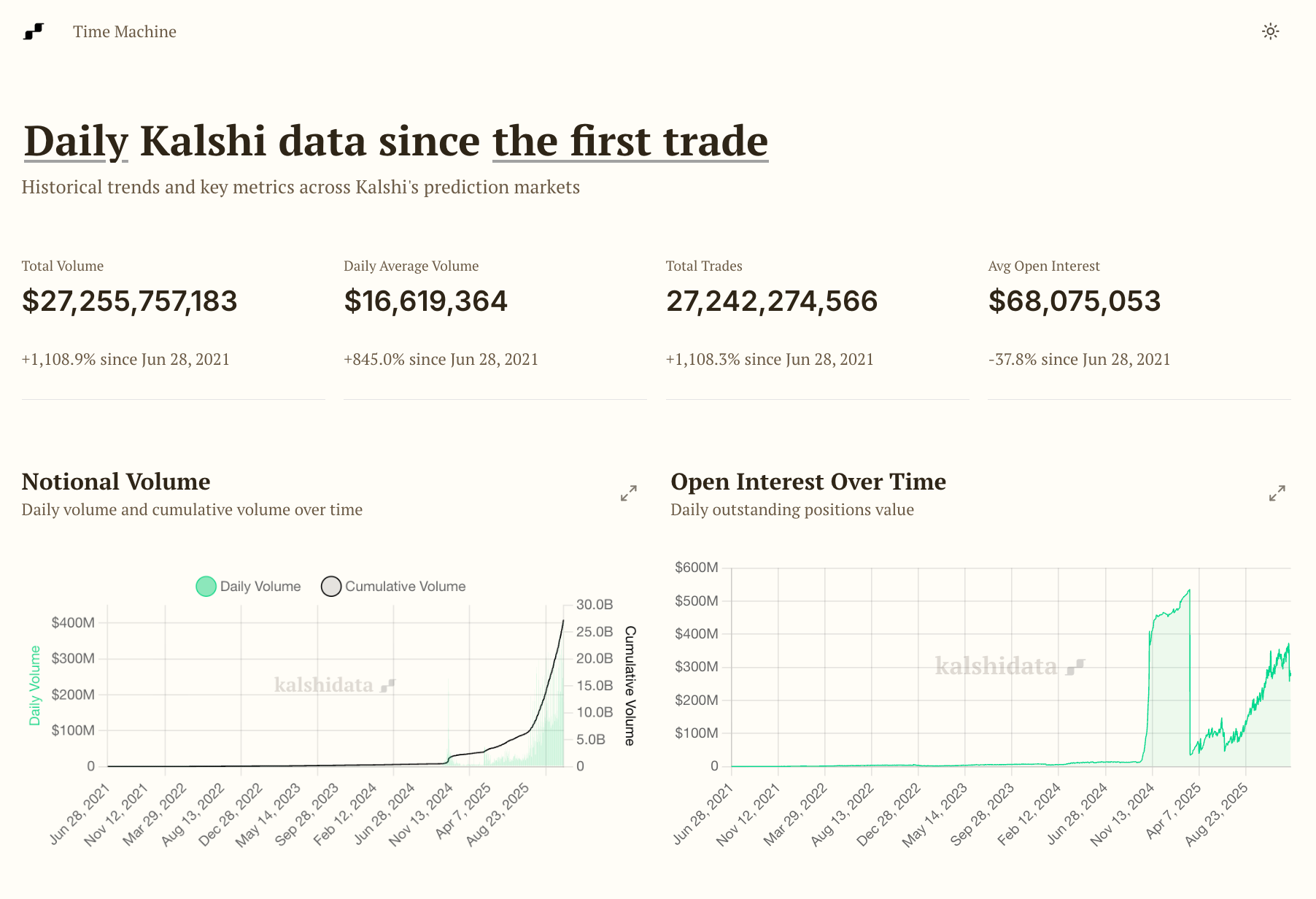
Что касается Polymarket, хотя он позиционируется как «ончейн-рынок предсказаний», возможно, из-за различий в статистических подходах и каналах данных о сделках, данные о его объеме торгов за 2025 год несколько размыты.
Итоги Polymarket за 2025 год: объем торгов оценивается примерно в 22–25 миллиардов долларов
Согласно данным DefiLlama, годовой объем DEX-торгов Polymarket за 2025 год составил около 10,5 миллиарда долларов.
Согласно информации панели данных Dune, годовой объем торгов Polymarket за 2025 год составил около 22,5 миллиарда долларов.
Согласно информации сайта PredictionIndex.xyz, совокупный исторический объем торгов Polymarket составляет 23,2 миллиарда долларов.
Согласно «Отчету о рынке предсказаний», подготовленному Keyrock совместно с такими платформами, как Dune, общий объем сделок на рынке предсказаний в 2025 году составил 44 миллиарда долларов, из которых объем торгов Polymarket составил около 21,5 миллиарда долларов (Прим. Odaily Planet Daily: в то время как объем торгов Kalshi составил около 17,1 миллиарда долларов).
Обобщая эту информацию, а также данные официальной платформы Kalshi, приведенные выше, о том, что «годовой объем торгов Kalshi составил 23,8 миллиарда долларов», мы берем относительно среднее значение и预估рируем, что общий объем торгов Polymarket в 2025 году составил около 22 миллиардов долларов.
Сегменты рынка предсказаний: спорт на первом месте, политические события и криптовалюты на втором и третьем местах
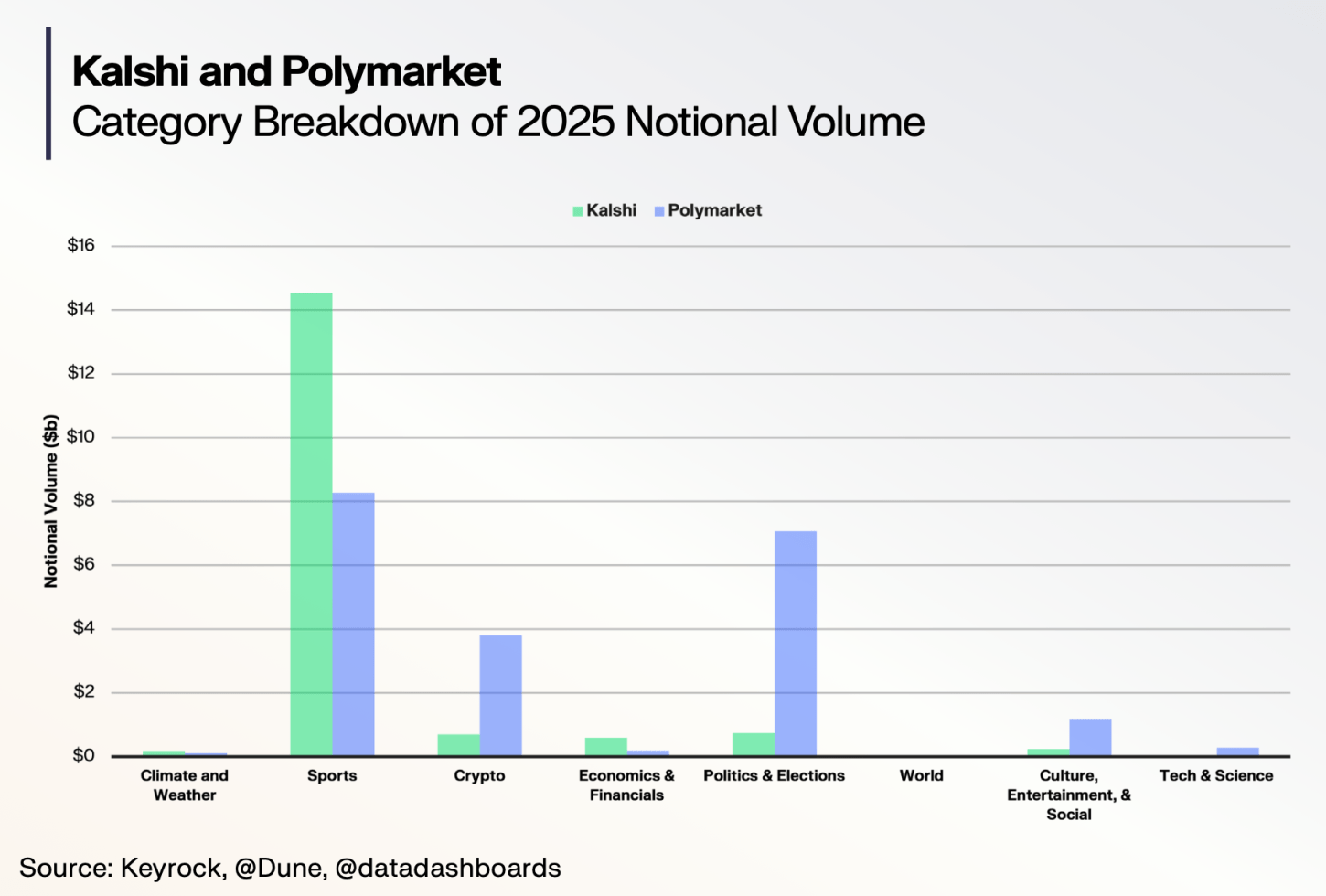
Согласно соответствующей информации из «Отчета о рынке предсказаний», подготовленного Keyrock совместно с Dune и другими платформами, в отношении событий для ставок на рынке предсказаний:
В 2025 году Kalshi по-прежнему в основном на спорт, на который приходится около 85% номинального объема торгов.
Для сравнения, Polymarket демонстрирует более диверсифицированный портфель —
Спорт (39%), политика (34%) и криптовалюты (18%) вместе обеспечили более 90% активности ставок на рынке предсказаний.
Кроме того, в расчетам объема сделок,
- Объем сделок, связанных с событиями в области экономики, вырос на 905%, достигнув 112 миллионов долларов;
- Объем сделок, связанных с событиями в области технологий и науки, вырос на 1637%, достигнув 123 миллионов долларов;
- Открытые ставки на события возглавили экономика (рост в 7 раз до примерно 800 миллионов долларов) и социальная сфера и культура (рост в 6 раз до примерно 700 миллионов долларов), что свидетельствует о растущем использовании макросхеджирования и долгосрочного позиционирования.
- Другие категории (такие как культура, общество) также показали значительный рост, общий объем открытых контрактов вырос с примерно 3,3 миллиарда долларов в начале 2025 года до примерно 13 миллиардов долларов, что свидетельствует о значительном увеличении глубины рынка и ликвидности.
На рынке предсказаний тоже есть «высокий и низкий сезоны»: всплеск объема торгов во втором полугодии
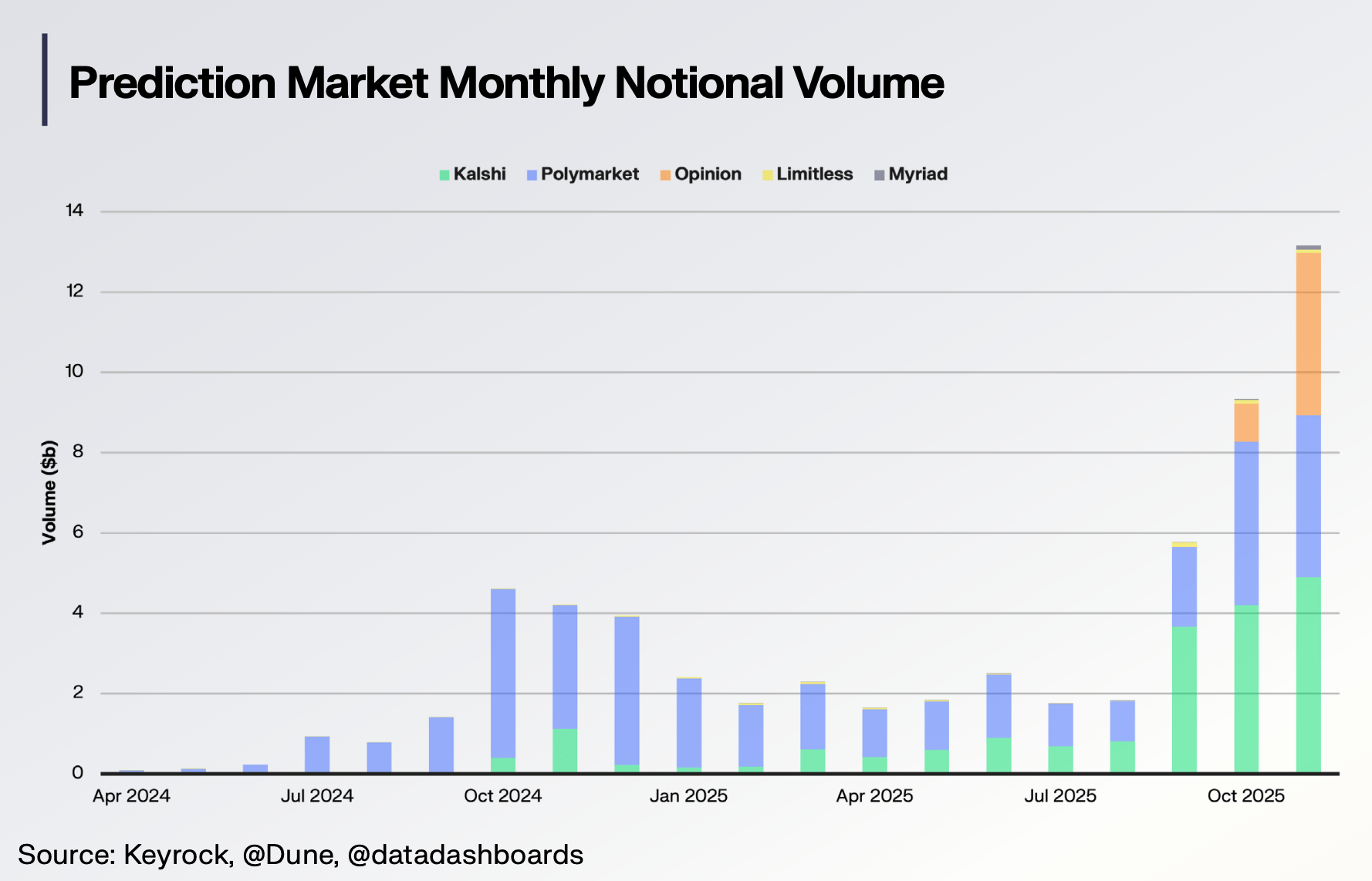
Стоит отметить, что по данным на конец августа 2025 года, объем торгов Polymarket все еще сохранялся на уровне около 7,5–8 миллиардов долларов, однако во втором полугодии, с всплеском различных непредвиденных событий, политических событий и спортивных соревнований, и Polymarket, и Kalshi пережили «период торгового бума»:
В сентябре совокупный объем торгов Kalshi и Polymarket достиг 1,44 миллиарда долларов;
В октябре объем торгов на рынке предсказаний достиг 8,7 миллиарда долларов, лидировал Kalshi, за ним следовал Polymarket;
В ноябре совокупный объем торгов Kalshi и Polymarket приблизился к 10 миллиардам долларов, при этом объем торгов Kalshi составил 5,8 миллиарда долларов, увеличившись на 32% по сравнению с предыдущим месяцем; объем торгов Polymarket составил 3,74 миллиарда долларов, увеличившись на 23,8% по сравнению с предыдущим месяцем.
В декабре 2025 года аналитик Патрик Скотт сообщил, что в ноябре 2025 года объем торгов на рынке предсказаний превысил 13 миллиардов долларов, что более чем в три раза превышает объемы торгов в пик выборов 2024 года. Polymarket, Kalshi и OPINION заняли подавляющую долю объема торгов. Бинарные опционы теперь применяются в политических выступлениях, спортивных событиях и отчетах публичных компаний, становясь вероятностным слоем мировых событий и новостей.
Учитывая, что объем торгов Kalshi в декабре составил 6,38 миллиарда долларов, объем торгов Polymarket, несомненно, также был впечатляющим, и общий объем торгов на рынке предсказаний в декабре 2025 года, возможно, достиг масштаба в 13-15 миллиардов долларов.
Определены Топ-5 звездных игроков рынка предсказаний: Kalshi, Polymarket и другие
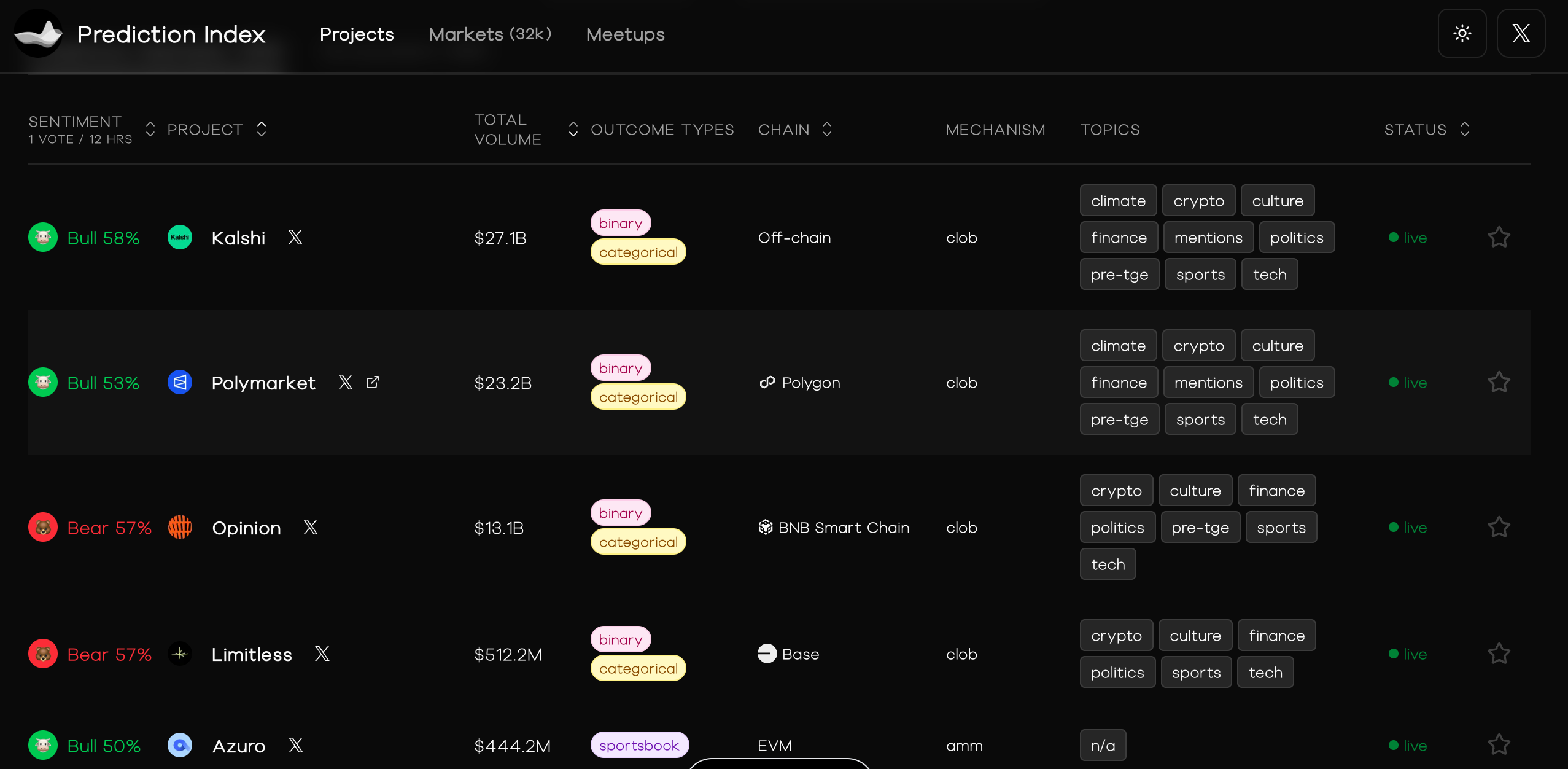
Наконец, мы можем обратиться к текущей статистике сайта PredictionIndex.xyz для справки. На момент написания статьи Топ-5 платформ по объему торгов на рынке предсказаний были следующими:
- Kalshi, исторический объем торгов на платформе составляет примерно 27,1 миллиарда долларов;
- Polymarket, исторический объем торгов на платформе составляет примерно 23,2 миллиарда долларов;
- Opinion, исторический объем торгов на платформе составляет примерно 13,1 миллиарда долларов (Прим. Odaily Planet Daily: учитывая время запуска платформы и ее механизм,可能存在刷量问题,此处仅以数据统计平台信息为准);
- Limitless, исторический объем торгов на платформе составляет примерно 512 миллионов долларов;
- Azuro, исторический объем торгов на платформе составляет примерно 444 миллиона долларов.
Ранее генеральный директор Kalshi заявлял, что размер рынка предсказаний составляет около 150 миллиардов долларов. Хотя最终 общий объем торгов в 2025 году составил лишь треть от заявленной им суммы, но учитывая, что в 2024 году этот сектор рынка предсказаний даже не был fully сформирован, его заявление о «рынке объемом 150 миллиардов долларов» не является пустым разговором. В сочетании с промежуточными выборами в США в 2026 году, Чемпионатом мира по футболу и другими крупными спортивными событиями, которые являются готовыми горячими темами для предсказаний, общий размер рынка предсказаний в 2026 году, возможно, сохранит рост в 10 раз.
Конечно, как мы упоминали ранее в статье «Только один из десяти рынков предсказаний доживет до конца года, и это не преувеличение», популярность сектора не означает, что все проекты и платформы будут процветать. Для нас, обычных игроков, учитывая ограничения по глубине ликвидности и распределению капитала, возможно, лучшим выбором будет специализация на 1-3 основных платформах.







