Epic Games Receives $2 Billion To Build “The” Metaverse

CryptoPotatoОпубликовано 2022-04-12Обновлено 2022-04-14

Введение

Epic Games created Unreal Engine and redefined the gaming industry. Now they want to create a metaverse —and got $2Bn for it.

Sony and Kirkby, the company behind The LEGO Group, are teaming up to fund Epic Games’ new venture focused on the metaverse.
On April 11, Epic Games, an American video game development company, announced the raising of $2 billion —1 Billion USD from Sony and 1 Billion USD from KIRKBI — to build a metaverse.
According to Epic Games, the idea of a metaverse is not just hype. The gaming studio wants to create new experiences based on its already popular games and new projects.  Epic Games sais that such major funding round aims to “advance the company’s vision to build the metaverse and support its continued growth.”
Epic games achieves a $32 billion valuation.
Thanks to this new investment, the company behind Fortnite achieved a valuation of $32 billion, allowing it to delve deeper into this new business model. The executive responsibilities remain the same, and Tim Sweeney remains as the company’s CEO.
Epic Games has not given more information about its plans so far. Still, its metaverse product would likely compete with already established decentralized alternatives, such as Decentraland and The Sandbox, which have attracted hundreds of investors and famous artists. Other centralized options, like Meta’s project, are also playing their cards.
Epic Games is also popular for being the studio behind Unreal engine, which isthe bread and butter of many video game developers, fiilmmakers and content creators. It offers multiple tools such as physics/lightning simulations, video editing, and animation rendering, among many other advantages. So it could be safe to say that it could play a significant role in the development of a metaverse.
Epic Games and LEGO Want a Metaverse That Helps Children to Become Good Individuals
Niels B Christiansen, CEO of The LEGO Group, said that children develop abilities like “creativity, collaboration, and communication through digital experiences thanks to both physical and digital games.” The corporation believes its team has a duty to create inspiring and beneficial content for all of society, helping children put their abilities to good use.
“We have a responsibility to make them (video games) safe, inspiring and beneficial for all. Just as we’ve protected children’s rights to safe physical play for generations, we are committed to doing the same for digital play. We look forward to working with Epic Games to shape this exciting and playful future.”
Tim Sweeney, CEO & Founder of Epic Games, emphasized that LEGO has “captivated the imaginations of kids and adults” for so many years, adding that building a metaverse with them will be “fun, entertaining, and made for kids and families.”
So far, Epic Games has not revealed what technology it will use to develop its metaverse. It is possible that the company goes for a centralized, non-blockchain model (like Meta’s) but the company has previously advocated for a pro-crypto model, allowing the release of many crypto games on its marketplace even though one of its direct competitors, Steam, decided to ban them.
So, it might be too early to rule out a decentralized Epicverse.

Похожее

Macroeconomic Origins of the African Payments Market Structure

Africa’s payment landscape exhibits the world’s highest mobile money penetration and fastest cryptocurrency adoption. This is not a market anomaly but a macroeconomic inevitability driven by deep structural factors: a vast, young population, heavy reliance on commodity exports and remittances generating massive cross‑border payment needs, and a chronically underdeveloped formal banking system plagued by de‑risking, high inflation, and currency instability. This vacuum has allowed mobile money (e.g., M‑Pesa) to become the primary payment channel domestically, while cryptocurrencies—particularly stablecoins—serve as a store of value against local‑currency depreciation and a lower‑cost cross‑border medium. The key divide is the Sahara: North Africa integrates with the MENA oil‑centric financial system, while Sub‑Saharan Africa, facing acute dollar shortages and fragmented currencies, is the epicenter of this fintech surge. Structural reliance on dollars, driven by trade deficits and weak local currency credibility, creates persistent dollar scarcity, which crypto and mobile payments effectively address. Efforts like the Pan‑African Payment and Settlement System (PAPSS) aim at de‑dollarization, but these alternatives will remain essential as long as underlying economic constraints—commodity dependence, limited industrialization, and financial exclusion—persist.

marsbit9 мин. назад

Macroeconomic Origins of the African Payments Market Structure

marsbit9 мин. назад

AAOI Defies Trend with Over 10% Surge, 'New Stock God' Serenity Predicts Potential to Double Again

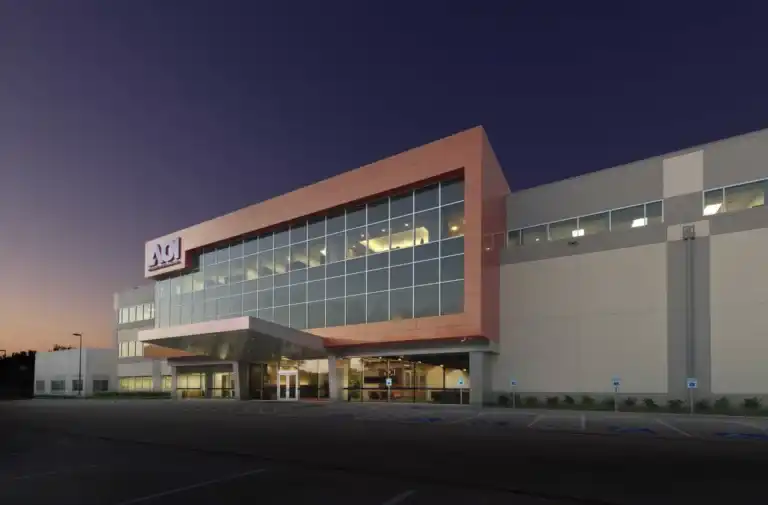
On June 4th, despite a significant sell-off in the broader AI and semiconductor sector triggered by Broadcom's disappointing guidance, Applied Optoelectronics (AAOI) surged over 11%, showcasing a sharp divergence in market sentiment. Broadcom's warning about potential supply chain diversification by key customer Google and a weaker-than-expected outlook punctured the high-flying AI valuation narrative. This led to heavy selling in names like Broadcom (-12.6%) and Micron (-7%), with funds rotating into traditional industrial stocks. AAOI defied this trend. The stock has experienced high volatility recently, driven by bullish analyst coverage, notably from Rosenblatt which raised its price target to $220. Key catalysts include initial 800G optical module revenue from Amazon, potential certification from Oracle, and strong demand across its product portfolio. The company has reported cumulative orders for 800G/1.6T modules exceeding $324 million and is aggressively expanding manufacturing capacity in Texas, targeting an annualized run-rate of $1.4 billion for its module business by Q3 2027. However, AAOI's fundamentals present a mixed picture. Its Q1 2026 results missed expectations, showing a GAAP net loss, and Q2 guidance points to merely breakeven adjusted EPS. Risks include a delayed 800G production ramp to the second half of the year and high dependence on a few key cloud customers. Recent stock sales by company executives near price highs also noted. The article suggests AAOI's rally reflects a market beginning to differentiate within the AI ecosystem. While Broadcom's issues prompted a reassessment of custom ASIC and customer concentration risks, funds flowing into AAOI indicate a belief that the "physical bottleneck" narrative for optical connectivity—where supply remains tight—remains intact and is somewhat decoupled from the current sector weakness. The sustainability of AAOI's premium valuation now hinges on the successful execution of its production plans and upcoming quarterly results.

marsbit16 мин. назад

AAOI Defies Trend with Over 10% Surge, 'New Stock God' Serenity Predicts Potential to Double Again

marsbit16 мин. назад

Worried about AI's Self-Evolution, Anthropic Intends to Stop Training?

In early 2026, Anthropic signaled a significant shift in its public narrative regarding AI development timelines and safety. In June, its Anthropic Institute published a detailed article, "When AI builds itself," presenting internal data suggesting accelerating AI self-improvement. Key figures included over 80% of merged code being written by Claude and a 52x speedup in certain optimization tasks. The article outlined three future scenarios, with the most speculative being full recursive self-improvement (RSI), where AI autonomously builds better successors. Anthropic stated RSI is "possible" and may arrive faster than most institutions are prepared for. This narrative pivot followed a series of strategic moves. In January, CEO Dario Amodei wrote about a powerful self-improvement feedback loop. In February, Anthropic revised its Responsible Scaling Policy, removing a core commitment to pause training if capabilities outstripped safety controls, citing the risk of falling behind competitors. This change coincided with reported pressure from the US Department of Defense. By May, Anthropic's valuation had soared to $965 billion. Anthropic's stance was mirrored by other industry leaders. DeepMind CEO Demis Hassabis adjusted his AGI timeline to "by 2029" and admitted to using provocative language like "foothills of the singularity" to create urgency. OpenAI also released a model claiming a key role in its own creation process. The article's carefully calibrated tone—presenting dramatic data alongside qualifying footnotes—exemplifies a balancing act between signaling technological acceleration and managing commercial, regulatory, and safety imperatives. External experts offered contrasting interpretations of the same data, from warnings of catastrophic risk akin to Chernobyl to skepticism that current automation merely handles "grunt work," not genius. The coordinated narrative shift among top labs highlights the complex interplay between perceived technical inflection points and strategic communication aimed at investors, regulators, and the public.

marsbit18 мин. назад

Worried about AI's Self-Evolution, Anthropic Intends to Stop Training?

marsbit18 мин. назад

Торговля

Спот
Фьючерсы
活动图片