Ethereum Shanghai Upgrade Live On Sepolia For ETH Withdrawals

CoingapeОпубликовано 2023-02-28Обновлено 2023-02-28

Введение

Ethereum Shapella network is successfully activated on the Sepolia testnet at epoch 56832, moving closer to the Shanghai upgrade.

Ethereum Shapella (Shanghai/Capella) network is successfully activated on the Sepolia testnet at epoch 56832 at the scheduled 4:04 AM UTC and finalized at 4:17 AM UTC on February 28. It enables validators to withdraw their stake from the Beacon Chain back to the execution layer and introduces new functions to the execution and consensus layers.

Ethereum developers and clients shared the news on Twitter the Shapellaannouncing network is live and finalized on the Sepolia testnet. The next upgrade will be on the Goerli testnet and then on the mainnet, finalizing the Shanghai upgrade.

Ethereum Shanghai upgrade anticipated in March will fully transition Ethereum to proof-of-stake (PoS) and enables the withdrawals of Ethereum staked on the Beacon Chain. The Sepolia is the second of the three testnets planned to trigger the Shanghai upgrade. The first Zhejiang testnet upgrade was successfully completed on February 7.

Ethereum developers Tim Beiko and Parithosh took to Twitter to share the successful Sepolia Shapella upgrade.
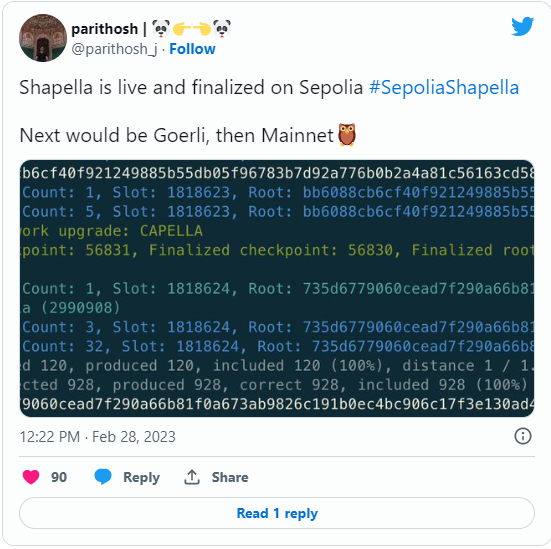
Terence.eth, an Ethereum developer working on Arbitrum, revealed that some of the Prsym validators failed to upgrade to new client releases and are offline due to using the old Geth version. However, these validators will come online after a few minutes.


Marek Moraczynski, team lead at Ethereum client Nethermind, also took to Twitter to share the interesting news of successful Sepolia Shapella activation by the Ethereum Foundation developers.


Meanwhile, Ethereum Foundation has announced to shut down the Goerli testnet after the Shanghai upgrade. It will follow with the Holli or Holesovice testnet, expected in September this year.


Ethereum Price After the Shanghai Upgrade on Sepolia Testnet


Ethereum price is currently trading at $1,627, continuing to move in a range above the $1,600 level. The 24-hour low and high are $1,615 and $1,662, respectively. Furthermore, the trading volume has increased by 15% in the last 24 hours, indicating a slight increase in interest.


The ETH price action has lost pace amid the fear of hawkish rhetoric from the U.S. Federal Reserve. The broader crypto market has also continued to be under pressure and is expected to bounce next month.

Похожее

MuleRun CTO: The Moat of Agents Lies in Data Density and User Memory

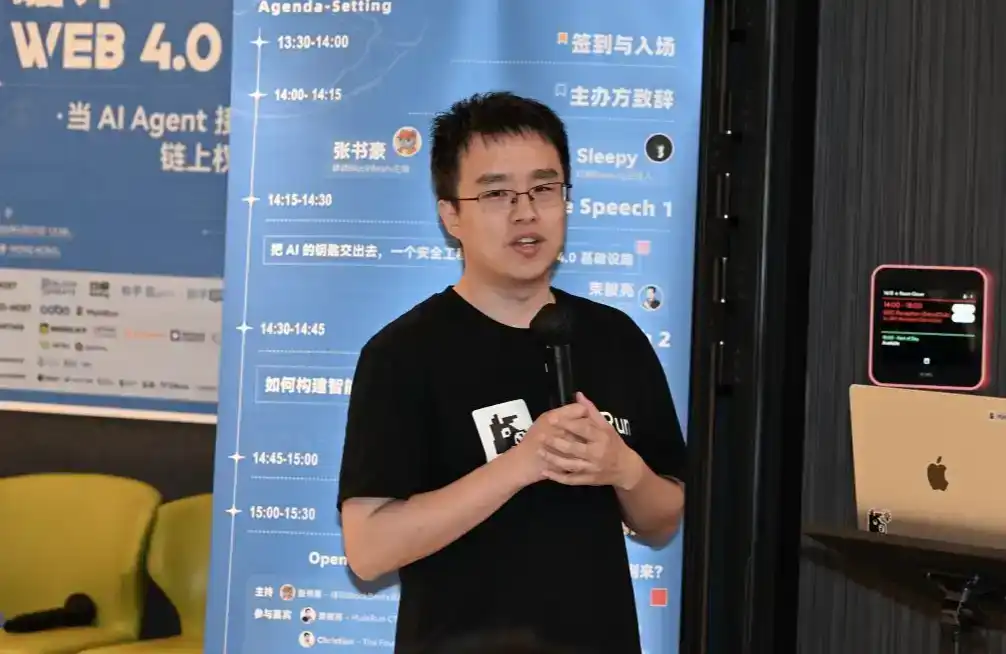
In a speech titled "Handing AI's Keys to the On-Chain Controllers," MuleRun CTO Shu Junliang discussed the evolution and security of AI Agents in finance and Web3. He outlined six dimensions for a complete AI assistant: dialogue, data input, agent capability, execution environment, user memory, and continuous learning. MuleRun's product integrates these through features like multi-platform IM bots, real-time multi-asset data, smart model routing, cloud sandboxes, persistent user profiles, and a shared knowledge network. Shu emphasized that while AI Agents are advancing from assisting to autonomously executing decisions—potentially enabling individuals to operate like small funds—safety remains paramount. He detailed MuleRun's security measures, including local key handling, isolated sandboxes, full audit trails, and strict permission controls. However, he acknowledged persistent risks like data exposure, model hallucinations, prompt injection, and the "black box" nature of AI decisions, advising manual confirmation for financial operations. He identified key trends: the shift from human-led to Agent-led on-chain interactions requiring infrastructure redesign; the erosion of information advantages replaced by competition in execution speed and strategy; and the balancing effect of Agents, which democratize access but ultimately advantage those with superior judgment. Shu concluded that an Agent's true moat lies in data density and accumulated user memory, not easily replicable technology, and that while Agents will reshape finance and Web3, human oversight over critical decisions must remain.

marsbit1 мин. назад

MuleRun CTO: The Moat of Agents Lies in Data Density and User Memory

marsbit1 мин. назад

Buying BTC is Not as Good as Buying Nasdaq, and This Statement Has an Expiration Date

The article, titled "Investing in Bitcoin Has an Expiration Date", discusses the recent narrative on social media that investing in U.S. tech stocks (like the Nasdaq 100) has been far superior to investing in Bitcoin. This sentiment is fueled by performance comparisons showing the Nasdaq 100 significantly outperforming Bitcoin over a specific five-year window starting in late 2021. However, the author argues that such comparisons are highly sensitive to the chosen timeframe. By shifting the starting point to other key market moments—like the COVID-19 bottom (March 2020), the FTX collapse bottom (November 2022), or the pre-Bitcoin ETF approval period (January 2024)—Bitcoin's returns often match or dramatically exceed those of the Nasdaq 100. The popular Reddit chart essentially cherry-picks a period that started near a Bitcoin cycle high and just before the massive AI-driven rally in tech stocks. The core difference lies in their asset structures. The Nasdaq 100, backed by corporate earnings, exhibits a steadier long-term upward trend. Bitcoin is a highly cyclical asset with extreme volatility, where returns are drastically different depending on where in its bull/bear cycle an investment is made. The article notes Bitcoin often acts like a leveraged version of the S&P 500, magnifying both gains and losses. Currently, Bitcoin is in a "cyclically undervalued zone," having corrected ~37% from its October 2025 peak while the Nasdaq hits new highs. Historically, peak narratives about stocks beating Bitcoin have often coincided with Bitcoin nearing cyclical lows, as seen before its major rally from late 2022. The conclusion is that declaring one asset permanently superior to another is statistically flawed; performance is entirely dependent on timing. The real challenge for investors is not picking the "better" asset, but mastering entry and exit timing.

marsbit18 мин. назад

Buying BTC is Not as Good as Buying Nasdaq, and This Statement Has an Expiration Date

marsbit18 мин. назад

Bezos, Schmidt, Powell Jobs: The Three AI Investment Philosophies of Silicon Valley's Old Money

Jeff Bezos, Eric Schmidt, and Laurene Powell Jobs, three prominent figures from Silicon Valley's "old money," are deploying massive personal fortunes into AI, but with distinctly different investment philosophies reflecting their visions for the future. Eric Schmidt, the former Google CEO, approaches AI as a geopolitical and infrastructural arms race. Through his family office, Hillspire, he invests heavily in defense AI companies, energy infrastructure (like Bolt Data & Energy to power data centers), and space launch capabilities (Relativity Space). For Schmidt, the ultimate AI advantage lies in physical resources—energy, transport, and military application—framing it as a national competition requiring state-level strategy and endurance. Jeff Bezos is building a vertically integrated, full-stack AI empire. His bets span the model layer (via Amazon's massive investment in Anthropic), the application layer (through investments like Perplexity), and now, the physical execution layer. His new venture, Project Prometheus, with $6.2 billion, aims to inject AI into manufacturing, creating a closed loop from AI chips and cloud compute (AWS) to real-world production, potentially for Amazon's own ventures like the Kuiper satellite network. In contrast, Laurene Powell Jobs adopts a more subtle, human-centric approach through her Emerson Collective. Her AI investments focus on specific, positive-impact applications—such as AI for healthcare (Proximie, Atropos Health), education (Curipod), and European AI sovereignty (Mistral AI). A key, high-profile bet was her early backing of Jony Ive's design firm LoveFrom and its spin-off, io, an AI hardware device company later acquired by OpenAI. Her philosophy prioritizes improving human-machine interaction and addressing societal needs over sheer scale or control. These three strategies—Schmidt's focus on state-level infrastructure and security, Bezos's pursuit of end-to-end industrial integration, and Powell Jobs's emphasis on human-centered design and applied solutions—represent fundamentally different wagers on what will define the next decade of AI. While the eventual winner is unknown, the sheer scale of this capital migration from internet-era giants is already reshaping the industry's trajectory.

marsbit41 мин. назад

Bezos, Schmidt, Powell Jobs: The Three AI Investment Philosophies of Silicon Valley's Old Money

marsbit41 мин. назад

Chinese Young Man's AI Short Goes Viral Abroad! Hollywood Director Searches Online: Wants to Hire Him

A young Chinese creator, Mx-Shell, an amateur filmmaker from Yunnan with no formal film training, has gone viral internationally with his AI-generated short film "Zombie Scavenger." Created independently in about 10 days using the Chinese AI video tool Seedance 2.0 at a minimal cost, the film features a robot cowboy in a post-apocalyptic world. Its unique atomic-punk style and cinematic quality caught the attention of Hollywood. The film initially gained little traction on Chinese platform Bilibili. However, after PJ Ace, founder of LA-based AI studio Genre.ai, shared it on X (formerly Twitter), praising it as "one of the best short films I've seen in recent years," it quickly garnered millions of views overseas. PJ Ace then publicly sought to hire the unknown director, sparking a cross-platform search. The creator, who doesn't speak English, was unaware of the overseas buzz until Chinese internet users relayed the message. Connection was eventually made via a QQ email address shared in Bilibili comments, and Mx-Shell received a job offer from the Hollywood director. The article highlights this as a case of "talent export." It argues that while China's competitive AI tool market lowers technical barriers, true success still relies on individual creativity, aesthetic judgment, and narrative skill—qualities Mx-Shell demonstrated. His story exemplifies how AI tools can empower previously unseen creators with compelling ideas to reach a global audience, even if initial recognition sometimes comes from abroad before reverberating back home.

marsbit1 ч. назад

Chinese Young Man's AI Short Goes Viral Abroad! Hollywood Director Searches Online: Wants to Hire Him

marsbit1 ч. назад

Торговля

Спот
Фьючерсы
活动图片