2026-08-05 Quarta

Notícias de cripto - Página 222

Mantenha-se a par do mercado de cripto. Notícias em tempo real, análises, preços, histórias em alta e análise de especialistas — tudo num só lugar.

Solana Ecosystem Shows Signs of Recovery: On-Chain Governance Upgrade, Tokenized Stocks and Meme Coins Heat Up

Solana Ecosystem Shows Signs of Revival: Governance Upgrades, Tokenized Stocks, and Memecoins Heat Up While the broader crypto market faces a downturn, Solana has shown relative strength with its price rising nearly 15% recently. This resilience is attributed to warming ecosystem activity, particularly in tokenized stocks and memecoins, coupled with a major upgrade to its on-chain governance. In the Real World Assets (RWA) sector, Solana now leads all public chains in both the number of unique holder wallets and the quantity of RWA assets. Its tokenized stock weekly trading volume has surged to a record $1.42 billion, capturing about 96% of the market share, largely driven by the Backpack exchange. Simultaneously, the Solana memecoin sector has reignited, fueled by the rapid ascent of the ANSEM token following endorsements from a prominent crypto influencer. This has boosted activity across platforms like Pump.fun and increased fee revenue for several Solana-based exchanges. A key development is the launch of Solana Governance Proposals (SGP), a new on-chain mechanism. It allows validators with at least 100,000 SOL delegated to submit proposals for community vote, enhancing decentralized decision-making. SGP will operate alongside the existing technical proposal process (SIMD), focusing on broader ecosystem governance. Despite these positive signals in specific areas, overall on-chain activity and transaction volumes still lag behind previous bull market peaks, indicating the recovery remains partial rather than ecosystem-wide.

marsbit07/03 09:56

Solana Ecosystem Shows Signs of Recovery: On-Chain Governance Upgrade, Tokenized Stocks and Meme Coins Heat Up

marsbit07/03 09:56

While Semiconductor Stocks Plunge, Anthropic Plans to Develop a 2nm Chip

Anthropic, the AI company behind Claude, is exploring the development of its own custom AI chip, according to a report from The Information. The company is in early discussions with Samsung Electronics to manufacture the chip using Samsung's most advanced 2-nanometer process and packaging technology. While the project is still in preliminary stages, including defining chip specifications, and could be abandoned, it marks a strategic step for Anthropic. The move comes as the company seeks greater control over its computing costs and hardware optimization, particularly for inference tasks to run its models more efficiently and cheaply. Samsung's potential involvement follows its participation as a strategic investor in Anthropic's recent $65 billion funding round. For Samsung, partnering with a major AI lab represents a significant opportunity for its foundry business to compete with market leader TSMC in advanced semiconductor manufacturing. Anthropic's CEO, Dario Amodei, has previously highlighted the immense financial challenge of securing enough computing power for anticipated growth, making cost-effective inference a critical focus. The company would join other tech giants like Google, Amazon, Microsoft, Meta, and OpenAI in pursuing custom AI silicon. However, analysts note this trend creates deeper interdependencies rather than independence, as US AI labs become more tightly woven into Asian semiconductor supply chains. Despite this move, Anthropic remains heavily reliant on a multi-cloud, multi-vendor strategy for its immediate computing needs. It has secured massive, long-term commitments for capacity from Amazon Web Services (Trainium chips), Google (TPUs), and even leased a large GPU cluster from xAI. For now, Nvidia continues to dominate the AI chip market, with its share reportedly growing to 74%.

链捕手07/03 09:54

While Semiconductor Stocks Plunge, Anthropic Plans to Develop a 2nm Chip

链捕手07/03 09:54

Korean Companies Following Strategy in Accumulating Cryptocurrency: From Bull Market to Delisting?

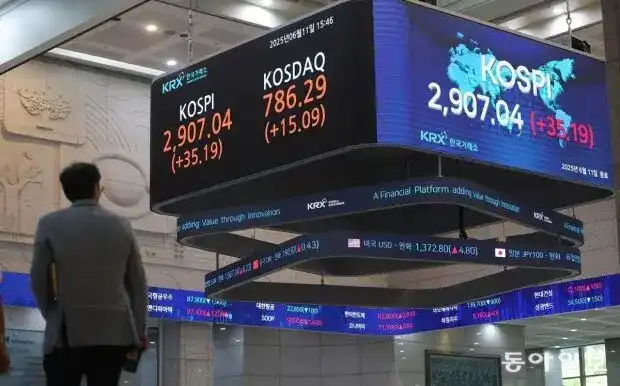
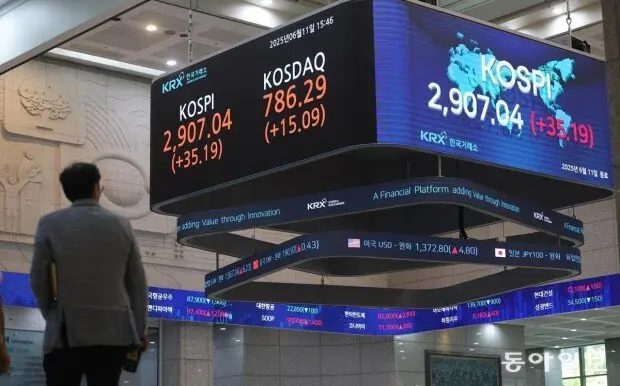
Title: Korean DAT Companies Following "Strategy" Bitcoin Hoarding Model Face Delisting Amid Bear Market Summary: Several Korean KOSDAQ-listed companies, known as Digital Asset Trusts (DATs), are at risk of being delisted due to a combination of stricter regulatory thresholds and a downturn in crypto markets. These firms, inspired by models like Strategy and Japan's Metaplanet, raised capital to buy Bitcoin, relying on a cycle of rising crypto prices to boost their stock value. However, recent reforms in Korea have raised the minimum market capitalization required to stay listed from 150 billion won to 200 billion won (approx. $1.3M), with a further increase to 300 billion won set for next January. The new rules also close loopholes like reverse stock splits used to artificially inflate share prices. The situation is exacerbated by a significant drop in Bitcoin's price from its 2025 peak and a weak KOSDAQ market. While the main KOSPI index has surged nearly 95% year-to-date, KOSDAQ has fallen about 10%, draining liquidity from smaller companies. Many DATs now hover near or below the new market cap thresholds and must also book substantial valuation losses on their Bitcoin holdings. Analysts suggest that without a sustained recovery in both crypto prices and broader market interest in KOSDAQ stocks, these companies have limited options to avoid delisting, marking a precarious moment for Korea's crypto-linked public companies.

marsbit07/03 09:44

Korean Companies Following Strategy in Accumulating Cryptocurrency: From Bull Market to Delisting?

marsbit07/03 09:44

Korean Companies That Learned to Hoard Coins from MicroStrategy: From Bull Market to Delisting?

South Korean companies that adopted the “Digital Asset Treasury” (DAT) strategy—issuing shares to buy and hold Bitcoin, inspired by MicroStrategy—now face delisting risks on the KOSDAQ market. New regulations effective July 1, 2026, tightened listing maintenance rules, notably raising the minimum market capitalization threshold from 150 billion KRW to 200 billion KRW (about $1.3 million), with a further increase to 300 billion KRW scheduled for January 2027. Companies failing to meet both the share price and market cap requirements for specified periods risk being designated for delisting, with fewer options for financial engineering like stock splits to artificially boost prices. The downturn in cryptocurrency prices has severely impacted these firms. Bitcoin, which peaked above $120,000 in mid-2025, has fallen below $60,000, forcing DAT companies to report large valuation losses. Compounding this, the KOSDAQ index has dropped about 10% year-to-date, while the main KOSPI index surged nearly 95%, diverting investor interest away from smaller-cap stocks. Examples like BitPlanet (holding 300 BTC) and Parataxis Ethereum currently hover just above the new market cap limits, but face heightened scrutiny and potential delisting starting in 2027. Industry analysts warn that the combination of weak crypto markets, a struggling KOSDAQ, and stricter regulations creates a significant survival challenge for these companies, highlighting the risks of business models overly reliant on volatile digital asset prices.

链捕手07/03 09:40

Korean Companies That Learned to Hoard Coins from MicroStrategy: From Bull Market to Delisting?

链捕手07/03 09:40

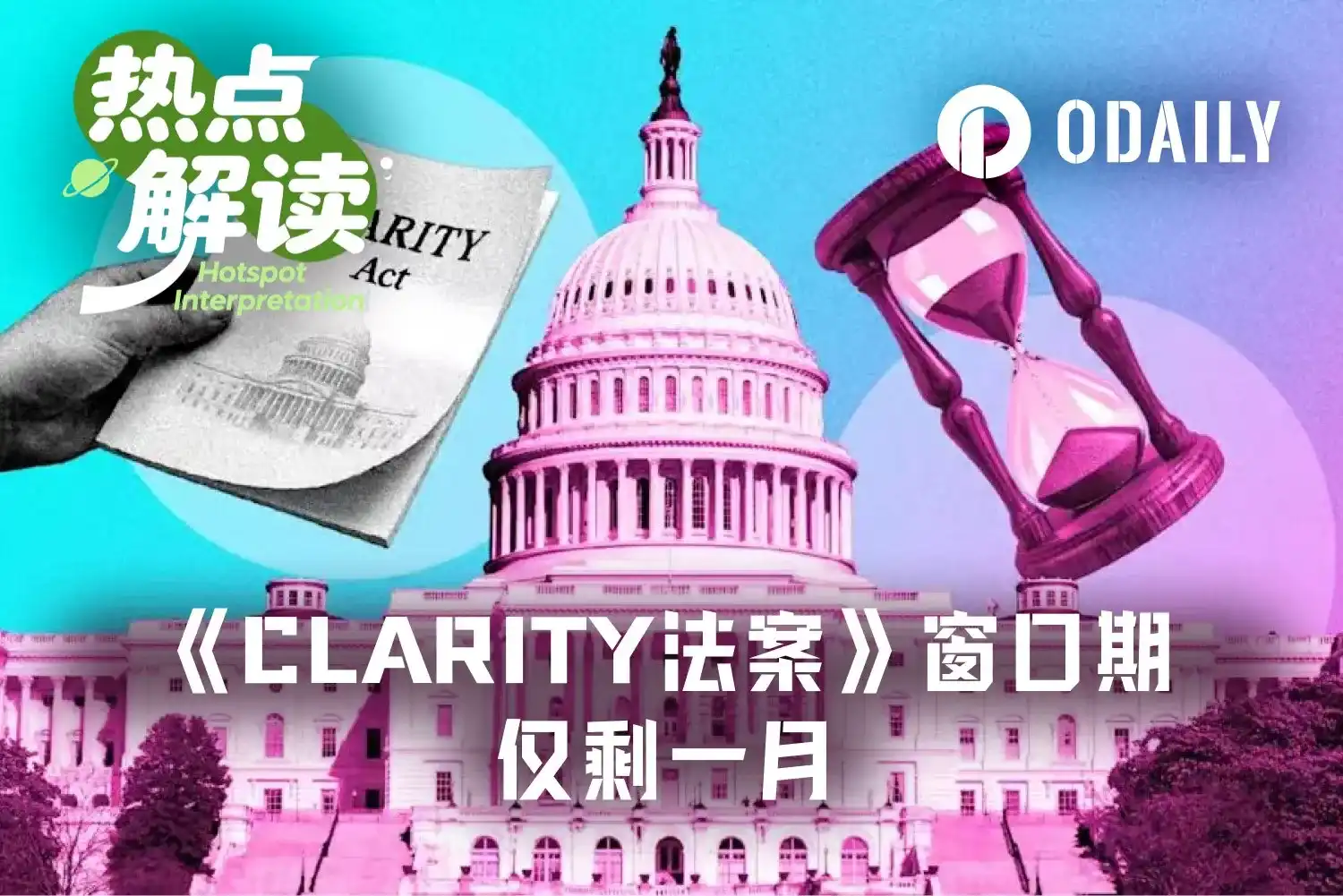
Countdown to the CLARITY Act: 25 Days Left—What Will Happen to the Crypto Market if It Fails to Pass Before the August Recess?

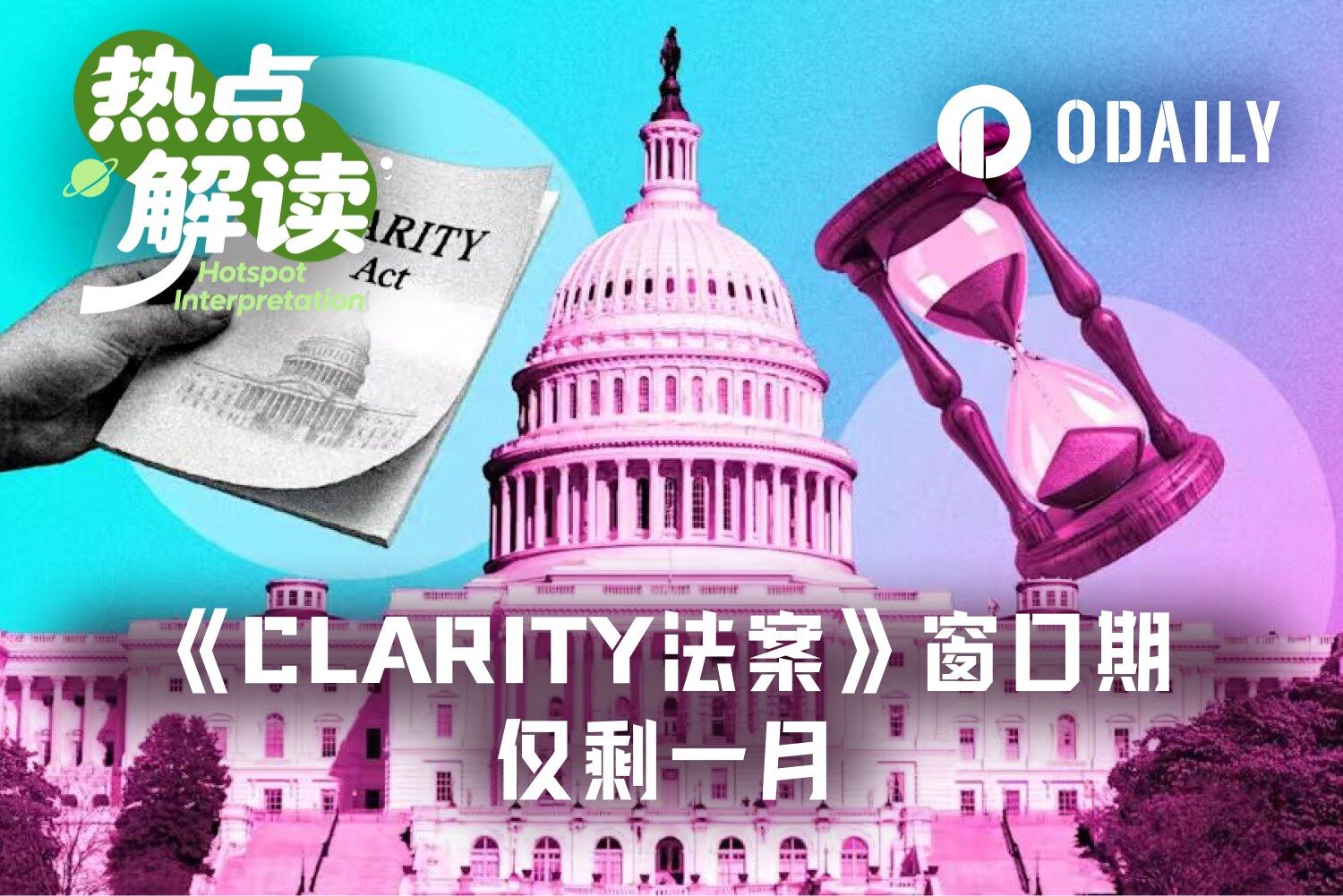
"The CLARITY Act, a key US crypto market structure bill, faces a tight deadline with only 25 working days left before the Senate's August 10 recess. The bill aims to clarify SEC/CFTC jurisdiction and establish a non-security path for decentralized tokens. Despite passing the House in 2025 and a Senate committee in May 2026, final negotiations have stalled over ethics and law enforcement provisions, jeopardizing the 60 Senate votes needed. If the bill fails to pass before the recess, its chances in 2026 drop significantly, with prediction markets giving only a 40% probability. Analyst Galaxy Digital has lowered its 2026 passage odds to 50%. Failure would likely lead to continued 'slow bleeding' in crypto markets, as seen in June's record $4.5 billion net outflow from US Bitcoin ETFs. XRP, which stands to gain permanent commodity status from the bill, could lose its 'regulatory premium.' Bitcoin and Ethereum, already classified as commodities via a joint agency interpretation, would face less direct impact but broader regulatory uncertainty would persist, delaying institutional capital and DeFi innovation. The path forward includes: 1) Passage before August (a major catalyst), 2) Delay to 2027 (extending market uncertainty), or 3) Failure, requiring the bill to be reintroduced in the next Congress. While delay is a setback, the bill's progress indicates the US is closer than ever to resolving crypto regulatory ambiguity."

marsbit07/03 09:06

Countdown to the CLARITY Act: 25 Days Left—What Will Happen to the Crypto Market if It Fails to Pass Before the August Recess?

marsbit07/03 09:06

In the First Half of the Year, Half of VC Money Flowed to AI, with These 30 Companies Alone Raising Over 170 Billion Yuan

First Half of 2026: VC Investment in AI Explodes, with 30 Top Companies Raising Over 170 Billion RMB In the first half of 2026, China's AI sector saw a massive surge in venture capital, with total equity financing exceeding 300 billion RMB—already surpassing the entire 2025 total. Key trends include: * **Massive Funding Scale:** The AI track recorded 1,203 financing events totaling over 300 billion RMB. Investment peaked in June, partly driven by DeepSeek's landmark 51-billion-RMB Series A round. * **Geographic Concentration:** Beijing, Hangzhou, Shanghai, and Shenzhen dominated, accounting for 74% of deals and 86% of total funding. Beijing led with 95.5 billion RMB, while Hangzhou surged to second place due to DeepSeek's round. * **Sector Focus:** * **Large Models** were the top draw, securing over half of all funds (nearly 1.6 trillion RMB). * **AI Infrastructure** (compute, chips) and **Embodied AI** (e.g., robotics) were other major investment areas, with the latter being the most active in number of deals. * **AIGC Applications** attracted significant capital (59.6 billion RMB), indicating strong belief in near-term commercialization. * **Investment Stage Logic:** Capital followed a clear strategy: heavy bets on growth-stage companies (A/B rounds), major funding for mature leaders, and widespread, smaller-scale seeding of early-stage innovators. * **Notable Early-Stage Trends:** World models (seen as the "OS" for embodied AI) attracted the most early capital. Angel/seed rounds reached unprecedented sizes ("inflation"), and investment shifted from foundational large models to downstream applications like robotics and physical AGI. * **Top Companies:** The 20 largest mid/late-stage deals raised 1.565 trillion RMB. Leaders include the "Big Three" large model firms (DeepSeek, StepFun, Kimi), seven leading humanoid robot companies ("Seven Samurai"), and top AIGC application players. * **Outlook:** Full-year 2026 funding is projected to exceed 6 trillion RMB. However, consolidation is expected in the large model sector, with the window for pure-play general AI startups closing. Survival will depend on finding niche verticals or securing strategic backing.

marsbit07/03 09:01

In the First Half of the Year, Half of VC Money Flowed to AI, with These 30 Companies Alone Raising Over 170 Billion Yuan

marsbit07/03 09:01

Airwallex Invests in Metal: How Stablecoins Reconnect with the Real Financial System?

Airwallex Invests in Metal: How Stablecoins Connect Back to the Real Financial System? Airwallex, a global financial platform for businesses, has completed a $3.2 billion Series H funding round at an $11 billion valuation. Concurrently, it co-led the seed round for Metal, a "tokenized financial products infrastructure" project, becoming its first design partner. This move signals Airwallex's strategic shift beyond traditional cross-border payments. It aims to leverage its decade of experience in licenses, local payment networks, and API infrastructure to address a new challenge: facilitating the entry of stablecoins, tokenized assets, and AI agents into enterprise financial systems. This involves handling critical functions like authorization, compliance, currency exchange, fiat on/off-ramps, and final settlement. Metal positions itself not merely as another stablecoin payment solution but as a compliant settlement layer (Layer 1 blockchain) designed for regulated financial institutions. It targets a broader scope of tokenized financial products, including stablecoins, tokenized deposits, and securities. The core challenge it addresses is connecting efficient on-chain assets with the complex realities of corporate finance, such as multi-currency bank accounts, securities, compliance checks, and local regulations. Airwallex's investment, alongside its founder-backed fund Capital49, provides Metal with crucial real-world infrastructure: access to local payment networks covering 200+ countries and 90+ currencies. This partnership aims to bridge the gap between on-chain efficiency and off-chain, institution-ready settlement. The announcement aligns with Airwallex's broader product direction, which includes an AI-native financial platform (T:0) and a wallet infrastructure for AI agent commerce (Airi). The combined vision is an integrated infrastructure that can handle the speed and cost benefits of on-chain assets while seamlessly managing compliance, authorization, and fiat connectivity required for global business operations and the emerging AI agent economy.

Foresight News07/03 08:32

Airwallex Invests in Metal: How Stablecoins Reconnect with the Real Financial System?

Foresight News07/03 08:32

活动图片