Technology Trends

Explores the latest innovations, protocol upgrades, cross-chain solutions, and security mechanisms in the blockchain space. It provides a developer-focused perspective to analyze emerging technological trends and potential breakthroughs.

From 'Old Guys' to 'New Favorites': How AI Is Revaluing Old Infrastructure from Dell to Nokia?

From "Vintage Tech" to "New AI Darlings": How AI Revalues Old Infrastructure One year ago, tech giants like Dell, Nokia, Cisco, and Western Data were seen as slow-growth, low-valuation stories, far from the AI spotlight dominated by players like Nvidia. Now, these legacy tech stocks are gaining market attention, sparking debate on whether this is genuine industry revaluation or a temporary narrative. As AI moves from model parameters to real-world data centers, the market is recognizing companies with proven delivery and infrastructure capabilities. This shift marks a change in the AI investment thesis: from pure model and GPU focus to the complex systems engineering required for deployment. Companies like Dell, HPE, and Corning are being revalued not for being "sexy" AI innovators, but for their decades of accumulated expertise in supply chains, enterprise delivery, and infrastructure—assets that have become critical in the AI buildout phase. The revaluation is unfolding across three key infrastructure lines: 1. **Servers & System Integration:** Dell and HPE are emerging as crucial system integrators or "general contractors" for AI data centers, translating GPU orders into complete, deployable server racks integrated with power, cooling, and networking. 2. **Networking & Connectivity:** AI's scale demands robust high-speed connections. Corning (fiber optics), Nokia (AI-RAN, 6G), and Cisco (data center switches) are gaining importance for enabling efficient data transfer within and between AI clusters. 3. **Storage:** Beyond high-speed memory (HBM/DRAM), the AI data explosion is driving demand for high-capacity hard drives (HDDs) from companies like Western Digital and Seagate to handle training data, logs, and cold storage cost-effectively. For this revaluation to be substantive and not just a narrative, three criteria are key: 1) Concrete AI-related order and revenue growth (e.g., Dell's AI server sales), 2) Upward revisions to company financial guidance, and 3) Sustainable improvements in profit quality, not just top-line revenue spikes. In essence, AI's transition to a real construction phase is re-pricing "old assets" against "new demand." The opportunity, however, is selective. Only those legacy firms that are demonstrably integrated into the capital expenditure chains of data center and enterprise AI deployment are likely to experience a true "logic re-rating" rather than just a temporary valuation bounce.

marsbit2h ago

From 'Old Guys' to 'New Favorites': How AI Is Revaluing Old Infrastructure from Dell to Nokia?

marsbit2h ago

The Merger of Codex and ChatGPT Marks the Beginning of a Major Reshuffle in Programming Tools

OpenAI is shifting its strategic focus from ChatGPT to Codex, merging them along with the browser tool Atlas into a unified desktop super-app. This move signals an internal belief that Codex, originally a programming tool, represents the next evolution of AI more than conversational models like ChatGPT. Over the past year, Codex's weekly active users have surged past 5 million. The key distinction is that while ChatGPT answers questions, Codex executes tasks. Enterprises increasingly value this ability to get work done over simply receiving advice. Consequently, Codex is attracting professionals beyond developers, including analysts, bankers, marketers, and product managers. OpenAI's reorganization and increased investment in Codex stem from recognizing that the future of AI competition lies in execution capabilities, not just conversation. The company is launching role-specific plugins (e.g., for data analysis, sales, design) to transform Codex into a broad knowledge work platform that automates and redefines white-collar workflows. Beyond being a tool, Codex reflects OpenAI's ambition to redefine software. New features like "Sites"—which generates interactive websites from documents—and collaborative "Annotations" aim to create a paradigm where the AI understands the goal and handles the tools and steps, functioning more like a digital colleague than traditional software. The ultimate goal is a unified experience where the user cares only about the completed task.

marsbit2h ago

The Merger of Codex and ChatGPT Marks the Beginning of a Major Reshuffle in Programming Tools

marsbit2h ago

AI Relay Stations Spark Heated Debate on Zhihu: Behind Cheap Tokens, What Are Users Really Worried About?

A discussion on Zhihu about "AI relay stations" shifted the niche developer topic of "cheap tokens" into broader user awareness. Users moved beyond simply questioning the legitimacy of these services to focus on practical concerns: Where do cheap tokens truly come from? Is the model being accessed the real one? Can relay stations see prompts, code, and API keys? For occasional users, are the risks worth it? The core debate centered less on price and more on trust. A primary worry is model authenticity—the risk of "model swapping," where users paying for a premium model might be routed to a cheaper one, creating an information asymmetry. Others argued that cost comparisons matter; while cheaper than official pay-as-you-go APIs, relay stations may not be the lowest-cost option versus subscriptions, domestic models, or free tiers, making user needs assessment crucial. Speculation about token sources ranged from legitimate bulk discounts to gray-area methods like account sharing or exploiting regional pricing. This opacity makes risk assessment difficult for users. Data security emerged as a critical concern, especially for enterprise use. When processing sensitive information like code, contracts, or client data, the inability to verify a relay station's data handling, retention, or access policies poses significant compliance and confidentiality risks. The evolving consensus suggests relay stations can be used cautiously for low-sensitivity, disposable tasks (e.g., summarizing public info, simple translation). However, they should not be the default for sensitive, professional, or production workflows involving proprietary data, Agents, or automated systems. Recommendations include avoiding large prepayments, not relying on a single service, using test prompts to monitor quality, anonymizing data where possible, and keeping official channels as backups. Ultimately, the discussion framed tokens not just as a billing unit but as a measure of real cost encompassing price, model integrity, data security, and service stability. The popularity of relay stations highlights user demand for affordable access, but the debate underscores a key trade-off: the savings from cheap tokens may come at the price of trust, transparency, and control over one's data and AI experience.

marsbit8h ago
AI Relay Stations Spark Heated Debate on Zhihu: Behind Cheap Tokens, What Are Users Really Worried About?

marsbit8h ago

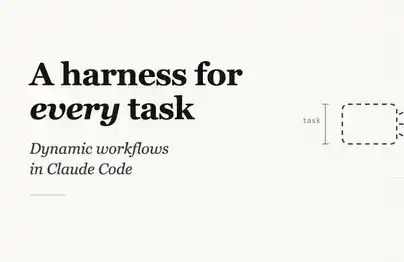
Claude Code Introduces Dynamic Workflows: Enabling AI to Form Teams and Collaborate

Claude Code introduces dynamic workflows, enabling AI to coordinate teams of specialized agents for complex tasks. This transforms Claude from a code assistant into a programmable workbench. Workflows address key limitations of single-agent systems: agentic laziness (premature task completion), self-preferential bias (favoring own outputs), and goal drift (losing sight of original objectives). The system allows Claude to dynamically create execution frameworks using JavaScript. It can split tasks, dispatch parallel agents for isolated work (e.g., in separate worktrees), implement adversarial validation, run tournaments, and synthesize results. This multi-agent approach is valuable for tasks requiring deep research, factual verification, code migration, root cause analysis, large-scale triage, and qualitative sorting. Key patterns include: classify-and-route, fan-out-and-synthesize, adversarial verification, generate-and-filter, tournaments, and loop-until-done. While token usage is higher, workflows excel where tasks resemble programming—needing problem decomposition, isolated context, hypothesis testing, and handling many details. They extend Claude Code's utility beyond technical work to areas like business plan review, resume screening, and naming brainstorm. The feature is not a universal solution but points to a future where AI tool competitiveness depends on organizing reliable, reusable, and auditable execution flows for complex goals.

marsbit12h ago

Claude Code Introduces Dynamic Workflows: Enabling AI to Form Teams and Collaborate

marsbit12h ago

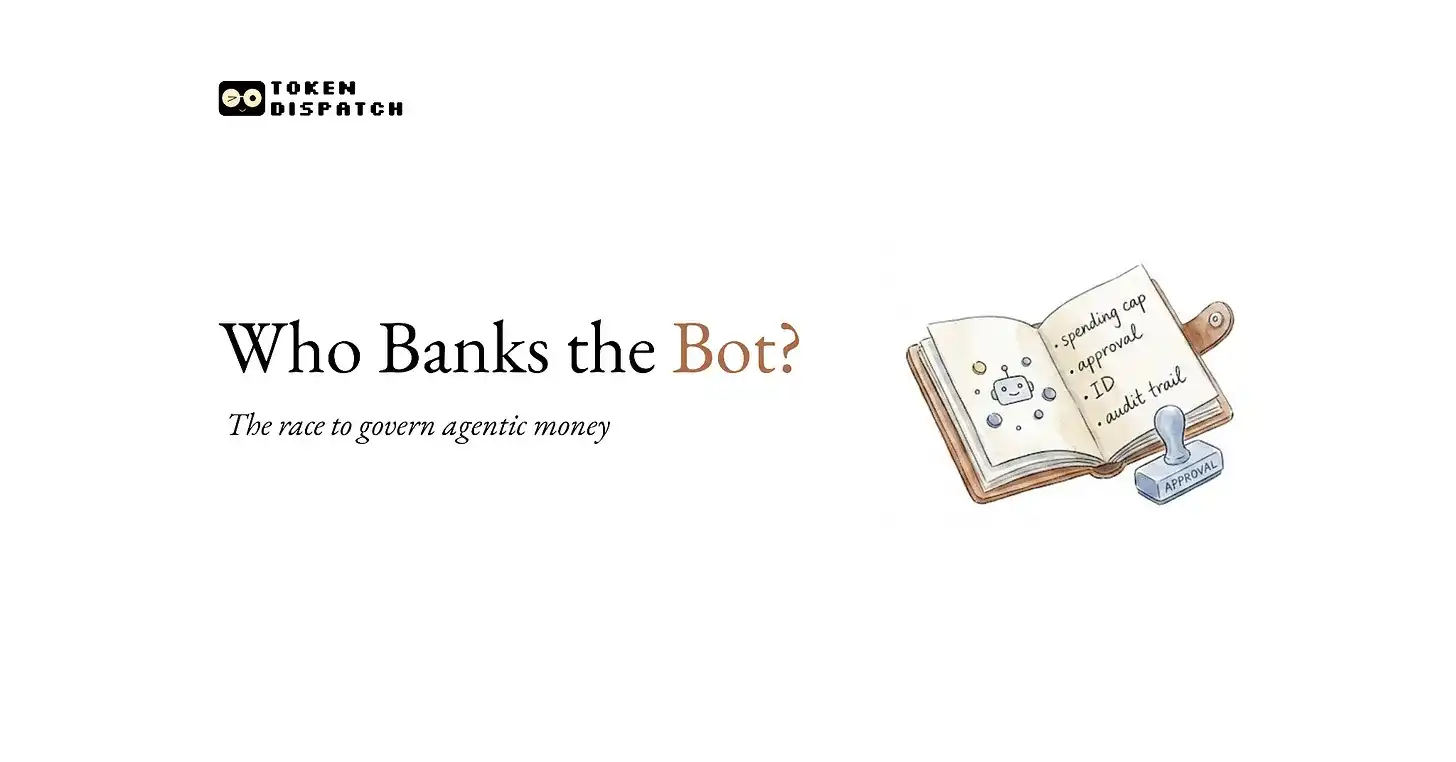
Who Funds the Agents?

**Summary: Who Funds AI Agents?** OpenAI recently shut down a feature allowing AI agents to shop for users, highlighting the challenge of creating a secure and regulated environment for agent-driven transactions. While payment infrastructure exists, a crucial governance layer—defining spending limits, fraud detection, tax handling, and return policies—is largely missing. The potential is enormous: AI agents already processed $73M across 176M transactions last year, with McKinsey forecasting this could grow to $3-5T in global consumer commerce by 2030. The core competition isn't just about processing payments, which can be very cheap (especially with crypto-based settlement), but about controlling the rules that govern agent spending. Key players like Stripe and Coinbase are racing to dominate this governance layer. Stripe's acquisition of wallet provider Privy allows it to set spending policies, identity checks, and human-in-the-loop approvals directly at the wallet level. Similarly, Coinbase's stack, including its x402 protocol and AgentKit, embeds governance rules. This vertical integration across settlement, wallet, and governance layers is becoming the dominant strategy. Control over the governance layer is where significant future value lies. If agents handle trillions in transactions, even a small fee for managing compliance, fraud prevention, and policy enforcement could generate billions in annual revenue. The companies that successfully integrate across the payment stack will capture value from idle agent balances, transaction fees, and governance services, positioning themselves as the foundational banks of the AI agent economy.

marsbit12h ago

Who Funds the Agents?

marsbit12h ago

A Nation Blocks Chips, a Giant Buys a Nuclear Power Plant: Why It's Time to Seriously Consider DeAI

**Title: Great Powers Blockade Chips, Giants Buy Nuclear Plants: Why It's Time to Seriously Consider DeAI** In May 2026, the US closed loopholes for Chinese firms to acquire advanced NVIDIA chips via overseas subsidiaries. That same month, Kenya halted a $1B geothermal data center project involving Microsoft, fearing its immense energy consumption. Meanwhile, Huawei announced mass production of its Ascend AI chip. These disparate events underscore a new reality: the competition for computing power ("compute") has escalated beyond the tech industry, becoming a geopolitical and infrastructural battleground. A new era of oligopoly is forming, with control over the AI stack—from GPU chips (NVIDIA) and cloud platforms (AWS, Azure, Google Cloud) to foundational models (OpenAI, Anthropic)—concentrating in a few Western "AI Octopus" corporations. This centralization creates systemic risks: pricing power and platform lock-in for users, infrastructure fragility, and a widening "compute divide" that threatens to marginalize nations without independent AI capacity. An "AI Iron Curtain" is deepening through export controls. In response, some nations like Saudi Arabia and the UAE are investing heavily to buy compute power, aiming to transition from oil to AI economies. The EU seeks to triple its compute capacity by 2030 to reduce dependency. However, the spending gap is vast, with four US tech giants alone planning ~$750B in AI capex for 2026. The race is increasingly constrained by energy, with AI tasks consuming up to 1000x more power than web searches, pushing firms to even acquire nuclear plants. This landscape is fueling interest in Decentralized AI (DeAI). It proposes a third way: using open protocols to coordinate a global network of idle GPUs, independent developers, and data centers, creating an AI infrastructure without a single controlling entity. Leveraging blockchain and cryptographic verification, DeAI aims to break market concentration, disperse energy demands, reduce geopolitical dependencies, and enhance transparency. While still nascent in performance and stability, DeAI's core promise is not immediate superiority but providing a crucial alternative architecture to resist monopoly, censorship, and centralized power. As specialized AI hardware costs fall and open-source models flourish, the window to build this foundation is open. The very existence of such competition serves as a vital check against the inevitable abuse of concentrated power.

marsbit13h ago

A Nation Blocks Chips, a Giant Buys a Nuclear Power Plant: Why It's Time to Seriously Consider DeAI

marsbit13h ago

WWDC26 Ultimate Preview: The All-New Siri is the Main Course, iOS 27 is Another Year of Refinements

Apple has confirmed WWDC26 will begin on June 8, with the keynote at 10 AM PT (1 AM Beijing Time, June 9). This year's focus is expected to shift significantly from routine OS updates to Apple's progress in AI, particularly a major overhaul of Siri. Reports indicate the highlight will be a new Siri, reportedly powered by Google's Gemini technology. This upgraded assistant is expected to appear as a lightweight bubble from the Dynamic Island and be accessible via a unified "Search or Ask" system-wide entry point. It aims to deeply integrate with iOS 27, iPadOS 27, and macOS 27, accessing personal data like messages, photos, and documents, with a potential standalone Siri app also in development. For iOS 27, leaks suggest incremental improvements rather than major redesigns. Key updates may include a redesigned, more customizable Camera app, enhanced photo editing tools within the Photos app, and potential early system optimizations for a future foldable iPhone. The update is also rumored to prioritize bug fixes, stability, and performance optimization. iPadOS 27 is anticipated to focus on improving productivity features like window management, file systems, and external display support to better utilize the iPad's hardware. macOS 27 is seen as a core platform for Apple Intelligence, likely receiving an optimized Siri, new AI features, and continued refinement of the "Liquid Glass" design language. Notably, macOS 27 may finally drop support for Intel-based Macs. The overarching theme for WWDC26 is whether Apple can effectively integrate AI across its ecosystem. The success of the new Siri and Apple Intelligence will be judged on their ability to move beyond standalone features and become a cohesive, context-aware system layer that understands user workflows across iPhone, iPad, Mac, and other devices, while maintaining Apple's emphasis on privacy and stability. The conference represents Apple's critical attempt to catch up and redefine the AI assistant experience after a perceived slow start in the generative AI era.

marsbit14h ago

WWDC26 Ultimate Preview: The All-New Siri is the Main Course, iOS 27 is Another Year of Refinements

marsbit14h ago

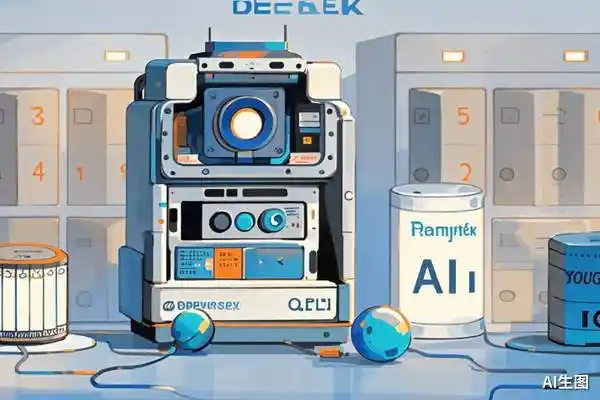
Can DeepSeek Save China One Trillion Dollars?

"DeepSeek and the $1 Trillion Infrastructure Question" The article examines whether DeepSeek's AI optimization breakthroughs could potentially save China $1 trillion in future AI infrastructure costs. The analysis begins with Nvidia's upcoming Vera Rubin AI platform, costing ~$7.8 million, where memory (HBM4/LPDDR5X) constitutes $2 million—a 435% cost increase in one year, highlighting how AI hardware spending is shifting toward expensive memory components. DeepSeek's approach works in the opposite direction. Through three key technical innovations showcased in DeepSeek V4, the company dramatically improves hardware efficiency: 1. **Memory Compression (MLA)**: Re-engineers the attention mechanism to compress long-context memory (KV Cache) by over 90%, drastically reducing expensive HBM usage. 2. **Selective Activation (MoE)**: Employs Mixture-of-Experts architecture where only a small fraction of parameters (e.g., 49B out of 1.6T in V4-Pro) are activated per token, allowing most parameters to reside in cheaper memory/SSD. 3. **Computation Caching**: Reuses previously computed results via cache hits, replacing expensive GPU computations with cheap memory reads. Combined, these optimizations allow the same hardware to produce approximately 4x more tokens, effectively reducing required hardware investment by 75%. DeepSeek's pricing reflects this: a 10-billion token workload costs ~$522 monthly versus ~$9,000-$10,000 for competitors. The $1 trillion savings projection stems from McKinsey's estimate that global AI infrastructure will require ~$5.2 trillion investment by 2030. As China's daily token consumption grows toward quadrillions, even marginal efficiency gains scale massively. With a conservative 4x throughput improvement, China could avoid building tens of thousands of AI data centers equivalent to ~7 trillion RMB ($1 trillion) in saved investment. Critically, this strategy shifts dependency from scarce, expensive GPU/HBM—where China lags—toward more accessible storage, caching, and systems engineering where domestic suppliers like CXMT are gaining strength. Rather than "replacing Nvidia," DeepSeek rebalances AI's value chain away from monolithic hardware dependency. Ultimately, DeepSeek's technical breakthroughs could lower the barrier to AI adoption across Chinese industries by making advanced capabilities affordable at scale—transforming who can access next-generation AI.

marsbitYesterday 00:47

Can DeepSeek Save China One Trillion Dollars?

marsbitYesterday 00:47

活动图片