Orisinil | Odaily Planet Daily (@OdailyChina)
Penulis | Asher (@Asher_ 0210)
1 Desember, jaringan enkripsi homomorfik penuh Zama yang telah mengumpulkan dana hingga $130 juta mengumumkan di platform X bahwa mereka akan menjual 10% dari total pasokan token ZAMA melalui lelang Belanda penawaran tersegel, dengan menggunakan enkripsi homomorfik penuh (FHE) untuk menjaga kerahasiaan penawaran. Selain itu, mainnet Zama diperkirakan akan diluncurkan sebelum akhir tahun.
Zama bisa dibilang proyek dengan diskusi komunitas paling panas yang melakukan TGE belakangan ini. Di bawah ini, Odaily Planet Daily akan mengajak Anda menganalisis proyek Zama, lelang Belanda penawaran tersegel, serta peluang interaksi terakhir sebelum peluncuran token.
Gambaran Proyek
Zama adalah perusahaan yang mengkhususkan diri pada teknologi enkripsi homomorfik penuh (FHE), yang merupakan salah satu inovasi paling mutakhir dalam bidang komputasi privasi. Secara sederhana, teknologi ini memungkinkan perhitungan langsung pada data terenkripsi tanpa perlu mendekripsinya. Misi Zama adalah membangun alat FHE yang efisien dan mudah digunakan, mendorong adopsi luas teknologi ini di Web3 dan bidang lainnya. Tim inti Zama didirikan bersama oleh Rand Hindi dan Pascal Paillier:
- Rand Hindi belajar pemrograman pada usia 10 tahun, membuat situs jejaring sosial yang sangat populer di Prancis pada usia 14 tahun, memiliki latar belakang PhD dalam Ilmu Komputer dan Bioinformatik dari University College London, dan pernah mendirikan serta menjual platform AI suara Snips;
- Pascal Paillier adalah ahli terkemuka di bidang enkripsi homomorfik penuh, dengan pengalaman penelitian 25 tahun, memegang 25 paten, menerbitkan puluhan makalah, pernah memenangkan Penghargaan Makalah Terbaik Asiacrypt, dan juga anggota inti IACR.
Saat ini Zama telah menyelesaikan dua putaran pendanaan, dengan total jumlah mencapai $130 juta. Pada Maret 2024, Zama mengumumkan penyelesaian pendanaan Seri A senilai $73 juta, dipimpin bersama oleh Multicoin Capital dan Protocol Labs; pada Juni 2025, Zama mengumumkan penyelesaian pendanaan Seri B senilai $57 juta, dipimpin oleh Blockchange Ventures dan Pantera Capital. (Lebih banyak konten dapat dibaca: Raksasa Blockchain Berikutnya: Mengapa ZAMA Dapat Mengumpulkan $130 Juta)
Penjualan Umum Token Lelang Belanda Tersegel Akan Dimulai pada 12 Januari
Perincian Penjualan Umum Token
Metode lelang: Lelang Belanda penawaran tersegel;
Waktu lelang: Akan diadakan dari 12 hingga 15 Januari, klaim dimulai 20 Januari;
Bagian penjualan umum: 10% dari total pasokan token, dengan 8% melalui lelang, 2% dijual dengan harga tetap setelah lelang (batas atas $10,000 per orang);
Status lock-up: Token Zama yang dibeli dalam lelang akan sepenuhnya tidak terkunci (unlocked);
Tautan pra-pendaftaran lelang: https://www.zama.org/auction.
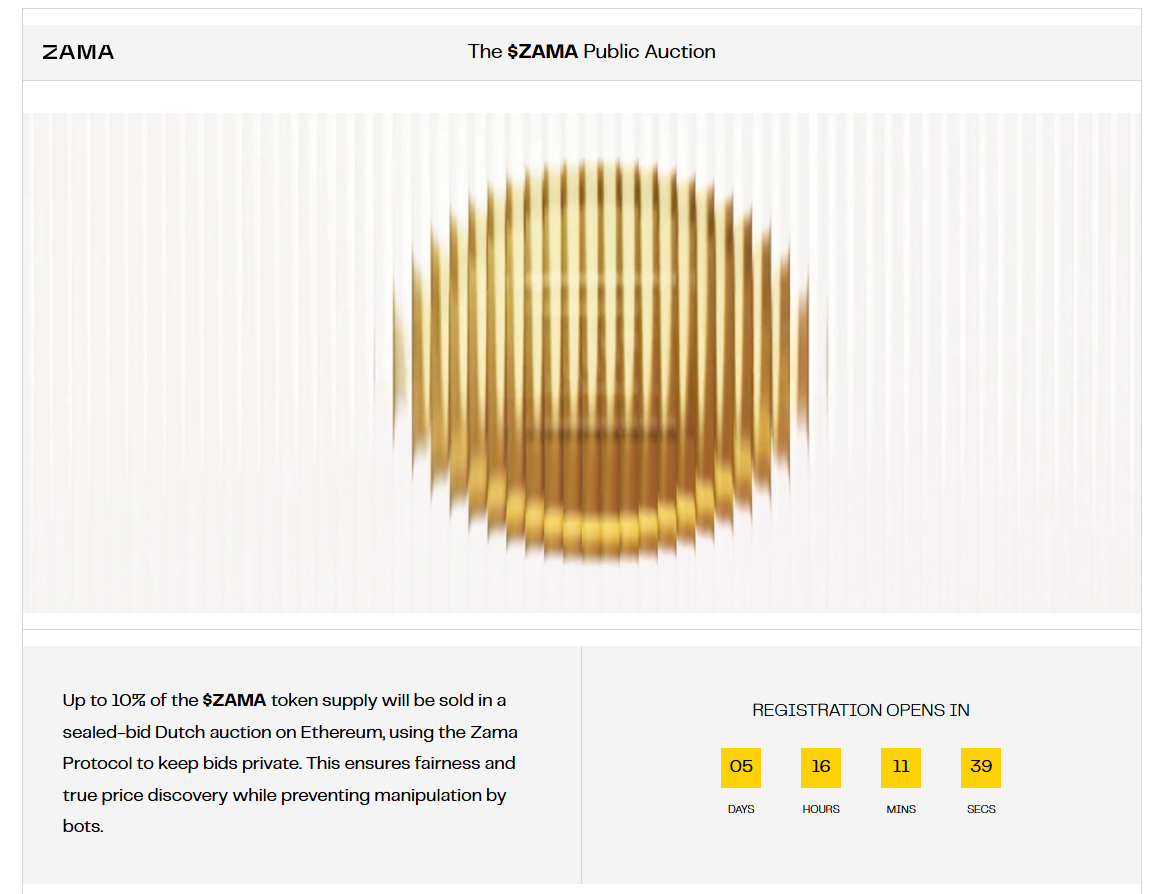
Penjualan Umum Zama Akan Dimulai pada 12 Januari
Apa itu Lelang Belanda Penawaran Tersegel?
Zama akan menjual 10% dari total pasokan token ZAMA melalui lelang Belanda penawaran tersegel di Ethereum, menggunakan enkripsi homomorfik penuh (FHE) untuk menjaga kerahasiaan penawaran. Highlight-nya adalah distribusi yang adil, tanpa front-running, tanpa bot, tanpa perang Gas. Secara spesifik, lelang Belanda penawaran tersegel terdiri dari 4 tahap:
- Tahap 1: Lindungi stablecoin (Shield stablecoins), siapkan dana dan konversikan stablecoin seperti USDC, USDT, DAI dari jaringan Ethereum pribadi menjadi aset rahasia ERC-7984 (saat penjualan umum上线,官方会给出资产转换网站), saldo dan jumlah transfer token ini akan dienkripsi.
- Tahap 2: Ajukan penawaran Anda (Place your bids), tahap penawaran, berlangsung dari 12 hingga 15 Januari, pengguna dapat mengajukan sejumlah penawaran, harga penawaran terbuka, jumlah dirahasiakan, harga dasar adalah $0.005 (sesuai dengan FDV $55 juta). Berbeda dengan lelang Belanda terbuka di mana harga turun seiring waktu, lelang Belanda penawaran tersegel memungkinkan pengguna menawar dengan harga berapa pun selama periode penawaran.
- Tahap 3: Harga penyelesaian dan alokasi (Clearing price and allocation), tahap penyelesaian, berlangsung dari 16 hingga 19 Januari, dihitung melalui kontrak pintar FHE, menambahkan permintaan dari harga tinggi ke rendah, menentukan harga penyelesaian. Oleh karena itu, pengguna akan mengalami tiga situasi: 1. Penawaran di atas harga penyelesaian: akan mendapatkan seluruh alokasi, dan kelebihan pembayaran akan dikembalikan; 2. Penawaran sama dengan harga penyelesaian: jika kuantitas melebihi pasokan yang tersisa pada harga tersebut, akan mendapatkan bagian token secara proporsional, sisa bagian akan mendapatkan pengembalian dana; 3. Penawaran di bawah harga penyelesaian: tidak akan mendapatkan token, dan mendapatkan pengembalian dana penuh.
- Tahap 4: Klaim token Anda (Claim your tokens), tahap klaim token, dimulai dari 20 Januari, untuk mengambil token ZAMA (semua tidak terkunci) dan pengembalian dana.
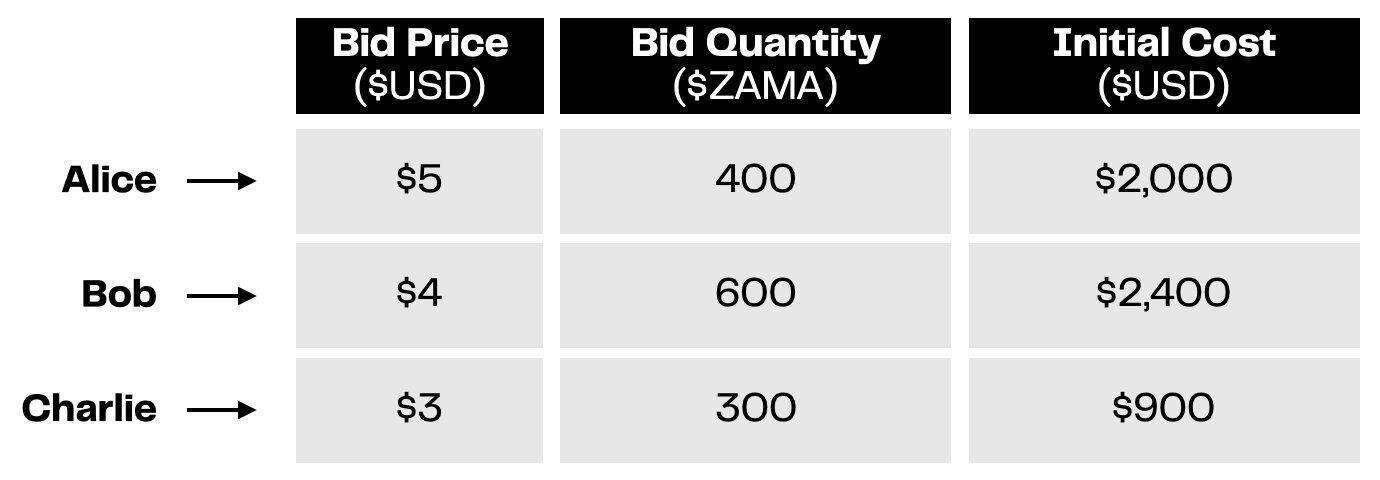
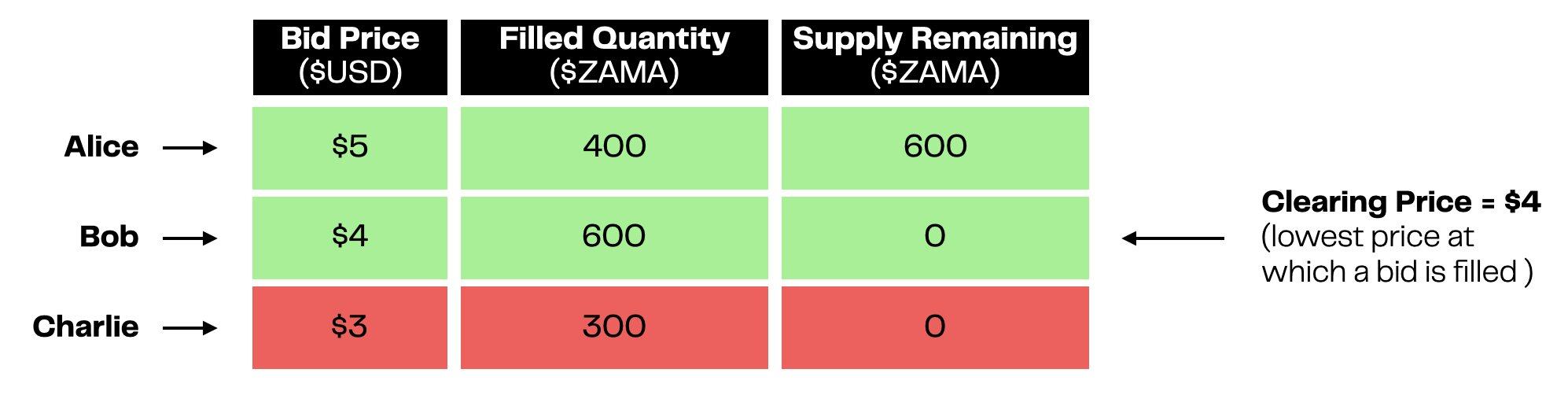
Untuk mempermudah pemahaman, Odaily Planet Daily memberikan contoh. Misalkan, ada 1000 token ZAMA yang dijual melalui lelang Belanda penawaran tersegel, dan ada tiga orang yang berpartisipasi dalam penawaran, yaitu Alice, Bob, dan Charlie.
Pertama, pada tahap penawaran, situasi penawaran ketiganya adalah sebagai berikut:
- Alice menawar 400 token dengan harga $5 per token, dia akhirnya membayar $2000;
- Bob menawar 600 token dengan harga $4 per token, dia akhirnya membayar $2400;
- Charlie menawar 300 token dengan harga $3 per token, dia akhirnya membayar $900.
Kedua, setelah periode penawaran berakhir, kontrak lelang akan mengalokasikan token kepada setiap peserta sesuai urutan penawaran dari tertinggi ke terendah:
- Alice menawar tertinggi, dia mendapatkan 400 token, menyisakan 600 token yang belum dialokasikan;
- Bob adalah penawar tertinggi kedua, dia mendapatkan 600 token. Jumlah token yang belum dialokasikan tersisa adalah 0. Oleh karena itu, harga penyelesaian akhir adalah penawaran Bob, yaitu $4 per token;
- Penawaran Charlie di bawah harga penyelesaian akhir, sehingga dia tidak mendapatkan alokasi apa pun.
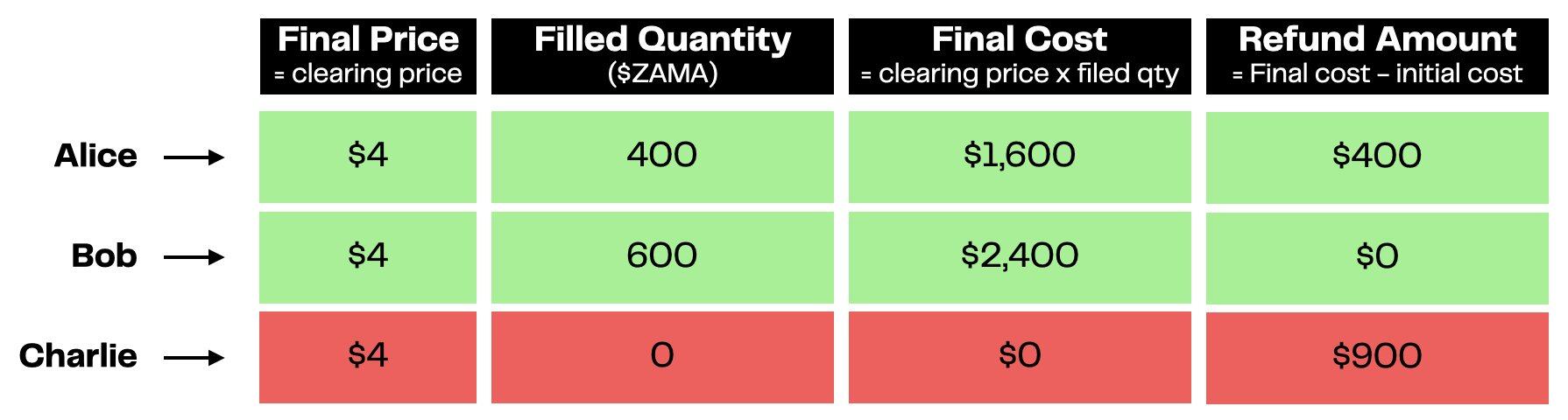
Terakhir, tahap klaim dan pengembalian dana, secara spesifik sebagai berikut:
- Alice menerima 400 token ZAMA dan pengembalian dana $400;
- Bob menerima 600 token ZAMA, tepat tanpa pengembalian dana;
- Charlie tidak menerima token ZAMA, tetapi $900-nya dikembalikan penuh.
Peluang Interaksi Terakhir Sebelum TGE
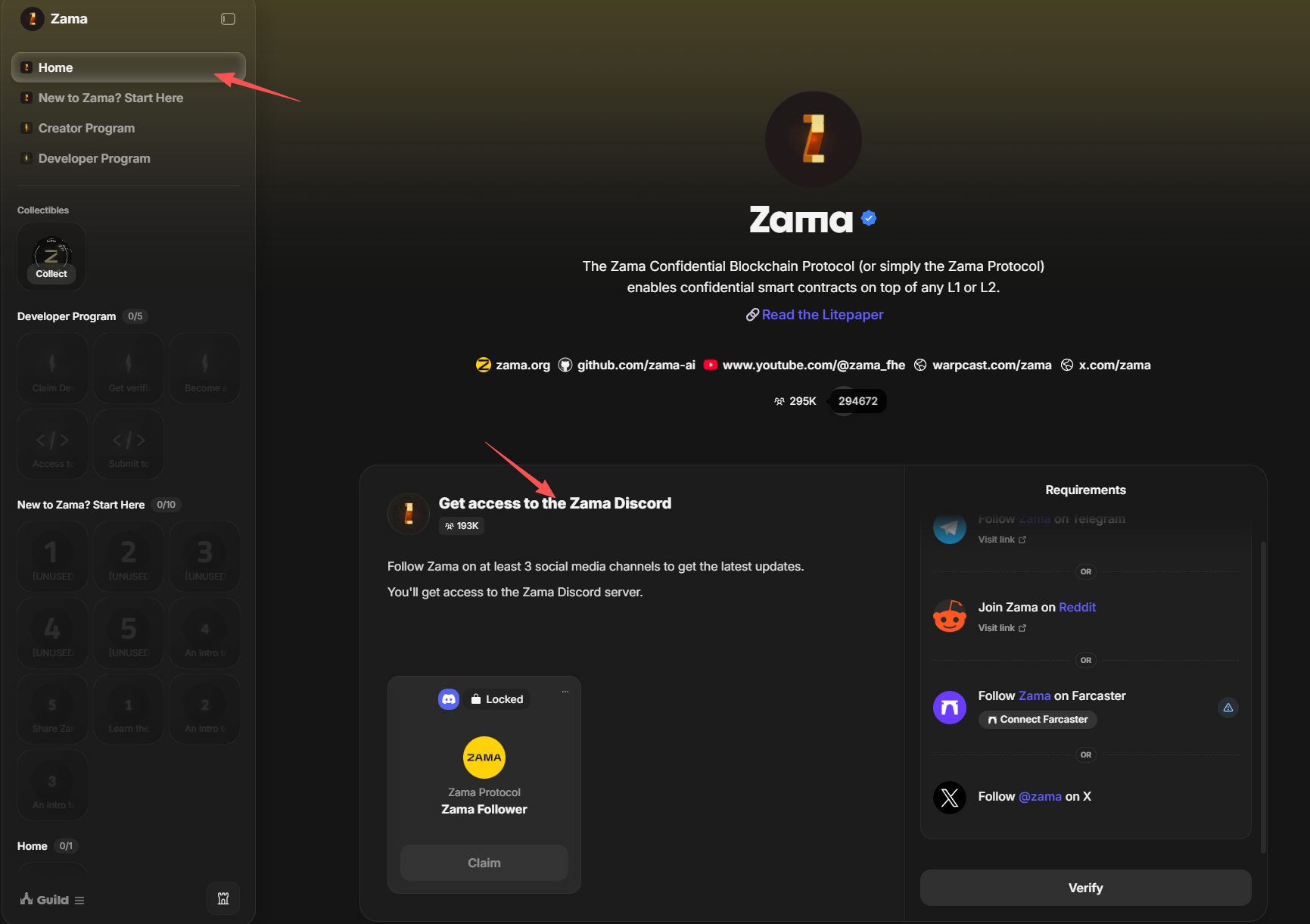
Saat ini, Zama masih dapat berpartisipasi dalam tugas guild (tautan: https://guild.xyz/zama/home), yang mencakup:
Tugas Dasar: Dapatkan akses ke Discord Zama, masuk ke tiga dari empat komunitas resmi即可完成, dan dapat bergabung dengan saluran Discord resmi untuk mendapatkan peran.
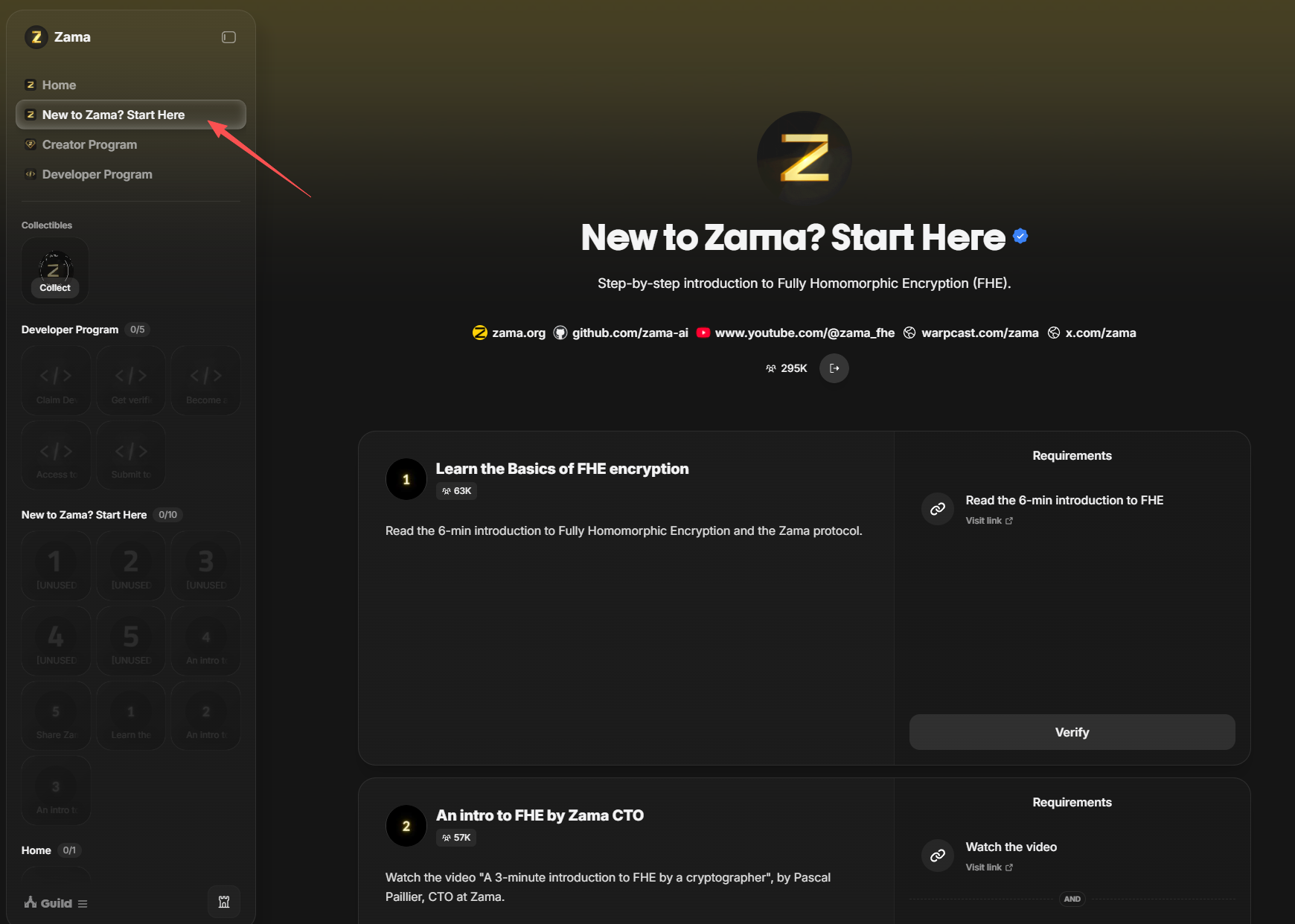
Baru di Zama? Tugas: Secara spesifik mencakup lima sub-tugas, ikuti petunjuk tugas即可, mudah diselesaikan.
Tugas Program Kreator: Termasuk dua sub-tugas, sub-tugas pertama dari tugas satu memiliki persyaratan dana, tugas kedua adalah program kreator.
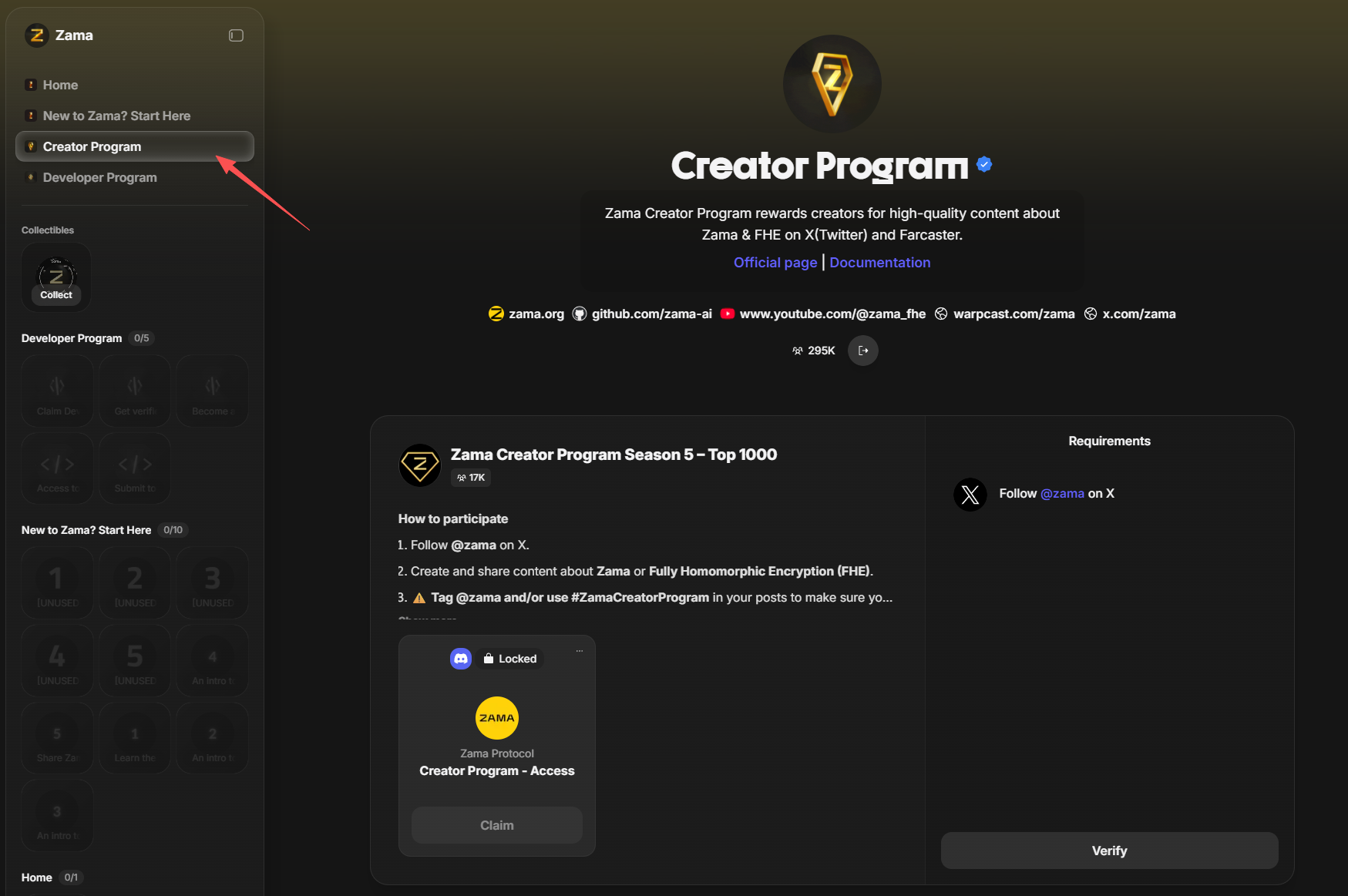
Tugas Program Pengembang: Persyaratan tugas tinggi, lakukan sesuai kondisi自身.
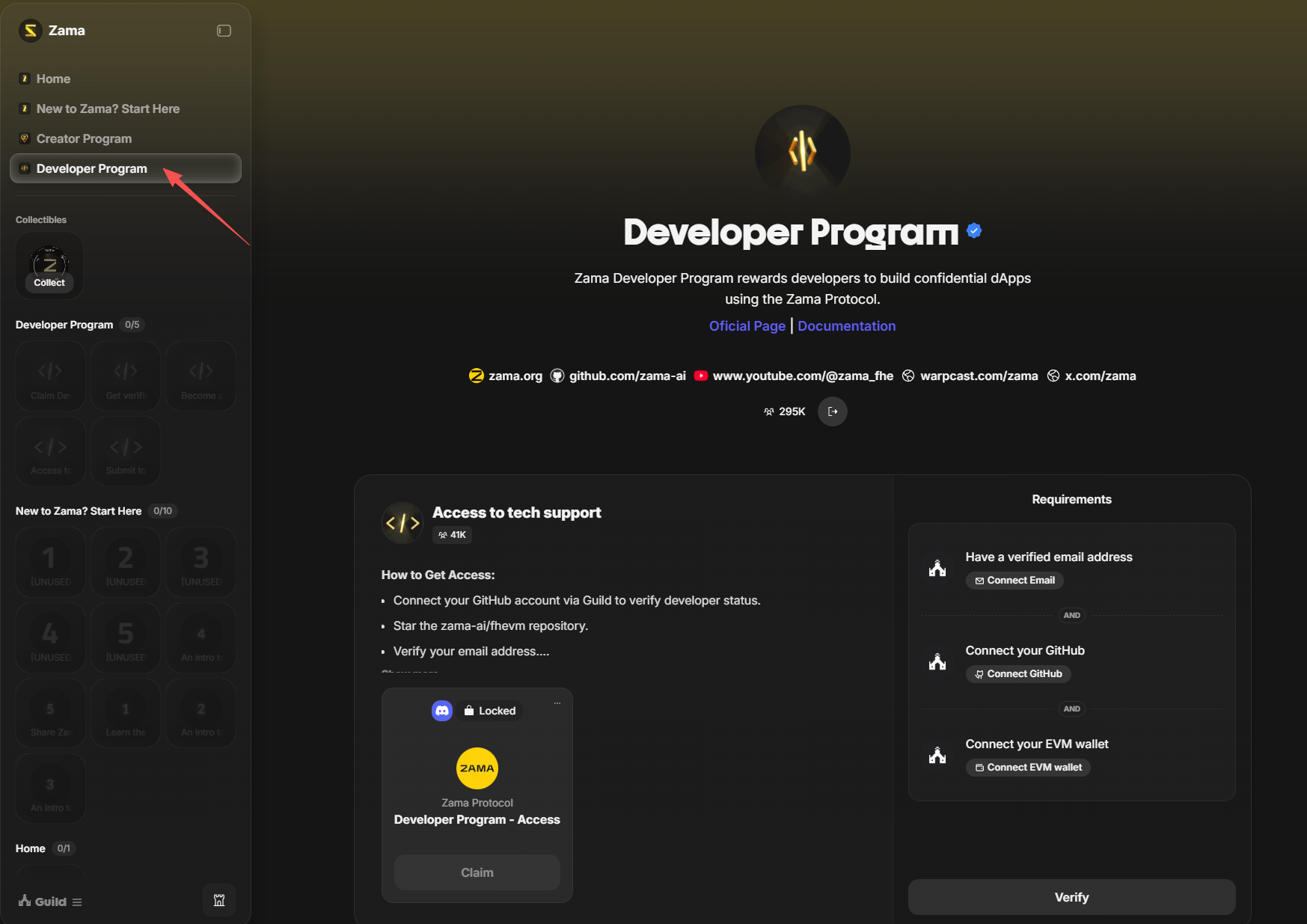
Selain itu, halaman pencetakan OG NFT akan segera dibuka, peserta awal dapat memeriksa kelayakan saat dibuka (tautan: https://www.zama.org/nft/og).