XRP’s volume surge triggers a price drop: Key support at $1.34

ambcryptoPublished on 2026-02-24Last updated on 2026-02-24

Abstract

XRP experienced a significant surge in trading volume across major exchanges, including an 83% increase on Upbit, a 34% rise on Coinbase, and a 68% jump on Binance. Despite this high activity, the token’s price dropped by 6.46%, falling from $1.46 to $1.34, as much of the volume was attributed to short selling. Key support is now at $1.34; a break below could lead to further decline toward $1.25. However, on-chain metrics remain strong, with daily successful transactions on the XRP Ledger increasing by 40% and Real-World Asset (RWA) market cap growing by 23.42% to $2 billion. Despite bearish short-term price action, fundamentals suggest a bullish outlook for XRP.

Ripple [XRP] was one of the most traded tokens in the past 24 hours, hence among the most shorted coins.

This spike in volume was priced in by the altcoin, where its valuation declined the same way as the entire crypto market.

XRP volume spikes across multiple exchanges

The data from CoinGlass showed that this spike in Spot volume was consistent across multiple exchanges.

For instance, daily trading volume on Upbit, which mostly constitutes Asian participants, was up by 83%. It was the highest among all, with activity exceeding $193 million.

For the U.S. investors, they traded about $111.7 million on Coinbase, which was a rise of 34%. Moreover, from a global perspective using the Binance exchange, volume increased by 68%, surpassing $131 million.

The Spot markets traded more than $710 million in total, while the Futures markets traded about $3.76 billion. The difference comes from the leverage feature in Futures trading, which amplifies gains or losses.

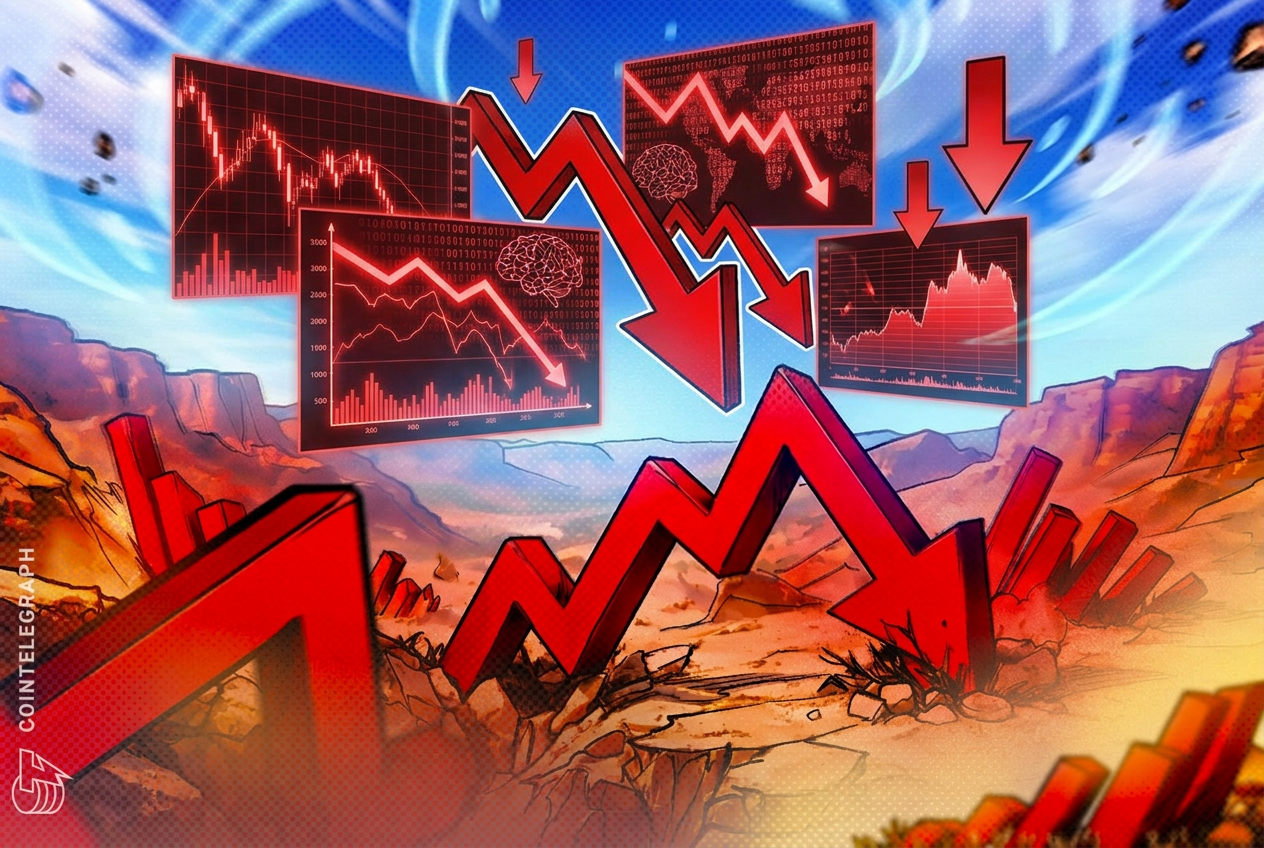
These figures suggested that most of these trades were shorts, as the price dropped by 6.46% during this period.

XRP falls amid increased selling pressure

The price action charts showed that XRP dropped from $1.46 to $1.34 during this period. The drop led to a breakdown below $1.40, a previous support level, though it was not a strong one then.

Breaking below $1.34 could see the altcoin crash further below $1.25.

However, XRP was holding above the $1.34 level, suggesting a reduction in sell pressure. Still, price needed to flip $1.40 into support for a rally toward $1.66, as it previously did when it hit $1.34.

These results indicated that XRP remained a significant player, particularly due to its strong on-chain and fundamental performance.

Why all is not lost for Ripple

To begin with, the number of daily successful transactions on the XRP Ledger spiked by 40%. This metric jumped from 1.5 million to 2.5 million at press time. This was an indication of real chain activity.

Additionally, XRP Ledger outpaced its peers in terms of on-chain market capitalization for Real-World Assets (RWAs).

As per rwa.xyz data, XRP’s RWA market cap grew by 23.42% in the last 30 days, reaching $2 billion. This value flipped Solana [SOL], whose cap grew by 44%, reaching $1.70 billion.

Despite their growths, they represented 0.50% and 0.45% of the total market share, with Canton [CC] leading at 87.9%.

Meanwhile, Arizona’s proposed Digital Assets Strategic Reserve Fund bill added XRP. Other assets in this list were Bitcoin [BTC], DigiByte, stablecoins, and non-fungible tokens [NFT].

Altogether, the fundamentals and chain activity look bullish for XRP. However, sell pressure from investors and a bearish market on the 4-hour chart showed that things were not good for the altcoin.


Final Summary

  • XRP saw a spike in daily volume across 3 major exchanges, signaling market-wide acceptance of its price weakness.
  • XRP’s on-chain activity and fundamentals pointed to a bullish outlook even though price action did not align.


Related Questions

QWhat was the main reason for XRP's price drop despite high trading volume?

AThe spike in trading volume was primarily due to short selling, as most of the trades were shorts, which increased selling pressure and caused the price to drop by 6.46%.

QWhich exchange had the highest daily trading volume for XRP, and by how much did it increase?

AUpbit had the highest daily trading volume for XRP, with activity exceeding $193 million, which was an increase of 83%.

QWhat key support level is XRP currently holding above, and what could happen if it breaks below?

AXRP is currently holding above the $1.34 support level. If it breaks below this level, it could crash further below $1.25.

QHow did the number of daily successful transactions on the XRP Ledger change, and what does it indicate?

AThe number of daily successful transactions on the XRP Ledger spiked by 40%, jumping from 1.5 million to 2.5 million, indicating strong real chain activity.

QWhat was the growth in XRP's Real-World Assets (RWA) market cap, and how does it compare to Solana?

AXRP's RWA market cap grew by 23.42% in the last 30 days, reaching $2 billion, which flipped Solana's RWA market cap of $1.70 billion that grew by 44%.

Related Reads

It's Not Jensen Huang Who Wants to Change the PC, But the PC That's Revolting Against Itself

The 40-year-old PC industry is undergoing a fundamental transformation, driven by the rise of AI PCs. At the GTC Taipei 2026 event, NVIDIA, backed by Microsoft and major PC OEMs, announced the RTX Spark super chip for Windows PCs, marking its official entry into the PC core processor market. This move aims to redefine the AI PC by shifting its core from the CPU to an AI-focused SoC (System on Chip). NVIDIA envisions the PC evolving from a personal computer to a "personal AI"—a platform where local AI Agents can autonomously perform tasks. While Intel pioneered the AI PC concept earlier in 2026, NVIDIA's aggressive push, leveraging its vast CUDA developer ecosystem of 6 million, positions it to potentially reshape the industry's long-standing Wintel (Windows-Intel) power structure. NVIDIA's strategy extends beyond hardware; it's about embedding its CUDA, RTX, and AI software stack into the PC platform itself. The article identifies key shifts: 1) The move from a CPU-centric to an AI SoC-centric architecture, similar to Apple's approach with its M-series chips. 2) The PC's evolution from a human-operated tool to a platform for human-Agent collaboration. 3) The extension of NVIDIA's data center-centric CUDA ecosystem to personal devices via RTX Spark. Ultimately, the change is driven by the broader trend of AI moving to personal devices. Companies like Intel, AMD, Qualcomm, and Apple are all participating in this shift. NVIDIA's entry accelerates the competition, but the core driver is the technology itself finding its optimal expression in the PC. The industry is reinventing itself, with the outcome hinging on execution, ecosystem development, and the creation of compelling local AI applications.

marsbit1h ago

It's Not Jensen Huang Who Wants to Change the PC, But the PC That's Revolting Against Itself

marsbit1h ago

Trading

Spot
Futures

Hot Articles

Discussions

Welcome to the HTX Community. Here, you can stay informed about the latest platform developments and gain access to professional market insights. Users' opinions on the price of S (S) are presented below.

活动图片