Why 2026 could redefine Ethereum, Solana, Base and Avalanche

ambcryptoPublished on 2026-07-07Last updated on 2026-07-07

Abstract

Blockchain infrastructure is undergoing a major coordinated transformation, driven by institutional demand for reliability, compliance, and predictable settlement. Over $30 billion in Real-World Assets (RWA) on-chain has exposed network weaknesses. Major blockchains are responding with foundational upgrades, moving beyond incremental speed improvements. Ethereum's "Glamsterdam" upgrade, planned for H1 2026, will significantly increase gas limits and introduce features like PBS (pre-blocked state) for enhanced settlement and parallel execution. Solana's "Alpenglow," targeting a mainnet launch in H2 2026, focuses on reducing finality time dramatically and freeing network resources to improve reliability. Beyond speed, compliance is critical. Base's "Beryl" upgrade in Q3 2026 will introduce a standardized, regulatory-compliant token framework (B20). Avalanche's "Octane" upgrade aims to boost transaction processing and reduce costs for enterprise applications. Even Bitcoin is evolving with the potential activation of OP_CAT by late 2026/early 2027. The competition is shifting. While technical upgrades are widespread, institutions will ultimately allocate capital based on proven execution, operational resilience, and regulatory compatibility during market stress. Ethereum currently leads in tokenized assets, while networks like Base and Solana are strengthening their institutional offerings. The blockchain that best delivers reliable, compliant, and uninterrupted service is poi...

As Q3 rolls out, blockchain infrastructure is entering its biggest coordinated transformation to date. It includes rising institutional demand rather than another race for retail adoption.

More than $30 billion in RWA now sits on public blockchains, exposing weaknesses in existing networks.
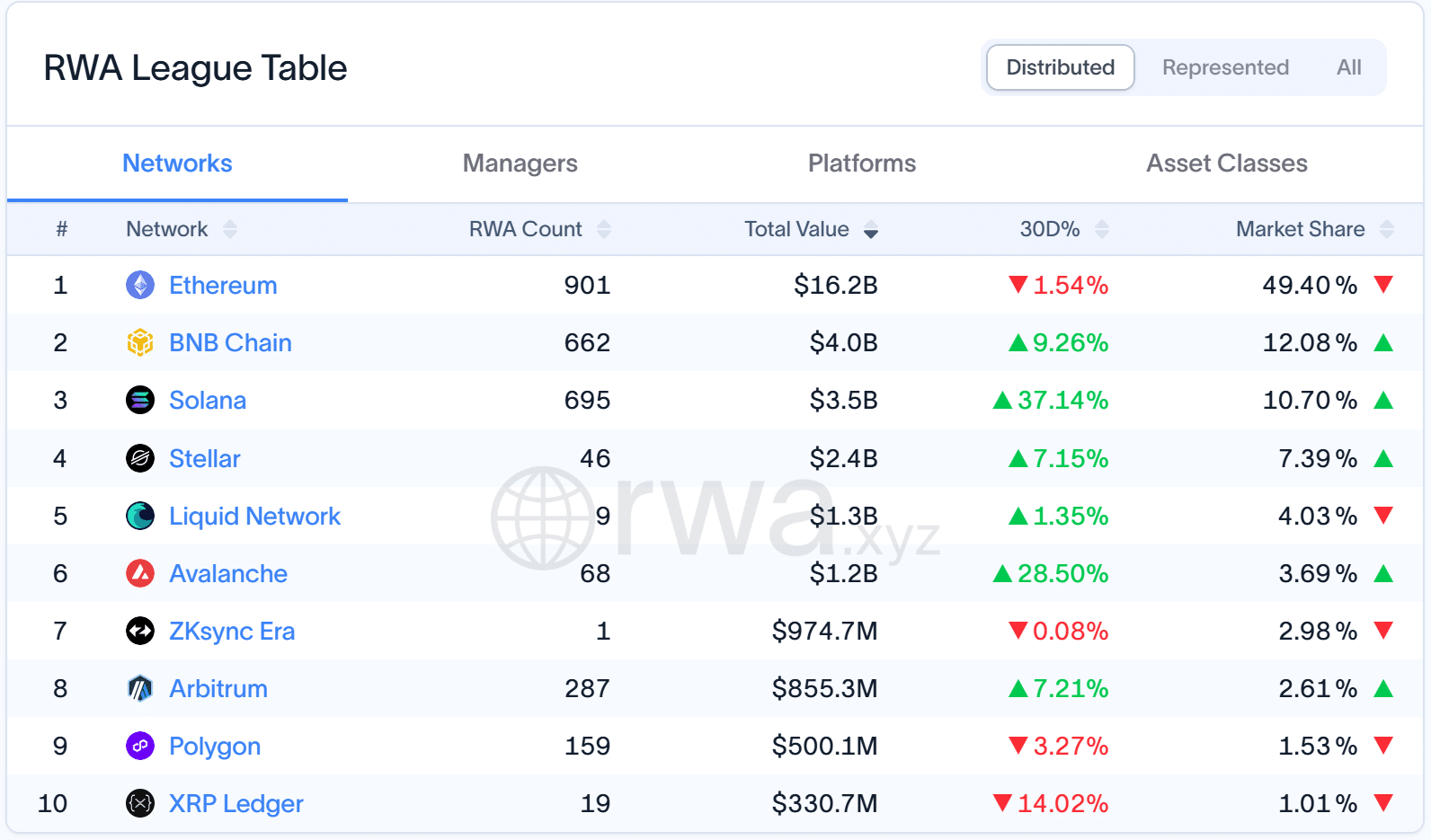
Source: RWA.xyz

Throughput, settlement speed, compliance, and reliability have become immediate priorities. Therefore, major blockchains are redesigning their foundations instead of relying on incremental upgrades.

Ethereum [ETH], Solana [SOL], Base, and Avalanche [AVAX] each target different bottlenecks through protocol-level improvements.

However, they share the same objective of supporting institutional-scale financial activity. This synchronized rebuild signals that infrastructure quality is becoming the industry’s main competitive advantage.

As deployments continue through 2026 and 2027, capital, developers, and liquidity will increasingly favor networks that execute these upgrades successfully.

How major blockchains are rebuilding for institutional finance

The upgrade process has evolved beyond faster and better speeds. The need for greater reliability as an institutionally viable option was brought forth by institutions and banks. Institutions have come to expect and therefore demand predictable settlement times, regulatory compliance, and uninterrupted execution.

That expectation has highlighted weaknesses in all areas of current decentralized networks.

Hence, rather than simply applying patches or making incremental changes, many of the major decentralized networks are being redesigned at the foundation level.

Ethereum is leading that transition.

Development on Glamsterdam accelerated in late 2025 before active devnets launched in early 2026. The mainnet version will be deployed in H1 2026. The upgrade will raise gas limits from approximately 60 million to 200 million.

Notably, it introduces PBS (pre-blocked state). This will be enshrined in the Ethereum codebase, as well as block-level access lists. Both of these enhancements will provide increased settlement capabilities while preparing Ethereum to run parallel executions as per the Lean roadmap.

In contrast, Solana is solving a different challenge.

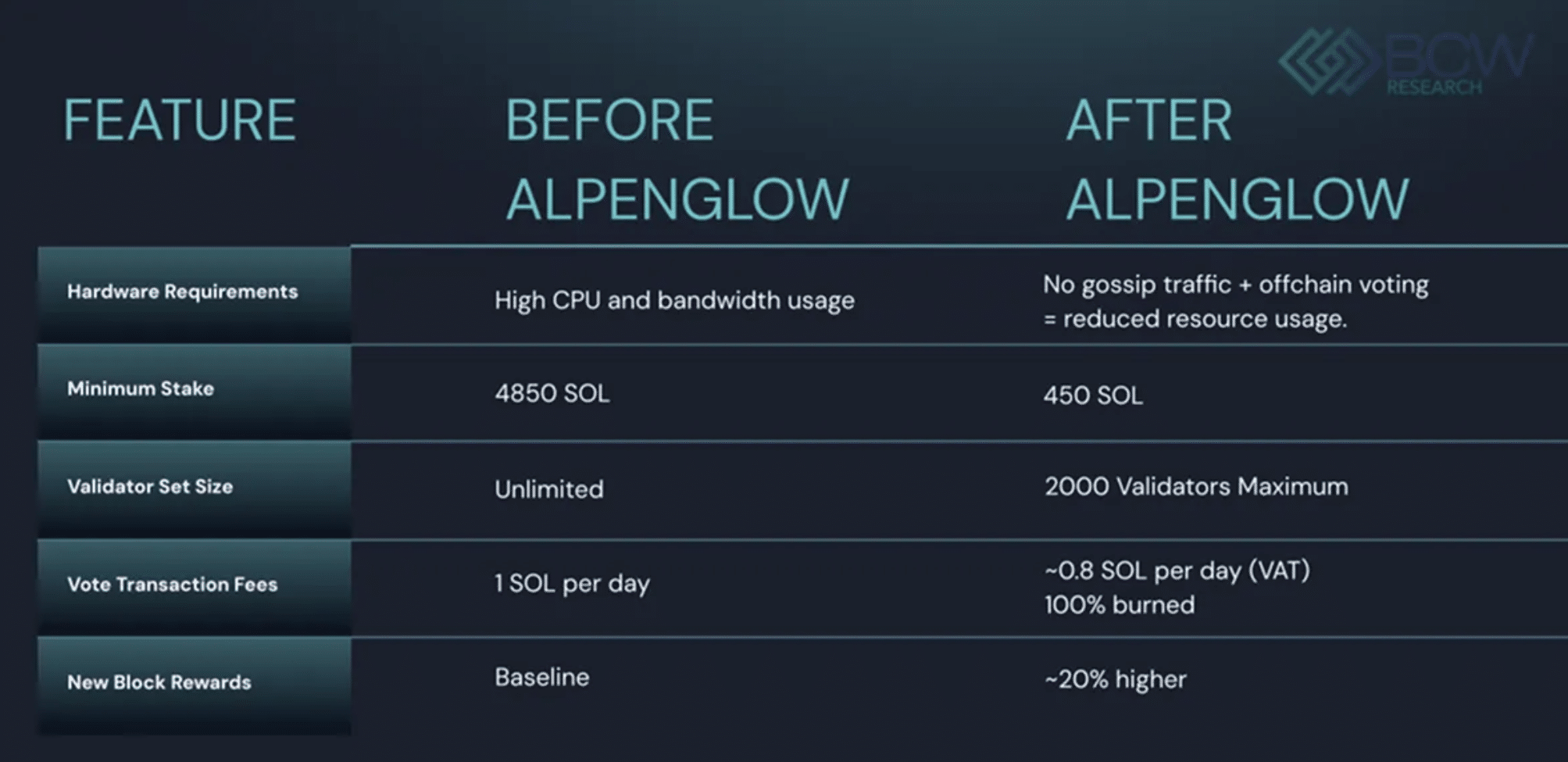
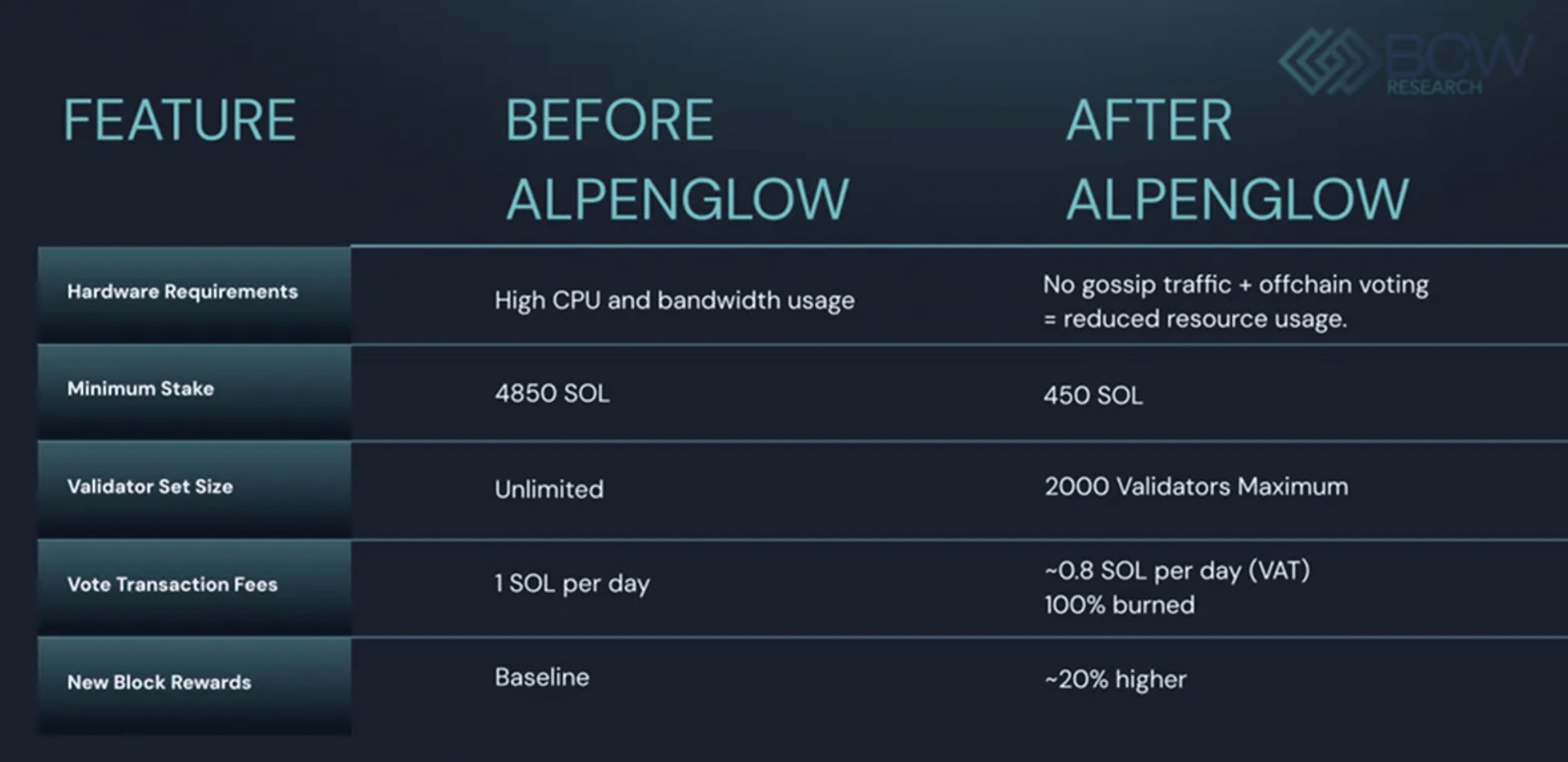
Alpenglow went into the production phase during 2025 and then proceeded through test nets in Q1 to Q2 2026. Solana plans to deploy Alpenglow on the mainnet in H2 2026.
Source: BCW Research

Unlike Ethereum’s approach of initially enhancing its capacity, Solana is redesigning its consensus mechanism. Finality time decreases from 12.8 seconds down to about 100-150 ms.

Beyond reducing finality, Alpenglow removes vote transactions that currently consume nearly 75% of Solana’s network resources. These improvements should enhance the reliability of Solana during periods of prolonged institutional utilization.

Building infrastructure beyond speed

Once settlement and execution improve, infrastructure must support regulated financial activity. This new requirement has caused a shift in focus from development, deployment, and programmability towards compliance.

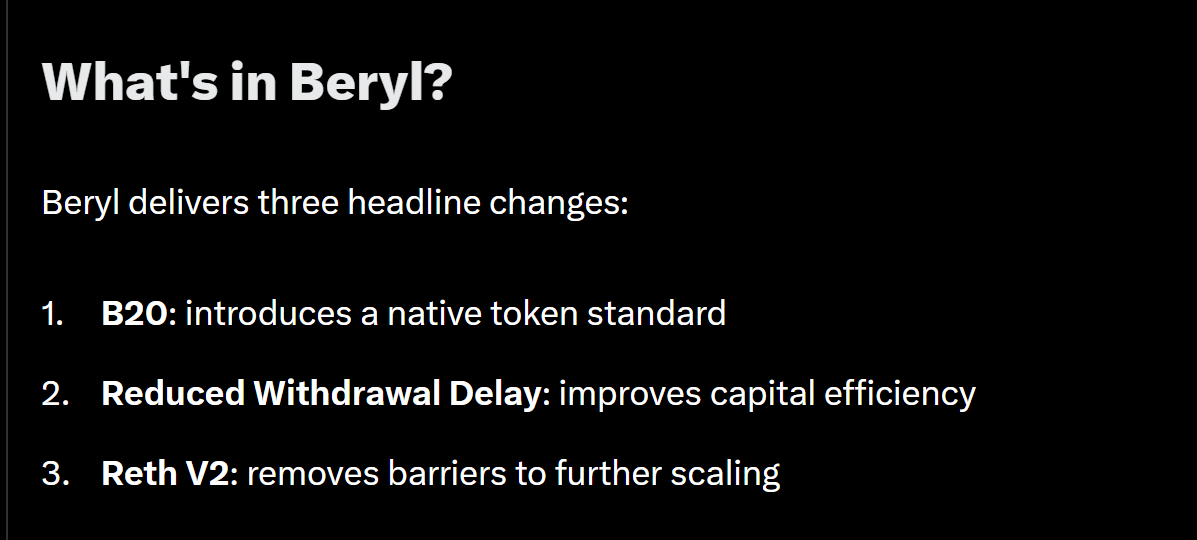
Base began developing Beryl in late 2025, with deployment scheduled for Q3 2026.

In addition to creating better ways to sequence information and provide access to this information via Beryl, it also includes a standardized form of tokens called the B20 token standard.
Source: Base on X

This standard can include stablecoins issued under regulatory conditions, tokenization of other types of assets, and equity issuance using compliant mechanisms built into the protocol.

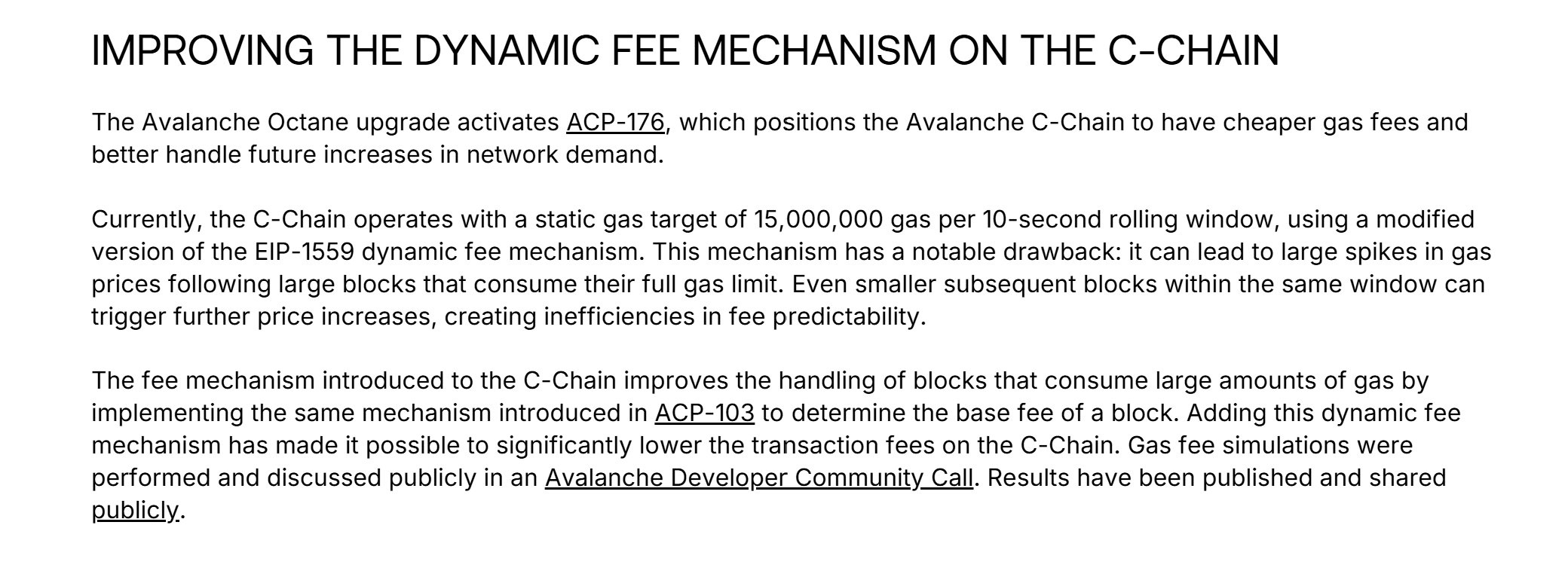
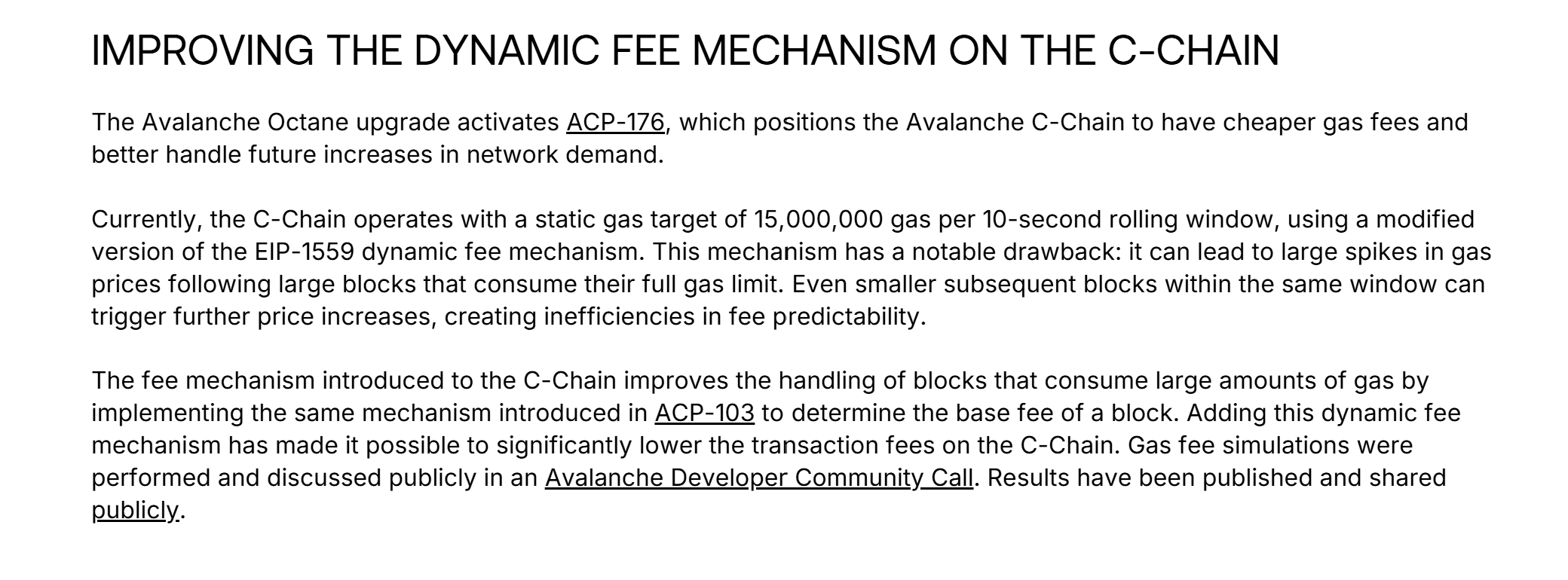
Octane on Avalanche was ramped up during the first quarter of 2026 after the Etna upgrade. Deployments continue to occur from the middle of Q2 through to Q3 of 2026.

Octane upgrades allow for greater transaction processing speeds while decreasing the cost of deploying an enterprise application. These advancements have made it possible to create an institutional blockchain specifically designed to operate for extended periods of time.
Source: AVAX.network

While Bitcoin [BTC] represents the most conservative path within the industry, OP_CAT (Opcode Concatenate) gained significant traction during 2025. The larger community continues to test OP_CAT through 2026. Activation of OP_CAT is predicted to occur by either late 2026 or early 2027.

Rather than redesigning Bitcoin, OP_CAT expands scripting while preserving its security model. Together, these timelines show institutions are no longer demanding faster blockchains alone. They increasingly require infrastructure built for long-term financial activity.

Scaling for institutional demand

The infrastructure race now enters its most important stage.

Technical upgrades alone will not determine long-term leadership because institutions ultimately allocate capital based on proven execution.

Although every major network is strengthening scalability, compliance, and reliability, adoption continues favoring ecosystems already supporting regulated financial activity.

Ethereum retains the largest share of tokenized assets and stablecoin issuance, benefiting from mature compliance standards, deep liquidity, and established settlement infrastructure.

Base further strengthens that advantage through its compliant token framework, simplifying regulated asset issuance.

Meanwhile, Solana continues narrowing the gap through stronger stablecoin growth and improved finality, while Avalanche attracts institutions seeking dedicated blockchain environments.

Those improvements broaden competition without immediately displacing existing leaders.

As these upgrades move from deployment to production throughout 2026 and 2027, institutions will increasingly judge networks by operational resilience rather than theoretical performance.

The blockchain that consistently delivers reliable settlement, regulatory compatibility, and uninterrupted service during periods of market stress is likely to attract the greatest share of future tokenized capital, regardless of which network processes transactions the fastest.


Final Summary

  • Blockchain infrastructure upgrades, led by Ethereum [ETH], are shifting competition toward institutional readiness instead of transaction speed.
  • Blockchain networks, including Ethereum, will increasingly compete on reliability, compliance, and real-world institutional adoption.


Trending Cryptos

Related Questions

QWhat is the main shift in blockchain infrastructure competition as described in the article?

AThe main shift is from a focus on transaction speed and retail adoption to prioritizing institutional readiness, including reliability, compliance, and support for real-world financial activity.

QWhat specific upgrade is Ethereum implementing to prepare for institutional-scale activity?

AEthereum is implementing the Glamsterdam upgrade (mainnet deployment in H1 2026), which will significantly increase gas limits, introduce PBS (pre-blocked state) into the core codebase, and add block-level access lists to enhance settlement capabilities.

QHow does Solana's Alpenglow upgrade aim to improve its network for institutions?

ASolana's Alpenglow upgrade (mainnet deployment planned for H2 2026) redesigns the consensus mechanism to drastically reduce finality time from 12.8 seconds to about 100-150 ms and removes vote transactions that consume significant network resources, thereby improving reliability.

QWhat is the key feature of Base's Beryl upgrade that targets regulated finance?

AA key feature of Base's Beryl upgrade is the introduction of a standardized, compliant token standard called B20, designed to facilitate regulated stablecoins, asset tokenization, and equity issuance directly within the protocol.

QAccording to the article, what will be the primary factor for institutions when choosing a blockchain network by 2026/2027?

AInstitutions will increasingly judge and choose networks based on proven operational resilience—reliable settlement, regulatory compatibility, and uninterrupted service during market stress—rather than theoretical performance or transaction speed alone.

Related Reads

Examining the Open USD Partner Lineup: Follow Who's Joining to See Where the Money Flows

**Title: Deciphering the Open USD Partner Roster: Following the Money** The launch of Open USD is notable less for the stablecoin itself and more for its expansive list of over 140 founding partners, which reads like a "who's who" of global finance and tech. This coalition, including asset managers like BlackRock, card networks Visa and Mastercard, banks (BNY Mellon, Standard Chartered, etc.), tech giants (Google, IBM), merchants (Shopify), and crypto firms (Coinbase, Ripple, Aave, MetaMask), signals a strategic shift. The diverse membership reveals that stablecoins are increasingly viewed not as products to compete over, but as shared infrastructure too critical to be left to any single entity. Each partner category has distinct motives. Asset managers like BlackRock seek to manage the large, sticky cash reserves, a lucrative fee-generating opportunity. Merchants like Shopify aim for lower-cost settlement and potential yield on balances. Banks join defensively to retain custody and settlement roles, fearing deposit outflows to stablecoins. Tech companies bet on programmable money for future machine-to-machine commerce. Crypto firms gain mainstream legitimacy and distribution channels. Remarkably, the consortium includes direct competitors (Visa vs. Mastercard, Coinbase vs. Ripple), indicating that the fear of exclusion from this emerging financial layer outweighs competitive rivalries. However, this shared governance could also lead to slow decision-making. The roster's composition is the real message: it represents a collective bet that a widely accepted, consortium-owned stablecoin is preferable to proprietary versions or having none at all. For incumbents like Circle and Tether, this alliance poses a significant threat, as potential clients have collectively chosen to build their own alternative. The absence of major U.S. retail banks (busy with their own tokenized deposit networks) is equally telling. In essence, the partner list maps where the industry believes value and risk will flow in a tokenized dollar future, marking stablecoin's evolution from a product to a utility.

Foresight News3m ago

Examining the Open USD Partner Lineup: Follow Who's Joining to See Where the Money Flows

Foresight News3m ago

IOSG: Q-Day Countdown, Will Quantum Computing End Cryptocurrency?

IOSG: The Q-Day Countdown – Will Quantum Computing End Cryptocurrency? This analysis explores the looming threat quantum computing poses to blockchain technology. Quantum computers, leveraging Shor's algorithm, could theoretically break the elliptic curve cryptography (ECC) underpinning cryptocurrencies like Bitcoin and Ethereum. The article outlines a hypothetical "Q-Day" scenario where exposed public keys from dormant assets are compromised, leading to fund theft and a deep governance crisis. The core risk is not the complete erasure of blockchains but a systemic reset of public-key cryptography. Bitcoin faces significant challenges due to its "code-is-law" ethos and the immense social consensus required for migration. Its primary vulnerability lies in legacy UTXOs with publicly exposed keys. Ethereum's path involves a more complex, full-stack cryptographic agility upgrade across execution, consensus, and data layers. The industry has a limited "engineering comfort window" of 5-8 years to coordinate a migration to post-quantum cryptography (PQC), such as lattice-based or hash-based signatures. While the existential threat is often overstated, the real bottleneck is the immense coordination required across protocol developers, node operators, wallet providers, exchanges, and custodians. Market repricing of crypto assets may occur well before an actual Q-Day if quantum hardware roadmaps accelerate or regulatory pressure mounts. The article concludes that quantum computing is not a doomsday weapon but a severe stress test for blockchain's foundational security model and governance structures.

marsbit32m ago

IOSG: Q-Day Countdown, Will Quantum Computing End Cryptocurrency?

marsbit32m ago

Tiger Research: Take RWA Tokenization Overseas First

This article discusses the strategic choices facing financial institutions in jurisdictions lacking mature regulatory frameworks for Real-World Asset (RWA) tokenization. With the market growing rapidly, institutions must choose between waiting for local legislation, using regulatory sandboxes, or—the recommended priority—expanding into overseas markets to gain early experience. Successfully launching cross-border RWA tokenization requires meticulous preparation across six key areas: establishing an overseas base (e.g., Hong Kong, Singapore, the U.S.), securing necessary licenses, defining the tokenized asset (with bonds being simpler than non-standard assets), defining the target investor scope, deciding on settlement currencies/payment flows, and designing operational requirements like custody and on-chain governance. The article outlines two primary strategic paths: a direct "onshore" path and a "native on-chain" path. The direct path involves setting up a legal entity and obtaining licenses in a mature jurisdiction like Hong Kong, Singapore, or the U.S., leveraging existing platforms (e.g., DigiFT, Securitize) for efficiency. The alternative native on-chain path involves partnering with compliant, decentralized platforms (e.g., Ondo, Plume Nest) that use structures like offshore SPVs to facilitate tokenization and access DeFi liquidity, offering speed and broader reach but with greater structural complexity. The core argument is that institutions should not wait for perfect domestic regulation. A detailed hypothetical case study illustrates the multi-step, 6-12 month process of launching an overseas tokenized bond. The key takeaway is that the essence of a tokenization business lies not in the technology but in successfully executing the entire sales and operational process. The market is moving forward, and the time to act is now.

marsbit1h ago

Tiger Research: Take RWA Tokenization Overseas First

marsbit1h ago

Trading

Spot

Hot Articles

Discussions

Welcome to the HTX Community. Here, you can stay informed about the latest platform developments and gain access to professional market insights. Users' opinions on the price of ETH (ETH) are presented below.

活动图片