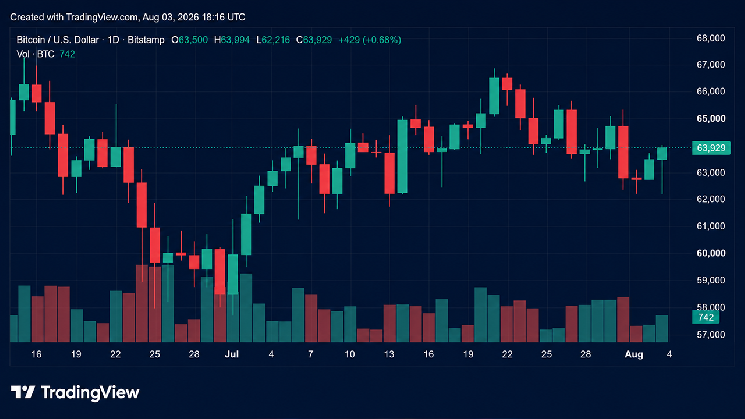
White House Clears Review Of Rule To Allow Crypto In $10 Trillion 401(k) Market

bitcoinistPublished on 2026-03-27Last updated on 2026-03-27

Abstract

The US Department of Labor's proposed rule to allow cryptocurrency investments in 401(k) retirement plans has cleared White House regulatory review. The rule, titled "Fiduciary Duties in Selecting Designated Investment Alternatives," would amend guidance under the Employee Retirement Income Security Act (ERISA), potentially enabling plan sponsors to include cryptocurrencies and private equity as investment options. This action rescinds a 2022 guidance that discouraged such investments due to perceived risks. The proposal, marked as "economically significant," follows a Trump executive order directing agencies to reduce barriers to alternative assets in retirement accounts. A public comment period is expected before a final rule is issued, opening access to the $10 trillion retirement market for crypto.

The Department of Labor’s (DOL) proposed rule to allow crypto investment options for 401(k) retirement plans has cleared the White House’s regulatory review, bringing digital assets closer to the US’s $10 trillion market.

White House Clears DOL’s Proposed 401(k) Rule

The White House’s Office of Information and Regulatory Affairs (OIRA) has concluded its review of a proposed rule submitted by the Department of Labor that could pave the way for crypto exposure in 401(k) retirement plans.

Notably, the Labor Department rescinded a 2022 guidance that discouraged fiduciaries from including crypto investments in 401(k) plans. The guidance followed a Biden-era executive order (EO) that required the government to assess the risks and benefits of digital assets.

As reported by Bitcoinist, it directed plan fiduciaries under the Employee Retirement Income Security Act (ERISA) to exercise extreme caution before incorporating crypto assets into their investment menus, asserting that the digital asset industry’s early stage could pose significant risks.

The DOL’s proposal, named “Fiduciary Duties in Selecting Designated Investment Alternatives,” could amend the fiduciary guidance for plans governed by the Employee Retirement Income Security Act (ERISA).
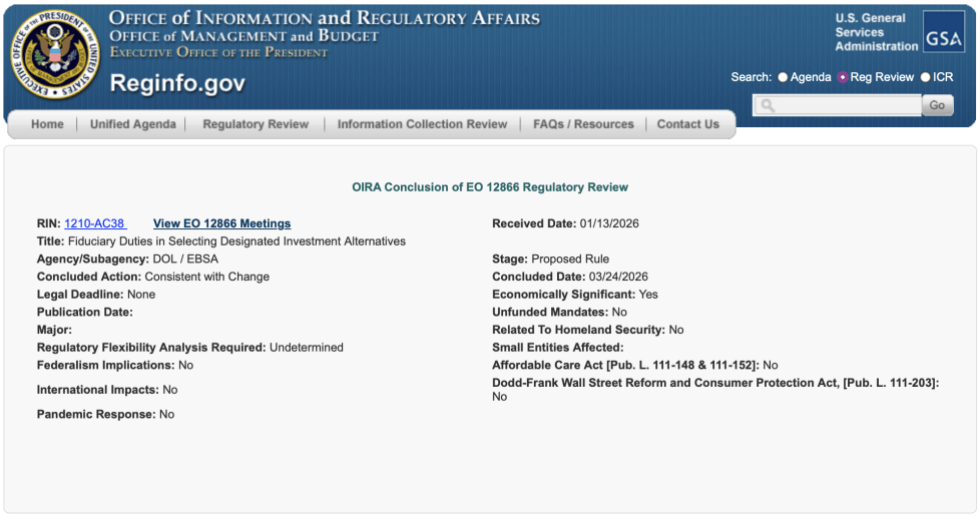
White House concludes regulatory review of DOL's proposed rule. Source: OIRA

This could potentially allow plan sponsors to include cryptocurrencies and private equity as designated investment alternatives. The federal agency marked the action as “consistent with change” and designed the proposal as an “economically significant” rule in its review, which concluded on March 24.

According to the OIRA website, the proposed rule carries no legal deadline for finalization. However, the DOL is expected to formally release the proposal in the coming weeks, allowing for a standard 60-day public comment period. Following this, revisions will be made, and a final rule will be issued.

US Push To Allow Crypto In Retirement Plants

The proposal follows an executive order signed by President Donald Trump last August seeking to allow more private equity, real estate, cryptocurrency, and other alternative assets in 401(k) retirement accounts.

The order directed the DOL, the Securities and Exchange Commission (SEC), the Treasury Secretary, and other federal agencies to reduce regulatory barriers that prohibited investments in alternative assets in their defined contribution retirement plans and explore ways to facilitate access to these assets.

In January, Bitwise’s CIO, Matt Hougan, discussed the possibility of 2026 being the year investors can own Bitcoin and other cryptocurrencies in 401(k) retirement plans, citing that the inclusion of digital assets is becoming more common in individual retirement accounts (IRAs).

The executive argued that providers are slow to adapt, but acknowledged that the Trump administration’s pro-crypto stance, which effectively removed the ban on crypto from 401(k)s, has opened the door to the multi-trillion-dollar market.

Recently, some US states have pushed to embed crypto into their public financial systems. In February, Indiana lawmakers advanced House Bill 1042 (HB 1042), also known as the Bitcoin Rights Bill, which requires several state-administered programs, including retirement plans for teachers, public employees, and legislators, to offer self-directed brokerage accounts with at least one digital asset investment option.

Multiple US lawmakers have backed the Trump Administration’s initiatives. In September, nine House members requested that the SEC Chairman, Paul Atkins, provide prompt assistance in implementing the president’s executive order and collaborate with the DOL to safeguard workers.

In addition, House of Representatives member Troy Downing introduced a bill to codify Trump’s directive and grant it the “force and effect of law.” This move aimed to facilitate investors’ access to Bitcoin and other alternative assets within their 401(k) retirement plans.
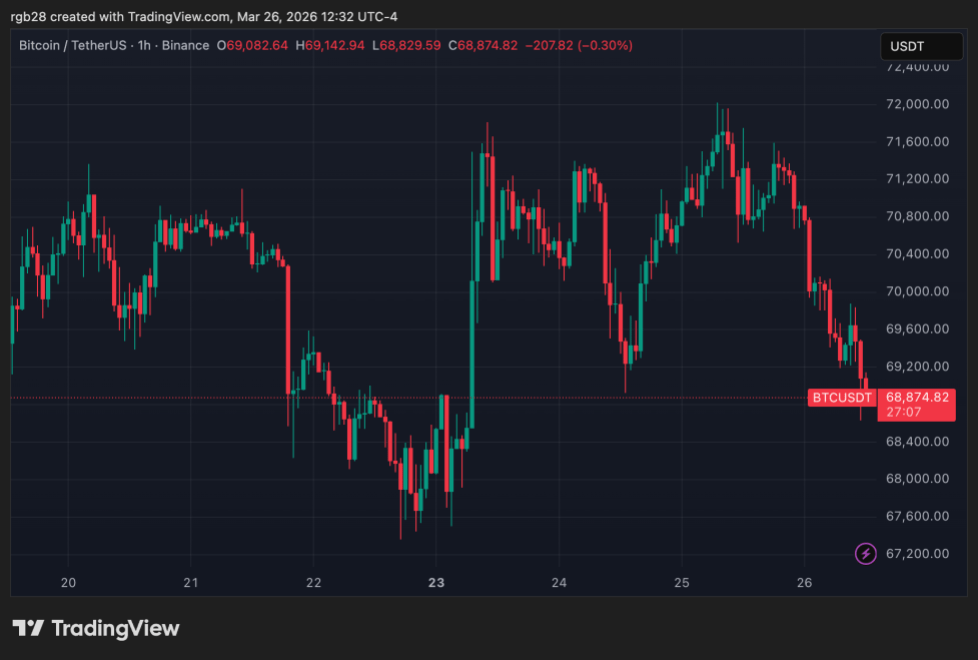
Bitcoin (BTC) trades at $68,874 in the one-week chart. Source: BTCUSDT on TradingView


Trending Cryptos

Related Questions

QWhat is the significance of the White House's Office of Information and Regulatory Affairs (OIRA) concluding its review of the DOL's proposed rule?

AIt signifies a major regulatory step forward, bringing digital assets closer to being allowed as investment options within the massive $10 trillion US 401(k) retirement market.

QWhich previous guidance did the Department of Labor rescind, and what was its stance on crypto in 401(k) plans?

AThe Labor Department rescinded its 2022 guidance, which had strongly discouraged plan fiduciaries from including cryptocurrency investments in 401(k) plans due to the significant risks posed by the early-stage digital asset industry.

QWhat specific types of alternative assets does the proposed rule aim to allow in 401(k) plans?

AThe proposed rule, named 'Fiduciary Duties in Selecting Designated Investment Alternatives,' could potentially allow plan sponsors to include cryptocurrencies and private equity as designated investment alternatives.

QWhich US President signed the executive order that initiated the push to allow alternative assets in retirement accounts, and what did it direct agencies to do?

APresident Donald Trump signed the executive order in August. It directed the DOL, SEC, Treasury, and other federal agencies to reduce regulatory barriers prohibiting investments in alternative assets and to explore ways to facilitate access to them in defined contribution retirement plans.

QBeyond federal action, how are some US states moving to integrate crypto into their financial systems, as mentioned in the article?

ASome states, like Indiana, are advancing legislation such as the 'Bitcoin Rights Bill' (HB 1042), which requires state-administered retirement plans for public employees and teachers to offer self-directed brokerage accounts with at least one digital asset investment option.

Related Reads

From Transaction Fees to Stablecoins: The Revenue Drivers and Economic Moats Behind Web3 Business Models

"From Transaction Fees to Stablecoins: Revenue Drivers and Moats in Verified Web3 Business Models" This analysis explores five established Web3 revenue models, examining their drivers and long-term sustainability. 1. **Transaction Fees**: This model is highly cyclical, with income tied to market activity and user risk appetite (formula: volume × fee rate). Growth depends on expanding the market, gaining market share, and maintaining stable fees amid intense competition. 2. **Stablecoin Reserve Yield**: Revenue stems from the scale of issued stablecoins and the interest earned on their underlying reserves (like US Treasuries). While predictable with strong moats (high user migration costs), growth is tied to adoption as on-chain dollar infrastructure and is sensitive to interest rate cycles. 3. **Funding Rate Arbitrage & Lending Spreads**: Protocols like Aave and Ethena profit from capital supply-demand imbalances. Similar to transaction fees, this model is cyclical and driven by user leverage demand during bullish market phases. 4. **Block Space Sales**: Chains sell computational resources (formula: demand × gas price). A key challenge is the ongoing decline in gas fees due to technological advances and competition among L1s and L2s. Future viability hinges on whether demand growth can offset falling unit prices. 5. **Protocol-Level Service Fees**: Similar to SaaS, this model involves charging other protocols for essential services (e.g., oracles like Chainlink). Revenue scales with ecosystem adoption. The primary moat is high switching costs once integrated, making market leadership crucial. In summary: Transaction fees and funding spreads are highly cyclical. Stablecoin yields and protocol services build strong, durable moats. Block space sales face the structural challenge of perpetually declining unit revenue despite growing demand.

marsbit1h ago

From Transaction Fees to Stablecoins: The Revenue Drivers and Economic Moats Behind Web3 Business Models

marsbit1h ago

Trading

Spot

Hot Articles

How to Buy HOUSE

Welcome to HTX.com! We've made purchasing Housecoin (HOUSE) simple and convenient. Follow our step-by-step guide to embark on your crypto journey.Step 1: Create Your HTX AccountUse your email or phone number to sign up for a free account on HTX. Experience a hassle-free registration journey and unlock all features.Get My AccountStep 2: Go to Buy Crypto and Choose Your Payment MethodCredit/Debit Card: Use your Visa or Mastercard to buy Housecoin (HOUSE) instantly.Balance: Use funds from your HTX account balance to trade seamlessly.Third Parties: We've added popular payment methods such as Google Pay and Apple Pay to enhance convenience.P2P: Trade directly with other users on HTX.Over-the-Counter (OTC): We offer tailor-made services and competitive exchange rates for traders.Step 3: Store Your Housecoin (HOUSE)After purchasing your Housecoin (HOUSE), store it in your HTX account. Alternatively, you can send it elsewhere via blockchain transfer or use it to trade other cryptocurrencies.Step 4: Trade Housecoin (HOUSE)Easily trade Housecoin (HOUSE) on HTX's spot market. Simply access your account, select your trading pair, execute your trades, and monitor in real-time. We offer a user-friendly experience for both beginners and seasoned traders.

5.0k Total ViewsPublished 2025.04.27Updated 2026.06.02

How to Buy HOUSE

Discussions

Welcome to the HTX Community. Here, you can stay informed about the latest platform developments and gain access to professional market insights. Users' opinions on the price of HOUSE (HOUSE) are presented below.

活动图片