When Silver Became a Meme Stock, Retail Investors Ultimately Caught the Falling Knife

marsbitPublished on 2026-02-05Last updated on 2026-02-05

Abstract

The article details the dramatic rise and crash of silver prices in early 2026, which saw a 40% plunge in three days after retail investors, inspired by the GameStop phenomenon, poured a record $1 billion into silver ETFs. The crash was triggered not by a change in Fed leadership, as initially reported, but by the CME raising margin requirements by 50%, forcing over-leveraged retail traders into a cascade of automatic liquidations. While散户 suffered significant losses, institutional players like JPMorgan capitalized on the chaos. They accessed emergency Fed liquidity unavailable to retail, executed profitable arbitrage on the discounted SLV ETF, and strategically bought physical silver at the bottom. The piece concludes that the event highlights the structural advantages institutions hold in an asymmetric market, where散户, attempting to challenge Wall Street, ultimately became the victims of a "mass grave" they helped create.

Author: Xu Chao, Wall Street News

"I lost an entire year's after-tax salary today."
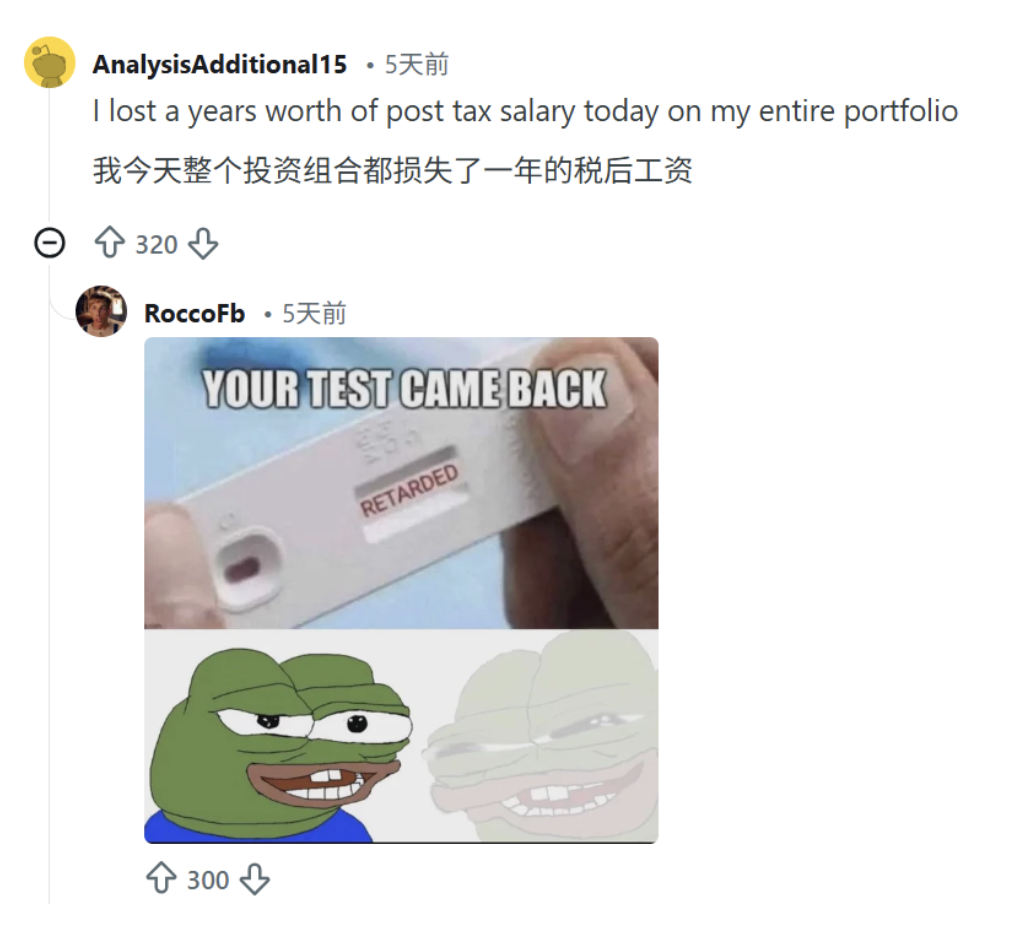
This was the desperate cry left by a Reddit user on the forum last Friday.

Just a few days ago, silver was seen as the "GameStop of 2026," a symbol of retail investors banding together to fight against Wall Street. Reddit forums were flooded with "Diamond Hands" memes, vowing to send silver to the moon.
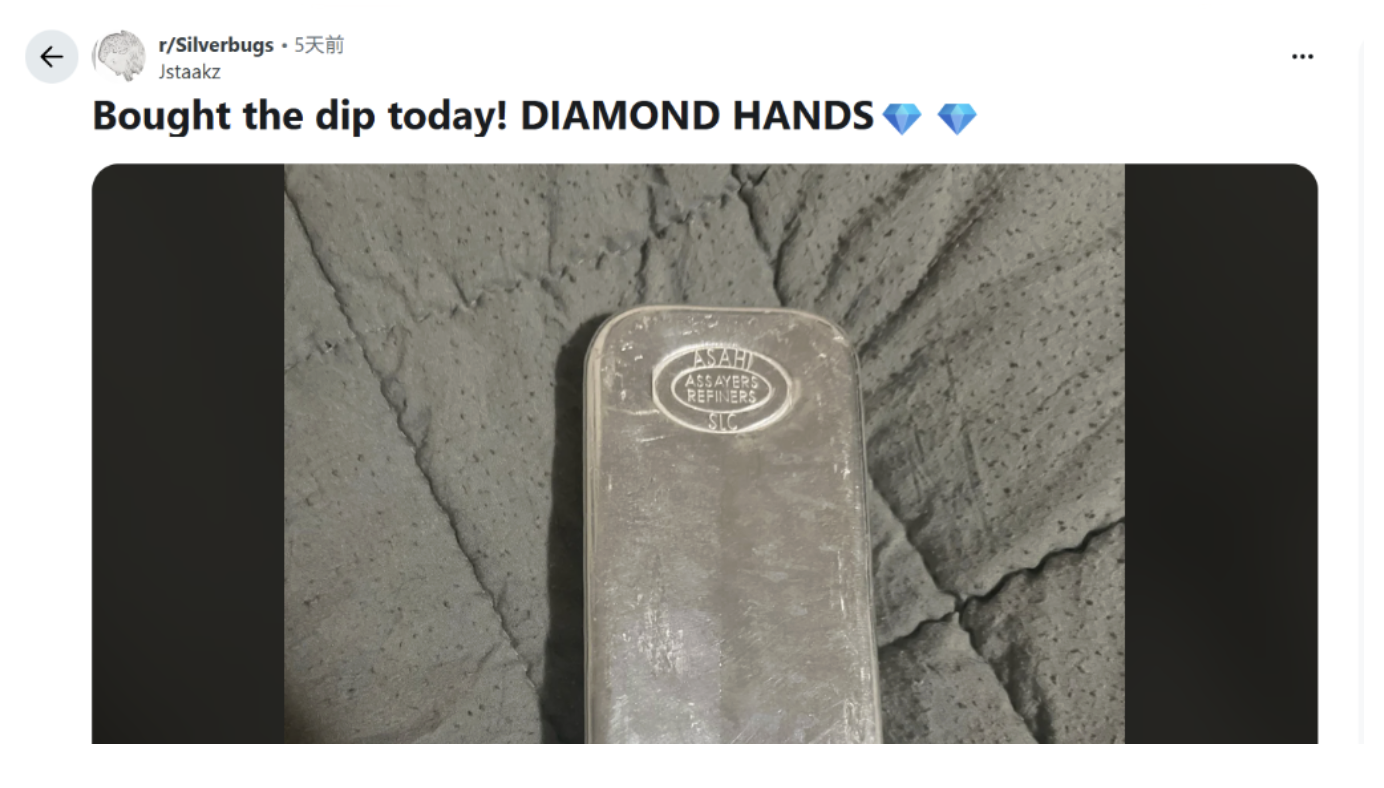
However, the狂欢 (carnival/euphoria) came to an abrupt halt within just three days.

Silver prices plummeted in free fall from a high of over $120 per ounce, crashing 40% in three days, not only erasing recent gains but also leaving a terrifying cliff on the chart.

For retail investors who bought at the peak, this wasn't a correction; it was a massacre. The silver market, once承载着 (carrying/hosting) dreams of sudden wealth, has been turned into a "mass grave" where retail investors buried themselves.
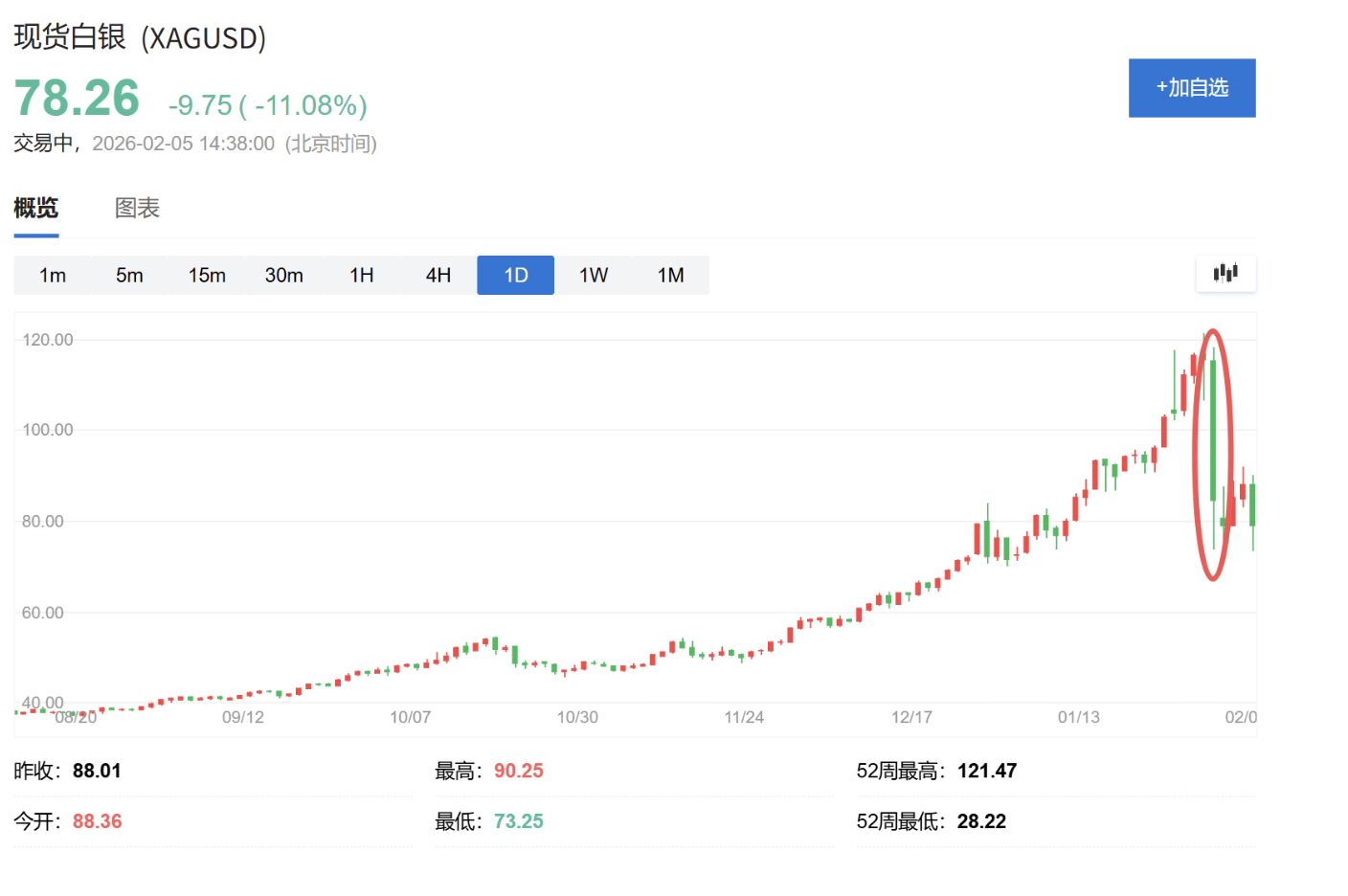
How did this happen? While we were talking about a "short squeeze," Wall Street's giants had already opened their bloody maws.

The Crazy Casino: When Silver Became a "Meme Stock"

The silver market in January 2026 could no longer be described as rational.

According to VandaTrack data, individual investors poured a record $1 billion net into silver ETFs in January alone.

This狂热 (frenzy) peaked on January 26th—trading volume for the silver ETF (SLV) reached a staggering $39.4 billion, almost matching the S&P 500 ETF (SPY)'s $41.9 billion.

Remember, this is an ETF for a single metal; its popularity nearly rivaled that of the entire U.S. stock market.
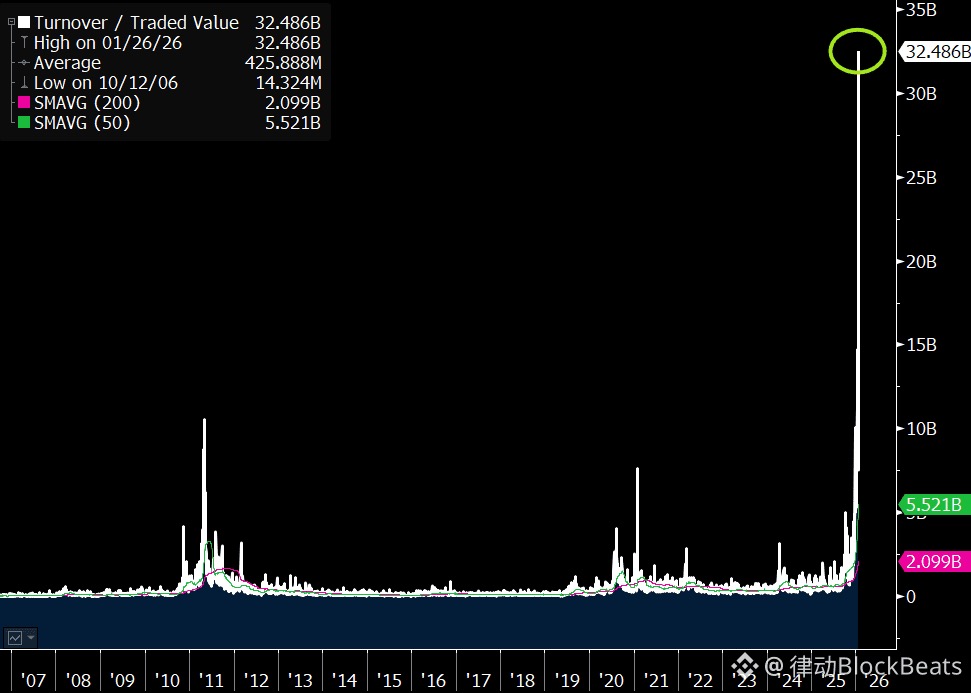
StoneX market analyst Rhona O’Connell was blunt: "Silver is severely overvalued, caught in a self-fulfilling madness. It's behaving like Icarus, flying too close to the sun, and will eventually get burned."

Social media acted as an accelerant for this狂欢 (carnival/euphoria).

On Reddit's WallStreetBets and Silverbugs sections, posts about silver surged to 20 times the five-year average. Retail investors, like they did rushing into GameStop in 2021, flocked en masse into this notoriously volatile market, trying to drown out fundamentals with sheer capital.

Bull and Baird market strategist Michael Antonelli told CNBC helplessly: "Silver has completely become the GameStop of 2026. The price doubled in three months, completely detached from industrial demand fundamentals, purely a vertical climb built on retail money."

But they forgot silver has a nickname: "gold on steroids." It rises疯狂 (crazily), and falls even more ruthlessly.

Crash Truth: Who Pulled the Trigger?

On January 30th, the惨案 (disaster) occurred. Silver experienced an epic sell-off within hours.

Media and analysts quickly found a perfect scapegoat: Kevin Warsh's nomination as Fed Chair.
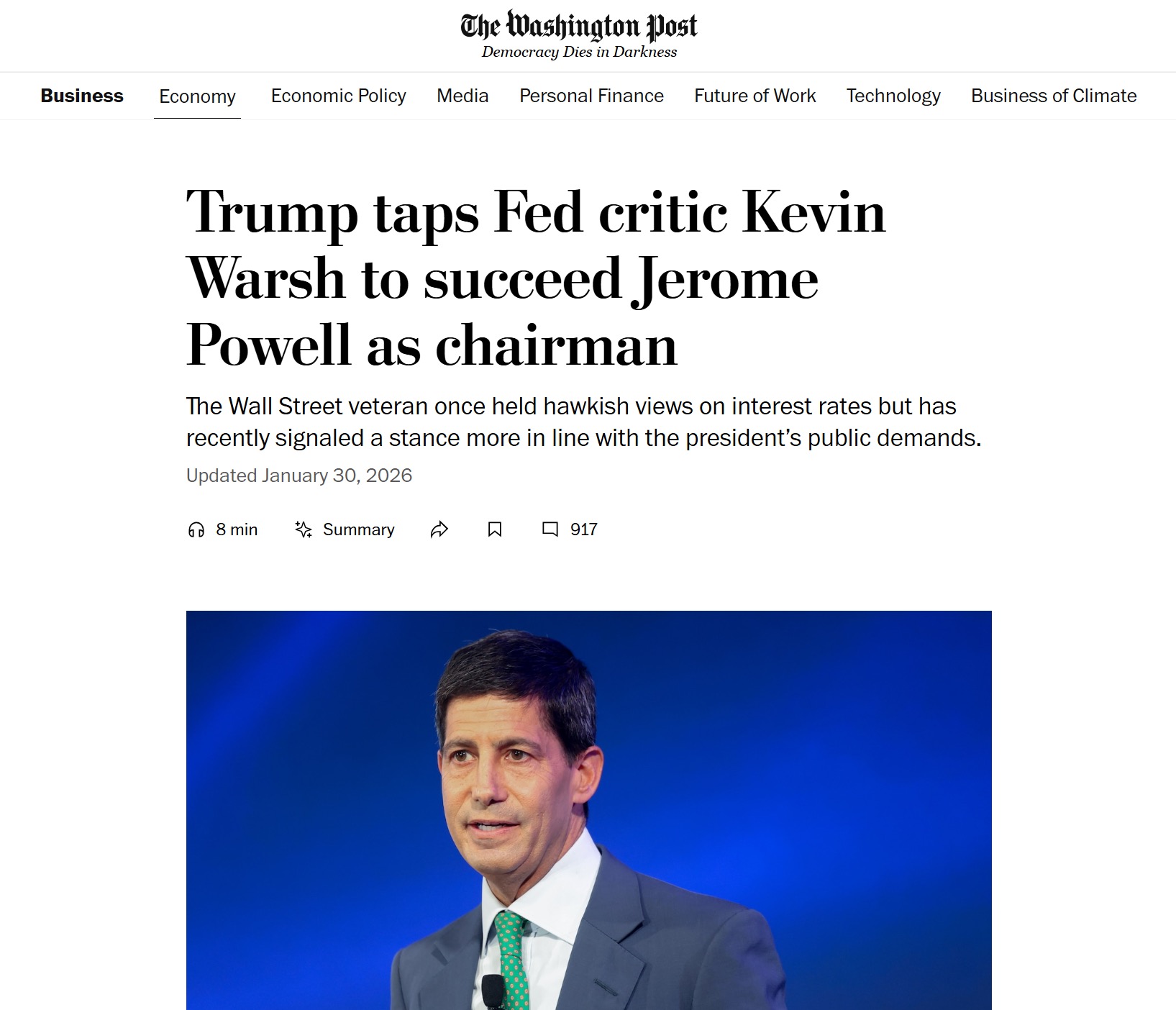
The market's reasoning seemed logical: Warsh is a hawk, implying rates will stay high, which is bearish for non-yielding precious metals.

But the truth often lies in the details.

Warsh's nomination was announced at 1:45 PM ET (1:45 AM Beijing Time on Feb 1st). However, silver's crash began as early as 10:30 AM on the 30th. In the three-plus hours before the news was public, silver prices had already plunged 27%.
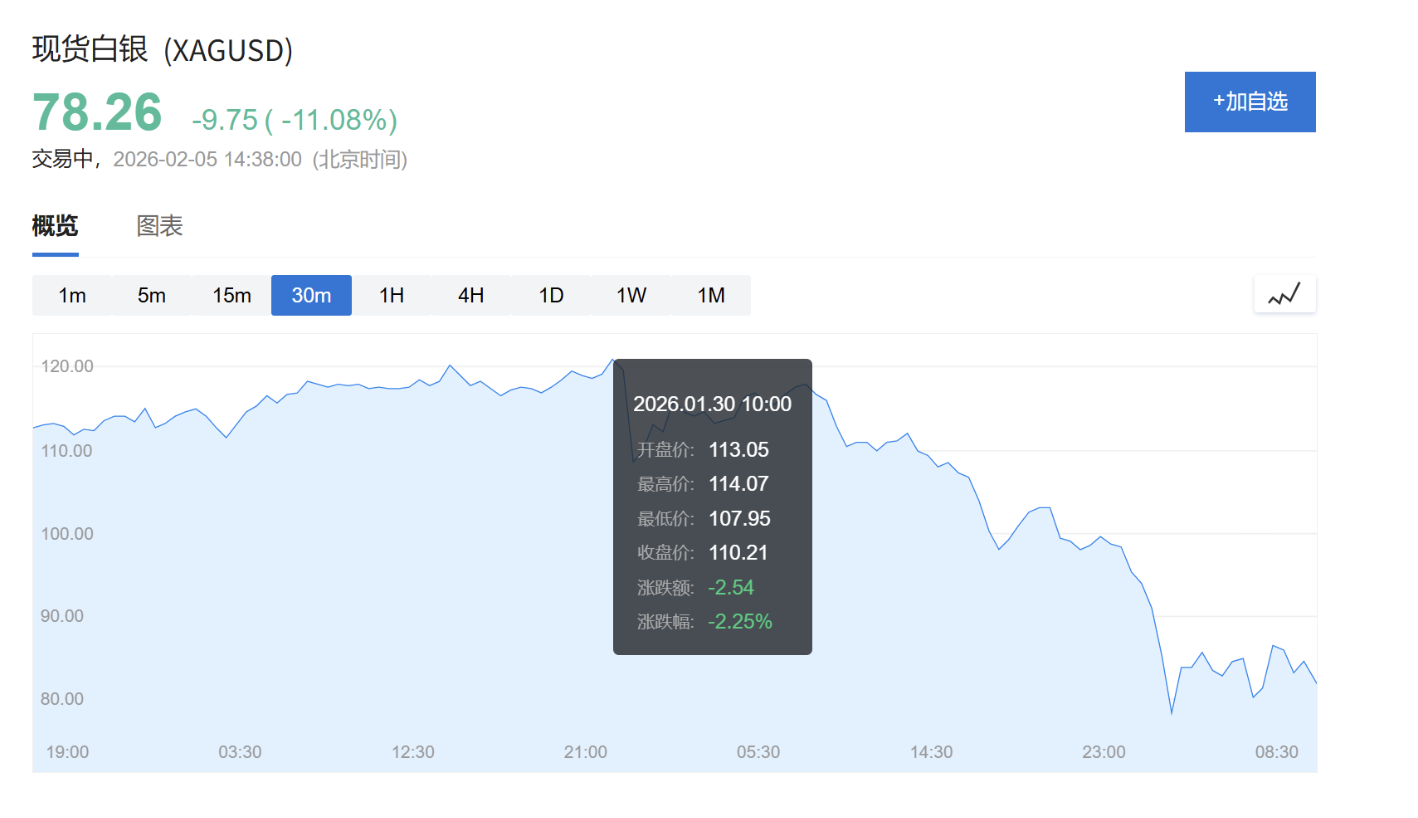
Blaming the Fed nomination was just a cover for the real "tool of slaughter"—margin requirements.

In reality, the true catalyst for this "mass grave" tragedy was a change in exchange rules. The Chicago Mercantile Exchange (CME) raised margin requirements for silver futures twice in the week before the crash, for a total increase of 50%.

What does this mean?

If you were a retail investor fully leveraged, your account previously only needed $22,000 to maintain the position. Suddenly, the exchange demanded you come up with $32,500. Can't produce the extra $10,500? Sorry, the system will automatically liquidate your position,不问价格 (regardless of price),不计成本 (regardless of cost).

This is why the crash was so rapid. Margin hikes triggered the first wave of forced liquidations, which caused prices to fall, which in turn triggered more people's liquidation thresholds. It's a vicious cycle, and retail investors are at the very bottom of this cycle.

An Asymmetric Game

While retail investors were wailing in the "mass grave," what were the institutions doing?

The answer might send a chill down your spine: They were waiting for retail sell-offs to buy low and profit. And this isn't illegal; it's a structural advantage built into the market's operation.

According to disclosures by columnist Luis Flavio Nunes, institutions, represented by JPMorgan, demonstrated textbook "profit-taking" methods during this crash:

Step 1: Access Emergency Liquidity.

While the exchange was raising margin requirements for retail investors, banking institutions were enjoying a "blood transfusion" from the Fed.

Data shows that on December 31st, banks borrowed a record $74.6 billion from the Fed's emergency lending window (SRF). This mechanism exists precisely to provide short-term liquidity to eligible financial institutions. Its design初衷 (original intention) is to prevent funding crises. But the reality is: Only specific institutions qualify to use this tool.
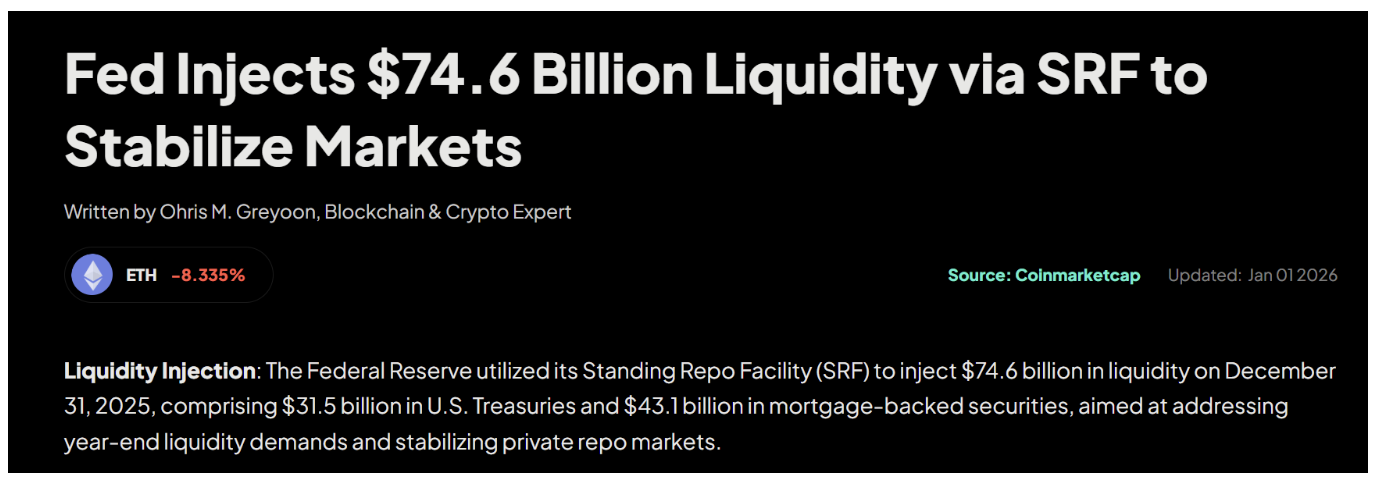

At the same time, the exchange raised silver margin requirements (by) 50% within a week. The Fed's emergency funding tool provides cash to eligible institutions at favorable rates. Retail investors have no access to equivalent channels of emergency central bank funding. This isn't favoritism. It's determined by the financial system's architecture: central banks lend to banks, not to individuals.

Step 2: Wait for the Market Chaos Caused by Margin Hikes.

The core mechanism of the silver crash lies in the difference in ability between retail and institutions to respond to increased margin requirements.

On December 26th and 30th, just before the crash, the CME raised margin requirements for silver trading by 50% in a short period. This meant a trader holding a position needed to immediately come up with 50% more cash.

For most retail investors, this sudden capital pressure directly triggered brokers' automatic liquidation mechanisms, forcing them to sell at any cost during the market plunge.

Meanwhile, institutions with access to Fed tools had more options.

They could draw on credit lines, obtain emergency loans, or quickly transfer funds between accounts. This doesn't prevent all liquidations, but it gives them more time and flexibility. Thus, retail positions were sold off during the panic, often at the worst prices. Institutional positions could be managed more strategically.

Step 3: Fully Utilize Authorized Participant Privileges for Arbitrage.

Take JPMorgan as an example. This bank plays a dual role in the silver market: they store all the physical silver for the largest silver fund (SLV), and they are also an "Authorized Participant," meaning they can create or destroy shares of that fund in large batches.

During the panic selling on January 30th, the SLV ETF's share price traded at an abnormal discount, falling to $64.50 per share, while the physical silver it represented was worth $79.53, a spread as high as 19%.

This provided huge arbitrage opportunities for institutions with "Authorized Participant" (AP) status through specific market mechanisms. Authorized Participants (a small group of large financial institutions) fully exploited this spread, buying ETF shares and redeeming them for higher-value physical silver.

Data shows approximately 51 million shares of SLV were redeemed that day, implying an arbitrage profit of about $765 million from this operation alone.

This operation helps maintain the link between the ETF price and its net asset value (NAV) and is a compliant market function, but it's a source of profit inaccessible to ordinary investors. Retail investors could see the discount but couldn't benefit from it due to lack of AP status.

Step 4: Strategic Positioning in Derivatives.

JPMorgan also held significant silver short positions, meaning they were betting on lower silver prices, or hedging other positions. As silver rose to $121 in late January, these positions were underwater.

The most ironic moment occurred at the price bottom. On January 30th, when retail investors were being forcibly liquidated at the low of $78.29 due to insufficient margin, JPMorgan stepped in. CME records show JPMorgan took over 633 contracts at this price, acquiring 3.1 million ounces of physical silver.

These crucial four steps happened almost on the same day. Did Wall Street orchestrate this series of events? This cannot be confirmed. But they were structurally positioned to benefit in multiple ways simultaneously: only institutions with their unique combination of roles and permissions could possibly do this.

"Silver is Always a Death Trap"

In this wave of行情 (market action/movement), countless retail investors like the Reddit user at the beginning of the article lost years of savings.

StoneX analyst Rhona O’Connell was right: "Silver is always a death trap."

Financial markets have never been a level playing field. When retail investors try to challenge the steel machine composed of algorithms, leverage, and rule-makers with "sentiment" and "memes," the outcome is often predetermined.

Silver is not GameStop either; it's a much more brutal arena than stocks.

Retail investors thought they were charging at Wall Street. Little did they know, they were unknowingly digging a huge "mass grave" with their own hands, then lining up to jump in.


Trending Cryptos

Related Questions

QWhat was the main reason behind the silver market crash in January 2026, according to the article?

AThe primary reason was the Chicago Mercantile Exchange (CME) raising the margin requirements for silver futures by 50% over a week, which triggered a cascade of forced liquidations among leveraged retail investors.

QHow did institutional players like JPMorgan benefit from the silver market crash?

AJPMorgan benefited by using its status as an authorized participant to arbitrage the price difference between the SLV ETF and physical silver, acquiring physical silver at a discount, and using emergency liquidity facilities to avoid forced selling while buying assets from distressed retail investors.

QWhat role did social media play in the silver market frenzy?

ASocial media platforms like Reddit's WallStreetBets and Silverbugs fueled the frenzy, with posts about silver surging to 20 times their five-year average, encouraging retail investors to pile into silver as a meme stock, similar to GameStop in 2021.

QWhy was the nomination of Kevin Warsh as Fed Chair not the actual cause of the crash?

AThe crash began three hours before the announcement of Warsh's nomination, with silver prices already down 27%, indicating that the margin requirement hikes were the true trigger, not the Fed news.

QWhat structural advantages do institutions have over retail investors in such market events?

AInstitutions have access to emergency liquidity facilities like the Fed's Standing Repo Facility, the ability to meet margin calls without immediate forced selling, and privileges such as authorized participant status for ETFs, allowing arbitrage opportunities unavailable to retail investors.

Related Reads

Six Years Later, UNI Finally Welcomes Its Own "Buyback Bull"

After years of debate, Uniswap's UNI token has finally entered a 'buyback bull' phase following the long-awaited activation of its fee-switch mechanism. The UNIfication proposal, executed in December 2025, redirected a portion of protocol fees from select pools and Unichain sequencer revenue into a treasury (TokenJar) dedicated to buying back and permanently burning UNI. Initial market reaction was muted due to modest early burn rates. A significant shift occurred in July 2026 with the launch of Robinhood Chain. Uniswap's immediate deployment there skyrocketed trading volume, making it a top fee-generator. Subsequently, governance votes extended the fee mechanism to v4 pools and Robinhood Chain, causing protocol revenue to nearly triple. Daily funds directed to UNI burns rose sharply, with Robinhood Chain contributing over half. This transitioned UNI's narrative from a governance token to a cash-flow asset backed by a perpetual automatic buyer. UNI's price, which had languished around $2.30 in early June, nearly doubled to approach $4.60 by late July. Analysts credit this to the tangible cash flow from fees rather than mere speculation. Unlike many newer projects where buybacks are offset by large investor unlocks, UNI's six-year history has resulted in a widely distributed and relatively clean supply, allowing the buyback pressure to effectively impact the secondary market. The key test will be whether trading activity, particularly on Robinhood Chain, sustains after its initial gas subsidies expire.

marsbit3m ago

Six Years Later, UNI Finally Welcomes Its Own "Buyback Bull"

marsbit3m ago

Only 153 Venture Capital Firms Invested in July: Is the Crypto VC Industry Experiencing a 'Mass Extinction'?

In July 2026, only 153 unique venture capital firms participated in disclosed crypto funding rounds, marking the lowest monthly count since November 2020. This figure represents an 87% decline from the peak of 1,177 firms in 2022. Overall, the first seven months of 2026 saw crypto projects raise approximately $11.78 billion across 481 rounds. This crypto VC contraction contrasts sharply with the broader venture capital landscape, where global VC investment reached a record $560.4 billion in H1 2026, heavily fueled by major AI company financings. This shift in capital allocation has drawn funds away from the crypto sector. Within crypto, funding is highly concentrated. Trading platforms, prediction markets, and payment sectors absorbed 53% of the total capital. While early-stage deals remain frequent, the largest sums flow to a few late-stage rounds and mergers & acquisitions, which surged to $7.23 billion in Q2 2026. The market is consolidating around top funds like a16z crypto and Dragonfly, which successfully raised new multi-billion dollar funds, while many smaller firms have retreated. Analysts describe this as a "great extinction" for crypto VCs, where capital is becoming more selective, favoring proven business models and assets over early-stage speculation. This raises the bar for project quality, funding efficiency, and viable exit paths.

marsbit23m ago

Only 153 Venture Capital Firms Invested in July: Is the Crypto VC Industry Experiencing a 'Mass Extinction'?

marsbit23m ago

Strategy's Loss in the Second Quarter Reaches $8.22 Billion Amid Bitcoin Decline

Strategy, the largest corporate holder of Bitcoin, reported a net loss of $8.22 billion for the second quarter. This loss was primarily driven by an $8.32 billion unrealized loss on its Bitcoin holdings due to a decline in the asset's price during the period. Despite these paper losses, the company increased its Bitcoin holdings to 843,775 BTC, a 25% growth since the start of the year. As part of a new monetization strategy, Strategy sold approximately $218.4 million worth of Bitcoin, mainly to fund dividends for preferred shareholders, with $216 million of that sold after Q2 ended. The company also built a $3.75 billion cash reserve, which it claims is sufficient to cover over two years of dividend and interest payments, aiming to insulate itself from Bitcoin's volatility while meeting obligations. Following the earnings release, Strategy's stock (MSTR) rose 4.7% in regular trading but corrected slightly after-hours. This pattern reflects how the company's accounting results are heavily tied to Bitcoin's price swings, even as its long-term strategy remains unchanged. The report indicates that Strategy is maintaining its core strategy of accumulating Bitcoin while building a financial buffer. This quarterly loss follows a recognizable pattern, with the company posting significant unrealized losses in previous quarters (e.g., $12.4 billion in Q4 2025 and ~$12.5 billion in Q1 2026) due to fair-value accounting. A key technical shift is its new monetization program, which introduces periodic selling pressure on the market, transitioning Strategy from a pure accumulator to a participant that occasionally adds supply. A critical question remains: how long can the cash reserve cover dividend obligations if a Bitcoin price downturn persists beyond two years?

cryptonews.ru43m ago

Strategy's Loss in the Second Quarter Reaches $8.22 Billion Amid Bitcoin Decline

cryptonews.ru43m ago

Will Terrorist Durov Ban Russian Officials?

Telegram founder Pavel Durov publicly reacted to being labeled a "terrorist" by Russian authorities, stating the designation came after he refused demands for mass surveillance and censorship on the platform. In a Telegram post, he highlighted that this status formally bans him from "publishing information online." Durov concluded with a statement widely circulated: Russian officials "clearly don't understand who can ban whom on the internet." This remark suggests Durov could potentially restrict official Russian government and officials' channels on Telegram, which continue to operate on the platform despite its formal blocking in Russia. The situation parallels previous, slow-moving state directives, like switching officials to domestic cars, contrasted with the current push to migrate all government communication to the Russian-made messenger MAX by 2030. However, reports indicate many officials still use Telegram via workarounds, fearing surveillance on MAX, while alternatives like BiP and KakaoTalk recently became inaccessible in Russia without a VPN. Durov has not specified any immediate actions against state channels. His statement is an initial response, with further developments depending on the authorities' reaction. The dynamic differs from 2020 when Russian regulators lifted a block on Telegram; now, Durov implies control from within the platform itself over the official accounts that persisted through that earlier blockade.

cryptonews.ru43m ago

Will Terrorist Durov Ban Russian Officials?

cryptonews.ru43m ago

Trading

Spot

Hot Articles

Discussions

Welcome to the HTX Community. Here, you can stay informed about the latest platform developments and gain access to professional market insights. Users' opinions on the price of MEME (MEME) are presented below.

活动图片