Wang Chun Also Fell Victim: A $50 Million 'Tuition' - Why Do Address Poisoning Attacks Keep Succeeding?

marsbitPublished on 2025-12-22Last updated on 2025-12-22

Abstract

On December 19, a cryptocurrency user fell victim to an address poisoning attack, losing 50 million USDT (approximately $50 million). The attacker first sent a small test transaction of 50 USDT from a Binance exchange wallet. Hours later, the victim transferred 49,999,950 USDT to what they believed was their own address but was actually a hacker-controlled wallet with a similar beginning and ending character sequence. The hacker quickly laundered the funds by converting USDT to DAI, then to ETH, and finally moving most of the assets into the privacy tool Tornado Cash. The victim, likely an institutional entity given transaction patterns and rapid response, publicly offered the hacker a $1 million reward for returning 98% of the funds and threatened legal action. Address poisoning attacks exploit user carelessness by creating deceptive addresses that mimic legitimate ones. Such attacks have been rising since 2022, with one Bitcoin incident alone involving 49,000 cases since 2023. High-profile figures like F2Pool’s Wang Chun have also suffered similar losses. While some victims have recovered funds through negotiation, this case remains unresolved as the hacker has not responded. The incident underscores the critical need for double-checking addresses in crypto transactions.

At around midnight Beijing time yesterday, on-chain analyst Specter X discovered a case where nearly 50 million USDT was transferred to a hacker's address due to failure to carefully verify the transfer address.

According to the author's investigation, this address (0xcB80784ef74C98A89b6Ab8D96ebE890859600819) withdrew 50 USDT from Binance at approximately 13:00 Beijing time on the 19th for a test transaction before a large withdrawal.

About 10 hours later, the address withdrew 49,999,950 USDT from Binance in one go. Combined with the previous 50 USDT withdrawal, the total amounted to exactly 50 million.

Approximately 20 minutes later, the address that received the 50 million USDT first transferred 50 USDT to 0xbaf4...95F8b5 for testing.

Within less than 15 minutes after the test transfer was completed, the hacker's address 0xbaff...08f8b5 transferred 0.005 USDT to the address holding the remaining 49,999,950 USDT. The address used by the hacker had similar beginning and ending characters to the address that received the 50 USDT, indicating a clear "address poisoning" attack.

10 minutes later, when the address beginning with 0xcB80 was preparing to transfer the remaining 40 million+ USDT, likely due to negligence, it copied the address from the previous transaction—the one used by the hacker for "poisoning"—and directly sent nearly 50 million USDT into the hands of the hacker.

With $50 million secured, the hacker began money laundering actions 30 minutes later. According to SlowMist monitoring, the hacker first swapped USDT for DAI via MetaMask, then used all the DAI to purchase approximately 16,690 Ethereum, kept 10 ETH, and transferred the remaining Ethereum to Tornado Cash.

Around 16:00 Beijing time yesterday, the victim addressed the hacker on-chain, stating that formal criminal proceedings had been initiated and that a substantial amount of reliable intelligence about the hacker's activities had been collected with the assistance of law enforcement, cybersecurity agencies, and multiple blockchain protocols. The victim stated that the hacker could keep $1 million and return the remaining 98% of the funds; if complied with, no further action would be taken; if not, criminal and civil liabilities would be pursued through legal channels, and the hacker's identity would be made public. However, as of now, the hacker has not responded.

According to data compiled by the Arkham platform, this address has records of large transfers with addresses associated with Binance, Kraken, Coinhako, and Cobo. Binance, Kraken, and Cobo need no introduction, while Coinhako might be a less familiar name. Coinhako is a Singapore-based cryptocurrency exchange platform established in 2014. It obtained a Major Payment Institution license from the Monetary Authority of Singapore in 2022, making it a regulated exchange in Singapore.
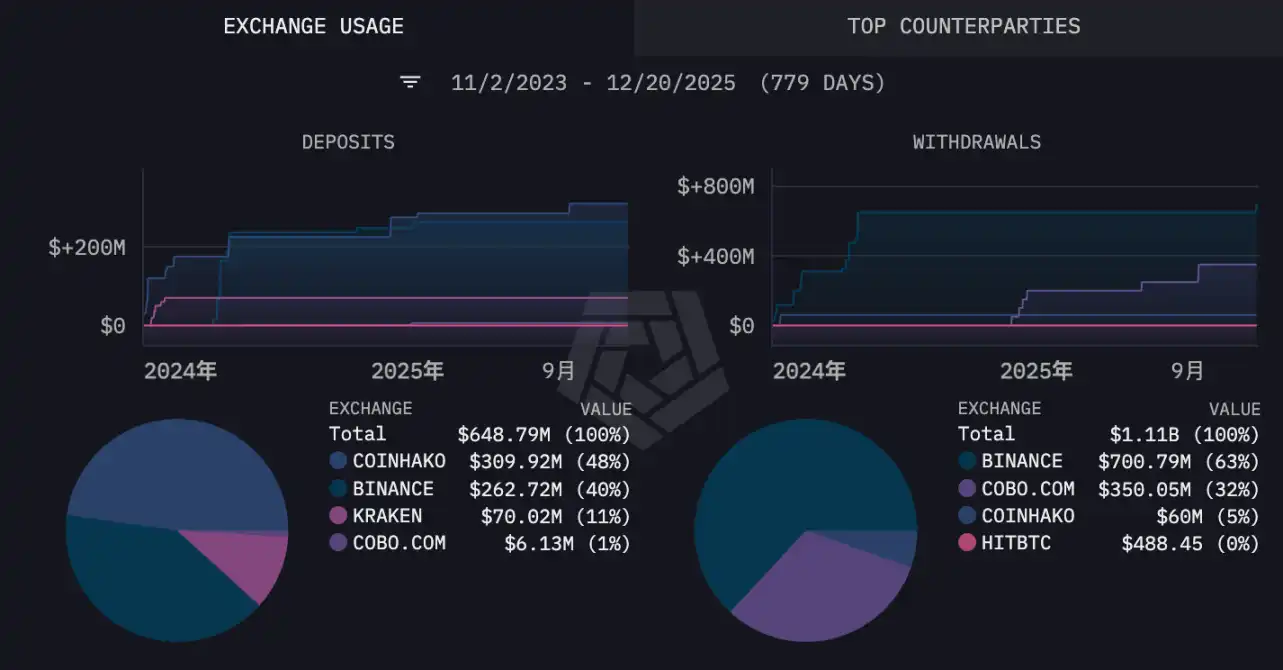
Given that this address uses multiple exchange platforms and Cobo's custody services, and its ability to quickly contact various parties and complete the tracking of the hacker within 24 hours of the incident, the author speculates that this address most likely belongs to an institution rather than an individual.

A "Careless Mistake" Leads to Major Loss

The only explanation for falling victim to an "address poisoning" attack is "carelessness." Such attacks can be avoided simply by double-checking the address before transferring, but clearly, the protagonist of this incident skipped this crucial step.

Address poisoning attacks began to emerge in 2022, originating from "vanity address" generators—tools that allow customization of the beginning of an EVM address. For example, the author could generate an address starting with 0xeric to make the address more labeled.

This tool was later discovered by hackers to have a design flaw allowing brute-force attacks on private keys, leading to several major fund theft incidents. However, the ability to generate addresses with customized beginnings and endings also gave some ill-intentioned individuals a "clever idea": by generating addresses similar in beginning and ending to a user's commonly used transfer addresses, and transferring small amounts to the user's other addresses, some users might, due to carelessness, mistake the hacker's address for their own and actively send on-chain assets into the hacker's pocket.
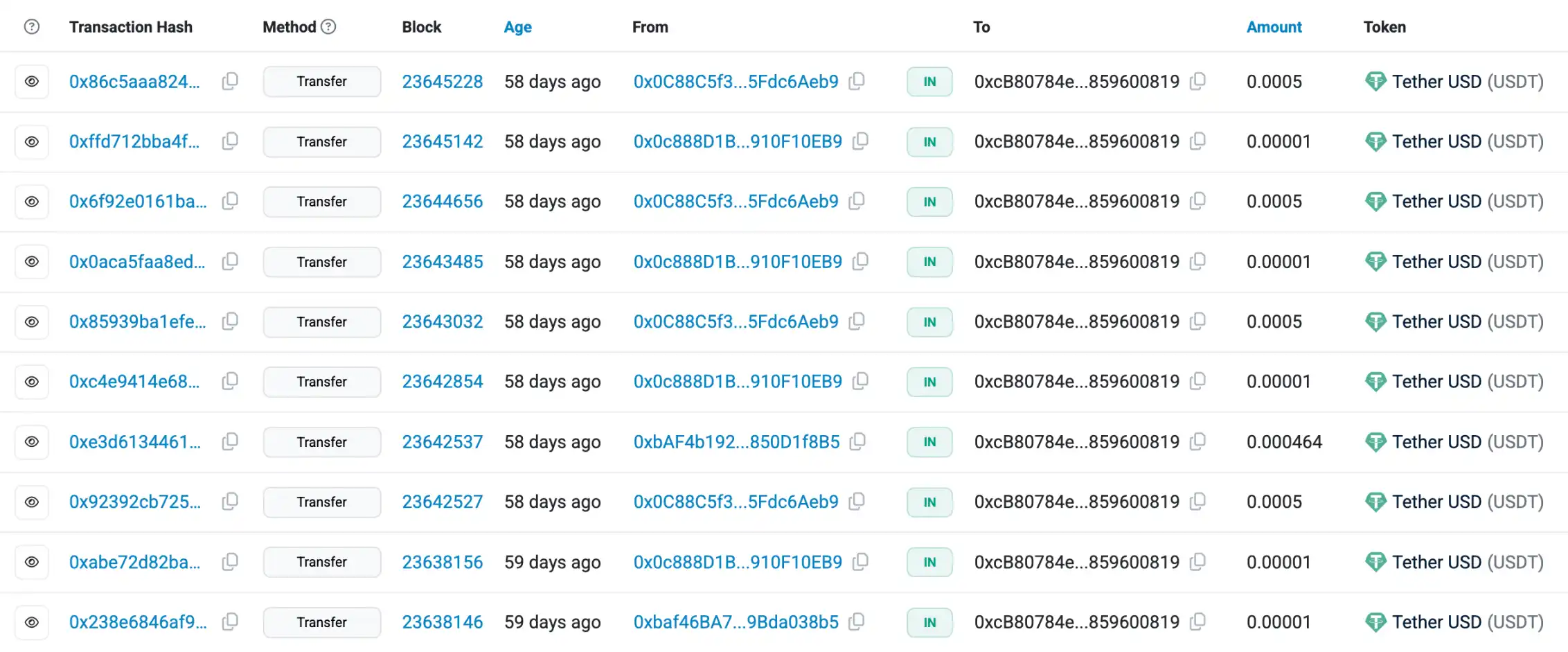
Past on-chain information shows that the address beginning with 0xcB80 was a major target for such poisoning attacks even before this incident, with attacks beginning nearly a year ago. This attack method essentially involves hackers betting that you will eventually get lazy or inattentive and fall for it. Ironically, it is this seemingly transparent attack method that continues to ensnare "careless" victims one after another.

Regarding this incident, F2Pool co-founder Wang Chun expressed sympathy for the victim on Twitter (X), mentioning that last year, to test if his address had a private key leak, he transferred 500 BTC to it, only to have 490 BTC stolen by hackers. Although Wang Chun's experience was unrelated to address poisoning attacks, he likely meant to convey that everyone has moments of "stupidity," and we should not blame the victim for carelessness but rather direct our criticism towards the hackers.

$50 million is no small amount, but it is not the largest loss from such attacks. In May 2024, an address transferred over $70 million worth of WBTC to a hacker's address due to a similar attack, but the victim eventually recovered almost all the funds with the assistance of security company Match Systems and the Cryptex exchange. However, in this case, the hacker quickly converted the stolen funds into ETH and transferred them to Tornado Cash, making it uncertain whether recovery is possible.

In April, Casa co-founder and chief security officer Jameson Lopp warned that address poisoning attacks are spreading rapidly, with as many as 48,000 such incidents occurring on the Bitcoin network alone since 2023.

Including fake Zoom meeting links on Telegram, these attack methods are not sophisticated, but it is precisely this "simple" approach that can make people let their guard down. For those of us in the dark forest, being extra cautious is never wrong.


Related Questions

QWhat is the total amount of USDT lost in the address poisoning attack described in the article?

A50 million USDT, worth approximately $50 million.

QHow did the hacker execute the address poisoning attack in this case?

AThe hacker sent a small test transaction (0.005 USDT) from an address with a similar beginning and end to the victim's target address, tricking the victim into copying the wrong address for the large transfer.

QWhat did the victim do after discovering the theft, and what was the hacker's response?

AThe victim filed a criminal complaint and offered to let the hacker keep $1 million if 98% of the funds were returned. The hacker did not respond and instead laundered the funds through token swaps and Tornado Cash.

QWhat is address poisoning, and why is it effective despite being a simple attack?

AAddress poisoning involves creating a fake address with similar starting and ending characters to a victim's常用 address. It preys on human error, as users may carelessly copy the wrong address from their transaction history.

QWhich prominent figure in the crypto space shared a similar experience of loss due to carelessness, and what did they lose?

AF2Pool co-founder Wang Chun shared that he lost 490 BTC after transferring 500 BTC to test for private key leaks, highlighting that even experienced individuals can make costly mistakes.

Related Reads

Huang Renxun Dramatically 'Saves' South Korean Stock Market

In early June, South Korea's stock market experienced a sharp decline, with the KOSPI index dropping over 5% and triggering a trading halt. Amid this volatility, NVIDIA CEO Jensen Huang's visit to Seoul provided a dramatic boost to market sentiment. During his trip, Huang held a dinner meeting with SK Group Chairman Chey Tae-won and SK Hynix CEO Kwak Noh-Jung. He announced that NVIDIA's new Vera CPU would utilize SK Hynix DRAM and confirmed a multi-year technical collaboration between the two companies. This partnership aims to co-develop next-generation memory for NVIDIA's AI infrastructure roadmap, covering products from data center supercomputers to personal AI devices. Huang also publicly commented that AI company stocks were attractively priced. A key announcement was that NVIDIA's upcoming Vera Rubin AI supercomputer systems will use HBM4 memory, with supply qualifications granted to all three major suppliers: SK Hynix, Samsung Electronics, and Micron Technology. Despite this multi-sourcing strategy, Huang warned that the industry-wide chip shortage, affecting everything from wafers to packaging, is expected to persist for several years due to relentless demand from global AI factory construction. The collaboration extends beyond memory supply. SK Hynix will employ NVIDIA's AI platforms and Omniverse digital twin technology to enhance its own semiconductor design, simulation, and manufacturing processes, aiming for more autonomous factory operations. This visit builds upon a prior October 2025 agreement for SK Group to build a large-scale AI data center using over 50,000 NVIDIA GPUs. Huang's itinerary also included meetings with other Korean giants like Hyundai, LG, and Samsung, indicating NVIDIA's broader strategy to deepen ties with South Korea's tech industry.

链捕手57m ago

Huang Renxun Dramatically 'Saves' South Korean Stock Market

链捕手57m ago

When Inference Becomes a Scarce Resource, Who Captures the Value?

When Inference Becomes the Scarce Resource, Who Captures the Value? The core AI bottleneck has shifted from model training to inference (runtime execution). While concerns persisted about an "AI compute gap"—initially a $200B, now a $600B problem—the market is now recognizing that the solution and value lie in the inference layer. Nvidia's financial restructuring around "serving tokens" and Cerebras's successful IPO highlight this shift. Inference is a recurring, usage-based cost, estimated to be 10-50x larger than the one-time training market, especially with the rise of agentic AI. The inference stack spans six layers: silicon (e.g., Nvidia), bare metal (e.g., CoreWeave), GPU rental/aggregation, deployment/optimization, model APIs, and end applications. Most companies operate in one layer. However, Hyperbolic uniquely spans three layers (GPU rental, deployment, and model APIs) without owning any hardware. It aggregates fragmented GPU supply from multiple cloud providers into a standardized pool, offering developers the cheapest available compute through intelligent routing. Its multi-cloud aggregation creates a data moat and a flywheel: more supply leads to better pricing data and liquidity, attracting more developers and providers. In contrast, applications like Venice operate at the top of the stack, reselling privacy-wrapped inference but remaining dependent on and constrained by the underlying compute costs they purchase. As inference demand explodes, value accrues not just to consumer applications but increasingly to the aggregation and routing layer that captures their cost of revenue. The coming potential GPU oversupply reinforces this dynamic. While hardware owners may suffer from depreciation, asset-light aggregators like Hyperbolic benefit from price arbitrage, routing workloads to the cheapest available capacity. The ultimate winner in the inference economy may not be the entity with the most GPUs, but the one that can most efficiently discover, aggregate, and route the world's fragmented compute.

链捕手1h ago

When Inference Becomes a Scarce Resource, Who Captures the Value?

链捕手1h ago

Trading

Spot
Futures

Hot Articles

How to Buy SFP

Welcome to HTX.com! We've made purchasing SafePal (SFP) simple and convenient. Follow our step-by-step guide to embark on your crypto journey.Step 1: Create Your HTX AccountUse your email or phone number to sign up for a free account on HTX. Experience a hassle-free registration journey and unlock all features.Get My AccountStep 2: Go to Buy Crypto and Choose Your Payment MethodCredit/Debit Card: Use your Visa or Mastercard to buy SafePal (SFP) instantly.Balance: Use funds from your HTX account balance to trade seamlessly.Third Parties: We've added popular payment methods such as Google Pay and Apple Pay to enhance convenience.P2P: Trade directly with other users on HTX.Over-the-Counter (OTC): We offer tailor-made services and competitive exchange rates for traders.Step 3: Store Your SafePal (SFP)After purchasing your SafePal (SFP), store it in your HTX account. Alternatively, you can send it elsewhere via blockchain transfer or use it to trade other cryptocurrencies.Step 4: Trade SafePal (SFP)Easily trade SafePal (SFP) on HTX's spot market. Simply access your account, select your trading pair, execute your trades, and monitor in real-time. We offer a user-friendly experience for both beginners and seasoned traders.

703 Total ViewsPublished 2026.05.22Updated 2026.06.02

How to Buy SFP

How to Buy CTR

Welcome to HTX.com! We've made purchasing Citrea (CTR) simple and convenient. Follow our step-by-step guide to embark on your crypto journey.Step 1: Create Your HTX AccountUse your email or phone number to sign up for a free account on HTX. Experience a hassle-free registration journey and unlock all features.Get My AccountStep 2: Go to Buy Crypto and Choose Your Payment MethodCredit/Debit Card: Use your Visa or Mastercard to buy Citrea (CTR) instantly.Balance: Use funds from your HTX account balance to trade seamlessly.Third Parties: We've added popular payment methods such as Google Pay and Apple Pay to enhance convenience.P2P: Trade directly with other users on HTX.Over-the-Counter (OTC): We offer tailor-made services and competitive exchange rates for traders.Step 3: Store Your Citrea (CTR)After purchasing your Citrea (CTR), store it in your HTX account. Alternatively, you can send it elsewhere via blockchain transfer or use it to trade other cryptocurrencies.Step 4: Trade Citrea (CTR)Easily trade Citrea (CTR) on HTX's spot market. Simply access your account, select your trading pair, execute your trades, and monitor in real-time. We offer a user-friendly experience for both beginners and seasoned traders.

580 Total ViewsPublished 2026.05.25Updated 2026.06.02

How to Buy CTR

What is USOIL

USOILUSDT Perpetual Contract is the trading symbol for West Texas Intermediate (WTI) Crude Oil priced in US dollars, representing 1 barrel of crude oil.

582 Total ViewsPublished 2026.05.25Updated 2026.05.25

What is USOIL

Discussions

Welcome to the HTX Community. Here, you can stay informed about the latest platform developments and gain access to professional market insights. Users' opinions on the price of A (A) are presented below.

活动图片