Walsh's Hearing Debut, 'New Fed Insider': Emphasizes Zero Tolerance for High Inflation but No Hint on Interest Rate Path

marsbitPublished on 2026-07-15Last updated on 2026-07-15

Abstract

Federal Reserve Chairman Wash's inaugural congressional monetary policy hearing delivered his "new Fed policy declaration," avoiding any clear signals on future interest rate moves—whether cuts or hikes—that the market sought. Instead, he consistently emphasized the Fed's commitment to restoring price stability, maintaining central bank independence, and pledged full advance communication for any future adjustments to the balance sheet. Nick Timiraos, often called the "new Fed whisperer," noted that Wash deliberately avoided hinting at future rate paths, focusing the hearing on reaffirming the Fed's long-term goal of controlling inflation. This stance persisted even after the release of a lower-than-expected June CPI report just before the hearing, which Wash downplayed, stating he did not view the inflation mission as accomplished. Timiraos observed that Wash refrained from using the data to signal any policy inclination, instead stressing that the Fed would rely on economic data to decide how to use its policy tools—interest rates and the balance sheet—to achieve price stability. Bloomberg's analysis suggested the hearing outlined the framework of the "new Fed": upholding monetary policy independence, adhering to the 2% inflation target, rejecting the notion of a trade-off between employment and inflation, and leaving room for future balance sheet and governance reforms. Wash asserted that restoring price stability is foundational for sustained economic growth and job cre...

By: Li Dan, Wall Street News

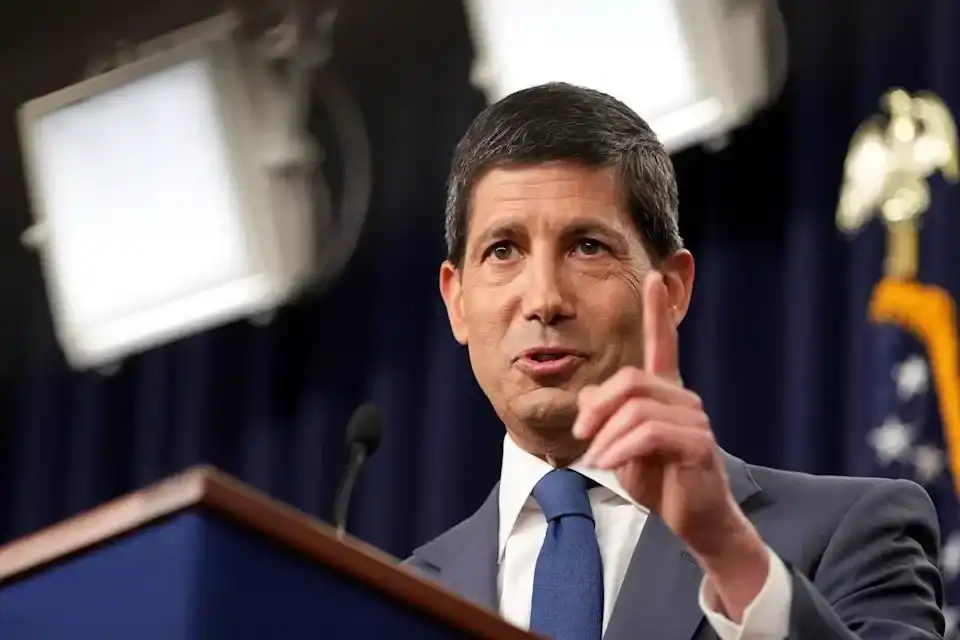
In his congressional monetary policy hearing "debut," Federal Reserve Chair Walsh unveiled his "New Federal Reserve Policy Declaration." He did not provide signals on the market's most concerned interest rate cuts or hikes. Instead, he repeatedly emphasized restoring price stability, maintaining the Fed's independence, and promised that future adjustments to the balance sheet would be fully communicated in advance.

Nick Timiraos, the reporter known as the "New Fed Insider," believes Walsh deliberately avoided giving any hints about the future interest rate path that day, focusing the hearing on reiterating the Fed's long-term goal of controlling inflation.

Just before the hearing began, the U.S. released June CPI data lower than market expectations, which once prompted the market to further bet on the Fed easing policy more quickly. However, Walsh downplayed the importance of this data, stating he did not believe the inflation mission was accomplished.

Timiraos pointed out that Walsh did not use this inflation data to signal any future policy inclination, nor did he reveal the interest rate path for the July FOMC meeting or thereafter. Instead, he insisted on emphasizing that the Fed has two policy tools—interest rates and the balance sheet—and future decisions on how to use these tools will depend on economic data to achieve the price stability goal.

Bloomberg, however, believes this hearing, which lasted several hours, actually outlined the policy framework of the "New Federal Reserve": adhering to monetary policy independence, sticking to the 2% inflation target, rejecting the notion of having to choose between employment and inflation, while leaving room for future balance sheet reforms and central bank governance reforms.

Influenced by Walsh's relatively hawkish remarks, U.S. Treasury yields erased some of their post-CPI declines during Walsh's hearing, and the dollar index recovered about half of its post-CPI drop.

Five Signals: Walsh's First Congressional Hearing Outlines the "New Federal Reserve" Policy Framework

Reiterates 'Zero Tolerance' for Sustained High Inflation, Asserts a Single CPI Drop is Not Enough to Declare Victory Over Inflation

Walsh emphasized at the hearing that the Fed has "zero tolerance" for sustained high inflation. He said the Fed has failed to achieve the 2% inflation target for many consecutive years, so restoring price stability remains the most important policy task at present.

In response to the June CPI data released that day, which was significantly lower than market expectations, Walsh stated: "Some might say, 'Mission accomplished.' I don't see it that way."

Timiraos believes that Walsh's repeated reiteration of the long-term inflation goal that day, without adjusting his policy stance due to a single month's data improvement, highlights his desire to avoid the market interpreting one inflation report as a signal of an imminent monetary policy shift.

Gives No Hint on Interest Rate Path, Emphasizes Future Actions Will Still Be Data-Dependent

Regarding the market's most concerned question about the next interest rate move, Walsh remained restrained throughout.

Timiraos pointed out that Walsh did not hint at the policy direction for the upcoming FOMC meetings, nor did he answer market questions about when rates might be adjusted. Instead, he emphasized that the Fed has two tools—interest rate policy and balance sheet policy—and will judge whether and how to use these tools based on future economic data.

However, Walsh also revealed that he would soon be engaging in discussions with his FOMC colleagues about "whether and when policy tools need to be used," describing it as potentially involving a "family fight."

Bloomberg believes this statement means that although Walsh did not provide clear policy guidance, his overall tone remained relatively hawkish, indicating his reluctance to easily signal easing before confirming that inflation is sustainably returning to target.

Employment and Inflation Are Not a 'Cruel Choice' of Either/Or

In response to lawmakers' questions about the Fed's dual mandate, Walsh denied the existence of a so-called "cruel choice."

He said that as long as price stability is restored, the U.S. economy can grow sustainably, and businesses can continue to expand hiring. Therefore, controlling inflation and achieving maximum employment are not conflicting but mutually reinforcing.

This statement further reinforces his policy philosophy that price stability itself is the foundation for achieving long-term employment growth and economic prosperity.

Balance Sheet Reforms Will Be Announced in Advance, Won't Shock the Market Suddenly

Balance sheet reform has been an important reform agenda item for Walsh since taking office.

However, at this hearing, he stated he was unwilling to prejudge the conclusions of the ongoing balance sheet reform working group.

At the same time, he promised that if balance sheet policies are adjusted in the future, the Fed will fully communicate with the market in advance to ensure investors have sufficient expectations and that actions are not taken suddenly.

Walsh again emphasized that the Fed's balance sheet should serve monetary policy, not bear the function of fiscal policy.

Reuters believes this statement helps alleviate market concerns that a new round of balance sheet reduction reforms might proceed too quickly and also signifies that the Fed will place greater emphasis on policy communication and market expectation management in the future.

Upholds Monetary Policy Independence, Receives Positive Responses from Some Lawmakers in Both Parties

Facing lawmakers' questions, Walsh again emphasized that the Fed will maintain independence in formulating monetary policy, promising that setting interest rates will not be influenced by political factors.

Bloomberg reported that although Walsh received almost no Democratic support during his Senate confirmation process, several Democratic lawmakers at this hearing still gave positive evaluations of his stance on emphasizing central bank independence.

Veteran congressional reporter Steve Dennis believes that against the backdrop of Trump's ongoing public pressure on the Fed to cut rates, some Democratic lawmakers' choice to publicly support Walsh's position on maintaining central bank independence also reflects subtle changes on this issue between the two parties.

Walsh's Hearing Reinforces the Data-Dependent Policy Communication Framework

How does the market view Walsh's hearing? Overall, Walsh's remarks did not change the short-term interest rate outlook but reinforced the new "data-dependent policy" communication framework.

Timiraos believes the most distinctive feature of Walsh's hearing was not releasing new policy signals, but deliberately not releasing any signals about the interest rate path.

Confronted with a lower-than-expected CPI report, Walsh did not take the opportunity to discuss whether the next step would be a rate cut, nor did he provide any forward guidance. Instead, he consistently elaborated on restoring price stability, Fed independence, and policy tools, continuing the communication style he has adopted since taking office of avoiding commitments based on single data points or meetings.

Bloomberg, however, believes the hearing further outlined the policy tone of the Federal Reserve under Walsh's leadership: continuing to prioritize price stability while advancing balance sheet and central bank governance reforms, and managing market expectations through more transparent communication.

For investors, this means future Fed policy will remain highly dependent on data performance, not on a preset interest rate path. The market will also pay more attention to how Walsh implements this philosophy into the FOMC's actual decision-making in the coming months.

Trending Cryptos

Related Questions

QWhat was the main focus of Federal Reserve Chair Walsh's first monetary policy hearing before Congress, according to the article?

AThe main focus was on reiterating the Fed's long-term goal of controlling inflation, specifically its 'zero tolerance' for persistent high inflation, restoring price stability, and maintaining the Fed's independence. He deliberately avoided giving any hints about future interest rate paths.

QHow did Chair Walsh react to the lower-than-expected June CPI data released on the hearing day?

AChair Walsh downplayed the importance of the single month's data. He stated he did not view the inflation mission as accomplished and warned against interpreting one data point as a signal of a coming shift in monetary policy.

QWhat policy framework did the hearing outline for the 'new Fed' under Chair Walsh, according to Bloomberg's analysis?

AThe hearing outlined a framework that insists on monetary policy independence, adheres to the 2% inflation target, rejects the idea of a 'cruel choice' between jobs and inflation, and leaves space for future balance sheet reforms and central bank governance reforms.

QWhat was Chair Walsh's commitment regarding potential future adjustments to the Fed's balance sheet policy?

AChair Walsh committed that if the Fed adjusts its balance sheet policy in the future, it will communicate sufficiently in advance to the market to ensure investors have ample expectations and to avoid sudden actions that could shock the market.

QHow did markets interpret Chair Walsh's testimony, particularly regarding the impact on the interest rate outlook?

AMarkets generally saw that Walsh's remarks did not alter the short-term interest rate outlook. Instead, they reinforced a new communication framework of 'data-dependent policy,' meaning future Fed actions will rely heavily on incoming economic data rather than a preset rate path.

Related Reads

Hyperliquid Pre-IPO Contract Priced CXMT at $7.2, Foreign Capital Engaging with China's Storage Narrative via DeFi

Hyperliquid, a blockchain-based perpetual contracts platform, has launched a pre-IPO contract for Chinese memory chipmaker Changxin Technology (CXMT) ahead of its STAR Market debut. Priced at 7.2 USDC (approx. $7.2) per share, the contract implies a market cap of about $500 billion, exceeding the official IPO valuation of roughly $80 billion and sitting at the upper end of analyst estimates. This marks the first time such a crypto derivative has targeted a STAR Market listing. It provides global investors, particularly those unable to meet China's 500,000 yuan ($69,000) investment threshold for the STAR Market, a direct avenue to gain exposure to the "China storage substitution" narrative. The 24/7 tradable, leveraged contract also fills a gap for those seeking to hedge or speculate around the A-share listing, which operates under T+1 settlement and restricts short-selling. Changxin Technology, the world's fourth-largest DRAM supplier, is raising nearly $8 billion in one of Asia's largest IPOs this year, buoyed by a DRAM super-cycle and strategic shifts by major competitors. While the Hyperliquid contract offers a novel parallel pricing mechanism, the lack of direct arbitrage with the underlying A-shares may lead to persistent price divergence. Nevertheless, its emergence underscores significant international interest in China's key semiconductor players.

marsbit51m ago

Hyperliquid Pre-IPO Contract Priced CXMT at $7.2, Foreign Capital Engaging with China's Storage Narrative via DeFi

marsbit51m ago

The 'Great Divergence' of the Crypto Market in 2026: BTC Bear Market, but BlackRock, Franklin Templeton, and JPMorgan Are Simultaneously Doing One Thing

"2026 Crypto Market 'Great Divergence': BTC Bearish, But BlackRock, Franklin, JPMorgan Are Simultaneously Building Infrastructure." In July 2026, amidst BTC struggling at $62K, seven key events signal a profound shift: the 'Great Divergence' between price action and underlying infrastructure development. Franklin Templeton's CIO notes a "big disconnect" between price and fundamentals. Meanwhile, major institutions are advancing real-world blockchain adoption: BlackRock, Goldman Sachs, and JPMorgan join a UK government-backed tokenization taskforce targeting repo and gilts; Hyundai pilotes USDT for cross-border trade settlement; Bolivia considers integrating USDT into its national payment system; and Robinhood's new blockchain sees rapid adoption. This activity represents a quiet infrastructure bull market, driven by institutional strategy and long-term regulatory roadmaps, not short-term crypto price cycles. The core narrative is shifting from speculative price action to foundational utility. Infrastructure development—focused on upgrading traditional finance, enabling real-world payments, and tokenizing assets—is now decoupled from BTC's volatility. Historical parallels (e.g., dot-com bust/AWS birth, 2018 crypto winter/DeFi Summer) show that infrastructure built during downturns often becomes the next cycle's "toll booth." The critical question is no longer "Will BTC drop further?" but "Who will own the tolls when this new infrastructure is complete?" While BTC remains a key liquidity anchor, the valuation logic for crypto's real-world utility is increasingly separate from its most traded asset's price.

marsbit1h ago

The 'Great Divergence' of the Crypto Market in 2026: BTC Bear Market, but BlackRock, Franklin Templeton, and JPMorgan Are Simultaneously Doing One Thing

marsbit1h ago

Trading

Spot

Hot Articles

Discussions

Welcome to the HTX Community. Here, you can stay informed about the latest platform developments and gain access to professional market insights. Users' opinions on the price of S (S) are presented below.

活动图片