Original|Odaily Planet Daily(@OdailyChina)
Author|Wenser(@wenser 2010 )
The AI boom continues to surge, and in the crypto field, the Base ecosystem has become the "last hope for the village" for AI concepts.
Aside from VVV rising 1076% this year, Virtual and Clanker are also steadily building; the x402 protocol related to AI Agent payments is still developing steadily; L1s, operating systems, wallets, social platforms, and others based on real business related to AI Agents are constantly emerging.
Odaily Planet Daily has compiled information on several AI-related tokens in the Base ecosystem, including VVV, for readers' reference.
VVV: The Unquestionable AI King of the Base Ecosystem
Odaily Planet Daily has previously conducted multiple follow-up introductions to VVV, including the article "What is VVV (Venice), Which Quickly Reached a $2 Billion Market Cap Upon Listing on Coinbase?" released when the token launched in January, and the article "OpenClaw Backs Venice.ai, VVV Token Surges Over 500% in a Month" when the price surged over 500% in March.
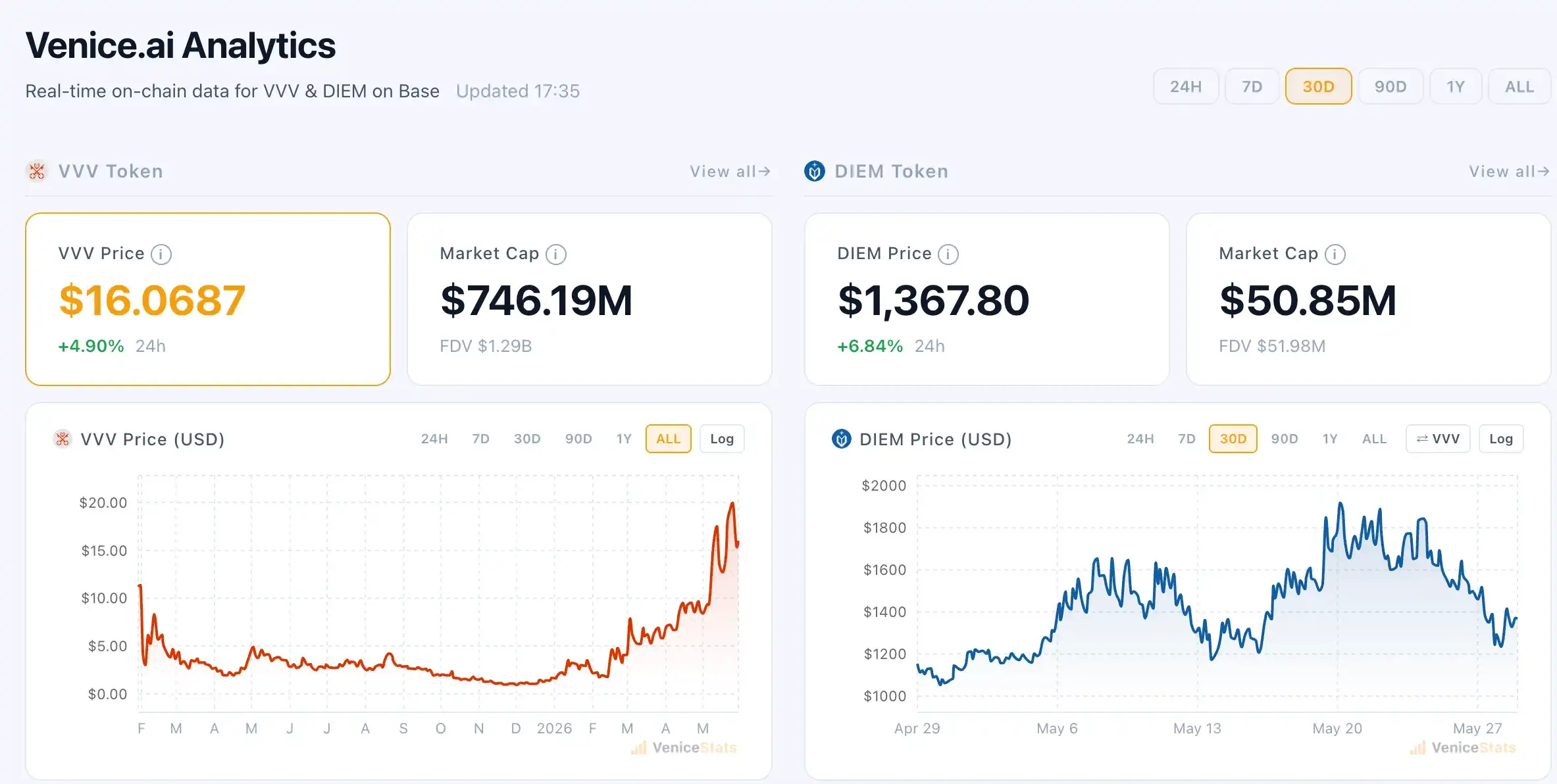
Since then, the dual-token asset model composed of "VVV & computing power token DIEM" paired with the real business revenue of Venice AI (used for token buyback and burn), which focuses on the "privacy AI" concept, has propelled the VVV token to continue rising, reaching around $18. Previously, Venice.ai officially updated the Agentic Chat feature on the 22nd; it also synchronized and launched an update after the Claude 4.8 opus model was released.
According to GMGN data, VVV is currently trading around $16.
According to Venice data website information, VVV's current circulating market cap is approximately $740 million, with an FDV of about $1.3 billion; DIEM is currently priced around $1367, with a circulating market cap of about $50 million and an FDV of approximately $52 million.
VIRTUAL: A Top Launchpad in the Base Ecosystem
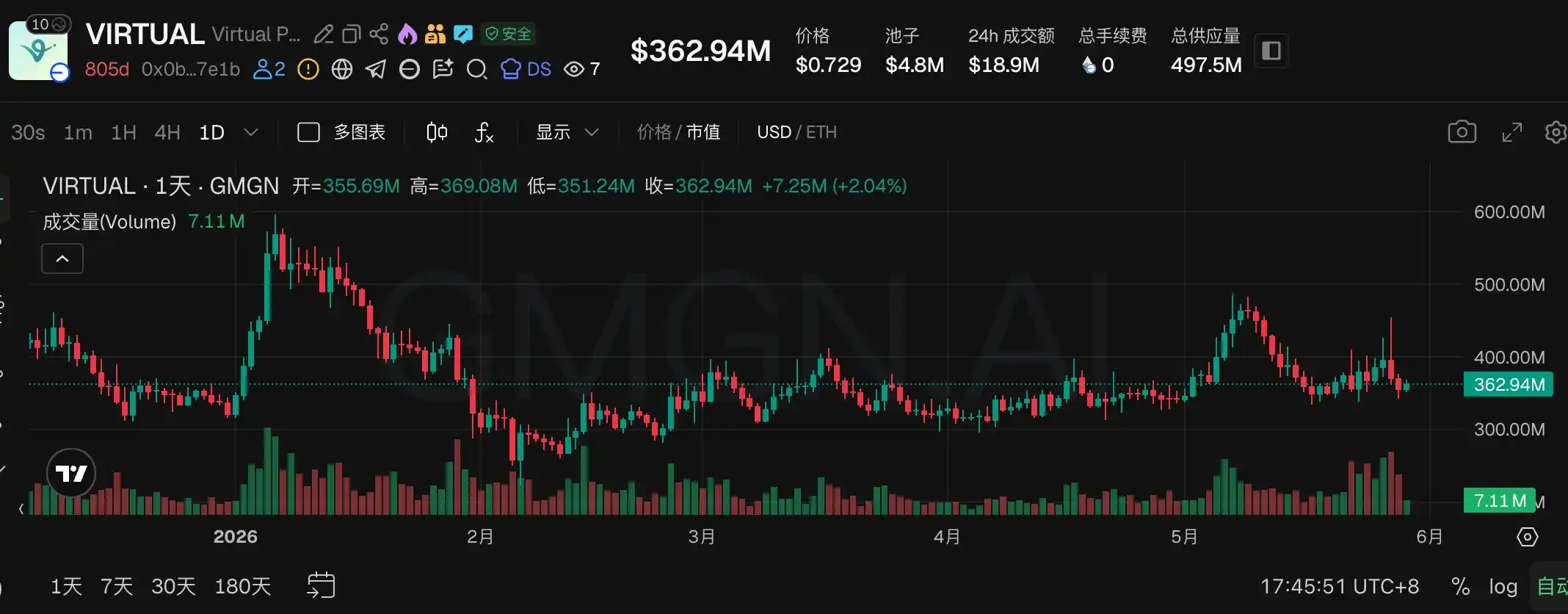
As a top launchpad in the Base ecosystem, Virtual's platform token VIRTUAL remains one of the leading projects in the AI track. Currently, the main positioning of the Virtual platform is an "AI Agent Co-ownership Layer + Launchpad," supporting token creation, asset tokenization, and monetization of autonomous AI Agents. Each Agent has its own independent token, trades in pools like Uniswap V3, and generates real revenue through inference calls and social/gaming/DeFi activities. Currently, the platform supports over 15,800 AI projects, with an aGDP (AI Agent economic output) scale of $477 million.
According to GMGN data, VIRTUAL is currently priced around $0.7, with a market cap of about $360 million.
Clanker: An AI Launchpad Originating from Farcaster
This AI launch platform initially emerged from the Farcaster ecosystem and later expanded to the Base ecosystem. Its main mechanism is AI Agent token launches, where just one Farcaster/X message can prompt Clanker to deploy a new token directly on Uniswap V3, with permanently locked token liquidity; 60% of the 1% trading fee is used for automatic buyback and burning of CLANKER tokens.
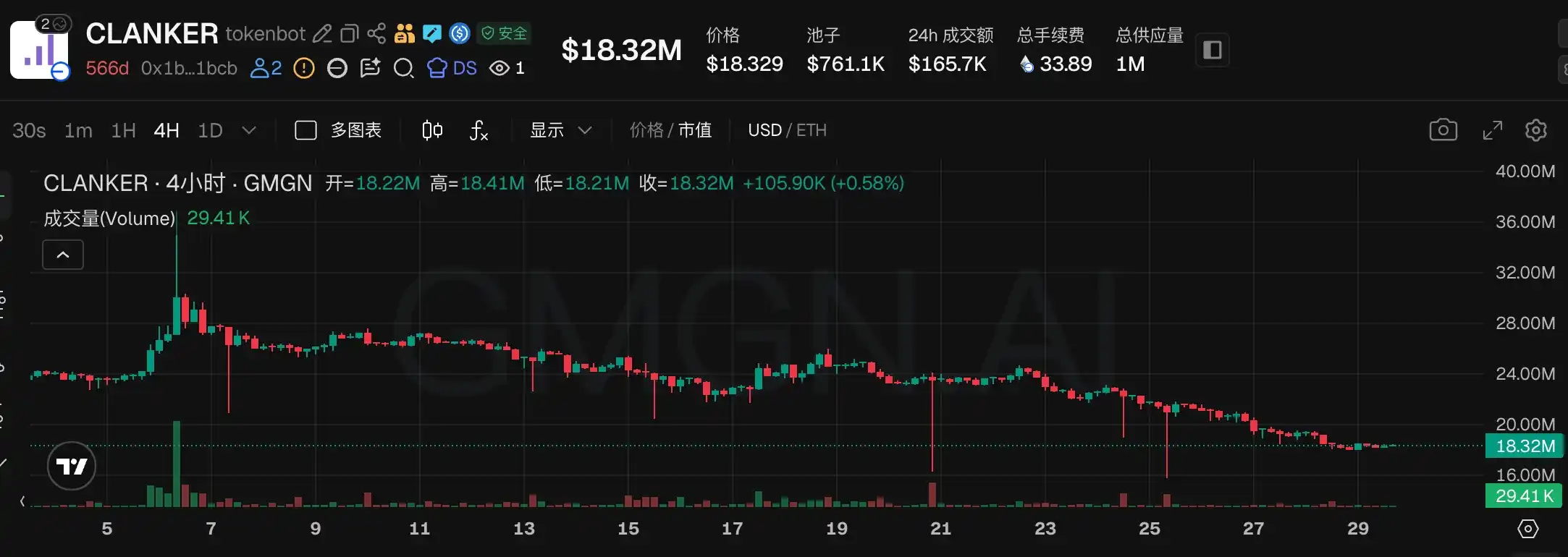
The platform previously achieved a record of launching 21,870 new tokens in a single day, after which activity declined somewhat.
Official account: https://x.com/clanker_world
According to GMGN data, the CLANKER token is currently priced around $18, with its market cap falling to around $18 million.
FAI: Sovereign AI Agent Concept Project
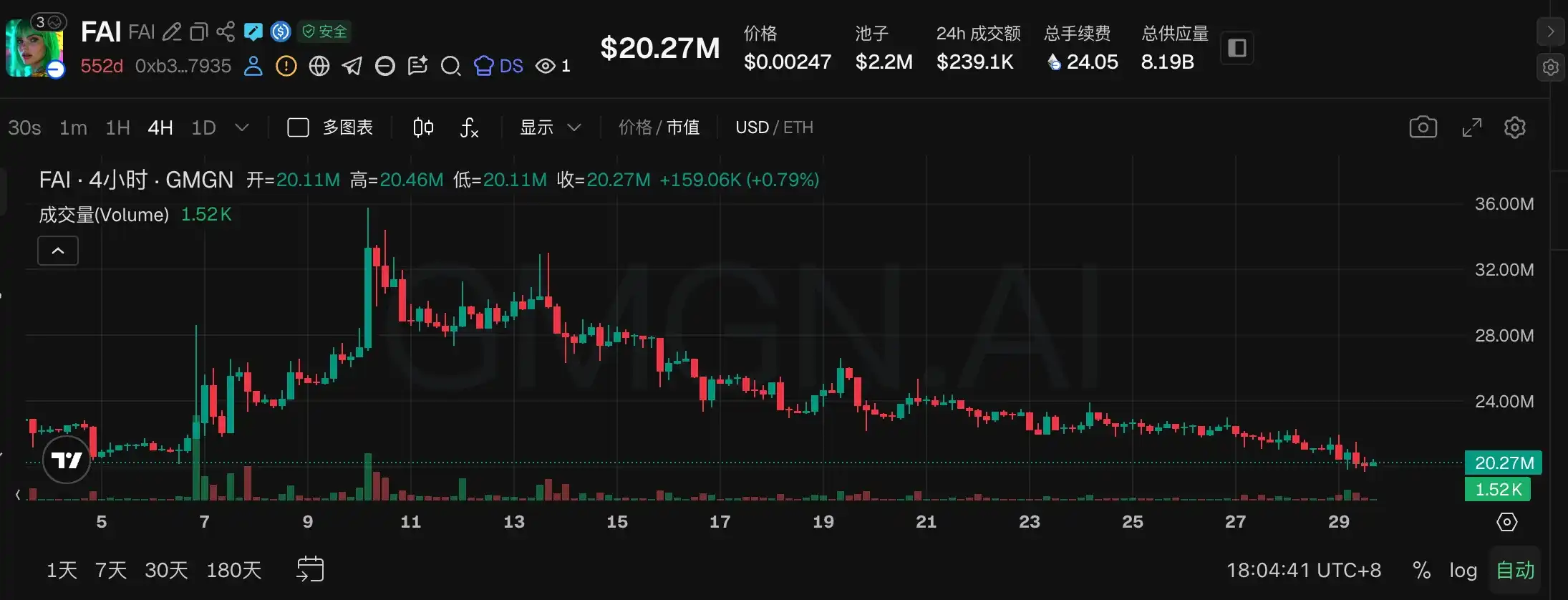
Freysa AI, the first experimental project for an "evolving Sovereign AI Agent" on the Base chain. The core idea is to create a truly autonomous AI agent without human-controlled keys and memory: the AI autonomously controls crypto wallets, assets, and decisions, constantly evolving through interaction with global users via the Sovereign Agent Framework (SAF). The project is positioned as a personal AI product suite, emphasizing human agency, liquid democracy, and decentralized ownership. Previously, the project's market cap once soared past $660 million and even received a reply tweet from Musk, but it is now in a quiet phase.
Official account: https://x.com/freysa_ai
According to GMGN data, FAI is currently priced around $0.002, with a market cap of approximately $20 million.
ELSA: AI Agent Execution Layer in the Base Ecosystem
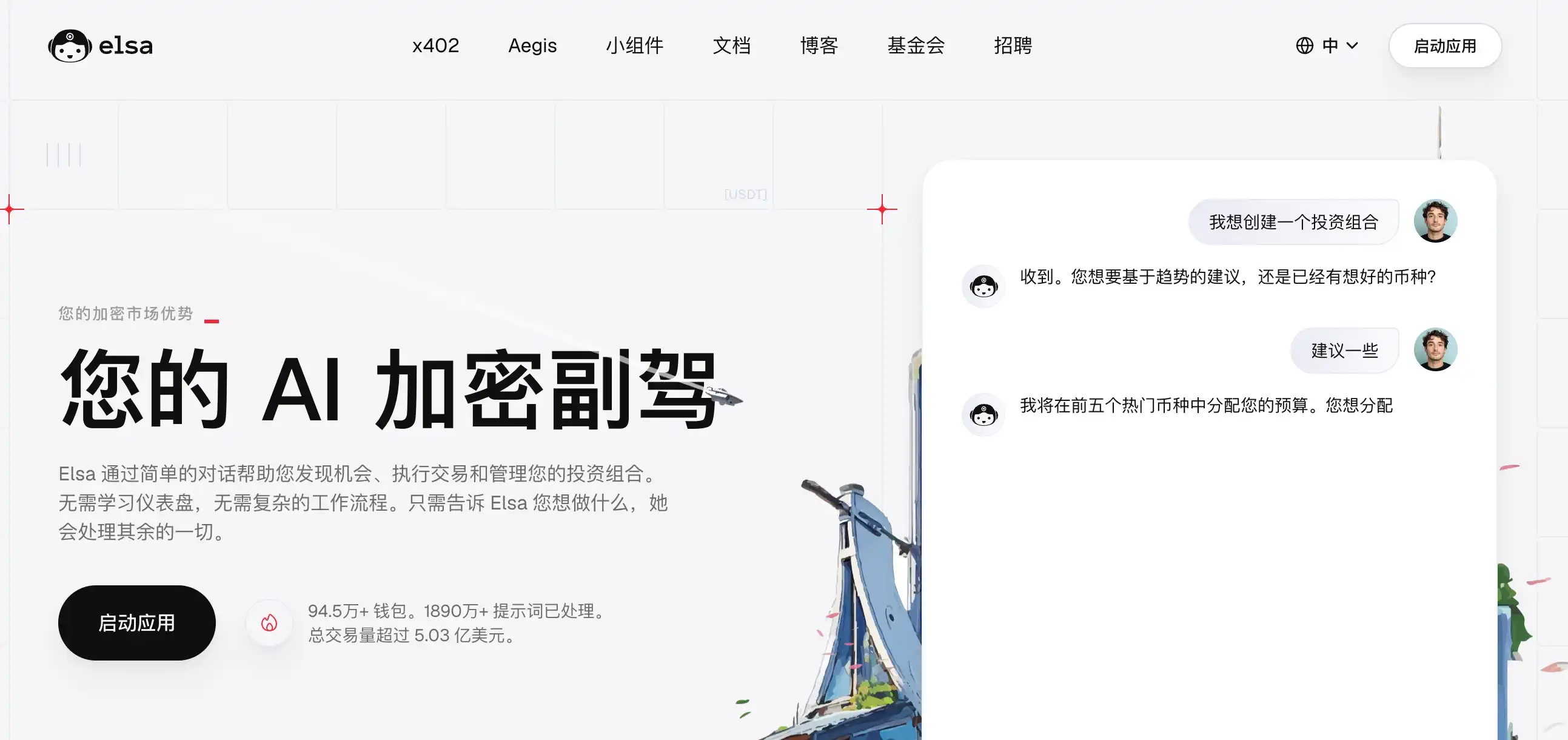
The project is positioned as an "AI-powered DeFi Super Assistant + On-chain Agent Infrastructure." Its core function is to directly convert natural language instructions into secure, autonomous on-chain operations, allowing users to implement various DeFi management and application operations without needing to understand complex on-chain concepts. In June last year, the project completed a $3 million seed funding round led by M31 Capital, with participation from Coinbase Ventures' Base ecosystem fund. Currently, according to official data, the Elsa ecosystem covers nearly 95 wallets, with a total transaction volume exceeding $500 million.
Official account: https://x.com/HeyElsaAI
According to GMGN data, ELSA is currently priced around $0.06; its market cap is about $63 million.
WARD: Modular L1/OS for the Agentic Internet
Warden Protocol, primarily focusing on decentralized AI, supports functions such as Warden Studio (creating an Agent in <60 seconds), SPEx verifiable AI execution, cross-chain intent execution, and AI Agent wallets. According to official statements, it has served 20 million users and processed over 60 million tasks. It previously received $4 million in strategic funding from projects like Messari and Venice.AI.
Official account: https://x.com/wardenprotocol
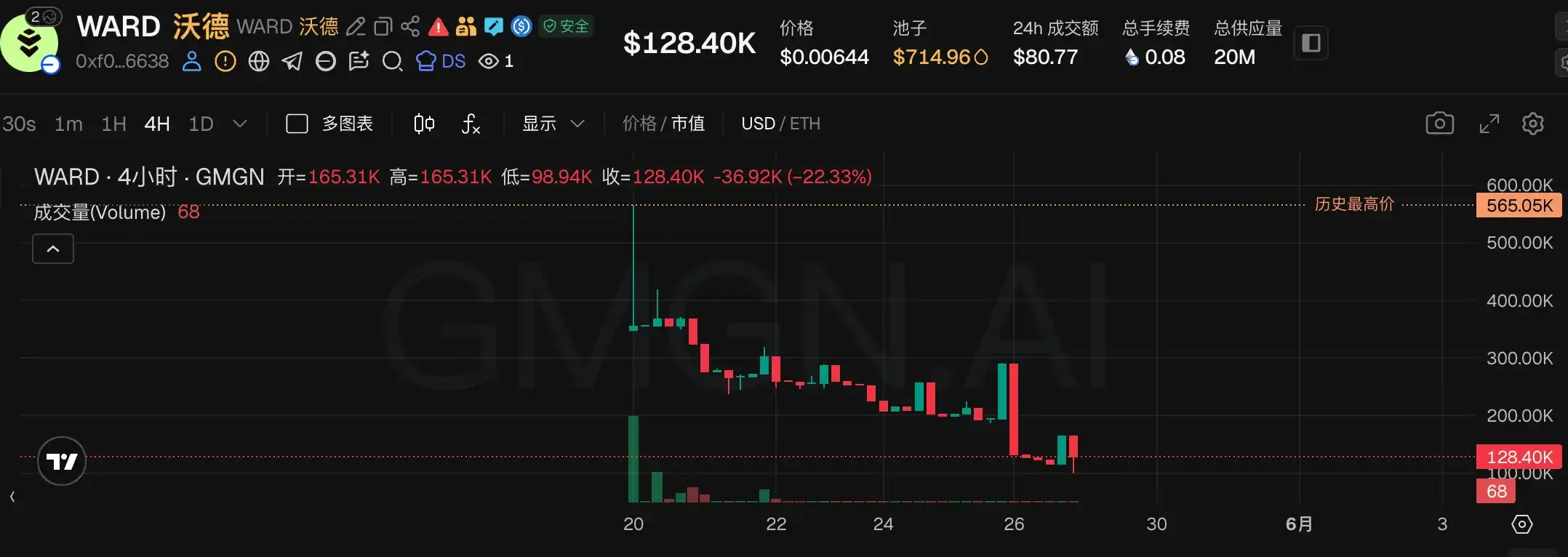
According to GMGN data, the WARD token price has fallen to around $0.006, with the Base ecosystem token market cap only about $128,000; the BSC ecosystem token market cap is approximately $2.4 million.
In addition to the above projects, AI concept meme coins in the Base ecosystem are also quite hot. Recently, Base ecosystem tokens like KellyClaude and GITLAWB saw their market caps surge several times in a short period, but as the hype shifted or celebrity effects faded, they quickly fell into a death spiral again, so they will not be elaborated on here.
In summary, thanks to the development of AI Agents and the prosperity of the AI Agent payment ecosystem, the Base ecosystem has become one of the few active ecosystems for crypto AI. However, whether it can truly achieve the "on-chain AI world" mentioned by the Base team remains an unknown.