¿Será la tokenización la nueva misión futura de RWA, permitiendo que los usuarios comunes entren en unicornios como SpaceX antes de que suenen las campanas?
Escrito por: Frank
Hasta 2026, RWA parece no tener nuevas batallas.
Mirando hacia atrás en los últimos 5 años, desde las monedas estables hasta los bonos estadounidenses, y luego a fondos y acciones estadounidenses, los activos principales han sido gradualmente incorporados al sistema en cadena, convirtiéndose en nuevos productos financieros negociables a través de la tokenización, hasta cierto punto facilitando la lógica de transacción en cadena de activos del mercado secundario de TradFi.
Pero el mercado primario, ese lugar que esconde super unicornios como SpaceX, ByteDance, OpenAI, Anthropic, sigue con sus puertas cerradas. Los usuarios pueden operar Tesla en cadena sin problemas, pero es difícil comprar un "boleto de entrada" para SpaceX antes de que suene la campana.
Sin embargo, desde el año pasado, la frontera realmente está siendo explorada: Robinhood probó en Europa productos tokenizados de acciones privadas como OpenAI, Hyperliquid lanzó contratos perpetuos de SpaceX, y esta semana MSX lanzó ofertas en cadena de participaciones Pre-IPO de unicornios como SpaceX y ByteDance.
Aunque estas acciones tienen caminos diferentes, apuntan en la misma dirección: Pre-IPO, este mercado primario anteriormente altamente cerrado, está intentando abrazar la cadena.
I. Pre-IPO está, y debe, abrazar la cadena
Para entender el significado de Onchain para Pre-IPO, primero debemos aclarar el papel único que juega "Pre-IPO" en el ciclo de vida del mercado de capitales.
Durante mucho tiempo, los mitos de inversión que conocemos de memoria, como Masayoshi Son aprobando Alibaba en 6 minutos, a16z invirtiendo temprano en Meta (Facebook), Sequoia apostando por Coinbase, etc., esencialmente cuentan la misma historia: anticiparse, como institución, a activos de calidad antes de su IPO, capturando el "diferencial de las tijeras" de la reevaluación desde el mercado privado al público.
Objetivamente hablando, también se lo merecen.
Después de todo, la inversión de riesgo temprana es un "juego de probabilidades"; a16z pudo haber invertido en cientos de redes sociales que murieron antes de dar con una Facebook; Masayoshi Son, antes y después de apostar por Alibaba, las empresas de internet que erró/invirtió mal son innumerables... En el fondo, asumir un alto costo de prueba y error, soportar períodos de salida de hasta diez años, y finalmente cubrir las pérdidas generales con el rendimiento excesivo de unos pocos proyectos exitosos, esta es la lógica comercial básica de la inversión de riesgo, y también el "sobreprecio por riesgo" que el capital institucional debería obtener.
Sin embargo, cuando hablamos de Pre-IPO (víspera de la salida a bolsa), la lógica sufre un cambio cualitativo.
Porque esta es una etapa completamente diferente, como la "última milla" antes de la salida a bolsa, en este momento la empresa ha crecido hasta convertirse en un super unicornio como SpaceX, ByteDance, OpenAI, Anthropic, con un modelo de negocio extremadamente maduro, una trayectoria de ingresos clara y visible, entrar en este momento, en comparación con el riesgo de la inversión de riesgo temprana se ha reducido enormemente, incluso tiene una cierta certeza del mercado secundario.
Y, irónicamente, en esta etapa de alta certeza, muchas veces la tasa de retorno antes y después del IPO sigue siendo sorprendente, tomando como ejemplo dos acciones representativas en 2025: Figma salió a bolsa a un precio de emisión de 33 dólares, cerró el primer día a 115,5 dólares, un aumento de más del 250%, Bullish subió casi un 290% en su primer día.
Esto significa que, aquellas instituciones que obtuvieron participaciones antes de que sonara la campana, en una situación de riesgo extremadamente bajo, aún se llevaron la parte más jugosa del pastel.
Lamentablemente, incluso con plataformas de transacción secundaria de acciones de empresas no cotizadas como Forge, EquityZen, etc.,普遍采取点对点OTC撮合模式,起投门槛动辄数万美元,且仅面向合格投资者,普通用户还是只能在IPO敲钟那一刻后再去二级市场接盘。
Desde la perspectiva de la eficiencia del capital, esta es en sí una estructura ineficiente: por un lado, la valoración de los unicornios sigue aumentando, por otro, los inversores ordinarios están excluidos fuera del muro, entonces surge una pregunta natural:
Ya que blockchain puede reducir el umbral de entrada para las acciones estadounidenses, lograr la fragmentación de activos, ¿puede también, cuando los activos de los unicornios aún no han salido a bolsa, a través de la tokenización, permitir a los usuarios compartir los beneficios del crecimiento de la valoración de la empresa durante la transición de privada a IPO?
II. Rutas divergentes: ¿Contratos perpetuos o espejos tokenizados?
Los intentos de Pre-IPO en cadena actualmente se han dividido en dos caminos con lógicas muy diferentes.
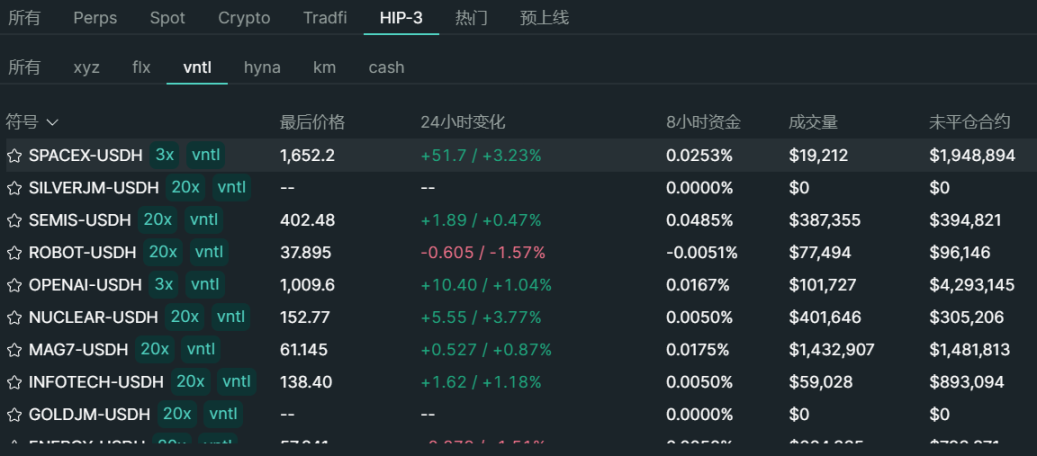
Uno es el modelo de contratos perpetuos representado por Hyperliquid, por ejemplo, basado en el marco HIP-3, los desarrolladores pueden personalizar el despliegue de productos de contratos perpetuos de activos Pre-IPO como OpenAI, SpaceX, etc. La lógica central es combinar Pre-IPO con contratos perpetuos, sin involucrar la transferencia real de acciones, esencialmente evitando las acciones en sí, solo proporcionando una exposición al precio, permitiendo a los usuarios apostar por la subida de la valoración de empresas como SpaceX, OpenAI.
Las ventajas también son obvias, por ejemplo, el umbral de entrada es extremadamente bajo, no requiere acreditación de inversor calificado; las transacciones se completan instantáneamente, no involucra flujos complejos de transferencia de acciones, etc.
De hecho, a nivel de mecanismo, podemos entenderlo simplemente como un acuerdo de apuesta sobre la valoración de unicornios como SpaceX, la liquidez es activada conjuntamente por los creadores de mercado y el mecanismo de apalancamiento, y precisamente por eso, necesita monitorear constantemente si el oráculo es estable, si el mecanismo de control de riesgos es confiable, si la liquidación en condiciones extremas es justa.
Además, desde una perspectiva regulatoria, si este modelo constituye una emisión de valores sintéticos, todavía se encuentra en una zona gris en las principales jurisdicciones judiciales del mundo.
Y el otro camino es mucho más difícil, es decir, bajo premisas regulatorias, permitir que los usuarios posean realmente activos de equity tokenizados, y no solo comercien el precio.
La prueba de Robinhood en Europa en junio de 2025 y el lanzamiento de la zona especial Pre-IPO de MSX en marzo de 2026, apuntaron conjuntamente en esta dirección: las dos plataformas sucesivamente establecieron una cooperación estratégica con Republic, una plataforma de tokenización de activos regulada en EE.UU., dedicándose a tokenizar acciones Pre-IPO reales through SPV (Vehículo de Propósito Especial), allowing investors to hold protected equity shares.
El valor central de este modelo radica en que el token está respaldado por acciones reales, held by a regulated third-party custodian,具备法律与资产支撑基础。
Concretamente, Republic adoptó una estructura de "tenencia indirecta through SPV", estableciendo un SPV offshore para hold las acciones de la empresa subyacente, y luego tokenizando los derechos del SPV para distribuirlos a los inversores. Aunque sigue siendo tenencia indirecta, en comparación con los productos puramente sintéticos, este modelo al menos establece una cadena de trazabilidad de "token -> SPV -> equity".
Por supuesto, la implementación de este modelo depende altamente de la infraestructura regulatoria, debe operarse bajo el marco regulatorio de la SEC estadounidense, cooperando con instituciones custodias reguladas (como BitGo Trust Company, etc.), para garantizar la seguridad de los activos y la validez legal, esto también significa que no es solo una innovación de producto, sino más bien un proyecto de ingeniería institucional.
En general, estos dos caminos representan dos orientaciones de valor completamente diferentes, el primero (contratos perpetuos) está más cerca de la lógica de eficiencia de DeFi,追求极致的流动性和低门槛,代价是与底层资产缺乏真实关联;el后者(tokenized equity mirror)更贴近 la lógica institucional de TradFi, lo difícil es la construcción del marco regulatorio.
Pero independientemente del camino elegido, se está formando un consenso: a través de la tokenización de acciones no cotizadas, un "mercado primario y medio" entre el primario y el secundario正在成型。
III. De Robinhood a MSX, el puente global del "mercado primario y medio"
El estallido de un mercado requiere no solo una gran narrativa, sino también productos de nivel de entrada.
Desde una perspectiva técnica, la tecnología de tokenización ha pasado por años de verificación de ingeniería, los contratos inteligentes, los oráculos, los marcos regulatorios en cadena tienen la capacidad de soportar productos financieros complejos; desde una perspectiva de aplicación, DeFi y TradFi han completado una fusión preliminar, los usuarios globales se están acostumbrando gradualmente a compartir los beneficios del crecimiento de los activos de más alta calidad de esta era de una manera descentralizada y sin permisos.
Puede decirse que la puesta en cadena de los activos Pre-IPO se encuentra en un nodo histórico a punto de cruzar el umbral. Pero la lógica por sí sola nunca equivale a que el jaque mate ocurra naturalmente.
Los protocolos DeFi por sí solos a menudo tienen dificultades para completar de forma independiente la educación del usuario, la conexión regulatoria y la introducción de capital a gran escala, por lo que en este momento, la infraestructura de cadena que puede conectar los genes de las finanzas tradicionales a menudo se convierte en la variable más crítica entre la narrativa y la implementación.
Por eso, mirando hacia atrás, el intento de Robinhood en junio de 2025 tiene un significado profundo.
Como标杆 global de corredores de Internet de tasa cero, permitió a los usuarios europeos participar en transacciones de participaciones en cadena de super unicornios como OpenAI, SpaceX con un umbral extremadamente bajo,算得上主流券商首次以如此规模、清晰的姿态,向链上Pre-IPO市场表明立场,这验证了监管框架可以被弹性地适配,也证明了大众用户对此类产品有着真实且旺盛的需求。
Pero Europa es solo el comienzo. Los mercados asiáticos, de mayor volumen y mayor crecimiento,同样蕴藏着不可忽视的增量空间,而这里,尚缺一个真正意义上的入口级平台。
Esta es precisamente la razón por la que la nueva zona especial Pre-IPO lanzada por MSX merece atención.
El 2 de marzo, MSX estableció una cooperación con Republic, que当初支持了Robinhood欧洲的合规框架,将这条经过验证的路径复制到了亚洲市场:首批已开放SpaceX、ByteDance、Lambda Labs、Cerebras Systems等顶级独角兽的代币化股权认购,最低门槛仅需10 USDT。
En cierto modo, MSX正在扮演一个“亚洲版Robinhood”的角色——在监管框架相对复杂的亚洲市场,用合规的代币化结构连接“敲钟前”的稀缺股权与“敲钟后”的全球流动性,打通那段原本最难跨越的“最后一公里”。
Y desde una perspectiva más amplia, la puesta en cadena de Pre-IPO从来不只是普通用户的单方面诉求,本质上是一场双向奔赴:
-
Los usuarios ordinarios necesitan una verdadera entrada equitativa, para compartir los beneficios del crecimiento de los super unicornios globales antes de que suene la campana, sin tener que esperar fuera de la puerta del mercado secundario;
-
Las acciones privadas y los accionistas iniciales同样希望引入前所未有的全球增量资金池,以链上流动性换取多元退出选项;
Necesidades de ambos lados,一拍即合。
Así que de Robinhood a MSX, uno en Europa y otro en Asia, también确实说明Pre-IPO市场,正在从“点对点撮合”的原始形态,逐步迈入“低门槛、高效率”的代币化时代。
IV. Escrito al final
La madurez de la tecnología subyacente y su popularización a gran escala往往不会立即兑现为产品的爆发,但当积累足够,迟到的创新浪潮反而会来得更猛。
En este sentido, que Pre-IPO en cadena se convierta en una categoría de activo principal en los próximos 3~5 años并非没有依据:la tecnología blockchain ha llegado hasta hoy, la infraestructura de tokenización ya tiene la capacidad de ingeniería para soportar productos financieros complejos, los marcos regulatorios en cadena se están aclarando gradualmente, la confianza bilateral entre instituciones y usuarios se está estableciendo lenta pero firmemente.
Pero que la lógica se cumpla从来不等于破局自然发生。
Si la ruta regulatoria es lo suficientemente clara, si el mecanismo de control de riesgos es真正可靠,机构与散户双边流动性能否有效撮合等等,每一项都是必要条件,缺一不可,更重要的是,不只是Robinhood和MSX,需要有更多的平台,愿意承担“第一个吃螃蟹”的成本,用真实的产品和真实的用户趟出一条可复制的路来。
2026年,Pre-IPO链上化,会是昙花一现的概念游戏,还是重塑资本市场准入规则的真正起点,我们很快就会知道。



















