Trump Says US Leaving Iran Soon — What This Means For Bitcoin And Oil

bitcoinistPublished on 2026-04-01Last updated on 2026-04-01

Abstract

President Trump announced the U.S. may withdraw military forces from Iran within two to three weeks, conditional on achieving its military objectives. This news prompted immediate market reaction, with oil prices cooling and stocks rising as fears of a Strait of Hormuz blockade eased. However, ongoing strikes indicate potential continued volatility. Bitcoin, trading around $68,500, is highly sensitive to these developments. A swift U.S. exit could trigger a relief rally in risk assets like Bitcoin, while prolonged conflict could cause investors to flee to traditional hedges. The situation remains uncertain as the U.S. aims to degrade Iran's capabilities before departing.

The prospect of a US military withdrawal from Iran within the next 15 to 20 days is already sending ripples through the global markets. From the price of Bitcoin to the cost of a barrel of crude, investors are scrambling to figure out if we are looking at a genuine de-escalation or just a temporary calm before another storm.

A Conditional Departure

Speaking to reporters, US President Donald Trump suggested that the current conflict might be nearing its end, hinting that US forces could wrap up operations “soon.”

While the White House is floating a two-to-three-week timeline, there’s a major catch: Washington isn’t leaving until they feel their military objectives are met.

The markets reacted almost instantly to the news. Traders and investors saw stocks tick upward while oil prices finally caught a break, cooling off as the fear of a total blockade in the Strait of Hormuz began to fade.

Interestingly, officials have clarified that this isn’t about a peace treaty; it’s a strategic exit based on how much of Tehran’s military capability the US can dismantle before heading for the door.

The Volatility Window

Despite the optimistic talk of leaving, the situation on the ground is far from settled. Reports of ongoing US strikes suggest that the next few days could still be quite violent. Trump has made it clear that he wants to “degrade” Iran’s ability to fight back before pulling the plug, which leaves traders in a difficult spot.

If the exit happens fast, we’ll likely see a massive relief rally. If the military gets bogged down in “one last strike,” expect volatility to come roaring back.
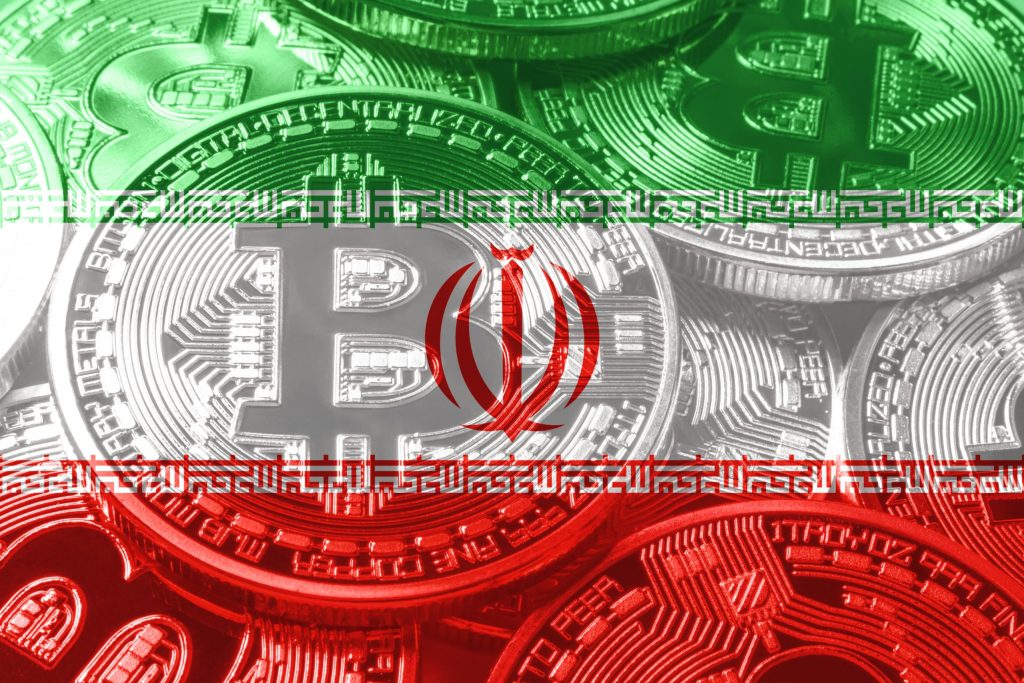
Image: Freeman Law

Bitcoin Braces For A Move

Crypto traders are perhaps the most tuned-in to this window. Bitcoin has spent the last week acting like a geopolitical barometer, swinging wildly with every headline out of the Gulf.

Currently, Bitcoin is hovering in that $68,300 to $69,000 range, stubbornly holding onto support. The “smart money” seems to be playing both sides of the fence right now.

The Bitcoin bull case would be a clean US exit removes the “uncertainty tax” on risk assets, potentially sending Bitcoin back toward all-time highs.

The bear case would be the withdrawal timeline slips and more strikes occur, we could see a “flush out” as investors flee to traditional hedges.

BTCUSD trading at $68,552 on the 24-hour chart: TradingView

For now, the message from Washington is loud and clear, but it comes with a massive asterisk. The US is packing its bags, but it’s going to make sure it finishes the job before it leaves the room.

Featured image from Reuters/Kevin Lamarque, chart from TradingView

Related Questions

QWhat is the potential timeline for the US military withdrawal from Iran as mentioned in the article?

AThe White House is floating a two-to-three-week timeline for the US military withdrawal from Iran.

QAccording to the article, what is the major condition for the US withdrawal from Iran?

AThe major condition is that the US will not leave until they feel their military objectives are met, specifically the degradation of Iran's military capability.

QHow did the financial markets react to the news of a potential US withdrawal from Iran?

AThe markets reacted almost instantly with stocks ticking upward and oil prices cooling off as the fear of a total blockade in the Strait of Hormuz began to fade.

QWhat are the two potential scenarios described for Bitcoin's price movement based on the US exit strategy?

AThe bull case is that a clean US exit removes the 'uncertainty tax' on risk assets, potentially sending Bitcoin back toward all-time highs. The bear case is that if the withdrawal timeline slips and more strikes occur, it could cause a 'flush out' as investors flee to traditional hedges.

QWhat price range was Bitcoin hovering in at the time the article was written?

ABitcoin was hovering in the $68,300 to $69,000 range, stubbornly holding onto support.

Related Reads

Apple Finally Admits, Siri Is Getting Old

In a significant shift, Apple has rebranded Siri to "Siri AI" at WWDC 2026, acknowledging the assistant's limitations after years of stagnation. The company announced a deep partnership with Google, leveraging Gemini's model capabilities to train its new Apple Foundation Models. This collaboration extends Apple's Private Cloud Compute to Google Cloud and Nvidia GPUs for the first time. The article traces Siri's history from its groundbreaking 2011 debut to its subsequent confinement within Apple's closed ecosystem, prioritizing control and privacy over expansive functionality. While Apple integrated AI into its hardware and systems over the years (e.g., Neural Engine, Core ML), it missed the paradigm shift brought by generative AI models like ChatGPT. Facing pressure, Apple restructured its AI leadership and opted to license Google's Gemini technology—reportedly paying around $1 billion annually—to power the revamped Siri. The strategy involves "distilling" knowledge from the large Gemini model into smaller, on-device models. Apple also plans to use Google Cloud's Nvidia GPUs for complex cloud inference tasks. The core vision for "Apple Intelligence" is a system-level assistant that reduces cognitive load: summarizing notifications and emails, drafting context-aware replies, and retrieving relevant information across apps. Siri gains a dedicated app with memory and cross-device sync. However, this AI push comes with hardware requirements, potentially excluding older iPhones. A major challenge is China, where Apple Intelligence will likely be a different product due to local regulations, requiring partnership with a domestic AI provider. The article concludes by questioning the future of personal AI, noting that true understanding involves more than data access—it requires knowing where to stop. Apple's partnership marks a humble beginning in its quest to build a genuinely helpful, yet respectful, personal assistant.

marsbit5m ago

Apple Finally Admits, Siri Is Getting Old

marsbit5m ago

When Doing Cryptocurrency Payment, the First Thing is Licenses, What is the Second?

When launching a crypto payment business, obtaining the necessary licenses is the crucial first step. However, the second, and arguably more critical, step is designing a comprehensive operational framework that forms a coherent business loop. This loop must be clearly understood and executable by all stakeholders: banks, payment partners, exchanges, on-chain analytics providers, regulators, and your internal team. Many projects mistakenly believe a single license permits all operations. Licenses merely grant entry; they don't define how the specific business functions. The real challenge lies in detailing every aspect of the workflow. This involves clarifying the customer base, the flow of fiat and crypto assets, the settlement process, and establishing clear lines of responsibility for risks like AML compliance, sanctions screening, chargebacks, and regulatory inquiries. A robust framework must answer seven core questions: Who are the clients and merchants? Who collects fiat and crypto? Who handles conversion and custody? And who is ultimately accountable for compliance and risk management? Projects often fail not from a lack of licensing, but during due diligence when they cannot convincingly explain these operational details. Therefore, beyond securing licenses, the priority must be constructing a closed-loop system. This system ensures the business model is transparent, risks are managed, responsibilities are delineated, contracts are aligned, and the entire process is comprehensible to partners and regulators. The true competitive edge in crypto payments lies not in acquiring a license quickly, but in integrating licensing, banking, compliance, and operations into a sustainable and executable whole.

marsbit50m ago

When Doing Cryptocurrency Payment, the First Thing is Licenses, What is the Second?

marsbit50m ago

Arthur Hayes Analysis: AI Bubble Nears Burst, Crypto Market Faces Short-Term Pressure

Arthur Hayes argues that the current AI market is a bubble poised to burst, which will exert downward pressure on the crypto market in the near term. The core trigger is rising oil prices due to the US-Iran conflict and a blockade of the Strait of Hormuz. Higher energy costs directly increase the operational expenses of AI data centers, squeezing profit margins for companies like Google, Anthropic, and OpenAI. Hayes predicts that persistent inflation from high oil prices will force Trump, in a bid to win the November election, to turn public sentiment against the AI industry. He may propose regulations and taxes on data centers and AI companies to appeal to voters concerned about costs and job displacement. Such political rhetoric could shatter market confidence. Furthermore, the market is unlikely to healthily absorb the massive concurrent IPOs of SpaceX, Anthropic, and OpenAI, which together seek valuations in the trillions. The combination of soaring energy costs, overwhelming equity supply, and negative political pressure will puncture the AI bubble. Hayes notes that nearly all new USD liquidity since 2022 has flowed into AI, leaving crypto like Bitcoin behind. When the AI bubble bursts, liquidity will contract sharply, pulling down all risk assets, including cryptocurrencies. In response, Hayes's fund, Maelstrom, has sold all AI-related stocks and non-core cryptocurrencies. It maintains core positions in Bitcoin and Ethereum while increasing exposure to energy sector equities, betting on rising oil and gas prices. He expects Bitcoin to bottom after the AI-led market decline, before rallying again with future monetary easing.

Foresight News1h ago

Arthur Hayes Analysis: AI Bubble Nears Burst, Crypto Market Faces Short-Term Pressure

Foresight News1h ago

Trading

Spot
Futures

Hot Articles

What is $BITCOIN

DIGITAL GOLD ($BITCOIN): A Comprehensive Analysis Introduction to DIGITAL GOLD ($BITCOIN) DIGITAL GOLD ($BITCOIN) is a blockchain-based project operating on the Solana network, which aims to combine the characteristics of traditional precious metals with the innovation of decentralized technologies. While it shares a name with Bitcoin, often referred to as “digital gold” due to its perception as a store of value, DIGITAL GOLD is a separate token designed to create a unique ecosystem within the Web3 landscape. Its goal is to position itself as a viable alternative digital asset, although specifics regarding its applications and functionalities are still developing. What is DIGITAL GOLD ($BITCOIN)? DIGITAL GOLD ($BITCOIN) is a cryptocurrency token explicitly designed for use on the Solana blockchain. In contrast to Bitcoin, which provides a widely recognized value storage role, this token appears to focus on broader applications and characteristics. Notable aspects include: Blockchain Infrastructure: The token is built on the Solana blockchain, known for its capacity to handle high-speed and low-cost transactions. Supply Dynamics: DIGITAL GOLD has a maximum supply capped at 100 quadrillion tokens (100P $BITCOIN), although details regarding its circulating supply are currently undisclosed. Utility: While precise functionalities are not explicitly outlined, there are indications that the token could be utilized for various applications, potentially involving decentralized applications (dApps) or asset tokenization strategies. Who is the Creator of DIGITAL GOLD ($BITCOIN)? At present, the identity of the creators and development team behind DIGITAL GOLD ($BITCOIN) remains unknown. This situation is typical among many innovative projects within the blockchain space, particularly those aligning with decentralized finance and meme coin phenomena. While such anonymity may foster a community-driven culture, it intensifies concerns about governance and accountability. Who are the Investors of DIGITAL GOLD ($BITCOIN)? The available information indicates that DIGITAL GOLD ($BITCOIN) does not have any known institutional backers or prominent venture capital investments. The project seems to operate on a peer-to-peer model focused on community support and adoption rather than traditional funding routes. Its activity and liquidity are primarily situated on decentralized exchanges (DEXs), such as PumpSwap, rather than established centralized trading platforms, further highlighting its grassroots approach. How DIGITAL GOLD ($BITCOIN) Works The operational mechanics of DIGITAL GOLD ($BITCOIN) can be elaborated on based on its blockchain design and network attributes: Consensus Mechanism: By leveraging Solana’s unique proof-of-history (PoH) combined with a proof-of-stake (PoS) model, the project ensures efficient transaction validation contributing to the network's high performance. Tokenomics: While specific deflationary mechanisms have not been extensively detailed, the vast maximum token supply implies that it may cater to microtransactions or niche use cases that are still to be defined. Interoperability: There exists the potential for integration with Solana’s broader ecosystem, including various decentralized finance (DeFi) platforms. However, the details regarding specific integrations remain unspecified. Timeline of Key Events Here is a timeline that highlights significant milestones concerning DIGITAL GOLD ($BITCOIN): 2023: The initial deployment of the token occurs on the Solana blockchain, marked by its contract address. 2024: DIGITAL GOLD gains visibility as it becomes available for trading on decentralized exchanges like PumpSwap, allowing users to trade it against SOL. 2025: The project witnesses sporadic trading activity and potential interest in community-led engagements, although no noteworthy partnerships or technical advancements have been documented as of yet. Critical Analysis Strengths Scalability: The underlying Solana infrastructure supports high transaction volumes, which could enhance the utility of $BITCOIN in various transaction scenarios. Accessibility: The potential low trading price per token could attract retail investors, facilitating wider participation due to fractional ownership opportunities. Risks Lack of Transparency: The absence of publicly known backers, developers, or an audit process may yield skepticism regarding the project's sustainability and trustworthiness. Market Volatility: The trading activity is heavily reliant on speculative behavior, which can result in significant price volatility and uncertainty for investors. Conclusion DIGITAL GOLD ($BITCOIN) emerges as an intriguing yet ambiguous project within the rapidly evolving Solana ecosystem. While it attempts to leverage the “digital gold” narrative, its departure from Bitcoin's established role as a store of value underscores the need for a clearer differentiation of its intended utility and governance structure. Future acceptance and adoption will likely depend on addressing the current opacity and defining its operational and economic strategies more explicitly. Note: This report encompasses synthesised information available as of October 2023, and developments may have transpired beyond the research period.

363 Total ViewsPublished 2025.05.13Updated 2025.05.13

What is $BITCOIN

Discussions

Welcome to the HTX Community. Here, you can stay informed about the latest platform developments and gain access to professional market insights. Users' opinions on the price of BTC (BTC) are presented below.

活动图片















