The Fall of Crypto Actually Has Little to Do with Scamming Retail Investors

比推Published on 2026-03-12Last updated on 2026-03-12

Abstract

The decline of Crypto is not primarily due to "scamming retail investors," but stems from deeper structural issues, according to a seasoned Crypto OG. Key problems include: 1. **Misunderstanding of Bitcoin’s Whitepaper**: The core concept is not "decentralization" (a term absent in the whitepaper) but "distributed trust architecture" — eliminating the need for trusted third parties. Many projects fail to achieve even basic distributed systems while overusing decentralized rhetoric. 2. **Loss of Incremental Users**: Grand narratives (Web3, Metaverse, GameFi, etc.) have oversold the technology’s capabilities, leading to repeated user disappointment and eroded trust. The market now suffers from a lack of new participants. 3. **Erosion of Community Belief**: Many communities engage in "narrative engineering" — using complex jargon to attract new users while insiders anticipate selling at peaks. This creates a cycle of hype, pump, and dump, damaging overall market credibility. 4. **Premature Financialization**: Crypto prioritized token launches and financialization before establishing robust infrastructure or mature applications. This led to overvaluation and repeated failures when technology couldn’t support inflated prices. 5. **Shift in Attention**: Human attention is moving from social and community interactions (like Telegram and Discord) toward AI-driven engagement. As an attention-dependent market, Crypto is naturally declining as interest wanes. The OG concludes that...

Source: Jiayan Kea


Some time ago, I had coffee with friends from Stanford, and the topic of Crypto came up at the table.

This kind of gathering is quite typical: VCs, engineers, entrepreneurs, and a few seasoned players. A young man suddenly said:

"Crypto is failing now because retail investors were scammed too hard."

Many at the table nodded. Sitting next to me was an old OG who had been in the Crypto space for over a decade. He had been silent until then.

Hearing this, he smiled, put down his coffee, and said:

"The fall of Crypto actually has little to do with scamming retail investors." Everyone was a bit surprised. Because the mainstream narrative nowadays is almost always: projects are too greedy, scams are too harsh, and the market has been ruined.

The old OG shook his head and said:

"Scamming retail investors has never been the problem; financial markets have been doing it for centuries. The real issue is—the underlying logic is wrong."

He said Crypto has at least a few fundamental issues.

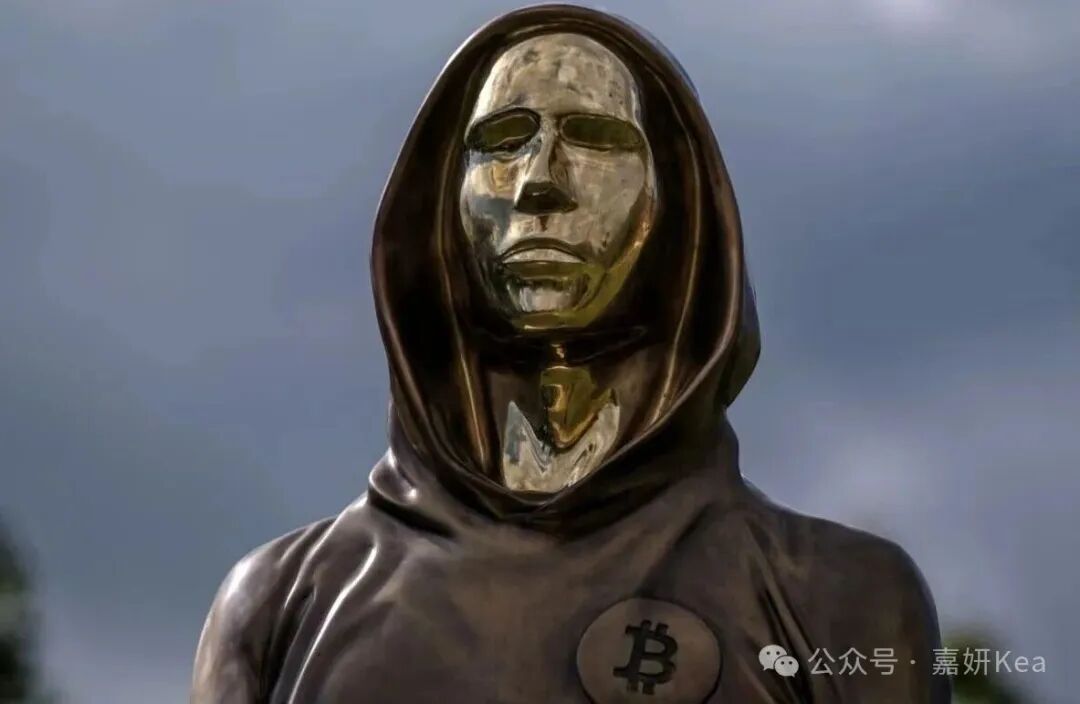
First Point: Many People Have Never Seriously Read Satoshi's Whitepaper

The old OG shared something interesting observation.

He said he sometimes asks people working on projects: "Have you read the Bitcoin whitepaper?"

Many say they have. But if he follows up with: "What is the most core word in it?" Most people would say:

Decentralization.

He directly shook his head and said: "The word 'decentralization' doesn’t appear even once in the whitepaper." Someone at the table checked on their phone—it was true.

The old OG continued: The word that actually appears repeatedly in the whitepaper is:

Distributed


Mentioned about 6 times.

And the real problem it aimed to solve was captured in one sentence:

remove the need for a trusted third party

Eliminate the need for a trusted third party.

He said this is the soul of Crypto, not "decentralization," but a distributed trust structure.

Now, many projects haven’t even achieved the most basic distributed architecture.

Nodes are fake.

Governance is fake.

The network is fake.

And then they talk nonstop about:

Decentralization.

He said something particularly harsh:

"Talking about decentralization without even achieving distributed architecture is like building a skyscraper on sand."
Second Point: Crypto Has Lost Its Growth Market

The old OG said the biggest problem with Crypto isn’t actually technology.

It’s that the narrative has透支 (overdrawn) the future.

Over the past decade, the one thing Crypto projects have been best at is: manufacturing expectations.

Every new narrative is grand: Web3, Metaverse, GameFi, SocialFi, DeFi—each story sounds like it’s going to rebuild the world.

The problem is, the technical capabilities of the vast majority of projects can’t support these narratives.

So a classic thing happened: expectations were severely透支 (overdrawn).

Users came in, time and again.

And were disappointed, time and again.

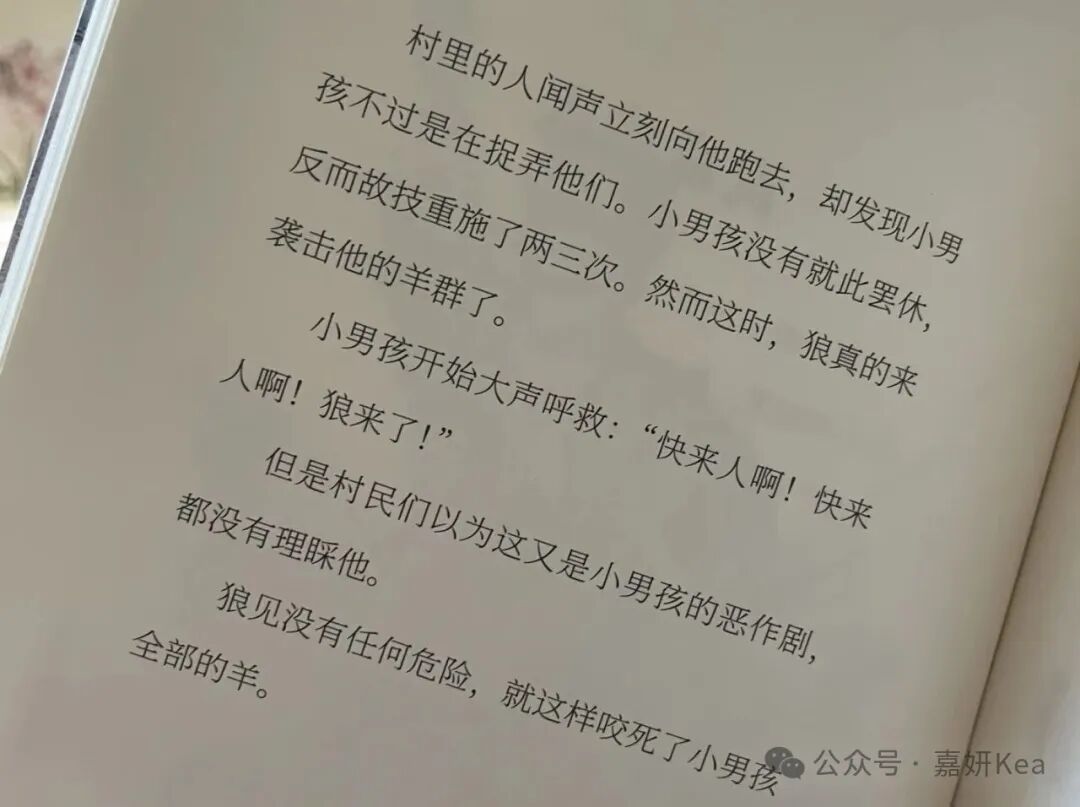
Slowly, it became a story everyone is familiar with:

The boy who cried wolf.

When the market stops believing your story, new users disappear.

The biggest problem with Crypto isn’t actually the bear market.

It’s that:

No new people are coming in.
Third Point: The Community Stopped Believing Long Ago

The old OG said many Crypto communities nowadays are quite interesting.

On the surface, everyone is enthusiastic, posting in groups daily: GM, WAGMI, To the moon

But in reality, many core participants are well aware of one thing:

They don’t even believe in this narrative themselves.

The function of the community gradually devolved into one thing:

Downward compatibility with new retail investors.


Using a bunch of jargon:

Tokenomics/Layer2/Modular/Restaking/Intent/etc

To surround new entrants.

Many newcomers don’t really understand what these terms mean.

But in such an atmosphere, people easily get brainwashed.

The old OG said this is essentially a form of narrative engineering.

But the problem is, those setting up the game know it’s a game too.

So everyone is waiting for the right moment:

Sell on the high.


This creates a vicious cycle:

Keep telling new stories → Attract new people → Pump the price → Cash out → Tell new stories again.

In the long run, the entire market’s credit gets透支 (overdrawn).

Fourth Point: Financialization Rushed Before Technical Maturity

The old OG said Crypto has another fatal flaw. Financialization started before the technical phase was complete. The normal path of technological development should be:

First, build the "infrastructure."

Then, develop "applications."

Finally, comes "financialization."


But Crypto took the reverse route:

Issue tokens first.

Do finance first.

Focus on trading first.

Patch up the technology slowly.


The result is: Many things weren’t even mature yet but were already priced by the capital market.

Once the real capabilities can’t keep up with the price,

Projects continuously get disproven.

The market might forgive it once or twice.

But when disproval becomes the norm, trust vanishes.

Fifth Point: Attention is Fleeing Crypto, Unnoticed

Finally, he mentioned something many haven’t realized: Human attention is migrating.

Over the past decade, the biggest attention structure on the internet was:

Human-to-human interaction, social media, communities, DAOs.


But a shift is happening now:

More and more attention is turning towards

Human-AI interaction.

Look where people spend their time now: not in Telegram groups, not on Discord.

But talking to AI.


When the structure of attention migrates,

Many ecosystems that originally relied on community heat,

Will naturally decline.

Crypto is largely an

Attention-driven market. When attention decreases, growth naturally disappears.

As the dinner was ending, someone asked:

"So do you think Crypto is finished?"

The old OG thought for a moment and said something很有意思 (interesting):

"Crypto isn’t finished, but this generation’s narrative has ended."


Then he added:

"The real problem was never scamming retail investors."

Financial markets will always scam retail investors.

Stocks do it, forex does it, AI will do it in the future too.

Scamming isn’t the problem.

Having no new retail investors is the problem.


He said the biggest tragedy of Crypto is actually very simple:

When the technology wasn’t mature,

They told twenty years’ worth of stories

In just three years.

The stories are finished.

And so the people disperse.

Twitter:https://twitter.com/BitpushNewsCN

Bitpush TG Discussion Group:https://t.me/BitPushCommunity

Bitpush TG Subscription: https://t.me/bitpush

Original link:https://www.bitpush.news/articles/7619255

Related Questions

QAccording to the article, what is the core concept emphasized in Satoshi Nakamoto's Bitcoin whitepaper instead of 'decentralization'?

AThe core concept emphasized in the whitepaper is 'Distributed' (mentioned about 6 times) and the key problem it aims to solve is to 'remove the need for a trusted third party' (distributed trust structure).

QWhat does the article identify as the main reason for Crypto's decline, beyond just 'cutting leeks' (scamming investors)?

AThe main reasons are: the underlying logic is flawed, narrative has outpaced technical reality, loss of incremental market/new users, premature financialization before technical maturity, and migration of human attention to AI interactions.

QHow does the article describe the current state of many Crypto communities regarding their belief in the projects?

AThe article states that many core participants in Crypto communities don't actually believe in the narratives themselves. Communities have become primarily focused on 'downward compatibility with new韭菜 (newbies)' - using complex terminology to encircle and onboard new entrants while waiting for the right time to sell high.

QWhat problematic development pattern does the article highlight regarding Crypto's technological and financial progression?

ACrypto followed a reverse development path: it financialized first (issuing tokens, enabling trading) before the underlying technology was mature, rather than building infrastructure first, then applications, and finally financialization. This led to assets being priced by the market before their real capabilities were proven, resulting in constant disproof and loss of trust.

QWhat major shift in human attention does the article suggest is negatively impacting Crypto market?

AHuman attention is migrating from human-to-human interactions (social media, communities, DAOs) to human-to-AI interactions. As Crypto is an attention-driven market, this reduction in attention leads to a natural decline and loss of incremental users.

Related Reads

Retail Ecology Dwindles, ZKsync Bets on Bank Pilots for a Breakthrough

Amidst declining retail activity, ZKsync is pivoting to target institutional banking as its primary growth strategy. The article explores this shift, contrasting it with the competitive "survival of the fittest" narrative by highlighting a cooperative model inspired by naturalist Peter Kropotkin. ZKsync is developing infrastructure like its private, permissioned Prividium suite for banks (e.g., Deutsche Bank's use case via Memento), enabling private transactions with public verifiability via zero-knowledge proofs. This appeals to institutions needing privacy, compliance, and Ethereum-based settlement security, unlike fully private chains (e.g., JPMorgan's Kinaxis) or consortium models (e.g., R3 Corda). However, this strategic focus has coincided with a steep decline in its public DeFi ecosystem, evidenced by plunging TVL and the departure of major protocols like Aave due to low fees. The network's future now hinges on banking adoption, with upcoming pilots like the Cari Network involving regional banks holding over $600 billion in deposits. A significant challenge is balancing this institutional focus with ZKsync's decentralized governance. Banks must operate on a network where rules and fees (denominated in the volatile ZK token) can be changed via community vote, and where a Security Council holds emergency control—a stark contrast to the predictable, contract-bound environments of traditional finance. The coming 18 months will test whether ZKsync can successfully onboard traditional banks onto a dynamically governed public chain or if institutions will ultimately revert to proprietary solutions.

Foresight News13m ago

Retail Ecology Dwindles, ZKsync Bets on Bank Pilots for a Breakthrough

Foresight News13m ago

The Recursive AI Anthropic Warned About: Tian Yuandong's New Company Has Just Taken the "First Step"

Anthropic recently highlighted the rapid progress toward "recursive self-improvement," where AI systems autonomously design and train their successors. In response, Recursive Superintelligence, a new company co-founded by former Meta researcher Tian Yuan Dong, has publicly demonstrated its first step toward automating AI research. The company released a system designed to autonomously execute the full AI research cycle: generating ideas, implementing code, running experiments, and learning from results. It validated this approach by achieving state-of-the-art results on three diverse benchmarks: 1. **NanoChat Autoresearch:** Optimizing a small language model's validation loss under a fixed 5-minute GPU budget, improving upon the community's best result. 2. **NanoGPT Speedrun:** Reducing the time to train a GPT model to a specific loss on 8 H100 GPUs from 79.7 seconds to 77.5 seconds, beating a highly optimized, human-driven community effort. 3. **SOL-ExecBench:** Improving the overall score on NVIDIA's suite of 235 GPU kernel optimization tasks by 18%, closing the gap to the hardware limit. The system discovered novel optimizations in this highly specialized domain without direct human expertise. Recursive's system operates as a general framework, capable of parallel exploration and cross-task knowledge transfer while incorporating safeguards against reward hacking. The company, backed by $650M in funding and a star-studded team including Richard Socher and Alexey Dosovitskiy, aims to create AI that recursively enhances its own research capabilities. This development represents an early but concrete move toward a new paradigm where AI accelerates its own advancement. It occurs alongside Anthropic's warnings about the need for industry coordination and potential pauses when recursive self-improvement thresholds are reached, highlighting the dual trajectory of rapid technical progress and growing calls for careful stewardship.

marsbit21m ago

The Recursive AI Anthropic Warned About: Tian Yuandong's New Company Has Just Taken the "First Step"

marsbit21m ago

The Gold Buy-on-the-Dip Guide: Watch Interest Rates, Not Just War

"Gold Buying Guide: Focus on Interest Rates, Not Just War" Four months ago, gold buyers likely didn't anticipate buying at a peak that even a war couldn't sustain. After hitting a record high of $5,596 on January 29, gold entered a bear market just 91 days later, its fastest decline since 2008. A key trigger was the Fed's hawkish shift, highlighting that monetary policy, not geopolitics, is the primary driver. The article argues that the traditional "buy gold in turmoil" script has changed. While the US-Iran conflict initially boosted prices, the sustained rally in oil prices heightened inflation fears, forcing central banks to maintain or consider tighter policy. Since gold yields no interest, higher rates increase its opportunity cost, eroding its appeal. This dynamic was evident when gold fell sharply on May 18 despite positive peace talks, as lower oil prices eased inflation and thus rate hike pressures. The recent sell-off is also part of a broader market deleveraging. Correlations between gold, Nasdaq, and Bitcoin spiked as leveraged investors sold liquid assets to cover losses, creating a synchronized downturn. Historically, gold bottoms align with policy shifts, not conflict resolutions. The 2008 and 2022 bear markets ended with shifts to extreme easing and peak inflation expectations, respectively. For potential buyers, the author suggests monitoring three signals: 1) Peak interest rate hike expectations, 2) Reopening of the Strait of Hormuz (to ease oil/inflation pressure), and 3) A return to net inflows for Gold ETFs, indicating the end of forced selling. While predicting the exact bottom is impossible, the author's personal strategy involves scaling into a position across price levels like $4000, $3700, and $3500, committing no more than 30% of the intended total allocation initially, and adding the remainder only if key signals emerge. The core conclusion: In turbulent times, watching interest rates is more crucial than watching wars.

marsbit27m ago

The Gold Buy-on-the-Dip Guide: Watch Interest Rates, Not Just War

marsbit27m ago

Recent On-Chain Review: No Clear Narrative Under U.S. Stock Market Pressure, Just Hype

This article analyzes the current state of the Solana meme coin and community token ecosystem, highlighting a market caught between two dominant forces: attention-based PvP and a gradual return to community-centric projects. The first part explores the "Attention PvP" dynamic, where success is driven by celebrity endorsements, viral events, and speed. Examples include $JOTCHUA, which surged after its meme creator's social media activity, and $WORLDCUP, which outperformed a similar Base chain project ($PITCH) largely due to influencer support. The recent "pump.fun GO" feature, allowing bounty tasks for token promotion, is critiqued for fostering sensationalist and often negative stunts—like people getting token tickers tattooed on their bodies for rewards—reminiscent of old internet shock content. In contrast, the article points to a resurgence of organic, community-driven tokens that survive market volatility through strong holder bases and shared ideology, not just hype. Influencer Ansem is cited, arguing that durable meme coins rely on communities willing to endure losses and promote their core message daily. Examples given are older tokens like $neet (anti-work ethos), $troll, $buttcoin, and $triplet, which have maintained relative price stability. A prime example of this community-build model is the new project $KINS, the token for the browser-based MMORPG Kintara. Its success stems not from advanced graphics but from consistently delivering updates, fostering player trust, and creating genuine engagement (e.g., in-game economies, events, property auctions). It has attracted a growing player base and even notable KOLs as participants, demonstrating that sustainable growth can come from building trust rather than orchestrating pumps. The article concludes by questioning whether the market is ultimately a game of mutual trust or mutual deception, expressing hope that such reflection might lead to a healthier ecosystem.

marsbit27m ago

Recent On-Chain Review: No Clear Narrative Under U.S. Stock Market Pressure, Just Hype

marsbit27m ago

Trading

Spot
Futures
活动图片