# Timing Related Articles

HTX News Center provides the latest articles and in-depth analysis on "Timing", covering market trends, project updates, tech developments, and regulatory policies in the crypto industry.


Why is Step Fun So Perfect?

The article analyzes StepFun's recent, meticulously orchestrated product launch on July 13th, framing it as a strategic maneuver rather than a conventional unveiling. Facing intense pressure in China's AI landscape, the startup preemptively announced its AI terminal brand STEPX, Step AOS operating system, Amoo personal agent, and the "world's first" Agent Phone, STEPX Neo—just days before a major competitor's launch at WAIC. The author argues this "perfect" presentation, addressing prior industry critiques around agent security, permissions, and ecosystem partnerships upfront, serves as a "perfect defense" aimed at regulators, investors, and the market. Its core purpose is to seize the narrative and define standards for the emerging "Agent Phone" category before giants like ByteDance (with its Doubao phone), Apple, or Huawei solidify control. Behind this move lies StepFun's precarious position. Despite a high valuation and revenue from supplying AI models to phone makers, its business is seen as vulnerable—akin to a "MediaTek of AI," with little pricing power as capabilities commoditize. CEO Yin Qi, drawing from his experience at Megvii, is betting that transitioning from a pure AI model supplier to an integrated "terminal platform" with its own hardware, OS, and ecosystem is essential for survival and sustaining its valuation narrative ahead of a potential IPO. The article concludes that StepFun's launch is a symptom of a broader trend: AI startups are forced to "release the future" and sell ambitious platform visions, often with products still in development, because "today" (current metrics, API revenue) has diminishing value in a market racing toward oligopoly. The very perfection of the presentation underscores the urgency of their fight for a seat at the table.

marsbit07/15 02:06

Why is Step Fun So Perfect?

marsbit07/15 02:06

Buying BTC is Not as Good as Buying Nasdaq, and This Statement Has an Expiration Date

The article, titled "Investing in Bitcoin Has an Expiration Date", discusses the recent narrative on social media that investing in U.S. tech stocks (like the Nasdaq 100) has been far superior to investing in Bitcoin. This sentiment is fueled by performance comparisons showing the Nasdaq 100 significantly outperforming Bitcoin over a specific five-year window starting in late 2021. However, the author argues that such comparisons are highly sensitive to the chosen timeframe. By shifting the starting point to other key market moments—like the COVID-19 bottom (March 2020), the FTX collapse bottom (November 2022), or the pre-Bitcoin ETF approval period (January 2024)—Bitcoin's returns often match or dramatically exceed those of the Nasdaq 100. The popular Reddit chart essentially cherry-picks a period that started near a Bitcoin cycle high and just before the massive AI-driven rally in tech stocks. The core difference lies in their asset structures. The Nasdaq 100, backed by corporate earnings, exhibits a steadier long-term upward trend. Bitcoin is a highly cyclical asset with extreme volatility, where returns are drastically different depending on where in its bull/bear cycle an investment is made. The article notes Bitcoin often acts like a leveraged version of the S&P 500, magnifying both gains and losses. Currently, Bitcoin is in a "cyclically undervalued zone," having corrected ~37% from its October 2025 peak while the Nasdaq hits new highs. Historically, peak narratives about stocks beating Bitcoin have often coincided with Bitcoin nearing cyclical lows, as seen before its major rally from late 2022. The conclusion is that declaring one asset permanently superior to another is statistically flawed; performance is entirely dependent on timing. The real challenge for investors is not picking the "better" asset, but mastering entry and exit timing.

marsbit05/14 08:34

Buying BTC is Not as Good as Buying Nasdaq, and This Statement Has an Expiration Date

marsbit05/14 08:34

From 100U to the Pinnacle of Glory—A Dialogue with 'Kid', Champion Trader of Huobi HTX's 'New Asset Battle for Glory': A Full Disclosure of the Trinity Trading Strategy of 'Position, Rhythm, and Timing'

In the Huobi HTX "New Asset Trading Championship," the trader known as "Kid" emerged as the champion, starting with just 100 USDT and achieving top returns in the highly volatile new asset sector. His success was attributed not to aggressive speculation but to a disciplined strategy, strict risk management, and a calm mindset. Kid emphasized a tripartite core strategy: position sizing, rhythm control, and timing. He never exceeds 20% allocation per asset, uses small positions to test waters, and reserves cash for volatility. He focuses on catching the "main upward trend" during market consensus phases and avoids emotional trading. Key sectors he favors include RWA (for its strong institutional backing), AI+blockchain (for high valuation elasticity), and cross-border payment projects (for stability). He credits Huobi HTX for its advantages in new asset listings, with over 70% of assets being first launches, robust risk controls, and deep ecosystem integration with networks like TRON. The platform’s liquidity, security mechanisms, and trading tools enabled his strategy execution. Kid views trading as earning within one’s cognitive limits and maintains a long-term, symbiotic relationship with the platform. His approach underscores professionalism, continuous learning, and respect for market risks.

marsbit01/30 07:52

From 100U to the Pinnacle of Glory—A Dialogue with 'Kid', Champion Trader of Huobi HTX's 'New Asset Battle for Glory': A Full Disclosure of the Trinity Trading Strategy of 'Position, Rhythm, and Timing'

marsbit01/30 07:52

Complete Analysis of Trump's Tariff "Playbook": A Practical Operation Guide

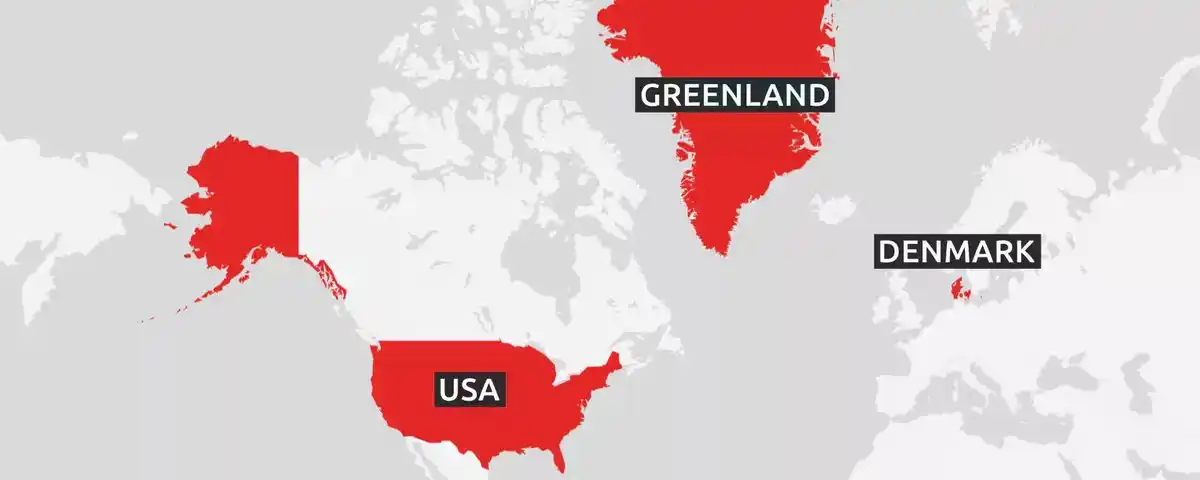
Former President Trump has announced new tariffs targeting multiple European nations, including Denmark, Norway, Sweden, France, Germany, the UK, the Netherlands, and Finland, starting at 10% on February 1 and escalating to 25% by June 1. These measures are tied explicitly to his strategic objective of acquiring Greenland, which he insists must be a "complete and comprehensive purchase." This follows a recurring pattern in Trump’s trade strategy: using high-stakes tariff threats as a negotiation tool, often announced over weekends when markets are closed to maximize psychological impact. The approach typically triggers an initial wave of market volatility and emotional selling, followed by a rebound as investors anticipate negotiated resolutions before tariffs take effect. The Kobeissi Letter outlines a consistent tactical playbook observed since early 2025: tariff threats are introduced, markets react negatively, buying opportunities emerge mid-week, and eventual deal announcements drive market rallies. While the Greenland demand is notably more ambitious than previous objectives—such as persuading China to drop export controls—the expected market response and negotiation timeline are projected to follow a similar cyclical pattern. Ultimately, the strategy leverages volatility as an opportunity, with disciplined traders capitalizing on predictable fluctuations tied to trade war headlines.

marsbit01/19 07:02

Complete Analysis of Trump's Tariff "Playbook": A Practical Operation Guide

marsbit01/19 07:02

活动图片