# Strategy Related Articles

HTX News Center provides the latest articles and in-depth analysis on "Strategy", covering market trends, project updates, tech developments, and regulatory policies in the crypto industry.

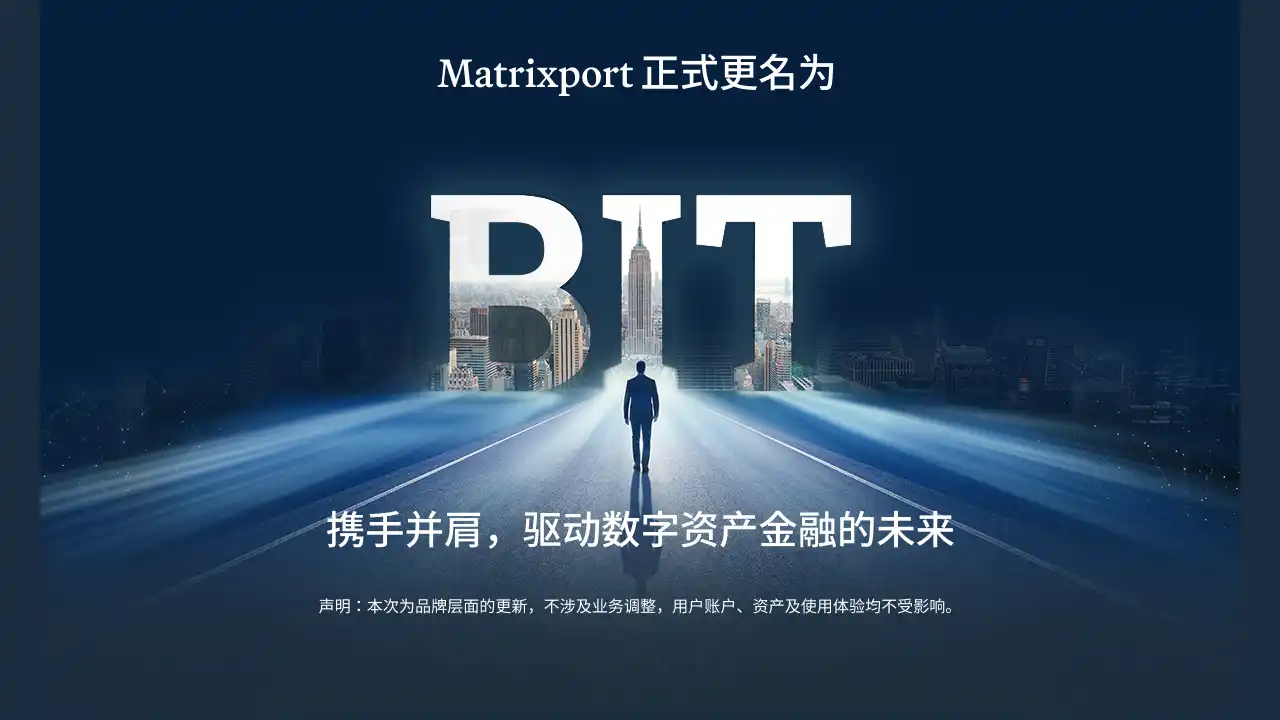
Matrixport Officially Rebrands as BIT, Clarifying New Strategic Positioning

Digital financial services group Matrixport has officially rebranded to BIT, marking a new phase in its strategic positioning. The company will now operate globally under the unified BIT brand. Alongside the rebranding, BIT released its "2026 Trust Whitepaper," which systematically details the group's established governance and risk control frameworks to provide a verifiable foundation of trust for clients and partners. As the digital asset industry undergoes increasing institutionalization and regulatory maturation, market demands for robust governance and compliance capabilities are growing. The new BIT brand better reflects the company's current business focus and strategic direction for future development. CEO John Ge stated that the industry is entering a stage where governance and compliance are increasingly critical. The name BIT represents the evolution of the company's business and its long-term commitment to building trusted digital asset financial infrastructure. The brand's tagline, "Bridge into Tomorrow," signifies its vision to connect traditional finance with digital asset markets and build lasting trust with clients. The rebrand does not affect existing customer accounts, products, or services, and all legal entities and contractual arrangements remain unchanged. As part of its next strategic phase, BIT is also exploring opportunities in U.S. capital markets, including a potential public listing. Founded in 2019 and headquartered in Singapore, BIT operates in seven countries and holds multiple regulatory licenses. It offers trading, custody, asset management, liquidity, and financing solutions to institutional and professional investors, with over $6 billion in assets under management and a monthly trading volume exceeding $7 billion.

marsbit03/20 09:18

Matrixport Officially Rebrands as BIT, Clarifying New Strategic Positioning

marsbit03/20 09:18

The First Batch of Big Tech Employees Laid Off by AI Have Returned to Their Posts

The first wave of employees laid off by major tech companies, citing AI as the reason, are already being rehired. In late February, Block, led by Jack Dorsey, laid off over 4,000 employees, reducing its workforce from 10,000 to under 6,000, with Dorsey stating that "AI tools changed everything." However, within a month, some of those laid off began receiving offers to return. Reports indicate rehires occurred in departments like engineering and HR, with reasons ranging from "clerical errors" in termination to managers advocating for their return. The article argues that replacing humans with AI is often more cost-effective. For instance, enterprise-level AI can be expensive in terms of token usage, and training a reliable AI system, such as for customer service, may exceed the cost of human employee salaries. Examples like Klarna, which rehired客服 after initially replacing them with AI, support this. Additionally, the "Jevons Paradox" suggests that AI-driven efficiency gains don’t necessarily reduce workloads but may increase demands on remaining employees, adding to their burden. The piece criticizes companies using AI as a pretext for layoffs, arguing that AI cannot replace human organizational dynamics or strategic roles. Nvidia’s Jensen Huang is quoted condemning leaders who裁员 instead of leveraging AI for expansion. Ultimately, AI serves as a convenient excuse for cost-cutting, but its limitations and the essential role of humans in organizations mean that some layoffs are reversed when key roles are affected. The trend reflects broader issues of corporate strategy and management rather than a true AI takeover.

Odaily星球日报03/20 07:26

The First Batch of Big Tech Employees Laid Off by AI Have Returned to Their Posts

Odaily星球日报03/20 07:26

Why Truly Mature Traders Are Starting to Monitor Bitcoin Volatility

The article explains why sophisticated traders are increasingly focusing on Bitcoin volatility rather than just price direction. It argues that while price indicates where the market is, volatility reveals the density of risk and the path ahead. Many traders lose not because they misjudge direction, but because they misjudge volatility—entering or exiting at inopportune times due to unexpected swings. The text distinguishes between historical volatility (past price movements), implied volatility (market expectations derived from options pricing), and volatility indices like BVIX, EVIX, and Cboe’s BITVX, which make future volatility expectations visible and tradable. These instruments signal a maturation in crypto markets, shifting from purely trading price to also trading risk, uncertainty, and market expectations. A key insight is that low volatility does not mean low risk; it often masks growing fragility, as complacency leads to increased leverage and crowded strategies. When volatility is compressed, the risk of a sudden, extreme move (a "fat tail" event) rises. Conversely, high implied volatility may indicate overpriced fear, creating opportunities to sell volatility for seasoned traders. The article concludes that understanding volatility is essential for advanced trading—it helps with risk management, identifies mispriced expectations, and reveals market sentiment before price moves. As crypto develops better volatility infrastructure, traders who monitor indicators like BVIX or EVIX gain a deeper understanding of what the market is truly pricing: not just direction, but uncertainty itself.

marsbit03/20 00:30

Why Truly Mature Traders Are Starting to Monitor Bitcoin Volatility

marsbit03/20 00:30

活动图片