# Stablecoin Related Articles

HTX News Center provides the latest articles and in-depth analysis on "Stablecoin", covering market trends, project updates, tech developments, and regulatory policies in the crypto industry.


DeFi Trend Shifts: Stablecoin Public Chains Recede, RWA Faces Critical Regulatory Window

Crypto market sentiment is currently bearish, with many traders predicting Bitcoin could fall below $50,000. Attention and capital are shifting toward AI, away from crypto. The author’s strategy has shifted toward holding mostly BTC and ETH, along with a few cash-flow-generating alts like AAVE and LINK, avoiding speculative public chains and L2s. Key topics discussed: - Aave faces governance tension between Aave DAO and Aave Labs, reflecting broader DeFi governance challenges. - Aave V4 introduces improved liquidation mechanisms. - Stablecoin-focused Layer 1 blockchains are struggling to gain market share against established chains like Ethereum and Tron. Their real potential lies in onboarding off-chain users, not competing internally. - RWA and stock tokenization gain momentum after the SEC approved DTCC’s tokenization plan. Ethereum and L2s are seen as compliant options. This development is viewed as a net positive for the sector, including projects like Ondo Finance. - Ondo uses a clever system with its own stablecoin, USDₒ, to enable large on-chain tokenized stock trades without relying on external liquidity. - Ethena’s Season 4 airdrop requires users to deposit and trade on HyENA to qualify, aiming to boost its perps trading platform. - Tempo, developed by Stripe and Paradigm, has launched its testnet, targeting efficient stablecoin payments with major enterprise partners.

比推12/17 07:09

DeFi Trend Shifts: Stablecoin Public Chains Recede, RWA Faces Critical Regulatory Window

比推12/17 07:09

DeFi Recent Updates: Stablecoin Public Chains Face Internal Competition and Cooling Off, RWA Welcomes Its 'SEC Moment'

The DeFi market is currently bearish, with sentiment leaning towards further downside for Bitcoin and a shift of attention and capital towards AI. The author's strategy involves moving away from most altcoins to focus on major assets like BTC and ETH, retaining only a few with strong cash flows like AAVE and LINK. Key developments include a governance dispute between Aave DAO and Aave Labs, highlighting industry-wide governance challenges, and an update to Aave V4's liquidation mechanism to reduce over-liquidations. The article discusses the underwhelming performance of new stablecoin-focused Layer 1 blockchains, which have failed to significantly capture market share from established players like Ethereum and Tron. Their true potential lies in onboarding new, off-chain stablecoin users, a challenging task. A major focus is on the tokenization of real-world assets (RWA) following the SEC's approval of DTCC's tokenization plan. This is seen as a significant, positive regulatory step. The approval outlines strict requirements for compliant blockchains, with Ethereum/L2s being a likely fit. This development is analyzed as a potential indirect benefit for existing projects like Ondo Finance, which recently had an SEC investigation closed with no charges. Ondo's mechanism for facilitating large on-chain stock token trades using its own stablecoin, USDon, is explained. Other updates include Ethena's new airdrop season requirements, which users must interact with its HyENA perps platform, and the testnet launch of Tempo, a new payments-focused blockchain backed by Stripe and Paradigm.

marsbit12/17 04:20

DeFi Recent Updates: Stablecoin Public Chains Face Internal Competition and Cooling Off, RWA Welcomes Its 'SEC Moment'

marsbit12/17 04:20

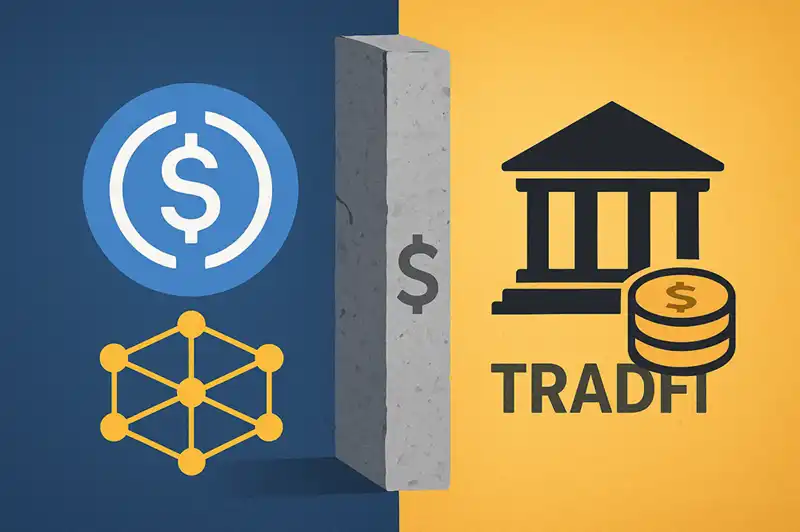
Interactive Brokers Opens 'Stablecoin Deposits': Why Is the Wall Street Giant Tearing Down the 'Payment Berlin Wall' at This Moment?

Interactive Brokers (IBKR), a major global electronic brokerage, has announced a landmark update allowing clients to deposit funds using stablecoins—primarily USDC—to trade traditional assets like stocks, futures, and forex. This move effectively bridges a significant gap between crypto and traditional finance (TradFi), addressing long-standing inefficiencies in fiat payment channels. Traditionally, cross-border wire transfers via SWIFT are slow (taking 1-3 business days), costly, and limited to banking hours. By leveraging blockchain technology, IBKR enables near-instant, 24/7 settlements, drastically reducing friction and improving capital efficiency for traders. Behind the scenes, IBKR likely partners with regulated entities like Paxos or Circle to convert USDC to USD seamlessly, ensuring compliance while using the blockchain as a new settlement layer. This strategic shift aims to attract crypto-native high-net-worth clients and institutions holding significant wealth in stablecoins, offering them a secure, compliant path to invest in traditional markets. It also signals the evolution of stablecoins from mere trading instruments to a foundational global payment infrastructure. However, challenges remain, including stringent KYC/AML requirements, address screening, and enhanced tax transparency. Despite these hurdles, IBKR’s move is a decisive step toward erasing the boundaries between crypto wallets and securities accounts, setting a new standard for the industry.

marsbit12/16 02:07

Interactive Brokers Opens 'Stablecoin Deposits': Why Is the Wall Street Giant Tearing Down the 'Payment Berlin Wall' at This Moment?

marsbit12/16 02:07

From 'Safe Harbor' to 'Compliant Innovation': An Analysis of the Impact of the SEC's Innovation Exemption Policy

From "Safe Harbor" to "Compliant Innovation": An Analysis of the SEC's Innovation Exemption Policy The U.S. SEC, under Chairman Paul Atkins, introduced the "Innovation Exemption" policy in July 2025, marking a historic shift from an "enforcement-as-regulation" approach to a proactive framework. This temporary exemption, set to take effect in January 2026, provides a 12–24 month grace period for crypto projects (exchanges, DeFi protocols, stablecoin issuers, DAOs) to operate with simplified disclosures instead of full SEC registration, reducing initial compliance burdens. The exemption is principle-based, requiring basic investor protections like periodic reporting, risk disclosures, investment limits, and adherence to technical standards such as ERC-3643 for identity verification. It operates alongside congressional efforts like the CLARITY Act (clarifying SEC/CFTC jurisdiction) and the enacted GENIUS Act (regulating stablecoins under banking rules). Reactions are polarized: startups and institutions welcome the lower entry costs and regulatory clarity, which attract capital and foster innovation. However, the DeFi community warns that mandatory KYC/AML and transfer restrictions risk "traditionalizing" decentralized protocols. Traditional financial institutions oppose it, fearing regulatory arbitrage. Globally, this flexible U.S. model contrasts with the EU’s pre-authorization MiCA regime, forcing companies into dual compliance strategies. The exemption positions the U.S. as a competitive "global crypto capital hub," but international coordination remains crucial for long-term stability. Ultimately, "compliant innovation" becomes the new core competency, requiring projects to balance agility with a clear path to verifiable decentralization.

marsbit12/15 23:06

From 'Safe Harbor' to 'Compliant Innovation': An Analysis of the Impact of the SEC's Innovation Exemption Policy

marsbit12/15 23:06

活动图片