# Speculation Related Articles

HTX News Center provides the latest articles and in-depth analysis on "Speculation", covering market trends, project updates, tech developments, and regulatory policies in the crypto industry.

The Art of Speculation: When Coin Launches Become a Mind-Reading Game Centered on Leaders' Social Dynamics

The article "The Art of Reading Between the Lines: When Coin Listings Become a Game of Guessing Leaders' Social Cues" critiques the culture of speculation and sycophancy in the cryptocurrency space, particularly around Binance’s listing process. It draws a parallel to a Shandong dining custom where the fish head is pointed toward the guest of honor as a sign of respect—a tacit social rule that requires intuition rather than explicit instruction. The piece centers on a recent event where He Yi, Binance’s co-founder, posted a cryptic New Year’s tweet saying “我踏马来了” (roughly: “Here the f*ck I come”). Shortly after, a community-created meme token with the same name was listed on Binance Alpha, despite He Yi’s earlier statements against favoritism and “insider coins.” The author argues that this reflects a deeper cultural issue: the shift from merit-based innovation to a system where success depends on interpreting the subtle hints of influential figures. Unlike traditional industries where technical skill or product quality drive progress, the crypto industry often prioritizes access to information, relationships, and the ability to please key decision-makers. The piece suggests that this “Shandong mindset”—where insiders learn to “read the room” rather than challenge or create—undermines transparency and rewards those who excel at flattery rather than genuine contribution. While He Yi may not have directly endorsed the token, the very fact that her social media activity can trigger such market behavior highlights a structural problem: the concentration of influence in the hands of a few, and the culture of speculation that follows. The author concludes that such an environment may signal decline, where those who master the art of揣摩 (speculation/interpretation) thrive, often at the expense of real innovation.

比推01/08 13:53

The Art of Speculation: When Coin Launches Become a Mind-Reading Game Centered on Leaders' Social Dynamics

比推01/08 13:53

Who is Placing Counterintuitive Bets in Prediction Markets?

Who Bets Against Common Sense in Prediction Markets? This article explores the counterintuitive players who provide liquidity by betting "Yes" on seemingly improbable events on prediction markets like Polymarket. Contrary to appearing irrational, these participants are often driven by calculated strategies. Three key groups are identified: 1. **The Lottery Players:** These individuals focus on high odds, betting small amounts for a potentially large payoff. They capitalize on the small but non-zero chance of a black swan event or a market settlement error, making such high-risk, high-reward bets a rational part of a diversified strategy. 2. **Bots:** Automated trading algorithms are significant liquidity providers. They quickly engage in new markets, scooping up ultra-cheap "Yes" shares and then placing slightly higher sell orders to profit from subsequent buyers (like lottery players or other bots). Some bots also trade to generate volume, potentially aiming to qualify for future airdrops. 3. **The Prediction Platforms:** Polymarket itself incentivizes liquidity through programs like maker incentives and holding rewards (e.g., a 4% APY for holding shares in specific markets). These financial incentives make providing liquidity on unlikely outcomes attractive, as rewards can offset potential losses or enhance gains, contributing significantly to market depth and volume. The analysis concludes that those betting against the consensus are not merely "stupid" but are often rational actors employing specific strategies to profit, with the platform's own incentive structures playing a major role in fueling this activity.

Odaily星球日报01/08 02:57

Who is Placing Counterintuitive Bets in Prediction Markets?

Odaily星球日报01/08 02:57

Visa Crypto Head: Eight Major Evolution Directions for Crypto and AI by 2026

Cuy Sheffield, Head of Crypto at Visa, outlines eight key themes for the evolution of cryptocurrency and AI by 2026, emphasizing a shift from theoretical potential to practical, reliable implementation. Cryptocurrency is transitioning from a speculative asset class into a high-quality technology. Its underlying infrastructure has become faster, cheaper, and more reliable, shifting its primary value from speculation to utility, particularly for payments and settlement. Stable币 are the clearest example of this, succeeding on objective merits like cost, speed, and global reach, and enabling adoption without ideological buy-in. As crypto becomes infrastructure, distribution capabilities and existing customer relationships—often held by large, regulated institutions—will matter more than pure technical novelty. For AI, the focus is shifting from raw intelligence to trust and reliability. AI agents are proving most valuable not as autonomous entities but as tools that reduce coordination costs in knowledge work—spanning research, analysis, and operations, not just coding. Their current limitation isn't capability but trust, requiring systems that are verifiable, consistent, and transparent. Successful AI integration is now a systems engineering challenge, relying on architecture, state management, and monitoring, not just model prompts. This development is creating a tension between the capital-intensive, centralized development of frontier models and the rapid iteration of open-source alternatives, leading to unresolved governance questions. Finally, the convergence of these fields is enabling new economic interactions. Programmable money, like stablecoins, is emerging as the native currency for AI agents, allowing for automated, fine-grained, and continuous payment flows between machines, opening the door to novel economic behaviors. The overarching trend is a move from flashy technological novelty to a focus on reliability, governance, and distribution, as both technologies become deeply embedded into real-world systems and workflows.

marsbit01/07 12:10

Visa Crypto Head: Eight Major Evolution Directions for Crypto and AI by 2026

marsbit01/07 12:10

Memecoin Leads the Rebound: Prelude to a Bull Market or a Trap Set by Whales?

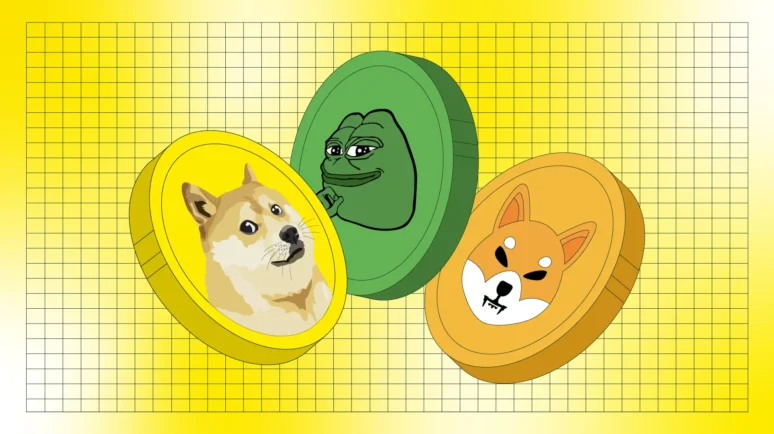
The memecoin market, led by tokens like PEPE and SHIB, has surged with its total valuation exceeding $50 billion, reigniting discussions about speculative fervor. After a prolonged decline, the "memecoin dominance rate" has rebounded strongly from historic lows, with the sector’s market cap reclaiming the $500 billion mark. Key tokens, including PEPE, BONK, and FLOKI, recorded double-digit gains at the start of the year. Analysts are divided on whether this surge represents a short-term speculative burst or an early signal of a broader market shift. Data from CryptoQuant shows memecoin dominance peaked at 11% of the altcoin market in late 2024 before plummeting to a record low of 3.2% by December 2025. This rebound mirrors past patterns where liquidity inflows eventually lifted the entire altcoin sector. Santiment reported a 20.8% surge in memecoin market cap in the first week of the year, reaching $45.3 billion, while CoinGecko estimated the total memecoin economy at $51.6 billion. The rally, driven by retail FUD (fear, uncertainty, doubt) peaking around Christmas, saw savvy investors accumulating during panic selling. Notably, this cycle differs from previous ones due to increased institutional involvement. Leveraged memecoin ETFs, such as 21Shares' 2x Long Dogecoin ETF, have performed strongly, indicating demand beyond crypto-native traders. This institutionalization affects exchange listings and forces traditional finance to adapt to memecoin-driven liquidity. The memecoin landscape is also diversifying, with "boy club" and "frog-themed" coins challenging the dominance of "dog-themed" tokens. Emerging categories like "political finance" and "AI memecoin" are gaining traction, suggesting internal sector rotation. Blockchain networks like Solana and Base are benefiting significantly, with memecoin launchpad activity hitting multi-month highs. This resurgence reignites "fee wars" among chains competing for high-frequency speculative trading. Base developer Jesse Pollak argued memecoins act as "collaborative anchors" for communities, fostering creativity and collective action. However, a major risk lies in high concentration: for instance, 10 wallets control 63% of Shiba Inu's supply, with the largest holding 41%. This centralization poses significant downside risks for retail investors, as "whales" can trigger sell-offs. While the rebound from historic lows suggests a awakening market, CryptoQuant cautions it's too early to determine sustainability, highlighting the high-risk, high-reward nature of the current rally.

marsbit01/06 10:36

Memecoin Leads the Rebound: Prelude to a Bull Market or a Trap Set by Whales?

marsbit01/06 10:36

After the Great NFT Collapse: Speculation is Dead, Utility Reigns?

The NFT market has experienced a dramatic collapse, marked by the cancellation of NFT Paris 2025 due to severe financial strain. Over five years, NFTs transitioned from a speculative frenzy—epitomized by Beeple’s $69.3 million sale—to a period of severe contraction. Data reveals a 35% increase in supply in 2025, while sales plummeted by 37%, and the total market capitalization fell 86% from its 2022 peak. Average sale prices dropped to $96, down 75% from the bull market highs. Even blue-chip projects like CryptoPunks and Bored Ape Yacht Club saw floor prices crash by over 78%. Major platforms struggled: OpenSea’s monthly revenue fell from up to $120 million to under $1 million, prompting a pivot to a broader “Trade Everything” model. Blur and Magic Eden saw token prices drop over 98%, while older platforms like X2Y2 shut down entirely. Amid the downturn, Pudgy Penguins emerged as a success story by leveraging its IP into physical consumer goods, generating an estimated $50 million annually through retail partnerships and brand campaigns—avoiding crypto terminology to appeal to mainstream audiences. Similarly, Yuga Labs transferred CryptoPunks to a non-profit to focus on cultural preservation rather than speculation. NFTs are increasingly functioning as utility tools: Courtyard.io tokenizes physical Pokémon cards, facilitating over $12.7 million in sales in a month, while FIFA uses NFTs for World Cup ticket verification to combat scalping. The speculative NFT era is over, but the technology persists as a functional layer for ownership, authentication, and real-world asset tokenization—shifting from a speculative asset to a practical tool.

marsbit01/06 10:30

After the Great NFT Collapse: Speculation is Dead, Utility Reigns?

marsbit01/06 10:30

活动图片