# Silicon Valley Related Articles

HTX News Center provides the latest articles and in-depth analysis on "Silicon Valley", covering market trends, project updates, tech developments, and regulatory policies in the crypto industry.

Big Short Prototype: Trillion-Dollar AI Investment Started on the Wrong Path from the Beginning

Michael Burry draws a parallel between a 19th-century case study and modern AI development to argue that the current path of large language models (LLMs) is fundamentally flawed. He references an 1880 article from the Smithsonian about Melville Ballard, a deaf man who, without formal language, engaged in complex abstract reasoning about the origins of the universe, life, and God. This story demonstrates that true reasoning and understanding exist prior to and independent of language. Burry contends that by prioritizing language processing over the development of genuine reasoning capabilities, LLMs are merely creating sophisticated mirrors of data, not true understanding. They operate in an intermediate zone, simulating reasoning but lacking the innate rational capacity that precedes language. This "language-first" approach, driven by immense computational brute force, leads to inherent flaws like hallucinations and an inability to achieve real comprehension. The proposed solution is a shift towards a "reasoning-first" architecture, which would focus on compressing information and utilizing System 2 reasoning to drastically reduce computational needs. Burry suggests that true AI must pass a "Ballard Test": demonstrating rational thought without language. He concludes by linking this technological critique to a cyclical pattern of speculative investment booms, comparing the current AI hype to the 19th-century mining speculation in San Francisco, warning of an inevitable bust if the foundational approach isn't corrected.

marsbit03/02 06:57

Big Short Prototype: Trillion-Dollar AI Investment Started on the Wrong Path from the Beginning

marsbit03/02 06:57

From 24 to 1 to 5: YC No Longer Invests in Crypto, But Crypto Hasn't Disappeared

The article analyzes Y Combinator's shifting investment strategy in crypto, moving from a peak of 24 crypto startups in a single batch (Winter 2022) to a low of just 1 (Summer 2024), with a recent modest rebound to 5 in Winter 2026. The key insight is that while the *number* of crypto investments has drastically fallen, the *nature* of these investments has fundamentally changed. YC is no longer funding traditional crypto-native sectors like L1/L2 protocols, DeFi, or NFTs. Instead, the five recent investments are infrastructure companies that use crypto as a backend tool to solve specific problems, with the end-user often unaware of the underlying blockchain technology. Examples include: * **Unifold:** A Stripe-like API for crypto deposits. * **SpotPay:** A cross-border neobank powered by stablecoins. * **Sequence Markets:** An execution engine for digital asset trading. * **Orthogonal:** A payment gateway for AI agents to pay for APIs, utilizing crypto for machine-to-machine micropayments. * **Forum:** A regulated "attention exchange" to trade on cultural trends, potentially involving tokenization. The author, a professional in both crypto and AI, concludes that Silicon Valley's mainstream is redefining crypto's value proposition: its greatest potential is not as a standalone industry but as invisible infrastructure for other sectors, particularly in stablecoin financial services and emerging fields like AI agent economies. The message for crypto builders is to focus on solving real-world problems where crypto is the best tool, rather than building for the crypto ecosystem itself.

marsbit02/20 11:26

From 24 to 1 to 5: YC No Longer Invests in Crypto, But Crypto Hasn't Disappeared

marsbit02/20 11:26

From 24 to 1 to 5: YC No Longer Invests in Crypto, But Crypto Hasn't Disappeared

The article analyzes Y Combinator's shifting investment focus in crypto-related startups, highlighting a transition from direct crypto infrastructure to applications leveraging crypto as an underlying utility. Key data shows YC's crypto investments peaked in 2022 with 44 companies (e.g., DeFi protocols, NFT infrastructure), then sharply declined to just 1 in Summer 2024. The Winter 2026 batch includes 5 crypto-related companies, but they represent a fundamental shift: none are building traditional crypto products like chains or protocols. Instead, they focus on practical solutions where crypto is invisible to end-users. Examples include Unifold (Stripe-like API for crypto deposits), SpotPay (stablecoin-based neobank for cross-border payments), and Sequence Markets (execution engine for digital assets). Two notable projects are highlighted: Orthogonal, building a payment gateway for AI agents using crypto for machine-to-machine microtransactions, and Forum, creating a regulated "attention exchange" to trade quantified cultural focus, potentially involving tokenization. YC's recent Request for Startups (RFS) guidance confirms this trend, explicitly prioritizing "stablecoin financial services" and "new financial primitives" over generic crypto/Web3 themes. The author concludes that YC is no longer investing in crypto for its own sake, but in companies using crypto as a tool to solve real problems—often without users realizing it. This signals a maturation where crypto's value lies in becoming embedded infrastructure for other industries, particularly AI and finance, rather than a standalone ecosystem.

marsbit02/14 10:34

From 24 to 1 to 5: YC No Longer Invests in Crypto, But Crypto Hasn't Disappeared

marsbit02/14 10:34

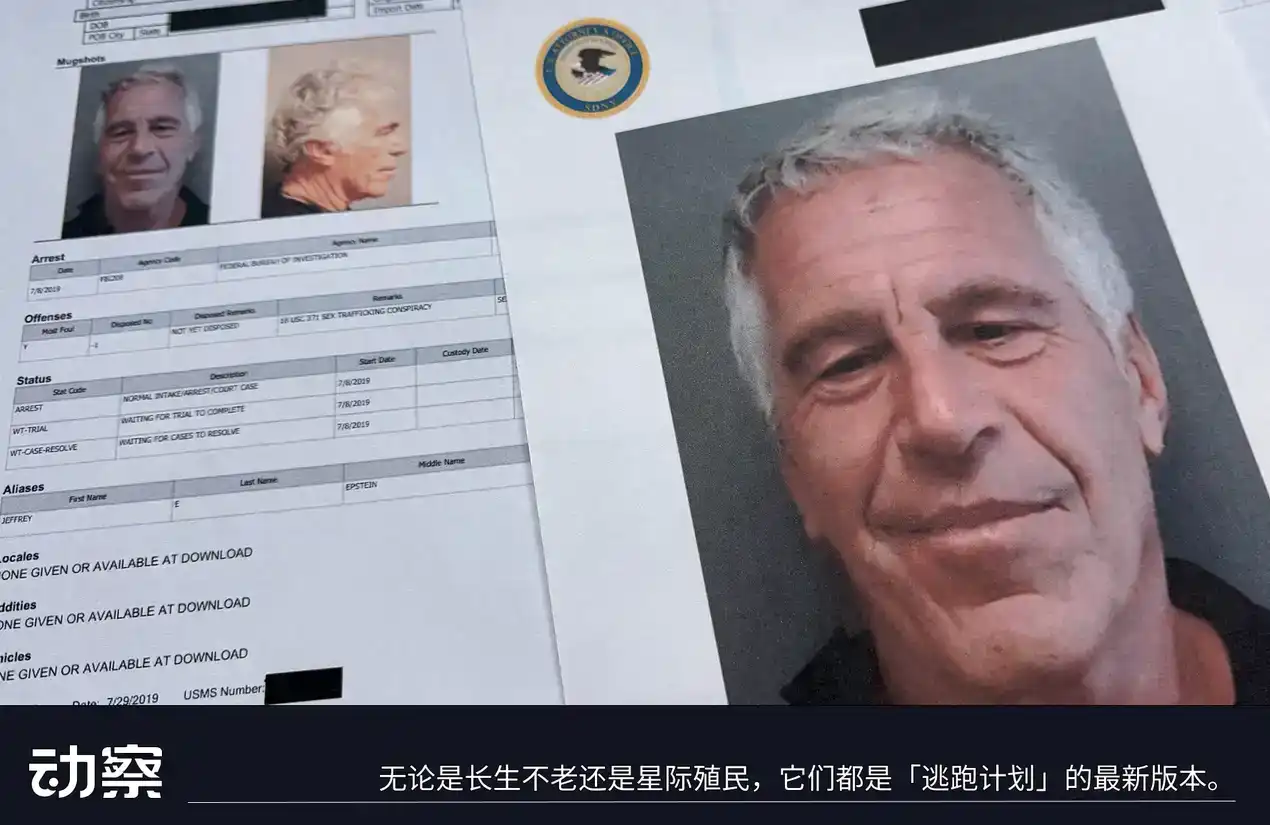
Escape the Leviathan: Epstein, Silicon Valley, and the Sovereign Individual

For over a century, the ultra-wealthy have sought to place their wealth beyond the reach of sovereign nations. This pursuit has evolved from Swiss bank accounts, which offered secrecy for 70 years, to Caribbean offshore havens, which lasted about 50 years before increased transparency eroded their appeal. The article uses the case of Jeffrey Epstein as a lens to examine the latest iteration of this quest: cryptocurrency. It details how Epstein, a convicted sex offender, strategically funded key players in the crypto space to gain influence. He donated to the MIT Media Lab, which used his money to hire core Bitcoin developers, effectively buying control over the technology's direction. He also invested in Bitcoin infrastructure company Blockstream. This financial influence helped morph Bitcoin's narrative from a purely technical, decentralized innovation into a radical ideological tool for challenging state power, an idea championed by Silicon Valley figures like Peter Thiel. Thiel, a vocal adherent of the book "The Sovereign Individual," views crypto as a means for a cognitive elite to escape the constraints of nation-states and democratic accountability. The piece argues that this pursuit of "freedom" is not for the common good but for the absolute liberation of a tiny elite from social responsibility and wealth redistribution. It describes a powerful network of tech elites, connected through organizations like the Edge Foundation, who operate in private to align interests and positions. Ultimately, the attempt to create a permanent digital haven is meeting a regulatory wall. The recent implementation of the global Crypto-Asset Reporting Framework (CARF) represents a coordinated international effort to impose transparency on crypto transactions, closing another loophole. The article concludes that the underlying ideology of escape persists, now manifesting in even more ambitious projects like life-extension technology and Mars colonization, funded by the same elite. It leaves the reader with a critical question: when a small, unaccountable group defines the future of money, society, and life itself in private, what does that mean for the rest of us?

marsbit02/03 04:50

Escape the Leviathan: Epstein, Silicon Valley, and the Sovereign Individual

marsbit02/03 04:50

活动图片